Plan Backward From the Warehouse Date
Wholesale jute tote bags for wellness studios are usually tied to fixed commercial dates: a studio opening, retreat weekend, seasonal spa promotion, membership renewal, wellness conference, influencer gift kit, or retail product launch. The procurement risk is rarely whether a factory can make a basic tote. The risk is whether the buyer has allowed enough calendar time for artwork review, sample making, sample courier, physical approval, material purchase, cutting, printing, sewing, finishing, packing, inspection, export booking, customs clearance, and local delivery.
Start with the required warehouse arrival date, not the public event date. If a 3PL must kit bags with towels, candles, skincare, supplements, or printed inserts, the tote bags need to arrive before the kitting date. If the bags are going to multiple studio locations, allow time for receiving, count verification, relabeling, and domestic redistribution. A supplier’s 25-day production quote is not a door-to-door schedule; it is usually only the manufacturing window after approvals are complete.
Clarify what triggers the supplier’s clock. Some suppliers count lead time from deposit receipt, some from artwork approval, and disciplined suppliers count from final specification, material confirmation, and sample approval. For B2B buyers, the safest timeline separates approval time from production time and separates production readiness from logistics. This makes it easier to decide whether sea freight, air freight, split shipment, or a reduced first quantity is needed.
- Use the warehouse arrival date as the planning anchor, then add local kitting and redistribution time.
- Separate artwork review, sampling, sample transit, sample approval, production, inspection, freight, customs, and final-mile delivery.
- Ask whether the quoted production lead time starts after deposit, artwork approval, bulk material purchase, or physical sample sign-off.
- Add extra time for dyed jute, custom webbing, zippers, linings, multiple artwork versions, retail labels, or individual packing.
- Build larger buffers before major holidays, seasonal freight peaks, and regional factory shutdowns.
Convert Wellness Use Into a Technical Specification
A jute tote for a yoga studio retail shelf should not be specified the same way as a low-cost event giveaway. Before requesting pricing, define how the bag will be used, how long it should last, what it must carry, and how visible the bag will be to paying clients. A premium spa welcome bag may need better fabric shade control, cleaner stitching, and more protective packing. A conference giveaway may prioritize budget, quantity, and arrival date.
The most useful RFQs describe the intended load. A bag holding a brochure, a small towel, and sample sachets has different stress points than a bag holding glass candles, bottled oils, books, or boxed skincare. If the buyer can estimate the packed weight per bag, the supplier can recommend handle width, reinforcement, gusset depth, and fabric weight more accurately. A target load also gives QC teams something practical to test against.
Wellness brands often use language such as natural, sustainable, rustic, premium, or eco-friendly. Those words are helpful for brand direction but not enough for production. Translate them into measurable choices: natural unbleached jute, unlaminated finish, cotton webbing handles, one-color water-based or plastisol ink where available from the supplier, paper band packing, no individual polybag, or inner lamination for moisture-prone products. The more specific the RFQ, the easier it is to compare quotes fairly.
- State the use case: retail resale, gift kit, retreat pack, trade event giveaway, or distributor inventory.
- List the actual products going inside the bag and estimate the total packed weight.
- Define the visibility standard: promotional, standard retail, premium spa, or gift-with-purchase.
- Translate brand preferences into material, print, handle, and packing requirements.
- Do not compare prices until size, jute weight, lamination, handle, print method, and packing are aligned.
Specify Jute Weight, Weave, and Finish Accurately
Jute bag fabric is often described in ounces, GSM, or both. In procurement conversations, 13 oz to 15 oz natural jute, roughly 360-425 GSM depending on yarn and weave, is a practical starting range for many wellness studio tote programs. Lighter 10 oz to 12 oz jute may suit low-cost giveaways, but it can sag, distort, or feel less substantial when used for retail-facing wellness products. Heavier jute can improve structure but also increases stiffness, carton weight, freight cost, and sometimes hand-feel concerns.
GSM alone does not describe the whole fabric. Yarn thickness, weave density, finishing, lamination, and batch shade also influence appearance and performance. Natural jute has visible slubs, fiber variation, and color variation; that is normal, but buyers should define what variation is acceptable. A controlled natural shade band or approved swatch is more practical than requiring every bag to be identical.
Jute is sometimes confused with burlap in casual sourcing language. Burlap generally refers to a plain-woven jute or similar natural-fiber cloth, often with a coarse texture. For tote procurement, use the supplier’s exact fabric description rather than relying only on the word burlap. Ask whether the quoted fabric is natural jute, bleached jute, dyed jute, laminated jute, jute-cotton blend, or another material. This avoids substitutions that look similar in photos but behave differently in sewing, printing, packing, and inspection.
- Use 10 oz to 12 oz jute only for light promotional use where structure is less critical.
- Use 13 oz to 15 oz jute for most membership kits, retail bags, and premium studio gifts.
- Consider reinforced construction, not only heavier fabric, for candles, bottles, books, or dense product bundles.
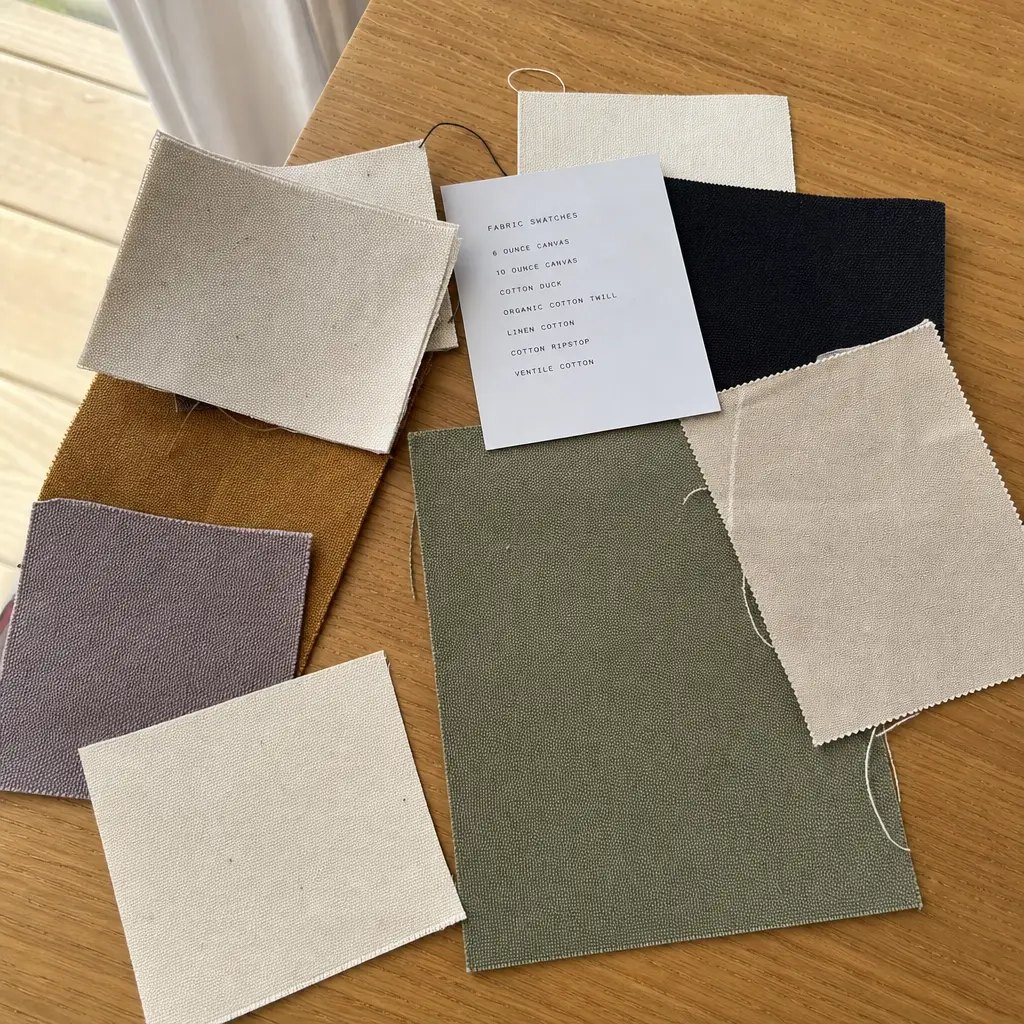
- Request swatches for natural, bleached, dyed, laminated, and unlaminated options before approving price.
- Define unacceptable fabric issues: mildew odor, oil smell, water stains, heavy shade mismatch, holes, and excessive broken yarns.
Decide Lamination and Moisture Controls Early
Unlaminated jute has the most natural hand feel and is often the best fit for eco-positioned wellness studios. It folds more softly, avoids a shiny exterior, and supports a rustic premium look when the stitching and print are controlled. For dry items such as apparel, brochures, sachets, yoga straps, small towels, and membership inserts, unlaminated jute is often a practical default.
Inner PP lamination can add body and light moisture resistance, which may be useful for bath products, lotions, oils, candles, damp towels, or heavier retail bundles. It can also make the bag easier to wipe inside. The tradeoff is a stiffer hand feel, possible crease marks, a less natural interior, and potential cracking if the bag is folded sharply or over-compressed in cartons. Outer lamination should be approved carefully because it can reduce the natural appearance many wellness buyers want.
Moisture planning should cover storage and transit, not just bag construction. Jute can absorb moisture and odor in humid environments. If goods move by sea freight or sit in a warehouse during rainy season, require dry fabric, dry cartons, clean storage, and sensible moisture protection. Desiccants, master polybags, container condition checks, or humidity indicator cards may be appropriate depending on route and order value, but they should be agreed before packing begins.
- Choose unlaminated jute for natural appearance, softer folding, and lower plastic content.
- Choose inner lamination when the bag needs added structure or will carry lightly damp or oily goods.
- Avoid outer lamination unless the brand accepts a shinier surface and different hand feel.
- Ask how lamination affects printing, folding, carton count, and inspection criteria.
- Set rejection rules for damp cartons, mildew odor, water marks, delamination, and cracked folds.
Control Size, Gusset, and Handle Engineering
Bag dimensions affect fabric yield, packing efficiency, freight cube, and whether the bag works in a real wellness program. A common tote might sit around 35 x 40 cm with a 10-15 cm gusset, but there is no universal correct size. A towel and skincare set may need a deeper gusset, while yoga apparel may need more width and height. If a distributor supplies many locations, standardizing one or two body sizes can reduce cutting complexity and mixed-SKU risk.
Write dimensions as finished width x height x gusset. Confirm whether the measurement is taken flat, opened, or after pressing. For many sewn jute totes, a practical body tolerance is often around +/-1 cm unless a tighter retail standard is contracted and priced. Handle tolerance should also be defined because a small handle-drop difference can change whether the bag is comfortable by hand only or can be carried over the shoulder.
Handles are a load-bearing component, not a decoration. Cotton webbing handles around 3-4 cm wide are often more comfortable than narrow rope or thin tape for wellness bundles. Specify total handle length, handle drop, handle width, handle material, attachment position, and reinforcement. For heavier loads, ask for box stitch, cross stitch, bartack, inside patch, or a combination. A sample should be loaded with the intended products and carried briefly before approval.
- State width x height x gusset in centimeters and define the measurement method.
- Use a body tolerance such as +/-1 cm only if both buyer and supplier agree it fits the program.
- Specify handle width, handle length, handle drop, material, placement, and reinforcement.
- Confirm whether the bag must work for hand carry, shoulder carry, or both.
- Test the approved size with real products before bulk production starts.
Choose Print Limits for Coarse Jute
Screen printing is usually the safest decoration method for wholesale jute tote bags when artwork is bold and simple. One-color or two-color studio logos, retreat marks, wellness slogans, and co-branded designs can work well when line weight and contrast are suitable. Jute is coarse and irregular, so printed edges will not look like paper packaging, coated nonwoven fabric, or smooth cotton canvas. The buyer should approve the expected jute print character through a strike-off or printed sample.
Artwork should be reviewed before screens are made. Small reversed text, thin serif fonts, fine-line mandalas, gradients, tight halftones, low-contrast colors, and close registration between colors are common risk areas. The supplier should confirm minimum line thickness and minimum readable text height based on the actual jute and print process. If the logo cannot be simplified, heat transfer may reproduce more detail, but it changes hand feel and may look less natural on jute.
Print placement also needs a tolerance. A centered logo in a digital proof can shift visually after sewing because the front panel, gusset, and side seams are three-dimensional. Define print width, print height, distance from top edge, distance from side edges, and no-print zones near seams and folds. During QC, judge print color and sharpness against the approved strike-off, not only against a screen image on a laptop.
- Use screen print for bold one-color or two-color logos and simple wellness graphics.
- Avoid tiny type, thin lines, gradients, halftones, and tight registration unless proven on real jute.
- Approve a printed strike-off or printed pre-production sample before bulk printing.
- Define print position tolerance, commonly within a few millimeters to 1 cm depending on design and bag construction.
- Confirm screen charges, revision charges, color matching limits, and separate screens for each artwork version.
Build Lead Time With Approval Gates
A strong lead time plan uses approval gates. Gate one is commercial and technical specification approval: size, fabric, lamination, handle, print method, quantity, packing, Incoterm, payment term, and target ship date. Gate two is artwork approval: print file, print size, color reference, print position, and jute feasibility. Gate three is physical sample or strike-off approval. Gate four is bulk production start. Gate five is final inspection and shipment release.
For a standard natural jute tote with simple screen print, artwork review may take 1-3 working days if the vector artwork is clean. Sampling may take 5-10 working days after specification confirmation, plus courier time and buyer review. Bulk production commonly needs about 18-30 working days after final approval for straightforward orders, depending on quantity, material availability, print complexity, factory capacity, and packing requirements. These figures are planning ranges, not guarantees, and should be confirmed with the supplier for each PO.
Do not let the supplier start bulk printing from a partially approved file unless the delivery risk is fully understood. A rushed approval can save three days and create three weeks of rework. The final approval package should reference the approved spec sheet, artwork file name, revision number, physical sample date, print strike-off, carton plan, inspection rules, and shipping documents. This creates a clear production record for both buyer and factory.
- Gate one: approve quotation, spec sheet, Incoterm, payment term, and target schedule.
- Gate two: approve artwork, print method, ink reference, print size, and print position.
- Gate three: approve physical sample, strike-off, substitute-material notes, and revision status.
- Gate four: approve production start, bulk material, carton plan, and inspection standard.
- Gate five: inspect packed goods before shipment release when order value, launch date, or retail exposure justifies it.
Use Sampling to Prove Performance
A sample is not only a visual mockup. For procurement, it should prove fabric hand feel, approximate GSM, odor, shade, stiffness, handle comfort, stitching, print behavior, gusset function, and packing suitability. Natural jute can vary by lot, so the approved sample should become the commercial reference for what is acceptable. If a buyer approves only a digital mockup, there is no reliable reference for final QC.
A true pre-production sample should use actual bulk material wherever possible. If timing requires a sample made from available stock jute, the supplier should clearly state what is representative and what is not. For example, the sample may confirm size and construction but not final shade, lamination, or print absorption. This distinction is important because buyers sometimes approve a substitute sample and later expect exact bulk material performance.
Sample review should be practical. Measure the body, gusset, handle drop, print size, and print position. Put the intended products inside and check whether the gusset opens properly. Carry the loaded bag for several minutes and inspect handle attachment points. Rub the cured print with a clean white cloth to check obvious transfer. Fold and reopen the bag to see whether lamination cracks or print creases. If the order will be packed without individual polybags, review whether the sample attracts loose fiber or dust during handling.
- Measure width, height, gusset, handle width, handle drop, print size, and print position.
- Load the sample with the intended kit weight and check handle comfort and seam stress.
- Review odor immediately and again after the sample sits enclosed for several hours.
- Check print rub, readability, line quality, and color against the approved reference.
- Keep one signed physical sample and dated reference photos for final inspection.
Define QC Before Production Starts
Jute tote QC should be written before the purchase order is released. Natural-fiber variation is normal, but buyers and factories need the same definition of acceptable variation. A practical QC plan includes measurement tolerances, defect classifications, print standards, stitching rules, load checks, odor checks, lamination checks, and packing verification. If using third-party inspection, specify the AQL level and defect categories before production is packed.
Common major defects include open seams, torn handle attachment, wrong size outside tolerance, wrong artwork, incorrect print color beyond agreed tolerance, unreadable logo, wet or moldy bags, severe stains, wrong packing count, and wrong carton marks. Minor defects may include small loose threads, slight natural slub variation, or small print irregularities within the approved standard. The classification matters because it affects pass/fail results.
Measurement and test methods should be simple enough for a factory QC team and an inspector to repeat. State whether bags are measured flat or opened, whether handle drop is measured from the top edge to the inside top of the handle, and how the print position is measured. Define a load check using the buyer’s target packed weight rather than a vague phrase such as strong handles. For print rub, define dry rub or wet rub expectations if they are important to the buyer’s product environment.
- Set AQL level, inspection sample size, and major/minor/critical defect definitions when inspection is required.
- Define body size, gusset, handle, and print-position tolerances in measurable terms.
- Use the approved sample and strike-off as the benchmark for shade, hand feel, construction, and print.
- Classify mildew odor, wet cartons, wrong artwork, open seams, and handle tearing as serious defects.
- Require production photos or inline checks for higher-risk orders before final packing is complete.
Pack for Freight, Kitting, and Clean Receiving
Jute totes are bulkier than many cotton drawstring bags, paper inserts, or nonwoven promotional bags. Packing affects landed cost as much as it affects product protection. A carton packed too loosely wastes freight cube and allows bags to shift or deform. A carton packed too tightly can crush gussets, crease front panels, crack lamination, distort handles, and create retail-facing fold marks. For many standard totes, 25-50 pcs per export carton is a useful planning range, but the actual count depends on bag size, lamination, handle bulk, carton strength, and maximum gross weight.
Inner packing should match the distribution channel. Individual polybags improve cleanliness for premium kits but add cost, labor, plastic, and sometimes carton volume. Paper bands, kraft sleeves, or master polybags may be better for buyers trying to reduce plastic while keeping cartons organized. If bags go directly to a 3PL kitting line, the receiver may care more about carton labels, SKU segregation, barcode accuracy, and clean counts than individual retail packaging.
Carton data should be requested at quotation stage and confirmed after sample approval. Ask for estimated carton dimensions, net weight, gross weight, pieces per carton, and total cubic meters. This information is needed for freight comparison and warehouse planning. If the shipment is going to a retailer, distributor, or 3PL, carton marks, pallet patterns, destination labels, routing codes, PO numbers, and barcode labels should be provided before the factory orders packing materials.
- Request carton dimensions, pieces per carton, net weight, gross weight, and total CBM with the quote.
- Set maximum carton gross weight if cartons will be manually handled at a studio, warehouse, or 3PL.
- Confirm whether bags are flat packed, folded once, bundled, paper banded, polybagged, or packed loose.
- Use moisture controls for humid routes, long sea freight, or storage-sensitive wellness programs.
- Approve carton marks, SKU labels, barcodes, PO numbers, and pallet requirements before packing begins.
Specification comparison for buyers
| Procurement decision | Recommended specification | Best fit for wellness buyers | Risk to verify before PO |
|---|---|---|---|
| Jute fabric weight | Natural jute commonly quoted as 13 oz to 15 oz, approximately 360-425 GSM depending on yarn, weave density, and finishing; request actual GSM range and approved swatch | Membership welcome kits, spa retail bags, yoga studio merchandise packs, retreat gifting, and dry product bundles | A low-GSM substitute may sag, twist at the gusset, or print poorly; a higher-GSM bag increases carton weight, freight cube, and handling cost |
| Fabric finish and lamination | Unlaminated jute for natural texture; inner PP lamination only when moisture resistance, added body, or wipeable interior is required | Eco-positioned studios usually prefer unlaminated; studios packing lotions, oils, candles, damp towels, or bath products may need inner lamination | Outer lamination can look shiny; inner lamination may crease at folds, crack under heavy compression, and alter print curing or adhesion |
| Finished size tolerance | State width x height x gusset in centimeters with tolerance, commonly +/-1 cm for body dimensions and +/-0.5-1 cm for handle placement unless tighter standards are contracted | Kits with known product dimensions, retail totes, conference welcome packs, and 3PL kitting programs | Vague medium/large sizing causes carton cube changes, kit fit failures, and disputes during final inspection |
| Handle construction | 3-4 cm cotton webbing or jute-cotton blend handles with box stitch, cross stitch, bartack, or inside reinforcement patch for heavier loads | Repeat-use retail bags, spa product bundles, premium membership gifts, and retreat bags carried for several days | Narrow webbing, weak stitching, or no reinforcement can tear jute at load points; handle drop may be too short for shoulder carry |
| Print method | One-color or two-color screen print for bold marks; heat transfer only when detailed multi-color artwork cannot be simplified; embroidery only after sample testing | Studio logos, retreat marks, wellness slogans, co-branded programs, distributor private-label orders | Fine lines, gradients, reversed text below practical readability, and tight registration can fail on coarse jute; approve strike-off on actual material |
| MOQ structure | Typical practical planning range is 500-1,000 pcs for standard natural jute with simple print; higher MOQ may apply to dyed jute, custom handles, zipper, lining, or multiple versions | Multi-location studios, spa groups, distributors, retreat operators, and buyers consolidating seasonal inventory | MOQ may apply per size, jute color, handle color, print artwork, print color, or shipment; splitting designs can remove price-break benefits |
| Sampling gate | Pre-production sample or production strike-off using actual jute, handle material, sewing construction, print method, print placement, and intended fold where possible | Launch-date programs, retail-facing bags, premium welcome kits, and repeat replenishment orders | Digital mockups do not prove odor, GSM, weave variation, print absorption, handle comfort, load performance, or carton fit |
| QC standard | Define AQL level, defect classification, measurement tolerances, shade range, odor rules, print rub test, stitching checks, and load check before production | Orders shipping to 3PLs, retail DCs, distributor warehouses, or multiple studio locations | If QC rules are not written before production, supplier and buyer may disagree on what is acceptable natural variation versus a defect |
| Packing plan | Flat pack or controlled fold, often 25-50 pcs per export carton for standard totes; confirm carton dimensions, gross weight, moisture control, carton marks, and pallet requirements | Kitting lines, warehouse receiving, e-commerce fulfillment, and retail replenishment | Over-compression can crush gussets and crease lamination; loose packing wastes freight cube and allows deformation in transit |
Buyer checklist before sampling
- Define the commercial use first: retail resale, membership gift, retreat kit, spa product bundle, trade event giveaway, holiday gift-with-purchase, or distributor replenishment, because expected load and finish level change the specification.
- Confirm the expected packed weight per bag in kilograms, including towels, candles, bottled products, skincare, books, apparel, documents, samples, or boxed supplements.
- Write finished dimensions as width x height x gusset, then add handle width, total handle length, handle drop, print area, print position, seam allowance expectations, and measurement tolerance.
- Specify jute fabric by ounce and GSM range where possible; clarify whether the quote is for natural, bleached, dyed, unlaminated, inner laminated, outer laminated, or laminated-and-lined material.
- State whether the buyer accepts natural shade variation in jute, and define unacceptable fabric issues such as mildew odor, oil smell, water marks, dirty panels, mixed-lot contrast, or excessive broken yarns.
- Provide vector artwork, Pantone or closest ink reference, final print dimensions, placement from top and side edges, minimum text height, and any no-print area near seams or gussets.
- Ask the supplier to review print feasibility before screens are made, especially for small type, thin lines, reversed text, gradients, halftones, and detailed wellness icons.
- Request a pre-production sample made with actual jute, actual handle material, actual print method, approved reinforcement, intended sewing construction, and the same folding method planned for packing.
- Define stitching requirements: straight top hem, secure handle reinforcement, no skipped stitches at load points, no open seams at gusset corners, no broken bartacks, and trimmed loose threads.
- Set inspection rules before PO: AQL level if used, sample size, major/minor defect definitions, measurement method, color/shade reference, load check, print rub check, and carton inspection requirements.
Factory quote questions to send
- What exact jute weight is included in the quote, expressed as ounce and approximate GSM, and can you provide a physical swatch before sample approval?
- Is the quoted fabric natural, bleached, dyed, unlaminated, inner laminated, outer laminated, or lined, and how does that choice affect stiffness, folding, print appearance, and carton packing?
- What is the finished bag size in width x height x gusset, what are the tolerances, and are measurements taken flat, opened, or after pressing?
- What handle material, handle width, total handle length, handle drop, handle placement, and reinforcement method are included in the price?
- What load weight do you recommend for this construction, and can you perform a basic loaded hang or carry check using the buyer’s target load?
- What is the MOQ for this exact size, jute finish, handle style, print method, and packing method, and does MOQ apply per artwork, per jute color, per handle color, per size, or per shipment?
- What are the unit prices at 500, 1,000, 3,000, and 5,000 pcs using the same specification, and which costs are separate, such as screen charges, sample charges, courier, export documents, or special packing?
- Which print method are you quoting, what is the maximum print area, and what minimum line thickness, minimum readable text height, or registration tolerance should we use for coarse jute?
- Can you review our vector artwork before sample production and identify any line, font, gradient, reversed text, or color area that should be simplified?
- Will the pre-production sample use actual bulk jute, actual ink, actual handles, and final sewing construction, or will any component be substitute material for reference only?
Quality-control points to confirm
- Verify fabric weight against the approved swatch and quoted GSM range; finished panels should not feel materially thinner, looser, or more open than the approved reference.
- Check jute shade against the approved sample or shade band; natural variation is expected, but strong yellow, grey, dark, stained, or mixed-lot panels should be segregated or approved before cutting.
- Confirm bags are dry and free from mildew odor, heavy oil smell, storage dust, visible water marks, grease spots, soil, insect contamination, and dirty handling marks.
- Measure finished width, height, gusset depth, handle drop, handle placement, print size, and print position using the agreed method; body dimensions are often controlled at +/-1 cm unless tighter terms are contracted.
- Inspect gussets opened and filled; they should open evenly, sit reasonably flat, and match the approved sample without twisting, collapsed corners, or unusable depth.
- Check handles for equal length, centered placement, comfortable grip width, and approved reinforcement such as box stitch, cross stitch, bartack, or inside patch.
- Perform an agreed load check on sampled bags using the buyer’s target packed weight; handle attachment points should not tear, pull open, or show skipped stitches after the check.
- Inspect stitching for skipped stitches, broken threads, thread nests, open side seams, open gusset corners, loose top hems, weak bartacks, and untrimmed loose threads.
- Judge print quality against the approved strike-off, not the digital file alone; unacceptable defects include unreadable text, severe bleeding, broken key lines, wrong position, wrong color, and obvious registration shift.
- Confirm ink is cured or dried properly; a light dry rub with a clean white cloth should not create obvious transfer under the agreed test method.