Start With The Use Case
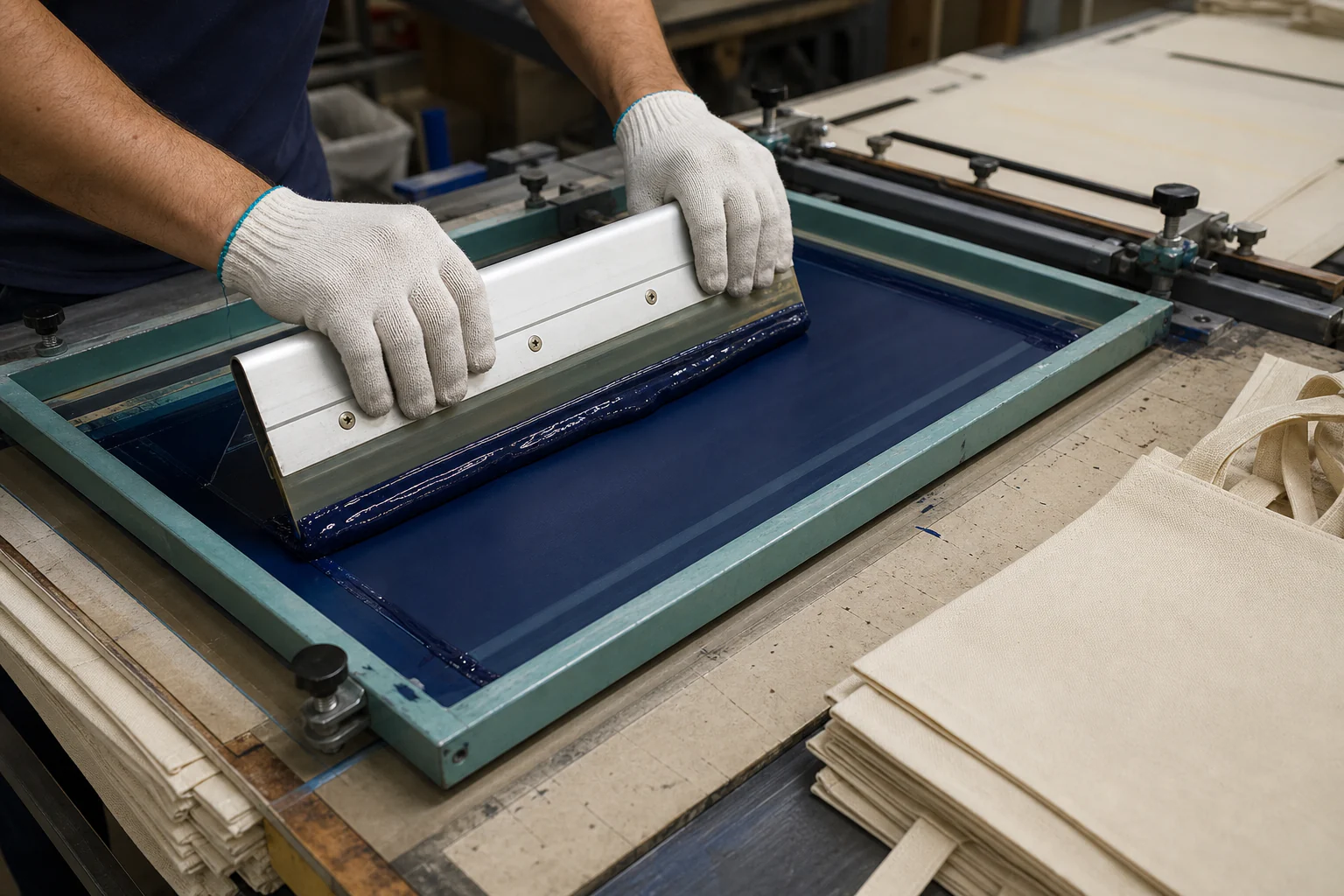
Special-effect inks change surface feel, opacity, artwork limits, curing, and wash behavior, so each option needs a production strike-off. This is the practical question behind screen printing ink types for procurement teams, designers, and operations staff who need an order to perform consistently after sampling.
Print quality depends on artwork preparation, ink chemistry, fabric surface, curing, and inspection. Buyers get more consistent results when the artwork file and production parameters are treated as controlled specifications rather than left to interpretation after the order is placed. For screen printing ink types, the working focus is specific: Special-effect inks change surface feel, opacity, artwork limits, curing, and wash behavior, so each option needs a production strike-off. The goal is to make the variables that change function, cost, lead time, or compliance reviewable before production.
Define The Decision Variables
For screen printing ink types, start by documenting the use case, quantity, destination, approval owner, and required arrival date. Resolve this first decision point before comparing suppliers: Match ink chemistry to fabric fiber, color, and finish. Each item below should be answered with a drawing, test, sample, certificate, or commercial assumption rather than a vague adjective.
Match ink chemistry to fabric fiber, color, and finish. Confirm whether the effect requires a special mesh or multiple passes. Check metallic, puff, or high-density details at final size. Define wash and abrasion expectations before selecting the effect. When two suppliers answer these points differently, normalize the assumptions before comparing their prices or lead times.
- Match ink chemistry to fabric fiber, color, and finish.
- Confirm whether the effect requires a special mesh or multiple passes.
- Check metallic, puff, or high-density details at final size.
- Define wash and abrasion expectations before selecting the effect.
Turn Requirements Into Numbers
A specification for screen printing ink types should be short enough for a production team to use and detailed enough for an inspector to verify. Put variable requirements in a table and keep reference samples, artwork, certificates, and revisions under the same approval record.
For Screen Printing Ink Types for Cotton and Canvas Bags, the following controls are a practical baseline for the printing workstream. Adjust the limits to the product and market, while keeping Confirm whether the effect requires a special mesh or multiple passes. measurable and assigned to an approval owner.
- Specification control for screen printing ink types: Match ink chemistry to fabric fiber, color, and finish. Provide vector artwork and identify every spot color or approved process build.
- Specification control for screen printing ink types: Confirm whether the effect requires a special mesh or multiple passes. Define print size, location, orientation, and distance from seams or gussets.
- Specification control for screen printing ink types: Check metallic, puff, or high-density details at final size. Record the fabric, ink system, underbase, mesh, and curing method used for approval.
- Specification control for screen printing ink types: Define wash and abrasion expectations before selecting the effect. Set acceptable limits for registration, pinholes, opacity, and color variation.
- Specification control for screen printing ink types: Match ink chemistry to fabric fiber, color, and finish. Approve a production strike-off on the actual bag fabric.
Review Samples And Quotes
Validation for screen printing ink types should reproduce the expected production material and use conditions, including this topic-specific requirement: Check metallic, puff, or high-density details at final size. A presentation sample can confirm appearance, but it does not prove that the production line, packing method, or shipment will deliver the same result.
For this printing decision, record who approved each checkpoint and what happens when a result falls outside the agreed range. Tie the record back to Define wash and abrasion expectations before selecting the effect. so sample comments are not lost between sales, engineering, production, quality, and logistics teams.
- Validation step for screen printing ink types: Match ink chemistry to fabric fiber, color, and finish. Review artwork at final print size before screens or transfers are made.
- Validation step for screen printing ink types: Confirm whether the effect requires a special mesh or multiple passes. Compare the strike-off under consistent lighting and on the approved fabric lot.
- Validation step for screen printing ink types: Check metallic, puff, or high-density details at final size. Rub, flex, and wash a sample when the bag will see repeated handling.
- Validation step for screen printing ink types: Define wash and abrasion expectations before selecting the effect. Check the first production pieces for placement and curing before volume output.
Risks To Resolve Early
The most avoidable failure in screen printing ink types begins with an assumption that was never made measurable. Put Match ink chemistry to fabric fiber, color, and finish. and the other topic-specific points in the RFQ or purchase specification before tooling, material reservation, or bulk production begins.
When value-engineering screen printing ink types, identify what performance, appearance, evidence, or schedule is being traded. Reapprove the affected sample or document, especially where the change touches Define wash and abrasion expectations before selecting the effect..
- Risk check for screen printing ink types: Match ink chemistry to fabric fiber, color, and finish. Artwork that looks sharp on screen may contain weak paths or tiny reversed details.
- Risk check for screen printing ink types: Confirm whether the effect requires a special mesh or multiple passes. A fabric texture can reduce fine-line clarity and ink coverage.
- Risk check for screen printing ink types: Check metallic, puff, or high-density details at final size. Under-curing causes wash failure while over-curing can scorch natural fibers.
- Risk check for screen printing ink types: Define wash and abrasion expectations before selecting the effect. Color approval without a named lighting condition invites disagreement.
What To Send The Supplier
Before approving screen printing ink types, ask the supplier to restate the final specification, exceptions, price basis, sample status, production window, inspection plan, packing details, and delivery term in one document. The summary must explicitly resolve Match ink chemistry to fabric fiber, color, and finish. and becomes the reference for purchasing and final inspection.
Use this guide as a decision record for screen printing ink types, then request a physical sample or targeted test for the variables that carry the highest commercial risk. A clear record is more valuable than a long email chain because it can be used by every team that touches the order.
- Confirm: Match ink chemistry to fabric fiber, color, and finish.
- Confirm: Confirm whether the effect requires a special mesh or multiple passes.
- Confirm: Check metallic, puff, or high-density details at final size.
- Confirm: Define wash and abrasion expectations before selecting the effect.