Start With the Job of the Logo
A jute tote for a wellness studio is rarely just a carry bag. It may be a new-member welcome tote, a spa retail bag, a Pilates studio launch gift, a retreat arrival kit, a yoga workshop merchandise item, or a gift-with-purchase for skincare, candles, apparel, or supplements. Those uses call for different logo choices. A tote designed for event photos needs a clear front-panel mark. A boutique retail bag may look better with a small lower-corner logo or woven side label. A bag that must stand upright at reception needs more structure than a brochure handout.
The easiest mistake is to send a supplier a lifestyle photo, a logo file, a target quantity, and a request for the lowest price. The replies may look similar, but the assumptions can be very different. One quote may use lighter jute. Another may assume a smaller print. One may include lamination, while another prices an unlined bag. Handle drop, carton packing, logo position, and sample support may also vary. The unit prices are then not comparing the same product.
A stronger RFQ explains what the tote must do. Say whether the logo should be readable from two meters, visible while the bag is carried over the shoulder, subtle enough for retail sale, or secondary to a larger event design. Add the intended contents: a 2-3 kg towel and bottle set, candles and skincare boxes, folded apparel, journals, supplements, or a light brochure pack. This lets the factory judge bag structure, handle placement, print area, and decoration method with fewer assumptions.
Write the success condition into the enquiry and later into the purchase order. For example: finished tote 350 x 400 x 150 mm, natural jute body, cotton webbing handles, front logo 210 mm wide, top of logo 85 mm below opening, logo clear of handle bartacks, bag to hold 3 kg without visible handle failure, cartons suitable for branch delivery. This is not over-specifying. It gives production and QC a measurable target.
- Define the use case before price: retail sale, welcome kit, retreat gift, workshop merchandise, seasonal promo, or distributor stock.
- Define the expected load and contents: brochure-only, 2-3 kg product bundle, towel and bottle set, candle and skincare kit, or apparel pack.
- Define the logo role: high visibility, subtle premium mark, co-branded event graphic, branch identifier, or private-label presentation.
- Define the delivery route: direct-to-studio cartons, warehouse receiving, branch split delivery, retail shelf display, or event-site handout.
- Define the approval path: digital proof for layout, material swatch for texture, physical sample for construction, and written tolerances for bulk acceptance.
Match Placement to Bag Construction
The most reliable branding area on many jute tote bags is the flat front panel between the handle stitch area and the bottom fold. On a medium tote around 350 x 400 x 120-150 mm, a front-center logo width of 180-240 mm is a practical starting range. On a smaller gift tote around 300 x 350 x 100 mm, 140-180 mm often looks more balanced. These are useful starting points, not fixed rules. Handle drop, gusset depth, seam allowance, fabric stiffness, and artwork shape all change how the final bag reads.
Logo position should be measured from construction points, not placed by eye. For a front-center mark, the top of the artwork often starts 70-100 mm below the opening, but the final number must clear handle stitching and bartacks. Keep the artwork away from side seams and gusset folds so it stays on the visible front face. For a lower-corner mark, leave about 40-60 mm from the side seam and bottom seam, then adjust for gusset depth and how the bag folds when filled.
Side gusset branding can be useful for branch names, retreat partners, event sponsors, or distributor identifiers. It is also less stable than front-panel branding. The gusset is folded, sewn, and pulled outward under load. A vertical logo may look straight when the bag is empty and slightly curved when the tote is filled. If the gusset carries a mark, inspect finished bags after loading them, not only flat panels before sewing.
A woven seam label is often cleaner for small branding. It avoids the roughest jute print surface and supports a premium private-label look. The label still needs a proper spec: width, height, fold style, yarn colors, stitch line, face direction, position from opening or side seam, and whether the reverse side is visible inside the bag. Without those details, labels can be sewn too low, upside down, partly hidden, or facing the wrong way.
- Front center: best for studio name visibility, event photography, and bold one-color logos.
- Upper middle: use only when handle bartacks sit high enough and the handle drop will not cover the logo during carry.
- Lower corner: best for understated wellness retail bags where natural jute texture is part of the look.
- Side gusset: useful for secondary branding, but requires wider tolerance and post-sewing inspection.
- Woven side label: suitable for minimalist branding, repeat retail programs, and logos with small details.
- Construction drawing: require seams, gusset folds, handle stitch boxes, bartacks, and bottom fold to appear on the layout.
Size the Logo for Real Use
A tote laid flat on a sampling table can be misleading. Wellness studios often fill jute bags with bulky but light items: towels, bottles, yoga blocks, grip socks, journals, candles, skincare boxes, supplements, or folded apparel. These contents push the front panel outward and curve the print. If the logo sits too low, it can bend into the bottom fold. If it sits too high, the handles may fall across it when the customer carries the tote.
Width alone does not decide readability. A 220 mm bold wordmark can work well on a medium tote. A 220 mm circular emblem with fine perimeter text may fail on coarse jute. Thin botanical illustrations, mandala lines, moon phases, fine script lettering, and small city names are all higher risk. Ask the supplier to review the artwork and identify which details may break, fill in, or lose contrast on the selected weave.
For direct screen printing on coarse natural jute, the factory should confirm practical minimums for line thickness, text height, and spacing. These limits depend on the fabric, screen mesh, ink, curing, and operator control, so avoid treating one number as universal. As a procurement control, flag lines under about 0.5-0.8 mm, small taglines, and tight letter spacing for physical testing. If the detail cannot hold, simplify the artwork or move that information to a printed patch, woven label, hangtag, or insert card.
Co-branded layouts need restraint. A retreat tote may need the studio logo, host name, sponsor mark, and location. Putting every mark into one rough jute print area can make the bag look crowded and less premium. A cleaner structure is usually one primary front logo, with secondary marks on a side label, back panel, hangtag, inside label, or printed insert.
- High visibility: start with an 180-240 mm front logo on many medium totes, then adjust after reviewing handles and gusset layout.
- Small gift tote: consider 140-180 mm front logos when the bag is closer to 300 x 350 x 100 mm.
- Subtle branding: use a 70-100 mm lower-corner mark or woven label instead of shrinking a complex logo too far.
- Small text: define minimum readable text height with the supplier and test it on real jute before bulk approval.
- Filled-bag review: load the tote with intended products and check bend, handle coverage, panel curve, and viewing distance.
- Co-branding: separate primary and secondary marks rather than forcing multiple small logos into one textured print zone.
Specify Jute Like a Buyer
Jute is not smooth cotton canvas. Yarn thickness, open weave, slubs, surface hairiness, seed particles, shade variation, and moisture history all affect the logo. Many wellness retail totes are quoted in the 13-15 oz range or approximately 280-350 GSM, but the number is not enough. Suppliers may use weight terms differently, and some quote by trade habit rather than a formal test method. The approved physical sample is a stronger reference than weight alone.
A tighter, more stable weave can print better than a heavier but uneven fabric. Heavy slubs running through the logo area can break fine lines or look like print defects. Open weave can make ink edges jagged. A hairy surface can reduce sharpness and add lint. If the brand uses a minimalist wordmark, the print zone must look clean enough that the mark feels intentional, not patchy or dirty.
Unlaminated jute has a natural handfeel and may suit studios that want a rustic look. It can also absorb ink unevenly and may have less structure. Laminated or backed jute can help the tote stand upright, but it may crease if folded tightly and can add stiffness or odor depending on materials and storage. Cotton lining improves the inside finish and protects products, but it changes cost, lead time, and sewing complexity. A printed cotton or canvas patch can solve many logo-detail problems while keeping the jute body.
Product compatibility matters in wellness orders. Towels, apparel, aromatherapy products, skincare, candles, and supplements can be sensitive to odor, loose fibers, stains, and moisture. Ask how raw jute is stored, whether the factory screens for mildew odor, and whether lining or lamination has adhesive smell. Surface cleanliness around the logo should be part of the quality standard, not a small cosmetic note after delivery.
- Ask for fabric weight, weave description, lamination status, lining, backing, and whether the jute is natural, dyed, blended, or treated.
- Use tighter jute for medium text, minimalist wordmarks, thin icons, and higher-end retail presentation.
- Avoid very open weave for QR codes, fine script, small taglines, mandala graphics, and delicate botanical marks.
- Use laminated or backed jute when upright structure matters, but test fold marks, odor, and carton compression.
- Use cotton lining when internal finish and product protection matter for skincare, apparel, towels, or gift sets.
- Reject heavy slubs, broken yarns, stains, oil marks, or dark fibers crossing the approved logo area.
Choose Decoration by Artwork Risk
Screen printing is usually the practical baseline for bulk jute tote bags with one or two solid colors. It suits bold wellness studio logos, simple icons, and high-contrast marks. Dark green, navy, black, brown, and other strong colors often read better on natural jute than pale low-contrast inks. The limitation is texture. Fine strokes may break over yarn ridges, small counters in letters may fill in, and gradients or watercolor effects are not reliable on coarse jute.
Heat transfer can give sharper edges on some surfaces, but it should not be approved on jute without testing the actual finish. Rough fibers, lamination type, heat exposure, and folding all affect adhesion. A transfer that looks clean in a photo can peel, crack, or feel plasticky after packing or use if the wrong film or process is selected. If a supplier proposes heat transfer, require dry rub, flex, fold, and adhesion checks before bulk release.
Printed cotton or canvas patches are often safer for detailed wellness branding. A patch gives a smoother surface for small text, QR codes, multi-color marks, and delicate icons. The tradeoff is more process control. You need to specify patch fabric, print method, cutting accuracy, stitch margin, thread color, corner flatness, and placement tolerance on the bag. Patch skew is a common visual issue, so treat patch placement as its own QC item.
Woven labels work well for subtle marks and repeat reorder programs, though they have yarn color limits and cannot reproduce every gradient or fine detail. Embroidery directly on jute can work for certain designs, but it may pucker the fabric and distort small marks. Choose the decoration method before comparing prices, because each method changes setup cost, MOQ, lead time, sampling, and inspection risk.
- Screen print: best for bold one-color or two-color logos with simple shapes and strong contrast.
- Printed patch: best for QR codes, small text, multi-color logos, fine icons, and cleaner retail edges.
- Woven label: best for subtle premium branding, private-label programs, and consistent repeat orders.
- Heat transfer: consider only after adhesion, dry rub, fold, flex, and packing tests on the actual jute surface.
- Embroidery: test for puckering, distortion, thread pull, and readability before approving direct embroidery on jute.
- Digital proof: useful for layout approval, but not sufficient for print quality approval on natural jute.
Compare Quotes Without Hidden Assumptions
MOQ for jute tote bags is rarely driven only by the finished bag quantity. It may depend on jute roll sourcing, custom dimensions, dyed jute, handle webbing color, lining fabric, lamination, screen setup, patch cutting, woven label production, carton printing, barcode labeling, and delivery split. A stock natural jute tote with one-color screen print may have a much lower MOQ than a custom-sized tote with dyed handles, cotton lining, printed patch, and branch-specific cartons.
Ask whether MOQ applies to total quantity or to each artwork, print color, bag size, jute color, handle color, lining color, or label design. This matters for wellness groups with several locations. If each branch uses a city name or slightly different logo, the supplier may treat each version as a separate lot. If the same bag is split by branch at packing, product MOQ may stay the same, but carton labeling, packing labor, and documentation cost may increase.
Quote comparison should separate the base bag from decoration and logistics extras. A low price may mean lighter jute, smaller logo, narrower handles, shorter handle drop, fewer stitches, no lining, weak cartons, or bulk packing without labels. A higher price may include better fabric, larger print, sample support, final inspection, individual packing, retail hangtags, or destination labels. Without a shared quote format, procurement may choose the lowest unit price and then pay through revisions, repacking, delays, or quality claims.
Lead time also needs to be broken down. Ask suppliers to separate material sourcing, artwork proofing, sample making, revision time, bulk production, curing, inspection, packing, and export handover. A supplier may quote a short production time while excluding artwork delay, sample approval, or holiday closures. For event-based wellness orders, factory completion is not the real deadline. Cartons must arrive early enough for warehouse receiving, studio setup, or retreat preparation.
- Clarify MOQ per artwork if branches, instructors, events, or retreat programs use different marks.
- Clarify MOQ per print color if the studio wants seasonal ink colors, co-branded versions, or multiple logo positions.
- Clarify MOQ per bag color, handle color, lining color, patch style, woven label, carton mark, and packing version.
- Request a quote breakdown for base bag, print, patch, label, sample, setup, packing, inspection, inland handling, and export terms.
- Confirm whether sample fees are refundable, whether one revision is included, and who pays courier charges.
- Compare quotes using the same Incoterm, carton specification, inspection requirement, payment schedule, and delivery split.
Turn the RFQ Into Acceptance Criteria
A strong RFQ turns design preference into measurable production language. Instead of writing “logo centered on front,” state logo width and height, distance from top opening to top of logo, side-to-side centering requirement, permitted tilt, ink color, fabric type, and placement tolerance. For stable front-panel screen print, many buyers negotiate around +/-5 mm to +/-8 mm, depending on construction and factory capability. Gusset print, sewn patches, and seam labels usually need wider tolerances and should be agreed before production starts.
The technical pack should include finished width, height, gusset depth, handle material, handle width, handle drop, handle stitch box, bartack reinforcement, lining, lamination, logo artwork, print method, print placement, packing, carton marks, quantity, destination, and inspection expectations. If the bag must stand upright at the front desk, write that into the spec. If cartons will be handled by studio staff, define maximum gross weight rather than leaving carton size entirely to the factory.
Artwork instructions should be practical. Vector files are preferred, but the buyer should also provide a simplified logo if the original contains fine lines, gradients, small location text, or delicate script. Pantone references help communicate color, but jute shade variation means final judgment should be against the approved physical sample or strike-off. Bulk production should match that reference within the agreed tolerances.
Packing requirements belong in the RFQ, not at the end of production. State whether individual polybags are allowed, discouraged, or replaced by paper bands, master polybags, carton dividers, or no inner packing. Define carton quantity, carton marks, barcodes, branch labels, and palletization needs. If this detail is missing, a good-looking tote can still arrive difficult to distribute.
- Bag spec: finished width, height, gusset, dimensional tolerance, handle width, handle drop, handle material, lining, lamination, and structure.
- Logo spec: artwork file, exact logo size, color target, placement measurements, print method, and minimum readable text requirement.
- Tolerance spec: position, tilt, color, ink coverage, patch alignment, label orientation, seam symmetry, and carton quantity.
- Packing spec: pieces per inner pack, pieces per carton, carton dimensions, carton marks, branch labels, barcode labels, and maximum gross weight.
- Sample spec: material swatch, strike-off, pre-production sample, revision process, approval photos, and retained reference sample.
- Inspection spec: sampling plan, critical/major/minor defects, inline photo requirements, final inspection timing, and approval authority before shipment.
Approve Samples With Production Discipline
The pre-production sample should use the same jute, handle material, lining, lamination, thread, decoration method, label, and packing fold intended for bulk. A logo printed on smoother cotton or on a different jute batch does not prove the final tote will work. If exact production material is not available before deposit, request a material swatch and print strike-off on comparable jute so the team can judge contrast, texture, and edge clarity before approving a full sample.
Review the sample physically, not only by photo. Lay the tote flat and measure logo width, logo height, top distance, side centering, bottom clearance, and visible tilt. Then fill it with the intended product set and check whether the mark bends, hides behind handles, or appears off-center when carried. Hang it naturally by the handles and view it from normal customer distance. Shoulder comfort and handle drop matter if the tote is expected to be reused outside the studio.
Wellness products make odor and cleanliness more important than they may be in general merchandise. Open the sample and smell the interior, lining, handles, lamination, and printed area. Check for mildew odor, adhesive smell, loose fibers, dust, oil marks, and rough internal seams that could affect towels, apparel, skincare cartons, or candles. A tote can pass logo placement and still fail the customer experience if it smells musty or sheds fibers.
Document the approved sample so production has a clear reference. Take a full front photo, side gusset photo, handle stitch close-up, logo close-up with ruler, print texture close-up, inside view, label view, and packing fold photo. If color is important, include a color card or approved swatch in the photo. Keep one approved sample with the buyer and one with the factory where possible.
- Measure logo top distance, side centering, bottom clearance, tilt, and size on the physical sample.
- Rub the cured print with a dry white cloth to check obvious transfer, flaking, or weak adhesion.
- Check whether ink bleeds into fibers, pale colors lose contrast, or small text becomes unreadable.
- Inspect handle stitching, bartack location, seam symmetry, gusset shape, label direction, and handle clearance from the print zone.
- Fill the tote with realistic products and confirm the logo remains visible, balanced, and clear when carried.
- Approve the packing fold only after checking it does not crease the logo, crack lamination, deform the patch, or distort the bag.
Control Bulk Production Inline
Jute tote production usually moves through material inspection, cutting, panel printing, sewing, trimming, final inspection, and packing. Logo application is often done before sewing because flat panels are easier to print accurately. That helps print control but creates another risk: a panel printed correctly can be sewn slightly off-square, making the finished bag look crooked. QC should check both printed panels and completed bags.
First-print approval is one of the most useful controls. Before mass printing continues, the factory should measure the first printed panels against the approved layout: logo size, distance from top edge, side centering, bottom clearance, and tilt. The first 10-20 panels should be checked and photographed with a ruler or placement template. If the logo is wrong here, stopping production prevents hundreds or thousands of unusable panels.
Inline sewing checks should pull pieces from different operators, bundles, or production lines. Inspect handle alignment, stitch box size, bartacks, front-panel squareness, gusset symmetry, seam strength, loose threads, and final visual logo position. If the bag tends to twist or collapse, inspect it empty and filled with a representative load. This is especially important for totes that need to stand upright for retail display.
Final inspection should separate logo defects from general bag defects. Critical defects may include wrong logo, missing logo, wrong print color, severe off-center placement, strong mildew odor, broken handles, or unsafe contamination. Major defects may include visible tilt, unreadable text, heavy stain across the logo, poor ink coverage, patch skew, upside-down label, or incorrect carton quantity. Minor defects may include small loose threads or slight shade variation within the approved range.
- First-print approval: measure the first 10-20 panels and record photos before mass printing continues.
- Print-area control: reject panels with stains, oil marks, broken yarns, holes, or heavy slubs across the logo zone.
- Inline sewing check: confirm handle placement, bartack security, front panel squareness, gusset symmetry, and seam consistency.
- Mid-production review: request random photos from different bundles, not only a clean sample selected for presentation.
- Final inspection: list logo placement, print quality, sewing, material, odor, and packing defects as separate categories.
- Shipment release: review production photos, carton data, inspection results, and approved deviation list before balance payment or dispatch.
Pack So the Logo Arrives Clean
Packing can damage an otherwise acceptable jute tote. Screen-printed bags need enough curing time before stacking. If packed too soon, ink may transfer, block, or mark the opposite surface. Laminated jute can crease under tight compression. Printed patches can show pressure marks. Natural jute can absorb moisture and odor if stored or packed poorly. For wellness studios, a musty smell or a crease through the logo can lead to immediate complaints.
Flat packing in export cartons is usually efficient for B2B orders, but the method must match the decoration. Large dark print areas, heat transfers, laminated panels, and printed patches may need interleaving or looser packing. Interleaving is not automatically required for every order, but the factory should test whether the approved print and packing method causes transfer, scuffing, or permanent creasing. Avoid tight folds across the logo unless the physical sample proves they are safe.
Individual polybags are not always needed and may conflict with a studio’s packaging goals. Alternatives include paper bands, master polybags, carton dividers, recycled polybags, or no individual packing, depending on storage and distribution. Decide this before quoting because packing affects labor, material cost, carton size, and warehouse handling. If bags are for retail sale, hangtags, barcodes, care cards, and price labels should be quoted and approved before production.
Carton handling needs a practical specification. A carton that is efficient for freight may be too heavy for front-desk staff, retreat teams, or small stockrooms. Define pieces per carton, carton dimensions, maximum gross weight, carton marks, PO number, item code, quantity, destination branch, and any pallet requirement. For multi-branch delivery, carton labels should be checked before shipment so goods do not need to be re-sorted after arrival.
- Confirm curing time before stacking printed bags, especially for dark inks and large solid print areas.
- Define pieces per carton and maximum gross weight so cartons are practical for studio staff, warehouses, and event teams.
- Use interleaving only when ink, lamination, patch surface, or dark print creates a marking risk confirmed by testing.
- Avoid tight folds across the logo unless the approved sample proves no cracking, transfer, or permanent crease.
- Require carton marks with item code, quantity, PO number, destination, and branch label where split delivery is needed.
- Request packing photos showing open carton, inner packing, closed carton, carton marks, and pallet configuration if applicable.
Specification comparison for buyers
| Spec decision | Recommended option | When it fits | Buyer risk to check |
|---|---|---|---|
| Front center logo on a medium jute tote | For a 35 x 40 x 12-15 cm tote, start with logo width 18-24 cm; place the logo top 70-100 mm below the opening and at least 25-35 mm clear of handle bartacks | Yoga studios, Pilates studios, spas, wellness retail counters, retreat welcome kits, and event merchandise where the logo must read when carried | Handles may cover a high logo; a low logo may bend into the base fold; require measurements from top opening, side seams, bottom fold, and handle stitch box |
| Lower-corner premium mark | Logo width 70-100 mm; place 40-60 mm above the bottom seam and 40-60 mm from the side seam, adjusted for gusset depth | Boutique wellness shops, skincare gift-with-purchase bags, candle sets, studio retail packaging, and minimalist private-label programs | Coarse jute can swallow fine marks; thin script, small taglines, and light ink need a physical strike-off, not only a digital proof |
| Side gusset branding | Vertical logo or wordmark on 100-150 mm gusset, typically 50-70 mm wide with extra clearance from fold edges | Secondary branding, branch names, event partners, distributor identification, or designs where the front panel carries artwork | Gussets move during sewing and filling; accept wider tolerance than front panels and inspect finished bags after loading |
| Woven side label or seam label | Folded woven label commonly 20-40 mm wide, sewn into side seam or near upper side panel with orientation specified | Subtle retail branding, repeat reorder programs, premium spa ranges, and front panels that must stay unprinted | Label MOQ, yarn color limits, fraying, reverse-side appearance, fold type, and sewing direction must be confirmed before PO release |
| Direct screen print on natural jute | One or two solid colors, bold artwork, minimum practical line thickness agreed by factory, commonly not below about 0.5-0.8 mm on coarse jute | Cost-controlled bulk orders, simple wellness logos, strong contrast marks, and quantities from several hundred to high-volume runs | Gradients, fine botanical lines, small serif text, pale inks, and QR codes are high risk; request ink drawdown or strike-off on the actual jute |
| Printed cotton or canvas patch sewn to jute | Patch printed on smoother cotton/canvas, then sewn with defined stitch margin, thread color, and placement tolerance | Detailed logos, QR codes, multi-color branding, small taglines, and clean-edged premium retail presentation | Adds cutting, printing, sewing, and alignment steps; check patch skew, corner lift, stitch spacing, shrinkage, and frayed edges |
| Jute weight and structure | Specify finished fabric by supplier standard, often 13-15 oz or approximately 280-350 GSM for many retail totes, plus lamination/lining/backing status | Studio welcome bags, towel and bottle bundles, skincare kits, apparel, grip socks, light books, and front-desk retail displays | Weight terms vary by supplier; verify sample weight, weave tightness, lamination thickness, load target, and whether the bag must stand upright |
| Handle and logo clearance | Cotton webbing handles 25-38 mm wide; handle drop about 220-280 mm for shoulder carry or 120-180 mm for hand carry, depending on bag size | Retail customers carrying towels, bottles, apparel, mat accessories, candles, or multiple wellness products | Handle stitch boxes and bartacks can crowd the print zone; require the layout to show stitch positions and finished handle drop |
| Packing and carton specification | Flat pack 25-50 pcs per export carton where practical; define carton dimensions, gross weight target, carton marks, and whether interleaving is needed | Warehouses, multi-branch studios, retreat operators, distributors, and brands storing inventory for seasonal campaigns | Over-compression can crease laminated jute, scuff ink, and distort patches; confirm curing time, stacking method, moisture control, and carton handling limits |
Buyer checklist before sampling
- Define the commercial use case: retail sale, welcome kit, retreat gift, workshop merchandise, gift-with-purchase, distributor stock, or branch launch kit.
- State the target load in kilograms and product type, such as brochure-only, 2-3 kg towel and bottle set, skincare boxes, candles, folded apparel, or mixed retail bundle.
- Specify finished dimensions as width x height x gusset in millimeters, plus handle width, handle drop, handle material, lining, lamination, and standing requirement.
- Confirm whether dimensions are measured empty and flat, and set dimensional tolerance, commonly around +/-5 mm to +/-10 mm depending on construction and supplier capability.
- Send vector artwork in AI, EPS, SVG, or print-ready PDF, with Pantone references, simplified artwork if needed, and minimum text height requirements.
- Mark logo position from fixed construction points: top opening, side seam, bottom seam, gusset fold, handle stitch box, and bartack location.
- Choose decoration by artwork risk: screen print for bold marks, printed patch for fine detail, woven label for subtle branding, and heat transfer only after adhesion testing.
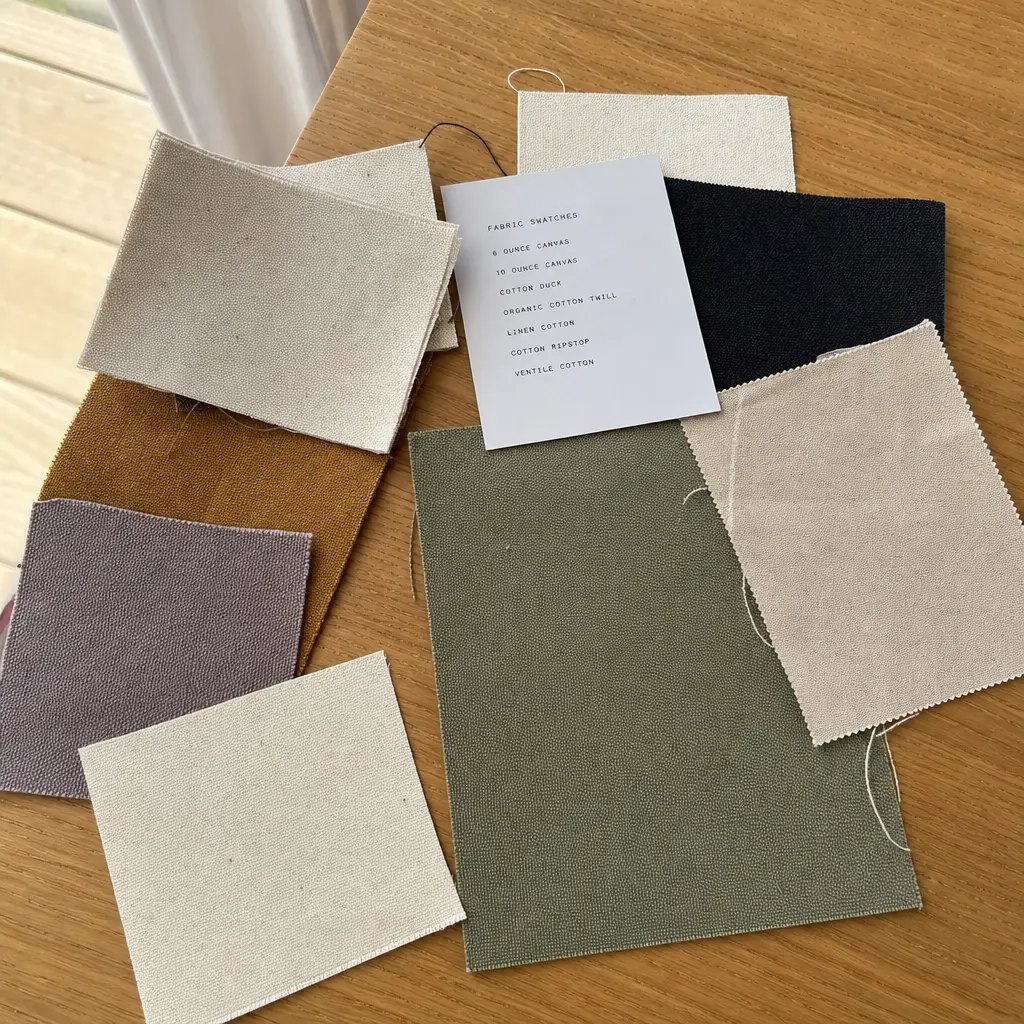
- Approve a material swatch and print strike-off if natural jute shade, yarn slubs, ink contrast, or surface hairiness may affect the logo.
- Approve a physical pre-production sample using planned jute, handle, lining, lamination, thread, decoration method, and packing fold before bulk production.
- Set written placement tolerances: for stable front-panel print often +/-5 mm to +/-8 mm; for gusset print, patch sewing, or seam labels often wider by agreement.
Factory quote questions to send
- What exact jute specification will be used: oz, GSM if available, weave type, lamination status, backing, lining, and whether the fabric is natural, dyed, blended, or treated?
- Can you provide a swatch or photos of the actual jute batch or closest available production batch before sample approval?
- What finished size tolerance can you hold for width, height, gusset, handle drop, and handle placement on this construction?
- Where will the logo be applied in production: before sewing on flat panels, after sewing on finished bags, on a separate cotton patch, or on a woven label?
- What is the maximum recommended print area for our selected bag size, and what placement tolerance can you hold for front print, gusset print, patch, and seam label?
- For our artwork, what minimum line thickness, minimum text height, and minimum gap between letters will remain legible on this jute surface?
- Can you provide an ink drawdown, print strike-off, or pre-production sample using the real fabric, selected ink color, and planned curing process?
- Is the MOQ based on total order quantity, each artwork, each print color, each bag size, each jute color, each handle color, each lining color, or each label design?
- Please separate costs for base bag, direct screen print, cotton patch, woven label, special handle, lining, carton marks, sample, screen/setup, and packing.
- What lead time is required for artwork proof, material sourcing, sample making, sample revision, bulk production, final inspection, packing, and export handover?
Quality-control points to confirm
- Logo position measured from top opening, left and right side seams, bottom seam or bottom fold, and handle stitch box on the first printed panels before mass printing continues.
- Logo size controlled against the approved sample and artwork spec, with no visible tilt when laid flat and no unacceptable distortion after the bag is filled with the intended load.
- Front-panel centering checked after sewing, because a correctly printed flat panel can appear off-center if cutting, gusset folding, or assembly shifts.
- Ink adhesion checked only after proper curing by dry rub, light scratch, and fold observation where relevant, not immediately after printing while ink is still setting.
- Color judged under consistent lighting against the approved sample, ink drawdown, or Pantone target, with realistic allowance for natural jute shade variation.
- Fine logo elements checked for broken strokes, fuzzy edges, filled counters, unreadable taglines, weak contrast, ink pinholes, and loss of detail over yarn ridges.
- Handle stitching checked for skipped stitches, loose threads, secure bartacks at all handle ends, equal handle drop, and enough clearance from the print zone.
- Bag body checked for broken jute yarns, heavy slubs across the logo area, stains, mildew odor, foreign fibers, oil marks, holes, and uneven surface texture.
- Laminated or lined bags checked for bubbles, delamination, cracking on folds, adhesive odor, sharp internal edges, and creases caused by tight packing.
- Patch and label branding checked for skew, stitch margin, thread color, corner lift, frayed edge, label orientation, and distance from seam or opening.