Start with the carton plan, not the logo
Wellness studio buyers often begin a jute tote project by choosing the logo size, handle color, and natural jute shade. Those are important customer-facing decisions, but the carton packing plan has a direct effect on landed cost, receiving labor, defect rates, and store presentation. A tote that looks correct in a single sample can still arrive with crushed corners, diagonal creases, handle marks across the print, or carton shortages if packing is treated as an afterthought.
Jute behaves differently from cotton canvas or non-woven polypropylene. It is coarser, stiffer, more prone to visible creasing, and more sensitive to moisture and odor. A carton packed too tightly may reduce CBM on paper but create compressed gussets, bent hems, print transfer, and bulging cartons. A carton packed too loosely can collapse during stacking and allow the bags to shift during inland trucking or warehouse handling. The right plan balances protection, freight efficiency, carton strength, and warehouse usability.
For a B2B order, the carton plan should be part of the RFQ and purchase order. Define pieces per carton, carton dimensions, gross weight, net weight, carton grade, inner liner, bundle quantity, fold direction, printed-face orientation, carton marks, and whether cartons are packed by SKU or destination. If the totes pass through a distributor, 3PL, or chain warehouse before reaching individual studios, the carton must support receiving, counting, allocation, and repacking without excessive local labor.
- Treat carton data as commercial quote data, not a post-production packing detail.
- Ask for CBM per 1000 pcs so unit price and freight exposure can be compared together.
- Reject packing plans that depend on heavy compression to make a carton quantity work.
- Require packed carton photos for first orders, new sizes, new logos, or multi-warehouse routes.
- Confirm carton marks before production so finished goods are not held while labels are redesigned.
Convert wellness use into measurable specs
A factory cannot quote accurately from the phrase natural jute tote bag with logo. The supplier needs to know what the wellness studio expects the bag to carry, how the customer will use it, and how the warehouse will receive it. A tote for yoga apparel needs different dimensions than a tote for boxed skincare. A retreat gift bag may need a lightweight, economical construction, while a paid retail tote needs better shape, cleaner finishing, and more controlled packing.
Start the specification with the expected contents. Record the largest item length, width, and height; the approximate total loaded weight; and whether the bag must hold a bottle upright, fit a towel, carry a shoebox-sized product, or present a welcome kit neatly. Then convert that use into finished size, gusset, jute weight, lamination, handle drop, reinforcement, print area, and carton count. This prevents suppliers from offering superficially similar but materially different options.
Operational use also matters. If the studio team will add inserts locally, bundles of 10 or 20 may be easier than individually polybagged units. If the tote is sold as a retail SKU or shipped through e-commerce fulfillment, individual polybags, barcodes, hangtags, and cleaner folding may be required. The same product can need a different packing plan depending on whether it is warehouse stock, store-ready inventory, or event merchandise.
- List expected contents before deciding size, handle length, and gusset depth.
- State target loaded weight so handle stitching and reinforcement can be judged realistically.
- Define whether the tote is resale merchandise, a welcome-kit component, or a functional carrier.
- Confirm whether cartons must be packed by SKU, destination, studio location, or mixed bulk stock.
- Keep one master spec sheet so every supplier quotes the same material, construction, print, and packing.
Specify jute weight and lamination clearly
For many commercial jute tote bags used by wellness studios, a practical retail range is 13 oz to 15 oz jute, roughly 380-430 GSM before lamination. This is often strong enough for boutique presentation, towels, apparel, and moderate welcome-kit contents without making cartons unnecessarily heavy. Lighter 11 oz to 12 oz jute can work for short-term event giveaways or low-load promotional use, but buyers should expect softer structure, more wrinkling, and less ability to stand upright.
Heavier jute can feel more premium, yet it increases fabric consumption, finished weight, carton gross weight, and sometimes CBM. Procurement teams should not select heavier material only because it sounds better. Test it against the actual contents, carton count, manual handling limits, and retail price point. If the tote must sit upright on a shelf or carry boxy products, lamination and gusset construction may improve structure more efficiently than simply increasing base fabric weight.
Lamination needs precise wording. Inner clear PP lamination adds structure, reduces fiber shedding, and gives some resistance to incidental moisture from bottles or spa products. It also changes sustainability positioning and can trap moisture or odor if jute is packed damp. Unlaminated jute has a more natural hand feel and a lower-plastic story, but the buyer should allow more surface texture, fiber shedding, and shape variation. Always ask whether the quoted GSM refers to base jute only or the finished laminated material, because suppliers may report this differently.
- Use 11-12 oz jute only for low-load promotions where relaxed structure is acceptable.
- Use 13-15 oz jute for most retail totes, welcome bags, and wellness merchandise.
- Confirm whether GSM is measured before lamination, after lamination, or as total composite weight.
- Approve a swatch range for natural jute shade instead of relying on one perfect photo.
- Require dry material and clean storage before laminated bags are sealed inside carton liners.
Lock size, gusset, and handle construction
Finished dimensions drive fabric yield, carton count, freight volume, and product fit. A common medium wellness tote may sit around 35-40 cm wide, 35-42 cm high, and 12-18 cm gusset, but there is no universal best size. Apparel needs panel width. Boxed skincare needs a stable base. Towels and robes may need height and shoulder comfort. A deeper gusset improves capacity but can create stronger fold lines and reduce pieces per carton.
Quote finished dimensions, not cutting dimensions. The purchase order should state width x height x gusset, measurement method, and tolerance. A general tolerance of +/-1 cm is common for many sewn jute totes, but tighter control may be needed when a rigid welcome-kit insert, product box, retail fixture, or fulfillment slot must fit. If the bag must stand upright when empty or lightly loaded, state this requirement before sampling because fabric weight, lamination, gusset shape, bottom seam, and packing method all affect the outcome.
Handles influence both comfort and carton behavior. Cotton webbing handles are widely used for wellness totes because they are smoother than jute handles and suit a clean boutique look. A width of 2.5-3.0 cm is usually more comfortable than narrow tape. Shoulder carry often needs a handle drop around 25-30 cm, while short retail carry handles can be lower. Specify total handle length, handle drop, attachment depth, stitch pattern, and thread color. Reinforcement such as box-X stitching or bar tacks should be documented in the sample and inspection checklist.
- Confirm finished width x height x gusset with photos showing ruler measurements.
- Keep logos clear of handle stitch boxes, side seams, top hems, and gusset folds.
- Specify handle width, total length, drop, material, color, and reinforcement method.
- Test the real largest insert or product box in the pre-production sample.
- Check that the tote packs flat without twisting before approving the carton count.
Choose print methods that suit jute texture
Screen printing is usually the first option for custom jute tote bags when the artwork uses one to three solid colors. It is scalable, familiar to most factories, and suitable for bold wellness branding. The limitation is the rough surface. Jute yarns, slubs, and gaps can break thin strokes, small serif type, delicate mandala graphics, and pale ink. A design that looks crisp on a PDF or cotton canvas proof may look intentionally rustic or visibly broken on natural jute.
Heat transfer can support finer detail or multi-color artwork, but it creates a smoother surface patch that may contrast with the rustic fabric. It also needs compatibility checks for heat settings, lamination, edge lifting, cracking risk, and carton pressure. Embroidery can work for small patches or badges, but dense stitching may distort coarse jute unless backing, stitch density, and placement are controlled. For most wellness studios, the safest choice is a bold mark, simple typography, strong contrast, and moderate print size away from seams.
Artwork approval should be physical, not only digital. Send vector files, Pantone references, print width and height, placement measurements, and acceptable position tolerance. Require a logo strike-off on actual production jute. Check color, opacity, broken edges, skew, registration, and rub after curing. If printed faces will touch inside the carton, the factory should prove the ink is fully cured and that normal compression does not cause transfer.
- Use screen print for bold logos and simple 1-3 color artwork.
- Avoid tiny type, hairline icons, low-contrast beige ink, and oversized solid ink blocks unless tested.
- Approve strike-offs on actual production jute, not paper, canvas, or a digital mockup.
- Define print-position tolerance, such as +/-5 mm to +/-10 mm, depending on artwork sensitivity.
- Check cured print for rub or transfer before the final carton packing method is approved.
Build quotes around real cost drivers
The lowest quoted unit price can be misleading if the supplier has not included the same material, packing, carton grade, or setup charges. A supplier may quote a low MOQ for the sewn tote but apply separate minimums for custom handle color, woven label, hangtag, barcode sticker, screen setup, printed carton mark, or laminated fabric purchase. Procurement teams should ask for each minimum separately, especially when testing a pilot order.
Request price breaks at 500, 1000, 3000, and 5000 pcs using the same specification and the same packing plan. If the 500-piece quote uses bulk packing and the 3000-piece quote assumes individual polybags or a different carton count, the comparison is distorted. Ask the supplier to show which costs are included in the unit price and which are one-time or order-level charges. Screen charges, sample fees, strike-offs, label setup, and special carton marks should not be hidden in vague wording.
Landed cost depends on carton volume as much as FOB price. A tote packed at 50 pcs per carton with high CBM may cost more to move, store, and allocate than a slightly higher FOB tote packed efficiently and safely. Ask for carton dimensions in centimeters, gross weight, net weight, and estimated CBM per 1000 pcs. If the shipment goes to a 3PL, confirm any receiving requirements such as maximum carton weight, barcode labels, carton numbering, or pallet configuration.
- Separate tote body MOQ from print, handle, label, hangtag, barcode, polybag, and carton mark MOQs.
- Request price breaks at identical specifications, not downgraded materials at higher quantities.
- List unit price, setup charges, sample fees, packing labor, carton cost, inland freight, and excluded charges.
- Compare CBM per 1000 pcs and gross weight per carton before selecting a supplier.
- Confirm whether the quoted carton count is based on trial packing or an estimate.
Use sample stages to remove production risk
A showroom sample proves that a supplier can make one acceptable bag. It does not prove that the factory can repeat the construction, hold tolerances, cure the print, control odor, or pack export cartons correctly. A first production order should use staged approvals that match the real risks: material swatch, logo strike-off, pre-production sample, and packed carton confirmation.
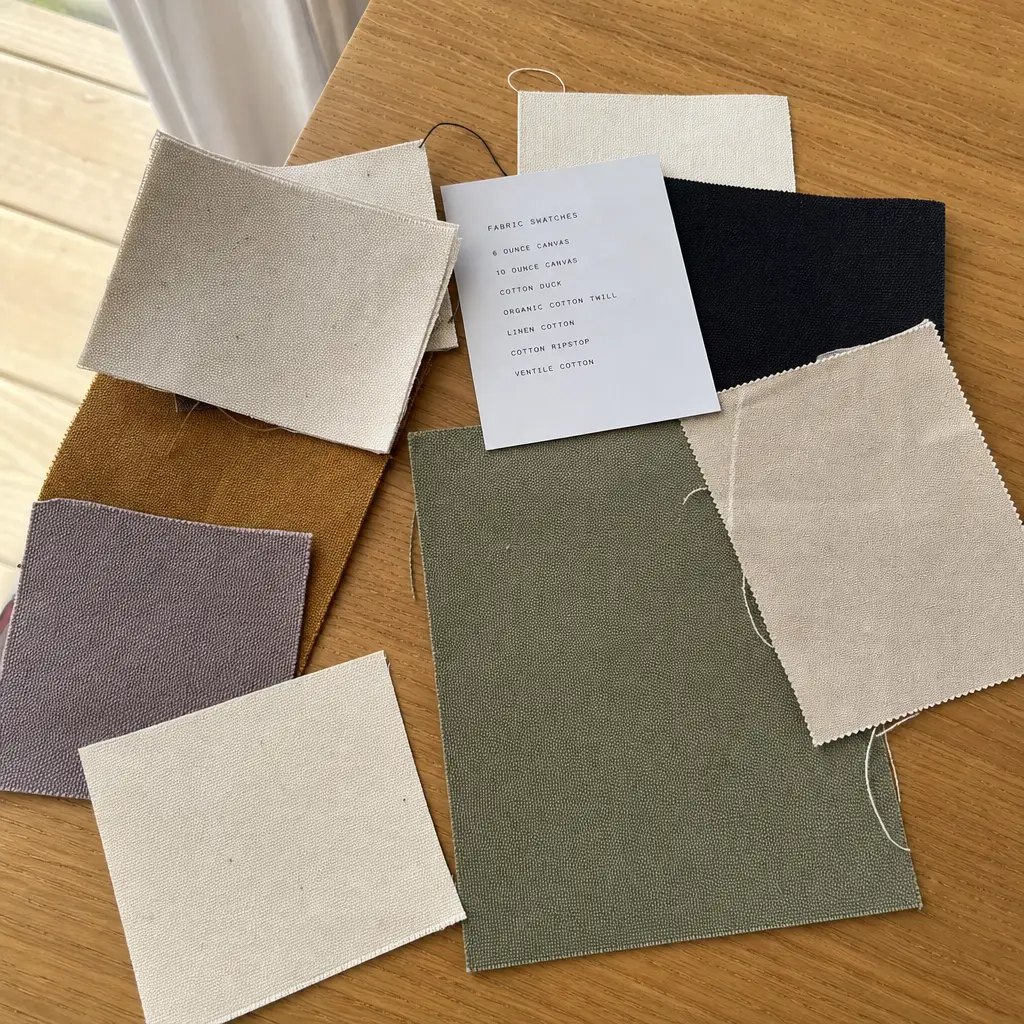
The material swatch checks jute shade, weight, lamination, surface texture, hand feel, and odor. The strike-off confirms artwork size, Pantone direction, opacity, line clarity, contrast, and placement on actual jute. The pre-production sample confirms finished dimensions, handle drop, stitching, label, hangtag, top hem, gusset, and print position. The packed carton confirmation checks pieces per carton, fold direction, bundle size, carton liner, printed-face orientation, carton dimensions, and gross weight.
For retail-sensitive orders, ask the factory to pack a trial carton using the final packing method, leave it closed long enough to show compression behavior, then reopen and photograph the top, middle, and bottom layers. This simple check can reveal obvious problems such as handle imprints across the logo, print transfer, stubborn creases, carton bulging, or a bundle method that makes warehouse counting difficult. Approval records should be dated and saved so the production and inspection teams compare bulk goods against the same reference.
- Swatch approval covers shade range, GSM, lamination, texture, and odor expectation.
- Strike-off approval covers Pantone direction, opacity, edge quality, size, and placement.
- Pre-production approval covers construction, measurements, handle drop, stitching, label, and final artwork.
- Packed carton approval covers carton count, fold direction, bundles, liner, carton size, and gross weight.
- Inspection references should include signed sample photos, measurement photos, and approved defect limits.
Design cartons for warehouse receiving
Many medium jute totes are packed around 40-60 pcs per export carton, with 50 pcs often used as an initial planning number. This is not a universal standard. The correct quantity depends on finished size, gusset depth, lamination stiffness, handle bulk, print method, individual polybag use, and carton strength. A good carton is full enough to reduce shifting but not so compressed that it bulges or deforms the totes.
Flat packing is usually safer than aggressive folding because jute can hold creases. If folding is required for parcel fulfillment or store display, the fold location must be approved during sampling. Printed panels may need to face inward, alternate directions, or be separated depending on ink behavior. For wholesale stock, a bulk poly liner plus 10 pcs or 20 pcs paper-banded bundles often balances protection, count control, and reduced plastic. For retail resale or e-commerce fulfillment, individual polybags, barcodes, and hangtags may justify higher packing cost and larger carton volume.
Carton specification should match the route. Export cartons should be clean, dry, strongly taped, and suitable for stacking through factory handling, inland transport, port movement, LCL consolidation, or warehouse storage. A 5-ply corrugated carton is a common baseline for many export tote shipments, but buyers should still approve dimensions, gross weight, compression risk, and pallet plan. For multi-location rollouts, avoid mixed cartons unless the receiving warehouse has approved the allocation process.
- Use 40-60 pcs per carton only as a planning range until final trial packing confirms it.
- Keep gross weight within the buyer’s manual handling and 3PL receiving limits.
- Use carton-level SKU or destination separation for chain studio allocations when possible.
- Mark cartons with PO number, item code, SKU, quantity, carton number, gross weight, net weight, and destination.
- For palletized shipments, confirm pallet height, carton orientation, corner boards, stretch wrap, and label visibility.
Define QC thresholds before inspection
Jute is a natural fiber, so reasonable shade variation, slubs, and uneven texture should be expected and controlled through an approved swatch range. Natural variation is not a reason to accept oil marks, active mildew odor, severe stains, broken seams, weak handles, crooked logos, lamination peeling, or cartons packed with the wrong count. Defect definitions should be agreed before production starts, not negotiated after the inspection report arrives.
Wellness studios are especially sensitive to odor and cleanliness because bags may be used near apparel, skincare, supplements, aromatherapy, towels, and spa environments. Inspectors should open random cartons and smell the product immediately. Damp jute, smoke, oil, solvent, or uncured ink odor can make an otherwise well-made tote unsuitable for the channel. Moisture control matters because laminated jute and bulk liners can trap humidity inside cartons.
Inspection should cover product quality and packing quality. Product checks include finished size, fabric condition, lamination bond, stitching, handle strength, logo position, print color, and print rub. Packing checks include carton count, bundle count, carton marks, carton condition, liner, sealing, moisture, and whether packed bags show handle marks or transfer. Random carton opening is essential because top-layer inspection may miss shortages, mixed SKUs, or over-compressed middle layers.
- Classify critical defects: wrong logo, mildew odor, unsafe handle failure, severe staining, incorrect SKU, or unusable packing.
- Classify major defects: visible print skew, ink bleeding, broken stitches, lamination peeling, wrong count, or bulging cartons.
- Classify minor defects: small natural slubs or slight shade variation within the approved range.
- Perform representative loaded carry or handle pull checks based on expected use and approved construction.
- Open random cartons to verify count, bundle method, carton marks, odor, compression, and print protection.
Plan lead time by approval gate
A realistic jute tote schedule includes artwork review, material sourcing, swatch approval, print strike-off, pre-production sample, bulk material booking, cutting, sewing, printing, curing, inspection, carton packing, export documents, and shipment handoff. Custom handle colors, woven labels, hangtags, barcodes, or destination-specific carton labels can become the bottleneck even when the tote construction is simple.
The most common timing problem is incomplete approval. A buyer may approve the tote sample but not the carton mark, barcode position, inner packing method, destination split, or carton quantity. The factory then finishes production but cannot pack, or it packs based on assumptions that the buyer later rejects. For wellness chains, distributors, and retreat programs, packing files should be treated as production-critical documents.
Lead time should start from a defined approval gate. Clarify whether the supplier counts production days from deposit, artwork approval, swatch approval, pre-production sample approval, or arrival of all custom materials. Schedule inspection before shipment release and early enough to allow rework if print quality, carton count, odor, or packing method fails. If the order is tied to a retreat, studio opening, membership campaign, or seasonal launch, build a buffer for sample revisions and logistics changes.
- Approve artwork, material, strike-off, pre-production sample, carton marks, and packing plan before bulk release.
- Define exactly when bulk lead time starts and what approvals must be complete.
- Send SKU split, destination allocation, and 3PL routing requirements before packing begins.
- Book inspection before final shipment release, not after cartons have already moved to the forwarder.
- Add launch buffer for sample revisions, printing cure time, inspection rework, and vessel or truck schedule changes.
Specification comparison for buyers
| Procurement decision | Recommended control | Best fit for wellness studios | Buyer risk to verify before PO |
|---|---|---|---|
| Jute fabric weight | Specify base jute weight in oz or GSM; common retail range is 13-15 oz, about 380-430 GSM before lamination. Require the supplier to state whether GSM includes PP lamination. | Member welcome kits, boutique retail totes, retreat merchandise, towel and apparel bundles | A lighter fabric may reduce FOB price but can crease more, lean when filled, and lose shape after carton compression. |
| Lamination choice | Define unlaminated, inner clear PP laminated, or matte laminated. Ask for lamination thickness or total laminated material weight if used. | Skincare, candles, boxed supplements, humid spa environments, or totes expected to stand upright | Unlaminated jute sheds more fiber and absorbs moisture faster; laminated jute can trap odor or humidity if packed damp. |
| Finished size and gusset | Quote finished dimensions as width x height x gusset, not cutting size. Use +/-1 cm general tolerance unless inserts or boxes require tighter control. | Medium studio totes around 35-40 cm wide, 35-42 cm high, and 12-18 cm gusset | Small gusset changes alter fabric yield, carton quantity, CBM, product fit, and whether the tote can stand when lightly loaded. |
| Handle construction | Specify 2.5-3.0 cm cotton webbing, total handle length, handle drop, color, attachment depth, and box-X or reinforced bar-tack stitching. | Yoga apparel, towels, bottles, robes, retail purchases, retreat packs | Rough jute handles can feel uncomfortable; weak tack stitching may fail during loaded carry or warehouse handling. |
| Print method | Use screen print for 1-3 solid colors; require strike-off on actual jute. Use heat transfer only when fine detail or multi-color artwork justifies the trade-off. | Clean studio logos, earth-tone Pantone palettes, bold icon marks, simple typography | Thin lines, pale ink, and small type can break on coarse jute; uncured ink may rub or transfer in compressed cartons. |
| Inner packing | Use bulk carton liner plus 10 pcs or 20 pcs bundles for wholesale stock; individual polybags only when resale, barcodes, or fulfillment require them. | Distributor warehousing, chain studio allocation, sustainability-conscious brands | Bulk packing is not store-ready; individual polybags increase cost, plastic, labor, carton volume, and sometimes CBM. |
| Carton pack quantity | Treat 40-60 pcs per export carton as a starting range for many medium totes; approve only after final trial packing and gross weight review. | Importer warehouse shipments, studio chain rollouts, retail replenishment | Overpacking can cause bulging cartons, crushed corners, handle imprints, print rub, and receiving rejections. |
| Carton data | Require pcs/carton, carton dimensions, gross weight, net weight, carton grade, carton marks, and CBM per 1000 pcs on the quote. | Landed-cost comparison, pallet planning, 3PL receiving, warehouse allocation | A low unit price can be offset by high CBM, weak cartons, heavy manual handling, or local repacking labor. |
| MOQ structure | Request price breaks at 500, 1000, 3000, and 5000 pcs, with setup charges separated from unit price. | Pilot orders, seasonal launches, chain expansion, retreat programs | Low MOQ may exclude screen charges, label MOQ, custom handle MOQ, barcode setup, carton mark fees, or inefficient packing labor. |
Buyer checklist before sampling
- Define the tote’s commercial role: resale SKU, new-member welcome bag, retreat gift, gift-with-purchase carrier, subscription insert, product carrier, or staff-use bag.
- List expected contents, largest item dimensions, approximate loaded weight, and whether the customer carries the tote by hand or shoulder.
- Confirm finished width x height x gusset, target capacity, tolerance, and whether the tote must stand upright when empty or lightly loaded.
- Specify base jute weight, lamination type, handle material, handle width, total handle length, handle drop, stitch reinforcement, top hem, side seam, and bottom gusset construction.
- Send vector artwork with Pantone references, maximum print size, print method, exact placement from top and side edges, and acceptable print-position tolerance.
- State whether the order is bulk packed, bundled, individually polybagged, hangtagged, barcoded, carton-level separated, or prepared as a retail-ready SKU.
- Request material swatch, logo strike-off, pre-production sample, and packed carton photos made with final material, final handle, final print process, and intended packing method.
- Approve carton quantity only after reviewing carton dimensions, gross weight, net weight, liner type, bundle count, bag compression, carton grade, and stacking route.
- Ask suppliers to quote unit price, setup charges, screen charges, label cost, sample cost, packing labor, carton cost, carton CBM, and estimated CBM per 1000 pcs as separate lines.
- Set QC criteria for stains, mildew odor, lamination bubbles, loose fibers, print rub, print skew, handle pull, seam strength, count accuracy, carton bulging, and carton damage.
Factory quote questions to send
- What base jute weight, fabric shade, lamination type, and lamination thickness are included in this quote, and does the stated GSM include or exclude lamination?
- Are you quoting finished dimensions or cutting dimensions, and what tolerance do you allow for width, height, gusset, handle drop, handle placement, and print position?
- What handle material, handle width, total handle length, handle drop, thread type, attachment depth, and reinforcement stitch are included?
- What loaded weight do you recommend for this construction, and can you perform a handle pull or loaded hang check against the buyer’s target use?
- What is the largest safe print area on the front panel without distortion near the top hem, handle stitch box, side seam, or gusset fold?
- Are screen charges, Pantone ink matching, logo strike-offs, woven side labels, hangtags, barcode stickers, carton marks, inner packing, and packing labor included or separate?
- What carton quantity, carton dimensions, gross weight, net weight, carton grade, and estimated CBM per 1000 pcs are used in your quotation?
- Can you provide packed trial carton photos showing fold direction, bundle quantity, carton liner, printed-face orientation, carton sealing, carton mark placement, and whether the carton bulges?
- What are the separate MOQs for the tote body, custom logo printing, custom handle color, woven label, hangtag, barcode label, individual polybag, and custom carton mark?
- Which sample stages do you offer before bulk production: material swatch, blank sample, logo strike-off, pre-production sample, and packed carton sample?
Quality-control points to confirm
- Finished width, height, and gusset should normally stay within +/-1 cm unless the tote must fit a retail fixture, insert card, product box, or fulfillment slot requiring tighter tolerances.
- Handle drop should be consistent within the agreed tolerance, with matching left and right handle placement so the tote does not twist during carry.
- Jute fabric should be free from large dark stains, oil marks, active mildew smell, excessive broken yarns, severe shade mismatch within the same carton, and visible lamination bubbles.
- Natural jute slubs and shade variation should be judged against the approved swatch range, not treated as defects unless they exceed the signed standard.
- Lamination should be bonded evenly, with no peeling at the top edge, bottom seam, side seam, or gusset fold after normal opening and flattening.
- Logo print should match the approved strike-off for color, size, position, opacity, and edge definition, with no heavy bleeding, missing edges, obvious skew, or unacceptable rub after curing.
- Print rub should be checked after normal handling and carton compression, especially when printed faces touch or when dark ink is printed on laminated jute.
- Handle attachment should use the approved reinforcement method, even thread tension, no skipped stitches at stress points, and no loose thread ends that weaken the seam.
- Bag opening, side seam, and bottom gusset should sit square enough for the tote to pack flat without twisting, permanent diagonal creases, or uneven leaning when filled lightly.
- Odor inspection should be done immediately after opening random cartons because damp jute, uncured ink, smoke, oil, or trapped warehouse odor is unsuitable for spa, skincare, apparel, and supplement environments.