Start With the Bakery Use Case, Not the Bag Photo
Jute tote bags for artisan bakeries are not a generic giveaway item. They may carry crusty sourdough, pastry boxes, coffee bags, jam jars, wine, flour packs, or retail gift bundles. Each load creates a different pressure point. A tote that works for one loaf and a postcard may fail when a customer adds two jars and a boxed cake. Before quoting, procurement teams should define the heaviest realistic purchase, the product shape, and whether the bag will sit on a counter, hang from a hook, or be folded into an online order carton.
The most common sourcing mistake is approving a good-looking jute tote from a photo without confirming fabric weight, gusset behavior, handle strength, and packing method. Natural jute hides variation well in images. A thin panel can still look rustic and premium until it is loaded. A bakery buyer should treat the RFQ as a performance specification: what the bag must carry, how it should present the brand, and what defects are unacceptable at receiving inspection.
- For bread and pastry retail, prioritize gusset stability and handle comfort over the lowest material weight.
- For gift bundles, specify bottom support so jars and boxes sit level instead of leaning into the side seam.
- For premium bakery merchandising, approve the natural jute shade range and print strike-off before bulk production.
- For distributor programs, standardize one base tote and control variations through artwork, label, or handle color.
Choose Jute Weight and Construction Around the Load
For bakery use, a practical jute tote usually starts around 300 GSM and may move toward 360-380 GSM or a 14 oz to 16 oz mill standard for stronger shape and better retail appearance. The exact number depends on how the supplier defines jute ounce weight and whether the material is laminated. Buyers should not compare 14 oz from one supplier and 14 oz from another without swatches, because weave density, yarn thickness, and finishing can change the actual hand-feel.
A gusseted tote with a boxed bottom is normally more suitable than a flat jute tote for bakery orders. Pastry boxes and bread loaves need volume and a flat base. Bound inner seams reduce fraying and improve perceived quality. If the bag will carry jars, bottled drinks, or packaged coffee, add reinforcement at the bottom or at least confirm that the seam allowance and stitch density can handle the expected load.
- Common retail bakery tote range: natural jute around 300-380 GSM, depending on size and target price.
- Size tolerance should be written in the purchase specification, for example plus or minus 1 cm for width and height where feasible.
- For heavier contents, request box-X handle stitching and a load test using the buyer's target carrying weight.
- For delicate pastry boxes, choose a gusset that matches the box depth rather than forcing the carton into a narrow tote.
Laminated or Unlaminated Jute Changes the Quality Risk
Laminated jute gives better shape, reduces loose fibers inside the bag, and helps the tote stand upright on a bakery counter. It can also provide a cleaner interior when the bag is used near flour, crumbs, and paper-wrapped bread. The tradeoff is that lamination changes the environmental claim, may add odor if material is not aired properly, and can crack if the bag is folded sharply or over-compressed during packing.
Unlaminated jute is often chosen for a more natural positioning, especially when the bakery wants a lower-plastic story. It has a softer hand and more authentic texture, but it may shed fibers and collapse more easily. For food-adjacent use, buyers should clarify whether the bag directly touches food or only carries wrapped goods. Most bakery retail totes should be specified as outer carry bags for packaged products unless proper food-contact testing and materials are required.
- Use laminated jute when structure, clean interior, and counter display are more important than a plastic-free claim.
- Use unlaminated jute when natural hand-feel and simple sustainability messaging matter more than stiffness.
- Inspect laminated bags for bubbles, film separation, sharp creases, edge peeling, and strong smell after carton opening.
- Avoid vague claims such as eco-friendly unless the material composition and local marketing rules support the statement.
Handle Specification Is Where Cheap Quotes Often Hide
The handle is usually the first failure point on jute bakery totes. A supplier may quote a strong-looking body fabric but reduce cost with narrow handles, short handle drop, weak thread, or simple single-line stitching. For bakery buyers, handle comfort matters because customers may carry the bag while walking from a market stall, train station, or shopping street. A thin jute handle can cut into the hand when the tote carries jars or several dense loaves.
Cotton webbing handles are often a good commercial balance for artisan bakeries. They feel softer, print programs can coordinate handle color with the bakery brand, and they tolerate heavier retail loads when stitched correctly. Jute webbing gives a fully natural look but may feel rougher. The RFQ should state handle material, width, drop length, thread color, and reinforcement pattern instead of leaving these items to the supplier's default.
- Typical comfortable handle width: around 2.5-3.8 cm for retail totes carrying mixed bakery goods.
- Common shoulder-friendly handle drop: around 22-28 cm, depending on bag height and market preference.
- Box-X stitching or reinforced bar tacks should be reviewed on the pre-production sample.
- A pull test should be agreed before mass production, using a realistic load rather than an abstract claim.
Printing on Jute Needs Practical Artwork Rules
Jute is coarse, uneven, and absorbent compared with cotton canvas. Fine logo details that print cleanly on paper or woven labels may lose sharpness on natural jute. For most bakery programs, one or two-color screen printing is the safest and most cost-effective option. Bold logos, simple bakery names, icons, and large typography normally print well. Thin serif letters, small origin text, QR codes, and pale colors can become weak or unreadable.
Heat transfer can reproduce more complex artwork, but it may look less integrated with the natural jute surface and may not suit every brand style. Embroidery is possible in limited use but can distort loose weave if the design is dense. Buyers should request a print strike-off on the actual bulk jute or a close production swatch, not on a smoother substitute material. Print placement should be measured from bag edges and handle position, not described only as centered.
- Supply vector artwork with Pantone colors and define whether natural jute color showing through is acceptable.
- Avoid small text below the supplier's recommended minimum height for the selected print method.
- Set print position tolerance, for example within 5 mm to 10 mm depending on bag size and equipment.
- Check rubbing resistance and curing, especially for dark ink on laminated or coated jute surfaces.
MOQ and Price Breaks Should Match Real Production Logic
A jute tote quote is driven by more than the finished quantity. The supplier considers fabric roll usage, lamination, cutting yield, handle material, print screens, sewing line setup, carton packing, and inspection. A 1,000-piece order with one size and one artwork is much easier to run than 1,000 pieces split across five bakery branch logos. Buyers comparing supplier quotes should separate the base bag cost from artwork and setup costs so the true price break is visible.
For distributors and retail buyers, the smartest MOQ structure is often one standardized bag body with controlled brand variations. If each bakery customer needs a different logo, the supplier may keep the same jute fabric, size, handle, and carton format while changing only screen printing and carton marks. This approach reduces sampling risk and makes reorders more predictable. It also helps avoid the situation where every small reorder is treated as a new development project.
- Request pricing at practical tiers such as 500, 1,000, 3,000, and 5,000 pieces if the supplier supports them.
- Separate unit price, screen charge, sample fee, label cost, inner packing cost, and export carton cost.
- For multi-logo bakery programs, ask whether screens can be reused and how long they are stored.
- Compare quotes using landed cost per usable bag, not only ex-factory unit price.
Sampling Should Prove the Production Method
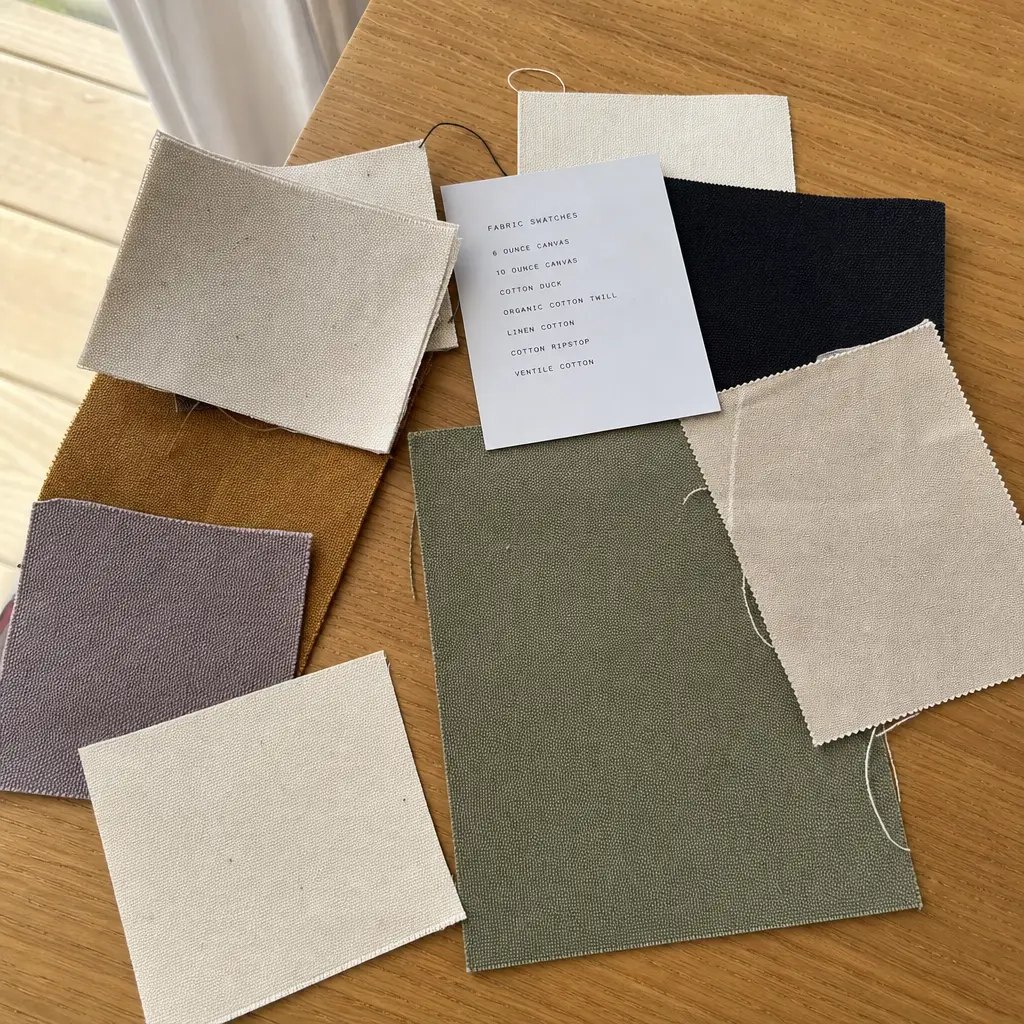
A showroom sample is not enough for a bakery tote program. It may use available fabric, a substitute handle, or hand-adjusted sewing that does not reflect bulk production. A proper sample process should move from material swatch to plain construction sample, then to print strike-off, and finally to a pre-production sample using the approved fabric, handle, print method, and packing style. Not every order needs every stage, but skipping all physical checks increases risk.
The pre-production sample should be treated as the control document. Procurement teams should mark approved dimensions, handle drop, print position, seam binding, bottom shape, carton fold, and any label placement. Photos are useful, but the retained physical sample is better for resolving later disputes. If the bulk factory changes fabric lot, lamination, handle supplier, or print ink after approval, the buyer should require notice before mass production continues.
- Material swatch confirms jute shade, GSM, weave density, lamination, odor, and hand-feel.
- Plain sample confirms size, gusset, handle drop, seam binding, and bottom construction.
- Print strike-off confirms ink color, edge definition, readability, curing, and placement tolerance.
- Pre-production sample confirms the exact version to inspect against during bulk production.
Inspection Criteria Need Acceptance Thresholds
A useful quality inspection checklist does not say only that the bag must be good quality. It defines the faults that cause rejection, the tolerances that can be accepted, and the checks that must be photographed. For jute tote bags, buyers should expect some natural shade variation and minor slubs, but not broken yarns across visible print areas, oily marks, severe odor, loose handles, crooked panels, or unreadable logos. Natural material variation should be managed by approved swatches, not ignored.
Final random inspection can follow an agreed AQL plan, but inline checks are especially helpful for jute bags because defects can be locked in early. Cutting errors affect size. Print errors affect the whole lot if not caught before sewing. Handle stitching errors may not be visible once bags are packed. A good factory will inspect after cutting, after printing, after sewing, and before carton sealing. Buyers should request evidence photos, not only a pass statement.
- Critical defects include handle detachment, sharp foreign matter, severe mold, wrong artwork, and unsafe odor.
- Major defects include wrong size beyond tolerance, weak seam, misprinted logo, heavy stains, and failed load test.
- Minor defects include small natural slubs outside the print zone, slight shade variation, or trim threads within the approved limit.
- Inspection photos should include ruler measurements, weight check, print close-up, handle reinforcement, seam interior, and carton condition.
Packing Decisions Affect Appearance and Landed Cost
Jute totes are bulky compared with thin cotton pouches, and packing method changes both landed cost and presentation. Flat packing preserves shape and reduces crease complaints, but it increases carton volume. Folding reduces CBM and freight cost, but laminated jute can hold fold marks. For bakery retail programs where the tote is displayed on a shelf or sold as a gift add-on, the cleaner appearance may justify the larger carton. For low-cost event distribution, folded packing may be acceptable if approved in advance.
Moisture control is important because jute is a natural fiber. Cartons should be dry, strong enough for export handling, and not over-compressed. If the bags are packed soon after printing, ink curing and odor should be reviewed before sealing cartons. Buyers should request carton dimensions, gross weight, net weight, carton quantity, and estimated CBM before confirming the order. These details allow importers to compare landed cost and warehouse handling, not just FOB price.
- Flat pack for premium retail presentation, shelf display, or laminated bags sensitive to creases.
- Folded pack for cost-sensitive distribution where minor fold lines are acceptable.
- Use moisture-resistant export cartons and avoid storing jute directly on damp warehouse floors.
- Include carton marks with item number, artwork code, quantity, gross weight, net weight, carton size, and destination details.
Lead Time Risks Come From Approvals, Not Only Sewing
Bulk sewing time is only one part of the schedule. Jute tote lead time can be delayed by artwork correction, fabric booking, lamination availability, sample courier transit, print strike-off approval, handle material matching, and carton production. Buyers often lose more time before production starts than during sewing. A realistic timeline separates sample development, buyer approval, raw material preparation, printing, sewing, inspection, packing, and export handover.
For seasonal bakery programs, launch calendars should include buffer for sample revisions and freight. A holiday bread gift program or farmers market campaign cannot rely on a best-case factory schedule. If the buyer needs multiple bakery branch logos, artwork approval should be batched and frozen before screens are made. Late artwork changes after screen making can create rework cost and push the order behind other factory bookings.
- Freeze size, fabric, handle, and print method before requesting final bulk price.
- Approve the print strike-off before the factory cuts or prints the full order.
- Build schedule buffer for natural jute shade approval if exact color tone matters.
- For repeat orders, retain approved samples and quote data to shorten development time.
Specification comparison for buyers
| Spec decision | Recommended option | When it fits | Buyer risk to check |
|---|---|---|---|
| Jute fabric weight | 14 oz to 16 oz natural jute, usually around 300-380 GSM depending on mill standard | Bakery retail totes, pastry gift bags, farmers market purchases, and reusable takeaway packaging | Low-GSM jute may look similar in photos but collapse after loading bread jars, flour packs, or bottled drinks |
| Inner treatment | Clear PP lamination or unlaminated jute selected by market rule and food contact policy | Laminated bags hold shape and resist flour dust; unlaminated bags suit plastic-free positioning | Lamination can crack on sharp folds, add odor, and may change recyclability claims if not disclosed |
| Handle material | Cotton webbing, jute webbing, or padded cotton handles with box-X reinforcement | Cotton webbing is more comfortable for heavier bakery purchases and premium retail programs | Handle width under 2.5 cm or weak stitching can fail even when the body fabric is acceptable |
| Print method | One or two-color screen print for most bakery logos; heat transfer only for fine gradients | Screen print works well on rough jute when artwork has bold lines and practical ink coverage | Fine serif text, QR codes, and small ingredient-style lines can fill in on coarse jute weave |
| Bag structure | Gusseted tote with reinforced bottom and bound inner seams | Needed when buyers expect sourdough loaves, pastry boxes, coffee bags, or jarred products to sit flat | Flat totes are cheaper but cause crushed bakery boxes and poor shelf presentation |
| MOQ logic | Set MOQ by fabric roll, print setup, and colorway rather than only total pieces | Useful for distributors combining multiple bakery branch logos or seasonal designs | Splitting 1,000 pieces across many small artworks may trigger extra screens, sampling, and packing cost |
| Packing method | Folded once or flat-packed in export cartons with moisture protection and clear carton marks | Flat packing suits retail-ready appearance; folded packing reduces carton volume on less sensitive programs | Over-tight cartons leave permanent crease lines, especially on laminated jute |
| Inspection level | AQL-based final random inspection plus inline checks after cutting, printing, and handle attachment | Best for import orders where defects are expensive to sort after arrival | Only checking finished cartons can miss print curing, uneven panels, and handle reinforcement problems |
| Supplier evidence | Pre-production sample, material test report if needed, bulk fabric swatch, print strike-off, and carton layout | Appropriate for brand owners, retail buyers, and distributors needing repeatable reorders | A low quote without evidence may hide thinner fabric, smaller size tolerance, or lower packing standard |
Buyer checklist before sampling
- Define the exact bag size as width x height x gusset, and state whether dimensions are measured flat or expanded.
- Specify jute weight in GSM or oz, plus acceptable tolerance, instead of approving only by product photos.
- Decide whether the bag needs lamination, and confirm odor, hand-feel, recyclability language, and market compliance before bulk approval.
- Set handle material, handle width, handle drop length, and reinforcement stitching standard based on the expected bakery load.
- Send vector artwork with Pantone references and minimum readable text size for rough jute printing.
- Approve a physical print strike-off before bulk printing if the logo includes fine text, curved lines, small icons, or light ink on natural jute.
- Confirm inner seam binding, bottom reinforcement, and thread color because these details affect both durability and shelf appearance.
- Require sample load testing using realistic bakery items such as boxed pastries, loaves, coffee bags, jars, or bottles.
- State packing style, carton quantity, carton marks, inner polybag policy, moisture control, and pallet requirements.
- Request a quote breakdown showing bag size, GSM, lamination, handle type, print colors, packing method, MOQ, sample cost, tooling, lead time, and Incoterm.
Factory quote questions to send
- What jute GSM or oz range is included in this quote, and what is the normal bulk tolerance from your mill?
- Is the quoted material laminated or unlaminated, and what lamination thickness or finish is being used?
- What handle material, width, drop length, and stitch pattern are included in the unit price?
- Does the quoted price include inner seam binding, bottom reinforcement, and any label or hangtag requested?
- How many print colors and print positions are included, and are screen charges, strike-off charges, or artwork separation fees separate?
- What is the practical MOQ for one bag size and one artwork, and how does the price change if we split designs by bakery branch or season?
- What sample stages do you recommend before bulk production: material swatch, plain sample, print strike-off, or full pre-production sample?
- What are the current lead times for sampling, bulk material booking, printing, sewing, inspection, and export packing?
- What packing method is included: flat-packed, folded, individual polybag, master carton only, or retail-ready bundle?
- Can you provide carton size, carton weight, estimated CBM, and loading quantity so we can compare landed cost instead of unit price only?
Quality-control points to confirm
- Fabric weight should match the approved specification within the agreed tolerance, with no weak, brittle, oily, or heavily slubbed panels on visible areas.
- Finished size should remain within the buyer-approved tolerance, typically tighter on width and height than on gusset expansion.
- Lamination, if used, should be bonded evenly without bubbling, peeling, sharp cracking, strong odor, or exposed film at the seams.
- Print should be positioned consistently, cured properly, and free from smearing, pinholes, heavy ink bleeding, and unreadable small text.
- Handle stitching should use the approved reinforcement pattern, with no skipped stitches, loose thread ends, or weak anchoring at stress points.
- Seams should be straight enough for retail presentation and strong enough to withstand the agreed load test without tearing.
- Bottom panel and gusset should hold the intended bakery products flat without twisting, collapsing, or creating sharp internal pressure points.
- Color variation should be managed by approved bulk swatches because natural jute shade can vary between lots.
- Cartons should be dry, correctly marked, not over-compressed, and packed according to the approved fold or flat-pack method.
- Inspection records should include photos of size measurement, GSM check, print position, handle pull test, seam check, and packing condition.