Start with the real buying problem
For artisan bakeries, the risk with jute tote bags is rarely the idea itself. Natural jute looks appropriate for bread, coffee, farmers markets, gift hampers, and reusable retail packaging. The problem starts when a clean bakery logo designed for paper packaging is printed onto a coarse woven surface without proofing the artwork, fabric, ink coverage, and bag construction together.
A useful RFQ should therefore do more than say “jute tote bag with logo.” It should tell the factory what the bag must carry, how the logo must look at retail distance, how many artwork versions are needed, and how the bags will be packed and shipped. That information lets suppliers quote the same product instead of giving prices for different GSM, handle types, print methods, and carton packing.
- Best use case: retail bakery merchandise, gift packaging, market tote, loyalty program bag, or distributor promotional item.
- Main proofing risk: small logo details and light ink colors disappearing into the jute texture.
- Main cost risk: comparing quotes without matching GSM, laminate, handle, print size, and packing method.
- Main schedule risk: approving digital artwork only, then discovering during bulk print that the logo is not suitable for jute.
Choose the jute construction before artwork proofing
Print proofing should not happen in isolation from fabric selection. A 260 GSM loose natural jute panel, a 340 GSM laminated jute panel, and a 420 GSM heavy promotional jute panel will not print the same way. The ink sits differently, edges break differently, and the bag folds differently during packing. For bakery buyers, a practical starting point is usually 320-380 GSM jute when the bag needs a retail-quality hand feel without becoming overly bulky.
Lamination is also a commercial decision, not just a technical option. Laminated jute helps the bag hold shape and provides a cleaner inner surface when carrying wrapped bread, pastry boxes, coffee bags, or jars. Unlaminated jute has a softer, more rustic feel but can shed fibers and may feel less clean for food-adjacent retail use. If the bag will carry unpackaged food directly, standard jute tote construction should be reviewed carefully because it is normally treated as outer packaging, not a direct food-contact material.
- Common buyer spec: natural jute, 320-380 GSM, laminated inner backing, cotton webbing handles, screen printed logo.
- Budget-sensitive spec: 280-320 GSM jute, smaller print area, standard natural handles, flat export packing.
- Premium retail spec: heavier jute, cotton lining or cleaner binding, custom woven side label, reinforced base stitching.
- Avoid vague wording such as “thick jute” or “good quality jute”; quote by GSM, laminate, and finished bag size.
Match print method to bakery artwork
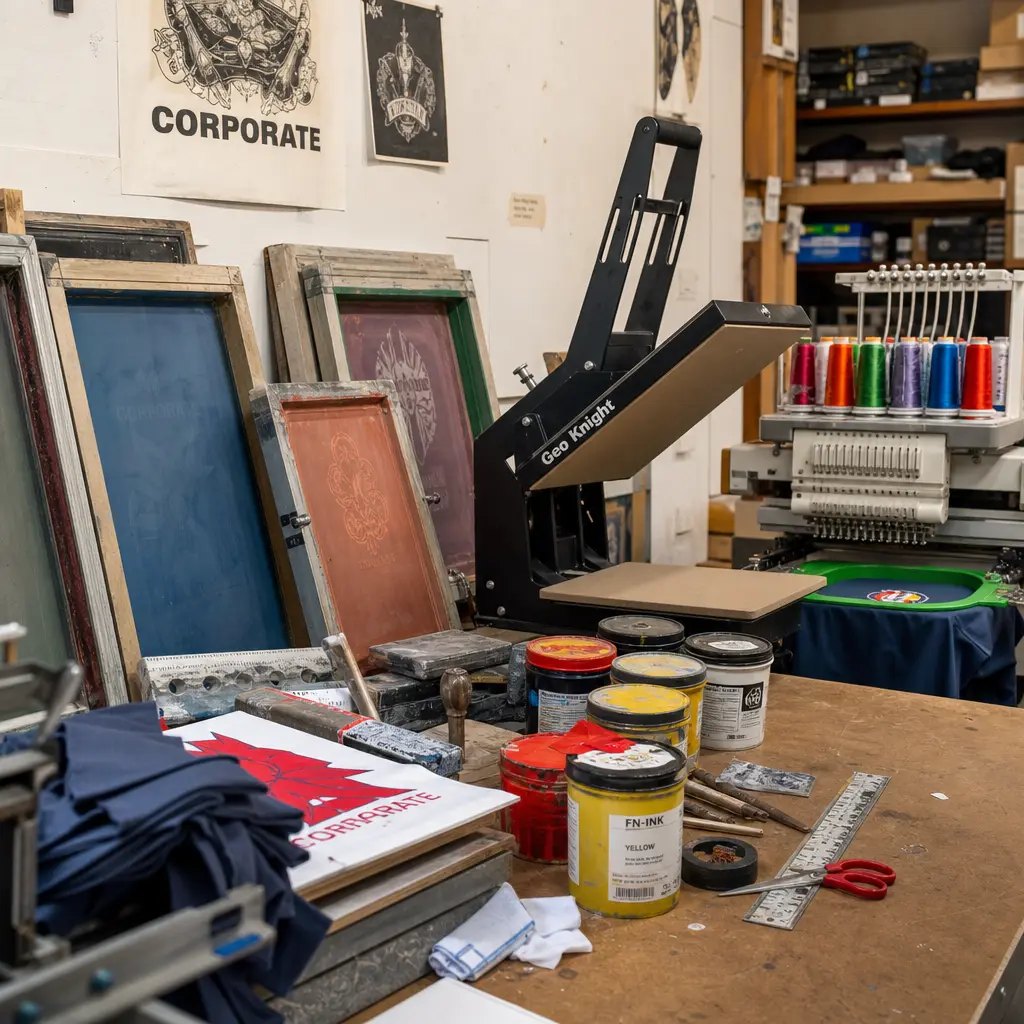
Screen printing is usually the safest method for jute tote bags when the design is a solid bakery logo, simple icon, or short slogan. It works well with one to three spot colors and gives a natural branded look on jute. The limitation is detail. Thin lines, small serif type, dotted borders, flour-dust style textures, and tonal gradients can break or fill in because the ink is landing on an uneven woven surface.
Heat transfer can carry more detail, but it may look less natural on jute and can create a patch-like surface if not specified carefully. Embroidery is possible for small marks but can distort coarse jute and is less efficient for large bakery logos. Woven labels or cotton patch labels are strong alternatives when the artwork has tiny type, delicate crests, or strict brand color requirements. The best proofing decision is sometimes to print less on the jute and move detailed information to a sewn label or hangtag.
- Use screen print for bold logos, bakery names, simple bread icons, and limited-color retail branding.
- Use a sewn cotton patch when the artwork has small type, fine borders, or strict color matching.
- Use a woven side label for subtle brand reinforcement without risking large print defects.
- Avoid photographic artwork, gradients, QR codes, and thin legal text directly on coarse jute unless tested physically.
Set artwork rules that a factory can follow
A print proof should translate brand artwork into production language. Send vector files, not low-resolution screenshots. Define finished logo width and height in millimeters, print location from the finished bag edge, Pantone or spot color references, and whether the print must be centered on the front panel or visually centered after the gusset opens. These details prevent the common argument where the buyer judges by a photo and the factory measures from a different reference point.
For jute, the artwork may need simplification before sampling. Minimum line thickness should be increased, small negative spaces should be opened up, and very light colors should be tested against natural jute before approval. A bakery logo that looks refined on a white paper box can look broken on jute if the letter spacing is too tight. The goal is not to redesign the brand; it is to create a production-safe version for woven natural fabric.
- Keep important logo details at least 25-35 mm away from seams, bottom folds, and handle stitch zones.
- Use darker ink colors when brand rules allow; dark brown, black, green, navy, and burgundy normally read better.
- Specify whether minor jute fibers showing through solid ink are acceptable as part of the natural material effect.
- Create a separate simplified jute-print artwork file instead of forcing paper-packaging artwork onto fabric.
Use physical samples to prevent bulk mistakes
A digital mockup is useful for layout discussion, but it is not enough for jute tote approval. The pre-production sample should use the same jute GSM, lamination, handle type, ink color, print size, and sewing method intended for bulk production. If the factory samples on a different available fabric just to save time, the buyer may approve a result that cannot be repeated in production.
The sample review should include more than a front photo. Open the bag, load it with realistic bakery items, inspect the handle comfort, check whether the print distorts when the bag is filled, and look for creasing after folding. If the bag will be sold in a bakery shop, place it near actual packaging colors under normal store light. Jute shade variation is normal, but the approved sample should define the acceptable overall look.
- Approve one signed physical sample for construction and one clear reference for print color and position.
- Photograph the sample with a ruler showing print size, handle drop, gusset width, and carton folding method.
- Test load with expected items such as bread loaves, pastry boxes, coffee bags, jars, or gift packs.
- Reject samples with unreadable small text, weak handle stitching, uneven mouth binding, or strong chemical odor.
Understand MOQ and cost drivers
MOQ for jute tote bags is driven by material cutting efficiency, print setup, sewing line setup, handle sourcing, and packing labor. A quote for 3,000 pieces of one size and one logo is not equal to a quote for 3,000 pieces split across six bakery branch logos and three handle colors. Each version may require separate screens, separate production control, and more sorting time.
Cost drivers should be visible in the RFQ and quote. Fabric GSM, lamination, bag dimensions, gusset depth, handle material, handle length, number of print colors, print area size, custom labels, inner pockets, carton packing, and inspection requirements can all change the price. Buyers comparing suppliers should request a quote breakdown or at least a clear assumption list. The cheapest quote often excludes something another supplier included.
- Lower cost path: standard size, natural jute, standard cotton handles, one-color screen print, bulk flat packing.
- Higher cost path: custom size, heavy GSM, colored handles, multi-color print, sewn label, individual polybag, stricter inspection.
- MOQ pressure point: many small artwork versions create more setup time than one larger production run.
- Quote comparison rule: do not compare unit price until GSM, print method, packing, and carton data are aligned.
Define acceptance criteria for print proofing
Jute is a natural woven material, so print acceptance cannot be judged like offset paper or coated plastic. Some texture show-through, tiny fiber interruptions, and shade variation are normal. The buyer should define what is acceptable before bulk printing starts. For example, the logo must be readable at one meter, main letterforms must not be broken, print position must stay within the agreed tolerance, and heavy ink smears are not accepted.
Color control also needs practical limits. A Pantone number is a target, but ink on natural jute will appear different than ink on coated paper. The signed sample becomes the real production reference. If exact brand color is critical, the buyer should consider a cotton patch, woven label, or printed cotton panel sewn onto the jute bag. That gives better color control than printing directly onto coarse natural fiber.
- Position tolerance: agree a measurable range from finished edges, not a visual “centered” instruction only.
- Color tolerance: compare against the approved physical sample under the same light source.
- Registration tolerance: avoid tight multi-color artwork where slight movement will be obvious.
- Defect threshold: separate natural jute texture from true defects such as smearing, ghosting, skipped logos, or wrong placement.
Plan packing around ink, moisture, and shape
Packing is often treated as an afterthought, but it can ruin a good print run. Jute absorbs moisture, laminated panels can crease, and fresh ink can transfer if bags are stacked too early or compressed too tightly. The packing method should be confirmed during sample approval, especially if the front logo must remain clean for retail sale.
Flat packing in export cartons is usually efficient, but the buyer should decide whether bags may be folded, whether tissue or separation sheets are required, and how many pieces go into each carton. Individual polybags protect retail presentation but add material, labor, carton volume, and sometimes sustainability objections. For bakery distribution, carton-level packing with clean internal protection is often enough unless the bag is sold as a premium retail item.
- Require dry cartons and inner moisture protection for ocean shipments or humid storage routes.
- Confirm print drying time before packing, especially for large solid logos or dark ink coverage.
- Request carton dimensions, gross weight, net weight, and pieces per carton for freight calculation.
- Avoid over-compressed cartons that create permanent creases across laminated jute panels.
Build a realistic production schedule
A safe schedule starts before the purchase order. Artwork review, material confirmation, sample production, sample shipment, buyer approval, material booking, cutting, printing, drying, sewing, trimming, inspection, packing, and export documentation all need time. If a bakery wants bags for a seasonal launch, farmers market opening, holiday hamper program, or franchise rollout, the approval path must be locked early.
Lead time varies by quantity, season, customization level, and factory workload, so buyers should avoid assuming that a previous cotton tote schedule applies to jute. Jute material availability, lamination, and print drying can affect the calendar. Rush orders can be possible, but they narrow the time available for sample revision and QC. The worst schedule decision is skipping the physical proof to save a week, then losing several weeks to rejected bulk goods.
- Allow time for one sample revision if the logo has small type, multiple colors, or unusual placement.
- Freeze artwork before material cutting; late logo changes can waste printed panels or screens.
- Book inspection after bulk packing but before final shipment release.
- Give the factory the required delivery date and the shipment method so production and logistics can be planned together.
Compare quotes by landed cost, not unit price only
For importers and distributors, the unit price on a jute tote bag is only one part of the buying decision. Heavier GSM, larger gussets, individual packing, and lower pieces per carton can raise freight cost. A bag that is cheaper by a few cents may become more expensive after cubic meters, handling, repacking, or defect sorting are included.
A useful comparison sheet should include ex-factory price, tooling or screen cost, sample cost, pieces per carton, carton size, gross weight, total CBM, expected defect allowance, payment terms, production lead time, and whether inspection support is included. When two suppliers quote different specifications, normalize the product first. Otherwise the buyer may select a supplier based on a low number that reflects a lighter fabric, smaller print, weaker handle, or less protective packing.
- Calculate freight using actual carton dimensions, not estimated bag weight alone.
- Compare how many retail-ready units arrive without repacking, cleaning, or relabeling.
- Include extra costs for artwork screens, custom labels, sample shipping, inspection, and urgent courier approval.
- Treat missing quote data as risk; a complete quote is usually more useful than a very low incomplete price.
Specification comparison for buyers
| Spec decision | Recommended option | When it fits | Buyer risk to check |
|---|---|---|---|
| Jute fabric weight | 320-380 GSM natural jute for most bakery retail totes | Good balance for bread, pastry boxes, jars, and light grocery use without making the bag too stiff | Below 300 GSM can look loose and transparent; above 400 GSM raises freight weight and may wrinkle more in packing |
| Inner structure | Laminated jute with PE or PP backing when crumbs, moisture, or grease contact is likely | Useful for bakery counters, farmers markets, gift sets, and reusable retail packaging | Laminate can change hand feel and folding behavior; proof both print and fold marks before bulk approval |
| Print method | Screen print for solid logos and limited-color bakery artwork | Best for rustic marks, one to three spot colors, and medium to large print areas on coarse jute | Fine serif fonts, thin borders, and gradients may fill in or break on the jute weave |
| Logo color | Dark brown, black, forest green, or deep burgundy spot colors | Fits bakery branding and covers better on natural tan jute | Light cream, gold, and pastel inks may lose contrast unless a base layer or alternate label is used |
| Handle choice | Cotton webbing handles stitched with box reinforcement | More comfortable for shoppers than rope when carrying bread, coffee, jars, or gift bundles | Handle color must be approved under the same light source as the logo; natural cotton lots vary |
| Artwork placement | Logo centered with at least 25-35 mm margin from seams, bottom fold, and handle stitch area | Reduces distortion from side gussets, seam ridges, and operator alignment variation | Artwork too close to seams often looks tilted after the bag is filled |
| MOQ logic | Start from factory MOQ by bag size, print color count, and handle material, not only total quantity | Works for bakery chains, regional distributors, and seasonal retail programs | Splitting many artwork versions can push each SKU below efficient cutting and printing quantity |
| Packing method | Flat packed in export cartons with moisture protection and print-facing separation where needed | Keeps freight efficient and protects ink surface during ocean or air transit | Over-compression can crease laminated jute and transfer uncured ink if packing starts too soon |
Buyer checklist before sampling
- Define bag size as finished width, height, gusset, handle drop, and usable internal capacity, not only a visual reference photo.
- Specify jute GSM, laminate requirement, handle material, handle width, stitch type, and whether the bag must stand when filled.
- Send vector artwork with Pantone or spot color references, minimum line thickness, logo size, and exact print position from bag edges.
- Approve a physical pre-production sample on the same jute quality, same handle, same ink system, and same packing fold as bulk production.
- Set realistic print tolerances for jute: minor weave show-through is acceptable, but broken logo edges, heavy smearing, and visible misregistration are not.
- Confirm MOQ by SKU, print version, handle color, and carton mark requirement before comparing quotes.
- Require carton dimensions, gross weight, pieces per carton, and packing method so freight and warehouse teams can calculate landed cost.
- Reserve time for artwork proof, material booking, sample revision, bulk cutting, print drying, sewing, final inspection, and export documentation.
- State whether the bag will contact unpackaged food directly; if yes, request a different construction discussion rather than assuming standard jute is suitable.
- Record approved sample photos, signed sample tags, color references, and any allowed deviations before releasing the purchase order.
Factory quote questions to send
- What jute GSM and laminate type are included in your quote, and can you provide a cut swatch before sample production?
- Is the quoted price based on screen print, heat transfer, woven label, or another branding method, and how many print colors are included?
- What is the MOQ per bag size, per artwork, and per handle color, and what surcharge applies below standard production quantity?
- What print tolerance do you apply for position, color shade, registration, and small text on coarse jute fabric?
- How many days are required for artwork proof, physical sample, sample revision, bulk production, and final packing after deposit and approval?
- What are the carton dimensions, pieces per carton, gross weight, and expected cubic meters for the quoted quantity?
- Will bags be flat packed, folded, or nested, and how will you prevent ink transfer, moisture absorption, and crushed corners?
- Which quality checks are performed before shipment, and can inspection photos show print clarity, seam strength, handle pull, carton marks, and random packed cartons?
- Are spare bags included for inspection replacement, and how are defects handled if the failure is print-related versus sewing-related?
- What quote assumptions would change the unit price, such as larger artwork, extra ink colors, colored handles, custom labels, inner pockets, or rush lead time?
Quality-control points to confirm
- Finished size tolerance should usually stay within about plus or minus 5 mm for width and height and plus or minus 8 mm for gusset on sewn jute bags.
- Print position should be measured from fixed finished bag edges, with a practical tolerance agreed before production, often around plus or minus 5-8 mm depending on artwork size.
- Logo edges should remain readable at normal retail viewing distance; reject heavy smearing, double images, skipped ink patches, and severe weave contamination.
- Handle attachment should use reinforced stitching with no open seams, broken threads, or loose tails in the load-bearing area.
- Color approval should compare the production print against the signed sample under consistent daylight or lightbox conditions, not against a backlit phone image.
- Laminated jute should not show major delamination, bubbling, sharp cracked folds, or loose film at the mouth and bottom seam.
- Cartons should be dry, clean, export-grade, and marked with SKU, quantity, carton number, gross weight, and buyer reference.
- Random packed-carton inspection should verify that the approved packing method is actually used after bulk sewing and not changed at the last minute.