RFQ Purpose for Bakery Jute Totes
A good RFQ for custom jute tote bags should remove guesswork from the factory quotation. Bakery buyers often request a natural jute tote with logo, but that phrase can describe a stock promotional bag, a heavy retail bag, a laminated grocery tote, or a gift hamper carrier. Each version uses different material, sewing time, print handling, carton volume, and quality controls.
For artisan bakeries, the buying problem is usually not only the bag price. The bag must fit bread boxes, pastry cartons, coffee packs, and seasonal gift bundles without looking collapsed at the counter. It must also carry weight safely, protect the brand print, and arrive in cartons that your warehouse or distributor can receive without repacking.
- Define the use case before asking for price: retail resale, gift-with-purchase, bread carryout, wholesale distributor program, or event merchandise.
- List the products that must fit, including box dimensions and expected load weight.
- Avoid one-line RFQs such as natural jute tote with logo; this usually creates non-comparable supplier quotes.
Bag Size and Capacity
Bag size should be built around the bakery product, not copied from a catalog. A sourdough loaf, a cake box, and a pastry assortment need different base depth and opening width. If the base is too narrow, the carton tilts and crushes corners. If the bag is too tall, the product sinks and the branding looks badly positioned during hand carry.
A practical starting point is to measure the largest bakery box and add handling allowance. For a box that must remain flat, the internal base should exceed the box footprint by enough space for easy insertion. For mixed retail items, a deeper gusset gives better shelf presentation and reduces pressure on seams.
- For boxed pastry sets, provide the exact box length, width, and height, not only the desired bag size.
- For bread loaves or baguette packs, specify whether the product is loose wrapped, boxed, or sleeved.
- For gift hampers, state if the bag must stand upright when filled and whether a bottom insert is required.
- For shoulder carry, separate handle drop from total handle length; these are often confused in supplier quotes.
Jute GSM and Fabric Construction
Jute tote pricing is strongly affected by fabric weight and weave consistency. For bakery retail use, a common practical range is around 270-320 GSM. Below this range, the bag may feel thin and lose shape when loaded. Above this range, the bag can look premium but becomes bulkier in cartons and may raise freight cost.
Natural jute has color and slub variation, which is part of its appeal, but the RFQ should still define what is unacceptable. Large holes, heavy dark streaks, oil stains, mildew smell, and broken yarn clusters are not normal rustic character. If a buyer needs a cleaner look, request fabric swatch photos or a material sample before approving mass production.
- Quote jute GSM as a target range, not simply light, medium, or heavy.
- State whether natural jute shade variation is acceptable within cartons.
- Define unacceptable defects such as mildew odor, oil stains, broken weave, or large dark patches.
- Request the supplier to confirm whether fabric is newly produced or taken from existing stock rolls.
Lamination Choice
Unlaminated jute gives a softer, more natural bakery feel and works well for rustic retail branding. It is also easier to position as a reusable natural fiber bag, provided the buyer avoids exaggerated sustainability claims. The tradeoff is less structure, less moisture resistance, and more risk of loose fibers contacting packaged goods.
Light PP lamination adds body and helps the bag stand up on a retail counter. It also provides a smoother inner surface and can improve print handling in some constructions. However, lamination changes the material story, may add odor if poorly cured or packed damp, and can show white crease marks if cartons are over-compressed.
- Use unlaminated jute when brand texture and natural hand feel matter more than structure.
- Use laminated jute when the bag must stand upright, resist minor moisture, or hold boxed products neatly.
- Require odor and delamination checks if choosing laminated construction.
- Avoid making recyclability or compostability claims unless your compliance team has verified the full bag construction.
Handle and Sewing Specification
Handle failure is one of the most common avoidable problems in bakery tote orders. The jute body may be strong enough, but weak stitching or a narrow handle can fail when the customer carries bread, jars, coffee, and gift items together. Cotton webbing is often a better choice for premium bakery use because it feels softer in the hand and photographs better for retail displays.
The RFQ should state handle material, width, color, drop length, attachment style, and reinforcement. A bag intended for shoulder carry needs a different drop from a hand-carry gift bag. Cross-stitching, box stitching, or bar-tack reinforcement should be agreed before sampling, not added after a failed inspection.
- For hand carry, define a comfortable handle drop based on the filled bag height.
- For shoulder carry, confirm the drop using a physical sample with the intended load.
- Specify cotton webbing width if hand comfort is part of the retail positioning.
- Set a basic pull test requirement so the supplier knows handle strength is not optional.
Logo Printing on Coarse Jute
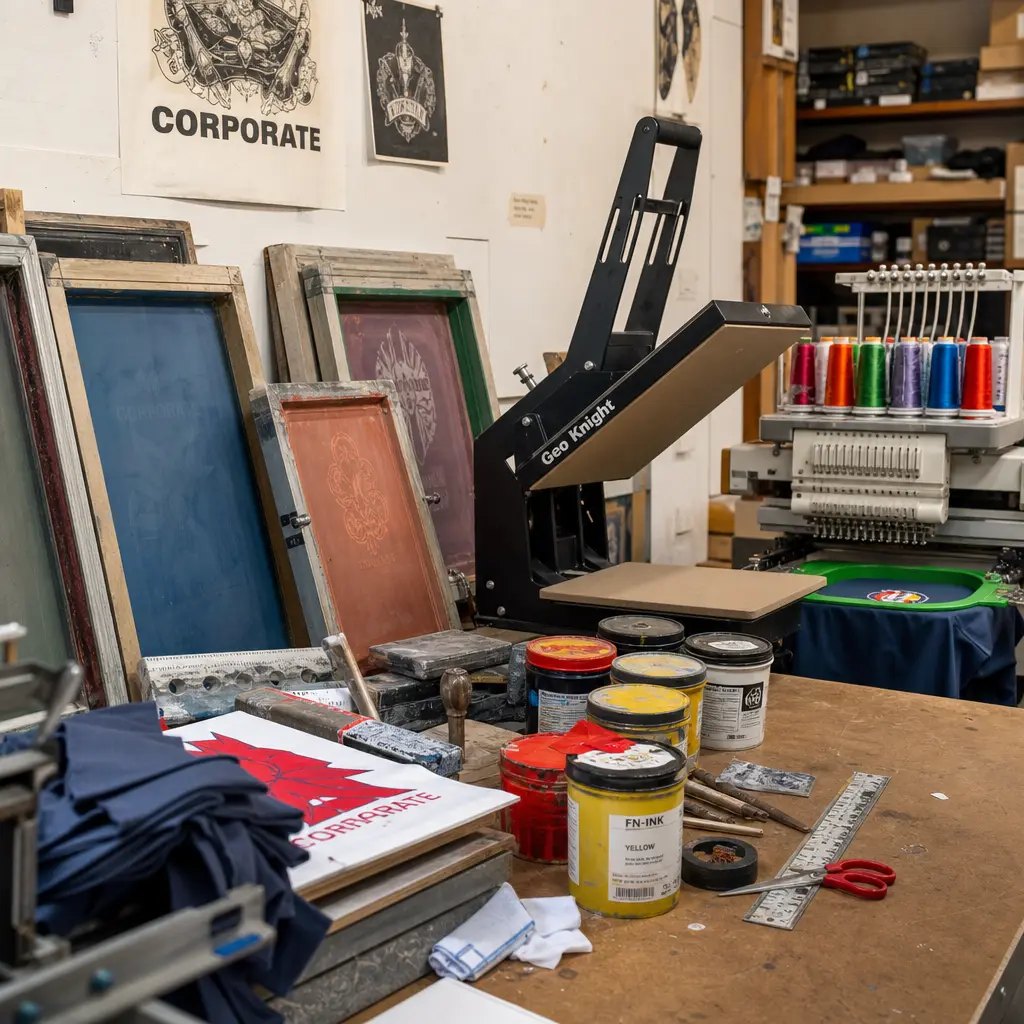
Jute is not a smooth cotton canvas, so artwork must be adapted to the weave. Screen printing is usually the most practical option for bold bakery logos, simple line drawings, and one to three color graphics. Fine serif fonts, tiny ingredient text, gradients, and small registration gaps may fill in or look broken because the yarn surface is uneven.
The RFQ should include vector artwork, Pantone references, actual print size, placement from top and side edges, and whether the print must appear on one side or two sides. If the brand color is critical, approve a printed strike-off rather than judging from a digital mockup. Digital previews cannot show ink absorption and edge behavior on natural jute.
- Keep minimum line thickness realistic for coarse jute; very fine artwork should be simplified.
- Use Pantone references but allow an agreed tolerance because jute background color affects the result.
- Mark print placement with measurements from fixed bag edges, not only a visual screenshot.
- For two-sided printing, confirm whether both panels are printed before sewing or after sewing.
MOQ and Cost Drivers
MOQ depends on more than the number of printed bags. A supplier may offer a low MOQ by printing on stock bags, but custom size, custom handle color, heavy GSM, lamination, and special carton marks can each create separate minimums. This is why two quotes for 500 pieces can differ widely even when the headline product name looks the same.
Buyers should compare the full cost structure: bag body, printing setup, handle upgrade, sample fee, carton packing, inland freight, export handling, and shipping volume. Jute bags are bulky, so carton dimensions can affect landed cost as much as a small unit price difference. A cheaper bag packed inefficiently may cost more after freight.
- Ask whether the quote is for stock-size bags or fully custom production.
- Separate unit price from setup charges, sample charges, and freight-sensitive packing data.
- Compare pieces per carton, carton size, gross weight, and estimated CBM.
- For distributor programs, request price breaks at trial, first production, and replenishment quantities.
Sample Approval Workflow
Sampling should match the risk level of the order. If the buyer is only adding a one-color logo to a proven stock bag, a printed strike-off plus stock sample may be enough. If the order uses a custom size, custom handle, lamination, and new print placement, a full pre-production sample is the safer route.
The sample approval should be written like a production standard. Approve or reject based on measurable points: finished size, handle drop, print size, print position, fabric weight, lamination, stitch pattern, and packing fold. A sample that looks good in a photo can still be wrong if the bag is too narrow for the bakery box or if the handle drop is uncomfortable.
- Request material swatch photos before paying for a custom sample if jute shade matters.
- Measure the sample with actual bakery boxes and expected product weight.
- Keep one approved sample with the buyer and one sealed approval sample with the factory.
- Record all deviations in writing before mass production starts.
Packing and Export Handling
Packing affects bag shape, print condition, odor risk, and warehouse receiving. Jute bags should be dry before packing and protected from moisture during export. For laminated bags, excessive compression can create fold marks or panel deformation. For printed bags, ink should be fully cured before stacking to avoid transfer marks.
A serious RFQ includes pieces per polybag if used, pieces per master carton, carton dimensions, gross weight, carton marks, barcode needs, and pallet requirements if applicable. Retail buyers and distributors should also specify whether cartons must be mixed by design, separated by SKU, or labeled for direct store allocation.
- Require cartons strong enough for export stacking without crushing the bottom bags.
- Specify moisture protection without overusing plastic if your packaging policy restricts it.
- Define SKU, PO number, quantity, and carton sequence marks for warehouse receiving.
- Request final packing photos before shipment when the order is new or seasonal.
Lead Time and Schedule Risk
Lead time is not only sewing time. It includes artwork checking, material sourcing, sample making, sample courier time, buyer approval, bulk fabric cutting, printing, curing, sewing, inspection, packing, and booking shipment. For bakery seasonal programs, the approval delay is often the biggest hidden risk because production cannot safely begin until size and print are locked.
The RFQ should separate sample lead time from production lead time and identify peak-season constraints. If the buyer needs delivery before holidays, markets, or franchise openings, the supplier should know the final in-warehouse date, not only the desired ship date. Importers should build in inspection and possible rework time rather than assuming the first production lot will be perfect.
- Provide the required delivery date at destination, not only the order date.
- Lock artwork, bag size, and handle specification before requesting final lead time.
- Allow time for sample courier transit and internal buyer approval.
- For repeat orders, reserve fabric and print capacity earlier if the bakery season is predictable.
Specification comparison for buyers
| Spec decision | Recommended option | When it fits | Buyer risk to check |
|---|---|---|---|
| Main jute fabric weight | Around 270-320 GSM natural jute with consistent weave | Retail bakery totes, gift packs, farmers market sales, and reusable customer bags | Very light jute can sag under bread boxes; very heavy jute increases freight and may look rough if weave is uneven |
| Inner structure | Unlaminated jute for breathable bakery positioning, or light PP lamination for shape and moisture resistance | Unlaminated fits rustic bakery branding; laminated fits grocery, chilled counters, or bags packed near damp cartons | Lamination changes hand feel, recyclability claims, odor, print adhesion, and fold marks |
| Bag size | Medium grocery tote around 35 x 30 x 15 cm, adjusted to actual bakery box dimensions | Works for sourdough loaves, pastry boxes, coffee packs, and retail add-on items | A bag quoted from a generic size may not fit your cake box or baguette sleeve without crushing corners |
| Handle material | Cotton webbing or padded cotton rope with reinforced cross-stitching | Better hand feel for premium bakeries and heavier retail use than thin jute handles | Handle drop must match shoulder or hand carry use; weak stitching fails before the jute body |
| Logo method | Screen print for bold one to three color logos; heat transfer only for detailed artwork on laminated panels | Screen print suits bakery marks, slogans, and simple ingredient-style graphics | Fine serif text and halftones can fill in on coarse jute; confirm artwork at actual print size |
| Side gusset and base | Full side and bottom gusset with optional bottom insert for gift packs | Needed when the bag must stand upright at retail or carry multiple boxed items | A flat tote may quote cheaper but performs poorly for boxed bakery products |
| MOQ logic | Separate MOQ for plain stock color, custom size, custom handle, and custom print colors | Helps compare a 500-piece trial against a 2,000-piece distributor replenishment order | Some low MOQ offers use stock bags with limited control over size, weave, and sewing tolerance |
| Export packing | Flat packed in master cartons with moisture protection, barcode or carton marks as required | Suitable for importers, distributors, and retail buyers receiving into warehouse systems | Over-compressed cartons deform laminated bags; poor moisture control can cause odor or mildew risk |
Buyer checklist before sampling
- State the exact bakery use: retail merchandise, bread carry bag, gift hamper, market stall packaging, or distributor resale.
- Provide dimensions of the largest product or box that must fit, including height, width, depth, and whether it must remain upright.
- Specify jute GSM target, lamination preference, handle material, handle drop, gusset size, and any bottom board requirement.
- Send artwork as vector files with Pantone references and mark the required print size and placement from bag edges.
- Define acceptable color tolerance for natural jute variation and print color, especially for brand-critical logo colors.
- Request pre-production sample photos and at least one physical sample before mass production if the order uses new size, print, or handle construction.
- Require carton dimensions, gross weight, net weight, pieces per carton, packing method, and moisture protection in the quotation.
- Set inspection criteria for size tolerance, print registration, handle pull strength, stitch density, odor, stains, and carton labeling.
Factory quote questions to send
- Is the quoted bag made from custom production or an existing stock jute tote with added logo printing?
- What is the exact jute GSM, fabric composition, and lamination type if any?
- What are the finished bag dimensions, gusset depth, handle drop, and expected sewing tolerance?
- Which print method is included in the price, how many colors are included, and what is the maximum print area?
- What artwork file type, line thickness, and minimum font size do you need for clean printing on jute?
- What is the MOQ for the bag body, handle color, lamination, print setup, and carton customization?
- What sample options are available: blank material sample, printed strike-off, full pre-production sample, and paid courier sample?
- What are the production lead time, sampling lead time, and realistic peak-season capacity for repeat orders?
- How will the bags be packed, protected from moisture, and marked for export or distributor warehouse receiving?
- Which quality checks are performed before shipment, and can photos or inspection reports be provided by lot?
Quality-control points to confirm
- Finished dimensions should stay within agreed tolerance, commonly plus or minus 1 cm for body size and plus or minus 0.5 cm for handle drop unless tighter tolerance is approved.
- Jute fabric should be free from large holes, heavy oil stains, mildew odor, broken yarn clusters, and obvious color mismatch within the same carton.
- Handle attachment should use reinforced stitching with no skipped stitches, loose thread nests, or tearing at the seam after a reasonable pull test.
- Screen print should have clean edges for the approved artwork, acceptable opacity, correct placement, and no major ink bleeding into the jute weave.
- Laminated bags should show no serious bubbling, peeling, delamination, sharp creases, or odor from trapped moisture.
- Cartons should match the approved packing plan with correct quantity, carton marks, barcode labels if required, and no over-compression of bag bodies.