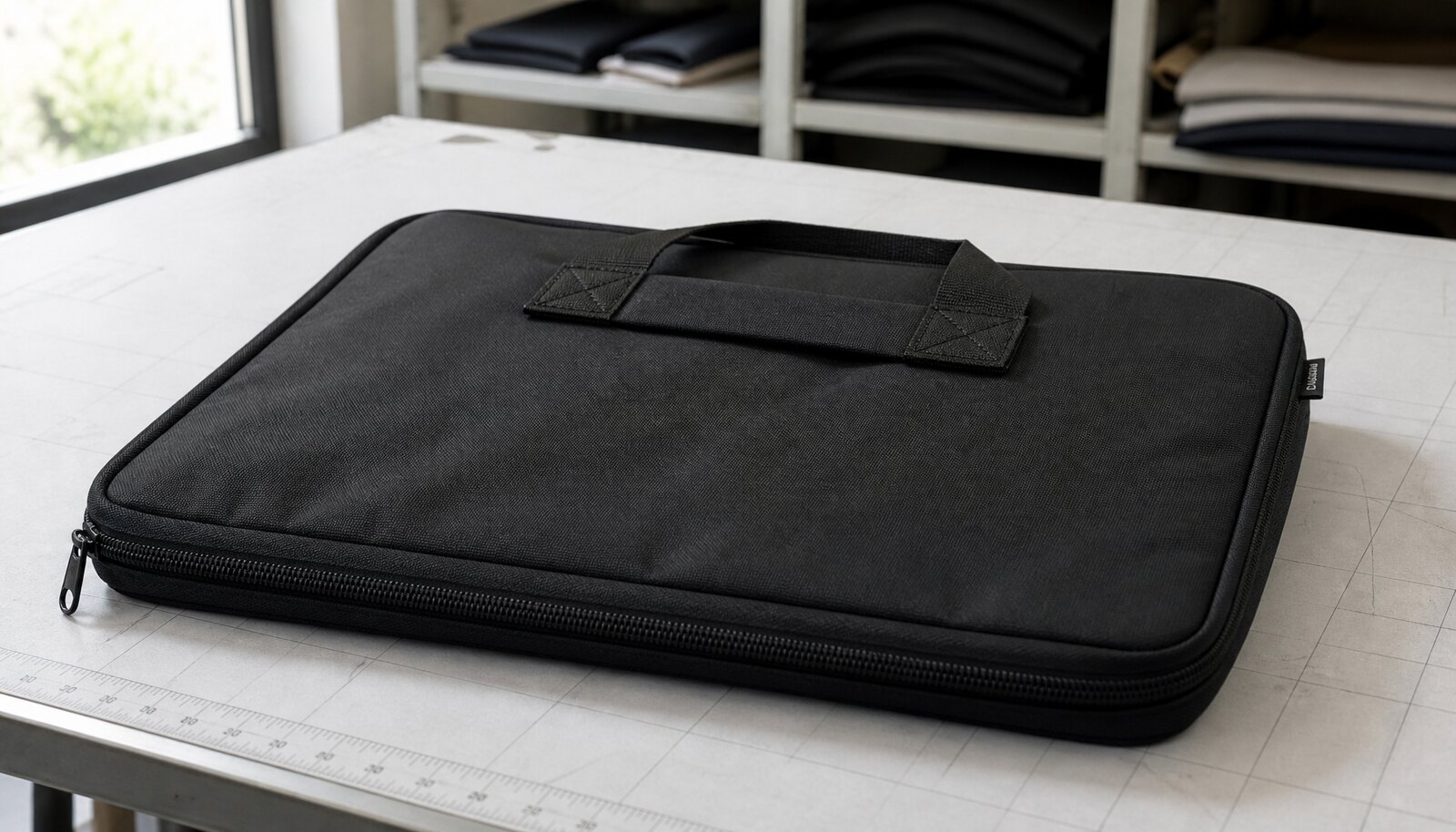
Why ecommerce buyers need a tighter spec for zippered portfolio bags
Zippered portfolio bags for ecommerce sit in a difficult middle ground. They are not just simple document holders, and they are not fully rigid briefcases either. A buyer has to balance visual appeal in product photos, protection for documents or tablets, shipping weight, and a price point that still leaves margin after freight and fulfillment. That is why vague specs cause trouble fast: one supplier quotes a light promotional pouch, another quotes a padded business bag, and both call it a portfolio bag.
For ecommerce, the problem is usually not the bag shape itself. The issue is consistency. If the zipper drags, the body collapses, or the logo print looks weak in hand, returns and review complaints follow. A useful RFQ should define the bag like a working product, not a marketing item: exact size, fabric weight, structure, closure, logo method, packing, and the carton plan. That is the baseline for comparing quotes fairly.
- Do not rely on the phrase “portfolio bag” alone; specify document size, tablet size, or kit contents.
- State whether the bag must stand upright, stay flat, or fit into a shipping mailer.
- Use photos with measurements or a reference sample when possible.
Choose the construction first: flat, padded, or semi-structured
Most sourcing mistakes happen when the buyer chooses decoration before construction. For portfolio bags, construction decides the cost profile. A flat unpadded bag is lighter and cheaper, but it looks more like a sleeve. A padded version with 3–5 mm foam gives better shape and a more professional feel, but it increases sewing steps and carton volume. A semi-structured version with board inserts or a reinforced base looks closer to a presentation bag and can support higher ecommerce pricing.
The right route depends on how the end customer uses the bag. If the bag is for sales teams, conferences, or branded kits, a semi-structured body often justifies the extra cost. If it is for document carry or low-price ecommerce bundles, a lighter body with a clean zipper and reinforced corners may be enough. The buyer should decide the product role before asking for quotes, because suppliers will price very differently once foam, piping, or board inserts enter the build.
- Flat build: lower cost, lower weight, less protection.
- Padded build: better photo appearance, better perceived value, higher material and labor cost.
- Semi-structured build: best presentation, but higher MOQ pressure and higher carton volume.
Fabric weight, lining, and zipper grade drive more cost than the logo
For many buyers, the logo gets all the attention and the bag body gets under-specified. That is a mistake. In this category, fabric weight and hardware matter more than the decoration method. Common outer fabric options include 600D polyester for a sturdy mainstream build, or 300D to 420D nylon for a lighter bag with a smoother surface. If you want a premium hand feel for ecommerce photography, a tighter weave and cleaner coating often matter as much as the nominal denier.
The zipper is the second major cost and quality lever. A #5 nylon coil zipper is a practical default for most portfolio bags. If the bag is larger, heavier, or expected to open and close frequently, a #8 may be safer. Thin zipper tape, rough pullers, and poor end-stop sewing create the complaints that show up in customer reviews. A buyer should request zipper brand or at least zipper size, tooth type, and puller finish in the quote.
- Outer fabric examples: 600D polyester, 300D nylon, 420D nylon, or canvas-style constructions for a more premium look.
- Ask for lining if the bag carries electronics, paperwork, or printed inserts that must not snag.
- If the supplier cannot identify zipper size and type, the quote is not ready for comparison.
How print method changes price, appearance, and rejection risk
For ecommerce, print method is not just branding; it is part of the perceived quality. Silk screen is usually the cleanest option for a simple one- or two-color logo on a smooth surface. It is efficient at moderate to high volumes and usually gives strong opacity. Heat transfer works better when the artwork has more detail, small text, or multiple colors, but it must be tested for edge lift and rub resistance. Embroidery gives a premium business-bag look, but it adds stitch density issues, backing material, and potential fabric puckering.
A buyer should pick the decoration method based on artwork complexity and sales channel. For B2B resale or private label ecommerce, a simple centered logo in one color often sells better and is easier to repeat accurately. Thin fonts, gradients, and tiny legal text are the most common sources of problems. The factory should receive vector artwork plus a placement sheet that defines size, distance from the zipper, and acceptable tolerance. Without that, sample approval becomes subjective and bulk production will drift.
- Screen print: best for simple logos and strong contrast.
- Heat transfer: useful for detailed designs, but needs rub and wash testing where relevant.
- Embroidery: premium look, but can distort thin fabric if backing is not balanced.
What a usable MOQ looks like for ecommerce launches
MOQ should not be treated as a fixed number without context. For zippered portfolio bags, MOQ is often driven by fabric color setup, print setup, zipper sourcing, and whether the supplier needs to reserve a sewing line. A simple black or navy bag with one-color print may fit a lower MOQ than a custom color body with branded zipper puller and full lining. If the order includes multiple SKUs, the supplier may split material usage across more than one lot, which raises the practical MOQ even when the formal MOQ looks low.
For ecommerce testing, a workable production range is often 1,000 to 3,000 pieces per style for a custom build, though some factories can support smaller runs if they already stock the fabric and hardware. Lower quantities may be possible, but the buyer should expect a higher unit cost and less flexibility on exact trim or packing. The real question is not whether a supplier can do a small order; it is whether the small order still matches the quality you want after all setup costs are spread across fewer units.
- Single color, simple logo, standard zipper: best chance for lower MOQ.
- Custom fabric color, special lining, or molded puller: higher MOQ or higher unit price.
- Multiple SKUs under one PO can still create material mixing risk if the factory is not organized.
Use a sample sequence that exposes mistakes before bulk
A flat photo approval is not enough in this category. Zippered portfolio bags need hands-on sampling because the issues are tactile and structural. Start with a blank sample to confirm shape, zipper movement, and panel alignment. Then review a decorated sample for print location, contrast, and any distortion caused by stitching or heat. If the order is meaningful, request a pre-production sample made with the exact materials, zipper, and artwork that will go into bulk.
The best sample review is specific. Measure the bag length, height, and depth. Open and close the zipper several times. Check whether the bag sits flat, stands up, or caves in at the corners. Look at the handle attachment points and the inside seam finish. If the sample has a logo, compare it to an approved artwork sheet rather than memory. Buyers lose control when sample approval is based on vague comments like “looks fine” or “slightly bigger is okay.”
- Blank sample: confirms dimensions, zipper quality, and build shape.
- Printed sample: confirms color, placement, and edge quality.
- Pre-production sample: confirms the exact bulk setup and is the real approval gate.
Quote comparison should include carton weight, not just unit price
Unit price is only one piece of the landed-cost picture. For ecommerce, carton size and gross weight can change the freight total enough to wipe out a seemingly better quote. A well-built portfolio bag with foam and a sturdy zipper may have a higher unit cost but lower complaint risk and a cleaner presentation. A thinner bag may cost less ex-factory but require more packing protection or create more damage during transit. Buyers should compare quotes on the same basis: construction, decoration, packing, incoterm, and expected carton data.
A practical quote breakdown should show fabric, lining, zipper, foam or insert, print, labor, packing, and export carton cost. If the supplier only gives one unit number, the quote is incomplete. Also watch for hidden changes in carton quantity. A supplier may improve the unit price by packing more pieces per carton, but if that causes crushing or zipper pressure, the savings are false. For ecommerce, presentation on arrival matters as much as manufacturing cost.
- Compare EXW with freight separately, or compare FOB with your own freight assumptions.
- Request carton dimensions and gross weight before PO finalization.
- Use the same artwork, same fabric, and same packing standard across all suppliers when comparing.
Supplier evidence matters more than a polished sales reply
The best supplier is not always the one with the slickest quotation. For zippered business bags, you want proof that the factory regularly handles structured sewing, zipper alignment, and logo application at volume. Ask for photos of current production, especially close-ups of seam intersections, zipper ends, and handle reinforcement. A useful factory should be able to explain which steps are in-house and which are outsourced, because outsourced decoration or insert work often affects lead time and consistency.
If the supplier claims they can do everything, that is not automatically a plus. What matters is control. A factory that can show sample-room development, cut-and-sew discipline, and pre-shipment inspection records is generally safer than a trading response with broad promises. When a buyer is sourcing for ecommerce, repeatability is worth more than novelty. Look for evidence that the factory can reproduce the same logo location, zipper feel, and carton standard across repeat orders.
- Close-up production photos are more useful than lifestyle images.
- A real quote should state where printing and final QC happen.
- Repeat-order consistency is a sourcing advantage for ecommerce brands.
Packing and shipping details that protect ecommerce margins
Packing decisions affect both damage rate and warehouse labor. Zippered portfolio bags often ship best in individual polybags with a simple size label or barcode sticker, then packed into master cartons with consistent counts. If the bag has a structured face or padded body, the supplier should protect the surface from zipper pulls and rubbing with a light insert or tissue layer. Overpacking can crush the body; underpacking can cause scuffed logo prints and bent corners.
For ecommerce, buyers should also decide whether the product ships as a standalone bag or inside a branded outer sleeve. The outer sleeve can lift the presentation value, but it adds cost and can increase pack-out time. If the bag will be fulfilled from a warehouse with strict carton receiving rules, make sure the supplier marks cartons clearly with style number, color, quantity, and gross/net weight. Mislabeling at carton level is a common cause of receiving delays.
- Each piece should be protected from zipper abrasion during transit.
- Carton marks should match the PO style code exactly.
- If retail hangtags are required, include them in the packing quote upfront.
Lead time risk is usually in materials, not sewing
Many buyers assume sewing time is the bottleneck. In practice, the delay often comes from fabric reservation, zipper sourcing, print scheduling, or approval loops. A simple run may move quickly once all components are in house, but custom color or custom logo work can add several handoffs. That is why lead time should be quoted from sample approval or deposit confirmation only after all technical details are locked. If the factory starts work before artwork or packing is final, the schedule may appear short but the risk moves into rework.
A realistic sourcing plan includes a buffer for sample revisions and final inspection. If the bag has multiple panels, contrast binding, or a zipper pocket, the first production run should be watched carefully because sewing order mistakes can multiply quickly. Buyers with fixed launch dates should avoid changing zipper color, logo placement, or carton pack count after sample approval unless they are willing to pay for delay and rework. In this category, small changes create real production consequences.
- The critical path is usually fabric, zipper, decoration, and final packing approval.
- Changes after sample signoff often affect both lead time and unit price.
- Build in time for pre-shipment inspection and any corrective action.
Specification comparison for buyers
| Spec decision | Recommended option | When it fits | Buyer risk to check |
|---|---|---|---|
| Supplier route | Direct factory with zipper-bag experience | Best for private label ecommerce, custom print, and stable repeat orders | Weak zipper alignment, poor binding control, or no proof they sew structured bags regularly |
| Outer fabric | 600D polyester or 300D–420D nylon for lighter positioning | Use 600D when you need shape retention and a more premium hand feel; use lighter nylon when weight matters for shipping | Too-light fabric can wrinkle, sag, and make the bag look cheap after packing |
| Structure | Padded body with 3–5 mm foam or no foam with board insert | Fits laptops, documents, and sales kits where the bag must stand up and protect contents | Over-padding raises cost and shipping weight; under-padding can cause poor form and complaints |
| Print method | Silk screen for simple logos; heat transfer or embroidery for detailed branding | Best depends on artwork complexity, order size, and the look you want on ecommerce photos | Fine gradients, small text, or thin lines may fail on screen print or look weak after rubbing |
| Closure style | Full zipper with #5 nylon coil for mainstream use; #8 if the bag is heavier or larger | Good for portfolio bags that carry catalogs, tablets, and paperwork through repeated daily use | Cheap zippers create jam risk and generate the highest complaint rate on business bags |
| MOQ strategy | 1,000–3,000 pcs for custom production; lower only if supplier has ready fabric and simple branding | Fits ecommerce tests, distributor launches, or seasonal campaigns with controlled colorways | Low MOQ can hide higher unit cost, weaker customization, or partial material substitution |
| Packing route | Each piece polybagged with carton quantity and master carton marks | Suitable for FBA, DTC, and distributor receiving teams that need clean intake and count control | Loose packing can scuff logos, distort shape, and increase warehouse labor |
| Sample approval | Pre-production sample with print, zipper, handle, and stitch approval before bulk | Essential when artwork placement, pocket layout, and zipper movement matter | Do not approve from photos only; color, sewing tension, and zipper feel often differ in hand |
| Landed-cost route | Compare EXW, FOB, and delivered-to-warehouse with cartonized weight | Needed when freight share is high versus product value or when buying for ecommerce margin control | Ignoring carton size and volumetric weight can make a low unit quote more expensive overall |
Buyer checklist before sampling
- Define the exact use case: document carry, laptop protection, client presentation, or retail resale packaging.
- Lock bag size, zipper length, pocket count, handle style, and any foam or board insert requirement before quoting.
- Specify fabric weight in GSM or denier, not just the fabric name, so suppliers do not downgrade material.
- State logo method, logo size, placement, and acceptable color variance for the artwork.
- Request a full sample set: blank sample, printed sample, and if possible a pre-production sample with final materials.
- Ask for carton size, quantity per carton, and net/gross weight to estimate landed cost and warehouse handling.
- Set AQL or visible defect limits for zipper smoothness, stitch skips, print misregistration, and handle pull strength.
- Confirm lead time from sample approval, not from PO date alone.
Factory quote questions to send
- What fabric, lining, zipper size, and thread specification are you quoting, and can you list them line by line?
- Is the quote based on EXW, FOB, or another incoterm, and what is included in packaging and inner packing?
- What is your MOQ for this exact construction, and does MOQ change if we switch print method or color?
- Can you provide a blank sample and a decorated sample before bulk, and what are the sample charges and lead times?
- What carton quantity, carton dimensions, and gross weight do you expect for this bag style?
- Which parts are made in-house and which are outsourced, especially printing, embroidery, or lamination?
- What quality checks do you run on zipper function, seam strength, and logo placement before shipment?
- If we reorder the same spec, what material substitutions do you allow without buyer approval?
Quality-control points to confirm
- Finished size must stay within the agreed tolerance and the bag must not twist when laid flat.
- Zipper must run smoothly across the full length without catching lining, seam tape, or corner fabric.
- Logo placement must match the approved art sheet for size, position, and orientation.
- Handle stitching must be symmetrical, secure, and free of skipped stitches or loose thread tails.
- Seam intersections must be reinforced cleanly with no exposed foam, frayed edges, or hole damage.
- Packed units must remain presentable after carton compression testing appropriate to the shipping route.
- Carton labels, packing list data, and style code must match the approved PO and sample reference.
- Color consistency must be acceptable across all panels and across the order lot.