Zipper Business Bag Wholesale Supplier: Sustainability Sourcing Criteria for the United States
Byline: Vincent Xi, Editorial Author. Author profile: https://cottontotemaker.com/authors/vincent-xi/.
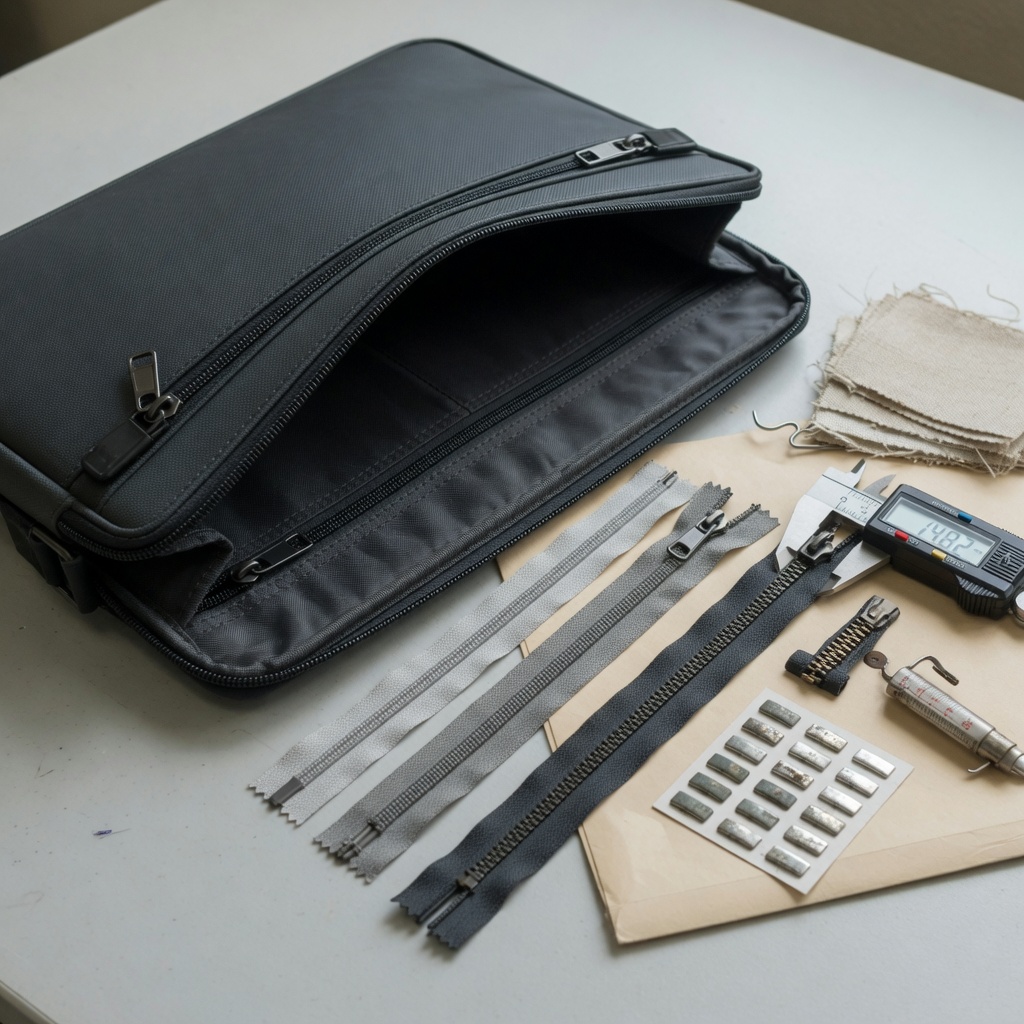
United States B2B buyers should treat sustainability sourcing criteria as zipper-SKU controls when they compare zipper business bag wholesale supply—not as catalog copy. Award or withhold the purchase order only after every zipper position (main compartment, laptop sleeve, front pocket, interior document pocket) maps to its own bill-of-materials line for tape, teeth or coil, slider, puller, and top/bottom stops; after chain-of-custody files name those lines; and after sewn-in durability tests pass on the pre-production bag.
Zipper-maker education material describes recycled RPET zippers, discusses PLA options, and lists GRS, OEKO-TEX Standard 100, and REACH files buyers request for bag trims (RHF Zipper). A wholesale eco-bag guide treats skipped hardware sustainability as an OEM sourcing mistake and tells buyers to audit RPET with mill and transaction certificates rather than a logo on a sell sheet (JiangLiDa). Durability still governs returns: a B2B bag-zipper sourcing guide cites 10,000 reciprocating cycles, 500 N burst strength, 48-hour salt spray, and gauges from #3 to #10 by compartment as wholesale-oriented checks (Omaska). This brief is a United States procurement control set for zipper business bag wholesale supply. It is not a consumer shopping page, not a tariff ruling, and not a claim that CottonToMaker or any named mill holds a current, in-scope certificate.
Editorial note (approved basis). Compiled by Vincent Xi, Editorial Author at CottonToMaker, from the named supplier-education sources below. No factory visit, laboratory test, client name, award, certification, years of experience, or customer outcome is attributed to the author or to CottonToMaker.
Decision snapshot (specify → compare → verify → approve → order)
- Specify each zipper position, length in millimeters, gauge, chain type, slider/lock type, puller material, finish, and whether the recycled claim is tape-only or full hardware.
- Compare documented GRS lots versus logo-only “RPET” sell sheets; coil versus vislon versus metal; quoted tests versus sewn-in reports; FOB versus DDP zipper surcharges.
- Verify mill certificates and transaction certificates against invoice lot codes; OEKO-TEX annex, chemical statements, and United States tag copy; mechanical reports on the actual business-bag panel.
- Approve a pre-production sample with the zipper SKU frozen. Do not allow “equivalent” interiors if the hangtag will say all zippers are recycled.
- Order only when the zipper surcharge is its own commercial line, test methods are named on the PO, and a shipment-hold rule exists for lot-code mismatches.
How this brief was compiled and what to verify
Methodology / how the data was derived. Claims below are limited to three source contexts plus publicly named United States control schemes:
- Zipper construction types, gauge ranges, and numeric test examples published in a B2B bag-zipper sourcing guide (Omaska).
- Recycled-zipper material descriptions (RPET and PLA) and the GRS / OEKO-TEX Standard 100 / REACH document set described on a zipper-maker education page (RHF Zipper).
- Mill certificate, transaction certificate, ISO 14001, skipped-hardware, and unverified-low-price guidance from a wholesale eco-bag guide (JiangLiDa).
United States labeling and import notes use publicly named schemes (FTC Green Guides, CBP origin marking, TSCA, California Proposition 65) as buyer-control language only. No laboratory was commissioned for this page. No factory audit, certificate, price, lead time, or customer result is attributed to CottonToMaker. Numeric values are transcribed from the cited pages as RFQ starting points; confirm the live page date, edition, and wording before copying any figure onto a purchase order.
Claim-to-source map (traceability)
| Claim cluster | Source context | What the source supports on this page | What this page does not treat as proven |
|---|---|---|---|
| RPET / PLA zipper materials; GRS, OEKO-TEX Standard 100, and REACH requested as trim documents | RHF Zipper | Material naming and a document set buyers are told to request | Drop-in performance versus virgin PET; United States legal clearance; CottonToMaker certification |
| Mill certificates, transaction certificates, ISO 14001, skipped hardware, unverified low prices | JiangLiDa | Document types and OEM mistakes to control in wholesale eco-bag programs | A current certificate for any zipper lot on a CottonToMaker or third-party bag |
| 10,000 reciprocating cycles; 500 N burst strength; 48-hour salt spray; gauges #3 to #10; coil / vislon / metal construction types | Omaska | Wholesale-oriented numeric examples and construction vocabulary | An ASTM / ISO / SATRA clause; sewn-in results on your business-bag panel; recycled-content proof |
Source-bound numbers used as RFQ starting points (not CottonToMaker test data).
- 10,000 reciprocating cycles — unit: cycles; scope: wholesale-oriented bag-zipper endurance example on the cited sourcing page; as-of: as published on that page (confirm live edition/date before PO use); source: Omaska. Put a named method on the PO; this page does not assign an ASTM, ISO, or SATRA clause.
- 500 N burst strength — unit: newtons; scope: wholesale-oriented strength example on the same sourcing page; as-of: as published on that page (confirm live edition/date); source: Omaska. Confirm whether the supplier means chain crosswise strength, slider pull-off, or box-and-stay burst.
- 48-hour salt spray — unit: hours; scope: metal-component corrosion screen example on the same sourcing page; as-of: as published on that page (confirm live edition/date); source: Omaska. Screening value only; not a marine-grade certification.
- Gauge range #3 to #10 — unit: zipper gauge designation; scope: compartment-based selection on the same sourcing page; as-of: as published on that page (confirm live edition/date); source: Omaska.
Limitations / what to verify. Numeric zipper tests in the cited guide are supplier-education examples. They are not a substitute for the ASTM, ISO, or SATRA clause you put on a purchase order, and they do not by themselves prove recycled content. GRS, OEKO-TEX Standard 100, REACH, and ISO 14001 files expire, are scope-limited, and may cover a mill or a factory environmental management system rather than the zipper SKU on your bag. Recycled-content percentages apply to defined mass-balance or physical lots, not to a catalog photo. United States duty, merchandise processing fee (MPF), harbor maintenance fee (HMF), ocean freight, and inland cartage change by HTS line, origin, Incoterm, and week; any dollar figures below are example calculations / assumptions to verify in the supplier quote and with a licensed customs broker. This page does not assign an HTS code. PLA “biodegradable” claims do not mean backyard composting in the United States. Do not treat this page as a certification, test report, or legal opinion. Distinguish a standard’s requirement from any supplier’s own practice; never imply certification without a current document whose legal name, site, and annex match the zipper lot.
Sustainability sourcing criteria for zipper hardware on wholesale business bags
On a zipper business bag, the zipper is both a failure point and a sustainability claim point. A recycled shell with a virgin, undocumented slider still fails a serious wholesale sustainability review. Ask the supplier to map every zipper position to a construction type, gauge, finish, and document pack before the quote is comparable.
Construction types in B2B bag-zipper sourcing guidance include nylon coil, vislon (molded plastic), and metal, with gauges described from #3 to #10 depending on compartment load (Omaska). The following split is buyer logic to confirm on your tech pack, not a requirement of a named standard and not a CottonToMaker specification:
- #3–#5 coil on interior pockets where bulk and noise matter more than abuse.
- #5–#8 coil or vislon on the main closure of a daily-carry business bag.
- #8–#10 or metal on high-cycle or heavier brief-style bags, if corrosion, weight, and finish are acceptable.
Eco-positioned zipper tapes are described as RPET (recycled polyethylene terephthalate, often marketed as bottle-derived) with GRS chain of custody, or as PLA plant-based tape positioned as biodegradable under industrial conditions (RHF Zipper). Those are material claims, not interchangeable performance grades. Recycled coil is not a drop-in for virgin polyester coil: require shade-band, tape-stiffness, and slider-bite comparison on the same gauge. PLA is not automatically PET-equivalent: require heat, humidity, and storage tests before freezing it on a multi-year corporate bag. Neither tape material automatically includes a recycled slider, puller, or zinc/aluminum body. Wholesale eco-bag guidance tells buyers to evaluate recycled metal zippers and other hardware as their own line items, and to audit RPET with mill and transaction certificates rather than a logo on a sell sheet (JiangLiDa).
Trade-offs to price on the RFQ
- A GRS-documented RPET #5 coil on the main opening can support a recycled-content claim on the trim only if shade-band and cycle testing pass versus your virgin control chain.
- A metal #8 can improve perceived durability and lock options, but adds weight, corrosion risk, and a separate recycled-metal or finishing claim that GRS on tape does not cover.
- PLA belongs on the RFQ only if the United States downstream customer has an industrial composting pathway and hangtags will not overclaim “biodegradable.”
If a mill brand is named on the RFQ, brand name is not a sustainability certificate. Still require recycled-content scope, chemical screen, and mechanical tests on the exact chain and slider.
United States labeling, chemical, delivery, and landed-cost controls
Keep the product decision first: you are buying zipper business bags for United States wholesale placement (corporate programs, distributors, or brand OEM). Country of manufacture is an origin fact for CBP, not a second sales market.
Environmental marketing. If cartons, web copy, or hangtags say “recycled zipper,” “eco zipper,” or “sustainable hardware,” align wording with the FTC Green Guides: recycled content should be qualified (pre- versus post-consumer, percentage, which component). “Eco-friendly” without a specific, substantiated attribute is a claim risk. GRS transaction certificates support a recycled-content narrative; they do not automatically legalize superlatives. This is buyer-control language, not a legal opinion.
Chemical and state rules. REACH is an EU chemical regulation. Zipper-maker education pages still include REACH documentation in the trim file set, so United States programs may request a REACH SVHC statement as a chemical screen (RHF Zipper). That request is a file-set control, not an invitation to treat the European Union as this page’s sales market. For United States placement, add TSCA-relevant substance controls on coated tapes and metal finishes, and a California Proposition 65 pathway if the bag may be sold into California (slider alloys, plated pulls, coated textiles). OEKO-TEX Standard 100 is a harmful-substance screen for textile and trim articles; it is not a recycled-content standard and is not a United States government mark. Do not print “certified” on the bag unless the current, in-scope certificate number matches the zipper lot.
Origin, classification, and delivery. Require a commercial invoice that lists zipper construction as part of the product description if you will make a recycled-trim claim to downstream customers. Confirm country-of-origin marking on the bag or a sewn-in label per CBP rules for the imported article. Incoterms change who owns freight delay and duty: FOB origin leaves ocean, insurance, and U.S. entry with the buyer; DDP shifts more of that into the supplier quote but still needs a broker-ready HTS stance. This page does not classify the article.
Example landed-cost calculation (assumption to verify, not a quote). Suppose one carton holds 20 zipper business bags (example pack-out; unit: bags per carton; scope: illustration only; as-of: none—replace with the supplier’s pack-out), FOB value is USD 360 per carton (USD 18.00 per bag), ocean freight plus insurance allocated to that carton is USD 48, and you temporarily model combined duty plus merchandise processing at 6.0% of FOB for illustration only. Illustrated entry charges = 360 × 0.06 = USD 21.60; illustrated landed merchandise + freight = 360 + 48 + 21.60 = USD 429.60 per carton or USD 21.48 per bag before inland trucking, warehousing, and defect reserves. Replace every input with the supplier’s Pro Forma, the broker’s HTS, and the forwarder’s actual surcharge sheet. Do not use this 6.0% figure as a tariff ruling.
Delivery control for documented zipper lots. Put the zipper SKU on the critical path with four milestones: sample zipper chain approval date; bulk zipper ex-mill date; bag sewing start; ex-factory date. If GRS transaction certificates will be issued, state whether they ship with the commercial documents or within a fixed number of days after on-board date. Do not copy a lead-time number from this page; none is sourced.
Recycled-content documents versus management-system certificates
Wholesale buyers of eco bags are advised to request GRS, OEKO-TEX, and ISO 14001, and to audit RPET with mill certificates and transaction certificates (JiangLiDa). Those instruments are not substitutes for each other. The bullets below distinguish a scheme’s usual purpose from any supplier’s own practice; they are not a claim that a given factory is certified.
- GRS (Global Recycled Standard) is a product/chain-of-custody scheme for recycled input, plus additional environmental and social criteria in the certified supply chain. Useful zipper documents are a scope certificate listing the zipper factory or trader and transaction certificates that follow the shipped lot. A GRS certificate on a bag factory does not prove the zipper tape is GRS unless the zipper is in the chain.
- OEKO-TEX Standard 100 screens for a defined set of harmful substances by product class. It can cover zipper tape and, depending on the certificate annex, some components. It does not state recycled percentage.
- REACH (and a REACH SVHC declaration) addresses chemical compliance for the EU market; treat it as a chemical file, not as proof of recycling and not as FTC recycled-content substantiation.
- ISO 14001 is an environmental management system for an organization. It can support process discipline; it does not quantify RPET in a #5 coil or recycled content in a zinc slider.
Buyer rule: match certificate legal names, sites, and expiry dates to the zipper purchase-order line. Reject “GRS factory” language when the zipper is bought from a third-party trim vendor outside that scope. If metal teeth or sliders are claimed as recycled, demand the scheme and percentage for metal, not only for polyester tape.
Zipper type, gauge, and durability tests that change returns
Sustainability that fails in the field is still a failed wholesale lot. Use the Omaska figures in the numbers block as RFQ starting points, then name the test method on the PO. Quote recycled tape, custom pulls, and documented lots as a surcharge versus commodity chain. Pay for the document pack and the mechanical report on the bulk lot, not only on the salesman sample.
Convert those examples on the zipper business bag PO as follows. For 10,000 reciprocating cycles, specify slider lock type, test speed, and sewn-in testing on the actual panel—a free-chain pass can still fail after box-stitching or a tight corner radius. For 500 N burst / crosswise strength, confirm whether the test is chain crosswise strength, slider pull-off, or box-and-stay burst, and record the failure mode. For 48-hour salt spray, treat the value as a metal-finish screen, not a marine-grade certification; raise it for humid United States warehouses or winter-road delivery, and still check slider springs on non-metal coil or vislon.
Measurable trade-offs: higher gauge (#8–#10) and metal add abuse resistance, weight, corrosion risk, and trim cost. RPET coil with GRS transaction certificates supports a qualified recycled-content story for United States marketing, with extra shade-band risk and certificate admin. PLA tape offers a plant-based narrative but a weaker fit for a multi-year corporate bag if heat and humidity are untested, plus overclaim risk on United States tags (RHF Zipper). The eco-bag wholesale guide flags unverified low prices and skipped hardware sustainability as primary OEM mistakes (JiangLiDa); price without lot-level transaction certificates is not a sustainability win.
Pre-production should include: (1) zipper tape shade band against the bag body; (2) sewn-in cycle test on the actual main opening radius; (3) slider pull-off and lock function; (4) salt spray or humidity on metal finishes; (5) carton-drop on a packed wholesale carton to see whether the slider head bruises the PU, leatherette, or fabric face.
Decision table: specify, compare, and approve zipper sustainability
| Decision object | Specify on the RFQ | Compare across suppliers | Verify before bulk | Approve / order gate |
|---|---|---|---|---|
| Main-opening zipper | Gauge, coil/vislon/metal, lock type, closed-end vs O-type, tape color, puller, length in millimeters | Recycled vs virgin tape; metal vs coil weight; quoted cycle life | Sewn-in reciprocating test vs the 10,000-cycle example, plus failure-mode photos | Signed PP sample with zipper SKU frozen |
| Interior pocket zippers | Separate gauge (often #3–#5) and tape width | One recycled SKU vs mixed virgin interiors | Same GRS TC if hangtags will say “all zippers recycled” | BOM freeze: no “equivalent” interiors |
| Recycled content | Component-level % and pre-/post-consumer split for tape and, separately, metal | GRS vs undocumented “RPET” marketing | Mill certificate + transaction certificate lot numbers matching invoice | TCs received or contractually dated |
| Chemical screen | OEKO-TEX Standard 100 class; REACH SVHC statement; Prop 65 / TSCA language for U.S. | Certificate annex vs actual slider alloy | Current certificates, site names, expiry, product class | No “certified” hangtag until annex matches |
| EMS vs product claim | Do not accept ISO 14001 as recycled proof | EMS present vs product CoC present | ISO 14001 covers organization only | Recycled claim only with product CoC |
| Corrosion / finish | Plating type; 48-hour salt spray as metal screen | Antique vs nickel vs painted sliders | Salt-spray panels from the bulk plating lot | Fail lot if white rust or peel exceeds agreed photos |
| Strength | 500 N burst example plus slider pull-off newtons you choose | Coil vs vislon vs metal at the same gauge | Bulk report, not only development | AQL retest if zipper vendor lot changes |
| United States labeling | Qualified recycled statement; origin mark; no unsourced “eco” | Hangtag copy vs Green Guides | Compliance review of tag PDF | Carton mark and tag PDF approved |
| Landed cost | Incoterm, carton pack, zipper origin vs bag origin | FOB vs DDP; recycled-lot surcharge | Broker HTS + freight invoice vs example math above | PO states zipper surcharge as its own line |
| Traceability | Zipper vendor, factory site, lot code on bag or QC record | Trader certificate vs mill certificate | Incoming QC lot code matches TC | Shipment held if lot codes do not match |
Practical RFQ checklist for zipper business bag wholesale supply
Paste these lines into the RFQ or pre-production file. Do not award until each gate has an owner.
- Product identity: zipper business bag; each zipper position, length in millimeters, gauge, chain type, slider type, and puller material.
- Sustainability scope: tape-only, all-zippers, or full hardware (slider, puller, stops).
- Recycled scheme: GRS or equivalent chain of custody; mill certificate and transaction certificates for the shipped zipper lots (JiangLiDa).
- Percentage and origin of recyclate: numeric % and pre-/post-consumer split per component; no bag-level average that hides a virgin slider.
- PLA or other bio-based tape: named, heat/humidity tested, and not tagged “biodegradable” for United States use without a qualified disposal pathway (RHF Zipper).
- Chemical files: OEKO-TEX Standard 100 annex for the zipper article class; REACH SVHC statement; United States Proposition 65 and TSCA-relevant declarations for finishes.
- ISO 14001: optional EMS evidence only; not recycled-content proof.
- Mechanical tests: reciprocating cycles, burst/crosswise force, slider pull-off newtons you specify, and salt spray for metal—start from the sourced 10,000-cycle, 500 N, and 48-hour examples (Omaska).
- Test condition: sewn into the production bag panel, not only free chain; report date, lab name, lot number.
- Gauge map: #3 to #10 assigned by compartment; no silent substitutions after pre-production.
- Shade, brand, and equivalent: tape shade band and slider bite against the bag body; if a mill brand is named, state whether equivalent chain of custody and tests are allowed.
- United States tags: FTC-qualified recycled wording, origin marking, and a ban on unsourced “eco-friendly zipper” copy.
- Incoterm and zipper surcharge: separate line for documented recycled zipper lots; FOB or DDP and who books U.S. entry. The buyer’s broker replaces the illustrative 6.0% duty/MPF model and the USD 360 FOB carton example with live numbers before PO.
- Milestones and incoming QC: zipper pre-production approval, bulk zipper ex-mill, sewing start, ex-factory, transaction-certificate transmittal; lot-code match to TCs; AQL on zipper function; metal-finish photo standard.
- Change control: any zipper vendor, gauge, or finish change reopens tests and certificates; agree pass/fail images for salt spray, tape fray, and slider skip.
- Do-not-award flags: unverified low price; GRS claimed on the bag factory only; missing hardware chain of custody; expired annexes; free-chain tests instead of sewn-in tests; tape-only “RPET” photos with undocumented zinc sliders; ISO 14001 offered as recycled-content proof; PLA “biodegradable” hangtags without a United States disposal pathway.
Award zipper business bag wholesale supply only when the zipper BOM, the mechanical report on the sewn bag, and the in-scope chain-of-custody files tell the same story. That is the operational meaning of sustainability sourcing criteria for a zipper business bag program serving United States buyers.
Discuss Your Requirements
Review our manufacturing capabilities, then share your specifications for a supplier-fit review.