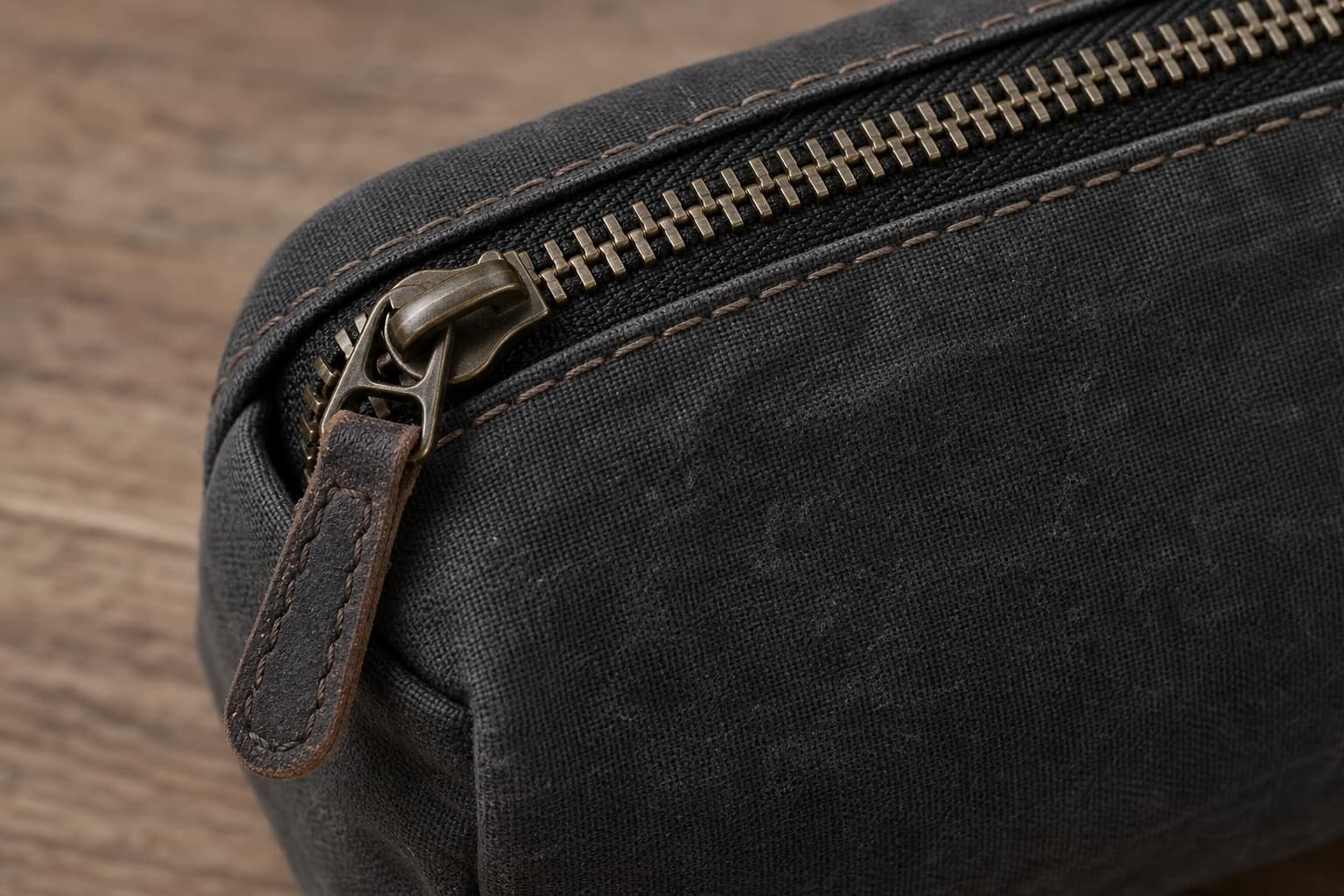
Why Side Seam Variance Matters In A Zipper Business Bag
Side seam allowance variance is not a small sewing detail. In a zipper business bag, it changes finished width, internal usable space, zipper alignment, print position, and how the bag sits inside a carton. If one side closes at 8 mm and the other side slips to 11 mm, the bag can look asymmetrical even if the overall length is still within spec. Buyers often catch this only after sample approval, when the finished bag begins to shrink or twist across bulk production.
The commercial problem is that two factories can quote the same bag size and still deliver different results. One may quote cut size, another may quote finished size, and a third may build in extra allowance to reduce sewing risk. If procurement does not control the seam allowance, the order can drift on width, print location, and packaging count. A good variance tracker turns that hidden sewing detail into a measurable buying spec.
- Seam drift changes finished width even when the cut panel size looks correct.
- Asymmetry shows up first at the zipper line and side panel corners.
- Print and woven label placement can move when seam allowance changes.
- Packing count and carton fit can shift if the bag gets wider or narrower in bulk.
Define The Measurement Point Before You Ask For A Quote
Before you compare suppliers, define exactly what you mean by side seam allowance. For a zipper business bag, the practical measurement is usually the distance from the cut edge to the stitch line on each side seam, measured at the top, middle, and bottom of the seam. You also need the finished width after pressing, because some factories sew to one number but press to another. If the tech pack does not show both points, quote comparison becomes guesswork.
The drawing should name every layer that affects the seam: face fabric, lining, interlining, foam, zipper tape, and any binding or tape cover. If the seam is hidden inside a lined body, state whether the allowance includes overlock trimming or a separate binding fold. Buyers should ask the factory to annotate the approved sample with arrows and measurement points so the same reference is used in PP, inline, and final inspection.
- State whether the measurement is cut size, sewn size, or finished size.
- Define if binding, piping, or seam tape is included in the allowance.
- Mark the seam points on the sample with a ruler photo before approval.
- Keep the same method for sample, bulk audit, and final inspection.
Set A Tolerance That Matches Fabric Weight And Build
Tolerance should match the construction, not just the buyer's target size. A business bag in 210D to 300D polyester, around 110 to 160 gsm, can often hold a tighter seam window because the fabric is stable and the edges do not bulk heavily. A cotton canvas bag in 12 to 16 oz, roughly 340 to 510 gsm, may need a slightly wider tolerance because the seam bulk, shrinkage, and pressing response are less predictable. When foam or heavy interlining is added, the allowance should usually be widened again to keep the finished width consistent.
Print method matters too. Screen print can tolerate more flat panel control, but if the logo sits close to the side seam, even a small allowance shift can make the artwork look off-center. Heat transfer and embroidery add their own placement risk because the visible edge of the artwork must stay clear of the seam zone. For most buyer programs, a tolerance around plus or minus 1.5 mm on lighter business bags and plus or minus 2.0 mm on heavier builds is a practical starting point, but the final number should come from sample behavior, not from habit.
- Use tighter tolerance on stable synthetic fabrics and slightly wider tolerance on heavy canvas.
- Add margin when foam, lining bulk, or binding is part of the construction.
- Keep print artwork away from the seam zone unless the placement is locked on the sample.
- Do not approve a tolerance that the factory cannot hold across the full line.
Build A Variance Tracker That Can Catch Drift Early
A useful variance tracker is simple enough to use on the line and detailed enough to explain a defect later. At minimum, record order number, colorway, fabric lot, machine number, operator ID, left seam readings, right seam readings, and any rework action. Measure the same bag at three points on both sides, then compare the result against the approved target. The goal is not just to spot an outlier; it is to see whether one machine, one operator, or one shift starts to drift before the whole lot is affected.
Sampling should include the first-off piece, a middle-of-run check, and a late-run check. For a normal production lot, buyers often ask for 10 pieces per lot or per colorway as a starting point, but the more important point is consistency of timing. Measure after pressing, because fabric relaxation can change the seam behavior. If the average begins to drift by more than 1 mm from the approved sample or if left-right symmetry breaks, the lot should be stopped for correction before the defect becomes a packing problem.
- Track lot, operator, machine, and rework action on one sheet.
- Measure the same three points on both sides of the bag.
- Check first-off, middle, and end-of-line samples, not only final cartons.
- Flag repeated drift before it turns into a bulk rework charge.
What Your Factory Quote Must State
A usable quote must go beyond unit price. For a zipper business bag, the supplier should state fabric type, fabric GSM, lining GSM, zipper size, thread spec, seam construction, print method, allowance target, tolerance, MOQ, sample lead time, bulk lead time, and packing method. If the quote only says 'business bag' or 'zipper file bag' with no sewing detail, the numbers cannot be compared fairly. The cheapest quote often becomes the most expensive one after sample revisions, extra rework, or a late change in carton size.
The MOQ logic should also be transparent. If the factory needs a special jig, a woven label setup, or an embroidery program, that setup cost may push the MOQ higher. If the bag is printed instead of embroidered, the MOQ may be lower but the print area and seam-safe distance still need to be fixed. As a working example, many factories quote PP samples in about 7 to 12 days and bulk in about 30 to 45 days depending on material booking and order size, but the buyer should always ask for the actual production calendar behind those numbers.
- Ask for separate pricing if the same bag is quoted with print, embroidery, or woven label.
- Confirm whether the quoted price includes sample revisions and PP approval photos.
- Ask if packing is flat-packed, folded with insert card, or stuffed for shape retention.
- Request the exact MOQ breakpoints for each decoration method and colorway.
Common Sewing Causes Of Side Seam Drift
Most side seam problems come from predictable production causes. Cutting lay mismatch, blade wear, and panel nesting errors can start the deviation before the sewing line even begins. On the sewing side, presser foot pressure, feeding speed, overlock trimming, and zipper tape tension can all pull the seam off line. If the lining is cut from a stretchier substrate than the shell fabric, the inside layer may creep and create a twisted body even when the outside looks acceptable at first glance.
This is why a variance tracker should not only record the measurement; it should also link the measurement to the machine and operator. If one machine consistently produces a wider left seam, the issue may be a guide or tension setting. If one operator creates more drift after lunch or during high-speed runs, the issue may be feeding control or edge alignment. The value for procurement is that you can ask the factory what corrective action was taken, not just whether the bag was eventually passed.
- Check cutting accuracy before sewing begins, especially on nested panels.
- Watch for presser foot pressure and zipper tape tension that pull the side seam.
- Confirm lining and shell fabric behave the same during feed and pressing.
- Require corrective action notes when a machine or operator repeats the same drift pattern.
Sample Checks Before Bulk Approval
The pre-production sample is the first place to test whether the side seam allowance is realistic. Ask the factory to make the sample from the same fabric GSM, the same zipper size, and the same decoration method that will be used in bulk. A sample made in a lighter fabric or with a different print method can hide the real production behavior. Measure the sample under the same lighting and pressing condition that will be used for bulk approval so the seam line, zipper tape, and logo edge are all judged the same way.
For buyer approval, the sample should pass more than one test. It should match the finished width, the seam should be symmetrical, and the logo should remain inside the safe zone if it sits near the side panel. If the bag uses screen print, heat transfer, or embroidery, confirm that the artwork is not cut by the seam or pulled by the adjacent stitch line. A simple mark-up sheet, a ruler photo, and one sealed approved sample can save a lot of debate when bulk pieces start arriving.
- Measure the sample after pressing, not only right after stitching.
- Confirm that the same fabric GSM and zipper spec will be used in bulk.
- Check logo position, zipper alignment, and side seam symmetry on the same sample.
- Keep one sealed reference sample with annotated photos for line inspection.
Packing And Carton Control Keep Variance From Hiding
Packing can hide a seam problem or make it worse. If bags are folded too tightly, a width issue may not be visible until the customer opens the carton. If bags are packed loosely, the carton count may change because a slightly wider bag takes more space than the approved sample. For a zipper business bag, the packing spec should define the fold direction, insert card use, polybag size, carton count, and any compression standard. That way the factory cannot blame packing for a shape issue that was actually caused by seam drift.
Carton labeling should also support lot traceability. Record the colorway, line number, and approval date so a buyer can match the carton to the tracker sheet if a defect is found later. If the order has multiple colors or multiple decoration types, keep them separated by lot. This matters because seam variance often appears only when one line starts speeding up or when a different operator takes over. Good packing control lets procurement isolate the source instead of treating every carton as the same risk.
- Define flat-pack or folded-pack dimensions before bulk starts.
- Keep carton counts tied to approved finished width, not to a guess.
- Label cartons by lot and line so traceability stays intact.
- Separate mixed colorways or mixed decoration methods by production lot.
How To Compare Supplier Quotes Without Getting Trapped
The cleanest way to compare quotes is to force every supplier to price the same spec. That means the same side seam allowance target, the same tolerance, the same fabric GSM, the same zipper size, the same print method, and the same packing method. If one supplier quotes a lower price but assumes a looser seam allowance, less QC, or a different finished width, the comparison is not real. Buyers should ask each supplier to show whether the price includes cutting loss, sewing rework, pressing, inspection, and carton control.
A useful comparison is not just cost per piece but cost per acceptable piece. If one supplier has a lower unit price but a higher PP sample failure rate or a longer correction cycle, the final landed cost can rise quickly. Ask for quote data that lets you compare like for like: fabric consumption, zipper length, print area, labor steps, packing count, and expected lead time. That is the only way to see whether the quote is genuinely efficient or simply incomplete.
- Compare the same allowance target and the same finished size across every supplier.
- Ask whether QC, rework, and packing are included in the quote or added later.
- Check whether the factory quote is based on piece price, fabric consumption, or full process cost.
- Treat a lower unit price as a warning until the spec is fully matched.
A Practical Buyer Workflow From RFQ To PO
A simple buyer workflow reduces seam variance before it becomes a production issue. Start with a spec sheet that locks size, fabric, decoration, seam allowance, and packing. Then request a quote that repeats those details in the supplier's own words. Approve the sample only after the seam tracker is filled out, the measurements are photographed, and the factory confirms what machine and operator handled the sample. Once bulk starts, require line checks at the first piece, mid-run, and before packing.
If the order is for a premium business bag, do not treat the variance tracker as a one-time form. Use it as a live control sheet across sample, bulk, and packing. That makes the seam allowance part of the commercial agreement instead of a hidden sewing habit. When buyers hold the factory to one measurable standard, they reduce returns, save sampling cycles, and make the quote comparison more honest.
- Lock the spec before RFQ so the quote reflects the same seam allowance target.
- Approve the PP sample with annotated measurement photos and a signed tracker.
- Audit first-off, middle, and end-of-line pieces during bulk.
- Use the same measurement method from sample room to final carton check.
Specification comparison for buyers
| Spec decision | Recommended option | When it fits | Buyer risk to check |
|---|---|---|---|
| Side seam allowance target | 8-10 mm on 210D-300D polyester; 10-12 mm on 12-16 oz cotton canvas; 12-15 mm if foam or heavy lining is added | Use when the bag must hold a stable finished width across bulk production | If the quote lists only finished size, you may miss cut loss, rework, or width drift |
| Seam construction | Single-needle seam with clean overlock inside; reinforce stress points near zipper ends | Fits standard business bags with lined interiors and moderate load | Loose control of trimming or backtack can shift the effective allowance from piece to piece |
| Print method near the seam | Screen print for simple logos, heat transfer for small-color runs, embroidery or woven label for premium versions | Best when logo placement is close to the side panel or lower body | If the print zone is too close to the seam, distortion can make approved artwork look off-center |
| Measurement method | Track cut edge to stitch line at top, middle, and bottom on both sides, then compare to finished width after pressing | Use for PP approval, inline checks, and final inspection | If the factory measures only one point, local drift can hide until bulk packing |
| QC control point | Use a variance tracker with lot, operator, machine, and rework notes | Best for orders with multiple machines, multiple lines, or mixed colorways | Without lot tracking, you cannot isolate whether the issue came from cutting, sewing, or pressing |
Buyer checklist before sampling
- Confirm the tech pack shows finished size, cut size, and side seam allowance in mm for both sides.
- Ask the factory to mark the exact measurement points on the pre-production sample before approval.
- Lock fabric GSM, lining GSM, zipper size, thread type, and print method before bulk quoting.
- Require left/right seam allowance readings at top, middle, and bottom on the first-off sample.
- Check whether the allowance is measured before or after overlock, binding, and final pressing.
- Approve one sealed PP sample and keep photos of the seam gauge, ruler, and product side label.
- Confirm packing style, carton count, and folded dimensions so width drift does not change pack efficiency.
- Make sure the factory quote states MOQ, sample lead time, bulk lead time, and any extra QC cost.
Factory quote questions to send
- What cut size and finished size are you quoting for the zipper business bag?
- What side seam allowance target and tolerance will you hold on both left and right sides?
- Is the allowance measured before or after overlock, binding, and pressing?
- What fabric GSM, lining GSM, zipper size, and thread specification are included in the quoted price?
- What print method is assumed, and how far is the logo from the nearest seam line?
- What MOQ applies to printed, embroidered, and unbranded versions of the same bag?
- How many sample rounds are included, and how long is the PP sample lead time?
- What bulk lead time is realistic after sample approval, including material booking and packing?
- What packing method, carton size, and inner pack count are assumed in the quote?
- What happens if seam allowance variance exceeds tolerance during bulk production?
Quality-control points to confirm
- Measure left and right side seam allowance at three points: top, middle, and bottom.
- Check finished width after pressing, not only after stitching, because pressing can change the final measurement.
- Confirm zipper tape runs centered and does not pull the side panel into a wave or skew.
- Verify that logo placement stays inside the safe zone and does not get distorted by side seam shift.
- Inspect lining alignment at the side seam so the inside does not twist or tunnel.
- Check stitch density, backtack length, and seam trimming consistency across operators and machines.
- Record lot number, machine number, and operator ID on the variance tracker for every sampled batch.
- Compare sample packing dimensions against bulk cartons so seam variation does not change pack efficiency.