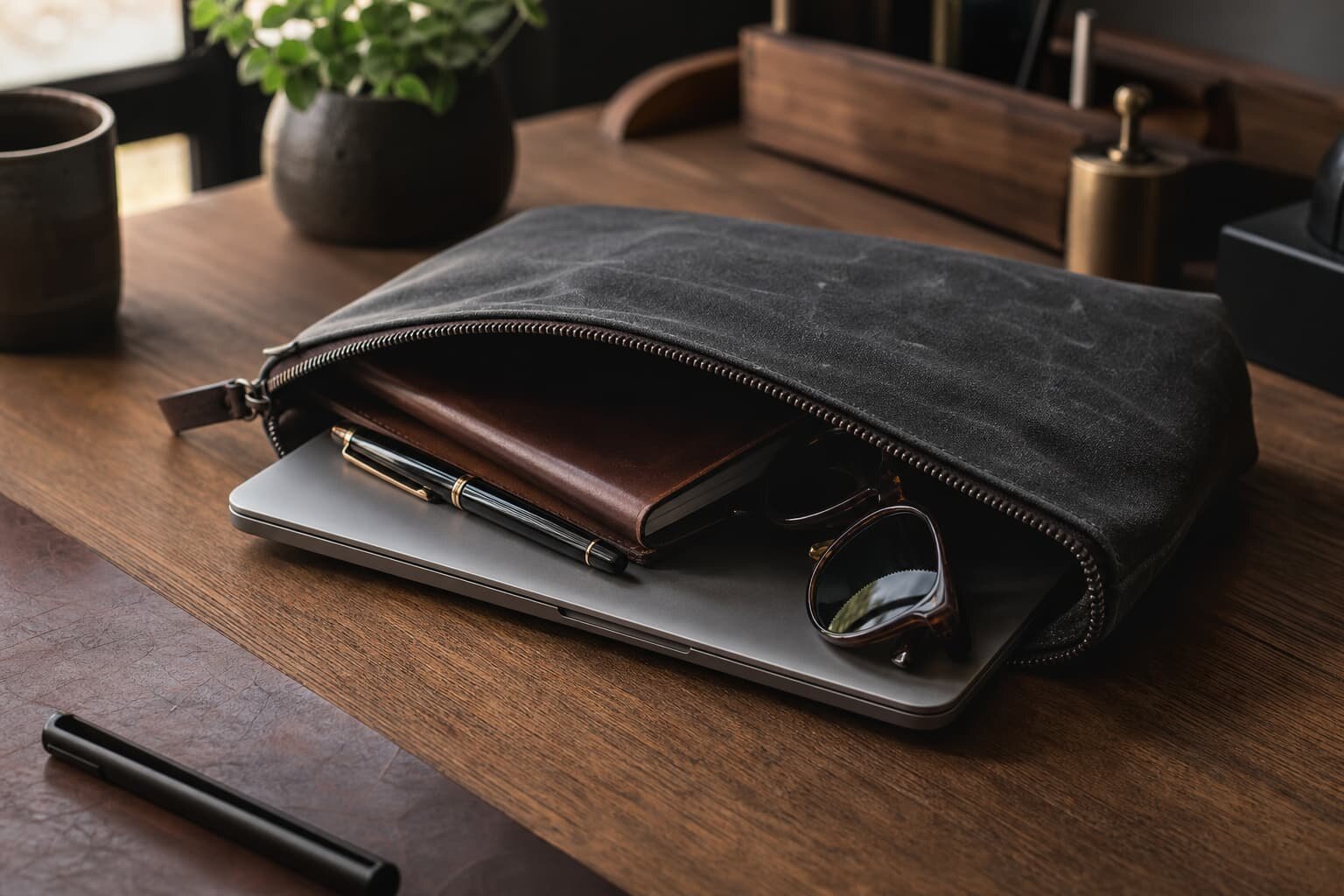
Why side seam allowance becomes a claim issue
For zipper business bags, the side seam allowance is not just an internal sewing detail. It controls the finished width, the shape of the side panel, the strength of the corner, and the way the zipper sits after the bag is turned and pressed. When this allowance is too narrow, the seam may look acceptable in a product photo but fail under normal document or laptop accessory weight. When it is too wide or inconsistent, the finished bag can lose capacity, show twisted edges, or no longer match the approved sample.
The common claim problem is evidence. A buyer receives bags that look narrower than expected, the zipper line waves, or the side panels are uneven. The factory replies that the finished size is within tolerance, while the buyer believes the cutting or seam allowance was changed after sample approval. If the RFQ did not state side seam allowance, seam finish, and measurement method, the argument becomes subjective. Good claim evidence starts before production, not after arrival.
- Side seam allowance affects finished size, strength, zipper alignment, and corner appearance.
- A finished size tolerance alone does not prove the correct seam construction was used.
- Claims are harder to resolve when the approved sample has no internal seam photos.
- Buyers should treat side seam allowance as a controlled specification, not a factory habit.
Define the bag construction before asking for a quote
A zipper business bag can mean different things to different suppliers. Some factories think of a flat document bag with a top zipper. Others quote a gusseted conference bag, a laptop-style pouch, a canvas file carrier, or a promotional business gift bag with handles. Each construction needs a different seam allowance and sewing process. If the RFQ says only zipper business bag, suppliers may quote different structures and the prices will not be comparable.
Start by defining the product in practical terms: finished dimensions, fabric type and weight, zipper position, handle type if any, lining requirement, logo method, and target loading weight. A 12 oz cotton canvas business bag with a side label and YKK-style zipper is not the same cost as a 280 gsm polyester document bag with a standard nylon zipper. The side seam allowance claim risk is higher when the buyer compares the cheapest quote without checking what construction was included.
- Flat document bag: usually simple side seams, lower material use, but visible zipper waviness if sewing is rushed.
- Gusseted business bag: needs more control at side seams and bottom corners because capacity depends on seam accuracy.
- Canvas zipper bag: stronger handfeel but thicker seam bulk, especially near zipper ends.
- Polyester zipper bag: cleaner machine sewing, but fabric may shift and pucker if tension is not controlled.
- Lined business bag: internal seam evidence must include lining attachment, not only outer shell sewing.
Set side seam allowance and tolerance in the RFQ
A practical side seam allowance for many zipper business bags is around 10-12 mm, but the right value depends on fabric weight, seam finish, and whether the bag is bound inside. Heavy canvas may need more room for turning and reinforcement. Thin polyester may accept a smaller allowance, but going too narrow leaves little margin for sewing variation. The RFQ should state the planned allowance and tolerance instead of leaving the decision entirely to the sewing line.
Do not confuse side seam allowance with finished bag size tolerance. Finished size is what the buyer sees on the outside. Seam allowance is the fabric margin inside the seam. A factory can sometimes keep the outside size close by changing cutting size, but that does not mean the seam allowance matches the approved construction. For repeat programs, put both numbers into the spec sheet so future replenishment orders do not drift.
- Example wording: finished size 380 x 280 mm, side seam allowance 10 mm +/- 2 mm after sewing.
- State whether tolerance applies before turning, after sewing, or on finished bags.
- Ask for measurement photos from the pre-production sample before bulk cutting.
- For heavy 14-16 oz canvas, confirm if seam bulk requires wider allowance or corner grading.
- For thin polyester, confirm seam strength testing because narrow allowance can tear at stress points.
Use evidence photos that can support a real claim
Claim photos must show more than a general defect. A useful evidence photo includes a ruler, the exact measuring point, the order or sample reference, and enough surrounding detail to identify the bag area. For side seam allowance, the buyer needs inside photos after the bag is turned, close-ups of the side seam finish, and outside photos showing the effect on finished width or zipper alignment. A photo of a wrinkled bag on a desk is rarely enough.
Agree on the evidence format before production starts. The factory can provide sample-stage photos, inline inspection photos, and pre-shipment photos. The buyer should store them with the approved sample record. If a dispute occurs later, both sides can compare the same points: approved sample seam allowance, bulk seam allowance, finished size, print distance from seam, and packing condition. This prevents the discussion from becoming a general complaint about poor quality.
- Take one photo with ruler perpendicular to the side seam allowance inside the bag.
- Take one photo showing zipper end, side seam, and corner together.
- Take one photo of finished width measurement at top, middle, and bottom.
- Take one photo of the approved sample with the same measuring method.
- Record carton number if the defect appears only in certain packed cartons.
Fabric weight changes the seam decision
Fabric GSM or ounce weight is one of the main reasons side seam allowance claims happen. If the sample used 12 oz cotton canvas and the bulk uses a lighter fabric, the bag may collapse differently even when the seam allowance is unchanged. If the bulk fabric is heavier than the sample, the side seam may become bulky, the zipper end may not lie flat, and the finished bag may look smaller after turning. Buyers should require the quoted fabric weight and acceptable tolerance from the supplier.
For cotton canvas zipper business bags, common choices include 10 oz, 12 oz, and 14 oz depending on the target market. For polyester business bags, buyers may see 280-340 gsm fabric, 600D polyester, or laminated polyester options. Jute or blended materials can be used for some business gift bags, but zipper areas need careful testing because coarse fabric can create uneven seam thickness. The factory quote should connect fabric weight to seam finish, not list fabric as a separate line with no construction explanation.
- 10 oz canvas: easier sewing and lower cost, suitable for light document or event bags.
- 12 oz canvas: common balance for reusable zipper business bags with better handfeel.
- 14-16 oz canvas: stronger structure but higher risk of bulky side seams and zipper end thickness.
- 280-340 gsm polyester: practical for distributor programs, but sewing tension and puckering must be checked.
- 600D polyester: durable appearance, usually needs clean binding or lining to improve internal finish.
Print placement must respect the side seam
Logo problems often appear together with side seam allowance disputes. If the artwork is placed too close to the side seam, part of the print may fold into the seam, distort near the corner, or crack after turning. This is especially relevant for screen print, heat transfer, and large solid-color logos. A buyer may think the print is misaligned, while the factory may say the artwork was supplied too close to the sewing line.
For most zipper business bags, keep the print edge at least 15-20 mm away from the side seam fold and zipper end unless the design intentionally wraps around the edge. If the bag has a woven side label, confirm whether the label is inserted into the side seam and whether it changes the seam thickness. A small CTM or CottonToMaker sample logo on the product should be treated like any buyer logo: approved on the sample, measured from fixed points, and checked again during bulk production.
- Screen print: best for simple logos and solid colors, but needs clearance from seam folds.
- Heat transfer: clean for detailed artwork, but pressure near bulky side seams can be uneven.
- Embroidery: not ideal too close to the seam because backing and thread thickness affect turning.
- Woven side label: useful for branding, but must be included in side seam allowance planning.
- Rubber or PU patch: requires reinforcement planning if placed near zipper or side seam stress points.
MOQ logic: why the cheapest quote may not include the same seam
MOQ is not only about order quantity. It affects fabric purchase, zipper color, label setup, print setup, cutting efficiency, and how much time the factory can spend on internal seam finishing. A low MOQ zipper business bag quote may use stock fabric, stock zipper, standard overlock seam, and simple packing. A higher MOQ may allow custom dyed fabric, custom zipper tape, woven labels, stronger binding, and better carton planning. Both may be valid, but they are not the same product.
When comparing quotes, ask suppliers to separate the cost logic instead of only giving one unit price. If one factory includes bound inner seams and another uses overlock only, the price difference is not just margin. If one supplier quotes 12 oz canvas and another quotes 10 oz, the side seam performance will differ. For procurement teams, the key is to compare construction level before negotiating price. Otherwise, cost reduction may quietly remove the seam allowance and evidence controls that protect the order.
- Low MOQ often uses stock material and standard seam construction.
- Medium MOQ may allow custom logo, zipper color, and woven label with stable production setup.
- Higher MOQ can justify custom fabric color, better cutting yield control, and more inspection time.
- Ask whether the quote includes pre-production sample, revised sample, or only one approval sample.
- Confirm if inspection photos and measurement reports are included or charged separately.
Sample approval should include destructive and visual checks
A beautiful sample can still be a weak production reference if nobody checks the inside. Before approving a zipper business bag, open it fully, inspect the side seam allowance, pull gently at the seam, check zipper end reinforcement, and measure the finished size at several points. If the bag is intended to carry catalogues, documents, tablet accessories, or light tools, perform a loading check using realistic weight. Do not approve only the outside logo and color.
For high-risk orders, buyers can ask the factory to provide one extra sample for checking seam construction. This sample may be opened at the side seam or photographed inside out. It does not need to be pretty; it needs to prove construction. The sealed approval sample should still remain intact as the production reference. This two-sample method is useful when the order value is significant or when the brand has had previous disputes about finished size and seam strength.
- Measure finished width at top, center, and bottom before approval.
- Check zipper opening length because side seam changes can reduce usable opening.
- Inspect whether inner seam is overlocked, bound, folded, or left raw.
- Check stitch density and skipped stitches at the side seam and zipper end.
- Keep sample photos with date, version number, fabric weight, and approved packing.
Packing can create false seam and zipper defects
Some claims blamed on side seam allowance are actually packing problems. If zipper business bags are compressed too tightly, the zipper tape can bend, side seams can twist, and corners can deform. Canvas bags may recover after airing and pressing, while some laminated polyester bags keep crease marks. The buyer should define packing method in the RFQ, especially for retail or distributor shipments where bags may be inspected soon after carton opening.
Flat packing is usually safer for document-style zipper business bags. For structured bags, paper inserts or light tissue may help maintain shape, but they add cost and carton volume. Inner polybags may be required by some retailers, but buyers should consider plastic reduction rules in their market. The important point is that packing evidence should be part of the claim file. If a carton is overfilled, a ruler photo of seam allowance alone may not explain the visible distortion.
- Specify pieces per carton and maximum carton weight where possible.
- Ask for carton drop-test logic if the bags are heavy or structured.
- Require a packed sample photo before mass packing starts.
- Check whether handles, zipper pullers, or labels are folded against the side seam.
- Avoid extreme vacuum or compression packing for bags with structured zipper edges.
Build a claim file before balance payment
The best time to collect side seam allowance claim evidence is before the goods leave the factory. Once bags are shipped, the buyer may face mixed cartons, handling damage, and limited access to the original sewing records. A practical claim file includes the RFQ specification, factory quote, approved sample photos, fabric weight confirmation, inline inspection photos, final inspection report, and packing photos. This file helps the buyer release payment with confidence or raise a precise corrective request.
If a defect is found, avoid broad wording such as bad sewing or wrong size. State the measured problem: side seam allowance averages 5-6 mm against approved 10 mm +/- 2 mm, finished width is short by 8 mm at center, zipper end is pulled into side seam, or inner seam is raw instead of bound. Specific evidence allows the factory to sort, repair, discount, or remake with less argument. It also helps procurement teams improve the next RFQ.
- Keep the approved sample record and bulk measurement record in the same folder.
- Use the same measuring points for sample, inline inspection, and final inspection.
- Photograph defects with ruler, order number, and carton number visible where practical.
- Separate construction defects from packing deformation and transport damage.
- Record the agreed corrective action before authorizing shipment or balance payment.
Specification comparison for buyers
| Spec decision | Recommended option | When it fits | Buyer risk to check |
|---|---|---|---|
| Side seam allowance width | 10-12 mm for most canvas and polyester zipper business bags | Laptop sleeves, document bags, conference bags, and retail promo bags needing stable side panels | If factory quotes only finished size without seam allowance, bag may become narrow after turning and pressing |
| Seam finish | Bound inner seam or overlocked seam plus topstitch depending on fabric | Bound seam for premium reusable business bags; overlock for cost-sensitive promotion orders | Loose yarn, exposed fray, or bulky seam can trigger claims even when outside appearance looks acceptable |
| Fabric weight | 10-12 oz cotton canvas, 280-340 gsm polyester, or 12-16 oz heavy canvas for structured styles | Choose based on carrying weight, brand position, and whether bag needs to stand semi-rigid | Thin fabric hides low cost in quote but makes seam stress and zipper waviness more visible |
| Print method near seam | Screen print or heat transfer kept at least 15-20 mm away from side seam fold | Simple CTM-style logos, event branding, distributor artwork, and repeat purchase programs | Artwork placed too close to the side seam may crack, distort, or disappear into the seam allowance |
| Inspection evidence | Pre-shipment photos showing ruler on side seam, inside binding, zipper end, and carton label | Orders where buyer needs claim evidence before releasing balance payment | General beauty photos are not enough to prove seam allowance or workmanship after bags are packed |
| Packing method | Flat pack with tissue or paper insert for structured styles; inner polybag if required by market | Retail, corporate gifting, and distributor stock replenishment | Over-compressed cartons can bend zipper tape and make side seams look twisted on arrival |
Buyer checklist before sampling
- State finished bag size and required side seam allowance separately in the RFQ.
- Confirm whether measurements are taken outside-to-outside, seam-to-seam, or panel cutting size.
- Ask the factory to mark side seam allowance on the pre-production sample with a ruler photo.
- Define acceptable seam allowance tolerance, for example 10 mm +/- 2 mm if suitable for the style.
- Specify fabric GSM or ounce weight, not only the fabric name such as canvas or polyester.
- Keep logo artwork clear of the side seam, zipper ends, and bottom corner turn points.
- Request inside seam photos after turning, binding, and final pressing.
- Approve a sealed sample that includes zipper, puller, lining if any, logo, label, and packing method.
- Require carton packing photos showing bag orientation and compression level.
- Keep inspection evidence in one claim file: approved sample photos, bulk photos, measurement records, and packing photos.
Factory quote questions to send
- What is the planned side seam allowance in millimeters before turning and after sewing?
- Is the quoted size finished size or cutting panel size?
- Which seam finish is included in the price: overlock, bound seam, French seam, or topstitched seam?
- What fabric weight is quoted, and what is the normal GSM tolerance from the mill?
- Will the zipper business bag use cotton canvas, polyester, recycled polyester, nonwoven lining, or another construction?
- How far will the print edge be kept from the side seam and zipper end?
- Can you provide sample photos showing ruler measurement on the side seam allowance and inside seam finish?
- At what MOQ does the quote include custom fabric color, custom zipper color, or woven side label?
- What is the estimated sampling lead time and bulk lead time after artwork and material approval?
- How will the bags be packed to avoid zipper bending, seam twisting, and corner deformation during shipment?
Quality-control points to confirm
- Check side seam allowance on cut panels before sewing and on finished bags after turning.
- Measure finished width at top, center, and bottom because side seam allowance errors often show as tapering.
- Inspect zipper end alignment against the side seam so the zipper does not pull the side panel out of shape.
- Open the bag and photograph inner seam binding, overlock density, skipped stitches, and loose thread trimming.
- Compare print placement to approved artwork distance from seam, zipper, and bottom corner.
- Perform a practical loading check using the buyer's expected carry weight for documents, samples, or laptop accessories.
- Check carton packing pressure, especially for structured zipper business bags with shaped corners.
- Keep defect photos with ruler, order number, carton number, and inspection date for any claim discussion.