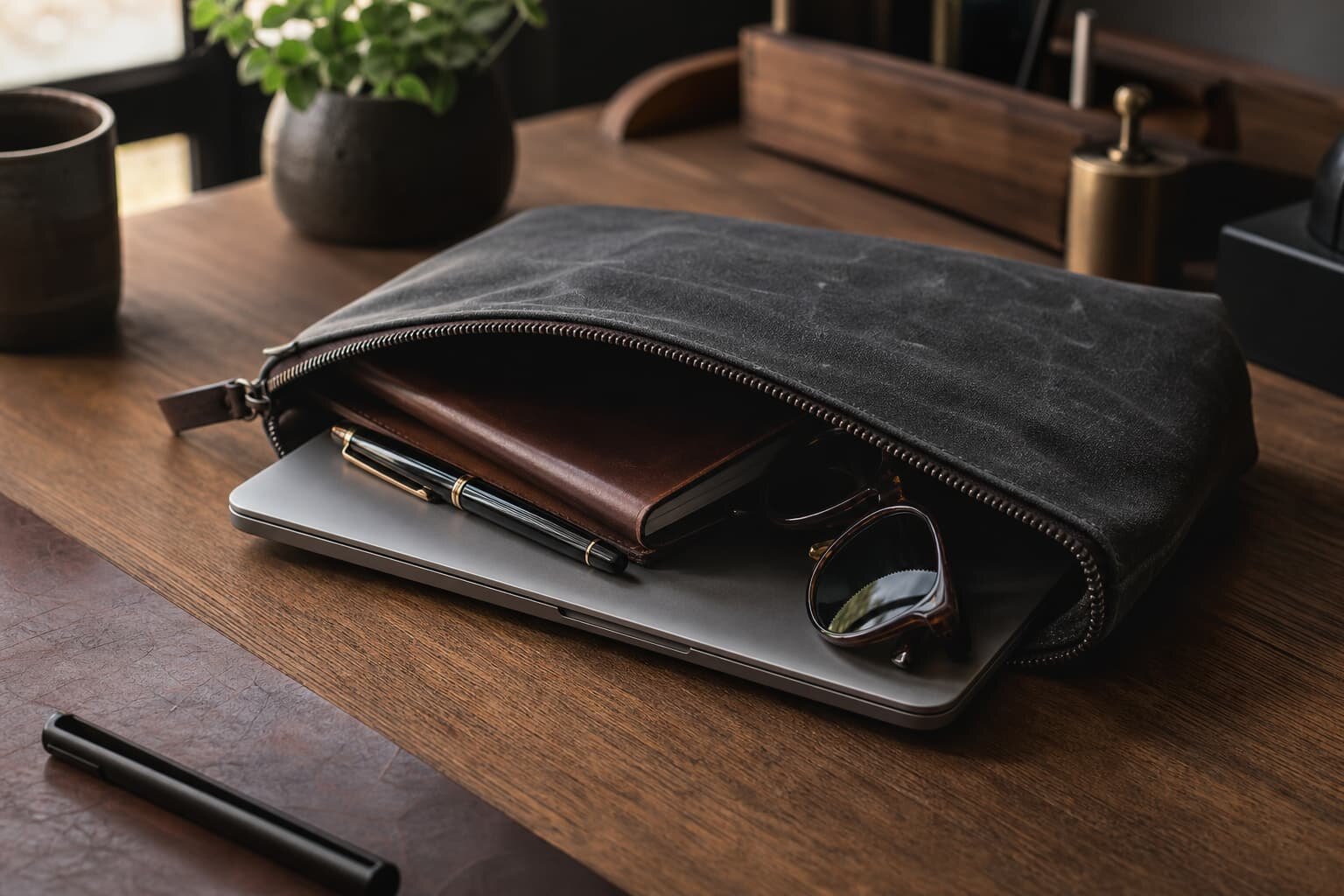
Why Sample Revisions Matter Before Bulk Approval
A zipper business bag is not a complicated product, but it has many small decisions that affect cost, appearance, and use. The buyer may focus on the front logo and color, while the end user notices the zipper catching, handle twisting, thin fabric, or a panel that wrinkles after packing. A sample revision request is the point where these problems can still be corrected without changing thousands of finished bags.
For procurement teams, the purpose of a revision request is not to complain about the sample. It is to convert visual comments into measurable production instructions. A good request tells the factory what is wrong, what the correct result should be, how it will be checked, and whether the change affects price, MOQ, or lead time. If the request is vague, the merchandiser may fix the visible issue but miss the real buying requirement.
- Use sample revision to freeze the product standard before the purchase order becomes expensive to change.
- Separate must-fix production defects from optional preference changes.
- Confirm whether each change affects fabric sourcing, printing setup, sewing time, packing, or carton size.
- Keep one approved sample version as the production control sample.
Start With the Real Use Case, Not Only the Artwork
Before asking for revisions, define how the zipper business bag will be used. A bag for conference documents can be lighter and flatter than a bag used by sales teams to carry catalogues, sample folders, chargers, and a tablet. A retail buyer may need the bag to look neat on shelf or inside a gift set, while a distributor may care more about carton efficiency and quick reordering. These use cases change the acceptable fabric, handle, zipper, and packing decisions.
A common mistake is sending only logo artwork and finished size, then expecting the factory to choose the rest. The supplier may quote a low-cost 600D polyester version with a standard zipper, but the buyer may expect a stiffer, premium hand feel. When the first sample disappoints, the revision becomes a negotiation about assumptions. Stating the use case early helps the factory recommend realistic options and prevents multiple unnecessary sample rounds.
- State the expected load, such as 2 kg of brochures, light office documents, or a tablet and folder kit.
- Clarify the target channel: event giveaway, corporate gift, retail pack, distributor resale, or internal staff issue.
- Tell the factory whether a soft foldable bag or a structured bag is preferred.
- Mention any warehouse or retailer packing rules before revising the sample.
Turn Visual Comments Into Measurable Revision Points
Comments such as "make it stronger," "logo looks too low," or "zipper is not good" are difficult for a factory to execute consistently. A merchandiser may understand the general direction, but the sampling room still needs dimensions, materials, and inspection points. The best revision request uses photos with marked areas, a short written instruction, and a target measurement. This reduces argument later when the second sample arrives.
For example, instead of saying the logo is too small, write that the front logo should be 180 mm wide, centered horizontally, with the top edge 70 mm below the zipper seam. Instead of saying the bag is soft, specify 600D polyester at approximately 280 GSM with PVC or PU coating, or change to 12 oz canvas if a natural fabric look is required. A measurable request helps the factory quote and helps your own team approve or reject the next sample quickly.
- Mark sample photos with arrows and numbers, then list each number in the revision sheet.
- Use finished measurements, not only flat panel measurements before sewing.
- Write color references with Pantone, lab dip, fabric swatch, or approved previous order sample when available.
- Identify whether the change is functional, appearance-related, packing-related, or cost-related.
Fabric GSM and Structure: What to Check on the Revised Sample
Fabric is one of the biggest reasons zipper business bag samples feel different from the buyer's expectation. For polyester business bags, 600D fabric is common, but the hand feel can vary widely depending on yarn, weave density, GSM, and coating. A low-cost 600D may feel thin and collapse easily, while a heavier 600D around 250-300 GSM gives better body. Canvas versions may use 10 oz, 12 oz, or heavier cotton canvas depending on the desired look and budget.
When revising the sample, ask whether the material is actual production fabric or a substitute from sample room stock. Factories often use available fabric to save time, especially for early samples. That is acceptable only if it is clearly stated. Before approval, the buyer should confirm the final fabric weight, color, coating, and shrinkage or colorfastness expectations if relevant. If the bulk fabric will be different, request a fabric swatch or pre-production sample before mass cutting.
- For budget corporate bags, 600D polyester with moderate coating is often enough if the load is light.
- For a premium business look, consider heavier polyester, cotton canvas, or a lined construction.
- For printed polyester, check whether the coating accepts screen print or heat transfer cleanly.
- For natural cotton canvas, expect more shade variation and possible shrinkage than synthetic fabric.
Zipper, Puller, and Opening Revisions
The zipper is the most used component on a zipper business bag, so it should not be approved by appearance only. A No.5 nylon coil zipper is a practical choice for many document and business bags because it balances cost, flexibility, and smooth movement. However, the zipper tape, teeth, slider, puller, end stop, and sewing alignment all affect performance. A sample that opens smoothly when empty may catch after documents are loaded if the opening is under stress.
Your revision request should specify what is unacceptable and how to improve it. If the zipper waves, the sewing tension or tape quality may need adjustment. If the puller feels weak, specify a stronger molded puller or metal puller and confirm plating color. If the opening is too short for folders or laptops, revise the opening length before the pattern is approved. Changes to zipper length can affect panel cutting, sewing sequence, and sometimes the unit price.
- Test the zipper with the bag flat, then test it again after loading the expected contents.
- Check whether zipper ends are secured cleanly and do not create sharp corners.
- Confirm puller color, shape, branding option, and whether it matches other hardware.
- Measure the usable opening, not only the full zipper tape length.
Logo Revision: Print Method, Position, and Production Risk
Logo changes often cause extra sample rounds because artwork approval and production approval are treated as the same thing. They are not the same. A logo can look correct in a PDF but shift after panel cutting, sewing, or folding. Screen print is suitable for solid-color logos and larger quantities. Heat transfer can handle gradients or detailed artwork, but the buyer should check edge feel, adhesion, and color stability on the actual fabric. Embroidery, woven labels, or sewn side labels can create a more durable branded finish but may change MOQ and sewing time.
When reviewing the revised sample, measure the logo from stable reference points such as the zipper seam, side seam, or bottom edge. Avoid approving by eye only. If the bag has a gusset or curved top, the visual center may not match the mathematical center, so the buyer and factory should agree which standard to follow. For dark fabrics, confirm whether an underbase is needed for print opacity. For coated polyester, confirm curing conditions and rub resistance before mass production.
- Specify print size in millimeters and include artwork file format such as AI, PDF, or EPS.
- Define print color by Pantone or approved physical sample, not only a screen view.
- Ask whether screen charge, heat transfer film, embroidery tape, or woven label setup is included in the quote.
- Check logo placement after the bag is sewn and packed, not only on a flat fabric panel.
Handle, Seam, and Load Revisions
Handles are a frequent weak point because buyers and suppliers may define strength differently. A zipper business bag used for brochures may not need the same reinforcement as a sample bag carrying product catalogues. Self-fabric handles can look clean and integrated, while webbing handles may offer better strength and consistency. The revision request should state handle drop, handle width, reinforcement method, and expected load.
For sampling, ask the factory to revise handle stitching if the stitch box is too small, if the bar tack is missing, or if the handle twists when loaded. The buyer should check both appearance and stress points. Pulling the handle by hand is not a formal lab test, but it quickly reveals weak construction. If your sales team or customers will carry heavy documents, consider adding reinforcement backing inside the panel or increasing stitch density. These changes should be quoted before approval.
- Measure handle drop from the top edge of the bag opening to the top of the handle curve.
- Check whether handle length is comfortable for hand carry, shoulder carry, or both.
- Confirm thread color, stitch density, bar tack position, and reinforcement patch if used.
- Load the revised sample for several minutes and inspect seam stretching or panel distortion.
MOQ and Cost Logic Behind Sample Changes
Not every sample revision has the same cost impact. Changing logo size may only require a new screen or heat transfer adjustment. Changing fabric color can trigger a fabric MOQ. Changing zipper tape color, webbing color, lining, puller, or woven label can create separate component MOQs. A buyer who requests many small custom details at a low order quantity may receive a higher quote not because the factory is difficult, but because each component must be sourced and controlled separately.
When reviewing the revised sample quote, ask the factory to separate the cost impact of each major change. This helps procurement decide what is necessary and what can be simplified. For example, using a standard black zipper instead of a custom dyed zipper may reduce MOQ pressure. Choosing a stock fabric color may shorten lead time. Keeping the logo as a one-color screen print may avoid the cost and testing needs of multi-color heat transfer.
- Separate base bag cost from logo setup, custom label, special packing, and sample revision charges.
- Ask which components are stock and which require custom production.
- Check whether the quoted MOQ is driven by fabric, printing, zipper, label, or factory line efficiency.
- Confirm whether the sample cost can be refunded or credited only if that is clearly agreed in writing.
Packing and Carton Checks During Sample Revision
Packing is often reviewed too late. For zipper business bags, poor folding can crease the front panel, damage the logo, bend the zipper, or make the bag look cheaper when unpacked. If the bag is for retail or corporate distribution, the way it arrives matters. Ask the factory to show the folding method, individual packing, carton quantity, and carton size during the sample revision stage, not after bulk goods are finished.
Packing decisions also affect landed cost. A thicker structured bag may require fewer pieces per carton and more shipping volume. A soft foldable bag may save freight but may need careful folding to protect the print. If the buyer has warehouse receiving rules, barcode needs, carton marks, or plastic reduction requirements, include them before final quote confirmation. Otherwise, the factory may quote standard polybag and export carton packing that does not match the buyer's distribution plan.
- Check whether the printed area touches zipper pullers, metal parts, or rough fabric during packing.
- Ask for carton dimensions, gross weight, net weight, and pieces per carton in the revised quote.
- Confirm individual packing: polybag, paper band, tissue wrap, belly band, or no inner bag.
- Review recovery after unpacking; a bag that remains deeply creased may not be acceptable for retail presentation.
Lead Time and Approval Workflow for Revised Samples
Sample revision timing depends on what is being changed. A simple print placement change may be quick if the same fabric and components are available. A fabric GSM change, custom zipper puller, dyed webbing, woven label, or new pattern can require more time. Buyers should ask for a sample revision lead time based on confirmed artwork and comments, not a general promise. The clock should start only after all open points are clear.
For bulk production, approval workflow should be written. The approved revised sample, final artwork, purchase order, packing instruction, and quote should all match. If procurement approves a price based on one specification while marketing approves a different sample, the factory may follow the wrong reference. A clear version number solves many disputes. Mark samples as Sample 1, Revision 1, Revision 2, or Pre-Production Sample, and keep photos plus written comments in the same file.
- Ask the factory to confirm revision lead time and bulk lead time separately.
- Do not mix new change requests into final approval unless the cost and timing are updated.
- Use one approval sheet that lists fabric, size, zipper, logo, handle, packing, carton, and tolerance.
- Keep one sealed approved sample for inspection reference when bulk goods are produced.
Specification comparison for buyers
| Spec decision | Recommended option | When it fits | Buyer risk to check |
|---|---|---|---|
| Main fabric weight | 600D polyester around 250-300 GSM or 12 oz cotton canvas for a heavier look | Corporate document bags, conference kits, retail gift-with-purchase, distributor stock programs | Too light fabric collapses when loaded; too heavy fabric may raise freight cost and reduce folding efficiency |
| Zipper type | No.5 nylon coil zipper with smooth metal or molded plastic puller | Standard business bags that need easy opening and stable cost | Cheap zipper tape may wave after sewing; puller plating can scratch or discolor if not specified |
| Handle construction | Self-fabric handles with reinforced bar tack or 25-30 mm webbing handles | Samples carrying catalogues, laptops, brochures, light tools, or retail documents | Handle length and stitch box size may change the appearance and load capacity |
| Logo application | Screen print for solid logos, heat transfer for gradients, embroidery or woven label for premium version | Brand promotion, event merchandise, distributor gifts, or retail packaging programs | Print size, color tolerance, and placement must be approved on the revised sample, not only on artwork |
| Inner structure | Single main compartment plus optional slip pocket or divider | Business documents, sample cards, brochures, small electronics, or onboarding packs | Extra lining and pockets increase sewing time, MOQ pressure, and inspection points |
| Packing method | 1 pc in polybag or paper band, then export carton by agreed quantity and carton marks | Import programs needing clean presentation and easy warehouse receiving | Over-tight cartons can crease panels; loose packing can distort corners and zipper shape |
Buyer checklist before sampling
- Compare the revised sample against the approved tech pack, artwork file, and original comments, not against memory.
- Measure finished size at the top, bottom, height, gusset, handle drop, zipper opening, and print placement.
- Confirm main fabric GSM, yarn or denier description, coating, hand feel, color, and whether the bulk fabric will be the same lot or a production substitute.
- Open and close the zipper at least 20 times; check catching at side seams, puller strength, zipper tape alignment, and end stops.
- Load the bag with the expected use weight, such as documents, catalogues, or a laptop sleeve, then inspect handle distortion and seam stress.
- Check logo color, print edge sharpness, curing, rub resistance, and whether the print is centered after sewing, not only before sewing.
- Review inside seams, binding, thread trimming, seam allowance, bar tack positions, and whether any raw edge is visible.
- Confirm packing size, folding method, polybag warning text if needed, carton quantity, carton weight, and whether the sample can recover after unpacking.
- Ask the factory to mark every revision clearly, including version number, date, changed points, and remaining open issues.
- Do not approve bulk production until the quote, sample, and written specification all describe the same bag.
Factory quote questions to send
- Which fabric quality will be used for bulk production, including denier, GSM, coating, color fastness level if available, and supplier status?
- Is the revised sample made from actual bulk material, available stock material, or a close substitute?
- What zipper brand or grade is included in the quote, and can the puller shape, color, and plating be controlled in production?
- What is the MOQ for the selected fabric color, zipper color, webbing color, lining, label, and printed logo combination?
- Does the quoted price include sample revision cost, printing setup, logo film, mold charge if any, inner packing, export carton, and carton marks?
- How many days are needed for one sample revision after artwork and comments are confirmed?
- How many days are needed for bulk production after sample approval, deposit, and final packing instruction are received?
- What tolerance will the factory follow for finished size, print placement, color shade, fabric GSM, and carton weight?
- Can the factory provide pre-production photos or a pre-production sample before full sewing starts?
- What sample approval document should the buyer sign so production, QC, and merchandising all follow the same version?
Quality-control points to confirm
- Finished size tolerance should be written clearly, commonly plus or minus 5 mm for small dimensions and plus or minus 10 mm for larger panels, unless the buyer requires tighter control.
- Fabric weight should be checked by cutting and weighing a known area or by confirming mill data; do not rely only on hand feel.
- Zipper movement should be smooth after the bag is sewn and loaded, because zipper quality can change when the opening is under tension.
- Handle reinforcement should match the sample, including bar tack length, stitch density, and thread color.
- Logo placement should be measured from fixed bag edges after sewing, because panel stretch and seam allowance can shift the print.
- Print adhesion should be checked by dry rub, light scratch, and folding around the printed area, especially for coated polyester.
- Seam strength should be tested at handles, zipper ends, gusset corners, and bottom corners because these areas carry most stress.
- Thread trimming, loose fibers, stains, glue marks, needle holes, and panel creases should be included in the appearance standard.
- Packing should protect shape and print surface; printed panels should not rub directly against zipper pullers or sharp carton staples.
- Bulk inspection should reference the approved revised sample, approved artwork, and final written specification together.