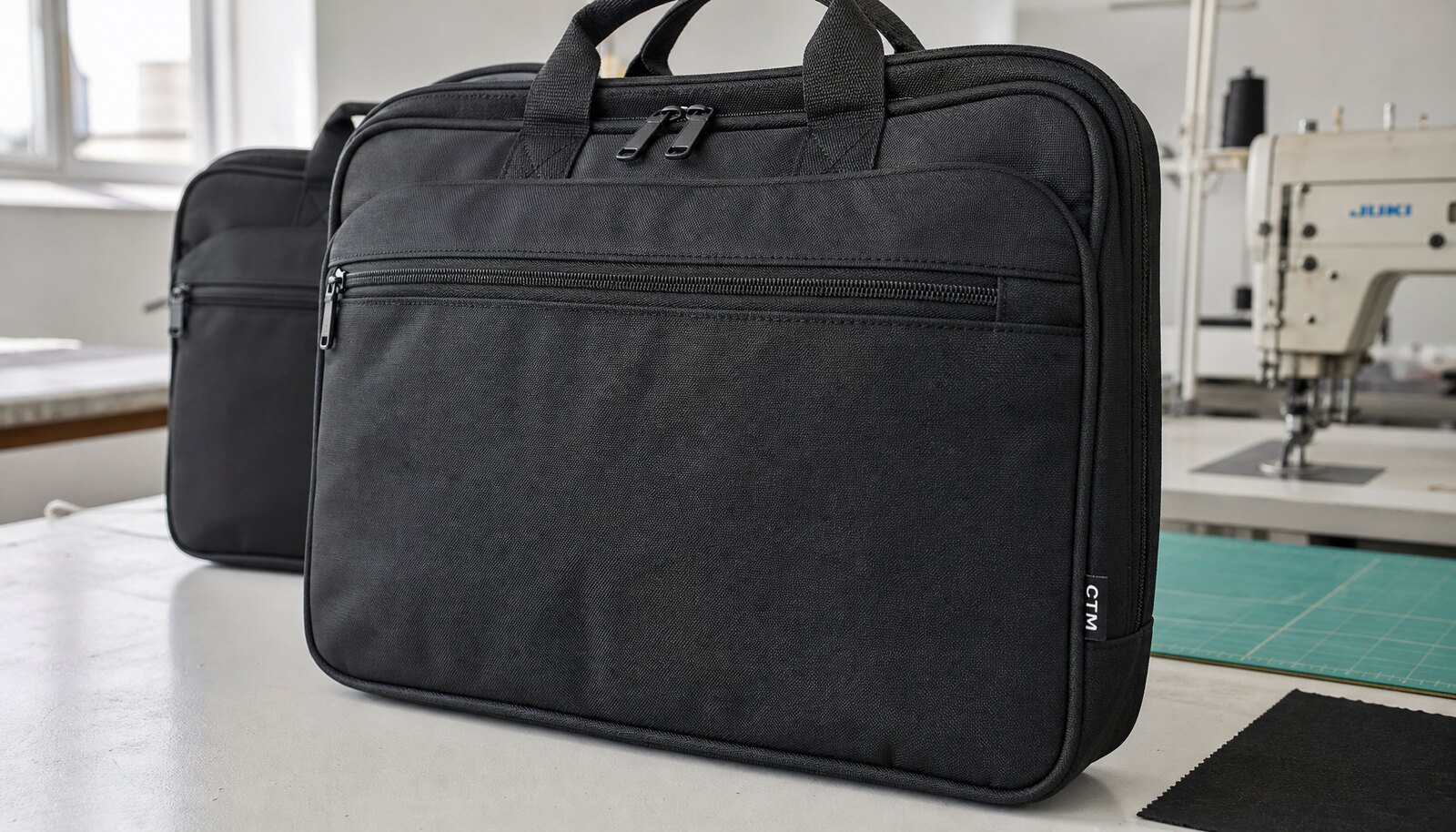
Why sample approval matters before bulk production
For a zipper business bag, the sample is not just a presentation piece. It is the only stage where a buyer can catch pattern errors, weak construction, logo problems, and packing mistakes before they become a full shipment issue. A bag may look correct in photos, but once you load it with documents, a laptop, or a merchandise set, the differences between a well-made sample and a risky bulk order show up fast.
Procurement teams should treat sample approval as a contract checkpoint. If the factory can not match the sample in bulk, the buyer should not approve production yet. The goal is simple: make the sample carry the final decisions on fabric, structure, branding, hardware, and packing so the quote and the finished goods follow one standard.
- Use the sample to confirm the actual cost drivers, not only the visual appearance.
- Approve only after you know which details are fixed and which are still open for revision.
- Tie the approved sample to the PO, tech pack, and final artwork file.
Start with the product definition, not the sample photo
Most sample disputes begin because the buyer asked for a zipper business bag, but did not define which kind. Is it a slim document bag, a padded laptop case, a retail carry bag, or a sales sample organizer? Each one changes the fabric weight, seam load, zipper length, lining, pocket count, and packaging structure. If the factory has to guess the use case, the sample may still look acceptable but fail the actual buying need.
A clean approval starts with a short product definition. Specify the end user, expected load, target market, and whether the bag is for daily corporate use, promo distribution, or retail resale. That information tells the factory whether to propose 300D polyester, 600D polyester, 12oz canvas, or heavier canvas, and whether the structure needs foam, board, or only a simple unpadded build.
- State the target use: document carry, laptop carry, sales kit, or event giveaway.
- Define any required compartments, such as laptop sleeve, pen loop, or front pocket.
- Tell the factory if the bag must hold shape when empty or only when filled.
Check fabric, lining, and build quality with measurable detail
Fabric is where many samples mislead buyers. A sample can use a thicker cloth than the bulk order, or the factory may choose a cleaner-looking batch just for approval. Ask for the exact fabric spec by GSM or denier, plus any coating, backing, or wash treatment. For business bags, common options are 300D to 600D polyester for lighter structures and 12oz to 16oz canvas for a more substantial retail feel. If the bag needs stiffness or better body, confirm whether the factory uses foam, paper board, or a structured interlining.
Lining quality matters just as much as the outer shell. A neat 210D polyester lining is common, but the real question is how it is attached and whether the corners are clean. Loose lining, raw edges, and uneven seam turn-backs create returns even when the outside looks fine. During sample review, inspect the inside of every compartment, because weak internal finishing often tells you more about bulk consistency than the exterior does.
- Ask for fabric weight, coating type, and color standard before sample approval.
- Check whether the sample and bulk will use the same fabric lot or only the same spec.
- Inspect the underside of seams, corners, and zipper ends for raw edge exposure.
Approve the zipper system and hardware under real use
Because the bag is a zipper business bag, the zipper should be tested like a working component, not treated as decoration. Move the zipper repeatedly while the bag is empty and while it is loaded with paper, a tablet, or whatever weight the product is designed to carry. Pay attention to the start point, end stop, and the feel of the slider at the corners. A sample that feels smooth on day one can still fail if the zipper tape is light, the stitch line is off, or the slider spec is inconsistent with bulk production.
The same logic applies to pullers, metal tabs, snaps, magnets, webbing, and any handle attachment points. Hardware should be specified in a way the factory can repeat. If the sample includes a matte black puller, an antique brass logo plate, or a specific webbing width, write it down and make sure the quote reflects it. Small hardware changes can alter the feel of the bag and the cost structure more than buyers expect.
- Test zipper travel on straight runs and around corners.
- Check that pullers do not scratch the fabric or twist under normal use.
- Confirm that all attachment points are bartacked or reinforced where load is expected.
Treat logo approval as a production control point
For branded business bags, the logo is usually where approval breaks down first. The artwork may be correct on screen, but the sample can still miss the mark if the size, placement, stitch density, or print finish is off. Decide early whether the logo should be woven, printed, embroidered, embossed, rubberized, or attached as a side label. Each method behaves differently on polyester, canvas, and padded surfaces, so the best choice depends on the bag body and the brand position.
When reviewing the sample, check the logo in daylight and from a normal viewing distance, not only under sample-room lighting. Verify the exact placement from the top edge, zipper line, handle seam, or front pocket center. If the logo is screen printed, ask what mesh and ink type are used. If it is embroidery, check backing, thread density, and whether the stitches distort the fabric. If it is woven or sewn as a label, inspect the edge finish and stitch count so the label does not fray in bulk.
- Approve one logo method and one artwork file before bulk starts.
- Confirm logo size, position, and color tolerance with a marked sample or drawing.
- Ask the factory to repeat the logo on the same material used in mass production.
Use a comparison method for structure and internal layout
A useful sample approval process compares the sample against the intended use, not against a generic bag category. A laptop-style zipper business bag may need foam, a divider, and a stronger handle, while a conference document bag may need a flatter profile, lighter build, and easier stacking. The buyer should compare the sample layout with the planned load and decide whether the bag needs structure, softness, or a balance of both.
This is also the stage to confirm pocket logic. Internal pockets should serve the real use case instead of adding complexity for its own sake. Too many pockets can create distortion, while too few can reduce the bag's selling value. Review the sample with the person who will write the product listing, the person who will place the order, and the person who will handle returns, because all three will notice different issues.
- Check pocket sizes with actual items, not only with a ruler.
- Confirm whether the bag should stay upright when empty.
- Make sure the base, gusset, and handle positions support the intended load.
Apply acceptance criteria for sample quality, not vague opinions
The phrase looks good is not enough for a procurement file. Your approval should define what counts as acceptable and what counts as a defect. For zipper business bags, that usually means limits for size tolerance, stitch spacing, logo placement, zipper function, and visible defects such as stains, misalignment, or loose threads. If the sample is the master reference, then the tolerance range should be clear enough that a factory can produce the same result without guessing.
A practical acceptance standard should distinguish cosmetic issues from functional issues. A tiny thread tail may be acceptable if trimmed before packing, but a crooked zipper, weak handle reinforcement, or shifted logo should trigger revision. Buyers protect themselves when they write the approval notes in simple language, supported by photos, because factory teams can translate clear notes into production better than subjective feedback.
- Define the maximum acceptable size variance for length, width, and depth.
- Set a clear rule for visible defects, such as stains, broken stitches, and uneven logo placement.
- Require the factory to resend corrected photos or a revised sample when a defect is not cosmetic.
Compare packing, labeling, and carton data before signoff
Many sample approvals fail late because the bag itself is fine, but the packing plan is not. Ask the factory to show how the approved sample will be folded, bagged, labeled, and packed into cartons. If the bag has a structured front panel, a side label, or a decorated logo, the packing method must protect those features from crease marks and abrasion. For import programs, the carton and inner packing data are part of the product quality, not an afterthought.
Check whether the sample includes care labels, barcode placement, polybag warning text if required, and carton marks. If your channel requires shelf-ready appearance, confirm the fold direction and whether the product can recover shape after unpacking. For distributors and retail buyers, the packing spec can affect sell-through and damage claims as much as the bag build itself.
- Confirm individual polybag size and whether air holes are needed.
- Check carton count, carton dimensions, and stacking strength.
- Verify that labels and barcodes do not sit on visible brand surfaces unless approved.
Use quote data to prevent a weak sample from becoming a weak order
A good sample approval should match a complete quote, not just a sample request. Buyers should ask for the exact fabric, lining, zipper, logo method, packing format, and MOQ logic behind the quote. This is important because a factory may be able to make one clean sample with premium trims but switch to a lighter spec in bulk if the order sheet is not detailed enough. A full quote should show where the cost comes from, even if it does not reveal confidential factory margins.
Pay special attention to MOQ breaks. A higher MOQ may be needed for custom fabric dyeing, a special zipper color, a unique puller, or a new logo plate. If you do not know which parts drive MOQ, you may approve a sample that is commercially impossible to repeat. That is why a sample approval checklist should always sit next to the quote review, not after it.
- Ask which trims change the MOQ and which do not.
- Check whether lead time changes when the logo method changes.
- Request the sample cost, revision cost, and bulk production lead time in the same quote file.
Lock the approval workflow so no one treats the sample as informal
The approval workflow should tell the factory exactly what happens next. If the sample is approved as is, note the date, version number, and the person who signed off. If revisions are needed, list the required changes one by one and ask for a revised sample or revised photos before production. A sample that is only approved in chat messages often causes disputes later because there is no single source of truth.
The cleanest workflow is simple: receive sample, inspect against spec, record issues, revise if needed, and then issue written approval tied to the PO. This protects the buyer when multiple stakeholders review the product, including sourcing, merchandising, quality, and sales. It also protects the factory because the production team gets one approved reference instead of mixed instructions from different people.
- Use sample version numbers so revisions do not get mixed up.
- Store inspection notes with photos in the buying file.
- Issue final approval only after all critical defects are closed.
Specification comparison for buyers
| Spec decision | Recommended option | When it fits | Buyer risk to check |
|---|---|---|---|
| Body fabric | 300D to 600D polyester or 12oz to 16oz canvas | Daily office carry, laptop sleeves, sales kits, and light travel use | Confirm GSM or denier, coating, and colorfastness so the sample does not hide a weaker bulk fabric |
| Lining | 210D polyester lining with neat edge finishing | Most business bags with pockets and organizers | Check whether lining is fully stitched or only tacked, because loose lining creates returns |
| Zipper | Nylon coil zipper with smooth pull and matching zipper tape | Frequent open-close use and moderate load | Test the sample under load; a sample can feel smooth even when the selected bulk zipper is lower grade |
| Logo method | Woven label, emboss, screen print, or heat transfer depending on surface | Brand programs with repeat orders and controlled artwork | Verify logo placement, size tolerance, and color match under daylight, not only in the sample room |
| Structure | Padded base and reinforced side seams | Bags carrying documents, samples, or small tech items | Look for weak corner stitching and uneven gusset shape that will distort in production |
| Packing | Individual polybag plus export carton with quantity marks | Wholesale shipment and distributor orders | Confirm pack count, carton dimensions, and inner packing protection before sample approval |
Buyer checklist before sampling
- Confirm the final bag dimensions, tolerance, and whether the sample reflects the actual bulk pattern.
- Check fabric spec by GSM, denier, coating, hand feel, and color standard, not by appearance alone.
- Open and close every zipper several times with a realistic load inside the bag.
- Inspect seam strength, stitching density, bartacks, reinforcement points, and thread trimming.
- Verify logo placement, logo size, color, and method against the approved artwork file.
- Test pockets, internal dividers, pen loops, laptop sleeves, and any magnetic or snap closures.
- Review lining quality, edge binding, and the inside finish where buyers often miss defects.
- Check sample packing, hangtags, care labels, barcode position, and carton marking requirements.
- Ask the factory to confirm sample-to-bulk consistency for fabric, trims, and hardware.
- Record approval comments in writing with photos so the factory has one clear reference.
Factory quote questions to send
- What exact body fabric, lining, and foam spec are you quoting, including GSM or denier and coating?
- Is the sample made from the same materials and factory line as bulk production, or is it a one-off sample build?
- What zipper type, slider finish, and puller style are included in the quote?
- What logo method are you pricing, and what are the setup or plate charges for each method?
- What is the MOQ by color and by logo version, and does the MOQ change if we use a different zipper or lining?
- What lead time do you need for sample revision and for bulk after final approval?
- What packing format is included in the quote, including polybag, insert, inner box, and carton count?
- Which dimensions and tolerance will you hold in bulk, and how will you measure them?
- What inspection standard do you use for stitching, zipper function, and logo placement?
- What information do you need from us to avoid a second sample round?
Quality-control points to confirm
- Measure overall length, width, depth, and handle drop against the approved tech pack.
- Check zipper movement on both empty and loaded bags, including the start point, end stop, and pull force.
- Inspect stitching density and seam line straightness on handles, gussets, pocket edges, and stress points.
- Confirm logo registration, color, and position with a daylight reference sample.
- Verify fabric weight, hand feel, and coating consistency across front, back, and side panels.
- Open all compartments to confirm pocket dimensions and that the sample matches the intended use case.
- Check lining security, no loose threads, and no exposed raw edges at corners or zipper tape ends.
- Test pullers, sliders, snaps, magnets, Velcro, or webbing attachments for function and finish.
- Review packing completeness, including barcode, care label, quantity mark, and carton strength.
- Document any acceptable variance and any non-negotiable defect before signing off.