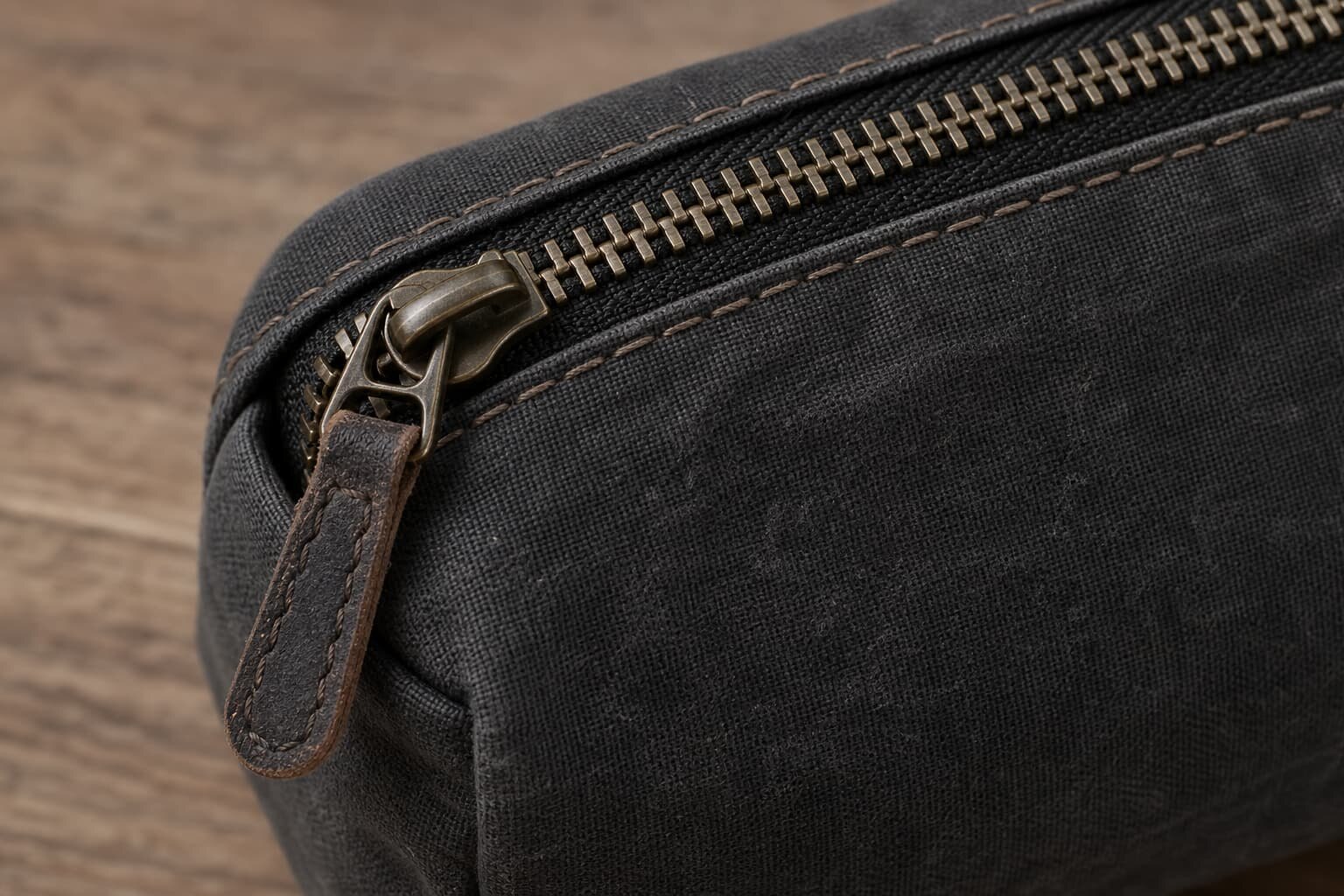
Why Repeat Orders Go Wrong Even After A Good First Order
A repeat order for zipper business bags is not automatically safer than a first order. In many factories, the second run is where quiet substitutions start: a different fabric lot, a lighter zipper tape, a thinner lining, or a revised puller from the trim supplier. The bag may still look close at a glance, but procurement teams end up with a product that feels cheaper, wears differently, or fails earlier in use. If your sales team only says "same as last time," that is usually not enough for production control.
The buyer's job is to define what "same" means in measurable terms. The approved sample is only the starting point; the reorder should reference fabric weight or denier, zipper size, logo method, stitching points, packing count, and outer carton format. If any one of those items changes, the factory should quote it separately and confirm whether it also changes MOQ or lead time. That is how you keep a reorder from becoming a quiet revision order.
- Treat the last approved sample as the control piece, not the new quote sheet.
- Ask the factory to flag every substituted trim, fabric lot, or packaging change in writing.
- Do not approve a reorder from photos alone if the bag will be sold under the same SKU.
Freeze The Spec Pack Before You Ask For A Reorder Quote
A strong repeat-order RFQ starts with a frozen spec pack. The pack should include the last approved sample photo set, dimension sheet, bill of materials, artwork file, packing spec, and carton marking instruction. If the previous order had any waiver, note that too. For example, if the zipper puller was approved with a shorter tail, or the lining shade was allowed to vary slightly, that needs to stay visible in the reorder file so nobody assumes a broader tolerance than you intended.
Good buyers also keep a change log. If the customer wants the same zipper business bag but with a new corporate color, a different pocket count, or a new logo application, list those changes first and keep the unchanged details locked. That lets the factory quote the base bag separately from the revision. It also helps your internal team compare the reorder against the prior PO without mixing old and new requirements.
- Include a clean PDF spec sheet and the exact approved artwork file.
- Mark any prior exceptions so the factory does not treat them as permanent defaults.
- Use one version-controlled document set for procurement, QA, and the supplier.
Fabric And Construction Targets That Should Not Drift
For zipper business bags, fabric choice changes the whole product equation. Standard corporate bags are often made in 300D to 600D polyester, while a more structured or premium version may use 12oz to 16oz canvas. If the bag needs to stand upright or carry a laptop, ask for a fabric that holds shape and a lining that does not collapse into the shell. For canvas builds, the buyer should not look only at the advertised ounce figure; the weave density, finish, and backing also matter. A very soft canvas can feel nice but lose form fast on a repeat order.
The construction details matter just as much as the shell. Ask for a #5 or #8 nylon coil zipper for daily business use, bar-tacks at load points, and reinforcement at the handle roots and strap anchors. If the bag includes a laptop sleeve, confirm the padding thickness and the seam allowance around the sleeve opening. Reorders often fail when one small trim decision changes the performance of the whole bag.
- Lock shell fabric by denier or GSM, not by a vague color description.
- Confirm lining weight, interlining use, and whether the bag has a base insert.
- Check whether the zipper puller, slider, and tape color are all matched to the approved sample.
Branding Choices Need Repeatability, Not Just Nice Sample Photos
Logo method is one of the easiest places for a reorder to drift. Screen print can be efficient for simple artwork, but it is sensitive to ink thickness, mesh count, and color registration. Embroidery can look premium, but it can also change density from run to run if the factory does not lock the stitch file. Woven labels are often more stable on repeat orders, while a PU patch or debossed patch works well if the brand wants a more durable, low-wear finish. The best choice depends on where the bag will be sold and how often it will be handled.
Do not let the factory treat the logo as decoration only. Measure the placement from the seam, keep the logo size fixed, and confirm the exact color standard if the art uses brand-specific tones. If the business bag has a front panel curve or a gusset seam near the logo, verify that the print or embroidery will sit flat after sewing. A repeat order with the wrong logo placement is painful because it looks close enough to miss during a quick inspection, then causes customer complaints after delivery.
- Choose the logo method based on wear, not only on appearance.
- Require exact placement measurements from the nearest seam or edge.
- Ask for a stitched, printed, or woven strike-off on the same material used for bulk.
Sample Checks That Matter Before You Release The Bulk Order
A repeat order still deserves a sample check if anything changed, even if the change seems minor. A pre-production sample is the right checkpoint when the fabric lot, print method, zipper color, pocket layout, or packing format changes. If nothing changes and the factory has a strong history, a photo confirmation or size-confirmation sample may be enough, but only if the buyer already has a detailed approval record from the last order. The point is not to create extra work; the point is to prevent hidden revisions from moving into bulk production.
On the sample, test the pieces that fail in real use. Open and close the zipper several times. Load the main compartment with documents or a mock laptop weight. Check whether the bag sits flat, whether the gusset is symmetrical, and whether the strap hardware twists or bites into the webbing. The sample should also prove that the logo, pocket count, and internal organization still match the intended use case. If the bag is sold as a business bag, it should feel organized, not only durable.
- Confirm zipper movement, slider action, and stitching at the zipper ends.
- Test the bag with real contents: files, tablet sleeve, notebook, or laptop dummy weight.
- Approve the sample only after comparing it side by side with the last approved version.
MOQ And Lead Time Logic For Repeat Business Orders
Repeat orders usually get easier only when the material set stays stable. MOQ is often driven by fabric dye lot, print screen setup, zipper color, and carton count per style. If the buyer changes only one thing, such as logo color or zipper puller, the factory may still need a fresh setup and a new minimum. That is why it helps to ask the supplier which part of the quote is tied to material procurement and which part is tied to labor or finishing. The headline MOQ can look the same while the real operating MOQ changes by color or by trim choice.
Lead time should also be discussed as a production path, not a single number. Ask the supplier what happens if you keep the exact same spec, and what happens if you revise artwork, lining, or packaging. Repeat orders with frozen specs should be faster than new development, but they still need time for material reservation, cutting, sewing, finishing, QC, and carton booking. Procurement teams should build a small buffer for artwork confirmation, especially if the business bag will be sold to a retail chain or tied to a fixed campaign date.
- Ask for MOQ by material, by color, and by logo method.
- Separate unchanged repeat production lead time from revised-order lead time.
- Keep a buffer when the reorder depends on matching the same shade as the previous batch.
Packing Details That Keep Repeat Orders Sellable
Packing is one of the most overlooked repeat-order issues because it feels routine. For zipper business bags, individual polybag packing, a simple insert card, and desiccant are common choices, but they should still be specified. If the bag has a structured body, confirm whether a tissue insert or cardboard support is needed to protect the shape. If the SKU sells through retail, barcode placement and hangtag position may matter as much as the bag itself. A buyer who ignores packing details can receive a perfect bag that still arrives with wrinkles, scuffs, or mixed assortments.
Carton control should be simple and repeatable. Lock the quantity per carton, carton size, gross weight target, and master carton mark. If there are multiple colors or sizes in one shipment, define the packing ratio clearly. If the shipment will move by sea, ask for carton compression resistance and moisture protection. The factory does not need a long packing essay; it needs a clear packing plan that can be repeated on every reorder without extra interpretation.
- Specify the polybag type, closure style, and whether warning text is required.
- Confirm the exact carton count per style and per colorway.
- Ask for carton photos before shipment if retail presentation is important.
How To Compare Repeat-Order Quotes Without Missing Hidden Cost
A good repeat-order quote should be itemized. The buyer needs to see fabric, lining, zipper, webbing, print, labor, packing, and any testing or documentation charge separately. If a supplier rolls everything into one number, it becomes hard to tell whether the quote is competitive or simply missing a required detail. This matters even more on reorder business because a lower quote can be built on a weaker zipper, a lighter fabric, or a less careful packing standard. The cheapest line is not the cheapest landed result if the bag gets rejected or reworked.
Watch for vague phrases such as "same as previous" or "similar quality." Those phrases are useful in a sales conversation but weak in a production order. Ask each supplier to confirm the exact shell fabric, lining, zipper spec, logo method, packaging count, and revision allowance. If one supplier offers a faster lead time, check whether that speed comes from using stock materials instead of the approved material set. Compare quote data, not just the total price.
- Compare line items side by side: materials, trim, print, labor, packing, and revision cost.
- Look for unstated substitutions in zipper, lining, or base board materials.
- Require the factory to explain any quote difference tied to MOQ or setup work.
A Repeat-Order Workflow That Reduces Rework
The best repeat-order workflow is simple enough that procurement, QA, and the factory can all follow it. Start with the last approved sample and spec pack, then request the quote against that exact reference. Next, capture every requested change in a revision sheet. After that, confirm the pre-production sample or photo approval, freeze the packing details, and release the production order only when the factory has acknowledged the final version. This sequence sounds basic, but it prevents most of the avoidable mistakes that appear on repeat business bags.
Before the PO is released, make one person responsible for sign-off. If sales, design, and procurement all send separate instructions, the supplier may stitch together a product that satisfies nobody completely. A single approval chain helps the factory know which document controls. It also helps your team defend the reorder internally if someone later asks why the zipper size, logo placement, or carton count changed. Repeat orders run better when the decision trail is clean.
- Use one version-controlled approval sheet for all reorder changes.
- Assign a single spec owner who signs off on materials, artwork, and packing.
- Freeze the final version before cutting, not after the first bulk pieces appear.
Specification comparison for buyers
| Spec decision | Recommended option | When it fits | Buyer risk to check |
|---|---|---|---|
| Shell fabric | 300D-600D polyester or 12oz-16oz canvas | Daily office carry, document bags, light laptop use | Too-light fabric sags, shows lining lines, or wears through at corners |
| Zipper spec | #5 or #8 nylon coil with auto-lock slider | Frequent opening, business travel, heavier contents | Cheap zipper tape, weak slider, or color mismatch across lots |
| Logo method | Woven label, embroidery, screen print, or debossed PU patch | Repeat orders that need stable branding | Logo size drift, color shift, or embroidery density that changes from sample |
| Reinforcement | Bar-tacks at strap points, gusset reinforcement, base insert | Bags carrying files, folders, tablets, or laptops | Stress tears at handle roots, shoulder strap anchors, or zipper ends |
| Packing style | Individual polybag, desiccant, and export carton with fixed qty | Retail, wholesale, and export shipments | Scuffs, moisture, mixed SKUs, or inaccurate carton count |
| Lead time control | Frozen spec with no late artwork or trim changes | Repeat reorder with stable sales forecast | Hidden delay if zipper color, lining, or print artwork changes after PO |
Buyer checklist before sampling
- Pull the last approved sample, photos, and spec sheet before you request the reorder quote.
- Confirm shell fabric, lining, zipper size, puller style, and reinforcement points have not changed.
- Check whether the logo method, logo size, and artwork placement match the previous approved version.
- Verify the packing plan: polybag type, insert card, desiccant, carton quantity, and carton label format.
- Ask the factory to separate any change costs from the base repeat-order price.
- Confirm whether a pre-production sample is still needed if fabric, trim, or artwork changed.
- Review the minimum order by color, by logo method, and by material lot, not just the headline MOQ.
- Set the required ship window early and ask what will move the lead time.
Factory quote questions to send
- Is this quote based on the last approved sample, or did you substitute any material or trim?
- Please list the shell fabric, lining, zipper size, zipper brand or equivalent, and logo method line by line.
- What is the MOQ by color, by print method, and by zipper or hardware color?
- What sample do you recommend for a repeat order: pre-production sample, photo sample, or size-confirmation sample?
- What packing details are included in the price: polybag, insert, carton qty, and outer marks?
- What lead time applies to unchanged repeat orders, and what events add time?
- Which quote items are optional and which are fixed for production?
- If we change only the logo color or zipper puller, what cost and MOQ impact should we expect?
Quality-control points to confirm
- Compare the bulk fabric against the last approved sample for hand feel, color shade, and surface finish.
- Check zipper opening and closing on multiple units, including corner stress and repeated pull tests.
- Measure bag dimensions, gusset depth, strap length, and logo placement against the approved spec.
- Inspect stitching density, seam allowance, bar-tacks, and loose threads at the load points.
- Confirm lining quality, pocket alignment, and internal pocket size for documents or laptop sleeves.
- Verify logo sharpness, registration, embroidery density, and color match under natural light.
- Check individual packing, carton count, carton marks, and moisture protection before shipment.
- Review final AQL or piece inspection results against the agreed acceptance criteria.