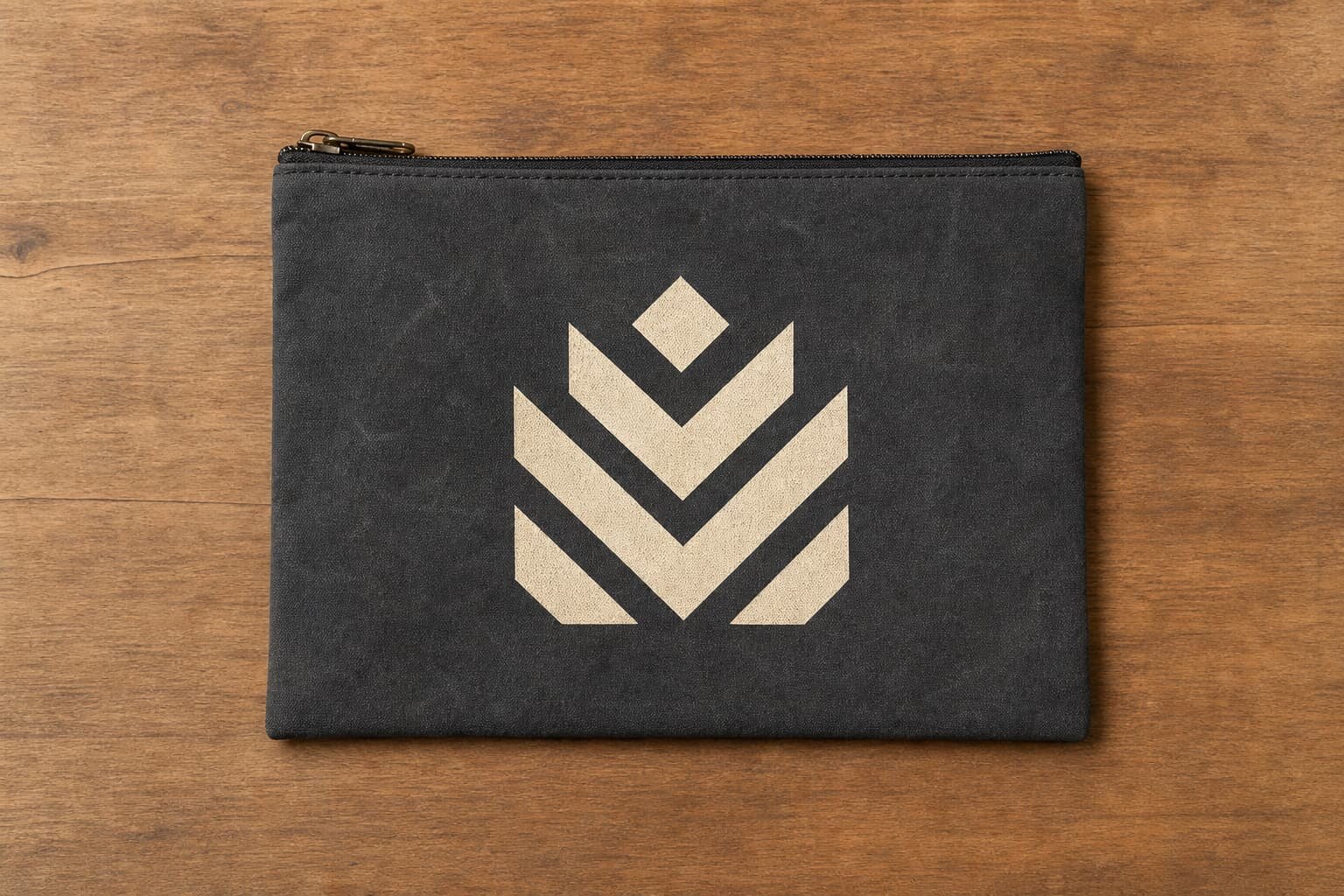
Why a placement report matters on zipper business bags
A zipper business bag logo placement quality report is not just a photo sheet. It is the document that stops a supplier from moving the logo two centimeters lower, shrinking the mark to fit a panel, or changing the method because the original spec was too loose. For procurement teams, the report is the easiest way to connect artwork, sample approval, and bulk inspection into one record that can be compared across suppliers.
This matters more on zipper business bags than on simple tote bags because the structure is tighter. The bag may have a front pocket, gusset, zipper tape, lining, foam, piping, or a padded laptop compartment, and each one changes where the logo can sit. If the report does not define the placement clearly, the factory will make a judgment call based on sewing convenience, and that judgment call is usually where the quality dispute starts.
- Use the report to freeze the logo location before bulk, not after the first carton ships.
- Treat the approved sample as the legal reference for size, position, and method.
- Ask the supplier to show the logo on the actual construction, not only on a flat artwork proof.
Define the logo zone before you ask for a quote
Start with the bag structure, not the artwork file. A logo placed on the center of a flat front panel behaves differently from the same logo placed above a zipper pocket or across a seam line. The RFQ should tell the factory exactly which panel carries the mark, where the logo begins and ends in millimeters, and whether the measurement is taken from the top seam, side seam, zipper line, or centerline. Without that reference, two factories can quote the same brief and still produce different results.
The best reports also define what is not allowed. If the logo must never cross a zipper tape, sit over a side gusset, or touch a piping line, say so in the spec. If the bag will be made in several sizes, note whether the logo position must stay visually aligned across all sizes or whether each size gets a scaled placement. Buyers often lose control here because the design team cares about the look while the factory cares about the seam path. The report should settle both.
- Specify placement by fixed reference points, not by description alone.
- State whether the bag will be measured flat, stuffed, or both.
- Call out any no-go areas such as seams, zippers, folds, pockets, and piping.
Match the decoration method to the fabric and panel structure
The logo method should follow the fabric, not the other way around. A 300-450 GSM canvas body can handle a different branding approach than a 600D polyester shell or a PU accent panel. Screen print works well when the panel is flat and the logo has a simple shape. Embroidery gives a stronger retail feel, but it can pucker thin fabric if there is no backing or reinforcement. Woven labels stay crisp on textured or coated surfaces, while debossing and embossing belong on PU areas that can take pressure without warping.
When comparing methods, think about durability, repeatability, and quote clarity. A direct print on a smooth 600D face fabric may be the cheapest option, but if the bag folds through the logo area during packing, that same print can crack or rub. A stitched patch can hide small surface variation and look more premium, but it adds another part, another sewing step, and another chance for alignment error. For this reason, the report should note the body fabric weight or GSM, the decoration method, and whether any reinforcement is needed under the logo area.
- Use print for flat, simple, low-color logos on stable panels.
- Use embroidery or a patch when the buyer wants a more premium, tactile finish.
- Use woven labels or debossing when the surface texture or panel shape makes direct printing risky.
Lock the measurement standard and tolerance
A quality report is only useful if the factory can measure the same way every time. Define the artwork size in millimeters, the distance from the chosen reference edge, and the tolerance that is acceptable after sewing. Many disputes happen because the artwork was centered in design software but not centered on the sewn product. A bag body can shift slightly during sewing, and a logo that looked perfect on a flat panel can drift once the side seam is closed or the zipper is installed.
For buyer control, the report should distinguish between design position and production position. For example, the artwork may be centered on the panel, but the sewn product may require a small offset to account for seam allowance, gusset pull, or zipper tape thickness. If the logo is on a curved or padded section, add a note on whether the measurement is taken before stuffing, after stuffing, or after final packing. That small detail keeps the supplier from using a different measuring method later.
- State logo size, top and side offsets, and measuring points in the spec sheet.
- Set one tolerance for print alignment and a separate one for stitched or embossed placement if needed.
- Note whether the factory should correct for seam allowance, panel distortion, or padding thickness.
Approve samples against the same reference every time
Sample control is where most logo placement issues are caught early, but only if the approval process is disciplined. Ask for a sequence that makes sense: artwork proof, placement sketch, strike-off or decorated swatch, pre-production sample, then a golden sample signed by both sides. Each stage should show the logo on the actual material and construction, not only as a digital file. If the bag uses a woven label, the sample should show the cut edge and stitch line. If it uses print, the sample should show the ink edge and cure quality.
Check samples in the same lighting and the same condition you expect in bulk. A zipper business bag may look centered when empty but shift after a laptop insert is added. That is why buyers should inspect one sample flat and one sample lightly loaded, with the zipper fully closed. If possible, take front, side, and angled photos next to a ruler. The factory quote may be based on a nice design file, but the approval should be based on the real product in hand.
- Approve one reference sample that all future production must match.
- Review the logo under neutral light and again after light stuffing.
- Keep photo records of the approved placement from front, side, and top views.
Ask for quote data that reveals real cost
A useful quote separates the bag cost from the branding cost. Buyers should ask for the base bag price, logo setup or tooling, sample charge, packaging charge, and any extra cost for multiple artwork colors or extra locations. If the supplier only gives one unit price, it becomes hard to know whether the quote includes a woven label, print plate, embroidery digitizing, or a second inspection step. That is where low quotes often hide cost later.
MOQ logic also needs to be explicit. A factory may accept a low MOQ on the bag body but push the decorated MOQ higher because the logo method needs setup recovery or special handling. Ask whether MOQ is by total quantity, by color, by logo variant, or by panel placement. Lead time should be split into stages as well: artwork approval, sample production, sample revision if needed, bulk production, and packing. As an example only, a straightforward printed bag may be quoted at 15-25 working days after sample approval, while embroidery, custom lining, or a new patch can extend that.
- Separate unit price, setup cost, sample cost, packing cost, and carton cost.
- Ask whether MOQ changes with logo method, color count, or extra placement.
- Request lead time by stage so you can see where delays are likely to happen.
Compare supplier quotes on the same spec, not the same price
Two quotes are only comparable if the spec is identical. If one supplier quotes a 600D polyester bag with screen print and another quotes a thinner shell with heat transfer, the lower price is not a fair benchmark. The same warning applies to logo size, panel choice, zipper grade, lining weight, and packing method. A quote that looks cheaper may simply be using less fabric, less thread, or a smaller logo. The report should force each supplier to quote the same size, same method, same placement, and same carton pack.
The buyer should also compare the supplier's risk handling, not just the price line. Did the factory measure placement from the same seam points you requested? Did they include a strike-off or pre-production sample? Did they show how they will inspect the logo during bulk? The best quote is the one that makes hidden assumptions visible. If a supplier cannot explain how the logo will be centered after sewing, that quote is not yet ready for award, even if the unit price is attractive.
- Normalize all quotes to the same fabric, logo method, size, and packing.
- Watch for hidden reductions such as smaller artwork, thinner fabric, or fewer color steps.
- Reward the quote that shows the process, not the one that only shows the lowest number.
Pack the bag so transit does not distort the logo
Packing can damage placement quality even when production is correct. A logo located near a fold line may crease when the bag is flat-packed. A printed surface can rub against another bag if the zipper pull or buckle sits on top of it. Embroidered areas can catch on tissue or polybags if the inside finish is rough. For this reason, the report should include the packing method, folding direction, insert card or stuffing requirement, and whether the logo must stay out of the fold path.
Buyers should also confirm how the supplier stacks bags in the master carton. Compression can make a heat-transfer logo look cloudy, and a debossed mark can soften if the panel is pressed against a hard edge. If the bag has a side label or woven mark, make sure it will not be hidden inside a fold. A good factory quote includes packing details because the supplier knows that a logo can pass inline inspection and still fail after cartons are stacked, strapped, and shipped.
- Keep the logo away from the main fold line whenever possible.
- Confirm whether the bag needs a flat insert, tissue, or internal support.
- Check logo appearance after carton stacking, not only during sewing.
Inspect bulk output with clear acceptance criteria
Bulk inspection should not be a general visual opinion. It should be a check against the approved sample and the agreed placement numbers. The inspector should confirm logo position, size, color, orientation, edge quality, and repeatability across the lot. On a zipper business bag, the logo must also be checked relative to the zipper line, pocket edge, and seam joins because those features can pull the panel out of square. If the bag has multiple sizes, the report should show whether the logo is proportionally scaled or held at the same visible distance from each edge.
The acceptance criteria should be simple enough for the factory to use at line level. If a print is too close to the seam, if an embroidery patch is lifting, if a woven label is fraying, or if a debossed mark is unreadable under normal light, the lot should be held before packing. Buyers do not need a complicated document; they need a document that tells the operator what is allowed, what is not, and who signs off when an issue is corrected.
- Check the first-off pieces before the rest of the lot runs.
- Use the signed sample as the reference for all visual and dimensional checks.
- Hold any lot that shows repeated logo drift, edge damage, or method failure.
Turn the report into a repeatable RFQ workflow
The easiest way to reduce logo mistakes is to turn the report into a standard workflow. Start by selecting the decoration method based on the bag fabric and use case. Then define the placement with measurement points, issue the RFQ with the artwork file and tolerance, approve a decorated sample, and lock a golden sample before bulk. During production, ask for first-off photos and mid-run checks. Before shipment, review packing photos and carton marks so the final packed bag still matches the approved look.
This workflow is especially useful for procurement teams buying from multiple factories. It gives you a common language for comparing quotes, correcting samples, and rejecting vague answers. The goal is not to over-control the supplier; it is to make the supplier's job measurable. When the logo placement report is detailed enough, the factory can quote more accurately, the sample can be approved faster, and the bulk order is less likely to come back with the familiar complaint that the logo is 'close, but not quite right.'
- Use the same placement template across all suppliers for easier comparison.
- Keep one signed golden sample and one photo file set for internal reference.
- Require photos at sample approval, first-off production, and final packed stage.
Specification comparison for buyers
| Spec decision | Recommended option | When it fits | Buyer risk to check |
|---|---|---|---|
| Front panel screen print | Large single-color or two-color logo on a flat panel | 600D polyester, canvas, or other smooth body fabrics with enough print space | Check shift after sewing, cracking on fold lines, and whether the print stays centered once the bag is filled |
| Embroidery on patch | Logo stitched on a sewn patch or reinforced panel | Thicker canvas, heavier polyester, or premium corporate bags that need a raised look | Check stitch density, edge lift, puckering, and whether the patch size matches the approved artwork |
| Woven side label | Small brand mark or understated identifier | When the logo must stay crisp on textured, coated, or narrow areas | Check fraying, visibility after folding, and whether the label interferes with seams or zippers |
| Debossed or embossed PU area | Subtle premium branding on a PU accent panel | Executive bags, retail lines, and minimalist styles that use faux leather trim | Check depth consistency, heat distortion, and whether the press mark is readable under normal lighting |
| Heat transfer on coated polyester | Detailed multicolor logo or fine text on a smooth coated surface | Promotional or mixed-color artwork that cannot be stitched cleanly | Check edge halo, adhesion, abrasion resistance, and whether packing pressure marks the logo |
Buyer checklist before sampling
- State the logo position from fixed points such as top seam, centerline, zipper tape, and side seam, not from a vague visual description.
- Define artwork size in millimeters and confirm whether the factory should measure on a flat bag, a stuffed bag, or both.
- Match logo method to fabric weight or GSM, such as 300-450 GSM canvas, 600D polyester, or a PU accent panel.
- Approve one pre-production sample or strike-off that shows the exact color, size, and placement to be used in bulk.
- Confirm tolerance, rework trigger, carton pack method, and whether the logo can sit over a seam or only on a flat panel.
- Ask for separate quote lines for setup, tooling, sample, bulk unit price, inner packing, and carton packing.
- Check how the logo looks after folding, stuffing, and zipper closure before you release the order.
- Keep a signed golden sample and a photo record of the approved placement for production reference.
Factory quote questions to send
- What exact fabric, GSM, denier, or PU thickness will you use for this zipper business bag?
- Which decoration method is included in the quote, and is the logo on the front panel, pocket, side, or trim?
- What are the setup, tooling, digitizing, or plate costs separated from the unit price?
- What is the MOQ for this logo method, and does it change with artwork color count or placement area?
- What tolerance will you hold for logo position, size, and alignment after sewing and finishing?
- Does the unit price include inner polybag, tissue, insert card, hangtag, and master carton packing?
- How many sample stages are included, and how long is each stage in working days?
- Will you send placement photos, measurement photos, and first-off approval photos before bulk production continues?
- What packaging or folding method will you use so the logo does not crease, hide, or rub during transit?
- What changes to the artwork, fabric, or panel construction would require a new sample or new tooling?
Quality-control points to confirm
- Measure logo position from fixed seams and centerline on the approved flat sample, then repeat the same points in production.
- Compare every batch against the signed golden sample for size, color, orientation, and placement.
- Check for print shift, embroidery pull, patch lift, heat-transfer edge halo, and fraying around sewn labels.
- Inspect the logo after the bag is lightly stuffed and the zipper is closed, not only when the bag is empty.
- Confirm the logo stays visible and undistorted after folding, polybagging, carton stacking, and compression.
- Record the lot number, operator, and rework decision when any logo falls outside the agreed tolerance.