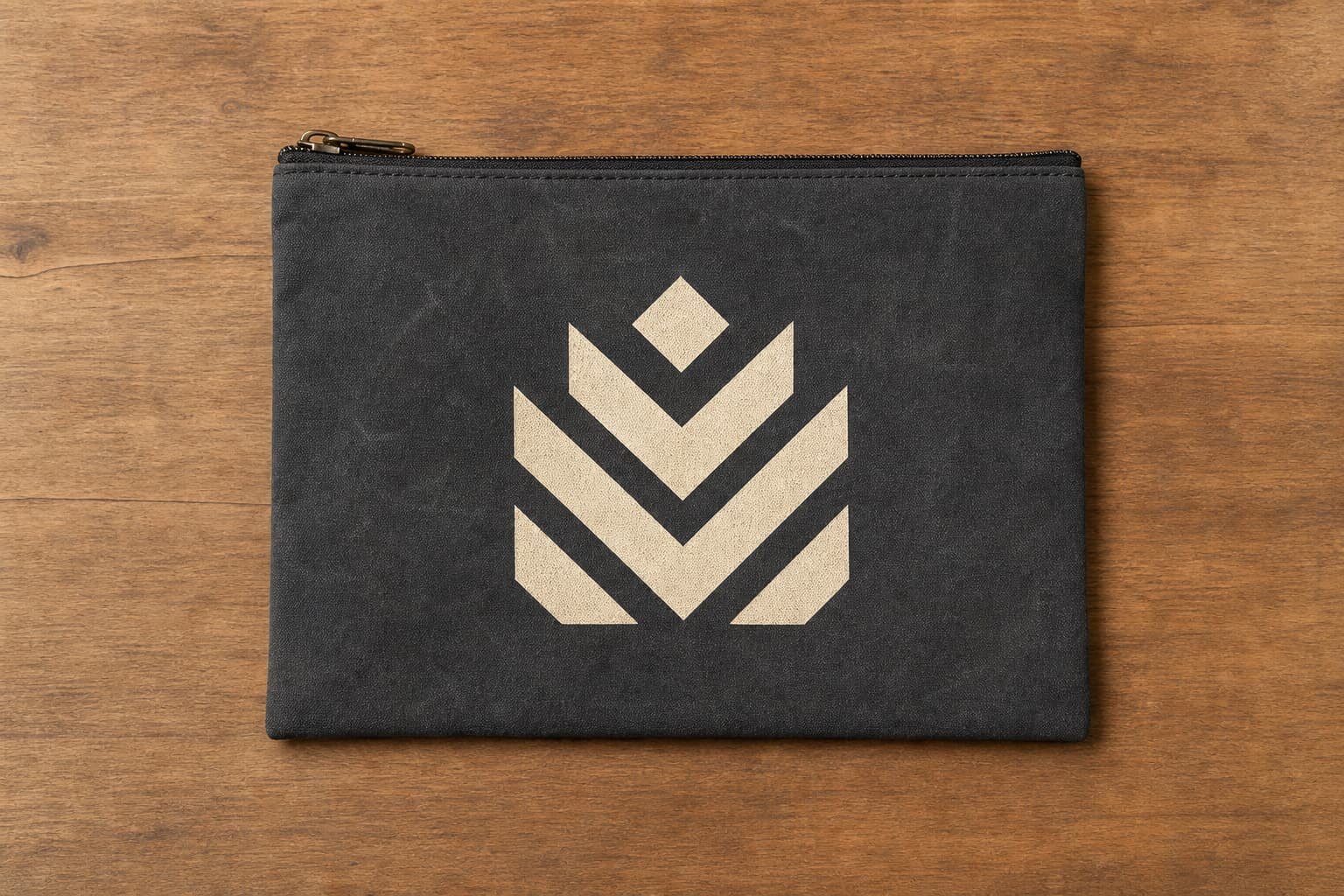
Where color matching fails on zipper business bags
Most logo complaints on zipper business bags are not about the artwork itself. They start when the buyer gives a color target that is too vague, or when the factory applies the logo on a fabric that changes how the color reads. A blue logo on a white paper proof can look darker, duller, or slightly greener once it lands on 600D polyester, 900D polyester, or a coated canvas panel. The same thing happens when the bag body, zipper tape, and logo all sit in similar shades but come from different dye lots.
The other common failure is method mismatch. A brand may expect a sharp, solid logo, but the factory uses embroidery on a small mark, or a fine gradient is forced into screen printing with too few screens. If the buyer does not define what matters most, the quote may look cheap but the output will be hard to approve. This guide focuses on the commercial decisions that keep the logo color usable in bulk, not just acceptable in a mockup.
- Color drift usually comes from fabric shade, print method, or lighting, not only from ink choice.
- The same logo can look different on black, navy, gray, and natural canvas.
- A digital proof is not enough when the brand color is strict.
Lock the color standard before discussing price
A quote cannot be compared fairly until the buyer defines the color standard. For zipper business bags, the safest starting point is a Pantone reference, plus a physical swatch whenever the brand team has one. If the logo is two-tone or includes a small wordmark, the factory needs to know whether each color must match a separate reference and whether the tolerances are equal for both. A good supplier will ask how the bag will be used, because a trade show giveaway, a sales kit bag, and a retail carry bag do not always need the same level of color control.
Do not stop at the logo file. Tell the supplier the base bag color, the zipper tape color, any piping or binding color, and whether the hardware is silver, black, gunmetal, or matte. These surrounding colors change how people perceive the logo. A warm gray logo can look cleaner beside a cool black zipper, while the same logo can look muddy beside beige binding. The goal is not only exact pigment matching, but a final product that reads as intentional.
- Use one named color reference per logo color, not a loose description like red or blue.
- If the logo color must be exact, send a physical sample or approved swatch.
- Specify whether the buyer will approve under office lighting, daylight, or store lighting.
Choose the logo method that can hold the color
The right logo method depends on both the color target and the bag material. For a flat corporate logo with solid spot colors, screen print is usually the most direct option because it can hold a clear color block on broad panels. For small logos, woven labels often give better repeatability because the yarn colors are set before attachment. Embroidery adds texture and premium feel, but it can distort thin letters and make color matching less precise, especially when the logo has small type or multiple close shades.
Heat transfer, silicone, embossing, and patch applications each solve a different problem. Heat transfer can handle fine detail, but the color can shift if the film, fabric finish, or press temperature changes. Embossing is strong when the buyer wants a low-color, tone-on-tone look rather than a precise printed shade. Patches are useful when the logo needs contrast and structure, but they create an extra material layer that must be sampled on the actual bag body. If the quote does not separate the method from the artwork, the buyer may compare incompatible offers.
- Screen print fits solid brand colors on medium and large logo areas.
- Woven labels fit small marks where color stability matters more than ink density.
- Embroidery fits premium styles, but not tiny text or exact color-critical logos.
- Heat transfer and patches need more sample control than many buyers expect.
Match the logo to the bag, zipper, and trim
A zipper business bag is a system, not a blank panel. The logo color should be reviewed against the body fabric, zipper tape, zipper puller, piping, lining, and any side label. Many disputes happen because the logo technically matches the approved code, but the surrounding components make it look wrong. For example, a strong corporate blue can look sharp on charcoal polyester, yet appear too cold on light gray canvas. The buyer should decide whether the logo must stand out or blend in, because that changes the right contrast level and even the print density.
If the bag will be carried in office, school, or travel environments, the logo has to survive mixed lighting. Fluorescent lights make some reds look dull and some grays look greenish. Natural light can expose a weak white underbase or uneven thread tension. This is why a factory sample room check is more valuable than a catalog proof. When possible, compare the logo against the zipper tape and trim side by side, not in isolation. Small trim mismatches can make the entire bag look off, even if the logo itself is approved.
- Review the logo next to zipper tape and hardware, not just on the bag panel.
- Pay attention to contrast on dark bags, where underbase quality matters most.
- Check the same sample under daylight and indoor lighting before approval.
Set a sample process that catches drift early
The most reliable approval path is strike-off first, then pre-production sample, then bulk. A strike-off shows how the logo color behaves on the actual material and print method before the factory commits to full production. The pre-production sample should use the same fabric, same zipper color, same thread or ink batch, and same application size planned for bulk. If those inputs change after approval, the sample is no longer a valid reference and the buyer takes on the risk.
Buyers often lose control by approving from a digital proof only. A screen image can never show stitch density, thread luster, ink absorption, or how the logo looks after the bag is sewn and turned. A good sample check should include placement, color, edge clarity, and how the logo looks when the bag is closed and when it is filled lightly. If the logo sits close to a seam, test the seam stress because the panel can pull the design and change the way the color is seen.
- Ask for a strike-off on the real fabric before full material commitment if the order is color-critical.
- Approving a pre-production sample is safer than approving only a digital mockup.
- If the factory changes fabric lot, print batch, or thread supplier, request a new sample.
Build the quote around real production inputs
A useful quote should let procurement compare factories line by line. For zipper business bags, the logo color can change cost through method choice, number of colors, size of the mark, and the amount of sampling required. Ask the supplier to separate the base bag, zipper and trim package, logo application, sample fee, and packing method. If the factory rolls those together, you cannot see where one supplier is cheaper because of process efficiency and where another is cheap because it is cutting corners on color control.
The quote should also identify the fabric weight or GSM, because the same logo method behaves differently on different materials. A 600D polyester body may accept a print well, while a softer 300D fabric may need more care to avoid bleed or show-through. For canvas, ask for the ounce or GSM and whether the fabric is bleached, dyed, enzyme-washed, or pre-shrunk, because each treatment changes the final appearance. The buyer should also ask for packing details. A logo that arrives clean in production can still rub if the factory packs too tightly or uses low-grade polybags.
- Request separate quote lines for bag body, logo setup, logo unit cost, sample cost, and packing.
- Confirm the fabric weight or GSM in the quote, not only the fabric name.
- Ask whether the logo color cost changes with each additional Pantone shade or embroidery color.
Use MOQ logic to protect color consistency
MOQ is not only about factory economics. It also affects color stability. A very low MOQ can force the supplier to use leftover materials, mixed dye lots, or a smaller print run that does not justify a fresh color setup. That increases the chance of variation between sample and bulk. When buyers ask for multiple logo colors, multiple bag colors, or a logo on multiple panels, the MOQ often rises because the factory needs separate setup time and separate color control for each version.
The buyer should think in terms of variants. One bag color and one logo color is the simplest and most stable route. Add a second bag color, and you may need a second fabric lot. Add a second logo color, and the print or embroidery sequence becomes more complex. If you need a mixed program, ask the factory whether each variant will be run separately or combined in one batch. Combined batches can save cost, but they can also make it harder to protect the approved color standard.
- Simpler color programs usually have better sample-to-bulk consistency.
- Multi-color logos and multi-color bag runs usually need higher MOQ or more setup cost.
- Ask whether the factory will hold one fabric lot for the full order or split lots across production.
Read the real cost drivers behind logo color choices
The most expensive part of logo color matching is not always the print itself. It is the number of times the factory has to stop, compare, adjust, and re-approve. Every added color can mean more screens, more thread changes, more label weaving complexity, or more scrap if the first batch misses the target. Buyers comparing quotes should look at the whole chain: artwork prep, sample rounds, setup time, test output, rework allowance, and packing protection. A quote that looks lower at the start can become more expensive once the factory adds correction charges later.
A practical way to compare offers is to ask for a production scenario, not a headline number. For example, ask what the factory includes if the logo is a single solid spot color on 600D polyester, what changes if the logo becomes two colors, and what changes if the buyer switches from print to woven label. That gives procurement a better basis for negotiation than a single unit price. It also shows whether the supplier understands the difference between a simple corporate mark and a design that needs tighter color handling.
- More logo colors usually increase setup, sample, and correction cost.
- Quote comparisons should include sample rounds and packing, not only unit cost.
- Ask the factory to explain what changes when the logo or fabric changes.
Packing and handling can change the final look
Color matching does not end at sewing or printing. A finished zipper business bag can still fail if the packing rubs the logo, compresses the panel, or leaves the print surface exposed to dust and friction. This matters more for dark bags with light logos, soft-touch prints, and raised embroidery. Ask whether each bag will be polybagged, tissue wrapped, stacked, or bulk packed. If the logo is heat transfer or screen print, the factory should explain how it prevents blocking, sticking, or surface marks during carton storage.
Carton marks and outer packaging also matter for procurement teams managing multiple SKUs. If one style is brown kraft with tone-on-tone branding and another is a bright retail bag, the receiving team can confuse them unless carton labels are clear. Ask for a master carton label that identifies the approved logo color, bag color, and variant code. That way the warehouse can match the right shipment to the right PO without opening cartons and exposing finished goods to unnecessary handling.
- Ask how the bag is separated from adjacent bags in the carton.
- Confirm whether the logo surface needs tissue, insert cards, or protective film.
- Use carton labels that identify the approved variant, not only the style name.
Common buyer mistakes that trigger rejections
The first mistake is approving color from a monitor. The second is approving the logo before the bag fabric is confirmed. The third is asking for a precise brand color on a material that cannot hold it well, then blaming the factory when the result looks slightly different. Buyers also get into trouble when they use the same artwork across multiple fabrics without adjusting the logo method. A woven label that looks sharp on a backpack may be too small or too soft on a structured business bag. Likewise, a screen print that works on flat polyester may look uneven on a coated or textured canvas body.
Another common mistake is not defining the rejection rule. If the buyer cannot say what counts as too much shift, the factory will rely on its own internal standard, and that standard may not match the brand's tolerance. The better approach is to define a sample-based acceptance rule before bulk begins. Keep it simple and visual. The factory should know whether the logo must match the approved swatch closely, whether a minor shade change is acceptable, and whether any misregistration or edge blur is a reject. Clear rules reduce argument later.
- Never approve logo color from a screen alone.
- Do not change fabric, print method, or logo size after sample approval without rechecking color.
- State the rejection rule in visual terms the factory can apply on the line.
Specification comparison for buyers
| Spec decision | Recommended option | When it fits | Buyer risk to check |
|---|---|---|---|
| Color reference source | Pantone TCX/TPG or a physical approved swatch | When brand color must stay consistent across reorders and factories | Screen-only RGB values that shift on fabric and in different lighting |
| Logo application method | Screen print for solid spot colors, woven label for small logos, embroidery for premium texture | When you need repeatable color and a clear brand mark on business bags | Tiny text, gradients, or thin lines that lose accuracy in production |
| Base fabric weight | 600D polyester, 900D polyester, or 12 oz canvas depending on structure | When bag body stiffness affects how the logo sits and reads | Light fabric showing reverse-side shadow, puckering, or print bleed |
| Trim and zipper color | Keep zipper tape, puller, piping, and binding within one controlled shade family | When the product needs a clean corporate look and low visual risk | Near-match trim colors that look off under office lighting or retail display lights |
| Sampling method | Strike-off on actual fabric, then pre-production sample before bulk | When the logo color is brand-critical or order value is high | Approving a digital proof without seeing ink, thread, or fabric interaction |
Buyer checklist before sampling
- Send the final logo file in vector format and name the approved color standard for every color in the logo.
- Confirm whether the logo color must match Pantone on the ink, thread, woven label, or embossed area.
- State the bag fabric, GSM, weave, and base color before asking for a quote.
- Provide the exact logo size, placement, and the maximum allowed shift in position.
- Ask the factory to show a strike-off or physical sample on the same fabric and same color batch if possible.
- Confirm whether the quote includes setup, sampling, color correction, and packing changes.
- Check how the logo color looks on the actual bag color, not only on white paper or a screen proof.
- Approve the sample under the same lighting used for receipt inspection, showroom display, or retail use.
Factory quote questions to send
- What logo method do you recommend for this fabric and why?
- Will you match the logo color to a Pantone code, a physical swatch, or a digital file?
- Can you quote sample, setup, printing, embroidery, woven label, and packing as separate line items?
- What is the MOQ if we use one bag color and one logo color versus multiple logo colors?
- How many days do you need for a strike-off, a pre-production sample, and bulk production after approval?
- What color tolerance do you accept for the logo and for the bag fabric itself?
- Can you show a previous sample of the same print method on a similar GSM or fabric type?
- How will you prevent color transfer, rubbing, or fading during packing and transit?
Quality-control points to confirm
- Check logo color against the approved physical standard under daylight-equivalent lighting.
- Inspect the first article for color shift, registration error, edge crispness, and ink or thread density.
- Confirm that the logo is centered, level, and sized exactly as approved on the bag panel.
- Review the same logo on at least one bag from the top, middle, and bottom of the bulk run.
- Check zipper tape, puller, piping, and binding for unintended shade differences against the bag body.
- Rub-test printed logos and inspect for smear, transfer, or premature fading on darker fabrics.
- Open and close sample bags to confirm the logo is not cracked, warped, or distorted by seam stress.
- Verify carton packing, polybag friction, and stacking method will not mark the logo surface.