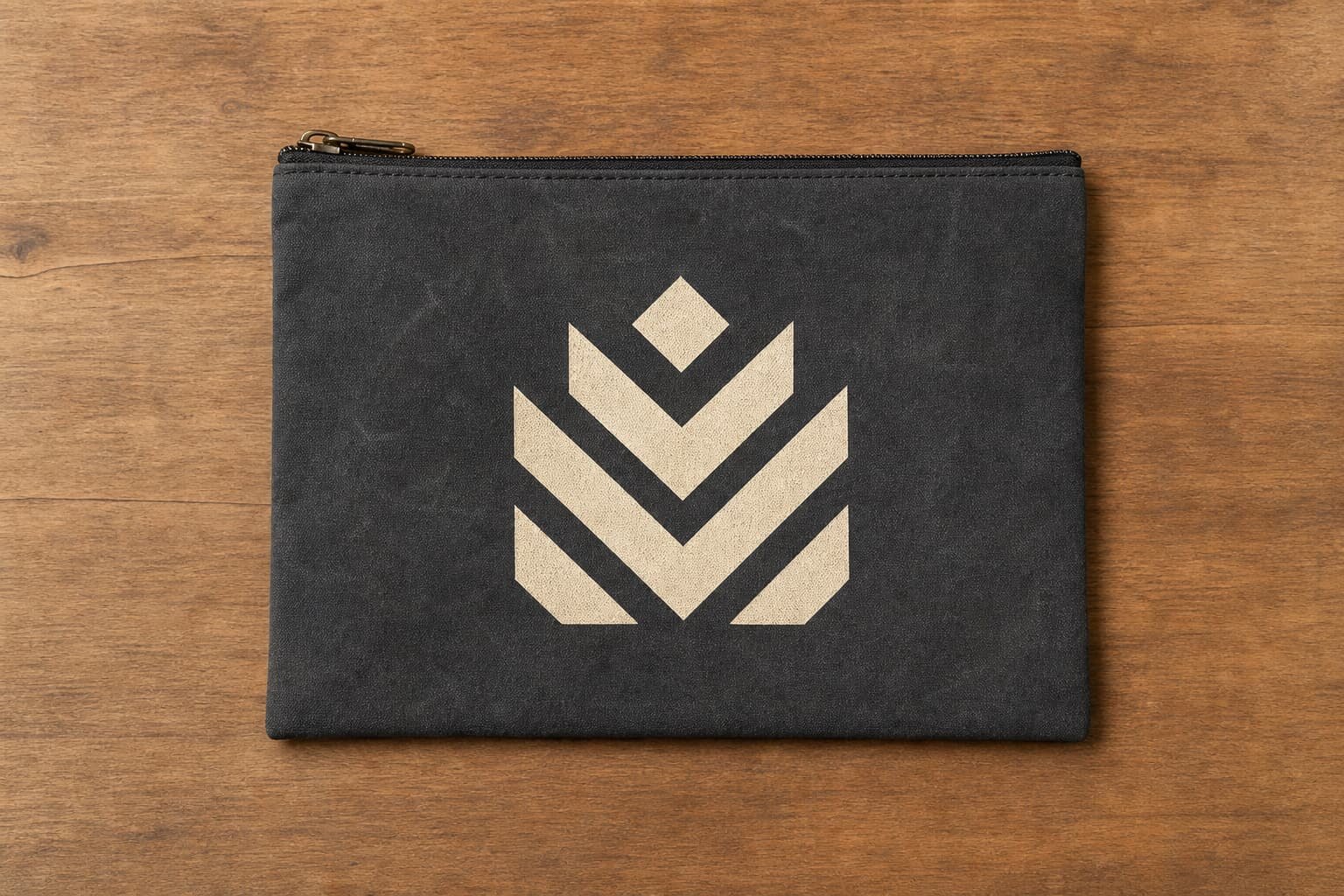
Why Line Release Variance Matters for Zipper Business Bags
A zipper business bag has more moving parts than a flat tote bag. The main panel may look simple, but the order usually includes zipper tape, slider, puller, inner pocket, handle reinforcement, lining or coating, logo placement, and export packing. If one item changes between sample approval and factory line release, the buyer may receive a bag that is technically usable but commercially wrong.
The factory line release variance tracker is the control sheet that compares the approved pre-production standard against the first real output from the sewing line. It is not a decoration for the file. It decides whether bulk production may continue, whether the line must stop, or whether a deviation can be accepted with written buyer approval. For procurement teams, this tracker reduces arguments because it turns subjective comments such as 'logo looks low' or 'zipper feels cheap' into measured evidence.
- Use it when the order has a printed logo, custom zipper color, custom lining, special packing, or retail carton requirement.
- Use it when the factory sample was made by a sample room but bulk will be made by a different sewing line.
- Use it when the quote changed after sample approval, because cheaper fabric or zipper substitution often enters at this stage.
- Use it before the first 50-100 pieces become 5,000 pieces with the same mistake.
The One Buying Problem: Sample Approval Does Not Equal Line Approval
Many buyers approve a sample and assume production will copy it. In factory reality, the sample may use available zipper stock, hand-cut panels, extra careful sewing, or a print position adjusted by one experienced worker. Bulk production is different. Fabric is cut in layers, operators follow a work instruction, and small reference errors repeat quickly. The first bulk pieces need a separate approval gate.
For a zipper business bag, line release variance usually appears in four places: material substitution, measurement drift, logo misalignment, and packing difference. A distributor may not notice the issue until cartons arrive at the warehouse. A retail buyer may notice sooner because barcode, hangtag, or shelf presentation fails. The tracker is useful because it forces the factory and buyer to confirm exactly what changed, why it changed, and whether the change affects resale value.
- Material variance: quoted 600D polyester becomes thinner fabric, softer backing, or different shade.
- Construction variance: gusset width, zipper opening, handle drop, or inner pocket size moves outside the approved tolerance.
- Decoration variance: screen print shifts, woven label folds unevenly, or heat transfer edges lift after packing pressure.
- Packing variance: polybag size changes, carton cube increases, or flat-packed bags develop permanent creases.
What to Put in the Variance Tracker
A useful tracker should be short enough for the factory line leader to use and detailed enough for a buyer to defend a decision. Do not only write 'same as approved sample.' That phrase fails when people change, samples are lost, or the order is repeated six months later. The tracker should list the measurable points that affect price, function, and brand presentation.
Each line should show the approved standard, line output result, tolerance, evidence, owner, and action. If the variance is accepted, the tracker should say accepted for this order only or accepted as new standard for repeat orders. Those two phrases have different commercial meanings. A one-time acceptance may be fine for an urgent event order, while a new standard affects future quotations and quality claims.
- Fabric: material, GSM or denier, coating/backing, color reference, roll width, and shade band.
- Size: finished width, height, gusset, zipper opening length, handle drop, pocket size, and seam allowance.
- Zipper: size, tape color, slider finish, puller type, stopper quality, and opening smoothness.
- Logo: method, artwork size, color, position reference, curing or label stitch quality.
- Packing: fold method, polybag size, carton quantity, carton dimensions, gross weight, and carton mark.
- Decision: release, hold, rework, remake sample, buyer approval required, or quote revision required.
Fabric and GSM Variance: The Fastest Way Quotes Become Misleading
Fabric is usually the biggest cost driver in a zipper business bag, especially when comparing polyester, canvas, nonwoven lining, and coated materials. A quote that says '600D polyester' is not complete. Two 600D fabrics can feel very different depending on yarn quality, density, PU/PVC backing, and actual finished GSM. For canvas bags, 12 oz and 16 oz material also vary by loom, finishing, dyeing, and shrinkage.
The variance tracker should record the actual bulk fabric used during line release. If the approved sample used 320 GSM polyester and the bulk line uses 260 GSM material, the buyer should know before shipment. The bag may still pass basic appearance inspection, but it may not match the expected handfeel or durability. In B2B distribution, this creates problems when sales teams promised a premium document bag and the delivered product feels like a low-cost giveaway.
- For budget promotional bags, ask whether 600D polyester is around 250-320 GSM and whether backing is PU or PVC.
- For mid-range business bags, consider higher-density polyester, 300D twill, or canvas with reinforced stress points.
- For premium canvas business bags, specify 12 oz, 14 oz, or 16 oz and ask for shrinkage data after finishing.
- For dark fabric with light print, test opacity and curing; weak print coverage is often blamed on artwork but caused by fabric texture.
- For custom dyed fabric, separate color approval from sewing approval because shade changes may appear across rolls.
Zipper, Slider, and Puller Checks Before Bulk Sewing Continues
The zipper is a small cost item that can create a large claim. Buyers often focus on fabric and logo but leave the zipper described as 'good quality zipper.' That wording is not enough. A zipper business bag needs a zipper that opens smoothly, does not wave badly after sewing, and does not fail when the bag is packed with documents, catalogs, or light laptop accessories.
At line release, check zipper length, tape color, slider movement, puller finish, stopper strength, and alignment at both ends. If the zipper is sewn under tension, the finished bag may twist or the zipper may ripple. If the slider is too light, the bag may pass visual inspection but fail during use. The tracker should note whether the line uses the approved zipper lot or a substitute lot.
- Use No. 5 nylon coil zipper for most main openings because it balances cost and function.
- Use No. 3 zipper only for small inner pockets or light-duty compartments.
- Avoid changing slider finish after sample approval; silver, matte black, and painted pullers affect brand appearance.
- Ask for a simple opening and closing cycle check during line release, not only a visual photo.
- Require the zipper tape color to match either the body fabric or the approved contrast design.
Logo and Print Variance: Measure From a Fixed Reference
Logo placement claims are common because buyers and factories often use different reference points. One person measures from the top panel edge, another measures from the zipper seam, and another centers by eye. For a zipper business bag, front pocket shape, zipper seam, gusset pull, and panel curve can all affect perceived logo position.
The tracker should define the measurement reference before printing or label stitching begins. For example, measure logo center line from the left side seam and top of pocket panel, or measure woven label distance from the lower edge of the front panel. If the bag has a curved front pocket or angled zipper, include a marked photo. Without a fixed reference, the factory may produce consistent pieces that still look wrong to the brand buyer.
- Screen print is suitable for flat polyester or canvas panels, especially for one to three solid colors.
- Heat transfer works for detailed artwork but needs temperature, pressure, and peeling control.
- Embroidery gives texture but can pucker light polyester if backing and stitch density are not controlled.
- Woven labels work well when fabric texture makes direct printing unstable.
- Embossed patches or leather-like labels should be tested for edge durability and sewing alignment.
MOQ Logic: Track the Real Drivers, Not Only the Total Quantity
MOQ for zipper business bags is rarely controlled by the bag shape alone. It is controlled by fabric purchase, zipper color, printing setup, label weaving, packing material, and line changeover. A factory may accept 1,000 pieces in one stock color but require a higher quantity for custom dyed fabric, custom zipper tape, or multiple logo versions. Procurement teams should ask which component creates the MOQ.
The variance tracker helps when an order mixes colors or logo versions. If the buyer approves a black sample but orders black, navy, and grey, each color may create a separate fabric and zipper matching risk. If the order includes distributor-specific carton marks, packing variation can also create mistakes on the line. Record these variables before release, not after cartons are sealed.
- One body color with one logo is the simplest MOQ structure.
- Multiple body colors may require separate fabric minimums and separate shade approvals.
- Custom zipper tape color may create a higher MOQ than the bag sewing MOQ.
- Multiple logo versions require separate print setup checks and packing separation.
- Retail barcode or carton mark variations need clear line segregation to avoid mixed shipments.
Quote Data Buyers Should Compare Line by Line
A low unit price is not automatically wrong, but it must be explainable. When two zipper business bag quotes differ by 12-20 percent, the difference usually comes from fabric grade, zipper grade, inner structure, logo method, packing, or inspection scope. Ask suppliers to break out the assumptions rather than forcing them into a single vague unit price.
For commercial comparison, request the same quote basis from every factory: material specification, finished size, quantity, logo method, packing, sample cost policy, mold or screen cost if applicable, lead time basis, and Incoterm. If the factory refuses to state fabric GSM, zipper size, or packing quantity, the quote is not ready for procurement approval.
- Fabric cost: main body fabric, lining if used, reinforcement patches, and wastage rate.
- Trims cost: zipper, slider, puller, webbing, thread, label, hangtag, and care label if required.
- Decoration cost: screen setup, print color count, heat transfer film, embroidery stitches, or woven label MOQ.
- Labor cost: cutting, printing, sewing, trimming, inspection, folding, and packing.
- Packing cost: individual polybag, carton, carton mark, barcode label, desiccant if needed, and pallet requirement.
- Commercial terms: sample fee, tooling fee, payment terms, Incoterm, inspection cost, and lead time trigger.
Sample Checks Before You Authorize Line Release
A pre-production sample should be made with bulk-intended materials, not leftover sample room substitutes. If bulk fabric, zipper, or label is not ready, the factory should clearly mark the sample as temporary and list the pending items. Buyers should not approve a temporary sample as a full production standard unless the variance is low risk and documented.
During sample review, check the bag as a user and as an inspector. Put documents inside, open and close the zipper several times, lift the bag by the handle, inspect the pocket, and place the bag flat as it will appear after packing. For many B2B programs, the bag does not need luxury construction, but it does need to match the promised function and brand presentation.
- Measure finished width, height, gusset, zipper opening, handle drop, and pocket position.
- Check fabric handfeel against the quoted GSM and approved swatch.
- Review stitch density, loose threads, skipped stitches, bartack position, and seam straightness.
- Compare logo color under natural light and factory light if possible.
- Confirm the bag still looks acceptable after being folded or packed in the proposed polybag.
- Keep one signed sample at the factory and one buyer-side sample for later dispute resolution.
Packing and Lead Time Variance That Affects Landed Cost
Packing is often treated as an afterthought, but it affects carton cube, freight cost, warehouse handling, and retail presentation. A zipper business bag packed flat may reduce carton volume, while a folded bag may reduce carton size but create crease marks. Individual polybags improve cleanliness and distribution handling but add cost, plastic use, and packing time.
Lead time should be counted from the last real approval, not from the first email confirmation. If artwork is pending, fabric color is pending, zipper sample is pending, or the line release sample is pending, production has not truly started. The tracker should show which approval unlocked cutting, printing, sewing, and packing. This helps buyers understand whether a delay is caused by factory capacity, material arrival, or buyer-side approval.
- Confirm units per carton, carton dimensions, net weight, gross weight, and carton strength.
- Check whether bags are packed flat, half-folded, or rolled; each method changes appearance after unpacking.
- Require carton marks to match PO, SKU, color, logo version, and destination requirements.
- Ask for packed carton photos before final inspection if the order has multiple versions.
- Separate sample lead time, material lead time, bulk production time, inspection time, and booking time in the schedule.
Specification comparison for buyers
| Spec decision | Recommended option | When it fits | Buyer risk to check |
|---|---|---|---|
| Main fabric for budget conference bag | 600D polyester, approx. 250-320 GSM with PU backing | Cost-sensitive corporate gifts, event document bags, distributor programs | Confirm actual GSM, backing thickness, color fastness, and whether quoted fabric is stock or dyed-to-order |
| Main fabric for retail or premium brand bag | 12 oz to 16 oz cotton canvas or 450-550 GSM blended canvas | Brand merchandise, boutique packaging, reusable business carry bags | Check shrinkage, slub level, dye lot tolerance, and whether seams can handle the heavier fabric |
| Zipper selection | Nylon coil zipper No. 5 for main closure, No. 3 or No. 5 for inner pocket | Most document, laptop accessory, and promotional business bags | Require zipper brand/type sample and cycle test; low-grade sliders often fail before the fabric does |
| Logo application | Screen print for flat polyester/canvas panels; woven label for textured or dark fabric | RFQs needing stable repeat orders with controlled cost | Track logo position from seam edge, print curing, label fold allowance, and color tolerance under production lighting |
| Internal structure | One main compartment plus document sleeve or simple inner pocket | Business meeting bags, tender document bags, sales kits | Clarify pocket size and stitch reinforcement; vague pocket wording causes quote gaps |
| Handle construction | Self-fabric handle with box stitch or webbing handle with bartack | Higher load use, distributor resale, laptop accessory carrying | Check handle drop, reinforcement patch, and pull strength; sample appearance alone is not enough |
| Packing method | Flat pack in master carton, optional individual polybag | Most B2B export orders where carton cube matters | Confirm carton size, units per carton, gross weight, barcode label, and whether bags deform after compression |
| Line release control | Signed variance tracker before first 50-100 pcs continue into bulk | Any order with logo, zipper, pocket, or fabric change after pre-production sample | Do not allow mass sewing until every variance has owner, acceptance limit, and photo evidence |
Buyer checklist before sampling
- Attach approved sample photos showing front, back, inside pocket, zipper, handle reinforcement, logo position, and packing method.
- List fabric construction by material, GSM or denier, backing/coating, color code, and acceptable shade tolerance.
- Define zipper type, size, tape color, slider finish, puller shape, opening direction, and minimum smoothness expectation.
- State finished bag size tolerance separately from cutting panel tolerance, especially for gusset and zipper opening length.
- Record logo method, artwork size, color standard, position from seam or panel edge, and allowed print or label variance.
- Confirm MOQ logic by fabric color, zipper color, logo version, packing version, and carton mark version, not only by total order quantity.
- Require a line release variance tracker before bulk sewing continues beyond the first approved production pieces.
- Ask for packing photos with carton dimensions, unit weight, gross weight, carton mark, and packed bag appearance after compression.
- Set inspection points for fabric incoming, print/label approval, first-line output, mid-line audit, final random inspection, and loading photos.
- Keep all approved deviations in one signed file so later claims are judged against the same release standard.
Factory quote questions to send
- Which fabric are you quoting: exact GSM/denier, composition, backing/coating, stock color or custom dye, and expected shrinkage?
- What is the MOQ for this bag if we change only logo, only fabric color, only zipper tape color, or only packing label?
- Can you provide a pre-production line release sample made with bulk fabric, bulk zipper, bulk logo process, and bulk packing material?
- What zipper size, slider type, puller material, and zipper supplier level are included in the quote?
- What finished size tolerance and seam allowance are you using for the main body, pocket, gusset, and handle drop?
- How will logo placement be measured on the line: from top seam, side seam, pocket edge, or center line?
- How many pieces will be checked during line release before permission is given to continue bulk sewing?
- Which costs are included in your unit price: printing, woven label, inner pocket, polybag, carton mark, export carton, and sample remake?
- What is the realistic production lead time after approval of bulk fabric, artwork, zipper, and pre-production sample?
- How will you report variances: photos only, measurement sheet, signed tracker, or updated production file?
Quality-control points to confirm
- Incoming fabric GSM, color shade, coating, roll width, defects, and shrinkage should be checked before cutting.
- Zipper tape color, slider movement, stopper strength, puller finish, and zipper length should match the approved sample.
- Logo print or label position should be measured against a fixed seam or panel reference, not judged by eye only.
- First-line output should include at least several finished pieces checked for size, pocket alignment, zipper smoothness, handle strength, and packing fit.
- Seam allowance, stitch density, bartack position, and thread color should be stable before the sewing line is released.
- Carton packing should be tested for unit count, bag deformation, barcode readability, carton mark accuracy, and export carton strength.
- All accepted deviations should be signed before mass production continues, with photos and measurement values attached.