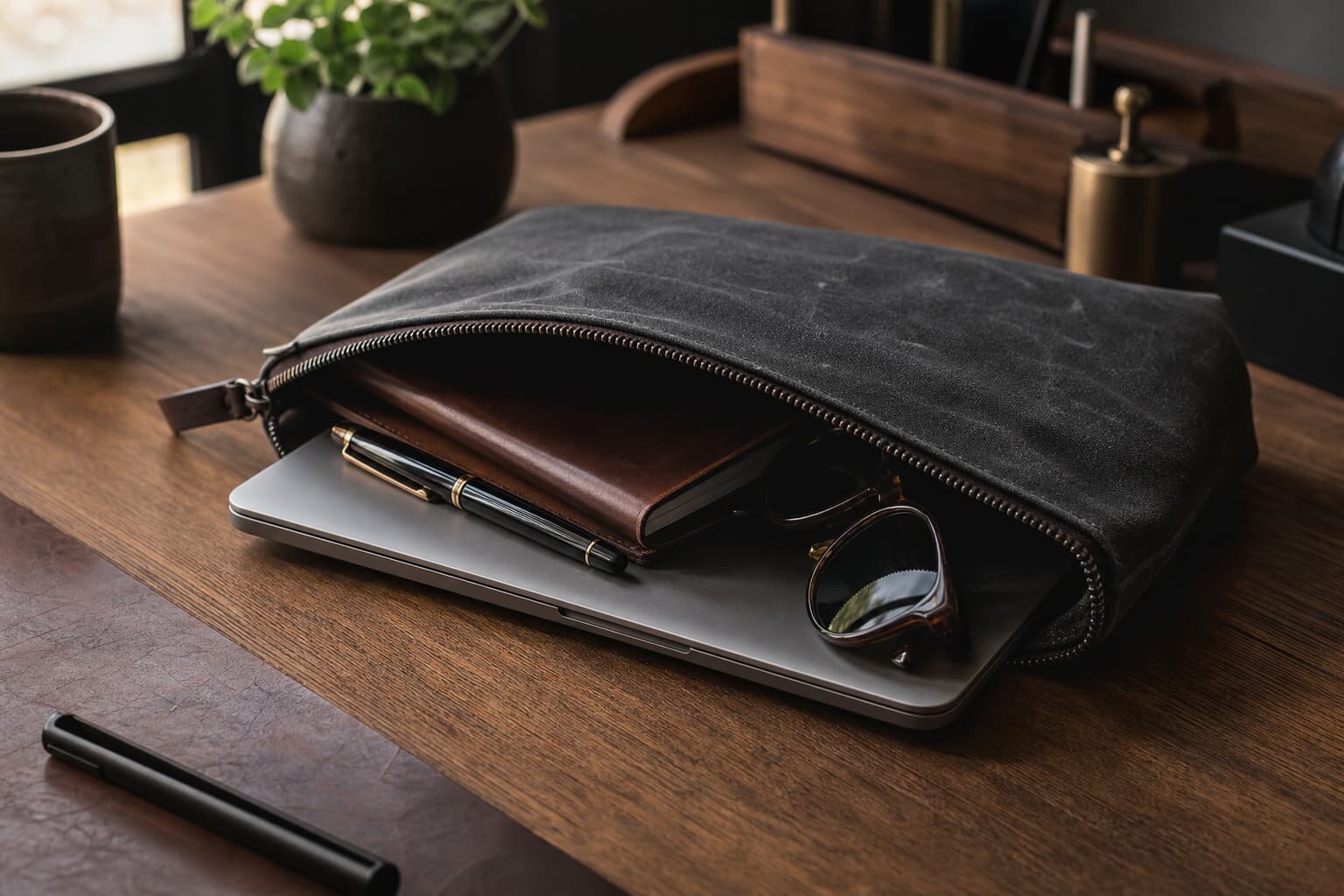
Why Line Release Matters for Zipper Business Bags
A zipper business bag looks simple on a quotation sheet, but it combines several risk points in one product: fabric stability, zipper function, print placement, handle strength, and flat packing. If the factory starts mass output before these points are checked together, the buyer may receive thousands of bags with a zipper that waves, a logo too close to the seam, or handles that look acceptable but fail under a document load.
Line release inspection is the control step between approved sample and bulk production. It is not the same as a final inspection. Final inspection tells you what has already been made. Line release tells the factory whether the first production pieces match the approved standard before the order becomes expensive to correct. For procurement teams, this is the best point to stop unclear specifications, quote misunderstandings, and sample-to-bulk drift.
- Use line release when fabric, zipper, print, and sewing all appear together for the first time.
- Do not release the line based only on loose material samples or an old showroom sample.
- Ask for dated photos and measurements of first-line pieces before full-speed production.
- Require a written hold-and-correct process if any critical item differs from the approved sample.
Define the Bag Before the Factory Starts Cutting
Many zipper business bag problems begin because the RFQ describes the product too generally. Terms such as canvas zipper bag, business document pouch, conference bag, or laptop bag can mean different constructions to different factories. One supplier may quote a flat 10 oz cotton pouch with a No. 3 zipper, while another quotes a 12 oz canvas bag with reinforced handles and a No. 5 zipper. Both may appear competitive until production starts.
Before line release, the factory should have one controlled specification file. It should include finished size, fabric weight, zipper type, handle construction, print method, label position, inside finishing, packing, and inspection tolerance. If the order is for retail or distributor resale, include barcode and carton mark rules early. If the order is for an event or corporate campaign, confirm the usable document size and zipper opening length, not only the outside dimensions.
- State finished size as width x height x gusset after sewing, not fabric cutting size.
- Specify fabric by GSM or oz, fiber content, weave, color, and shrinkage expectation.
- Identify zipper size, zipper tape color, slider color, puller type, and opening direction.
- Confirm whether handles are self-fabric, cotton webbing, PP webbing, leather-look trim, or no handle.
- Add tolerance for finished size, handle drop, print placement, and zipper opening.
Fabric GSM and Cutting Checks
For zipper business bags, fabric weight affects more than price. A light fabric may be acceptable for a low-cost document pouch, but it can pucker beside the zipper and make the bag feel cheap when used for business kits. A heavier canvas gives better structure, but it may require stronger needles, wider seam allowance, and slower sewing speed. Common practical ranges are 220-260 GSM for economical cotton pouches, 280-340 GSM for standard business bags, and 10-12 oz canvas for sturdier document or accessory bags.
At line release, do not rely only on the fabric named in the quote. Check the actual bulk roll. GSM can vary, and recycled cotton blends may have more shade variation or slubs than virgin cotton canvas. If the buyer approved a natural cotton look, agree how much speckling, seed mark, or weaving irregularity is acceptable. If the bag is dyed black, navy, or custom Pantone, compare bulk panels under consistent lighting because shade difference becomes obvious when multiple bags are packed together.
- Cut a small test piece from bulk roll and weigh it if GSM is a commercial requirement.
- Check fabric face direction before printing and sewing, especially on brushed or twill surfaces.
- Confirm shrinkage allowance if the fabric is washed, dyed, or heat-pressed after printing.
- Inspect for weaving holes, thick slubs, oil marks, and uneven dye streaks before cutting continues.
- Record whether shade tolerance applies to the whole order or only within each carton.
Zipper and Slider Release Criteria
The zipper is usually the highest complaint risk on this product category because the buyer notices it immediately. A bag can have good fabric and print, but if the zipper jams or separates at the end stop, the product feels defective. For most cotton, canvas, recycled cotton, or nonwoven-style business bags, a No. 5 nylon coil zipper is a practical choice. It opens smoothly, is not too heavy, and has fewer sharp edges than metal. Smaller zippers may save cost but can feel weak on larger bags.
Line release should include function testing, not just visual checking. Open and close the zipper repeatedly on first-line samples. Look for wavy zipper tape, tight corners, slider scraping, uneven teeth, weak pullers, and exposed raw ends. If the zipper is sewn into a curved or boxed corner, the factory must control seam allowance and feeding tension. A small zipper issue at line release usually becomes a large claim after packing because carton pressure can bend sliders and exaggerate waviness.
- Check zipper length against the finished opening, not only against the cutting pattern.
- Confirm slider direction matches the approved sample and intended user operation.
- Pull the zipper end stop lightly to check whether it can withstand normal use.
- Reject first-line pieces if zipper tape is twisted, teeth are misaligned, or the slider catches.
- Confirm spare zipper stock is from the same lot if production will run across several days.
Logo Print and Branding Checks Near the Zipper
Branding on zipper business bags often sits close to the zipper line, handle base, or front panel center. This creates placement risk. If the factory prints panels before sewing, sewing tolerance can move the logo slightly from the finished center. If the factory prints after sewing, the zipper and seam thickness can make the print surface uneven. The buyer should decide which risk is more acceptable and state the tolerance in the artwork approval.
Screen print is usually the best choice for solid one to four color logos on cotton or canvas. Heat transfer can work for fine gradients or small text, but it must be tested for edge lifting and cracking, especially when the bag is folded flat. Embroidery may look premium but can distort lighter fabric and increase lead time. Woven labels or sewn side labels are useful when the buyer wants a cleaner retail finish or lower print failure risk.
- Approve a print strike-off on the same fabric as bulk production, not on paper.
- Measure logo position from zipper seam, left edge, bottom edge, and handle centerline.
- Rub-test cured print and check whether the color transfers to white tissue or adjacent fabric.
- Check small text legibility after printing on textured canvas.
- Confirm whether print screens, transfer films, or embroidery tapes are included in the quoted setup cost.
Sewing Construction and Handle Strength
Sewing defects on zipper business bags are often caused by speed, feeding tension, and insufficient seam allowance. The zipper area needs stable stitching because it carries repeated stress during opening and closing. Bottom corners need clean turning and enough seam allowance to avoid fraying. If the bag has handles, the handle base must be reinforced because buyers often load catalogues, samples, tablets, or document folders heavier than the original promotional use.
At line release, inspect both outside and inside. A neat front panel can hide loose threads, skipped stitches, or raw edges inside. For retail buyers, internal binding may be worth the extra cost because the bag looks cleaner when opened. For event or trade promotion use, a clean overlock may be acceptable if it is specified and consistent. The important point is that both buyer and factory quote the same construction.
- Check stitch density in stitches per inch or per centimeter against the approved sample.
- Measure seam allowance at zipper, side seam, and bottom seam before approving full production.
- Use box stitch or bar tack at handle bases when the bag will carry catalogues or documents.
- Look for needle cuts on dense canvas or coated fabric, especially near zipper ends.
- Trim loose threads before packing; do not allow trimming to hide skipped or broken stitches.
Sample Approval and First-Line Sample Control
A signed pre-production sample is useful only if the factory line uses it as the control standard. Many disputes happen because sales, sampling, purchasing, and production teams do not work from the same reference. The approved sample may use one zipper lot while bulk production uses another. The sample may be sewn by a senior sample maker while bulk production is sewn by operators under speed targets.
For better control, require three levels of evidence: material confirmation, pre-production sample approval, and first-line sample approval. The first-line sample is especially important because it is made by the production line using bulk materials and real operators. Procurement teams should ask for photos, measurements, zipper test notes, print checks, and packing photos before releasing mass output. If timing is tight, this can be done by video call, but the factory should still keep physical signed samples.
- Keep one approved sample with the buyer, one with factory QC, and one at the sewing line.
- Mark approval date, version number, and allowed changes directly on the sample tag.
- Do not approve bulk production if the first-line sample uses substitute zipper, fabric, or label.
- Ask the factory to record corrective action if any first-line piece is rejected.
- Use photos with ruler and close-up zipper images for remote approval.
MOQ, Quote Logic, and Cost Drivers
MOQ for zipper business bags is not only a sewing line decision. It can be driven by fabric roll quantity, custom dye MOQ, zipper tape color, puller mold, label weaving, print setup, or carton mark requirements. A factory may accept a lower quantity if the buyer uses stock fabric and stock zipper colors. The same bag with custom dyed canvas, custom zipper tape, and multiple print positions may require a much higher MOQ or a higher unit cost.
When comparing supplier quotes, separate the bag cost from setup costs and accessory constraints. A quote that looks lower may exclude print screens, sampling, individual polybags, barcode labels, inner cartons, or third-party inspection support. Ask each supplier to state what is included, what is optional, and what changes trigger a price revision. This helps procurement avoid a common problem: approving a low quote and then paying add-ons after the purchase order is placed.
- Stock fabric and stock zipper color usually allow lower MOQ than custom dyed materials.
- Screen print cost depends on number of colors, number of positions, and artwork size.
- Embroidery cost depends on stitch count, backing, thread colors, and machine time.
- Custom pullers, woven labels, and branded zipper sliders may have separate MOQ.
- Carton marks, hangtags, barcodes, and retail packing can change both cost and lead time.
Packing and Carton Checks Before Release
Packing affects appearance and zipper function. Zipper business bags are often flat packed to save space, but poor folding can crease the print panel, bend zipper sliders, or deform corners. If the buyer needs a retail-ready presentation, the factory should test the approved folding method during line release, not after thousands of pieces are finished. For distributor shipments, carton strength and carton mark accuracy may be more important than individual presentation.
The line release checklist should include polybag size, ventilation holes if required, warning text if required by market, barcode position, carton quantity, carton size, carton gross weight, and carton mark content. Check whether bags are packed with zipper open or closed. In most cases, zipper closed and bag laid flat gives a cleaner shape, but the factory must ensure the slider does not press into the printed face of another bag.
- Pack several first-line pieces exactly as bulk goods will be packed and inspect after compression.
- Confirm carton quantity does not exceed weight limits agreed with the importer or warehouse.
- Check barcode scannability through polybag if retail or fulfillment handling requires it.
- Place tissue, belly band, or insert only if included in the quote and approved by buyer.
- Verify carton mark spelling, PO number, item code, color, quantity, and destination.
Lead Time and Release Timing
Lead time should be counted from the slowest approved item, not from the first email inquiry. For zipper business bags, common bottlenecks include fabric arrival, custom dye approval, zipper color matching, print strike-off approval, label production, and buyer sample feedback. If the purchase order requires a fixed event date, the buyer should ask the factory to show a production calendar with material cut-off dates and inspection windows.
Line release should happen after bulk materials arrive and the production line is ready, but before full output starts. If the buyer approves only a pre-production sample and waits until final inspection, there is less room to correct. A practical workflow is: approve artwork and material swatch, approve pre-production sample, confirm bulk material, inspect first-line samples, release sewing and printing, then conduct inline or final inspection depending on order value and risk.
- Ask which approval starts the lead time: deposit, artwork, sample, or material arrival.
- Build time for print curing, label production, and carton printing into the schedule.
- Reserve an inspection date before the factory finishes packing all cartons.
- Do not compress line release when the order uses new fabric, new zipper, or new logo method.
- For urgent orders, simplify specifications instead of asking the factory to rush complex custom items.
Specification comparison for buyers
| Spec decision | Recommended option | When it fits | Buyer risk to check |
|---|---|---|---|
| Body fabric weight | 10-12 oz cotton canvas or 280-340 GSM recycled cotton | Conference kits, document bags, retail business giveaways needing a stable handfeel | Too light fabric can collapse around the zipper and show puckering after stitching |
| Zipper type | No. 5 nylon coil zipper with color-matched tape | Most cotton and canvas business bags where smooth opening matters more than metal appearance | Weak sliders, loose end stops, and zipper tape shrinkage can cause opening failure after packing |
| Print method | Screen print for solid logos; heat transfer only for fine gradients | Brand logos, event marks, distributor artwork with controlled Pantone colors | Print must not crack near zipper seam or shift because the bag was printed after partial sewing |
| Handle construction | Self-fabric or 2.5-3.8 cm cotton webbing with box stitch | Document carriers, training bags, and light laptop accessory packs | Handle load point can tear if stitching misses reinforcement or seam allowance is too narrow |
| Inner finishing | Bound raw seams or clean overlock depending on target price | Retail orders need cleaner finishing; promotional orders may accept overlock if specified | Unspecified finishing creates quote gaps and factory substitutions |
| Packing method | Flat packed with zipper closed, 25-50 pcs per export carton | Keeps zipper line straight and reduces carton volume | Over-tight cartons bend sliders, crease print panels, and distort bag corners |
Buyer checklist before sampling
- Confirm approved sample, fabric swatch, print color standard, zipper sample, and packing method are all available at the line before release.
- Measure fabric GSM or ounce weight from bulk roll, not only from the sales sample.
- Check zipper length, tape color, slider direction, puller shape, end stop strength, and opening smoothness on first-line pieces.
- Verify bag size after sewing with zipper closed and bag laid flat; record tolerance for width, height, gusset, and handle drop.
- Inspect seam allowance around zipper, side seam, bottom corners, handle attachment, and any internal binding.
- Rub-test the logo print after curing and check placement from the zipper edge, side seam, and bottom edge.
- Review MOQ logic for fabric dyeing, zipper color, print screens, woven labels, and carton marks before approving production release.
- Open and close zippers at least 10 cycles on first-line samples to catch slider or end-stop problems early.
- Pack several finished pieces into the approved polybag and carton to confirm creasing, barcode visibility, carton strength, and weight.
- Hold line release if bulk materials, workmanship, or packing differ from the signed pre-production sample.
Factory quote questions to send
- What exact fabric will be used for bulk production: fiber content, GSM or oz, weave, shrinkage rate, and roll width?
- Is the quoted zipper nylon coil, resin, or metal, and what size, tape width, slider model, and puller finish are included?
- Does the quoted MOQ depend on fabric stock, custom dyeing, zipper tape color, logo print, label, or carton mark quantity?
- Is the logo quoted as screen print, heat transfer, embroidery, woven label, or debossed patch, and how many colors or positions are included?
- Will the logo be printed before sewing or after sewing, and how will the factory control print placement near the zipper seam?
- What sample stages are included: material swatch, print strike-off, pre-production sample, and first-line sample?
- What measurement tolerance is quoted for bag size, handle drop, zipper opening, and gusset depth?
- What packing is included in the quote: individual polybag, recycled polybag, belly band, hangtag, carton quantity, carton size, and carton mark?
- What production lead time starts after which approval: deposit, artwork confirmation, sample approval, fabric arrival, or accessory arrival?
- What inspection standard will be used for line release and final inspection, and who signs the release record?
Quality-control points to confirm
- Bulk fabric GSM, color shade, weave density, handfeel, shrinkage, and visible slubs against the approved standard.
- Zipper tape width, tooth alignment, slider smoothness, puller strength, end stop security, and color matching.
- Cut panel accuracy, print placement, print curing, color registration, and artwork orientation.
- Seam allowance around zipper, side panels, bottom corners, gusset fold, and handle reinforcement.
- Finished dimensions including width, height, gusset, zipper opening length, handle drop, and pocket position if any.
- Needle damage, skipped stitches, thread tension, puckering around zipper, loose threads, and internal seam cleanliness.
- Packing sequence, polybag size, warning text if required, barcode placement, carton mark accuracy, carton weight, and compression risk.
- First-line approval records with photos, signed sample reference, defect limits, and corrective actions before mass output continues.