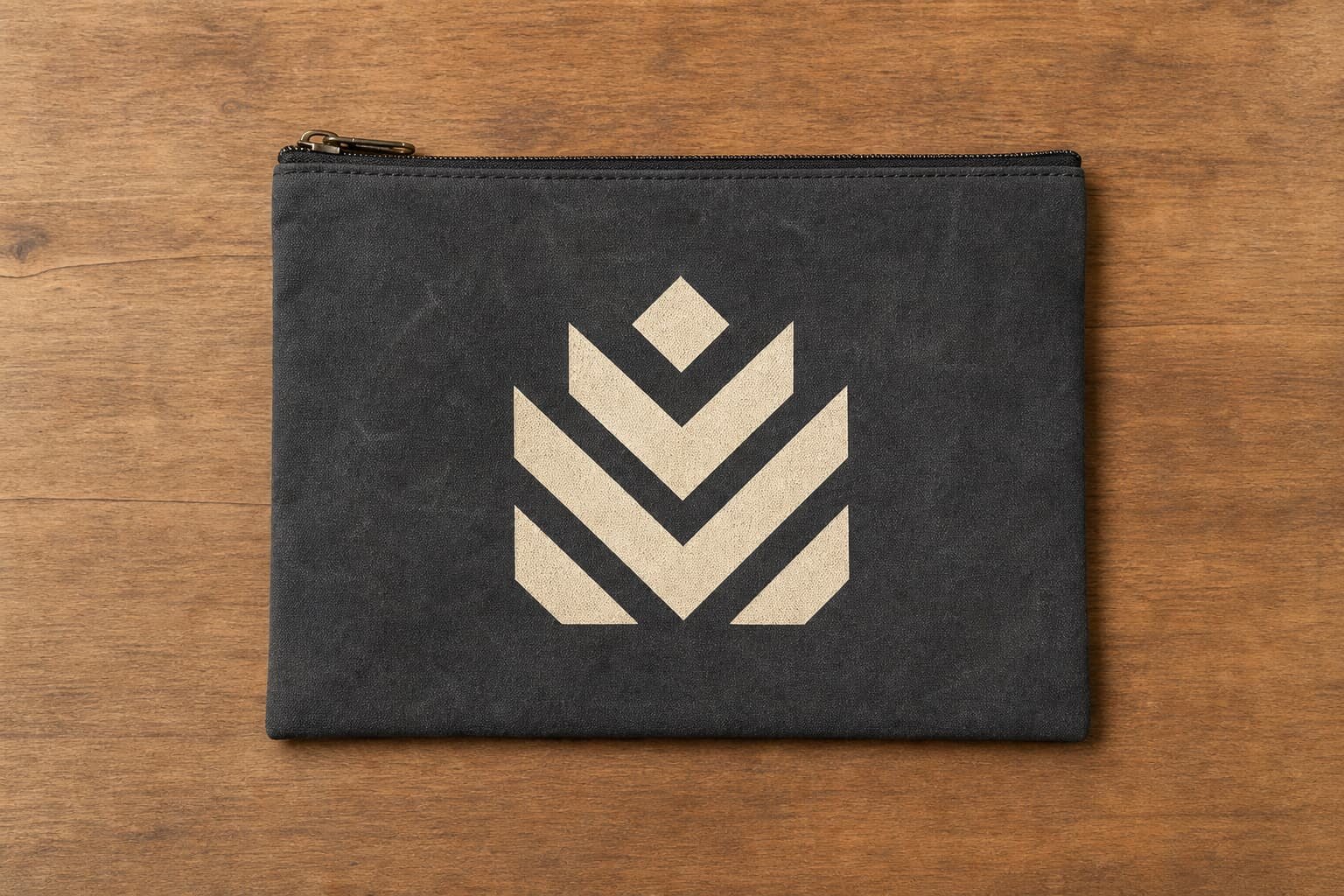
Why Fabric Weight Decides How a Zipper Business Bag Feels
Fabric weight is not just a materials line on a quote. For zipper business bags, it determines whether the bag holds its shape on a desk, supports the zipper line without waviness, and survives repeated packing and unpacking. A bag that is too light can look cheap even if the print is good. A bag that is too heavy can become bulky, expensive to sew, and awkward to open at the zipper curve. Buyers usually feel this difference before they can explain it in technical terms, which is why GSM belongs at the center of the RFQ, not buried in a footnote.
The right fabric weight has to work with the rest of the construction. Zipper tape, lining, print method, panel size, and stitching all affect the final result. A well-chosen 220 GSM canvas may be perfect for a conference organizer with a clean logo, but the same fabric may be too soft for a premium retail bag with a sharp boxy profile. Treat GSM as the starting point, then ask how the bag will be used, what it will carry, and how the factory will build the zipper seam around that load.
- Fabric weight affects body shape, zipper stability, and print appearance at the same time.
- The same GSM can feel very different once lining, interfacing, and seam structure are added.
- A buyer should compare the finished bag, not the raw fabric number alone.
Start With End Use, Not a GSM Target
Before you ask for a number like 180 GSM or 280 GSM, define what the bag will actually do. A zipper business bag for trade show literature is not the same product as a document organizer that needs to sit upright in a meeting room, and neither is the same as a premium retail pouch sold with stationery or tech accessories. The load, the visual expectation, and the handling pattern all matter. If the bag is mostly for light papers, a lighter body may be acceptable. If it must protect contents and look structured on a shelf, you need more body and usually more internal support.
The cleanest RFQs start with function. Tell the factory whether the bag is for daily office carry, presentation kits, customer gifts, travel organization, or retail resale. Then add the expected contents, approximate weight, and whether the bag must stand up, collapse flat, or stay slim in a briefcase. This gives the supplier room to recommend a GSM range that matches the use case instead of forcing a heavy fabric into a light-duty bag or a thin fabric into a premium program where failure will show immediately.
- State the target contents: papers, stationery, cables, tablets, or mixed business accessories.
- Clarify whether the bag must stand, fold flat, or keep a slim profile in transit.
- Give the factory the load expectation before discussing decoration or carton packing.
What Common GSM Ranges Mean in Real Production
In zipper business bags, the most useful fabric weight ranges usually fall into three practical groups. Around 140-180 GSM, you get a lighter body that can work for simple organizers and low-cost promotional packs, but it often needs careful seam control and a good zipper tape match. Around 200-240 GSM, you enter a useful middle zone for business bags, conference kits, and retail items that need a more finished hand feel. Around 260-320 GSM, the bag starts to hold structure well and usually feels more premium, but stitching becomes heavier and the seam bulk increases. Many canvas mills still quote in ounces, so ask the factory to state the conversion they are using when comparing quotes.
Weight alone does not tell the whole story. A tightly woven 220 GSM canvas can feel firmer than a looser 260 GSM fabric, and a pre-shrunk or heavily finished cloth can behave differently again. That is why buyers should ask for a finished sample made from the exact planned fabric, not just a catalog swatch. The sample should show the real zipper opening, corner turn, logo edge, and seam line. If the factory only gives you a raw fabric hand feel, you still do not know how the completed zipper bag will behave in bulk.
- 140-180 GSM: light organizer use, but watch for softness and seam waviness.
- 200-240 GSM: the most flexible middle zone for most zipper business bag programs.
- 260-320 GSM: better structure, but higher risk of seam bulk and slower sewing.
Choose Weight by Bag Structure and Trim
A zipper business bag is not just a fabric shell with a closure. The pattern shape, gusset depth, corner turns, zipper end treatment, and any internal board or lining all change how the bag behaves. If the bag has a wide gusset or needs a boxier profile, the fabric should carry enough body to prevent collapse near the zipper line. If the design is slim and minimalist, a lighter fabric can be the right call, but only if the zipper installation stays neat and the seam does not tunnel. A poor structure choice often shows up first at the top edge, where the zipper pulls against the body and reveals every weakness in the panel build.
Think of the spec as a system. A heavier zipper tape on a thin body can cause puckering. A very thick canvas on a small zipper curve can create bulk that slows production and makes the corner look messy. Lining can improve hand feel and hide internal construction, but it also adds cost and sewing time. Interfacing helps premium bags hold a crisp line, but it may require a different needle, more careful trimming, and a longer sample approval cycle. Buyers who understand these trade-offs can ask for a better-built quote instead of simply asking for the thickest fabric possible.
- Small zipper curves and heavy fabric can create bulk at the top corners.
- Wide gussets need enough fabric body to keep the bag from collapsing at the opening.
- Lining and interfacing improve finish, but they change both cost and sewing complexity.
How Print Method Changes the Right Fabric Weight
The logo method matters as much as the fabric weight. Screen print usually works well on midweight canvas because the surface is stable enough to keep line edges sharp and the ink sits cleanly. Heat transfer can work on lighter or darker fabrics, but the buyer should test adhesion, edge lift, and wash resistance on the actual body material. Embroidery can look strong on a premium zipper business bag, but if the fabric is too light the stitches may distort the panel or show backing marks on the inside. Woven labels and side labels are useful when the buyer wants a clean outer surface without risking print quality on textured fabric.
Ask the factory to test the decoration on the exact fabric, not a random substitute. A logo that looks fine on a flat swatch can fail once it is wrapped around a gusset and stitched beside a zipper. This matters even more when the artwork has small text or tight line spacing. If the fabric weight is light, large solid prints can telegraph through to the back or create a stiff patch that changes the drape of the bag. If the fabric is heavy and textured, fine details may fill in or lose edge clarity. The right answer is a matched sample with the actual art, actual fabric, and actual trim.
- Screen print favors stable midweight fabrics with a tighter weave.
- Embroidery needs enough body or backing to avoid panel distortion.
- Heat transfer and fine-detail logos must be tested on the final production fabric.
MOQ, Sampling, and Lead Time: Why Heavy and Light Fabrics Quote Differently
Fabric weight affects more than feel. It changes cutting waste, needle wear, sewing speed, and how the factory plans material sourcing. A lighter zipper business bag may be easier to cut and sew, but if the fabric is too flimsy it can create more rework in finishing. A heavier bag often needs more machine time, stronger needles, cleaner trimming, and careful handling at the zipper corners. That is why MOQ logic can change when you move from a plain unlined body to a structured lined bag or from a simple one-color print to embroidery with reinforcement. The supplier may need a larger run to justify setup, fabric purchase, and line balancing.
Sampling also takes on more importance as the weight goes up. A PP sample should confirm not only the look, but the sewing behavior, zipper action, logo placement, and packing method. Heavier constructions often need one more round of sample correction because the bag does not behave like the unstitched pattern on paper. Buyers should ask for a realistic lead time for each stage: artwork confirmation, sample build, approval, bulk material booking, and final packing. If a supplier gives the same timeline for a simple light pouch and a structured heavy canvas bag, the quote is probably too loose.
- Heavier fabric usually means more machine time and more finishing checks.
- MOQ often rises when the bag has lining, interfacing, or embroidery.
- Ask for separate timing for artwork, sample approval, material booking, and bulk sewing.
What Should Be in a Real Factory Quote
A good quote for zipper business bags should read like a build sheet, not a marketing flyer. It needs the outer fabric composition, finished GSM, lining spec, zipper type, puller finish, print method, packaging format, carton size, and any reinforcement at stress points. If one supplier quotes 220 GSM canvas with light lining and another quotes 220 GSM without lining, the numbers are not directly comparable. The same problem happens when a quote hides zipper quality or leaves out inner finishing. Buyers should request a line-by-line breakdown so they can see which supplier is really offering the same product.
This is where quote data protects the buying team. Ask the factory to state what is included in the base price and what is optional, such as side labels, insert cards, dust bags, desiccants, or individual polybags. You also want the supplier to define the tolerance on GSM, dimensions, and logo placement. A quote that is vague on these points makes future disputes more likely. The best response to a too-simple quote is not just to ask for a lower number; it is to ask for a cleaner spec that makes all quotes comparable on the same basis.
- Compare finished bag specs, not just fabric GSM.
- Separate material, labor, print, and packing so hidden costs are visible.
- Require the supplier to state what is included and what is excluded from the base quote.
Packing, Carton Load, and Transit Damage
Packing decisions change how a zipper business bag survives the trip from factory to warehouse. Soft unlined bags can wrinkle, collapse, or take a permanent fold if they are packed too tightly. Heavy structured bags can crush if too many are forced into a carton or if the carton is not sized for the finished thickness. The more body the bag has, the more important it is to control the fold line, the insert card, and the carton compression. If the bags are intended for retail shelves, you also need to think about how the product will look after ocean freight, storage, and final handling by distribution teams.
For bulk orders, ask the factory for the packing logic, not just the piece count. Will the bags be flat-packed, folded once, or nested? Is there an insert to protect the front panel and keep the zipper edge straight? Is a polybag needed to prevent dust and abrasion, or will that create too much trapped moisture in long transit? If the order is moving by sea, ask about carton marks, desiccant use, and whether the cartons are tested for stacking. Good packing is not an afterthought; it is part of the product spec when the bag has a finished retail appearance.
- Too much carton compression can leave permanent creases on finished bags.
- Insert cards help protect shape and reduce zipper-edge distortion in transit.
- Packing should match the target channel: retail shelf, warehouse, or direct distribution.
Common Buyer Mistakes and How to Avoid Them
The most common mistake is buying by GSM alone. Buyers see a heavier number and assume the bag is better, even if the use case does not need that much body. Another common error is approving print on the wrong substrate. A logo may look crisp on a flat sample but lose definition once the fabric is sewn and turned into a zipper bag. Buyers also get trapped by incomplete quotes that leave out lining, zipper quality, or reinforcement. The result is a price that looks competitive but a product that does not behave the same in bulk.
You can avoid most of these problems by asking the factory to build a decision around three questions: what will the customer carry, how should the bag present visually, and how will the bag be packed and shipped? If the answer to any of those questions is unclear, do not lock the fabric weight yet. Move the supplier back to a physical sample and insist on the same fabric, zipper, and print method that will be used in production. That extra step is usually cheaper than correcting a whole order after approval.
- Do not choose the thickest fabric by default; choose the fabric that matches the bag's job.
- Do not approve artwork on a different fabric than the one planned for bulk production.
- Do not compare quotes unless the lining, zipper, and packing spec are fully aligned.
Acceptance Criteria for PP Samples and Bulk Approval
The PP sample is the last realistic chance to catch a bad fabric choice before bulk production starts. At this stage, the buyer should check finished dimensions, actual hand feel, zipper performance, logo placement, seam finish, and whether the bag sits the way the brand expects. If the fabric weight is too light, the bag may sag near the zipper or feel soft where the customer expects structure. If it is too heavy, the sample may open awkwardly or show bulk at the corners. This is where a sample should be judged as a working product, not just a pretty item on a table.
Set the acceptance criteria before the factory starts bulk cutting. Decide what counts as acceptable seam variation, logo movement, zipper pull resistance, and packing appearance. If your team uses an inspection process, tie the approved sample to that process so everyone checks the same things. That prevents the classic mismatch where merchandising likes the look, procurement likes the cost, and quality rejects the bulk because the seam bulk or zipper function was never clearly defined. A well-written approval sheet turns fabric weight from a subjective debate into a controlled production choice.
- Measure finished dimensions and compare them to the approved tolerance range.
- Cycle the zipper on the PP sample and look for waviness, snagging, or misalignment.
- Lock the sample as the reference for print position, seam finish, and packing layout.
Specification comparison for buyers
| Spec decision | Recommended option | When it fits | Buyer risk to check |
|---|---|---|---|
| Low-cost promotional body weight | 140-180 GSM canvas or cotton blend, usually unlined | Document pouches, event kits, light stationery bags | Check for seam puckering around zipper tape and see-through paneling |
| Daily carry retail body weight | 200-240 GSM canvas with light lining | Business organizers, conference bags, tablet sleeves | Confirm the bag still opens cleanly after lining is added |
| Structured premium body weight | 260-320 GSM heavy canvas with interfacing | Executive gift sets, work bags, premium retail lines | Watch seam bulk at corners and zipper ends |
| Print-sensitive surface choice | Tighter weave or pre-shrunk canvas for detailed logo work | Brands that need crisp screen print or embroidery | Ask for strike-off on the exact fabric, not a generic swatch |
| Transit and packing decision | Midweight body with insert card and controlled polybag packing | Sea freight, long warehousing, shelf-ready retail | Too much compression can create permanent creases or crushed gussets |
Buyer checklist before sampling
- Define the bag's actual use case, target load, and whether it must look structured or relaxed.
- State the main fabric as GSM or oz, and ask the supplier to confirm the finished weight basis.
- Specify fabric composition, weave, lining, interfacing, and any shrinkage or wash requirement.
- Lock the zipper size, tape width, puller finish, and reinforcement at the ends.
- Choose the decoration method before quoting so the factory can match fabric to print or embroidery needs.
- Request a PP sample made from the same fabric, trim, and zipper spec that will run in bulk.
- Ask for carton pack count, polybag details, and whether insert cards or desiccants are included.
- Compare MOQ, lead time, and setup charges by fabric weight and print method, not by unit price alone.
- Confirm the factory's tolerance on dimensions, weight, stitch count, and logo placement.
- Get a clear defect standard for seams, zipper function, print alignment, and loose threads before approval.
Factory quote questions to send
- What exact fabric composition, weave, and finished GSM are you quoting for the outer body?
- Does the quoted GSM refer to raw fabric, finished fabric after pre-shrink, or the completed bag panel?
- Is lining or interfacing included in the quote, and if not, what changes when it is added?
- Which zipper type, size, tape width, and puller finish are included in the base quote?
- What stitch density, bartack reinforcement, and seam allowance do you plan for the chosen fabric weight?
- Can you quote the same bag in two fabric weights so we can compare shape, cost, and sewing difficulty?
- What is the MOQ by color, by print method, and by fabric weight if we move from sample to bulk?
- What sample stages do you provide before bulk approval, and what should each stage confirm?
- How many pieces per carton do you recommend for this weight, and what is the carton size and gross weight?
- What are your dimension and weight tolerances, and which defects do you treat as critical?
Quality-control points to confirm
- Confirm the finished fabric weight matches the approved GSM range and the supplier's stated measurement basis.
- Check fabric hand feel, weave density, and shrinkage behavior against the approved sample.
- Open and close the zipper repeatedly to check smooth travel, end-stop security, and tape alignment.
- Inspect seam width, stitch density, bartacks, and corner reinforcement for consistency on every panel.
- Verify logo placement, print sharpness, and color registration on the exact production fabric.
- Check that lining, interfacing, and body panels lay flat without twisting, bubbling, or seam shadowing.
- Inspect polybag count, insert card, carton marks, and master carton compression resistance.
- Pull random units for loose threads, broken stitches, crushed gussets, and dented or misaligned zipper ends.