Why the Logo Print Proof Is the Control Point
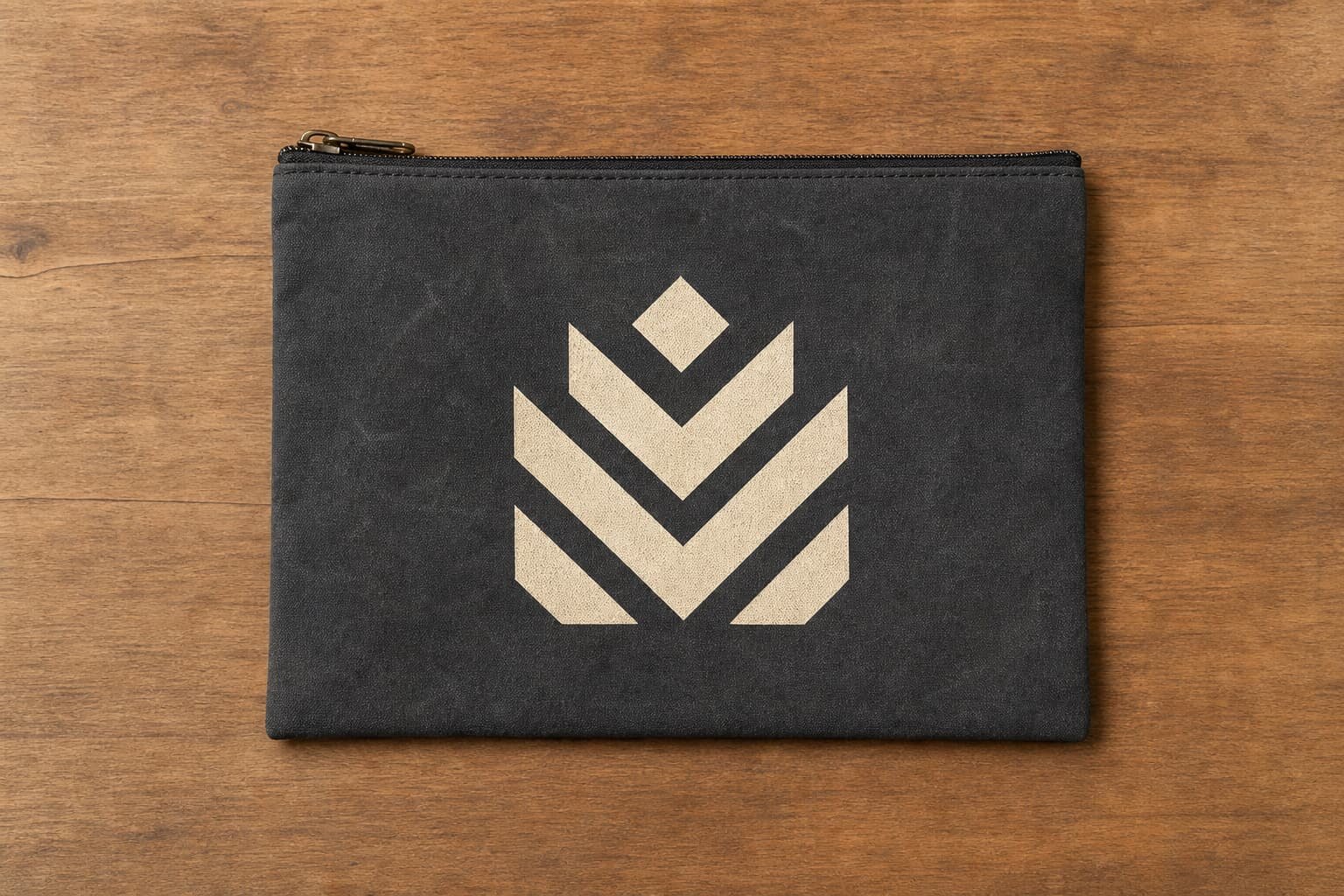
For a custom zipper business bag, the logo proof is not a decoration detail. It is the document that connects artwork, fabric, zipper sewing, bag size, packing, and final buyer approval. Many disputes start because the buyer approved a clean digital mockup, while the factory produced on a textured cotton canvas panel with zipper seam pull, fabric shrinkage, and ink absorption. The result may be a logo that is technically the right file but wrong in position, color, size, or hand feel.
A good proof guide prevents this by forcing each decision into measurable terms. The buyer should not only ask, "Can you print our logo?" The better question is: "Can you confirm the printable area, print method, logo size, Pantone target, sample process, tolerance, and packing condition for this zipper business bag?" When those items are clear before sampling, supplier quotes become easier to compare and production mistakes become easier to catch before they reach the carton.
- Use the print proof to approve size, position, color, and print method together.
- Never approve logo placement from a front-view mockup without seam and zipper references.
- Treat the pre-production sample as the final factory standard for bulk production.
- Keep approval records clear enough for the merchandiser, printing room, sewing line, and inspector.
Start With the Bag Structure Before Artwork
Zipper business bags are often used for document sets, trade show kits, bank files, laptop accessories, welcome packs, training materials, or retail stationery. The common mistake is to design the logo first and then discover the chosen bag has a zipper line, side gusset, or handle seam that reduces the clean print area. The print proof should be built from the bag pattern, not from a generic rectangle.
Confirm whether the bag is flat, gusseted, padded, lined, or reinforced. A flat A4 zipper bag may allow a large centered logo, while a gusseted document bag may have curved fabric tension near the side panels. If the bag includes a carrying handle, label, card holder, transparent pocket, or internal divider, those parts can also affect logo position and sewing sequence. The factory should show the artwork on a real pattern layout or a measured sample photo.
- Typical document sizes: A4, letter size, legal size, or custom laptop accessory size.
- Useful print area should exclude zipper seam, side seam, bottom seam, gusset fold, and handle stitch area.
- Ask for finished dimensions and tolerance, for example plus or minus 5 mm on soft fabric bags.
- For retail buyers, confirm whether hangtag, barcode, and care label placement will compete with the front logo.
Choose Fabric Weight With Printing in Mind
Fabric weight affects both perceived value and print quality. For cotton or canvas zipper business bags, many buyers consider 8 oz, 10 oz, 12 oz, or 14 oz canvas depending on budget and use. In metric terms, this may roughly fall around 240-420 GSM depending on construction. A lighter fabric can reduce cost and carton weight, but it may wrinkle more around the zipper and show less stable print edges. Heavier canvas gives a firmer business feel but may require stronger needle settings and careful folding in packing.
The logo proof should be made on the actual bulk fabric weight and color. A white ink screen print on natural 12 oz canvas will not behave the same as the same ink on black 300 GSM dyed cotton blend. Dark fabrics may need an underbase. Natural cotton may have slubs that break fine lines. Polyester blends may hold sharper transfers but feel less natural. If your procurement team compares three supplier quotes, check whether each quote uses the same GSM, construction, dyeing method, and shrinkage expectation.
- 8 oz canvas: lower-cost option for light documents and giveaways, but check wrinkling and opacity.
- 10-12 oz canvas: practical middle range for many business bags with a stable print panel.
- 14 oz canvas: premium hand feel, stronger body, but higher cost and more demanding sewing.
- Nonwoven or polyester: useful for budget or moisture-resistant programs, but print proof and heat setting must be verified.
Match the Print Method to the Logo
Screen printing is usually the first choice for solid brand marks, text, and simple icons. It is cost-efficient at volume and gives good coverage when ink, mesh, and curing are controlled. For a zipper business bag with a one-color white logo on black canvas, screen print is often practical. For two or three Pantone colors, the factory must control registration so the colors do not shift on a soft fabric panel.
Heat transfer is better for gradients, small color details, or artwork that is difficult to separate into screens. It can give a sharp result, but buyers should check edge feel, transfer film visibility, cracking risk, and rub resistance. Embroidery may suit a premium business bag, but it can pucker lighter fabrics and may not reproduce small text. Woven labels, PU patches, or embossed patches can work well when buyers want a more durable brand element, but they change the sewing process and MOQ logic.
- Screen print: best for solid logos, strong color blocks, and larger repeat orders.
- Heat transfer: best for detailed or multi-color artwork, but sample durability must be checked.
- Embroidery: premium appearance, but avoid tiny letters and thin strokes.
- Woven label or sewn patch: useful for repeat programs where brand trim becomes part of the product design.
- Embossed patch: suitable for synthetic leather trims or premium corporate bags, not for every cotton canvas style.
Build a Proof That Production Can Follow
A useful logo proof should show more than a front image. It should show artwork file name, logo width and height, color reference, print method, print position, and measurement from fixed points. For zipper business bags, the fixed points should usually be the top zipper seam, left side seam, right side seam, and bottom seam. If the bag is gusseted, measure from the visible front panel seam rather than the folded outer edge.
The proof should also note whether the logo is printed before or after sewing. Many fabric bags are printed on cut panels before assembly because this gives a flatter surface and better registration. If printing happens after sewing, the zipper, seams, or gusset may prevent the print board from sitting flat. Buyers should ask the factory which sequence they will use and whether the approved sample reflects that sequence.
- Proof should include final logo size in millimeters, not only percentage scaling.
- Proof should identify Pantone, CMYK, thread color, transfer film, or label yarn color where relevant.
- Proof should mark center line and safety margin from zipper and seams.
- Proof should state whether the logo is printed on fabric panel, pocket, patch, or sewn side label.
- Approval should be signed, dated, and linked to the purchase order or sample number.
Sample Checks Before Bulk Approval
The pre-production sample is where the buyer confirms whether the proof works on the real product. Check the sample as if it came from the first bulk carton. Open and close the zipper, measure the bag, place documents inside, check the front panel under normal light, and compare the logo with the approved color target. If the logo looks correct only when the bag is empty and perfectly flat, it may look different during actual use.
Do not approve a sample only from photos when the order is high value, retailer-facing, or color-sensitive. Photos can hide hand feel, ink thickness, zipper smoothness, fabric odor, and slight skewing. If timing forces photo approval, ask for ruler photos, close-ups of print edges, a short zipper operation video, and a photo with the Pantone card or approved swatch in the same light. Then keep the right to inspect the first production pieces.
- Measure logo width, height, and distance from zipper seam and side seams.
- Check whether the logo remains level when the zipper is closed and the bag is lightly filled.
- Look for pinholes, uneven ink coverage, fuzzy edges, ghosting, or transfer film marks.
- Check zipper end stops, puller direction, and whether the slider catches near corners.
- Confirm fabric shade, GSM feel, stitching color, label placement, and packing method.
MOQ and Cost Logic Buyers Should Understand
MOQ for zipper business bags is not only about sewing quantity. It can be driven by fabric dye lot, zipper tape color, print setup, label weaving, patch tooling, and packing material. A supplier may accept a lower quantity for stock fabric with a one-color screen print, but require a higher MOQ for custom dyed canvas, custom zipper pullers, or woven brand labels. If quotes are far apart, check which supplier is using stock materials and which is quoting custom production.
Cost should be separated enough for procurement to compare options. A clear quote may show bag body cost, logo setup, per-unit print cost, sample fee, packing cost, inland handling, and export carton details. It is acceptable for a factory to quote one combined FOB price, but the buyer should still understand what is included. Otherwise, a cheaper quote may exclude individual polybags, use lighter fabric, reduce zipper quality, or print with a lower-durability process.
- Stock fabric plus one-color screen print usually supports more flexible MOQ.
- Custom dyed fabric usually requires dye lot MOQ and longer pre-production time.
- Custom zipper pullers, metal plates, woven labels, or patches can add tooling or minimum trim quantity.
- Additional print colors may add screen charges, registration time, and rejection risk.
- Retail packing can change labor cost, carton size, and inspection time.
Lead Time Depends on Approval Discipline
For custom logo zipper business bags, lead time should be counted from approved artwork, approved sample, confirmed packing, and deposit or payment arrangement, depending on the supplier terms. If the buyer sends artwork today but changes logo size after sampling, the factory calendar resets for proofing, sample adjustment, or screen remake. Procurement teams should build an approval deadline into the RFQ instead of asking only for the shipment date.
The most common delay points are unclear artwork, late Pantone confirmation, custom fabric dyeing, trim approval, sample courier time, and packaging changes after production has started. If the bags are for an event or retail launch, ask the factory to give a timeline by stage. This helps the buyer identify which approval must happen first and which items can run in parallel.
- Artwork checking: confirm file quality, font outlines, and color references.
- Material preparation: confirm fabric, zipper tape, puller, label, and packing material.
- Sampling: produce and ship the pre-production sample or provide approved photo proof if accepted.
- Bulk production: cut, print, cure, sew, inspect, and pack according to approved standard.
- Final inspection and shipment: allow time for carton marking, booking, and buyer inspection if required.
Packing and Carton Details Affect the Logo
Packing is often discussed too late, but it can affect how the logo looks when the buyer receives the goods. A zipper business bag packed while the print is not fully cured can transfer ink or leave pressure marks. A heavy canvas bag folded across the logo can create a crease that looks like a print defect. A transfer print may show edge impressions if bags are compressed too tightly in cartons.
The packing specification should state whether bags are packed flat or folded, whether each bag needs an individual polybag, whether tissue is used, how many pieces go into each inner bundle, and how cartons are marked. For retail or distributor orders, confirm barcode placement and any suffocation warning requirement with the buyer's compliance team. For importer warehouse handling, carton weight and dimensions should be practical for receiving and palletizing.
- Avoid folding directly through the center of a large printed logo when possible.
- Confirm ink curing or transfer cooling time before packing.
- Use clean inner packing to prevent dark fabric lint or ink scuffing on light logos.
- Specify carton quantity, gross weight target, carton size, shipping marks, and PO reference.
- Ask for packed carton photos before shipment when packing is retailer-specific.
How to Compare Supplier Quotes Without Missing Risk
When comparing zipper business bag suppliers, do not rank quotes by unit price only. Put the quoted specification into a side-by-side sheet: fabric weight, finished size, zipper type, print method, number of colors, sample policy, setup charges, MOQ, lead time, packing, and inspection standard. A quote that looks cheaper may be using 8 oz fabric instead of 12 oz, a smaller bag size, bulk pack instead of individual polybag, or a digital transfer where screen print was expected.
Also compare how clearly the factory answers technical questions. A reliable factory should be able to explain printable area, tolerance, logo proof process, and sample approval sequence. If the factory only says "logo can be customized" and avoids measurements, the buyer may face problems after deposit. For repeat programs, the best supplier is often the one that can maintain the same material, logo standard, and packing record order after order.
- Normalize all quotes to the same size, GSM, zipper, print method, packing, and trade term.
- Ask whether setup charges are one-time, per design, per color, or per order.
- Check if the quoted lead time includes sample approval or only bulk production.
- Request photos of previous similar zipper business bags, but approve only your own sample.
- Define acceptable tolerance for size, logo position, color variation, and carton quantity.
Specification comparison for buyers
| Spec decision | Recommended option | When it fits | Buyer risk to check |
|---|---|---|---|
| Fabric weight | 10-12 oz cotton canvas or 280-340 GSM blended cotton | General conference, retail, bank, office, and document storage bags | Very light fabric can wrinkle around the zipper and distort the logo panel |
| Print method | Screen print for solid 1-3 color logos | High-volume orders where brand color accuracy and unit cost matter | Thin lines may fill in if mesh, ink thickness, and curing are not controlled |
| Print method | Heat transfer for gradients or small multi-color artwork | Promotional artwork with fine details, shadows, or photographic effects | Transfer edge, hand feel, and wash/rub durability must be checked on the exact fabric |
| Logo position | Centered on front panel, below zipper line, with 25-35 mm safety margin | Most business bag layouts using A4, letter-size, or laptop document format | Logo can look tilted if the proof is approved without measuring from seam lines |
| Zipper | Nylon coil zipper with matching or contrast tape | Soft cotton, canvas, nonwoven, and polyester business bags | Zipper tape shrinkage or wavy sewing can change the finished bag width |
| Sample approval | Pre-production sample using bulk fabric, zipper, ink, and packing method | Orders where logo accuracy and buyer sign-off are required before production | Digital proof alone cannot confirm ink absorption, fabric shade, or print hand feel |
Buyer checklist before sampling
- Send vector artwork in AI, PDF, EPS, or SVG format with fonts outlined and logo color codes included.
- Confirm finished bag size, zipper opening width, seam allowance, and usable print area before artwork placement.
- Specify fabric composition and weight, such as 10 oz cotton canvas, 12 oz canvas, or 300 GSM cotton blend.
- Ask the factory to mark logo size, distance from top zipper seam, side seam, and bottom seam on the proof.
- Approve Pantone or physical color target, not only a screen-view JPG.
- Request a pre-production sample using bulk material, bulk zipper, and the final logo print method.
- Check zipper smoothness, puller direction, seam tension, print alignment, ink coverage, and color consistency on the sample.
- Define carton packing, inner polybag requirement, carton marks, and barcode or retailer label placement before production.
- Confirm the approval cutoff date because bulk lead time should start after approved sample or approved print proof, not after inquiry.
- Keep one signed or sealed approved sample at the factory and one with the buyer or inspection team.
Factory quote questions to send
- What fabric composition, GSM or ounce weight, and construction are included in this quotation?
- Is the quoted logo cost based on screen print, heat transfer, embroidery, woven label, or another method?
- How many logo colors are included, and what is the extra cost for each additional color or screen?
- What is the maximum printable area on the selected zipper business bag size?
- Can you provide a layout proof showing logo size, position, and distance from seams in millimeters?
- Will the pre-production sample use the same fabric, zipper, puller, lining, ink, and packing as bulk production?
- What is the MOQ for this bag style, and does the MOQ change by fabric color, zipper color, or print method?
- What sample fee, tooling fee, screen charge, or setup charge applies, and is any charge refundable after bulk order?
- What production lead time applies after proof approval and deposit, and what can delay that schedule?
- What packing method is included in the price: flat bulk pack, individual polybag, tissue, carton divider, or retail-ready pack?
Quality-control points to confirm
- Measure finished bag size against tolerance after zipper is sewn, not only before sewing.
- Check logo position from actual seam lines using a ruler, not by eye.
- Compare print color under neutral light against the approved Pantone, swatch, or signed sample.
- Rub the printed area dry and lightly damp to check surface ink transfer before shipment.
- Open and close the zipper several times to check tape alignment, slider movement, and end stop security.
- Inspect seam tension near zipper corners because puckering can affect the front logo panel.
- Check whether logo edges remain sharp on the actual fabric texture and GSM.
- Confirm cartons contain the agreed quantity, bag orientation, inner packing, carton marks, and PO number.