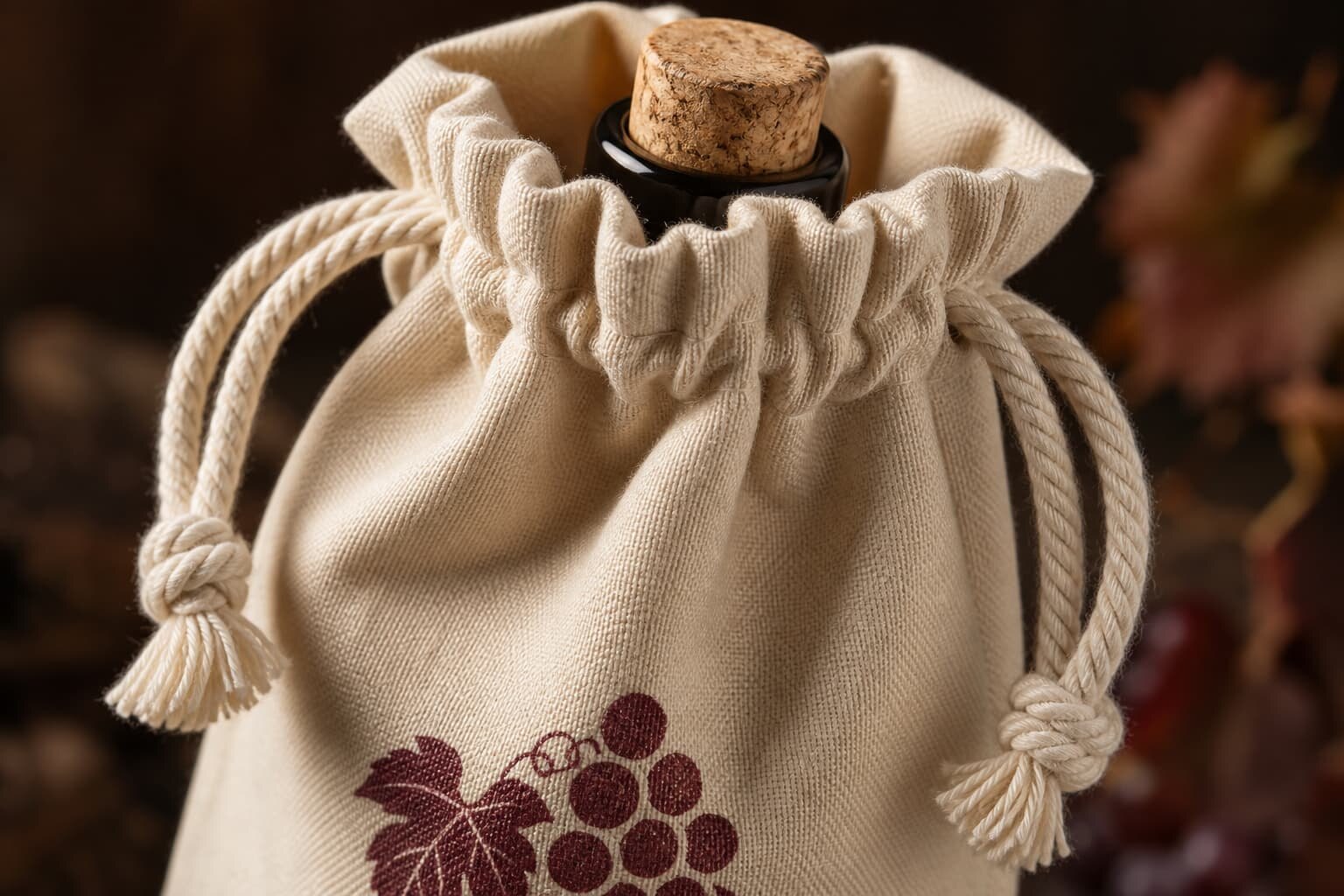
Why the Sample Seal Record Matters
A wine bottle bag looks simple until the buyer receives bulk goods that do not match the approved sample. The bag may be 8 mm too narrow for a burgundy bottle, the jute may be rougher than the showroom sample, the logo may sit too low after sewing, or the carton may crush the handles into permanent folds. Most of these issues happen because the approved sample was not sealed with enough production data.
A sample seal record is the control document that connects the physical approved sample with the quotation, artwork, material, packing, and production revision. It is not only a signature on a tag. For procurement teams, it prevents arguments about what was approved. For the factory, it tells purchasing, printing, sewing, packing, and QC teams which version must be followed.
- Use the seal record before issuing the final PO, not after mass production starts.
- Treat the sealed sample as the standard for appearance, while the written record controls measurable details.
- Keep one signed sample with the buyer and one matching signed sample with the factory.
- Add a revision number whenever artwork, size, fabric, trim, or packing changes.
Define the Bag Around the Bottle First
The first production mistake is approving a sample without testing the real bottle. Wine bottle bags are affected by bottle shape more than many buyers expect. A standard 750 ml Bordeaux bottle, tall Riesling bottle, champagne bottle, burgundy bottle, and oil-style gift bottle all sit differently. A bag that looks correct when empty can become tight at the shoulder, unstable at the base, or too short at the drawstring closure.
Your sample seal record should state the target bottle size and the required finished bag dimensions. For a single bottle cotton drawstring wine bag, buyers often work around finished sizes such as 150 x 350 mm or 160 x 360 mm, but this is only a starting point. If the bottle has a wider base or a tall neck capsule, the width, height, gusset, and drawcord position should be confirmed by physical fitting.
- Record bottle height, base diameter, shoulder width, and filled bottle weight.
- Confirm whether the bag must cover the full bottle neck or leave the foil top visible.
- Check whether the bottom needs a gusset, boxed base, insert board, or reinforced seam.
- For two-bottle bags, test bottle separation so glass does not knock against glass.
- For retail display, check whether the bag stands upright after the bottle is inserted.
Lock Fabric Weight, Structure, and Finish
Fabric wording in quotes is often too loose. A supplier may quote cotton, canvas, jute, or non-woven without stating the finished GSM, weave density, lamination, shrinkage, or shade tolerance. For wine packaging, the fabric affects not only cost but also bottle support, print clarity, seam strength, and shelf appearance. A 120 GSM cotton bag may be acceptable for light promotional use, but it may feel weak for a premium wine gift. A 240 GSM cotton canvas gives more structure but changes drawstring gathering and carton volume.
The sealed sample record should identify the material in factory language. For cotton, state whether it is plain weave cotton, twill, or canvas, and record the target GSM such as 180, 220, or 240 GSM. For jute, record lamination, weave compactness, odor acceptance, and whether the bag uses cotton webbing handles or jute handles. For non-woven, record PP GSM such as 80, 90, 100, or 120 GSM and whether seams are stitched or heat sealed.
- Ask if GSM is measured before or after dyeing, printing, coating, or lamination.
- Set a shade tolerance using a physical swatch or Pantone reference where possible.
- Check if fabric shrinkage affects finished size after steaming, pressing, or storage.
- Confirm if natural cotton slubs, jute hairiness, or small weave knots are acceptable.
- Record any special finish such as washed, bleached, dyed, laminated, calendered, or coated.
Control Print Approval Before Bulk Cutting
Print errors are expensive because they often appear after fabric has already been cut or sewn. Wine bottle bags usually have limited printable space, and the logo must work around drawcord channels, handles, seams, gussets, windows, and bottle curves. A logo that looks centered on a flat empty bag may appear low or distorted once the bottle is inside.
Screen printing is common for cotton, jute, and non-woven wine bags because it is economical for simple logos and solid colors. Heat transfer can work for detailed artwork but may feel less natural on cotton and may crack if the bag is folded hard. Embroidery, woven labels, PU patches, and debossed patches suit higher-value programs, but they add trim MOQ, sewing tolerance, and approval steps. Your seal record must show the exact print method, ink color, print size, position, and curing requirement.
- Record artwork file name and date, not only a printed paper proof.
- Measure logo position from the top edge, side seam, bottom seam, or center line.
- Specify Pantone coated or uncoated reference depending on fabric and ink behavior.
- Check dry rub and wet rub on dark ink, metallic ink, and jute surfaces.
- Confirm if print is applied before sewing, after sewing, or on a separate panel.
Seal Trims, Handles, Drawcords, and Inserts
Many disputes come from small components that buyers did not document. Drawcord diameter, ribbon width, handle length, label material, window film thickness, and insert board quality can change the look and function of the bag. A factory may replace a cord with a cheaper available stock cord if the approved sample record does not lock the trim specification.
For wine bottle bags, the stress points are predictable: handle base, side seam, bottom seam, drawcord channel, and divider seam. If the bag is a gift carrier with handles, the handle must support the filled bottle weight plus normal lifting force. If it is a drawstring sleeve, the channel must close smoothly without tearing. If it has a bottom insert, the insert must fit flat and not warp the base.
- Record handle material, width, finished length, stitch pattern, and reinforcement method.
- Record drawcord material, diameter, color, knot style, bead stopper, or metal tip if used.
- For window bags, record window shape, film thickness, clarity, and stitch or heat-seal method.
- For insert boards, record thickness, material, size, corner radius, and whether installed or packed separately.
- For labels, record woven, printed cotton, satin, PU, or paper tag details with position and stitch color.
Use MOQ Logic That Matches Real Components
MOQ is not one number. A supplier may say the MOQ is 1,000 pieces, but that may apply only to stock fabric, stock color drawcord, standard carton, and one-color screen print. If you request a dyed cotton fabric, custom jute handle, woven label, special insert board, or retail barcode carton, the real MOQ may be driven by the component supplier rather than the sewing factory.
The sample seal record helps procurement compare quotes because it forces every supplier to price the same build. If Supplier A includes 220 GSM cotton, installed insert board, and individual polybag, while Supplier B quotes 180 GSM cotton without insert and bulk packing, the lower price is not a saving. It is a different product. Ask each factory to show what is included, what is optional, and what has a separate MOQ.
- Separate MOQ for bag sewing, fabric dyeing, printing, woven labels, insert boards, and custom cartons.
- Ask whether the quoted price is based on stock fabric or custom-dyed fabric.
- Confirm if setup charges apply for screens, molds, patches, labels, or sample development.
- Ask how price changes at practical order breaks such as 1,000, 3,000, 5,000, and 10,000 pieces.
- Check if overage or shortage tolerance applies to custom-dyed or custom-printed production.
Set Lead Time by Production Stage
A reliable lead time is not just a number of days after deposit. For wine bottle bags, lead time depends on sample approval, material availability, printing, drying or curing, sewing, trimming, packing, inspection, and export handling. If the factory has to wait for custom fabric or printed labels, the sewing line may be ready but unable to start.
The sealed sample should trigger a production schedule. Buyers should ask for a stage-by-stage timeline and identify which approvals can block the order. A pre-production sample using bulk fabric is especially useful when the sales sample was made from available sample room material. Without that step, bulk fabric may arrive with a different handfeel, shade, or GSM.
- Confirm sample lead time separately from bulk lead time.
- Ask when bulk fabric will be purchased and when incoming material inspection will happen.
- Set a deadline for pre-production sample approval before mass cutting.
- Allow time for print curing before packing to avoid ink transfer or blocking.
- Confirm final inspection date, carton marking approval, and cargo ready date.
Record Packing Before the Carton Is Made
Packing is part of the product for wine bottle bags because deformation, moisture, and carton compression can damage the retail look. Jute bags can crease, laminated panels can bend, windows can scratch, and cotton drawstring bags can become dirty if packed loosely in weak cartons. If the buyer plans to pack bottles into the bags later, the bags must arrive clean, flat, and easy to count.
The sample seal record should include how each bag is folded, whether individual polybags are used, how many pieces go into an inner bundle, and how many pieces go into the master carton. Buyers should also record carton size, gross weight, net weight, and carton marking requirements. If the bag has an insert board or divider, confirm whether it is installed at the factory or supplied loose to save volume.
- Avoid tight folding across printed logos, windows, PU patches, or laminated jute panels.
- Use carton partitions or careful nesting if handles, windows, or insert boards can deform.
- Confirm if polybags are required by retailer rules or should be avoided for sustainability reasons.
- Set maximum carton weight for warehouse handling and carton strength.
- Check carton count at inspection, especially when bags are bundled in mixed quantities.
Build Acceptance Criteria Into the Record
A sealed sample without tolerances is still risky. Bulk goods cannot be identical piece by piece, especially with natural cotton and jute. The buyer should define which variation is acceptable and which variation is a defect. This avoids emotional arguments at inspection and gives the factory a clear target during inline QC.
For most wine bottle bag programs, size tolerance should be tighter where bottle fit is affected and more flexible where appearance is less critical. Print position may need a tolerance such as plus or minus 3 mm to 5 mm depending on the sewing method and fabric. Shade variation should be judged against the approved swatch under consistent light. Handle strength and seam strength should be checked with a filled bottle or an agreed test load.
- Define critical defects: wrong size that cannot fit bottle, wrong logo, broken handle, open seam, strong odor, or stained fabric.
- Define major defects: visible print misalignment, loose stitching, warped insert, poor drawcord function, or damaged window.
- Define minor defects: small natural slubs, slight thread ends, or small shade variation within approved tolerance.
- Use real bottle fit as an acceptance check, not only flat measurements.
- Require written approval for any deviation from the sealed sample before shipment.
How to Use the Checklist in an RFQ
The best time to use the wine bottle bag sample seal record checklist is during RFQ preparation. Send suppliers a concise specification sheet, then ask them to quote against the same sample control requirements. This makes price comparison more accurate and exposes suppliers who quote quickly but do not control fabric, trims, print, and packing.
After choosing a supplier, update the record with the final quotation number, PO number, artwork revision, and approved sample photos. Before deposit or mass cutting, confirm which document has priority if there is a conflict. A practical rule is that the signed sealed sample controls appearance, while the PO and seal record control measurements, materials, quantities, packing, and commercial terms.
- Attach the checklist to the RFQ instead of sending only a product photo.
- Ask suppliers to mark any exception line by line before quoting.
- Compare quotes by fabric GSM, print method, trim specification, packing method, and lead time.
- Do not approve bulk cutting until the sample seal number appears on the production file.
- Keep the record available for final inspection and future reorders.
Specification comparison for buyers
| Spec decision | Recommended option | When it fits | Buyer risk to check |
|---|---|---|---|
| Cotton wine drawstring bag fabric | 180-240 GSM cotton canvas or plain weave cotton | Gift packaging for single bottles where soft handfeel and print clarity matter | Shrinkage after washing or steaming, drawcord channel width, and whether quoted GSM is before or after finishing |
| Jute wine bag fabric | 14 x 15 or similar dense jute, often laminated inside for structure | Rustic retail gift sets, natural positioning, or heavier bottle presentation | Odor, shedding, uneven weave, lamination cracking, and front panel print distortion |
| Non-woven wine tote fabric | 80-120 GSM PP non-woven with reinforced handle stitching | Promotional programs, supermarket packs, and tighter budget projects | Handle tear strength, heat-sealed edge consistency, and color variation between fabric lots |
| Print method for small logos | Screen print with Pantone reference and wet/dry rub check | Simple one to three color artwork on cotton, jute, or non-woven bags | Ink bleeding on jute, poor opacity on dark fabric, and logo position shifting in bulk |
| Premium branding detail | Woven label, PU patch, embroidery, or debossed leather-look patch | Wine clubs, premium retail gift packaging, or reusable branded bags | Label fraying, patch edge lift, needle holes near bottle pressure points, and MOQ for trims |
| Bottle protection | Bottom insert board or internal divider when bottle movement is a risk | Two-bottle carriers, glass-heavy gift sets, or courier shipment after packing | Insert thickness, board moisture resistance, and whether insert is packed flat or installed |
| Sample seal method | Signed physical sample plus digital sample seal record with photos and measurements | Any order where print, size, handle, lining, or packing affects buyer acceptance | Uncontrolled changes after approval, missing revision number, and factory using an older sample |
| Export packing | Individual polybag only when required, otherwise master carton with divider or nested packing | Retail-ready projects, distributor stock, or fragile bottle kit programs | Carton compression, bag deformation, humidity marks, and incorrect units per carton |
Buyer checklist before sampling
- Assign a unique sample seal number that matches the PO, quote version, artwork file, and factory sample tag.
- Record final bag size as width x height x gusset in millimeters, and confirm whether measurements are taken flat or opened.
- Confirm fabric type, color, weave, GSM, coating or lamination, and approved tolerance for shade variation.
- Measure fabric weight from actual sample material where possible, not only from supplier quotation text.
- Attach the final artwork file name, Pantone references, print size, print position, and print method to the seal record.
- Check logo alignment against seams, drawstring channel, handle base, window opening, and bottle center line.
- Test one real target bottle inside the sample, including bottle height, shoulder width, and base diameter.
- Record drawcord, handle, ribbon, label, eyelet, window, insert board, and divider details with material and dimensions.
- Photograph front, back, side, bottom, inside, top opening, print close-up, stitch close-up, and packing method.
- Define acceptable measurement tolerance before bulk production, especially for bottle fit and carton packing.
Factory quote questions to send
- Which sample seal number and revision will your bulk production follow, and can you print it on the pre-production sample tag?
- Is the quoted fabric GSM measured before dyeing, after dyeing, after lamination, or from finished bulk fabric?
- What is your practical MOQ for this exact fabric color, GSM, print method, and trim combination, not only for a similar bag?
- Which components require separate MOQ, such as drawcord, ribbon, woven label, insert board, window film, or custom carton?
- What is the expected lead time for fabric purchase, printing, sewing, packing, and final inspection after sample approval?
- Can you provide a pre-production sample using bulk fabric and bulk trims before cutting the full order?
- What tolerance do you apply for bag size, handle length, print position, fabric shade, and carton quantity?
- How will you prevent bottle bag deformation during packing, especially for jute, laminated, or window styles?
- Which quality checks are included before shipment, and can you share the inspection report format before production starts?
- If the sealed sample conflicts with the quotation text, which document controls the order unless the PO states otherwise?
Quality-control points to confirm
- Verify bulk fabric GSM, color shade, coating, odor, weave density, and handfeel against the sealed sample before cutting.
- Check finished bag dimensions with a real bottle, not only with a ruler on the flat bag.
- Inspect print color, opacity, registration, curing, rub resistance, and position against the approved artwork record.
- Pull-test handles, drawcord channels, side seams, bottom seams, divider seams, and label stitching at the approved stress points.
- Confirm trims match the sealed sample, including cord diameter, ribbon width, label size, insert board thickness, and window film clarity.
- Review packing method, carton strength, carton marking, carton count, and whether bags are crushed, twisted, or stained during packing.
- Compare final random samples with the buyer-held sealed sample before release, especially if production was split across lines or dates.
- Record all deviations with photos and written disposition: accept, repair, rework, sort, or replace.