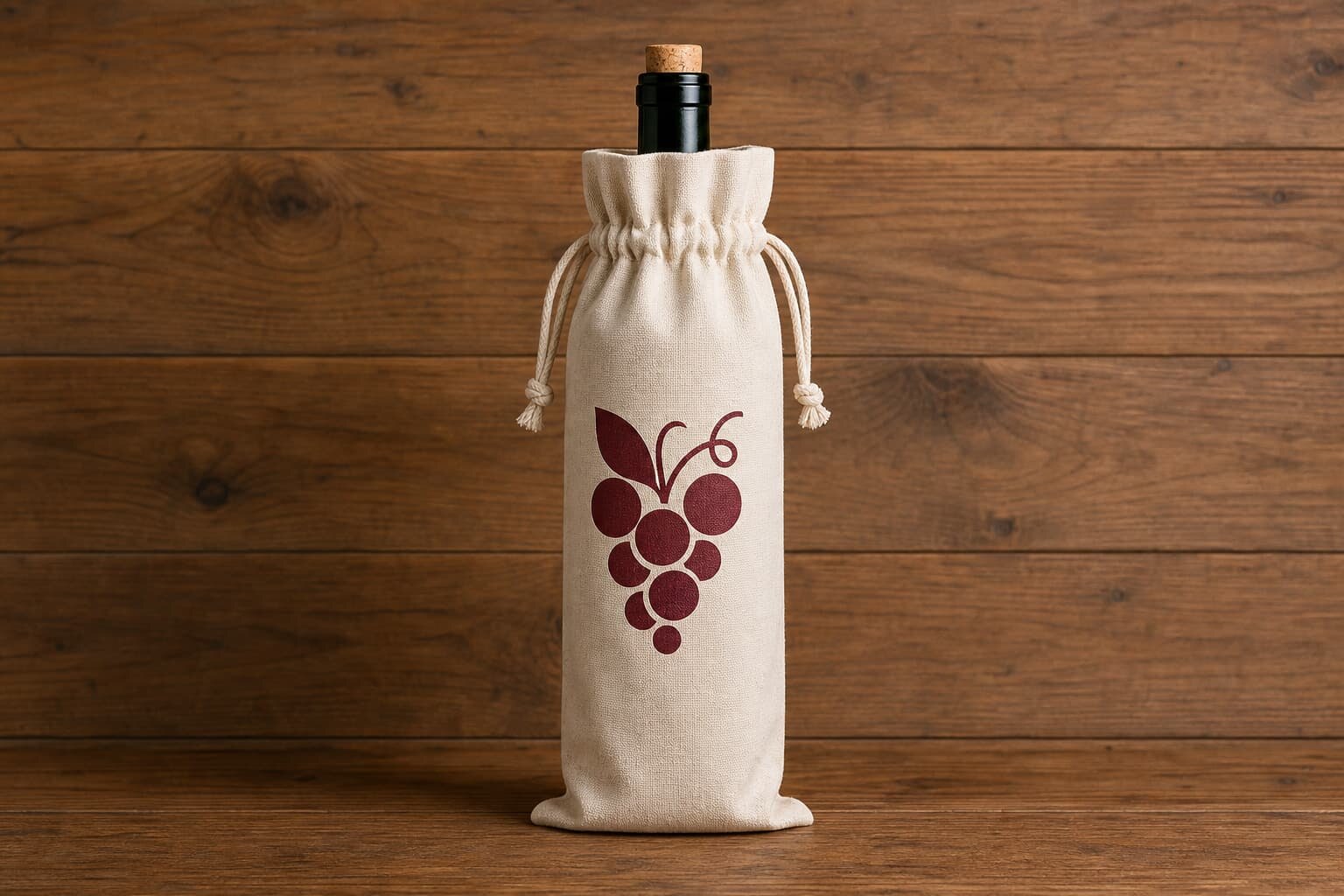
Why the Insert Board Needs Its Own Quote Line
A wine bottle bag insert board looks like a small detail, but it changes the cost, packing method, carton performance, and retail presentation of the bag. If the RFQ only says "wine bag with bottom board," each supplier may quote a different board material, thickness, shape, and insertion method. One factory may include a thin white card loosely placed inside. Another may quote a 2 mm greyboard die-cut with rounded corners and inserted by hand before packing. The unit prices will not be comparable.
For procurement teams, the main problem is not choosing the most expensive insert. The problem is locking the insert board specification early enough that the sample, quotation, and purchase order all describe the same product. A stiff board can make a cotton or jute wine bag stand better on a shelf, but it can also add labor, carton volume, and risk of fabric puncture if the corners are wrong.
- Ask the factory to quote the board as a named component, not a vague accessory.
- Show whether the board is included in the unit price, charged separately, or optional.
- Define whether insertion labor is included, because hand insertion can matter on large orders.
- Make the board drawing part of the approved sample package.
Start With the Bottle and Bag Construction
The correct board size starts from the bottle footprint, not from the artwork. A standard 750 ml Bordeaux bottle has a different shoulder and base behavior than a Burgundy, Champagne, or spirits bottle. If the bag is only for one bottle type, the board can be tighter and flatter. If the bag must fit mixed wine SKUs, the base and gusset need more tolerance, and the board may need a slightly smaller fit so it does not push against the seams.
Bag construction also matters. A flat-bottom wine bag with side and bottom gussets can accept a rectangular board with rounded corners. A simple sleeve-style wine bag may not benefit from a board unless the bottom is constructed to hold it flat. A drawstring wine pouch made from soft cotton may use a board only for retail display, while a laminated jute bag may already have enough body and only need the insert for base stability.
- List target bottle dimensions: height, maximum diameter, base diameter, and filled bottle weight.
- State whether the bag is one-bottle, two-bottle, or gift set format.
- Confirm bottom style: flat-bottom gusset, folded base, stitched base, round base, or no gusset.
- Require the board to fit after normal sewing tolerance, not only on the paper pattern.
Board Material and Thickness Decisions
Most wine bottle bag insert boards are greyboard, white cardboard, recycled board, or sometimes plastic sheet for moisture-resistant programs. Greyboard is common because it is economical and stiff enough for many cotton, canvas, jute, and non-woven bags. White board looks cleaner if the insert may be visible during unpacking. Plastic sheet is more durable but changes cost, recyclability, and sometimes import classification discussion, so it should not be added casually.
Thickness should be selected by bottle weight, bag size, and fabric strength. A 1.0 mm board may feel flimsy in a tall wine bag. A 1.5 mm to 2.0 mm board is a practical range for many single-bottle bags. Heavy glass, champagne bottles, or two-bottle formats may need thicker board or a different base construction. If a supplier quotes only "thick board," ask for caliper measurement or GSM equivalent and keep a retained sample.
- Common starting point: 1.5 mm greyboard for a single 750 ml wine bottle bag.
- Premium retail presentation: white board or covered board if the insert is visible to consumers.
- Moisture concern: discuss laminated board or plastic sheet, but check odor and sustainability claims.
- QC requirement: board should be flat, dry, low-odor, and cut without powdery edges.
Fabric Weight Must Match the Board
A stiff board inside a very light bag can make the bag look worse, not better. The base becomes squared while the upper body collapses, or the board edge shows through the fabric. For cotton wine bags, buyers often work in a range from 6 oz to 10 oz depending on budget and reuse expectation. Canvas wine bags may use 10 oz to 12 oz when a sturdier retail gift feel is needed. Jute bags often sit around 220 to 320 GSM, depending on weave openness and lamination.
Non-woven wine bags can use insert boards, but the board should be specified more carefully because thin non-woven fabric may tear or crease around a sharp corner. If the buyer wants a reusable brand gift bag, do not approve the insert board in isolation. Approve the board, fabric weight, seam type, drawstring or handle strength, and print together as one working structure.
- Natural cotton wine pouch: 6-8 oz can work for lighter promotional programs.
- Reusable cotton or canvas wine gift bag: 10-12 oz gives better body and print surface.
- Jute wine bag: 220-320 GSM; confirm lamination if the buyer expects cleaner structure.
- Non-woven wine bag: 80-120 GSM; pay attention to seam strength and board corners.
Print Method and Board Interaction
The insert board changes how the bag stands and how the front panel is seen. That affects logo placement. A logo that looks centered on a flat sample may look too low once the board is inserted and the bottle pushes the fabric upward. For retail programs, approve artwork with the actual board inserted and a filled bottle or bottle dummy inside. This is especially important for wine bags photographed in e-commerce listings or displayed upright on a shelf.
Screen printing is usually the practical choice for solid one-color or two-color logos on cotton, canvas, jute, and non-woven bags. Heat transfer may fit gradients or small detailed artwork, but buyers should check hand feel and cracking risk around fold points. Embroidered labels, woven labels, or cotton side labels can work when the buyer wants a quieter premium look. Whatever method is used, the RFQ should connect print size, print location, color count, and board insertion status.
- Screen print: best for clean solid marks and repeatable bulk production.
- Heat transfer: useful for gradients or complex art; test adhesion on the chosen fabric.
- Woven or cotton label: good for premium reusable bags and small brand marks.
- Approval tip: photograph the sample standing with bottle and board before final artwork sign-off.
MOQ Logic Buyers Should Expect
The MOQ for a wine bottle bag with insert board is not only about sewing quantity. It may be driven by fabric sourcing, dye lot, print setup, board die-cutting, and packing labor. A natural cotton stock fabric with one-color screen print and a standard board size can usually start lower than a dyed canvas bag with custom board shape, four-color print, and individual retail packing. If quotes differ sharply, check which cost drivers are included.
Some factories may accept a smaller trial order if the buyer uses available fabric, existing board die, and simple bulk packing. That can be useful for distributor testing, but it may not represent the final retail program cost. If you plan to reorder, ask the supplier to separate sample die charges, print setup, and board tooling from the repeat unit price. This helps your purchasing team understand which costs repeat and which are one-time.
- Lower MOQ path: stock fabric, standard size, existing board die, one-color print.
- Higher MOQ path: dyed fabric, custom size, custom board, complex print, retail packing.
- Quote comparison point: ask whether board die charge is amortized or listed separately.
- Reorder planning: keep the board drawing and approved sample for repeat consistency.
Quote Worksheet Data to Send the Factory
A good worksheet reduces quote revisions. Instead of asking for a general wine bag price, send a filled specification table covering bottle size, fabric, board, print, packing, quantity, sample needs, and shipping terms. The factory can then price real production assumptions instead of guessing. This also makes internal comparison easier when purchasing receives three or five supplier quotes.
The worksheet should include enough details to prevent hidden substitutions. For example, "natural cotton wine bag, 8 oz, 90 x 350 x 90 mm, 1.5 mm greyboard inserted, one-color screen print, packed 1 pc per OPP" is much clearer than "cotton wine bag with board." If you do not know one field, mark it as open and ask the factory to recommend an option with the cost impact.
- Finished bag size: width x height x gusset, with tolerance if known.
- Board size: length x width x thickness, corner radius, material, and color.
- Fabric: material, GSM or oz, color, weave, lamination, washing, or coating.
- Print: artwork file, print method, colors, size, placement, and color reference.
- Packing: board inserted or separate, individual bag, master carton quantity, carton strength.
- Commercial data: quantity breaks, sample cost, setup cost, lead time, payment terms, and Incoterm.
Sample Checks Before Bulk Approval
The pre-production sample should not be a pretty shell without the real board. Buyers need to approve the actual board thickness, actual board cut, actual fabric weight, and actual packing method. If the supplier cannot make the board during first sample stage, ask for the closest available board plus a separate board swatch showing the proposed final thickness. Do not approve bulk production until the working structure is clear.
Put a bottle inside the sample, close the drawstring or handle it as the consumer would, and place it on a flat table. The bag should stand reasonably straight for its construction, the board should stay flat, and the seams should not be under obvious stress. Then remove the board and check for scuffing, corner damage, and loose fibers. These simple checks catch many problems before production.
- Measure bag size and board size with a ruler or caliper, not by eye.
- Check board insertion and removal: it should fit without forcing or folding.
- Test with the heaviest bottle planned for the program.
- Check print position after the bottle and board are inside.
- Review packed sample after 24-48 hours to see whether the board curls or bends.
Packing and Carton Risks
Packing is where many insert board mistakes become expensive. If boards are inserted into each bag, the bags may take more carton space and can be crushed if stacked in the wrong direction. If boards are packed separately, the carton may ship more efficiently, but store teams or distributors must insert them later. Neither method is automatically better. The correct choice depends on whether the product is retail-ready, e-commerce packed, or supplied as bulk promotional packaging.
For retail buyers, individual packing may be required to keep the bag clean and keep the board in place. For sustainability-focused brands, a paper band or bulk inner pack may be preferred over OPP. Whatever option is chosen, the quote should show the packing material, pieces per carton, carton dimensions, gross weight, and whether the board is protected against bending and humidity.
- Retail-ready: board inserted, bag folded consistently, individual OPP or paper band if required.
- Bulk distributor: flat bags and bundled boards may reduce carton volume and damage risk.
- Carton check: avoid over-compression that bends boards or creates permanent bag creases.
- Warehouse check: keep cartons dry because paper board absorbs moisture quickly.
How to Compare Supplier Quotes Fairly
When quotes arrive, do not compare unit price first. Compare what is inside the unit price. One quote may include 10 oz cotton, 2 mm board, inserted packing, and one-color print setup. Another may include 6 oz cotton, 1 mm board, bulk packing, and separate setup charges. The cheaper quote may still be correct for a promotion, but it is not equivalent. Mark differences before negotiating.
A clean quote comparison should include material specification, board specification, print method, setup charges, sample charges, MOQ, quantity breaks, packing, carton data, lead time, and validity period. If any supplier leaves a field blank, ask again before presenting the comparison internally. This prevents the common situation where purchasing approves a low price and merchandising later discovers that the bag does not stand, the board is not included, or the print position moved.
- Compare fabric weight in GSM or oz, not only material name.
- Compare board thickness and material, not only "with insert."
- Compare inserted packing versus separate board packing.
- Compare all setup charges: print screen, board die, sample, color matching, and packing.
- Compare lead time from the same approval milestone, usually sample and deposit approval.
Specification comparison for buyers
| Spec decision | Recommended option | When it fits | Buyer risk to check |
|---|---|---|---|
| Insert board material | Greyboard or white cardboard, 1.5-2.0 mm, die-cut to bag base | Most cotton, canvas, jute, and non-woven wine bottle bags needing a flatter bottom | Uncoated board can absorb moisture; confirm odor, stiffness, and whether board is packed inside or separate |
| Board shape | Rounded-corner rectangle or bottle-base oval depending on bag construction | Flat-bottom gusset bags usually use rectangle; round-base bottle sleeves may need oval | Sharp corners can damage seams or poke through lighter fabric during transit |
| Bag fabric weight | Cotton 6-10 oz, canvas 10-12 oz, jute 220-320 GSM, non-woven 80-120 GSM | Choose by retail positioning, bottle weight, print detail, and budget | Too-light fabric with stiff board may wrinkle, twist, or show board outline |
| Print method | Screen print for solid logos; heat transfer for gradients; woven or cotton label for premium reusable bags | Best when artwork quantity, color count, and positioning are stable before sampling | Print position can shift if board changes the bag standing shape after packing |
| Insert handling | Board inserted by factory for retail-ready packing, or bulk packed separately for freight efficiency | Inserted board helps buyer inspect shelf form; separate board may reduce crushing risk | If not specified, suppliers may quote different labor and packing assumptions |
| MOQ logic | MOQ tied to fabric dyeing, print setup, board die-cutting, and packing labor | Custom size, dyed fabric, or multi-color print usually needs higher MOQ than stock fabric | Low MOQ quotes may hide board die charges, print setup, or carton repacking cost |
| Packing method | One bag with board inserted in OPP, paper band, or bulk carton with flat boards bundled | Retail programs need clean individual packing; distributor bulk orders may prefer lower packaging waste | Inserted boards can deform if carton compression, humidity, or stacking direction is ignored |
Buyer checklist before sampling
- Confirm bottle size range before bag and board sizing: 750 ml Bordeaux, Burgundy, Champagne, spirits, or mixed gift set.
- Specify finished bag size, gusset depth, seam allowance tolerance, and whether the board must be removable.
- Define insert board material, thickness, color, edge finish, odor requirement, and corner radius.
- Match fabric GSM or oz weight to bottle weight and retail positioning instead of selecting the cheapest shell fabric.
- Send logo artwork with print size, color reference, placement from bottom edge, and whether the board is inserted during print approval.
- Ask if the quote includes board die charge, board insertion labor, individual packing, carton protection, and pre-shipment inspection support.
- Request a pre-production sample with board inserted, packed, and carton-tested if the bag must stand upright at retail.
- Check whether boards are packed inside each bag or bundled separately, and make this visible on the purchase order.
- Set acceptance criteria for board fit: no curling, no sharp corners, no exposed board edge, no fabric puncture, and no strong paper odor.
- Compare supplier quotes using the same assumptions for fabric, board, print, packing, MOQ, lead time, and sample revision count.
Factory quote questions to send
- What board material and thickness are included in your unit price, and can you show the actual board GSM or caliper measurement?
- Is the insert board die-cut by an existing tool or does this order require a new cutting die charge?
- Will the board be inserted into each wine bottle bag before packing, packed separately, or supplied loose in bundles?
- What finished bag tolerance and board tolerance do you apply so the board fits flat without forcing the seams?
- Which fabric weight is quoted, in GSM or oz, and is it stock greige, natural, bleached, dyed, laminated, or washed?
- Which print method is quoted, how many colors are included, and are print setup charges separate from unit price?
- Can you make one sample with the actual board, actual fabric weight, and actual packing method before bulk production?
- What MOQ applies if we change board thickness, bag size, print method, or fabric color after sampling?
- How many pieces per carton are planned, what is the carton size, and how will inserted boards be protected from bending?
- What production lead time starts after which approval: artwork, sample, deposit, fabric color, or board die confirmation?
Quality-control points to confirm
- Measure finished bag width, height, gusset, and board size against the approved sample, not only the quotation sheet.
- Check board thickness by caliper at random pieces because visual inspection cannot distinguish 1.2 mm from 1.8 mm reliably.
- Insert a filled target bottle and confirm the base sits flat without rocking, seam strain, or board curling.
- Inspect board corners for rounding and smooth edges so they do not cut into cotton, canvas, jute, or non-woven fabric.
- Check print registration and placement with the board inserted because the standing shape may change the visible logo position.
- Perform a lift test with the bottle inside, holding by drawstring or handle if applicable, to check seam strength and fabric distortion.
- Smell boards and bags after sealed packing; reject strong chemical, moldy, or damp paper odor for gift and retail use.
- Open several packed cartons and confirm whether board insertion or separate board packing matches the purchase order.