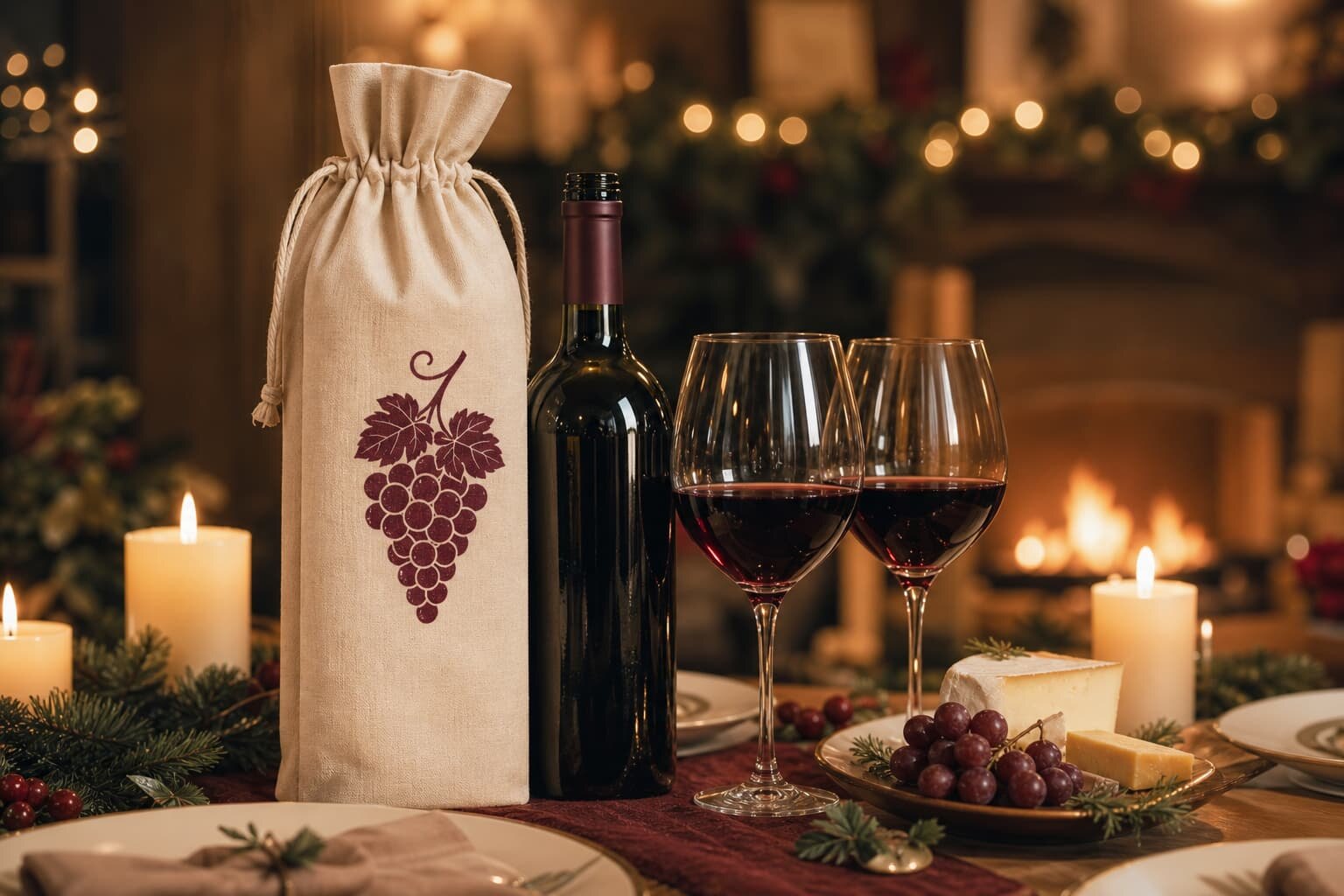
The Buying Problem This Worksheet Solves
Festive wine bottle bags look simple until procurement compares quotes. One supplier may quote only a plain cotton bag, another may include ribbon and hangtag attachment, and a third may include retail set packing inside a printed inner carton. If the RFQ does not control the packing worksheet, the lowest quote may be missing the labor and components that make the bag ready for holiday retail or gifting.
The purpose of a wine bottle bag festive packing worksheet is to turn a seasonal idea into measurable factory instructions. It should tell the factory what bottle must fit, what material to cut, what artwork to print, what accessories to attach, how to fold or pack the bag, and what data must appear in the quotation. This is especially important for importers, distributors, corporate gift buyers, and retail teams working against a fixed festive selling window.
- Use the worksheet before requesting quotes, not after receiving different prices.
- Separate product specification from packing specification so missing labor is visible.
- Make each SKU version clear when size, color, print, or insert card changes.
- Treat festive packing as a production process, not as a decoration note.
Start With the Bottle, Not the Bag
A reliable wine bag specification starts with the actual bottle. Bordeaux, Burgundy, Champagne, sparkling wine, olive oil, and spirits bottles do not share the same diameter, shoulder height, or neck profile. A bag that looks acceptable on a slim wine bottle can become tight around a Champagne base, too short for a tall Riesling bottle, or unstable when packed with a heavy glass container.
Ask the sales or merchandising team to provide a physical bottle, a technical bottle drawing, or at least confirmed measurements. The factory needs the bottle height, maximum diameter, base diameter, shoulder width, and whether the cork, capsule, or neck label must remain visible. If the bag has a drawstring channel, measure usable height below the channel, not only the full outside height.
- For a standard 750 ml Bordeaux bottle, buyers often start around 35-37 cm finished height, but the actual bottle should decide the final size.
- For Champagne or sparkling wine, increase base width and consider a stronger bottom seam because the bottle is heavier and wider.
- For two-bottle formats, confirm whether bottles sit side by side with a divider or in a wider open compartment.
- For retail display, check if the bottle must stand upright inside the bag without collapsing the front panel.
Choose Fabric Weight for Function, Not Only Price
Fabric GSM affects handfeel, print result, seam strength, packing volume, and perceived value. A 120-140 GSM cotton wine sleeve may work for low-cost promotional giveaways, but it can feel thin and transparent around a dark bottle. A 180-220 GSM cotton canvas gives better structure for corporate gifting and simple retail display. For a heavier premium look, buyers may use 10 oz or 12 oz cotton canvas, but the quote must consider higher fabric cost, stronger needles, slower sewing, and larger carton CBM.
Jute creates a rustic festive look, but it needs tighter control than many buyers expect. Loose fibers, odor, and uneven weave can create problems if the bottle has a premium paper label. If jute contacts the bottle directly, consider a cotton lining or laminated inner surface. If sustainability claims are part of the sales story, ask for the actual material composition and avoid vague wording that the factory cannot support.
- 120-140 GSM cotton: budget promotion, flat packing, lower structure, better for short-term use.
- 180-220 GSM cotton or canvas: common choice for branded wine gifting and cleaner print appearance.
- 10-12 oz canvas: premium feel, stronger body, higher freight volume and more visible sewing bulk.
- 10-12 oz jute: rustic shelf presence, but check lint, smell, edge finishing, and label abrasion.
Match Print Method to Artwork and Fabric
Most wine bottle bag festive programs use simple logos, seasonal messages, vineyard branding, or retail private label artwork. Screen printing is efficient for one to three colors and works well on cotton and canvas when the artwork is not too fine. Heat transfer can handle more colors and small details, but edge adhesion, handfeel, and heat marks must be checked. Embroidery can look premium on heavier canvas, but it may pucker thinner fabric and adds time for digitizing and stitch testing.
Do not approve a festive print from a digital mockup only. Dark red, forest green, navy, black, and natural jute all affect ink appearance. Metallic gold and silver can vary by ink system and may need a strike-off on the real fabric. If artwork crosses a seam, wraps near a gusset, or sits close to the drawstring channel, ask the factory to confirm print position after sewing and folding.
- Screen print: best for simple logos, solid marks, and larger seasonal artwork.
- Heat transfer: useful for small multicolor designs, but inspect peeling risk and handfeel.
- Embroidery: suitable for heavier canvas, not ideal for small text on thin cotton.
- Woven label: clean for private label programs when direct print coverage should stay low.
- Metallic print: always require a physical strike-off because shine and opacity change by fabric.
Define the Festive Packing Version
A common quoting mistake is writing one line such as "wine bag with holiday packing". That does not tell the factory whether the bag is flat packed, folded with a paper band, packed with tissue, attached to an insert card, barcode labeled, or pre-packed as a retail set. Each added step has labor, material, inspection, and packing implications. It also changes carton space and the risk of crushed bows, bent cards, or mixed SKUs.
Your worksheet should show the packing sequence in the order the operator will follow. For example: iron bag, insert paperboard support, tie ribbon, attach hangtag with cotton string, place into recyclable polybag or paper sleeve, apply barcode sticker, pack 100 pieces per export carton by color. When the sequence is clear, the factory can quote accurately and the QC team can inspect against a real standard.
- Flat pack: lowest labor and freight impact, but buyer or distributor handles final presentation.
- Folded with paper band: cleaner for retail set building, but band size and print must be approved.
- Hangtag attached: good for retail information, but tag hole, string type, and placement need control.
- Bottle-in-bag packing: only quote this if the factory or local packer also receives the bottle.
- Gift-ready packing: highest control requirement because final appearance is part of the product.
Build MOQ Logic by SKU, Not by Project Total
Factories usually calculate MOQ around fabric procurement, dyeing, printing setup, cutting efficiency, and packing complexity. A buyer may request 20,000 pieces total, but the factory sees ten fabric colors, five prints, two sizes, and three packing versions. That can become thirty production lots. If the worksheet does not break down SKU logic, the buyer may receive a quote that looks acceptable but becomes unstable during order confirmation.
Ask the factory to state MOQ by fabric color, print design, size, and accessory color. For example, natural cotton with black print may have a lower MOQ than custom-dyed burgundy canvas with metallic gold print and matching ribbon. Jute may have a different MOQ than cotton because fabric rolls, cutting waste, and storage conditions differ. Clear MOQ logic helps buyers decide whether to reduce variations or accept higher unit costs.
- Group artwork by print color when possible to reduce setup changes.
- Avoid custom dyed fabric for small seasonal quantities unless timing and budget allow it.
- Use standard drawcord or ribbon colors when launch date is more important than exact shade.
- Ask whether MOQ applies to each artwork, each bag color, or the total order quantity.
- Require the supplier to list surcharge logic for low-volume SKU splits.
Sample Approval Should Include Packing, Not Only Sewing
A neat sewing sample is not enough for a festive wine bottle bag program. The buyer should approve a full pre-production sample that includes the fabric, print, cord, ribbon, tag, label, folding method, and inner packing. If the bag is sold through retail, the sample should show the barcode label and shelf-facing side. If the bag is used for corporate gifting, it should show how the logo looks after the bottle is inserted and the top is tied.
Sample checks should be practical. Insert the actual bottle several times. Pull the drawstring with normal hand force. Check whether the print cracks when the fabric bends around the bottle. Smell the bag after it has been sealed in a polybag for a day. Shake the packed sample gently to see if the tag scuffs the print or the ribbon becomes untied. These are small checks, but they prevent many seasonal complaints.
- Approve fabric swatch before cutting if color, GSM, or jute texture is important.
- Approve print strike-off on the actual production fabric, especially for dark or metallic designs.
- Approve one complete packed sample per SKU version, not one generic sample for the whole order.
- Record measurement tolerance, usually by finished bag dimensions rather than flat artwork files.
- Keep an approved sample sealed for final inspection reference.
Quote Data Buyers Should Require
A useful supplier quote should be more than unit price and lead time. For wine bottle bag festive packing, the quote should state fabric specification, finished size, print method, included accessories, packing method, MOQ, sample timing, production timing, carton data, and validity period. Without this data, procurement cannot compare suppliers fairly or explain price differences internally.
Ask suppliers to separate optional items. A bag-only quote should not be compared with a gift-ready quote that includes hangtag attachment, insert card, ribbon tying, barcode labeling, and retail inner packing. For better comparison, request a base unit price plus add-on lines. This gives the buyer flexibility if the project needs cost reduction after the first quote round.
- Base bag price: fabric, cutting, sewing, standard drawstring or handle.
- Branding price: screen setup, print run charge, label, embroidery, or heat transfer.
- Accessory price: ribbon, hangtag, insert card, paper band, tissue, or barcode label.
- Packing labor: folding, tag attachment, retail set assembly, inner bagging, carton sorting.
- Export data: carton quantity, carton dimensions, gross weight, net weight, and CBM.
Lead Time Risks in Seasonal Wine Bag Orders
Holiday and festive programs have less room for delay because the selling period is fixed. Lead time should be counted from final approval of fabric, artwork, sample, packing components, and payment terms, not from the first inquiry. A quote that says "25 days production" may exclude fabric dyeing, print strike-off, tag printing, sample courier time, inspection booking, and vessel schedule.
The biggest timing risks are custom fabric color, late artwork changes, unapproved accessories, mixed SKU packing, and failed pre-production samples. Procurement teams should build a calendar with approval deadlines. If the order includes several retail markets, barcode and language versions must be frozen early. A small hangtag change can hold a whole packing line if the bag is otherwise finished.
- Reserve extra time for custom-dyed cotton, printed ribbons, metallic ink testing, and imported accessories.
- Do not start bulk cutting until finished size and bottle fit are approved.
- Do not start bulk printing until artwork position and color strike-off are signed off.
- Confirm cargo-ready date separately from production finish date.
- Ask the factory whether peak-season sewing capacity is already booked.
Acceptance Criteria for Final Inspection
Final inspection should match the approved worksheet. Inspectors need more than a general bag checklist because festive wine bottle bags combine textile sewing, printing, accessories, and retail packing. Measurement, print, sewing, odor, stain, drawstring function, and packed presentation should all be checked. If the bag will hold a glass bottle, seam and base strength deserve special attention.
Define defects before production. A small natural slub on unbleached cotton may be acceptable, while a stain near the logo is not. Slight jute shade variation may be normal, while loose fiber contamination inside the bag may not be acceptable. For packed goods, wrong barcode, wrong insert card, crushed tag, missing ribbon, or mixed color assortment should be treated as functional defects because they create receiving and retail problems.
- Critical: unsafe needle pieces, wrong SKU packing, wrong barcode, severe seam failure, mold, strong chemical odor.
- Major: wrong size outside tolerance, poor print adhesion, missing accessory, torn fabric, loose handle, incorrect carton mark.
- Minor: small thread ends, slight natural fabric slub, minor shade variation within approved standard.
- Packing: verify pieces per inner pack, pieces per carton, assortment ratio, carton mark, and carton strength.
- Function: test bottle insertion, drawstring closure, handle carrying, and bag standing stability if required.
Specification comparison for buyers
| Spec decision | Recommended option | When it fits | Buyer risk to check |
|---|---|---|---|
| Fabric for single bottle gift bag | 180-220 GSM cotton canvas or 8-10 oz cotton | Mid-range retail gifting, wine club shipments, promotional holiday sets | Too light fabric may show bottle shape and wrinkle badly after packing |
| Fabric for rustic festive program | 10-12 oz jute with cotton lining or laminated inner finish | Natural, winery, gourmet food, and seasonal hamper positioning | Loose jute fibers can contaminate bottle labels if lining is not controlled |
| Closure style | Cotton drawstring, twisted cord, ribbon tie, or handle top | Drawstring for efficient packing; ribbon for gift shelf appeal; handle top for retail carry-out | Ribbon color and length must be approved before bulk cutting |
| Print method | Screen print for simple logos; heat transfer for small multicolor artwork; woven label for premium low-coverage branding | Seasonal logos, corporate gifting, retail private label, limited holiday artwork | Metallic inks, large solids, and dark fabric prints need strike-off approval |
| Bottle fit | Base width and height based on actual bottle diameter plus packing tolerance | Bordeaux, Burgundy, Champagne, spirits, olive oil, or mixed bottle programs | One-size drawings often fail when buyer changes bottle shape after sample approval |
| Festive packing unit | Flat packed, bottle-in-bag packed, or retail set packed with hangtag and insert card | Flat pack saves freight; retail set pack reduces DC labor; bottle-in-bag suits local fulfillment | Quote must separate bag production cost from packing labor and inserted components |
| Export carton plan | Inner polybag or paper band by set, then master carton with divider only if needed | Seasonal programs with many SKUs, fragile inserts, or retail barcode control | Overpacked cartons increase CBM; underpacked cartons crush ribbon, tags, and bag corners |
Buyer checklist before sampling
- Confirm the exact bottle type, diameter, height, shoulder shape, and whether the bottle is inserted before export or packed later by the buyer.
- Specify fabric composition, weight in GSM or oz, color standard, shrinkage tolerance, and whether the buyer accepts natural slubs or jute fiber variation.
- Define finished bag size after sewing, not only cutting size, including usable height below drawstring or handle seam.
- Attach artwork at final size with print position, Pantone references, print method preference, and acceptable logo distortion around seams or folds.
- List every festive packing component: ribbon, cord, hangtag, insert card, barcode sticker, tissue, polybag, paper band, carton mark, and retail set sequence.
- Ask the factory to quote MOQ by fabric color, print design, size, and packing version rather than one blended MOQ.
- Request pre-production sample checks for bottle fit, drawstring function, print adhesion, seam strength, odor, lint, and final packed appearance.
- Lock carton quantity, carton size, gross weight target, and pallet or container loading assumptions before approving bulk packing.
- Define approval gates for fabric, print strike-off, pre-production sample, bulk inline inspection, and final packed carton inspection.
- Make sure the RFQ states seasonal delivery date, ship mode, latest cargo-ready date, and consequences if components arrive late.
Factory quote questions to send
- What fabric weight, composition, and width are you quoting, and is the quoted GSM measured before or after washing, coating, or dyeing?
- What is the MOQ for each bag size, fabric color, logo design, and festive packing version?
- Which print method are you recommending for this artwork, and what are the limitations for metallic ink, dark fabric, small text, or full-coverage graphics?
- Can you confirm the finished usable internal size for the actual bottle type, including tolerance after sewing and drawstring channel placement?
- What is included in the unit price: bag only, drawcord, ribbon, label, hangtag attachment, insert card insertion, barcode label, inner packing, and export carton?
- What sample stages are included before bulk production, and which sample fees or courier costs are separate?
- How many days are required for fabric sourcing, printing, sewing, finishing, packing, and final inspection after all approvals are complete?
- What carton quantity, carton dimensions, gross weight, and estimated CBM are used in the quote?
- How will the factory prevent mixed SKUs, wrong insert cards, or incorrect holiday artwork during packing?
- What inspection standard will be used for seam strength, print defects, stains, odor, measurement tolerance, and packed carton condition?
Quality-control points to confirm
- Measure finished bag width, height, base gusset, drawstring channel height, handle length, and usable bottle depth against the approved sample.
- Check actual fabric handfeel, GSM, color shade, jute lint level, cotton slubs, coating consistency, and odor before cutting starts.
- Perform bottle insertion test with the buyer's real bottle or a confirmed dummy bottle, including neck clearance and base stability.
- Inspect print registration, ink coverage, rub resistance, heat transfer edge adhesion, label alignment, and logo position after sewing.
- Pull test the side seam, bottom seam, drawstring channel, handle attachment, and any decorative ribbon or bow attachment.
- Verify all festive packing components by SKU: hangtag, insert card, barcode, tissue, ribbon color, paper band, and carton mark.
- Check inner packing sequence so the visible front panel, tag placement, and retail orientation match the approved packed sample.
- Open random export cartons to confirm carton count, mixed SKU separation, moisture protection, carton strength, and gross weight.