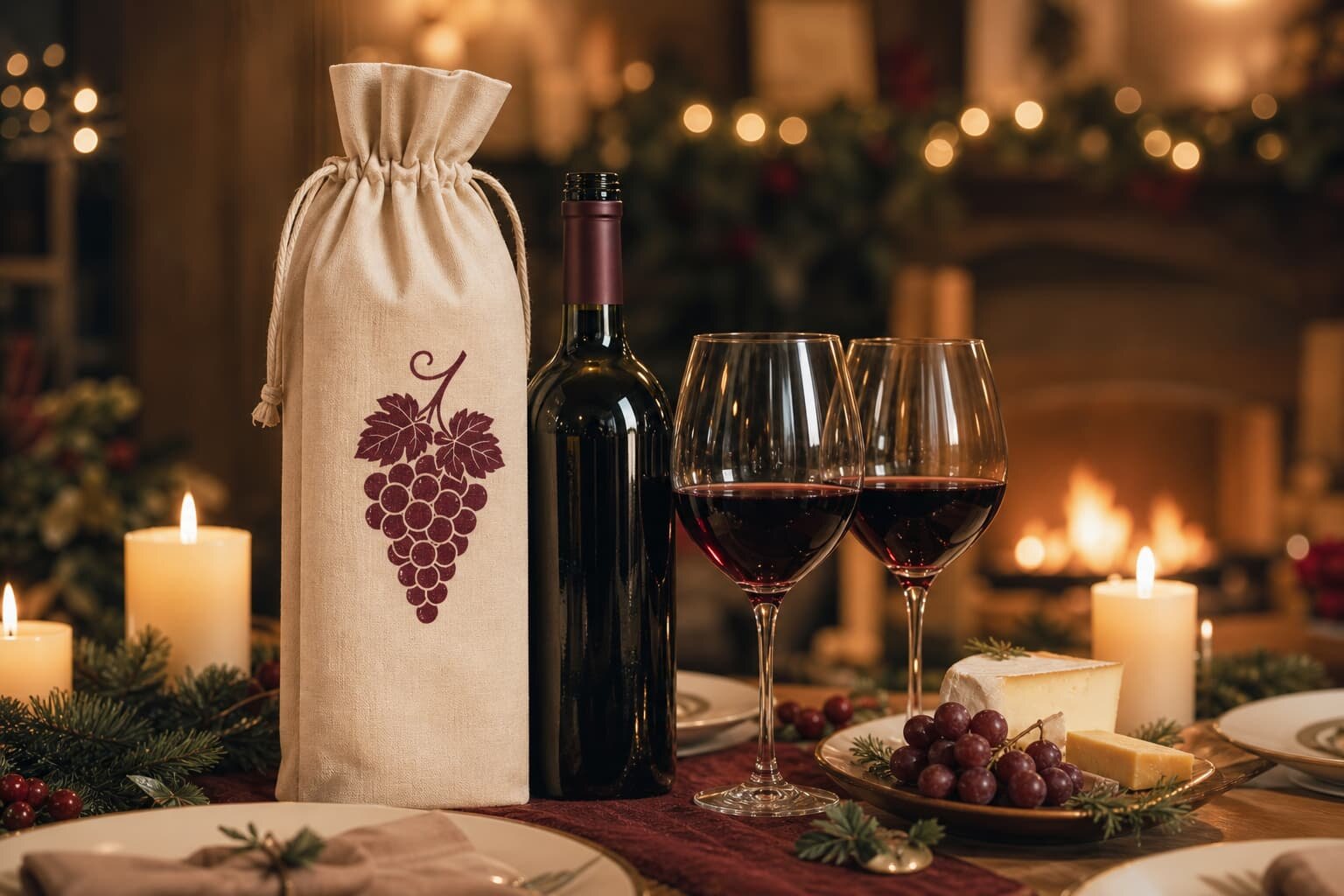
Why a Loading Worksheet Matters Before Price Comparison
A wine bottle bag factory loading worksheet is the link between the product spec and the shipping bill. Many RFQs ask for bag size, material, and logo, then compare quotes by unit price only. That can hide the real cost difference between a thin non-woven bag packed tightly and a heavier jute or canvas wine bag that takes more carton space. For importers and distributors, carton volume can decide whether the cheaper-looking offer is actually cheaper after freight, warehousing, and handling.
The worksheet should be created before final quote comparison, not after mass production. It tells the factory how to pack, how to calculate carton quantity, and what data must appear in the quote. It also helps the buyer catch weak assumptions early: wrong bottle size, unrealistic pieces per carton, missing inner packing, or a carton that exceeds warehouse handling limits. A good worksheet does not need to be complicated, but it must be specific enough that two factories quote the same packing basis.
- Use the worksheet to compare CBM per 1,000 pcs across suppliers.
- Require carton size and gross weight by SKU, not only total order CBM.
- Separate single-bottle, double-bottle, and gift-box-fit bags into different rows.
- Record whether the bag is packed flat, folded once, bundled, or individually polybagged.
- Ask for real packed sample measurements when the order has tight freight targets.
Start With the Bottle, Not the Bag
The most common mistake in wine bag sourcing is approving a bag size based on a standard 750 ml assumption when the actual bottle is taller, wider, or packed in a sleeve. A Bordeaux bottle, Burgundy bottle, sparkling wine bottle, and some premium shaped bottles can require different opening width and bag height. If the bag has a drawstring, the top allowance also matters because the cord needs room to close without stressing the seam.
For RFQs, procurement teams should provide bottle height, maximum diameter, shoulder shape if unusual, and whether the buyer needs the bottle neck visible. If the bag must hold a bottle plus an insert card, tissue wrap, or small gift tag, add that to the fit requirement. The factory can then advise if the bag needs a gusset, a wider body, or stronger side seam reinforcement. This step prevents a correct-looking sample from failing at retail packing.
- Standard single-bottle cotton bag example: around 15 x 35 cm, subject to bottle confirmation.
- Sparkling wine often needs more width and stronger seam allowance than a still wine bottle.
- Gift-box-fit bags need a different pattern than bare-bottle bags.
- Drawstring closure requires extra top height so the cord channel does not sit on the bottle shoulder.
- Ask the factory to test with your bottle or a confirmed dummy bottle before bulk cutting.
Choose Material by Loading Cost and Use Case
Wine bottle bags are often quoted in cotton, canvas, jute, non-woven PP, felt, or paper-laminated materials. The material affects not only appearance and unit cost, but also carton volume. A 12 oz cotton canvas wine bag can look premium and reusable, but it will not pack like an 80 gsm non-woven bag. Jute has a strong natural look and good shelf presence, but the fiber thickness and stiffness can increase carton dimensions when packed flat.
Buyers should ask the factory to state fabric weight clearly. Cotton may be quoted by ounce weight such as 6 oz, 8 oz, 10 oz, or 12 oz; jute may be quoted by GSM such as 220-280 gsm; non-woven PP may be quoted at 80-100 gsm for many promotional wine bags. When a supplier avoids the weight detail, quote comparison becomes unreliable. Two bags can share the same size and logo, but one may feel weak, stretch at the handle, or arrive with creased print because the material was chosen only for low price.
- For premium reusable wine bags, consider 10-12 oz cotton canvas or 220-280 gsm jute.
- For large event giveaways, 80-100 gsm non-woven PP can reduce cost and carton volume.
- For printed holiday programs, check whether the material surface can hold fine artwork.
- For heavy bottles, prioritize seam construction and handle reinforcement over only GSM.
- Record material option and packing CBM together because both affect landed cost.
Print Method Decisions That Change Packing
Printing is not only an artwork issue. The print method can change folding direction, drying time, stacking method, and the risk of scuffing inside cartons. Screen print is practical for one to three spot colors on cotton, canvas, jute, and non-woven bags. Heat transfer can handle fine details and gradients but may need careful temperature control and should not be folded sharply across the transfer area. Woven labels, sewn labels, and small patches can be good options when the buyer wants consistent branding without large ink coverage.
The loading worksheet should include print area, print side, number of colors, and whether the logo can touch a fold line. If a large logo is printed near the lower front of a bag, the folding method must avoid pressing the ink against rough jute or another printed surface. Buyers should request one sample packed as production will be packed, then reopen it and check print rub, sticking, cracking, or transfer marks. This is especially important for dark ink on natural cotton and full-color heat transfer on coated surfaces.
- Screen print is usually cost-effective for simple logos and medium to large order quantities.
- Heat transfer suits fine artwork but needs fold and heat resistance checks.
- Woven labels work well for small repeat branding and reduce large print coverage risk.
- Metallic ink, puff ink, and thick ink layers may need extra drying and careful packing.
- Include print position tolerance, such as plus or minus 5 mm, if brand placement is strict.
Build the Worksheet Rows Like a Factory Would Pack
A practical loading worksheet should not use one line for an entire wine bag program when the order includes different materials, colors, artwork, or sizes. The factory packs by SKU and carton. If a buyer blends multiple SKUs into one worksheet row, the carton data becomes an average and may be useless for warehouse planning. A cotton single-bottle bag, a jute two-bottle bag, and a non-woven promotional bag need separate rows even if they share the same logo.
Each row should include item number, bag description, finished size, material weight, print method, order quantity, pieces per inner bundle, pieces per carton, carton dimensions, gross weight, net weight, and CBM. Add a column for special packing such as individual polybag, hang tag, barcode sticker, neck card, or retail display carton. If the factory does not know the final carton data at quote stage, ask for estimated data first and final packed sample data before production packing.
- Worksheet row level: one SKU, one size, one material, one artwork, one packing method.
- Required carton data: L x W x H, gross weight, net weight, carton quantity, total CBM.
- Packing data: pieces per bundle, bundles per carton, inner polybag or no polybag.
- Label data: SKU label, barcode, carton mark, country of origin mark if required.
- Approval status: estimated, sample packed, pre-production confirmed, or final inspection confirmed.
MOQ Logic: Avoid the Blended Quantity Trap
Wine bottle bag MOQs are often misunderstood because buyers think one total order quantity covers all variations. In factory costing, MOQ may apply by fabric color, material type, print design, size, or label setup. A 10,000 pc program split into five designs may not price like one 10,000 pc design. Each print screen, heat transfer film, woven label, cutting setup, and packing instruction can create separate cost and production handling.
The loading worksheet helps buyers see this early. If the order includes different seasonal prints, distributor logos, or retail channel versions, put each variation on its own row and ask the factory which costs are shared and which are not. For example, the same natural cotton body may share fabric purchasing, but each print design still needs its own screen or artwork setup. If MOQ is tight, consider reducing material colors, using one common bag body, or moving variable branding to hang tags or sewn labels.
- Ask whether MOQ is per design, per fabric color, per size, or per total order.
- Use common material and size across designs when possible to improve production efficiency.
- Do not assume mixed artwork can be packed into one carton unless stated in the worksheet.
- Request setup charges separately from unit price for clearer quote comparison.
- For trial orders, ask which spec changes would reduce MOQ pressure without hurting function.
Sample Checks Before Approving Loading Data
A flat sample photo is not enough for a wine bottle bag order. The sample must be checked with a bottle, folded as production will be folded, packed into a carton, and then reviewed after unpacking. This is the only way to confirm that the bag fits, the handle carries the weight, the print survives packing, and the carton quantity is realistic. For a heavy glass bottle, weak handle stitching is more serious than a small cosmetic issue because failure can damage product and create store-level complaints.
Sample approval should include both product and packing checks. Measure the finished bag, check the opening, test the gusset if used, and inspect the inside seam allowance. For print, rub the logo lightly with dry and slightly damp white cloth if the material and ink system require it. For packing, count the pieces per bundle, confirm the folding direction, weigh the carton, and photograph the packed carton before sealing. These checks create the reference for the final inspection.
- Fit check: bottle inserts smoothly without forcing the seam or stretching the opening.
- Handle check: handle length matches use case and stitching does not tear under load.
- Print check: logo remains clean after folding, stacking, and light rub testing.
- Packing check: carton count matches worksheet and bags are not over-compressed.
- Measurement check: finished tolerance is agreed before cutting bulk fabric.
Packing Choices That Change Freight and Receiving
Packing method is a commercial decision, not only a factory convenience. Flat packing usually saves space and is simple for warehouse receiving. Individual polybags protect the bag but add labor, plastic, carton volume, and unpacking time. Hang tags and barcode labels support retail distribution but can slow packing and require more careful carton organization. If bags are shipped to a wine bottling line or gift assembly center, the packing format should support fast unpacking without mixing designs.
Buyers should ask whether the carton is suitable for export handling and whether the gross weight is acceptable for manual lifting. Very large cartons may reduce carton count but can deform bags, exceed warehouse rules, or split during handling. Very small cartons may protect product but increase carton handling cost. The best choice depends on the material, print sensitivity, destination warehouse, and whether the order ships loose-loaded or palletized.
- Flat pack is efficient for most cotton, canvas, jute, and non-woven wine bags.
- Individual polybag is useful for light colors, retail presentation, or dust-sensitive packing.
- Inner bundles help counting and receiving but must not create hard fold marks on printed areas.
- Carton gross weight should be checked against buyer warehouse handling limits.
- Palletized shipments may need carton strength and stacking height confirmed in advance.
Lead Time Data to Put in the RFQ
Lead time for wine bottle bags depends on material availability, print approval, sample approval, and packing complexity. A buyer should not accept a single lead time number without knowing when the clock starts. Some factories count from deposit, some from artwork approval, and some from approval of pre-production sample. If fabric must be dyed, printed labels must be woven, or special retail packing is required, the timeline can change.
In the RFQ, ask the factory to break the timeline into sample lead time, artwork approval time, material preparation, bulk cutting and sewing, printing, packing, inspection, and export handover. This format makes delays visible. It also helps procurement teams coordinate bottle filling, holiday campaigns, distributor launches, and warehouse booking. If the launch date is fixed, the buyer should identify which approval step is the critical path and avoid late artwork changes after screens or transfers are prepared.
- Clarify whether lead time starts after deposit, artwork approval, sample approval, or material approval.
- Ask for separate sample lead time and bulk production lead time.
- Check if fabric dyeing, woven labels, or heat transfer films add preparation time.
- Lock carton marks and barcodes before packing starts to avoid rework.
- Reserve inspection time before vessel or truck booking when the order is time-sensitive.
How to Compare Quotes Using the Loading Worksheet
Once factories return quotes, compare them on a controlled basis. The lowest unit price may use lower GSM, fewer stitches, thinner handle material, smaller carton count, or missing packing accessories. Put each supplier's data into the worksheet and calculate total cartons, total CBM, carton gross weight, and estimated CBM per 1,000 pcs. This quickly shows whether one supplier is underquoting carton volume or using an unrealistic packing plan.
Also compare what is included in the unit price. A clean quote should state material weight, bag size, print method and color count, setup charges, sample cost if any, packing method, carton marks, and trade term. If one quote includes individual polybags and barcode labels while another does not, the unit prices are not comparable. Procurement teams should send a clarification round before choosing the supplier, because loading assumptions are expensive to fix after production.
- Compare unit price together with CBM per 1,000 pcs and gross weight per carton.
- Check whether setup charges are included or listed separately.
- Confirm whether quoted carton dimensions are estimated or based on actual packed samples.
- Normalize all quotes to the same trade term before internal cost review.
- Flag any quote that omits material weight, print method, carton data, or MOQ basis.
Specification comparison for buyers
| Spec decision | Recommended option | When it fits | Buyer risk to check |
|---|---|---|---|
| Bag material for standard retail wine gift bag | 10-12 oz cotton canvas or 220-280 gsm jute | Premium supermarket, winery, holiday gift, and brand promotion orders needing a reusable feel | Higher fabric thickness increases carton volume; confirm folded size and pieces per carton before approving price |
| Low-cost event or giveaway wine bag | 80-100 gsm non-woven PP with stitched seams | Large event distribution, light duty gifting, short shelf life promotions | Print color can look weaker on textured PP; request pre-production print photo under normal light |
| Single bottle bag size | Approx. 15 x 35 cm for many 750 ml bottles, adjusted after bottle fit check | Bordeaux-style bottles and common retail wine packaging | Burgundy, sparkling, and boxed bottles may not fit; send actual bottle dimensions or bottle sample |
| Handle construction | Self-fabric handle or cotton webbing handle with reinforced stitch | Reusable bags, retail gift presentation, heavier glass bottles | Handle length and bar-tack position affect load safety; include pull test requirement in worksheet |
| Print method | Screen print for 1-3 spot colors; heat transfer for fine artwork; woven label for small branding | Most private label wine bag RFQs where cost and repeatability matter | Large ink coverage may stiffen fabric or crack on folds; confirm print area after folding method is chosen |
| Carton packing | Flat pack with inner polybag only if needed, 100-200 pcs per export carton depending on material | Importer wants predictable CBM and clean receiving at warehouse | Over-compression can crease print or deform jute; approve carton dimension with packed sample photos |
| MOQ planning | Separate MOQ by fabric color, print design, and bag size | Orders with multiple brands, seasonal graphics, or distributor assortments | Combining SKUs for MOQ may not reduce setup cost if each print screen or label differs |
Buyer checklist before sampling
- Confirm the target bottle type, bottle diameter, bottle height, and whether the bag must fit a gift box or only a bare bottle.
- List bag size, gusset, handle length, fabric GSM or ounce weight, print method, print position, and acceptable color tolerance in the RFQ.
- Ask the factory to quote pieces per carton, carton dimensions, gross weight, net weight, and estimated CBM per SKU.
- Separate worksheet rows by SKU, artwork, fabric color, and packing method instead of using one blended line for the whole program.
- Request a packed carton photo or video during sample approval, not only a flat bag photo.
- Check if inner polybags, hang tags, barcode labels, bottle neck cards, silica gel, or display-ready packing change carton volume.
- Define sample checks for bottle fit, handle pull strength, seam reinforcement, print rub resistance, and folded print appearance.
- Compare quotes using landed cost per usable bag and CBM per 1,000 pcs, not only EXW or FOB unit price.
- Lock carton marks, pallet preference, and loading sequence before mass packing starts.
- Keep one approved sealed sample and one approved packed carton reference for inspection.
Factory quote questions to send
- What fabric weight are you quoting: cotton ounce weight, jute GSM, non-woven GSM, or canvas thickness, and what is the normal tolerance?
- What is the exact flat bag size, gusset size, handle length, and finished measurement tolerance after sewing?
- How many pieces are packed per inner bundle and per export carton for each material option?
- What are the carton dimensions, gross weight, net weight, and estimated CBM per carton after real packing, not theoretical calculation?
- Does the quoted MOQ apply per order, per fabric color, per print design, per bag size, or per packing method?
- Which print method is included in the price, how many colors are included, and what is the maximum print area before extra cost applies?
- Can you provide a sample packed carton photo or short packing video before bulk carton production?
- What sample lead time and bulk lead time are assumed after artwork approval, fabric approval, and deposit?
- Are inner polybags, hang tags, barcode labels, carton marks, and pallet packing included or charged separately?
- What tests do you normally perform for handle strength, seam strength, color fastness, and print adhesion on this wine bag material?
Quality-control points to confirm
- Measure finished bag width, height, gusset, handle drop, and opening size against the approved sample.
- Check actual bottle fit using the buyer's bottle profile or approved dummy bottle before production release.
- Inspect fabric weight or thickness by material type and compare with the quoted specification and tolerance.
- Review print position, ink coverage, logo sharpness, color match, and print rub resistance after folding.
- Pull test handles and reinforced seam areas because glass bottle weight creates concentrated stress.
- Open packed cartons during inspection to check count, folding direction, inner bundle quantity, and print deformation.
- Verify export carton dimension, gross weight, net weight, carton marks, and SKU labels against the loading worksheet.
- Confirm that mixed designs or mixed colors are not packed in the same carton unless the worksheet specifically allows it.