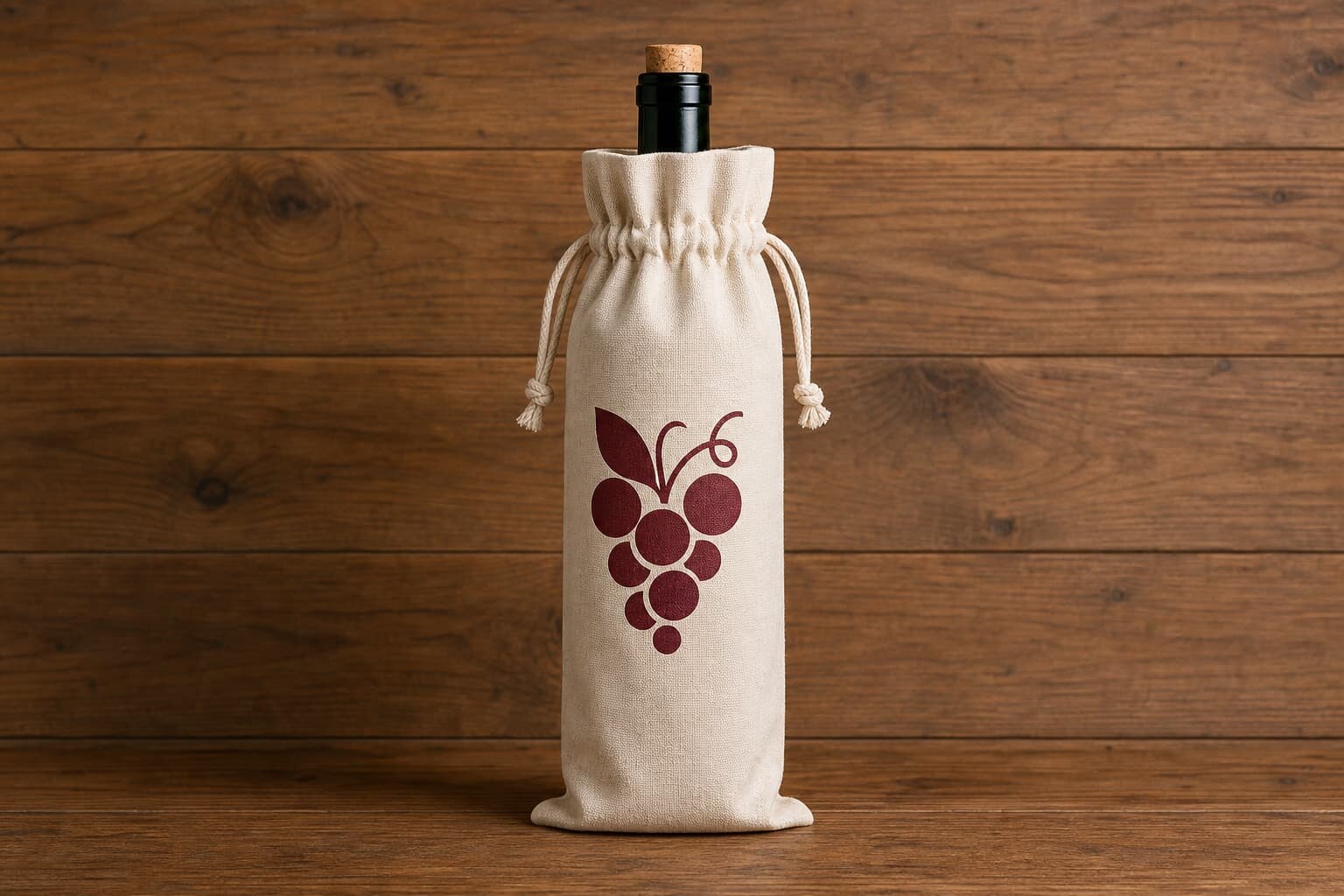
Why Bottle Fit Needs Its Own Approval Record
A wine bottle bag can look correct on a quote sheet and still fail in the packing room. The usual problem is that the buyer approves a flat dimension, while the factory cuts and sews a bag that loses internal space through seams, lining, drawstring tunnels, dividers, and fabric thickness. When the warehouse team later inserts real bottles, the bag may be too tight, too short, unstable at the base, or unable to close around the neck.
A bottle fit approval record prevents this by making fit a controlled specification, not a visual assumption. It records the bottle dimensions, approved sample measurements, material construction, closure performance, and acceptance criteria. For procurement teams comparing suppliers, it also makes quotations easier to judge because each factory is pricing the same usable fit, not simply a similar-looking bag.
- Use the record before bulk cutting, not after production inspection.
- Record usable internal size, not only flat finished size.
- Attach photos or video of the approved bottle inside the bag.
- Keep the record with the PO, artwork approval, packing instruction, and pre-production sample file.
Start With the Bottle, Not the Bag
The correct RFQ starts with the bottle family. A standard 750 ml Bordeaux bottle, a sloped-shoulder Burgundy bottle, a tall Riesling bottle, and a wider Champagne bottle do not behave the same inside a sewn bag. Their body diameter, shoulder shape, total height, neck position, and filled weight change the required width, height, base construction, and closure style.
If your range includes multiple bottle shapes, do not ask for one generic wine bottle bag unless you have checked the largest and tallest bottle. A bag that fits a slim Bordeaux bottle may jam at the shoulder of a Burgundy bottle. A bag that fits still wine may look strained with Champagne. For multi-brand distributors, the safest approach is to create a bottle fit table and mark which bottle is the approval master.
- Measure total bottle height from base to cap or cork top.
- Measure maximum body diameter, not only label panel width.
- Measure neck diameter where drawstring, tie, or flap will close.
- Weigh one filled bottle if the bag has handles or a divider.
- Identify whether the base is flat, punted, wide, or unusually heavy.
Translate Bottle Size Into Finished Bag Size
Many disputes start because the buyer reads a size such as 13 x 36 cm as a guaranteed internal fit. In production, that number may describe flat finished width and height, not the usable space after seam allowance, bottom fold, base stitching, or lining. For thicker jute or canvas, the difference is more visible because fabric bulk consumes space at the side seams and base corners.
For a single standard 750 ml bottle, buyers often review finished widths around 95-105 mm and heights around 330-350 mm, depending on closure and bottle type. Wider sparkling bottles often need 110-120 mm finished inner width plus stronger base construction. These are not universal promises; they are practical starting points. The approval record should show the exact sample measurement and the actual bottle inserted.
- Ask the factory to state flat finished width and usable inner width separately.
- Check whether quoted height includes the drawstring tunnel or only bottle body space.
- Allow extra clearance for labels, foil, wax seals, or bottle collars.
- Do not reduce width just to save fabric if warehouse packing speed matters.
- Set size tolerance, for example plus or minus 5 mm, only after confirming the pattern can hold it.
Choose Fabric Weight Based on Fit and Load
Fabric weight is not just a feel decision. It affects drape, internal space, print appearance, seam strength, carton volume, and how the bag behaves when a filled bottle is lifted. Lightweight cotton may be suitable for simple promotional sleeves, while a reusable gift bag with handles should normally use stronger cotton canvas, heavier plain cotton, jute, or reinforced construction.
For cotton wine bags, buyers often compare 140-180 GSM for light drawstring promotional use, 180-240 GSM for better retail feel, and 10-12 oz canvas for stronger premium carriers. Jute bags are usually discussed by fabric thickness and lamination rather than only GSM, because stiffness, weave density, and backing affect structure. If the supplier quote is unusually low, check whether fabric weight, handle reinforcement, and base seam strength were reduced.
- Use 140-180 GSM cotton only when the bag is mainly a sleeve and not a heavy-duty carrier.
- Use 180-240 GSM cotton for common branded wine gift packaging with better print coverage.
- Use 10-12 oz canvas when handle strength, reuse, and premium feel matter.
- Use laminated jute when the buyer wants a firmer rustic structure and cleaner inside surface.
- Request material swatches with the fit sample because fabric thickness changes usable space.
Print Method Can Affect the Approved Fit
Artwork placement is often approved on a flat bag, but the customer sees the print after the bottle is inserted. A tight bag may stretch the print across the bottle body. A design placed too close to the side seam can wrap around the curve and look off-center. A print near the bottom may be distorted by the base fold or seam bulk.
Screen printing is common for cotton, canvas, and jute wine bottle bags when artwork uses solid colors and clear lines. Heat transfer can work for detailed logos or multi-color artwork, but buyers should check hand feel, edge durability, and cracking risk on textured fabric. Embroidery, woven labels, and sewn side labels avoid some print distortion, but they need their own placement approval so they do not interfere with folding, closure, or bottle insertion.
- Approve print position with a bottle inside the sample, not only on an empty flat bag.
- Keep logos away from side seams, bottom folds, and heavy bulging zones.
- Ask for ink adhesion and rub checks on jute or laminated surfaces.
- Confirm whether the quoted print cost includes one side, two sides, one color, or multi-color setup.
- Record Pantone or artwork file version together with the fit approval so sampling changes do not mix.
MOQ Logic and Quote Comparison
MOQ is not only a sales number. It is tied to fabric purchasing, dyeing, printing setup, cutting efficiency, trim sourcing, carton packing, and factory line planning. A natural cotton drawstring wine bag may have a lower MOQ than a custom dyed canvas bag with rope handle, lining, and retail tag. A jute wine bag may depend on available fabric width, lamination, and minimum material roll quantity.
When comparing supplier quotes, make sure each quote covers the same bottle fit requirement. A cheaper quote may use lighter GSM, narrower finished size, single stitching, thinner cord, or no reinforced base. If you do not lock the bottle fit approval criteria, the lowest unit price can create repacking delays, returns, or emergency air freight for replacement bags.
- Ask whether MOQ changes by fabric color, print color count, and bag size.
- Separate sample cost, print setup, label setup, and bulk unit price in the quote.
- Confirm whether the quoted price includes pre-production sample revision after fit testing.
- Check if carton quantity changes when the bag is thicker, lined, or packed with insert cards.
- Compare total landed handling risk, not only ex-factory unit price.
Sample Checks Before You Approve Bulk Cutting
The sample stage is where the bottle fit approval record earns its value. Ask the factory to measure the finished sample and then insert the actual bottle or a bottle matching your dimensions. The sample should be tested open, closed, standing upright, and lifted. If the bag has a divider, test all compartments at the same time because the divider can pull the fabric inward and reduce usable width.
Do not approve from photos alone if your bottle is non-standard, heavy, or premium packaged with a thick label, wax seal, sleeve, or gift card. Send a real bottle when possible, or provide a dimensioned drawing and require the supplier to identify the test bottle they used. If the factory changes material weight, lining, cord, handle, or base construction after sample approval, the fit record should be updated.
- Insert the bottle without forcing fabric or bending the neck closure.
- Tie or close the bag and check whether the bottle shoulder blocks the closure.
- Stand the filled bag on a flat table and check leaning or base twisting.
- Lift the filled bag several times by the intended handle or cord.
- Photograph front, side, top opening, base, and closure with the bottle inside.
Packing and Lead Time Details That Affect Fit
A bag that passes sample fit can still arrive creased, damp, smelly, or compressed if packing is not specified. Wine bottle bags are often folded flat, bundled, polybagged, and packed into export cartons. Heavy jute, laminated bags, or shaped carriers may need looser carton packing to avoid permanent creases. Cotton and canvas bags should be protected from moisture and dye transfer, especially if they are natural color with printed artwork.
Lead time should include material booking, sample approval, printing, cutting, sewing, trimming, inspection, and carton packing. If the order is seasonal, do not treat bottle fit approval as a small administrative step. A late fit change can require new patterns, new screens, adjusted cutting, or revised packing quantities. Buyers should ask the supplier to separate sample lead time, bulk production lead time, and time needed after approval.
- Confirm whether bags are packed flat, folded, rolled, or stuffed to protect shape.
- Check carton size and gross weight so cartons are not too heavy for warehouse handling.
- Use moisture protection when shipping natural cotton, canvas, or jute in humid seasons.
- Require carton marks to identify bag size, bottle type, artwork version, and PO number.
- Freeze the approved sample before bulk cutting to avoid late size changes.
Acceptance Criteria for the Approval Record
A useful approval record should be written so a factory QC inspector, buyer, and third-party inspector can all make the same decision. Avoid vague comments such as 'fit is okay' or 'make slightly bigger.' Instead, define what must happen during the test: the bottle inserts smoothly, the bag closes correctly, the base sits flat, the print remains visually centered, and the handle or cord supports the filled weight without visible seam stress.
The record does not need to be complicated, but it should be specific. Include bottle dimensions, bag finished dimensions, material specification, print method, closure type, tolerance, sample date, revision number, and approval signature or email confirmation. If the production order includes several SKUs, create one line per bottle or per bag pattern. This prevents a factory from applying approval for one bottle style to another style that was never tested.
- Approved bottle model or dimension drawing attached.
- Approved finished bag width, height, base depth, and handle or cord length.
- Approved material weight, color, lining, lamination, and trim details.
- Approved print position measured from top edge, side seam, or bottom fold.
- Approved fit photos showing open, closed, standing, and lifted positions.
Common Mistakes That Create Production Claims
The most common mistake is approving a beautiful empty sample without testing the real bottle. The second is assuming all 750 ml bottles are similar enough. The third is changing material or construction after sample approval to reduce price. Each of these mistakes shifts risk to the packing stage, where there is little time to remake goods before a promotion, holiday program, or retail delivery window.
Another frequent issue is not aligning the fit approval with the quote. If the buyer approves a wider sample but the purchase order references the old smaller size, the factory may produce to the PO. If the artwork file changes but the print position is not checked again with the bottle inserted, the final bag may look off-center. Procurement teams should treat the fit approval record as a live control document until the pre-production sample is locked.
- Do not approve only by flat measurement when the fabric is thick or lined.
- Do not use Champagne fit requirements for a price comparison unless all suppliers quote that size.
- Do not move print artwork after fit approval without checking distortion again.
- Do not accept unclear tolerance language for narrow bags or heavy bottles.
- Do not skip filled-bottle lifting checks for handle bags and two-bottle carriers.
Specification comparison for buyers
| Spec decision | Recommended option | When it fits | Buyer risk to check |
|---|---|---|---|
| Single 750 ml still wine bag | Finished inner width 95-105 mm, inner height 330-350 mm, 180-240 GSM cotton or 10-12 oz canvas | Standard Bordeaux and Burgundy bottles when neck tie area is not too tight | Confirm widest bottle diameter and shoulder shape; do not approve from flat bag size only |
| Champagne or sparkling wine bag | Finished inner width 110-120 mm, stronger base seam, 240-320 GSM cotton canvas or laminated jute | Heavier bottles with wider body and punt base | Check filled weight and base stability; light cotton may sag or tear at seam |
| Retail gift wine bag with print | Screen print on cotton/canvas, heat transfer for fine color artwork, low-bleed ink test | Brand gift packs, winery shops, holiday retail sets | Print position can shift after bottle insertion if artwork is too close to side seam or bottom fold |
| Natural jute bottle bag | 13x36 cm finished size for standard single bottle, laminated inner surface if cleaner structure is needed | Rustic retail gifting, distributor seasonal packs, eco-style promotions | Jute thickness varies; request tolerance and check shedding, odor, and print edge quality |
| Two-bottle carrier | Center divider stitched to base, handle reinforcement, finished inner width per compartment checked separately | Wine clubs, distributor sales kits, corporate gift packs | Divider can steal usable width; approve with two real bottles, not one bottle plus empty space |
| Drawstring neck closure | Cotton cord or jute rope with opening allowance tested around real bottle neck | Simple promotional packaging and easy warehouse packing | Cord tunnel may reduce usable height; record fit with closure tied, not only open |
| Rigid-looking premium bag | Heavier canvas, laminated jute, or nonwoven stiffener insert if required | Retail shelves where the bag must stand before bottle insertion | Higher material and packing volume; ask carton quantity and crease risk before approving |
Buyer checklist before sampling
- List every bottle type the bag must fit: Bordeaux, Burgundy, Riesling, Champagne, spirits, olive oil, or custom glass.
- Record real bottle dimensions: total height, body diameter, shoulder width, neck diameter, punt/base shape, and filled weight.
- Approve finished inner bag size, not only cutting size or supplier pattern size.
- Request a fit photo or short video showing the actual sample bag with the specified bottle inserted, standing, lifted, and closed.
- Check whether drawstring tunnel, lining, divider, lamination, or seam allowance reduces usable internal space.
- Confirm fabric weight/GSM or oz, shrinkage risk, and whether the quoted material supports the filled bottle weight.
- Place print artwork away from bulging areas, bottom folds, side seams, and closure friction points.
- Define fit acceptance criteria in the PO: easy insert, no forced stretching, closure works, base sits flat, handle survives lifting.
- Require pre-production sample approval before bulk cutting when bottle shape is non-standard or the order includes mixed bottle types.
- Keep the approved bottle fit record with sample photos, measured bag dimensions, material swatch, and signed approval date.
Factory quote questions to send
- What finished inner width, inner depth, and usable height are you quoting after sewing, lining, divider, and drawstring tunnel?
- Which bottle size did your sample room use for fit checking, and can you test with our actual bottle or a dimension drawing?
- What fabric weight are you quoting in GSM or oz, and is it suitable for the filled bottle weight and handle style?
- What tolerance do you apply to finished size, handle length, drawstring opening, and print position?
- Will the bag fit Bordeaux, Burgundy, and Champagne bottles equally, or do we need separate patterns?
- Which print method is included in the quote, and will the print crack, distort, or rub when the bottle is inserted?
- Is the base seam single-stitched, double-stitched, boxed, or reinforced for heavier bottles?
- How many approval samples are included before bulk production, and what is the lead time for revised samples?
- What carton packing method prevents creasing, odor transfer, moisture issues, or deformation during export?
- What quote assumptions affect price: MOQ, fabric width, color dyeing, lamination, rope type, divider, label, and retail packing?
Quality-control points to confirm
- Measure finished bag dimensions after sewing and compare with the approved bottle fit record.
- Insert the approved bottle type fully and check that it slides in without force or seam stress.
- Close drawstring, tie, snap, or flap while the bottle is inside and confirm the neck area is usable.
- Lift the filled bag by the handle or cord for a practical strength check before carton packing.
- Inspect base seam alignment, skipped stitches, loose thread, and stress whitening around heavy bottle contact points.
- Check print location and distortion with the bottle inside, especially near curved body pressure areas.
- Verify material GSM or oz against approved sample, including lamination thickness if used.
- Confirm each retail set contains the correct bag size for the intended bottle, divider, tag, insert card, and label.
- Review carton packing direction, carton weight, moisture protection, and compression risk.
- Keep production inspection photos linked to the same fit approval record used at sample stage.