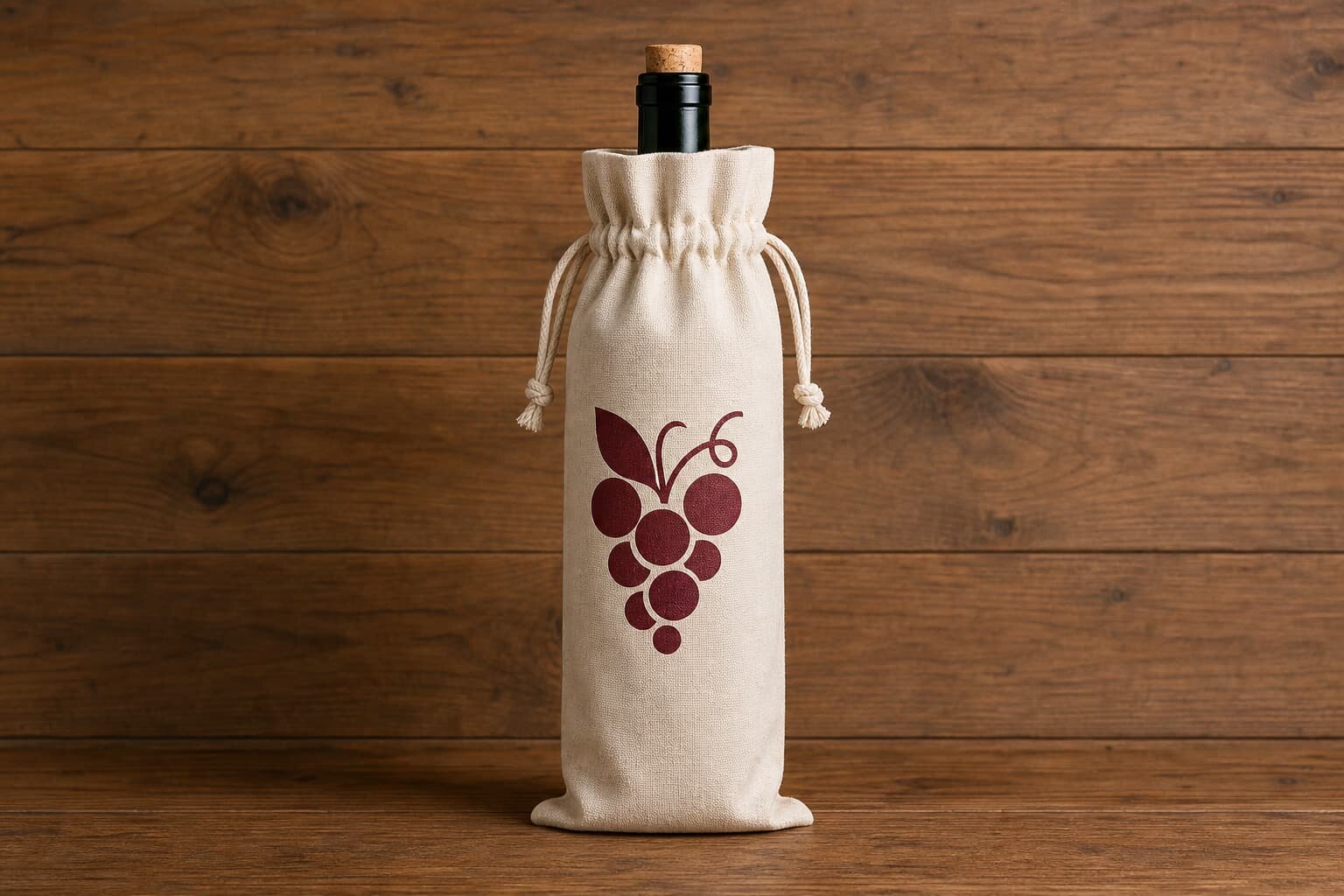
Why Timeline Planning Fails on Custom Wine Bags
Most wine bag delays start before production begins. The buyer asks for a delivery date, the factory gives a general lead time, and both sides assume the same starting point. In real production, the clock may start after artwork approval, after sample approval, after deposit, after fabric booking, or after packaging confirmation. If the RFQ does not define this, the quoted lead time is not useful for purchasing, launch planning, or freight booking.
Wine bags look simple, but they combine several scheduling steps: fabric sourcing, cutting, logo application, sewing, trimming, packing, inspection, and cargo handover. A drawstring cotton wine bag with one-color screen print can move quickly if fabric is available. A lined jute wine carrier with reinforced handles, woven label, swing tag, barcode sticker, and retail carton may need a very different timeline. The buyer's job is to separate these steps before comparing quotes.
- Ask suppliers to define lead time as calendar days or working days.
- Confirm whether the timeline starts from sample approval or PO confirmation.
- Separate sampling time, bulk production time, packing time, inspection time, and export handover.
- Do not compare a stock-fabric quote with a custom-dyed fabric quote as if they have the same schedule.
Start With Bottle Fit Before Discussing Lead Time
The first timeline decision is not printing or price. It is bottle fit. A wine bag made for a slim 750 ml Bordeaux bottle may not close properly over a wider Burgundy or Champagne bottle. If your program covers multiple bottle shapes, the sample stage must check the largest realistic bottle, not only the most common one. A failed fit after bulk cutting is expensive because fabric panels, print placement, and drawcord channel height may already be fixed.
For RFQ purposes, provide the bottle height, widest diameter, shoulder shape, and whether the bottle needs tissue wrap or a gift insert inside the bag. If the wine bag is used for retail display, the buyer may prefer a snug body and neat top closure. If it is used by distributors or wineries for mixed bottle gifting, a slightly more generous width and gusset may reduce complaints. This decision affects fabric consumption, carton quantity, and production scheduling.
- For standard 750 ml bottles, ask for finished internal width and usable height, not just outside dimensions.
- For Champagne or sparkling wine, confirm top closure after the cork and foil height are inside the bag.
- For two-bottle or six-bottle carriers, request divider construction details and bottom reinforcement method.
- For retail display, check whether the bag stands upright when empty or only after a bottle is inserted.
Map the Real Production Timeline
A practical timeline for custom wine bags should show each decision gate. A typical sequence is RFQ review, artwork and specification confirmation, sample production, sample revision if needed, pre-production sample approval, fabric preparation, printing, cutting or cutting before printing depending on method, sewing, trimming, final inspection, packing, carton marking, and shipment release. The exact order may vary, but the quote should not hide these steps inside one vague lead time.
For many bulk orders, the highest risk sits between sample approval and fabric preparation. If the factory quoted based on available natural cotton but the final order changes to dyed black cotton, production may wait for dyeing, shrinkage control, and color approval. If the artwork changes from one-color screen print to a detailed heat transfer, print testing and curing time may change. Procurement teams should treat every specification change as a potential timeline reset.
- Development sample: commonly used to confirm size, structure, and logo direction before bulk materials are booked.
- Pre-production sample: should match bulk fabric, print method, closure, label, and packing as closely as possible.
- In-line inspection: useful when sewing or printing problems can still be corrected before all goods are packed.
- Final inspection: should happen after packing but before shipment release, with enough time for sorting or repair if needed.
Fabric Weight and Material Choices That Affect Schedule
Fabric decisions are timeline decisions. Cotton wine bags are commonly produced in plain cotton, cotton canvas, or recycled cotton blends. Useful reference weights include 140-180 GSM for lightweight promotional drawstring bags, 180-240 GSM for standard cotton wine bags, and 8-12 oz canvas for a more structured gift or retail bag. Higher weight fabric usually improves perceived value but can increase sewing difficulty, needle changes, carton weight, and freight cost.
Jute wine bags have different planning risks. Natural jute has texture, odor, and color variation. Laminated jute improves structure and printability but can crack if folded poorly or sewn with the wrong tension. If the program requires a lining, such as cotton or nonwoven fabric, sampling must confirm that the lining does not twist, bunch, or reduce bottle space. Do not approve only the outside appearance; test the finished bag with the bottle and planned packing method.
- Natural cotton may be faster if the factory carries stock greige or finished fabric.
- Dyed cotton adds time for color matching, dyeing, drying, finishing, and shrinkage control.
- Jute fabric may need airing time if odor is a concern for premium wine or gift channels.
- Laminated material should be checked for fold marks before confirming flat packing.
Print Method Planning: Where Many Schedules Slip
Logo application is often the second major cause of delay. Screen printing is efficient for solid-color logos and repeat programs, especially on cotton and canvas. It still requires screen setup, ink matching, test printing, drying or curing, and quality checks. On textured jute, fine lines may break, small text may fill in, and Pantone matching may look different from coated paper. A buyer should approve print on the actual production fabric, not only on a paper proof.
Heat transfer, digital transfer, embroidery, woven labels, leather patches, and embossed patches can all be valid choices, but each changes the timeline. Transfers may need adhesion testing. Embroidery may distort lightweight cotton if backing is not planned. Woven labels require label production before bag sewing if they are inserted into a seam. Patches require separate material sourcing and stitching steps. If the order includes several SKUs or artwork versions, ask whether production is batched by print design or sewn first and decorated later.
- Use screen print for simple one- to three-color artwork on cotton or canvas when reorder consistency matters.
- Use woven or printed labels when the logo is small and fabric texture makes direct printing weak.
- Use embroidery carefully on thicker canvas, and confirm backing, puckering, and reverse-side appearance.
- For jute, request a strike-off or printed fabric test before approving the whole order.
MOQ Logic: Why the Smallest Order May Take Longer
Buyers often assume smaller quantity means faster delivery. In factory planning, that is not always true. MOQ is driven by fabric availability, dye lot size, print setup, label production, packing materials, and sewing line efficiency. A 1,000-piece natural cotton bag with one print may fit into available fabric and move quickly. A 500-piece order split across five colors and five logos may require more setup work, more approvals, and more production handling than a larger single-SKU order.
When comparing quotes, ask for MOQ by component. The fabric MOQ may be different from the printing MOQ, and the custom label MOQ may be higher than the bag quantity. Packing can also create MOQ pressure if the buyer needs custom belly bands, printed paper sleeves, barcode labels, or retail cartons. A good RFQ makes SKU structure clear so the factory can plan batching instead of discovering complexity after the PO is issued.
- List quantity by bag size, fabric color, logo design, and packing method.
- Ask whether assorted colors can share one MOQ if fabric is stock.
- Confirm extra cost or extra days for multiple print colors and artwork versions.
- Check whether packaging suppliers have longer lead times than the bag factory.
Sample Approval: What to Check Before Bulk Production
Sample approval should not be treated as a visual formality. It is the buyer's chance to lock the production standard. For wine bags, check the bottle fit, fabric weight, hand feel, seam line, bottom shape, drawcord channel, logo placement, print quality, label position, and packing fold. If the sample is made with substitute fabric or digital print only for development speed, the buyer should clearly write what remains unapproved for bulk production.
A sealed sample should be supported by written acceptance criteria. This protects both sides when the final goods are inspected. For example, logo placement tolerance may be plus or minus 5 mm, finished height may be plus or minus 10 mm, and fabric color may be judged against an approved swatch under normal light. The exact tolerance depends on design and retail requirement, but leaving it undefined invites disputes.
- Insert the intended bottle and close the drawstring to check usable height.
- Pull the drawcord several times to check seam stress and cord channel smoothness.
- Rub the print after curing to check adhesion and surface cracking.
- Fold the sample as planned for packing and check whether the logo creases badly.
- Photograph the approved sample with a ruler and written comments for the factory file.
Packing and Carton Planning for Import Buyers
Packing affects both presentation and shipping cost. Wine bags are usually flat-packed, folded, or bundled, depending on fabric stiffness and retail needs. Cotton drawstring wine bags can be packed in inner polybags, paper bands, or bulk bundles. Jute bags may need more careful folding to avoid hard creases, especially if laminated. If the bag includes handles, dividers, or padding, carton quantity must be tested rather than guessed.
Importers should request carton dimensions, gross weight, net weight, and pieces per carton during the quote stage. These numbers help estimate freight, warehouse handling, and palletization. If retail buyers require barcode stickers, carton marks, country-of-origin labels, warning labels, or recycled content claims, these must be included before packing starts. Re-labeling packed cartons is slow and can damage presentation.
- Confirm whether each bag is individually packed or bulk packed by inner carton or master carton.
- Specify fold direction so the printed logo is not permanently creased through the main artwork.
- Ask for moisture protection if shipping by sea, especially for cotton, jute, and paper packaging.
- Request carton drop strength suitable for the bag weight and distribution channel.
Quote Data Procurement Teams Should Require
A usable wine bag quote should do more than list unit price and lead time. It should identify the fabric specification, finished dimensions, print method, artwork assumptions, closure type, label details, packing method, MOQ, sample cost or sample policy, production lead time, carton data, payment terms, and validity period. If any of these are missing, the quote may be too weak for supplier comparison.
For timeline planning, ask the supplier to provide a date-based schedule after receiving your target launch or cargo-ready date. Work backward from final delivery, including inspection booking and freight cutoff. If the goods must support a seasonal promotion, winery event, retail reset, or holiday gift program, the purchase order should include approval deadlines for artwork, sample comments, packaging, and shipping marks. A production calendar is more useful than a single promised lead time.
- Separate ex-factory date, port handover date, and estimated vessel or courier pickup date.
- Ask how long the quote remains valid if cotton, jute, or freight costs change.
- Request assumptions behind the price, especially fabric width, print area, and packing quantity.
- Confirm whether the factory has reserved capacity or only estimated capacity at quote stage.
Mistakes to Prevent Before Issuing the PO
The most common mistake is approving a nice-looking sample without confirming it is production-realistic. A sample room may make one piece carefully, but bulk production needs repeatable sewing, stable print registration, efficient trimming, and consistent packing. If the design requires very tight corners, heavy fabric through narrow drawcord channels, or print too close to a seam, the bulk line may struggle. Ask the factory to flag production risks before the PO is final.
Another mistake is changing specifications after the factory books materials. A small artwork enlargement can change print screen size. A switch from natural cotton to dyed cotton can add color approval. Adding a side label can change sewing order. Adding individual packing can change carton size and labor time. Changes are sometimes necessary, but the timeline must be updated in writing so the buyer's internal team does not keep using the old cargo-ready date.
- Do not issue a PO with unfinished artwork, uncertain bottle size, or undecided packing.
- Do not assume Pantone color will look identical on cotton, canvas, jute, and coated labels.
- Do not approve carton data before confirming the final fold and inner packing.
- Do not schedule inspection on the same day goods are expected to leave the factory.
- Do not compare suppliers only by the shortest lead time unless the timeline assumptions match.
Specification comparison for buyers
| Spec decision | Recommended option | When it fits | Buyer risk to check |
|---|---|---|---|
| Fabric for standard gift wine bag | 8-10 oz cotton canvas or 180-240 GSM cotton | Retail gifting, winery merchandise, promotional bottle packaging | Confirm fabric shrinkage after washing/steaming and whether quoted GSM is before or after finishing |
| Fabric for rustic retail display | 10-14 oz jute or laminated jute with cotton lining | Wine shops, natural product ranges, premium hamper programs | Check odor control, lamination cracking, color variation, and whether lining hides seam dust |
| Logo method for repeat orders | Screen print with approved Pantone and print placement tolerance | One to three solid colors, stable reorder branding | Ask whether setup screens are kept for reorders and what color tolerance is accepted on textured fabric |
| Logo method for small detailed artwork | Heat transfer or woven/printed label | Fine lines, gradients, small text, multiple SKUs | Test adhesion on rough jute and confirm label stitch position after bag turning |
| Closure choice | Cotton drawcord or ribbon drawstring depending on retail look | Single-bottle bags, event packaging, gift sets | Check cord length after knotting, pull strength, fraying, and choking-warning requirements if applicable |
| Packing for retail buyers | Flat-packed by inner polybag or paper band, then master carton | Store replenishment, distributor warehouses, ecommerce kitting | Confirm carton size, bag crease direction, barcode position, and moisture protection during sea freight |
Buyer checklist before sampling
- Freeze the bottle size range before requesting the first sample: 750 ml Bordeaux, Burgundy, Champagne, magnum, or mixed assortment.
- State finished bag dimensions, not only fabric cut size, and include tolerance for height, width, gusset, and handle or drawcord length.
- Specify fabric type and target weight, such as 10 oz cotton canvas, 240 GSM cotton, 12 oz jute, or laminated jute with lining.
- Attach artwork in vector format and define print method, Pantone colors, print size, placement, and whether print is one side or two sides.
- Decide whether the sample must use bulk fabric and bulk print technique, or whether a substitute development sample is acceptable for shape approval.
- Confirm MOQ by fabric, color, print setup, and packing method rather than assuming one MOQ covers every SKU.
- Approve a sealed sample with written comments on stitching, logo position, drawcord, packing fold, and carton label before mass production.
- Add pre-production, in-line, and final inspection checkpoints to the PO schedule, not only the final shipping date.
- Request quote data that separates sample time, material booking, production time, packing time, QC time, and cargo handover date.
- Build buffer for public holidays, fabric dyeing, print curing, packaging approval, and inspection rework.
Factory quote questions to send
- What is the realistic timeline from artwork confirmation to pre-production sample, and from sample approval to finished packed goods?
- Is the quoted fabric in stock, greige stock, or made-to-order dyeing, and how many days does fabric preparation add?
- What is the MOQ per fabric, per color, per print design, and per packing style?
- Will the sample use the same fabric weight, print process, lining, drawcord, and packing method as bulk production?
- What print method do you recommend for this fabric and artwork, and what drying or curing time is included in the schedule?
- What are your standard tolerances for finished size, logo placement, fabric weight, and color variation?
- How many days do you need for cutting, printing, sewing, trimming, inspection, packing, and carton marking?
- Can you provide photos or inspection results during in-line production before the full quantity is packed?
- What carton dimensions, gross weight, and packing quantity per carton are expected for freight planning?
- What information must be approved before you can book fabric and reserve production capacity?
Quality-control points to confirm
- Confirm finished dimensions against approved bottle fit, including height after drawcord closure and usable internal width.
- Check fabric GSM or ounce weight, hand feel, odor, color consistency, and lamination condition if jute is used.
- Verify logo color, print sharpness, opacity, adhesion, curing, registration, and placement tolerance on actual bag fabric.
- Inspect seam strength at side seams, bottom seams, gussets, handle joins, drawcord channels, and stress points.
- Test drawcord pulling, knot security, cord fraying, and closure function with the intended bottle type inside the bag.
- Review loose threads, needle holes, skipped stitches, oil marks, stains, creases, and fabric slubs against agreed acceptance criteria.
- Confirm packing fold method, inner packing quantity, barcode or label position, carton mark, and moisture protection.
- Check final carton count, carton weight, carton strength, and pallet or container loading suitability before shipment.