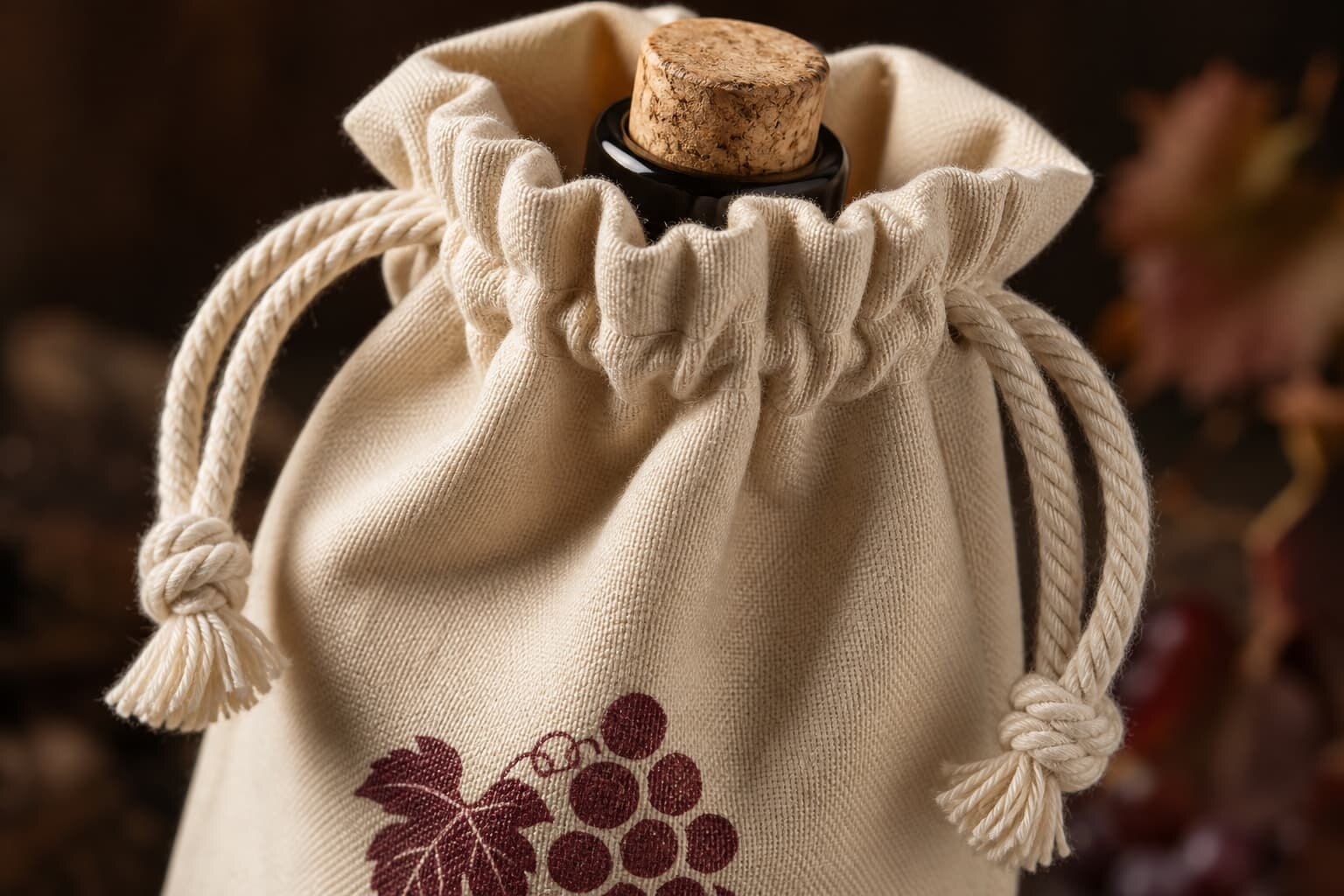
Why MOQ is the main cost lever in wine bag gifting campaigns
For wine bags, MOQ is not just a factory gatekeeping number. It is the point where material usage, print setup, cutting efficiency, and packing labor start to make sense for a production line. Buyers often treat MOQ as a negotiation target only, but in gifting campaigns it is better understood as the break-even point for a specific spec package: fabric, color, logo method, and bag construction. If you change any one of those, the real MOQ can move quickly.
This matters because gifting campaigns usually sit in the awkward middle of sourcing volume. The order may be too small for highly customized fabric and too large for expensive hand-made short runs. A procurement team that asks for a low MOQ without simplifying the spec often gets one of three outcomes: a higher unit price, downgraded material, or a supplier that accepts the order but struggles on lead time and consistency. The right buying move is to match the campaign objective with a realistic production setup instead of chasing the lowest minimum blindly.
- MOQ rises when you ask for custom dyed fabric, multi-color logo work, lining, or unusual bottle dimensions.
- MOQ usually falls when you use stock natural fabric, one-color print, and a factory's existing size pattern.
- A quote is only comparable if the MOQ is tied to the same size, fabric weight, logo coverage, and packing method.
- For gifting projects, overbuying 20 percent can cost less than forcing a factory into an inefficient custom run.
Start with the bottle, not the bag
Many wine bag RFQs begin with a target look: natural cotton, festive color, premium logo, maybe a drawstring top. That is useful for merchandising, but production starts with the bottle dimensions. Standard 750ml Bordeaux, Burgundy, and sparkling bottles can vary enough in shoulder width, base diameter, and height to change bag dimensions, gusset requirement, and closure usability. If the bottle fit is wrong, the bag feels cheap even if the print looks good.
A buyer should always provide the factory with the intended bottle size range and whether the campaign includes one SKU or several bottle shapes. If the bag must fit both a slim Bordeaux bottle and a wider sparkling bottle, the pattern needs more allowance. That affects fabric yield and can make the bag look oversized for the smaller bottle. If fit matters to the presentation, it may be smarter to split the campaign into separate SKUs or accept a higher MOQ for two sizes rather than force one compromise pattern.
- Share bottle height, base diameter, widest body diameter, and neck style with the factory.
- State whether the bag needs to hold 750ml only, or also 375ml, 1L, or sparkling wine formats.
- For single-bottle bags, a common starting range is around 10-12 cm width and 34-37 cm height, but the bottle should drive the final spec.
- If adding a cardboard bottom insert, include its thickness in the fit test.
How material choice changes MOQ, feel, and quote logic
Cotton and canvas wine bags are usually the easiest route for branded gifting because they print cleanly and feel familiar to buyers. For most campaigns, 8oz cotton works only for lower-cost promotions, while 10oz to 12oz canvas or roughly 280-340gsm cotton gives a better upright shape and a more premium hand feel. If the bag is expected to carry a heavy glass bottle without twisting or showing the bottle edges sharply through the fabric, lighter material often disappoints even when it looks fine in a flat sample photo.
Jute can work well for rustic or gourmet positioning, but it changes both the MOQ and the approval risk. Print edges are less crisp on coarse jute, color variation is wider between lots, and odor control needs more attention. Dyed fabric also affects minimums because mills and dye houses may have their own lot requirements. That is why a factory may offer 500 pieces MOQ in natural canvas but ask for 1,000 or more if the same bag needs a custom Pantone body color.
- Budget promo level: 180-240gsm cotton or 8-10oz cotton, one-color print, stock natural body.
- Mid-range gifting: 280-320gsm cotton or 10-12oz canvas, cleaner shape, better print base.
- Premium look: 340gsm+ canvas, reinforced handles, seam binding, possible lining or bottom support.
- Jute should be approved with real print and odor check, not on material swatch alone.
Print method is often the hidden MOQ driver
Buyers sometimes assume MOQ is mainly about sewing, but logo application can be the bigger limiter. Screen printing is efficient for simple art and moderate to large runs, but each color usually needs a screen and setup. That means a one-color wine bag may be viable at a lower volume than a three-color version using the same body fabric. On dark fabric, an underbase may also be needed, which affects cost, curing, and print hand feel.
For short gifting runs with multicolor artwork, heat transfer or digital printing can reduce setup friction, but they introduce different approval points such as edge feel, color realism, and scratch resistance. Embroidery or woven labels can make sense for a more understated brand presentation, especially if the order is split across multiple body colors. In practice, the best MOQ outcome often comes from simplifying the logo method rather than pushing the sewing factory for an unrealistically low minimum.
- Screen print suits one-color or two-color logos on cotton and canvas, especially above small pilot volumes.
- Heat transfer suits short runs with gradients or detailed logos, but confirm adhesion and surface feel.
- Embroidery increases labor and can distort lightweight fabric if backing is not handled well.
- A sewn woven label can lower logo complexity while preserving brand identity across repeat orders.
Typical MOQ structures buyers should ask suppliers to break out
A useful quote does not give one MOQ number only. It separates the minimum by fabric, dyeing, print, and accessories. For example, a factory may be able to sew 300 pieces of a standard single-bottle canvas bag, but the dyed body fabric mill may require 500 meters and the print shop may charge a setup that only becomes efficient from 1,000 pieces. If you receive one all-in minimum, you cannot see which part of the supply chain is controlling the decision.
Ask for a stepped quote at realistic campaign volumes such as 500, 1,000, 3,000, and 5,000 pieces, and ask what assumptions change at each level. Some suppliers lower the price at higher volumes by reducing carton count or changing packing density rather than by genuine production efficiency. That is not always bad, but you need to know whether the cost drop comes from better cutting yield, lower print setup burden, or simply a looser packing standard that may create wrinkles or deformation.
- Request MOQ by stock fabric versus custom dyed fabric.
- Request MOQ by plain bag, screen print, transfer print, and added labels or hangtags.
- Ask for sample charges separately from bulk pricing so they do not get buried inside unit cost.
- Have suppliers state whether quoted MOQ is per color, per artwork, or total order quantity.
Sample stages that prevent expensive gifting campaign mistakes
For wine bags, one pre-production sample is often not enough if the project is customized. A better workflow is to approve in stages. First, confirm a blank fit sample using the actual bottle. This solves size and handle proportion issues before the factory spends time on logo setup. Second, approve a printed or branded pre-production sample using the final fabric and logo method. Third, if the campaign is quality sensitive or time sensitive, hold a seal sample that becomes the final reference for bulk inspection.
This staged approach is especially useful when the MOQ is near the factory's lower comfort zone. Small runs tend to rely more on available stock material, manual handling, and flexible production slots. That increases the need to lock details early. A buyer who tries to compress everything into one fast sample round often ends up approving a bag that looks fine on a table but fails when filled, packed, or compared to the actual gift presentation intent.
- Fit sample checks: bottle insertion, standing stability, drawstring closing space, handle clearance.
- Printed sample checks: logo position, color match, print rub resistance, registration, and curing.
- Construction checks: gusset symmetry, seam straightness, bartack reinforcement, and inside cleanliness.
- Seal sample should be kept by both buyer and supplier as the inspection benchmark.
Packing and carton decisions can quietly reset your MOQ economics
Packing is not an afterthought on gifting orders. It changes labor, carton utilization, and freight efficiency. A flat-packed wine bag in bundles of 25 or 50 is usually the most efficient option, but certain premium campaigns want each bag individually inserted, folded a certain way, or paired with a gift tag or tissue. These requests add handwork and can make a low MOQ less attractive to the factory because the non-sewing labor becomes a larger share of the total cost.
Procurement teams should also check carton design early. Wine bags look small, but if they use stiff canvas, rope handles, inserts, or hang accessories, carton density can drop faster than expected. A supplier may quote on a high packing density that saves cost but creates permanent creases or crushed gussets. If the bags go directly into retail or event kits, it is often worth specifying a lower pack density and accepting a slightly higher freight cost to protect presentation quality.
- Common efficient packing: flat pack, 25-100 pieces per inner bundle depending on fabric thickness.
- Premium packing adds labor: individual polybag, tissue wrap, barcode sticker, swing tag attachment.
- Ask for estimated outer carton size and gross weight, not only pieces per carton.
- If color transfer is a concern on dark dyed bags, ask whether the bags are packed fully dry and cured.
Lead time reality: what affects schedule more than the sewing line
Buyers often focus on the sewing timeline because it is visible, but wine bag lead time is usually controlled earlier by fabric readiness, dyeing, printing queue, and sample approval speed. A simple natural canvas bag with one-color print can move quickly once artwork is approved. A custom dyed bag with transfer print, woven label, and special packing may spend more time waiting for material coordination than in final assembly. That is why lead time should always be quoted from final sample approval and confirmed artwork, not from the day the inquiry is sent.
For gifting campaigns tied to seasonal launches, the main risk is not only delay but schedule compression. When a buyer approves late, the factory may still accept the order but switch to a tighter production window with less buffer for rework. That can affect print consistency and packing accuracy. A more reliable buying approach is to ask for stage timing: sampling days, material prep days, print preparation days, bulk production days, and packing days. Even approximate breakdowns help you judge whether the supplier actually understands the project.
- Stock fabric + one-color print usually has the shortest path.
- Custom dye lots, branded trims, and insert components are common schedule stretch points.
- Artwork approval delays are buyer-controlled and should be treated as part of the critical path.
- Ask the supplier what step is the likely bottleneck at your target quantity.
How to compare quotes without getting tricked by low opening prices
Wine bag quotes often look close on the first page and very different after you normalize the spec. One supplier may quote 10oz cotton while another quietly assumes 8oz. One may include a bottom gusset and bartack reinforcement while another prices a simpler flat bag. One may include individual polybags and export cartons while another leaves packing as an extra. If you compare only the unit price, you can choose the wrong supplier for the wrong reasons.
Build a quote sheet that forces equal comparison: finished size, fabric GSM, print method, number of print colors, handle construction, reinforcement, packing standard, sample charge, MOQ basis, and ex-factory lead time. Then ask where the supplier sees cost sensitivity. Good factories usually answer directly. They will tell you whether cost is mainly in fabric weight, logo process, or handwork. That response is often more valuable than the first quoted unit price because it shows whether the factory can help optimize the order without degrading the product.
- Normalize size, GSM, and logo method before comparing any unit prices.
- Check whether the quote is per design, per color, or blended across all SKUs.
- Flag any quote that does not mention print area, tolerance, or packing assumptions.
- A lower sample charge can hide a higher bulk cost, or vice versa.
Acceptance criteria buyers should put in the PO, not just the email thread
If the project matters to a campaign launch, quality expectations should be written into the purchase order or approved specification sheet. This is where many gifting buyers stay too general. Terms like premium quality or export standard are not strong enough. The factory needs measurable acceptance criteria for dimensions, fabric weight tolerance, print placement, color consistency, seam quality, and packing method. Without these, disputes become subjective and hard to resolve once the order is finished.
The most useful acceptance criteria are the ones that reflect the product's end use. A wine bag is judged in three ways: how it fits the bottle, how it presents the brand, and how it arrives after packing and transit. If a bag fits badly, has a tilted print, or comes out of the carton heavily creased, the gifting experience suffers even if the sewing itself is technically acceptable. Put the practical pass-fail points in writing before production starts.
- Dimension tolerance example: finished width, height, and gusset within +/- 0.5 cm or agreed standard.
- Fabric control example: bulk fabric must match approved sample weight and finish within agreed tolerance.
- Print control example: logo placement centered within agreed margin and color matched to approved reference.
- Packing control example: no severe crushing, moisture exposure, color transfer, or mixed carton counts.
Specification comparison for buyers
| Spec decision | Recommended option | When it fits | Buyer risk to check |
|---|---|---|---|
| Single-bottle campaign bag | 12oz canvas or 280-320gsm cotton with bottom gusset | Corporate gifting, retail add-on sales, wine club packaging | Body too soft for a heavy bottle if factory uses lighter fabric than approved |
| Budget-focused promo run | 8-10oz cotton or 180-240gsm cotton with one-color print | Large event giveaways where unit cost matters more than premium feel | Thin fabric can wrinkle, show bottle shape, and reduce perceived gift value |
| Premium holiday gifting | 12-14oz canvas, reinforced handle, inside seam binding | Executive gifts, winery sets, higher-value seasonal campaigns | Quote may exclude reinforcement, edge finishing, or cleaner inside construction |
| Natural rustic positioning | Jute body with laminated or cotton-lined interior | Wine hampers, gourmet retail, earthy brand presentation | Jute odor, fiber shedding, and print sharpness vary widely between mills |
| Complex artwork | Heat transfer or digital print on cotton canvas panel | Small MOQ runs with multicolor logo or gradients | Color drift, hand feel, and scratch resistance need sample approval |
| Fast repeat programs | Existing factory pattern size with stock fabric color | Annual gifting campaigns using standard Bordeaux bottle size | If bottle dimensions change, the old pattern can become too tight at the neck or base |
Buyer checklist before sampling
- Confirm the exact bottle type before quoting: standard Bordeaux, Burgundy, sparkling wine, or mixed assortment, because diameter and height affect bag width, gusset, and handle length.
- Ask the factory to quote MOQ by material and print method separately, not only one blended minimum for the whole project.
- State finished bag size with tolerance, for example 12 x 36 x 9 cm +/- 0.5 cm, so suppliers are pricing the same construction.
- Specify fabric in both commercial name and weight, such as 12oz canvas or 300gsm dyed cotton, to reduce hidden downgrades in quote comparison.
- Define whether the wine bag must stand upright empty or only when a bottle is inserted, because this changes gusset and interfacing decisions.
- Request print size, print position, and artwork colors in Pantone references; logo complexity can change MOQ and sampling cost.
- Clarify if drawstring, webbing handles, self-fabric handles, divider panels, gift tag loops, or bottle protection inserts are required.
- Approve a pre-production sample with an actual filled bottle, not a flat empty bag photo, before mass production starts.
- Lock packing method early: individual polybag, flat pack per bundle, inner carton quantity, and outer carton gross weight limit.
- Ask for ex-factory lead time from artwork approval, not from deposit date, so the schedule reflects the real critical path.
Factory quote questions to send
- What is your MOQ by fabric type: natural cotton, dyed canvas, jute, and blended materials?
- What is your MOQ by logo method: screen print, heat transfer, digital print, embroidery, woven label, or embossed patch?
- Is the quoted fabric weight finished GSM or greige GSM before washing, dyeing, or lamination?
- What bag pattern are you quoting against, and what bottle dimensions did you assume for width, height, and base diameter?
- Does the price include bottom gusset, side gusset, seam binding, bartacks, lining, stiffener, or bottle divider if shown on artwork?
- What are the sample options: blank fit sample, printed pre-production sample, and seal sample, and how many days for each?
- What print tolerance do you allow for logo position and color match, especially on dark dyed fabric or jute texture?
- How do you pack the bags by default, and what carton size, carton quantity, and estimated gross weight will you use?
- What is the expected production lead time at 1,000, 3,000, and 10,000 pieces after final sample approval?
- Which parts of the quote are likely to change after artwork review, such as extra screens, larger print area, or custom dyed fabric?
Quality-control points to confirm
- Measure finished width, height, gusset depth, and handle length against approved tolerance before packing.
- Check fabric weight by batch and compare to approved standard, especially if the order mixes natural and dyed lots.
- Perform bottle fit test using the actual intended bottle shape, including insertion ease and top closure function.
- Verify print position, Pantone match, edge sharpness, rub resistance, and curing quality on a filled bag, not only flat fabric.
- Inspect seam density, skipped stitches, loose threads, bartack reinforcement, and bottom load-bearing points.
- Review odor, stains, yarn slubs, and color shading on jute and dyed cotton before final carton sealing.
- Confirm packing count, carton markings, barcode labels, and whether handles or drawstrings are folded consistently to avoid crush marks.
- Weigh random export cartons to ensure gross weight stays within buyer handling limits and transport assumptions.