Wine Bag OEM Product Development Capability for Australian Buyers
Vincent Xi Editorial Author Profile: https://cottontotemaker.com/authors/vincent-xi/
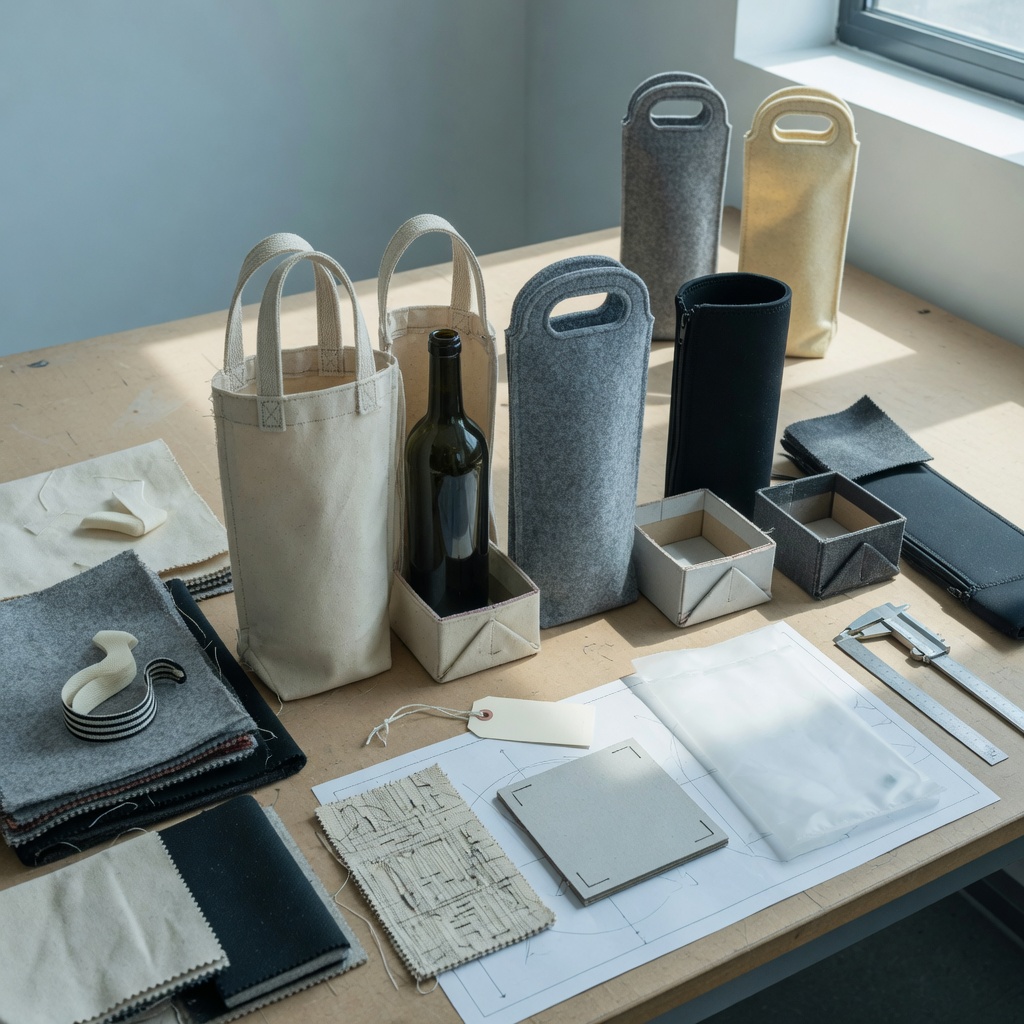
If an Australian buyer cannot obtain a named development owner, a dimensioned tech pack, a sewn prototype in the intended material, and a pre-production (PP) sample made on bulk-intent processes, the factory has not shown wine bag OEM product development capability. Treat that capability as a manufacturing workflow you specify, compare and verify—not as a catalogue add-on. A stock bag with a logo is decoration. Changing panel geometry, engineering handle attachment for a filled bottle, locking print coordinates to a measurement drawing, and freezing a PP sample is product development.
Three published OEM pages supply example windows only. Keep each figure with its source; do not average them or treat them as CottonToMaker quotations, capacity or guarantees. Confirm every number in a dated quote that states working versus calendar days, what is included, courier to Australia, and tolerances. Full unit, scope and as-of labels sit in the lead-time section below.
Author note: Vincent Xi is named as Editorial Author. This article attributes manufacturing figures only to the cited OEM pages and does not add personal production, factory-visit, client-name, award, certification or outcome claims. It is written for Australian wineries, retailers, corporate gifting teams and promotional distributors who must write a complete RFQ, compare OEM replies and approve bulk.
Evidence is limited to publicly described OEM workflows. Methodology: lead-time, MOQ, material-family and workflow statements were copied from the three supplied manufacturer pages and kept as separate attributed examples; values were not averaged, interpolated or converted into demand figures. Limitations: those pages do not date-stamp the numbers, do not name test methods, do not prove current certification, and do not set Australian customs, biosecurity, fibre-content or consumer-labelling rules. Verify with samples, a tech pack, mill documents and an independent compliance advisor.
Wine bag OEM product development capability: go/no-go checks
In manufacturing practice the factory must own the conversion from intent to a manufacturable, inspectable bag. That usually includes requirement capture (bottle diameter, height, filled weight, handle ergonomics, branding zones), technical analysis, pattern and construction engineering, material selection, prototyping, revision, PP lock and bulk process control.
Lovrix describes a 5-phase engineering workflow covering requirement discovery and technical analysis, material selection, structural planning, prototyping, and sampling with durability tests ahead of mass production. Szoneier describes OEM/ODM support covering material selection, pattern making, sampling, quality inspection and bulk production. Initipacking states that felt wine bags can be developed from sketches, tech packs or reference samples. Use those descriptions as a checklist of deliverables, not as an endorsement of any factory.
A material catalogue, a logo mock-up or a self-published years-in-business claim is not product development. If the reply cannot name who creates the first tech pack, in what file format, and how revision control works, stop before you pay sample freight to Australia.
Without panel dimensions, stitch type, stitch density, seam allowance, handle length and width in millimetres, hardware spec, print coordinates, and material GSM or thickness, sampling becomes trial-and-error. Each extra physical sample then consumes factory queue time plus courier time to an Australian approval desk.
Checks before you spend sample freight:
- Named product-development owner and file format for the tech pack.
- Sewn prototype in the intended outer, not a stock bag with a sticker.
- Included revision count and the fee for the next revision.
- PP sample from bulk-intent material lots, print process and construction.
- Written fit check against your bottle diameter, height and filled mass.
- Written stop-rule: bulk cannot start until the PP sample is signed and the drawing revision is frozen.
Lead time, sampling and MOQ when the destination is Australia
Lead time is a measurable manufacturing trade-off, not a slogan. The figures below are undated page excerpts, not live production calendars.
- Sampling, Szoneier: 3–7 days (unit: days; scope: single-bottle wine-bag sampling as described on that page; as-of: undated excerpt from the cited Szoneier page, which does not supply a publication timestamp in the evidence set; source: https://szoneier.com/custom-wine-bags/single-bottle-wine-bag-manufacturing-explained/).
- Sampling, Lovrix: 5–10 days including durability tests (unit: days; scope: custom wine-bag sampling as described on that page; as-of: undated excerpt from the cited Lovrix page; source: https://lovrix.com/wine-bags-manufacturer/).
- Sampling, Initipacking: 7–10 days (unit: days; scope: felt wine-bag samples as described on that page; as-of: undated excerpt from the cited Initipacking page; source: https://www.initipacking.com/wholesale-felt-wine-bags-the-ultimate-guide).
- Bulk after approval, Initipacking: 15–25 days (unit: days; scope: felt programmes after approval as described on that page; as-of: undated excerpt from the cited Initipacking page).
- Bulk, Lovrix: 20–35 days (unit: days; scope: custom wine bags as described on that page; as-of: undated excerpt from the cited Lovrix page).
- MOQ low band, Lovrix: 100–300 pieces (unit: pieces; scope: that page's described OEM wine-bag programmes; as-of: undated excerpt from the cited Lovrix page).
Faster published windows often mean fewer physical iterations or simpler constructions. A structured neoprene sleeve with zipper and foam will not move at the same speed as a single-layer felt tote. Specify whether quoted days start after complete artwork, colour standard or lab-dip approval, and a dimensioned drawing, and whether they include international courier to Australia. Specify working days versus calendar days. The excerpts do not say which counting method they use.
Longer bulk windows typically absorb more colourways, more print setups or tighter inspection. Shorter windows often require stock fabric and limited decoration. Ask for a calendar that shows artwork freeze, first prototype, revision slots, PP sample, bulk start, ex-works and estimated arrival under the chosen Incoterm. Sea-freight transit from a manufacturing origin to Australia is not stated on the cited pages; add transit and buffer yourself. Do not assume factory production days equal an in-hands date in Australia.
Lower MOQ usually raises unit price, may restrict colour or material, and can reduce complimentary samples. Higher MOQ improves fabric utilisation and print-setup amortisation but increases inventory risk for seasonal Australian gifting. Force the quote to state MOQ by colour, by size and by print method, plus the price break between sample and bulk.
Write included revisions and extra-revision fees into the RFQ. A stock bag with a paper sticker does not test construction. Require a sewn prototype in the intended material, then a PP sample from bulk-intent processes.
Material and construction locks that prove development happened
Published material families on the cited pages include canvas, neoprene, felt and RPET / rPET felt. Each named family changes drape, abrasion, print method, insulation and documentation—and therefore what the development file must lock. Do not assume every factory offers every family.
- Canvas is named on the Lovrix page as part of its wine-bag material set. For a tote-style carrier, the RFQ should lock shrinkage control, colour-fastness to rubbing, and a lab dip or strike-off before bulk, because those checks are not specified on the cited pages.
- Neoprene appears in the Szoneier single-bottle manufacturing context. Thickness and stretch affect grip and decoration; lock thickness in millimetres and the decoration method. Szoneier states over 18 years of experience in neoprene material development (unit: years; scope: that company's self-published claim on that page; as-of: undated excerpt; not independently verified here and not a substitute for a PP sample).
- Felt and rPET felt appear on the Initipacking page, and felt/RPET on the Lovrix page. Density and thickness affect die-cut handle strength and whether the bag stands. Recycled-content claims require mill documentation, not a hangtag. Initipacking cites sustainable materials such as rPET felt (as-of: undated excerpt from that page).
Construction variables the drawing must lock: panel count; flat versus boxed base; handle type (webbing, self-fabric, rope) and attachment (bartack, box-X, webbing wrap); closure (open, drawstring, zipper, magnetic); internal divider or collar; optional PE foam or board insert. Branding methods mentioned in passing on OEM pages include multiple decoration options; the RFQ must name method, maximum colours, placement tolerance in millimetres from a defined origin on the panel, and any wash or rub test.
Trade-off (example calculation only—verify in the supplier quote; not a price list and not sourced from the OEM pages): a 4-colour screen setup versus 1-colour embroidery changes plate or disk cost, MOQ and unit price; recycled felt versus virgin felt changes material cost and the paper trail an Australian sustainability statement would need. None of those are prices in this article.
Fit is a manufacturing problem. A wine bag that looks correct flat can fail when a 750 ml bottle (example commercial format only; the buyer must state actual diameter and height in millimetres and filled mass in grams or kilograms) is inserted. Require a fit check on the first prototype using the real bottle SKU or a dimensioned dummy of the same mass.
Quality control to require before bulk wine bag manufacturing
The cited pages mention durability tests during sampling, quality inspection and process control. They do not name ISO 9001, GRS, OEKO-TEX, ASTM or ISO textile methods. This article therefore does not imply any factory is certified. Distinguish a standard's requirement from a factory's own practice: if a buyer needs a named test, the RFQ must specify method, sample size (n) and pass/fail; the factory's "durability test" otherwise remains undefined.
Require a written QC plan: critical points (handle attachment, stitch density, dimension versus drawing, colour versus approved standard), AQL or 100% on those criticals, in-line plus final inspection, photo report and a retained golden sample. Practical tests that match use—even if the protocol is factory-proposed—include handle pull (state force in newtons), drop with a filled bottle (state height and surface), zipper cycles if used, and colour fastness to rubbing. Pre-production sample sign-off should include measurements, material lot numbers and photos of print and stitch.
Do not release bulk on a photo of a prototype. Colour, handle anchorage and bottle fit need a physical PP sample. If a mill lot changes after PP lock, require written notice and a new PP or a documented waiver.
For arrival in Australia, specify carton marks, inner packing and any buyer-supplied barcode or retail routing. The cited manufacturing pages do not provide Australian labelling or biosecurity rules. Fibre-content, packaging and consumer-product obligations remain the buyer's to confirm with a local advisor. Ask the factory only what documents they can actually supply (packing list, material declaration, mill cert if claimed).
Buyer decision table for an OEM wine bag RFQ
Every row is an action to specify, compare, verify, approve or order. Industry examples are attributed; they are not current quotes.
| Decision factor | Industry-published example (verify in quote) | What the RFQ must force the factory to state | How the buyer verifies | Primary trade-off |
|---|---|---|---|---|
| Development workflow | 5-phase: discovery, analysis, materials, structure, proto/sampling, mass (Lovrix) | Named phases, tech-pack owner, file format, revision control | SOP or anonymised sample tech pack | Engineering depth vs time to first sample |
| Sample lead time | 3–7 days; 5–10 days with durability tests; 7–10 days (Szoneier, Lovrix, Initipacking) | Working days after complete files; included revisions; courier to Australia | Quote calendar plus tracking | Speed vs physical iteration count |
| Bulk after PP approval | 15–25 days; 20–35 days (Initipacking; Lovrix) | Fabric lead, print queue, inspection days, capacity | Weekly production report | Speed vs colourways and complexity |
| MOQ | 100–300 pieces cited as low band (Lovrix; unit: pieces) | MOQ by colour, size, print method; sample vs bulk break | Line-item quote | Inventory risk vs unit cost |
| Materials | Canvas, neoprene, felt, RPET / rPET felt | GSM or mm, composition %, mill, recycled claim evidence, lining/foam | Swatch, mill cert, lab dip | Performance and story vs cost and MOQ |
| Branding | Multiple decoration options described | Method, colours, placement mm, strike-off or sew-out | Physical strike-off | Visual impact vs setup and durability |
| QC and tests | Durability tests and inspection mentioned; methods unnamed | AQL or 100% criticals; handle pull; drop protocol | Inspection report and retained sample | Inspection cost vs shipment risk |
| AU arrival documents | Not specified on cited pages | Carton marks, packing list, material declarations, photos | Pre-ship pack-out photos | Admin load vs warehouse delay |
Packing notes when Australia is the ship-to
Keep the product decision primary. Naming Australia as destination tells the factory to quote packing for sea or air, carton strength and any advisory on humidity during transit for natural canvas or felt. Do not ask the factory to replace a customs broker.
State port or delivery address, Incoterm, whether bags ship empty (typical), retail versus gift versus promotional use, seasonal window, and any retailer routing or barcode the buyer will supply. Climate and UV are not quantified on the cited pages. If using undyed canvas or certain felts, ask whether the factory recommends a moisture barrier or desiccant; treat the answer as advisory and test a production sample. Labelling and biosecurity remain buyer-side verification items because they are absent from the manufacturing excerpts.
RFQ checklist before artwork freeze
Include every item below so the factory cannot reply with a generic customisation claim. Do not accept a line that is "TBD" or "factory standard." Request a revised quote before artwork freeze if any line is unanswered.
A. Product-development inputs
- Configuration: single-bottle, two-bottle or tote; bottle diameter, height and filled weight (mm and kg or g).
- Quantity: first PO, colourways, sizes, annual forecast, and whether mixed SKUs share MOQ.
- Use: retail, gift or promotional; destination in Australia; seasonal in-hands date.
B. Engineering ownership
- Who drafts the first tech pack; 2D only or 3D as well; file format; revision-control method.
- Included proto revisions; extra-revision fee; artwork-freeze rule.
- Named product-development owner who signs the PP lock.
C. Materials and construction
- Outer, lining, interlining or foam; GSM or thickness in mm; fibre composition %; mill; recycled-content evidence if claimed.
- Panel count; base type; handle length, width and attachment (mm); stitch type and stitch density; hardware; closure.
- Branding: method; Pantone or lab dip; placement coordinates; size; vector artwork responsibility.
D. Sampling, test and QC
- Proto versus PP versus shipment sample; days after file freeze (working or calendar); who pays courier to Australia; approval measurements and photos.
- Buyer-specified handle pull (N), drop height, rub cycles—or factory-proposed protocol matching filled-bottle use, with method named.
- AQL or 100% on critical defects; in-line and final; photo report; retained golden sample and lot numbers.
- Written stop-rule: bulk may not start until PP measurements match the frozen drawing.
E. Packing, commercial, capacity
- Polybag or tissue; inner box; master carton dimensions and weight; marks; barcode placement.
- Incoterm; payment; quote validity date; fabric or print surcharge triggers; development or tooling fee.
- Documents the factory can supply versus documents the Australian buyer must obtain independently.
- Overlapping orders; peak-season blackout; substitution policy if a mill lot is delayed.
- Named project owner; file-sharing method; weekly status during sampling and bulk.
Evidence basis, method and what to verify
Source context 1: Lovrix (https://lovrix.com/wine-bags-manufacturer/) describes a 5-phase engineering workflow, materials including canvas, neoprene, felt and RPET, sampling with durability tests, mass-production windows and a low-quantity MOQ band. Source context 2: Szoneier (https://szoneier.com/custom-wine-bags/single-bottle-wine-bag-manufacturing-explained/) describes OEM/ODM support, material selection, pattern making, sampling, quality inspection and bulk production, plus a self-published neoprene-development tenure. Source context 3: Initipacking (https://www.initipacking.com/wholesale-felt-wine-bags-the-ultimate-guide) describes OEM from sketches, tech packs or reference samples, sample and post-approval bulk windows, flexible quantities and rPET felt. Those pages are the only sources for the numerical manufacturing claims in the lead-time section.
Methodology: numbers were copied from the supplied manufacturer page excerpts and labelled with unit, scope, source URL and as-of context (undated excerpt). No factory visit, lab test, client name, award or first-person production experience is claimed.
Limitations: published days may be working or calendar; the excerpts do not say. Durability tests are unnamed. MOQs and lead times move with mill, print calendar and factory load. Recycled content needs lot-level proof. Australian import, labelling and warehouse rules are outside the cited pages. Verify with a physical sample on the real bottle, a dimensioned tech pack, current mill certificates, a dated quotation and independent compliance advice before order.
Discuss Your Requirements
Review our manufacturing capabilities, then share your specifications for a supplier-fit review.