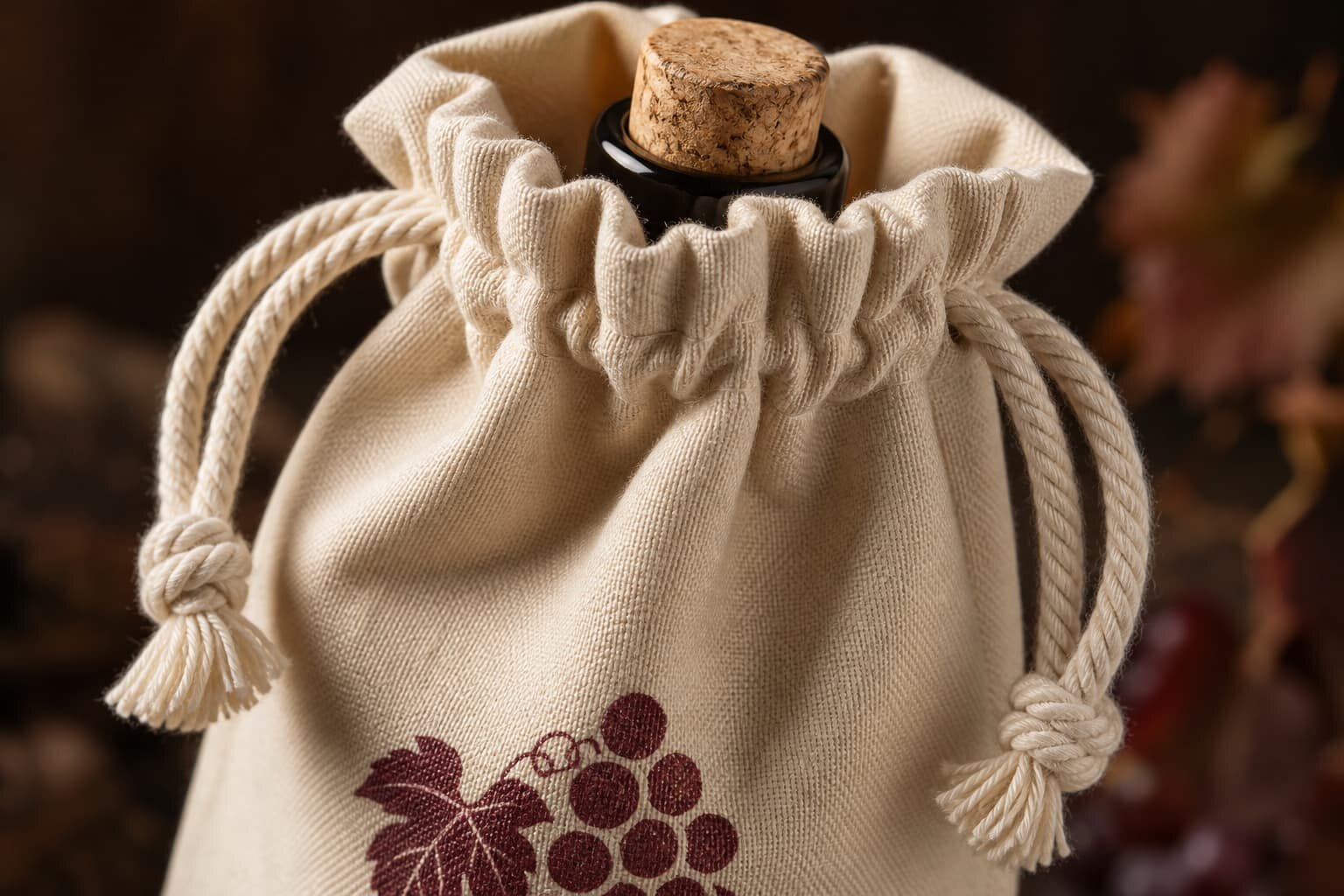
Why wine bag heat transfer pricing is rarely one number
The real buying problem is not whether a heat transfer logo looks good on screen. It is why two suppliers can quote the same wine bag and still land on very different numbers. On wine bags, the print area is small, the shape is narrow, and the surface may be cotton, canvas, jute-style fabric, or a blend. That means the bag body, the logo size, the number of colors, and the press setup all affect the quote. If you do not lock those inputs, you are not comparing suppliers. You are comparing assumptions.
For procurement teams, the easiest way to keep the conversation commercial is to treat the print as part of the bag spec, not as a decoration added later. The same logo can be cheap on a smooth 10 oz cotton bag and expensive on a rough, thick weave with a narrow front panel. Heat transfer is often chosen because it handles detail better than simple screen print on smaller runs, but that advantage only helps if the supplier can press cleanly and repeatably. The buyer job is to define the bag, the artwork, and the acceptance rule before asking for price.
- State the exact bag size, fabric weight, and print position in the RFQ.
- Confirm whether the logo is one color, multi-color, or includes gradients or fine text.
- Ask the supplier to quote the same spec across every price tier.
What actually drives heat transfer print cost on a wine bag
Heat transfer cost is built from more than one labor step. A factory may need artwork cleanup, transfer film or sheet preparation, press setup, positioning jigs, operator time, and final inspection. If the logo is large, if it uses many colors, or if it needs a special effect like metallic ink, the transfer material and press parameters change. Some factories include some of these items in the unit price. Others split them into setup, sampling, and bulk production. If you do not ask for the breakdown, the cheapest quote can hide the highest risk.
Wine bags also add their own cost drivers. The bag surface is often narrow, so alignment matters more than on a tote. A logo too close to a seam can fail during pressing or distort after folding. A bag with a gusset or stitched bottom may require a different press path, which raises setup time and scrap risk. A buyer who wants a clear comparison should ask for the print area, the number of press cycles per piece, and the expected reject allowance. That is the difference between a real quote and a guess.
- Request separate line items for artwork prep, setup, sample, bulk print, and rework allowance.
- Ask how many press cycles the bag needs and whether that changes labor cost.
- Confirm if color changes or special effects create a new setup charge.
Fabric weight and surface finish can change the quote fast
For wine bags, fabric weight is not just a quality point. It changes how the transfer bonds, how clean the print edge looks, and how much heat the bag can tolerate during pressing. Smooth 10-12 oz cotton canvas is usually easier to work with because it gives a more even surface and better opacity. Lighter fabrics may be cheaper, but they can show press marks or allow the design to shift if the weave is loose. Rough jute-style surfaces can look natural and retail-friendly, but they are harder to print cleanly and may need a more forgiving transfer method or a larger safe print area.
If you are sourcing a premium wine gift bag, ask the factory how the fabric reacts to pressure and temperature before you compare prices. Some buyers chase a lower unit cost by moving to a rougher, cheaper body fabric, then lose the savings because the print yield drops and the reject rate rises. The goal is not to pick the most expensive fabric. It is to choose a surface that gives stable adhesion, good edge definition, and low rework. A supplier who understands this will tell you when a lower GSM spec is not actually a lower-cost solution.
- Typical sourcing ranges: 6-8 oz cotton for promotional bags, 10-12 oz canvas for cleaner pressing, heavier canvas for premium gifting.
- Rough weave surfaces increase risk for small text, thin lines, and sharp edges.
- Ask for a print test on the real fabric before freezing bulk pricing.
Choose the print method before you compare unit price
Heat transfer is not automatically the best method for every wine bag. It is strong when the logo has detail, when the artwork needs a clean edge, or when the order is too small to justify a full screen print setup. Screen print can win on unit price for simple logos at volume, but it is less flexible if the artwork changes often or if the buyer wants multiple placements. Embroidery gives a premium feel, yet it works best on thicker bags and smaller motifs. A woven label is useful when branding needs to be subtle or when the main artwork should remain minimal.
This is why buyers should not ask only, 'What is the print price?' They should ask, 'What is the right decoration method for this bag, this logo, and this volume?' A method that looks cheap on paper can become expensive once the supplier adds setup, scrap, and quality risk. Use the comparison table as a decision tool, then tie the print method back to the bag fabric and end-use. A retail wine sleeve has different needs from a corporate gift pack or a multi-bottle carrier.
- Use heat transfer for detail, small runs, and moderate artwork complexity.
- Use screen print when the design is simple and the quantity is high.
- Use embroidery or woven labels when the buyer wants a premium or understated finish.
MOQ logic: why the same logo can have three different prices
The most common pricing mistake is treating MOQ as a single magic number. In practice, MOQ is where setup cost, transfer material waste, and labor spread become visible. A supplier may quote one number for 300 pieces, a better number for 1000, and a much lower figure for 3000 because the setup is already absorbed. If the logo is simple, the bag surface is smooth, and the print area is small, the MOQ break can be attractive. If the artwork is wide, multi-color, or positioned awkwardly, the low-volume quote can look fine but still carry a high per-piece handling cost.
A good RFQ asks for price tiers, not a single price. Use at least three quantity bands and keep the spec identical across them. Also ask whether the supplier can separate the cost of pre-production samples from bulk production. This matters for brands testing a new wine bag design, distributors running seasonal programs, and importers trying to compare two factories that use different setup methods. If you only ask for a final unit price, you may end up paying more overall even if the headline number is lower.
- Request price breaks at 300, 500, 1000, and 3000 pieces using the same artwork and same bag spec.
- Clarify whether the MOQ changes if the logo size or print position changes.
- Separate pilot quantity, sample quantity, and bulk quantity in your sourcing plan.
How to compare supplier quotes line by line
A useful quote for wine bag heat transfer print should let you compare more than just the unit price. At minimum, the supplier should identify the bag material, fabric weight, bag dimensions, print area, print method, color count, packing method, and delivery term. If one factory includes setup in the price and another does not, the lower number is misleading. The same problem appears when one quote assumes a smaller print area or a simpler transfer film. Procurement teams should force all bids into the same structure before they compare them.
The cleanest way to review offers is to ask for the quote data in a format that can be copied into a spreadsheet. Then compare apples to apples: ex-factory price, sample cost, setup charge, carton details, and lead time. If the supplier can only give you a fuzzy estimate, they are not ready for a serious bulk order. Good factories can usually tell you what changes the cost and how much each variable matters. That is exactly the kind of answer a buyer should want.
- Compare the same fabric weight, same logo size, same placement, and same packing spec across all offers.
- Check whether sample fees are refundable or credited to bulk.
- Ask for carton dimensions and carton count so freight cost can be estimated correctly.
Sample approval should test the print, not just the artwork
A printed sample for a wine bag should tell you more than whether the logo looks centered. You need to know whether the transfer stays sharp after handling, whether the edge lifts when the bag is folded, and whether the print still sits flat over the actual fabric weave. If the bag is meant to hold a bottle, fill it during sample review. That is often the easiest way to see whether the logo position looks correct in real use, not just on a flat table. The best approvals happen before bulk printing starts, not after the first carton is finished.
Ask the factory for a pre-production sample if the order is commercial in volume or if the logo has fine detail. The approval sample should lock the exact fabric, the exact print position, and the exact artwork file. Do not accept a loose photo if the program depends on brand color accuracy. If your team has a physical Pantone target, send it. If your approval is based on a previous bag, place the old and new sample side by side. The goal is to stop rework before it becomes a line-item argument.
- Check adhesion, centering, edge sharpness, and fold resistance on the sample.
- Approve against a filled bag when the final use involves bottles.
- Keep one signed sample as the production reference.
Packing and lead time can raise landed cost after the print looks approved
Some buyers focus on print price and forget that printed bags can be damaged in packing. Heat transfer surfaces can scuff if bags are folded too tightly, stacked without interleaf, or packed against rough carton walls. For wine bags, this matters because the front face is often the visible brand area when the customer opens the package. Ask the factory how the printed side is protected, how many pieces go in each inner bag or carton, and whether the packing method changes for darker inks or glossy effects. A small packing change can save a lot of claim handling later.
Lead time also deserves a proper split. The clock usually includes artwork confirmation, transfer preparation, sample approval, bulk printing, final inspection, and carton booking. If the supplier gives only one total lead time, you cannot see where delays are likely to happen. For seasonal wine programs, that is a real risk. Ask which step is the long pole: transfer material sourcing, print scheduling, or packing. Then hold the supplier to a dated approval calendar so the order does not drift while the bottle promotion is already in market planning.
- Confirm whether tissue paper, polybags, or carton dividers are needed to protect the print.
- Ask for the packing quantity per carton and the carton stacking limit.
- Split lead time into sample, production, inspection, and shipping booking.
Common production mistakes that make a cheap quote expensive
The most expensive mistakes are usually simple. Buyers forget to specify fabric weight, the supplier prints too close to a seam, or the artwork contains thin lines that disappear on a rough weave. Another common issue is approving a sample from a smooth fabric and then switching to a cheaper body material for bulk. The logo may still print, but the final look can change enough to trigger a rejection. Heat transfer is sensitive to surface consistency, so a small spec drift can create a lot of noise in the final lot.
The other trap is not writing acceptance criteria before production begins. If the PO does not say how much placement tolerance is allowed, whether slight gloss changes are acceptable, or how adhesion will be checked, every side will argue from a different standard later. Buyers should define pass/fail points in practical terms: the logo must stay within the agreed print zone, it must not lift after folding, and it must match the signed sample in visible color and clarity. That is more useful than vague language like 'good quality.'
- Do not change fabric after sample approval without re-approving the print.
- Keep thin text and fine lines away from rough or open-weave surfaces.
- Write a clear tolerance for placement, color, and adhesion in the PO.
A clean RFQ data sheet saves time and reduces quote noise
If you want comparable quotes, build your RFQ like a production sheet. Start with bag type, dimensions, fabric, GSM or oz weight, color, handle or drawstring detail, and bottle capacity. Then add the print zone size, artwork file, number of colors, print effect, and whether the bag will be folded flat, packed with tissue, or shipped in polybags. If you also specify carton quantity and shipping term, the factory can quote with fewer assumptions. The result is better commercial control and fewer surprises after the order is placed.
This step is especially useful for importers and distributors who order wine bags alongside other packaging. A factory can often make the bag body and the print in-house, but only if the input is complete. If your RFQ is vague, the quote will be padded to protect the supplier from risk. A precise RFQ does the opposite: it rewards factories that can control quality and penalizes those that hide process gaps. That is exactly what a buyer should want before moving to sample approval.
- Include artwork format, print dimensions, and the exact print location on the bag.
- State the bag color, fabric weight, and any lining or reinforcement requirement.
- Add packing, carton, and shipping details so the quote can be landed-cost ready.
Specification comparison for buyers
| Spec decision | Recommended option | When it fits | Buyer risk to check |
|---|---|---|---|
| Heat transfer print on 10-12 oz cotton canvas | Best for small-to-medium logos with solid edges or light gradients | Gift wine bags, branded retail packs, and moderate MOQs | Check peel resistance on the actual weave and confirm the print area does not cross seams |
| Screen print on flat cotton canvas | Best for simple 1-2 color logos at higher volume | Repeat programs where unit cost matters more than fine detail | Check ink feel, color registration, and whether setup fees are separate from unit price |
| Embroidery on heavy canvas or premium wine bags | Best for a premium look on small logos or initials | Corporate gifting and higher-end retail sets | Check stitch density, backing show-through, and distortion on thinner fabric |
| Woven side label or sewn patch | Best for understated branding and long-term repeat use | Private label programs and multi-SKU packaging | Check whether it replaces the main logo or only supports it, and confirm attachment method survives packing |
Buyer checklist before sampling
- Lock the bag material, fabric weight, and weave type before asking for prices.
- Specify the exact print size, placement, and whether the logo crosses a seam, hem, or fold line.
- Ask for a separate line for sample cost, setup cost, and bulk unit cost.
- Request the supplier's MOQ breakpoints at at least three volume tiers.
- Approve a physical sample or pre-production sample before bulk printing starts.
- Confirm packing method, carton quantity, and whether printed faces need tissue or interleaf.
- Ask for lead time split by sample, material prep, printing, packing, and shipment booking.
- Set a written acceptance tolerance for color, placement, and adhesion in the PO.
Factory quote questions to send
- What exact fabric weight and weave are you quoting for the wine bag body?
- Is the heat transfer setup fee included in the unit price or listed separately?
- What is the print area in centimeters, and does the design stay inside one flat panel?
- How many colors, effects, or special inks are included in this quote?
- What MOQ price breaks do you offer at 300, 500, 1000, and 3000 pieces?
- What sample type will you provide for approval before bulk production?
- How do you pack printed wine bags to prevent scuffing or transfer damage in transit?
- What is the full lead time from artwork confirmation to packed cartons ready for shipment?
Quality-control points to confirm
- Check logo placement against the approved sample, not against the digital artwork alone.
- Test adhesion after pressing and again after a short cure period, especially on dense canvas.
- Inspect edge lift, cracking, or gloss changes after fold and rub handling.
- Confirm the print does not warp at seams, hems, or gusset turns.
- Verify that color, opacity, and sharpness match the signed-off sample across the bulk order.
- Inspect carton packing so printed surfaces are not scuffed, crushed, or marked by ties and dividers.