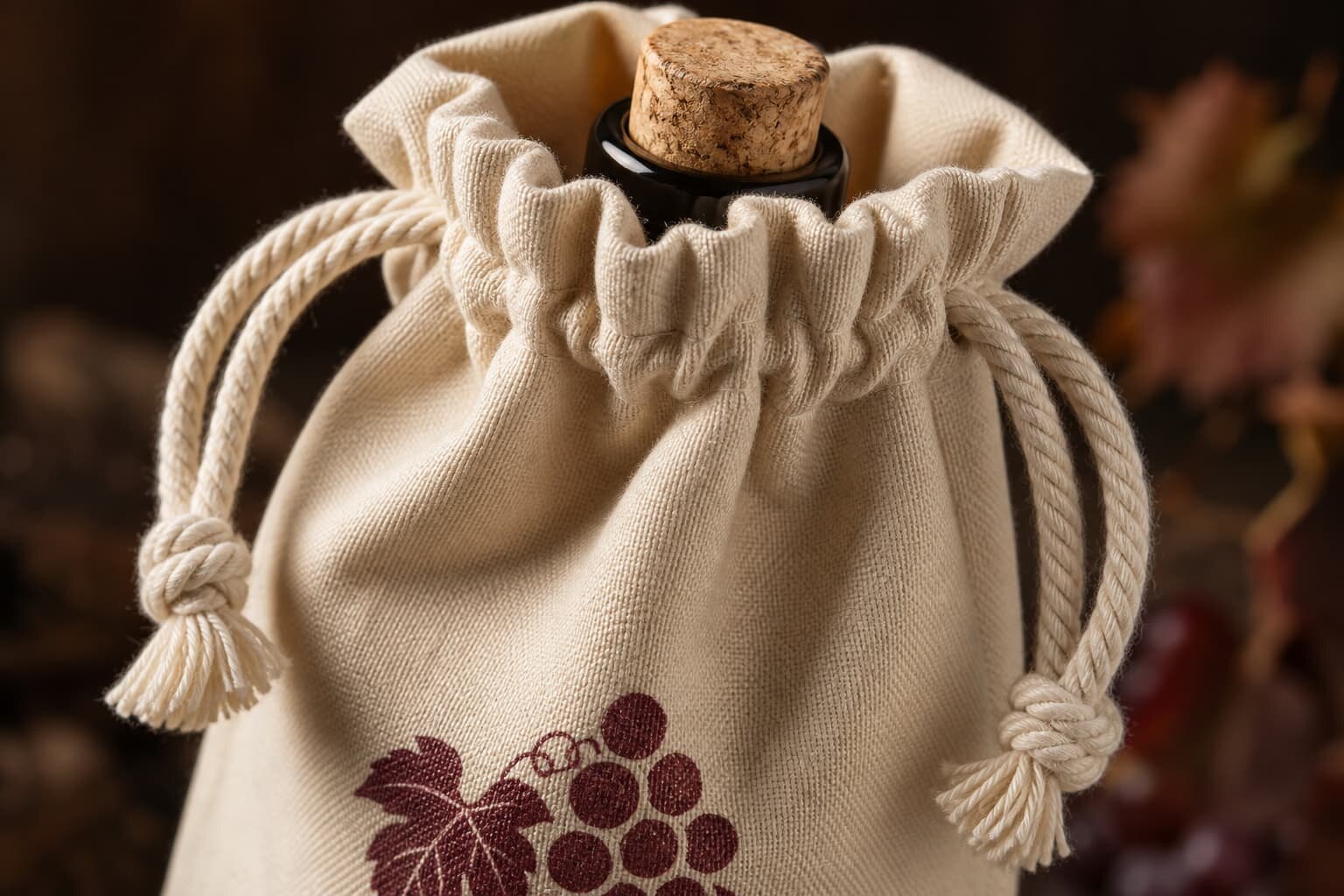
Why wine bag quotes are not directly comparable
Two wine bag quotes can look close on price and still be built from different assumptions. One factory may be quoting 10oz canvas with a simple screen print and bulk packing, while another is pricing a lighter fabric, a woven label, a cardboard insert, and retail polybags. If those details are not lined up, the lower number is not really cheaper; it is just missing work that will reappear later as a change order, sample revision, or shipping problem.
The fastest way to waste time is to compare suppliers by unit price alone. A proper comparison starts by freezing the use case, the bottle size, the material target, the branding method, and the packing requirement. Once those variables are fixed, you can ask each factory to quote the same spec and expose the real differences: fabric quality, stitching method, lead time, and what is excluded from the line price.
- Compare only after the same bottle size, same material, and same packing format are defined.
- Treat a lower price as a signal to check omissions, not as proof of better efficiency.
- Ask every factory to quote the same version number of the spec sheet.
Define the bottle, use case, and fit before you ask for price
A wine bag is not one fixed product. A single-bottle gift bag, a two-bottle carrier, a retail display bag, and a distribution pack all need different dimensions and different construction. A bag for a slim 750ml Bordeaux bottle can be too tight for a wider Burgundy shape, and a bag for a sparkling bottle needs more height and stronger bottom support. If you do not send the actual bottle drawing or sample bottle measurements, the factory will quote from its own assumptions, and those assumptions are rarely yours.
Use case matters just as much as bottle size. If the bag is meant for shelf gifting, buyers usually care about appearance, logo clarity, and neat presentation. If it is meant for repeated transport, you need stronger seams, better handle reinforcement, and a base that does not collapse. The quote should therefore state not only the bottle dimensions but also whether the bag must stand upright, be reused many times, or survive distributor handling.
- State the bottle type: Bordeaux, Burgundy, sparkling, or another shape.
- Give the target bottle weight and overall dimensions, including neck height.
- Say whether the bag must stand upright, be gift-ready, or be used for repeated carry.
Lock the material and construction spec
Fabric weight drives a large part of the cost and the feel of the final bag. For cotton canvas, 8oz is often a value option, 10oz is a common retail baseline, and 12oz or heavier gives a more substantial handfeel and better shape retention. In GSM terms, that usually means roughly 280gsm to 400gsm depending on weave and finishing. For jute, a practical premium range is often around 300gsm to 360gsm. The exact number matters less than the fact that every quote must name the same weight, because a supplier can quietly switch from a dense fabric to a lighter one that looks similar in photos but performs differently in production.
Construction details are where many quote gaps hide. Ask how the side seams are finished, whether the top edge is single hem or double hem, whether the handles are self-fabric or webbing, and whether stress points receive bar-tacks. If the bag includes a lining or a base card, that must be listed line by line. For a bottle bag, a slightly stronger bottom panel or a neater inner finish can matter more than a tiny change in print cost, because it affects how the bottle sits and how the bag survives repeated use.
- Name the fabric weight, weave, and finish in the RFQ, not just the fabric family.
- Ask for seam type, hem type, and reinforcement points in writing.
- If the bag needs shape, specify lining, base board, or insert upfront.
Choose the branding method that matches your volume
Logo method changes both the quote structure and the production risk. Screen print is usually the cleanest option for bold logos, simple line art, and one to two colors at higher volume. A woven label or sewn patch is better when the brand needs a more premium handfeel, small text, or a textured look that will not crack in folding. Embroidery can work well on thicker cotton or canvas, but it adds density, can distort thin fabric, and often needs more setup discussion than buyers expect. Heat transfer can be fine for some short-run projects, but if the bag will be folded often or handled roughly, it may age poorly.
The key is to match the branding method to the real artwork and MOQ. If your logo has fine serif text, small registration marks, or multiple colors, a screen print quote that looks cheap may become expensive once screens and setup are counted. If your artwork is simple and the quantity is moderate, a woven label or sewn side label can reduce print risk and make the quote easier to compare. For buyer approval, the sample should show the actual logo size and placement, not a generic placeholder image.
- Ask whether screen charges, embroidery digitizing, or label weaving are included.
- Require the quote to state the maximum number of colors or stitches allowed.
- For small text, consider a woven label or sewn patch instead of a fine print.
Read MOQ, sampling, and lead time in context
MOQ is not just a factory preference; it is tied to fabric sourcing, cutting efficiency, print setup, and packaging flow. A natural canvas bag with a simple one-color logo may be feasible at a lower MOQ than a dyed fabric with multiple trim colors and a custom woven label. If the supplier quotes one headline MOQ without saying whether it applies per color, per art version, or per packing format, you do not yet have a usable production offer. Ask for the MOQ that applies to the exact spec you intend to buy.
Sampling also needs to be broken into stages. A blank prototype checks size, handle length, bottle fit, and seam logic. A print strike-off checks logo color, placement, and registration. A pre-production sample confirms the actual production materials before bulk cutting begins. Lead time should start after the pre-production sample is approved, because that is when a factory can actually commit fabric, printing, sewing, and packing to a schedule. For custom wine bags, a simple order may move faster than one with dyed fabric or special trim, but the buyer still needs the factory to state the timeline by stage.
- Ask for MOQ by color, logo version, and packing format.
- Request a separate timeline for blank sample, print proof, PP sample, and bulk.
- Treat lead time as valid only when it starts from PP approval and deposit.
Put packing and carton terms into the quote
Packing can move a wine bag quote more than many buyers expect. A bulk-packed export carton is not the same as a retail-ready bag with an individual polybag, barcode sticker, hangtag, tissue, and carton marks. If you plan to sell through distributors or stores, the factory needs to know whether the bag is for shelf display, gift packaging, or direct carton shipment. For jute and cotton, moisture protection can also matter in humid lanes, so ask whether an inner bag or carton liner is part of the price or a separate charge.
The quote should include inner pack count, outer carton count, carton dimensions, gross weight, and any retail labels. Those details affect not only packing cost but also freight and warehouse handling. A slightly larger carton or a heavier insert can change the shipping calculation enough to offset a unit price advantage. This is why quote comparison should include the pack-out spec, not just the sewn product. If one supplier gives a neat piece price but vague carton data, you do not yet know the landed cost.
- Ask for pieces per inner pack, inner packs per carton, and carton dimensions.
- State whether you need retail labels, barcode stickers, or hanging tags.
- Confirm whether moisture protection or carton lining is included for natural fibers.
Compare the unit price against the full quote stack
A good factory quote should separate the bag into visible cost buckets so you can compare suppliers on the same basis. At minimum, you want to see material, cutting and sewing, branding, packaging, sample fees, and any setup or tooling cost. If a supplier gives you only one blended number, the quote may be technically correct but useless for procurement. You cannot tell whether the lower price comes from a thinner fabric, a cheaper print method, or a stripped-down pack-out that your customer will reject.
When you build a comparison sheet, make every factory answer the same columns. Ask what is included, what is excluded, and what triggers a price change. That list should cover screens, embroidery digitizing, woven labels, cartons, inserts, and freight terms. If a supplier says a cost is included, ask them to name the line item and the quantity basis behind it. This is the fastest way to turn three loose quotes into one clear sourcing decision. It also gives your finance team a clean story when they ask why one supplier looks cheaper but has a different total landed cost.
- Compare price by line item, not by one blended number.
- Separate product cost from setup cost, sample cost, and packing cost.
- Ask each supplier to quote the same incoterm so freight assumptions do not distort the comparison.
Check samples with acceptance criteria, not opinions
A wine bag sample is only useful if you know what it must prove. First check the fit: the bottle should slide in cleanly without forcing the seams or pulling the opening out of shape. Then check the finish: the logo should sit in the approved location, the print should be crisp, and the stitching should be straight with no loose threads or uneven top hems. For premium retail, the bag should also feel balanced in the hand, not top-heavy, and the bottom should sit flat enough to present well on shelf or in a gift box.
The pre-production sample should use the same fabric, print method, label, and packing approach that will go into bulk production. Do not approve a nicer showroom sample and assume the bulk will match it. Ask for a photo record of the actual production sample, but base final approval on the physical piece. If the bag is meant to carry a bottle repeatedly, do a simple load test and a carry test. If the bag fails on seam tension, logo placement, or closure function, fix it before cutting bulk fabric.
- Measure the finished bag and compare it with the approved spec sheet.
- Inspect logo placement, print sharpness, and seam quality on the actual sample.
- Test bottle fit, carry comfort, and bottom stability before bulk approval.
Negotiate from the same spec and spot hidden risk
The cleanest negotiation happens after you have one comparison sheet and one sample reference. If one supplier is much cheaper, ask what they changed: fabric weight, packing count, print method, or reinforcement. Many hidden risks hide behind vague language such as similar material, standard packing, or logo included. Those phrases are not bad on their own, but they are not production specifications. You need the supplier to spell out the exact fabric, the exact branding method, and the exact carton spec before you can treat the quote as comparable.
Use the quote review to pressure-test the supplier rather than just to squeeze price. A factory that answers clearly on GSM, seam type, sample stages, and lead time is usually easier to work with during production. A factory that keeps revising the quote without telling you why may be buying time, not clarity. If the difference between two quotes is hard to explain, the missing detail is usually where your risk sits. Better to pay for the correct bag than to save a small amount and absorb a rework, a delayed shipment, or a retail complaint later.
- Treat vague terms like similar material or logo included as follow-up questions, not answers.
- Ask the supplier to revise the quote on one fixed spec sheet if the numbers do not align.
- Choose the quote that explains its assumptions clearly, not the one that only looks cheapest.
Specification comparison for buyers
| Spec decision | Recommended option | When it fits | Buyer risk to check |
|---|---|---|---|
| Fabric weight / GSM | 10oz to 12oz canvas or 300 to 360gsm jute | Retail gift bags and reusable premium packaging | Quote may hide a lighter greige fabric or skip finished weight |
| Lining / insert | No lining for basic gift use; 210D lining or cardboard base for better shape | When the bag must stand up, protect the bottle, or feel more premium | Supplier may quote the outer shell only and add lining later |
| Closure | Simple drawstring, top hem, or flap closure depending on bottle style | Reusable gift bags and easy pack-out | Cord length, stopper type, and top finish may be missing from the quote |
| Branding method | 1 to 2 color screen print for volume; woven label or sewn patch for premium detail | When you need clear logo visibility and controlled tooling cost | Setup charges, screen count, and artwork limits may be excluded |
| Handle / reinforcement | Self-fabric handle with bar-tacks or webbing handle with reinforced stress points | For heavier bottles or frequent retail use | Load strength is often assumed, not tested or stated |
| Packing format | Bulk pack for shipping efficiency; individual polybag plus barcode for retail | When the bag goes through distributors, stores, or e-commerce | Inner pack counts, bag labels, and carton marks may be omitted |
| MOQ logic | Common custom runs often start around 1,000 to 3,000 pcs depending on fabric and print | When fabric and trim are standard and artwork is simple | MOQ can split by fabric color, logo version, or packaging spec |
| Lead time | Blank sample 5 to 7 days, pre-production sample 7 to 14 days, bulk 25 to 40 days after approval | Typical custom projects without special dyeing or imported trims | Lead time often excludes print proofing, sample revisions, and freight booking |
Buyer checklist before sampling
- Define the bottle type, bottle diameter, and finished bag dimensions before you request price.
- Lock the fabric weight or GSM, fiber content, and whether the fabric is raw, dyed, or washed.
- Choose the branding method, logo size, color count, and placement before asking for a quote.
- Specify whether the bag needs lining, a cardboard base, a divider, or reinforcement at the handle.
- State the exact closure style and any hardware, cord, stopper, or label requirements.
- Tell suppliers the packing format you need: bulk pack, retail polybag, barcode sticker, or carton labeling.
- Ask for MOQ by color, by logo version, and by packing format, not just one headline number.
- Confirm which sample stages you expect: blank sample, printed strike-off, and pre-production sample.
- Ask for the lead time from PP sample approval and deposit, not from the first inquiry date.
- Request all exclusions in writing: screens, plates, labels, freight, cartons, and testing if applicable.
Factory quote questions to send
- What fabric weight or GSM are you quoting, and is that the finished fabric or the raw fabric before finishing?
- Is the quote for the outer bag only, or does it include lining, base board, divider, or reinforcement?
- What branding method is included, how many colors are included, and what setup charges apply?
- What is the exact finished size, seam allowance, and size tolerance you will hold in production?
- What is the MOQ by fabric color, logo colorway, and packaging format?
- What sample stages do you offer, and what is charged for blank samples, print proofs, and PP samples?
- What packing is included per inner pack and per master carton, and are barcode stickers included?
- What is the bulk lead time after sample approval, and what items can extend it?
- What are your overrun and underrun limits, and how are those handled on invoice and shipment?
- Which costs are excluded from this quote, including screens, weaving, embroidery setup, labels, cartons, and freight?
Quality-control points to confirm
- Verify finished dimensions against the approved spec and confirm the bag still fits the target bottle without forcing the seam.
- Check fabric weight, handfeel, and opacity against the approved sample so a lighter substitute does not slip into bulk production.
- Inspect stitch density, seam straightness, bar-tack placement, and reinforcement at stress points near the handle and top edge.
- Confirm the logo position, print size, color match, and edge sharpness on the actual production fabric.
- Test the closure for smooth opening and closing, and make sure cords, stops, or flaps sit evenly on both sides.
- Check bottle stability inside the bag so the bottle does not tip, rattle, or pull the bottom seam out of shape.
- Review the inside finish for loose threads, odor, glue residue, or rough edges that could affect retail acceptance.
- Inspect packing count, barcode correctness, carton marks, and any retail label placement before shipment.
- Verify the carton size, stacking strength, and gross weight so freight quotes and warehouse handling stay realistic.
- Do a simple carry or load test on a filled sample to confirm the bag feels balanced and the stitching holds under use.