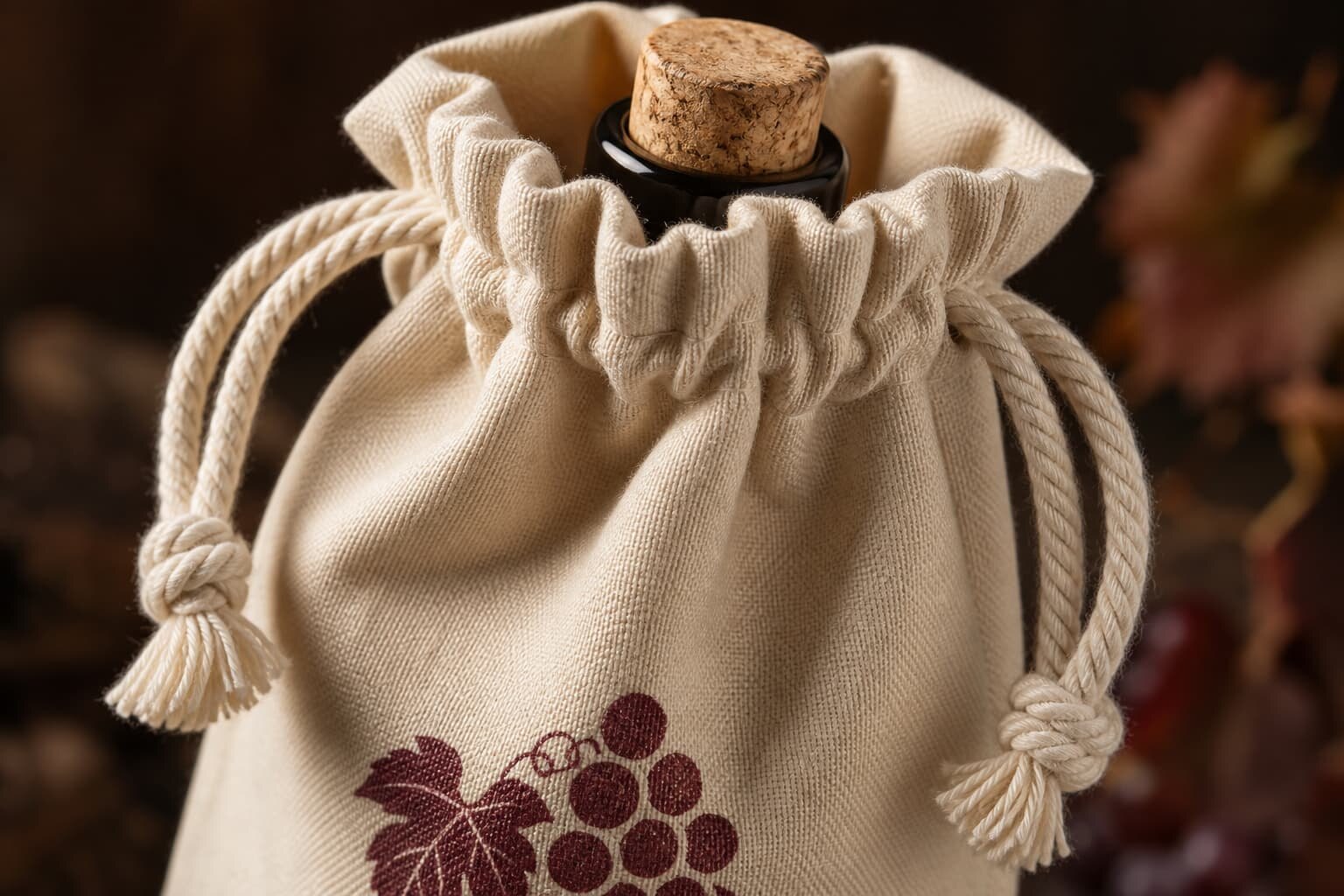
Why wine bag AQL needs its own checklist
Wine bags look simple in a quotation, but they create many inspection disputes because the product sits between packaging, textile sewing, and brand display. A buyer may approve a cotton wine bag based on fabric color and logo artwork, then discover during packing that the bottle shoulder catches on the seam, the drawstring channel is too narrow, or the print sits lower than expected once a bottle is inserted. A general textile AQL checklist is not enough because it may count visible defects without checking bottle fit and presentation.
For procurement teams, the purpose of a wine bag AQL inspection checklist is not to make inspection more complicated. It is to remove gray areas before the order ships. The checklist should tell the factory what the buyer will measure, what defects are critical, how many pieces will be sampled, and which issues require rework or rejection. This is especially important when the same purchase order includes cotton bags, jute wine bags, non-woven bottle bags, drawstring bottle pouches, or custom printed retail gift packaging.
- Use the checklist before confirming the proforma invoice, not only before final inspection.
- Attach the checklist to the approved sample record so production and QC teams follow the same standard.
- Treat bottle fit, logo presentation, seam strength, odor, and packing accuracy as separate controls.
- Do not accept a quote that only says standard quality without defining fabric, size, print, and AQL level.
Set the AQL plan before sampling
AQL is a sampling method, not a magic guarantee that every defective wine bag is removed. Most buyers use ANSI/ASQ Z1.4 or ISO 2859-1 style sampling for final random inspection. A common starting point for promotional wine bags is General Inspection Level II, with AQL 0 for critical defects, AQL 2.5 for major defects, and AQL 4.0 for minor defects. This can be adjusted depending on order value, retail channel, and the risk of product claims.
The important step is to define what counts as critical, major, and minor for this exact product. A broken seam at the bottom of a bottle bag is not a small cosmetic issue because it can drop the bottle. Wrong logo color for a retail brand launch may be major even if the bag is physically usable. A tiny natural slub on jute may be minor if it matches the approved sample. Without this classification, the inspector and factory may argue after defects are already found.
- Critical defects: needle fragments, mold, sharp objects, broken bottom seam causing bottle fall, severe contamination.
- Major defects: wrong size, wrong material, wrong logo, poor print curing, failed bottle fit, open seam, missing drawcord.
- Minor defects: slight thread ends, small natural slubs within approved range, light wrinkle, small position variation within tolerance.
- Commercial defects: wrong carton mark, mixed SKU, incorrect barcode, wrong inner packing, missing hangtag.
Define the wine bag specification clearly
Most quality problems start with a weak RFQ. If the buyer only requests a custom wine bag with logo, different suppliers will quote different fabric weights, sewing methods, drawcord quality, and packing. One factory may quote 140 GSM cotton, another 220 GSM cotton, and another jute-cotton blend. The cheaper quote may look attractive until the sample feels thin, the bottle outline looks uneven, or the print becomes patchy on coarse fabric.
A usable wine bag specification should include material, fabric GSM, finished size, tolerance, construction, print method, logo position, closure, label, packing, carton requirement, and inspection standard. For cotton wine bags, 180-220 GSM is a practical range for many promotional and retail uses. For jute wine bags, 260-320 GSM is common for a more structured natural look, but buyers should check fiber shedding and odor. For premium canvas bottle bags, heavier cotton canvas can be used, but MOQ and sewing cost usually increase.
- State finished size as width x height x gusset, plus usable internal height after drawstring closure.
- Give fabric GSM with tolerance, for example 200 GSM plus or minus 5 percent if acceptable.
- Specify drawcord material, diameter, color, length, knot method, and whether cord ends need metal tips or sewn finish.
- Confirm whether the bag is for one bottle, two bottles, a champagne bottle, or mixed bottle use.
Bottle fit is the first functional inspection
A wine bag can pass visual inspection and still fail in the buyer warehouse if the bottle does not fit properly. The inspector should test the bag with the bottle shape stated in the purchase order. A standard 750 ml Bordeaux bottle is different from a Burgundy bottle with wider shoulders, and champagne bottles often need more width, height, and seam strength. If the product is used by a distributor packing multiple brands, the buyer should approve the bag against the largest expected bottle.
Fit inspection should be practical. The bottle should insert without forcing the side seams, the bottom should sit flat, and the drawstring should close at the intended position. If the bag includes a window, handle, divider, or reinforced base, those features need their own checks. For drawstring wine bags, the channel must not twist or jam after the bottle is inserted. The inspector should record photos of the bottle inside the bag, the top closure, and the bottom seam under load.
- Check bag height with the bottle inserted, not only flat measurement on the table.
- Measure width at the narrowest usable point, especially if side seams turn inward.
- Confirm the drawstring closes above the shoulder and does not cover the logo unless designed that way.
- Test at least several sampled bags with the bottle because sewing variation can change fit.
Fabric and material checks that affect real use
Fabric GSM is not just a costing detail. It affects print coverage, opacity, structure, seam strength, and perceived value. A 140 GSM cotton wine bag may be acceptable for a low-cost event giveaway, but it may not support a premium wine brand image. A 200 GSM cotton bag usually gives better hand feel and print stability. Jute gives a rustic look but needs stricter checks for odor, shedding, uneven yarn, and color variation. Laminated jute can improve structure, but buyers should confirm whether the lamination changes recyclability claims or local compliance language.
Before bulk cutting, the factory should compare incoming fabric with the approved sample. The inspection should include GSM measurement, width, shade, weave defects, stains, oil marks, odor, and moisture risk. Natural fabrics can vary, so the buyer must decide what variation is commercially acceptable. If the brand requires an exact natural beige tone, the RFQ should include lab dip or fabric swatch approval before mass production.
- Cotton 160-180 GSM: budget promotion, lighter feel, higher risk of transparency and wrinkling.
- Cotton 180-220 GSM: balanced choice for printed drawstring wine bags and brand gifting.
- Cotton canvas 240-320 GSM: stronger hand feel, higher cost, longer sewing time, better premium position.
- Jute 260-320 GSM: natural retail look, check smell, dust, fiber shedding, and print sharpness carefully.
Print inspection and logo acceptance criteria
Wine bags are often bought as brand packaging, so logo defects matter. The buyer should not approve print quality only from a digital artwork file. The factory needs actual size artwork, Pantone or brand color reference where applicable, print method, print area, and position tolerance. Screen printing is usually suitable for solid one-color or two-color logos on cotton or jute. Heat transfer may help with fine details or gradients, but buyers should check feel, adhesion, and cracking. Embroidery can look premium but may distort lighter fabric and is less common for low-cost wine pouches.
A good AQL checklist separates print defects from fabric defects. Print issues include wrong color, poor edge sharpness, uneven ink coverage, pinholes, ghosting, misregistration, smudging, and poor curing. Position should be measured from fixed bag edges, not judged by eye. For example, the logo center may need to be within plus or minus 5 mm horizontally and vertically compared with the approved sample. If the bag is tested with a bottle inside, confirm that the logo still appears centered on the visible front panel.
- Request a print strike-off on actual bulk fabric before approving production.
- Use Pantone reference as a target, but accept that cotton and jute absorb ink differently from coated paper.
- Perform dry rub and light scratch checks if the bag will be handled in retail or event settings.
- Confirm whether print setup cost is included in the quote or charged separately by color and design.
Stitching, drawstring, and strength checks
The highest-risk sewing points on a wine bag are the bottom corners, side seams, drawstring channel, and any handle attachment. A bottle is heavy enough to expose weak stitching quickly. Inspectors should look for skipped stitches, loose thread, open seam, uneven seam allowance, broken needle holes, puckering, and weak backstitching. For jute, the fabric can fray if seam allowance is too narrow or the edge is not properly finished.
Strength testing does not need to be complicated, but it must be consistent. The inspector can insert the target bottle or equivalent weight, lift the bag carefully, and check whether seams distort or threads open. For drawstring bags, pull both cords several times to see whether the channel holds and the cord slides smoothly. If the wine bag has a handle, the handle should be tested under load because customers often carry the bottle by the bag rather than holding the bottle directly.
- Set stitch density, for example 8-10 stitches per inch if suitable for the fabric and style.
- Require reinforced backstitching at stress points and clean thread trimming before packing.
- Check drawcord length tolerance so pairs look consistent on retail display.
- Reject bags with open bottom seams, missing cord, broken channel, or severe seam slippage as major defects.
MOQ, lead time, and quote data that affect QC
MOQ is not only a sales term. It is connected to fabric purchasing, dyeing, printing setup, cutting efficiency, and packing. A factory may accept a low MOQ if the buyer uses stock natural cotton fabric and one-color screen print. MOQ rises when the buyer requests custom dyed fabric, multiple logo versions, special ribbon, private label packaging, or mixed carton assortments. Procurement teams should compare quotes only after confirming whether the MOQ is per style, per color, per logo, or per shipment.
Lead time also affects inspection risk. If fabric is already in stock, sampling and production may move faster. If the order needs custom fabric dyeing or special jute lamination, the schedule must include material procurement, sample approval, bulk cutting, printing, sewing, trimming, packing, and final inspection. A realistic quote should separate sample lead time from bulk lead time and state when the inspection can take place. Rushing the final inspection after cartons are sealed makes sorting more expensive.
- Ask whether the quoted MOQ changes if the order includes two print designs or two bag sizes.
- Confirm whether the sample fee includes fabric, printing screen, courier, and one revision.
- Request a quote line for inner packing, hangtag, barcode label, and export carton instead of assuming they are free.
- Build inspection time into the purchase order schedule before booking final shipment.
Packing inspection for import and retail handling
Wine bags are easy to crush, wrinkle, mix, or miscount if packing is not controlled. A buyer should define whether bags are flat packed, bundled, individually polybagged, paper banded, or packed with hangtags. For retail channels, barcode label position and carton assortment are often more important than the factory expects. For wine clubs or distributors, fast warehouse packing may require the bags to be grouped by logo, color, or bottle type.
Carton inspection should verify piece count, SKU mix, carton dimensions, gross weight, net weight, shipping mark, country of origin marking if required, and carton condition. If the bags are natural jute or cotton, moisture control matters. Cartons should be dry and not stored directly on a wet floor. If the shipment will move through humid ports, the buyer may request desiccants or stronger carton material, but this should be agreed before quotation because it affects cost.
- Check first carton, middle carton, and last carton from random production lots, not only top cartons.
- Confirm bags are packed after ink is fully cured to avoid transfer marks and odor concentration.
- Use SKU stickers or carton marks that match the buyer purchase order exactly.
- Photograph open cartons during inspection so warehouse teams can verify packing method before arrival.
How buyers should use the final inspection report
A useful inspection report does more than say pass or fail. It should show sample size, defect classification, defect photos, measurement results, bottle fit results, print checks, packing checks, carton count, and the inspector's conclusion against the agreed AQL. If defects are found near the acceptance limit, the buyer should review whether they are isolated or systematic. Ten bags with the same low logo position indicate a process issue, not random minor variation.
If the shipment fails, the buyer should decide the remedy based on defect type. Sorting may work for visible stains or loose threads. Rework may work for trimming, repacking, or adding missing labels. Reprinting usually creates risk unless the original print can be removed or covered cleanly. Replacement is normally required for wrong fabric, wrong size, failed bottle fit, or weak bottom seams. The purchase order should state who pays for reinspection after factory corrective action.
- Approve shipment only when the report matches the agreed AQL and all critical defects are zero.
- Ask for corrective action photos before accepting a reinspection appointment.
- Do not release payment only based on a factory self-check if the order is high value or retail sensitive.
- Keep inspection records for repeat orders so future quotes and samples can improve.
Specification comparison for buyers
| Spec decision | Recommended option | When it fits | Buyer risk to check |
|---|---|---|---|
| Fabric weight | Cotton 180-220 GSM or jute 260-320 GSM | Promotional wine packaging, retail gift sets, winery events | Too light may show bottle shape sharply, distort print, or fail seam strength during handling |
| Bottle fit | Internal size tested with 750 ml Bordeaux and Burgundy bottles | Mixed wine SKUs or distributors packing several bottle shapes | A bag approved on one bottle style may be too tight at shoulder or too short after drawstring closure |
| Print method | Screen print for solid logos, heat transfer for fine gradients, woven label for premium low-color branding | Brand promotions, private label packaging, retail display | Ink cracking, poor registration, dye migration, and print position drifting after cutting or sewing |
| Closure | Cotton drawcord, jute rope, or ribbon depending on brand position | Gift presentation and reusable packaging | Cord fraying, knot slipping, uneven cord length, or closure not covering bottle neck properly |
| Inspection level | ANSI/ASQ Z1.4, General Inspection Level II, AQL 2.5 major and 4.0 minor as common starting point | Normal export orders where buyer wants balanced inspection cost and risk control | AQL must not replace functional checks such as bottle fit, seam pull, rub test, and carton drop review |
| Packing | Flat packed in inner polybag or paper band, then export carton with moisture control if needed | Import shipments, distributor warehouse handling, retailer repacking | Wrinkles, mildew risk, mixed colors, crushed drawcords, wrong carton marks, and poor count control |
Buyer checklist before sampling
- Confirm final approved sample includes actual fabric GSM, color, drawcord, print method, print size, print position, stitching, and packing style.
- Define AQL levels separately for critical, major, and minor defects instead of using one vague pass or fail standard.
- Require bottle fit testing with the exact bottle shapes your team will pack, not only a generic 750 ml bottle.
- Check fabric GSM tolerance, shrinkage risk, color variance, smell, slub level, and visible weaving defects before cutting approval.
- Set acceptance criteria for print color, registration, ink coverage, rub resistance, curing, and allowable position tolerance.
- Inspect seam strength at side seams, bottom corners, drawstring channel, handle points if applicable, and label attachment.
- Require carton count verification by SKU, color, logo version, packing method, barcode, and shipping mark.
- Ask the factory to keep golden sample, pre-production sample, and bulk fabric swatch sealed and signed for comparison.
- Include photo records for measured bag size, bottle fit, print inspection, seam stress test, carton marks, and random cartons opened.
- Reject shipment release until the inspection report clearly separates defect types, sample size, accepted quantity, rejected quantity, and corrective action.
Factory quote questions to send
- What fabric composition, weave, GSM, and GSM tolerance are included in your quotation?
- Is the quoted size measured flat before filling, after sewing, or as usable internal bottle space?
- Which bottle shape did you use to confirm fit: Bordeaux, Burgundy, Champagne, slim bottle, or buyer-supplied bottle?
- What print method is quoted, and what are the limits for artwork line thickness, color tolerance, and print area?
- Does your price include sample development, screen setup, label setup, packing materials, barcode labels, and export cartons?
- What MOQ applies by fabric color, print design, bag size, and packing method?
- What is the normal bulk lead time after sample approval and deposit, and what part of that time is fabric procurement?
- Can you provide an inline inspection photo set before full production is completed?
- Which AQL standard and inspection level do you normally support for wine bag export orders?
- How do you handle rejected pieces found during final inspection: replacement, sorting, rework, discount, or shipment hold?
Quality-control points to confirm
- Fabric GSM and hand feel match the approved sample and quoted specification.
- Bag opening, width, height, gusset, and drawstring channel allow the intended bottle to insert and close smoothly.
- Logo color, size, sharpness, placement, and curing meet approved artwork and print tolerance.
- Side seam, bottom seam, and drawstring channel stitching are straight, secure, and free from skipped stitches.
- Drawcord length is balanced on both sides and does not fray, slip, or break under normal closure force.
- Labels, hangtags, barcodes, and care statements are attached in the approved position and correct language.
- Odor, stains, mildew, oil marks, heavy creases, and loose fibers are checked before packing.
- Carton quantity, SKU mix, shipping marks, carton strength, and pallet or loose loading plan match the purchase order.