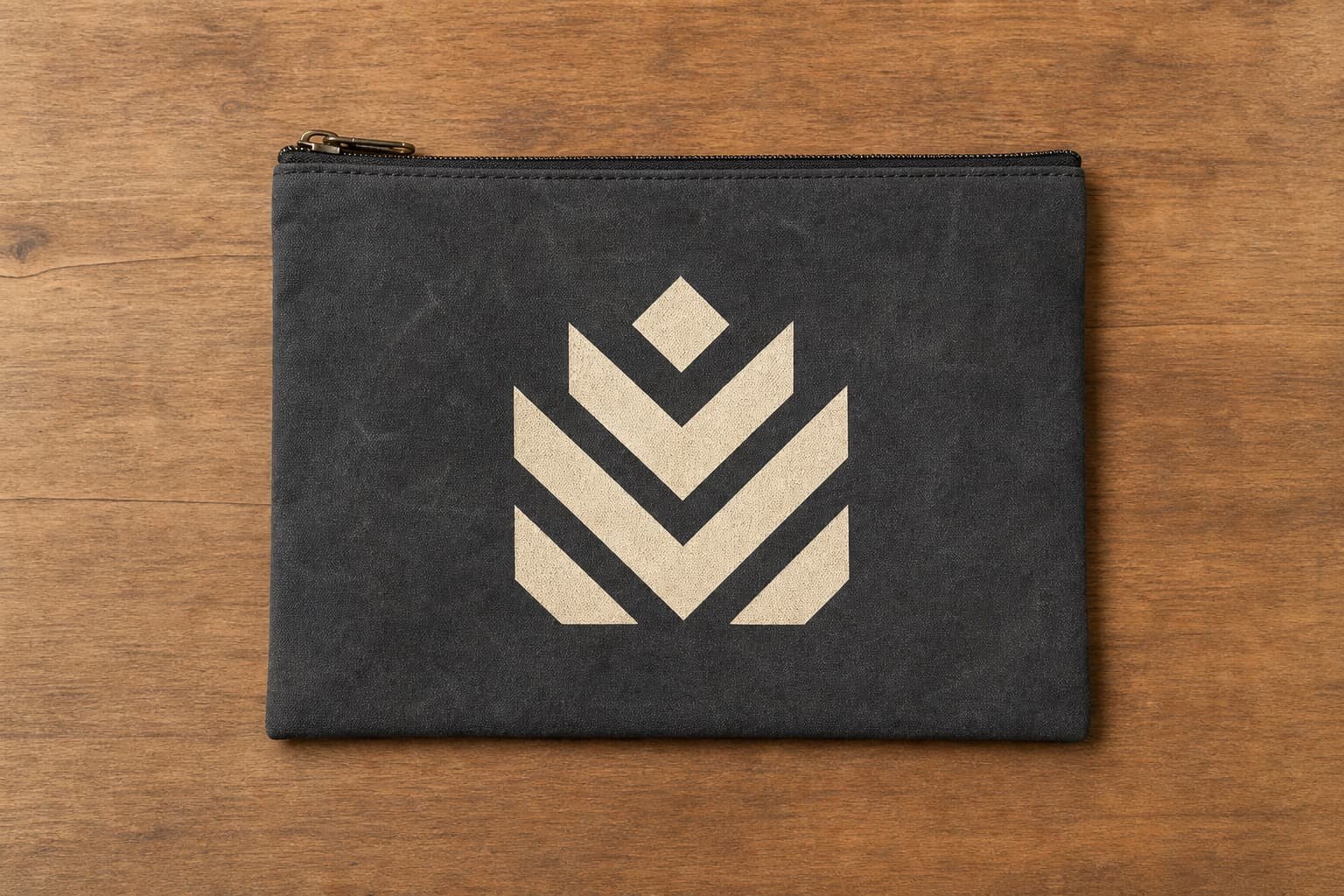
1. Start with the use case, not the cheapest zipper bag photo
A zipper business bag may be used for conference documents, sales kits, distributor samples, onboarding packs, retail bundles, office supplies, or lightweight laptop accessories. Those uses create different quality requirements. A one-day event pouch can be cost-driven. A reusable corporate document bag needs better zipper function, cleaner stitching, and more controlled packing. A bag that carries catalogs or samples needs stronger seams than a bag that only holds paper.
Procurement problems usually start when the RFQ is too general. A request for “10,000 A4 zipper bags with logo” can produce quotes based on very different materials. One supplier may price 80 GSM non-woven PP with a #3 zipper. Another may price 600D polyester with a stronger zipper and reinforced ends. Both may be responding honestly, but the quotations are not comparable.
The sample review should answer one practical question: will this exact specification survive the way the buyer will distribute, store, ship, and use the bag? That means checking fabric behavior, zipper movement, stitching, logo durability, carton pressure, and documentation before bulk production starts.
- For short-use event handouts, focus on cost, lead time, basic print clarity, and acceptable wrinkle level.
- For corporate presentation, focus on surface cleanliness, color consistency, zipper smoothness, and packing protection.
- For kits with catalogs or samples, add load testing, reinforced zipper ends, and stronger seam review.
- For repeat programs, lock down fabric, zipper, print method, tolerances, and packing with a signed approval sample.
2. Define the construction so suppliers quote the same product
Zipper business bags are not one standard product. The simplest version is a flat document pouch with a zipper along the top or side. A gusseted bag holds more items but requires more sewing control. A handle bag is easier for end users to carry, but handle attachment becomes a quality risk. A laptop-style sleeve may need padding, a more exact fit, or a thicker fabric. Window pockets, card slots, inner dividers, or side loops add cost and inspection points.
The construction should be described in finished dimensions, not cutting dimensions. State width, height, gusset, zipper direction, opening length, corner shape, handle size, and any inner pocket or divider. If the zipper should run full width, say so. If the zipper should stop before side seams, include the stopping point. If the bag needs to fit A4 paper, define whether it must fit loose sheets only or a folder with extra thickness.
Clear construction details prevent a common sourcing failure: the first sample arrives with the right logo but the wrong structure. Correcting the structure after sampling wastes time and may change the price.
- Flat pouch: efficient for documents, manuals, contracts, certificates, and training papers.
- Gusseted pouch: better capacity, but side seams and zipper ends need stronger control.
- Handle zipper bag: convenient for events and dealer kits; handle pull strength must be checked.
- Laptop-style sleeve: requires precise internal dimensions and often padding or thicker fabric.
- Window or pocket version: requires clarity, edge sealing, extra sewing, and more careful packing.
3. Fabric selection: quote by specification, approve by performance
Fabric is the largest reason zipper business bag prices vary. Low-cost event bags often use non-woven PP around 80-120 GSM. Reusable corporate bags commonly use 300D to 600D polyester, depending on handfeel and load. Premium natural-look bags may use 10-12 oz cotton canvas or cotton around 320-380 GSM. Each material changes not only the unit price, but also sewing behavior, print adhesion, carton volume, and freight weight.
Do not approve fabric only by photo. Non-woven can look acceptable online but arrive with wrinkles, thin handfeel, or weak zipper edges. Polyester can be durable, but the backing may be stiff, smelly, or prone to creasing. Cotton canvas can look premium, but it may have natural specks, slubs, shrinkage, and dye-lot variation. A buyer should ask whether the sample is made from the same fabric lot or only from similar available stock.
If the bag will carry sustainability claims, keep the wording disciplined. Recycled polyester, recycled cotton, organic cotton, or other preferred materials should be tied to documents the supplier can provide for the specific order where required. Do not rely on a general marketing statement if the claim will appear on packaging, a retail page, or a brand compliance file.
- Non-woven PP: specify GSM, color, surface finish, and whether edges are heat cut or sewn.
- Polyester: specify denier, backing or coating, stock color, stiffness, and odor expectation.
- Cotton canvas: specify oz/GSM, dyed or natural color, shrinkage expectation, and acceptable natural slubs.
- Laminated fabric: check crease marks, surface scratches, smell, and print adhesion.
- Recycled or organic fabrics: request relevant documentation and confirm whether certificates apply to the order, supplier, mill, or material only.
4. Zipper, puller, and reinforcement checks
The zipper is the part end users touch first, but it is often under-specified. “Zipper closure” is not enough for a procurement file. For light document pouches, a #3 nylon coil zipper may be suitable. For heavier polyester, canvas, gusseted bags, or bags expected to carry samples, a #5 zipper is usually safer. Zipper tape can be selected from stock colors or dyed to match the bag, but custom tape can raise MOQ and extend lead time.
Puller choice also matters. A standard metal slider may be fine for budget orders. Plastic pullers reduce metal finish concerns. Cord pullers can improve grip. Branded pullers may improve presentation but add tooling or MOQ. If the bag is for retail or a premium corporate kit, check plating consistency, sharp edges, and whether the puller scratches the printed panel during packing.
During sample review, test the zipper before and after loading the bag. The slider should move without snagging at the side seams. The zipper ends should be secured by bar tacks, reverse stitching, tabs, or another agreed reinforcement. Weak ends are a common failure point because users pull the slider hard when the bag is full.
- Confirm zipper size: #3 for light duty, #5 for heavier reusable or gusseted bags.
- Confirm zipper type and tape color: nylon coil, stock tape, contrast tape, or custom dyed tape.
- Check puller material, finish, shape, and whether it can mark the fabric or logo.
- Open and close the sample at least 10 cycles; note any catching, waviness, or misalignment.
- Check reinforcement at both zipper ends and around any handle, loop, or corner stress point.
5. Printing and branding: choose the method by fabric and risk
Most zipper business bags use screen printing, heat transfer, digital transfer, woven labels, sewn labels, or embroidery. Screen printing is practical for simple solid-color logos and larger quantities. Heat transfer or digital transfer works better for gradients, fine lines, or multi-color art. Woven and sewn labels can look clean on textured canvas or dark fabrics, but labels have their own MOQ, color, and sewing-position requirements.
The artwork file should include vector art, print size, position from edges, color references, and any required safe zone from the zipper or seam. Printing too close to zipper tape, gussets, handle stitching, or folds can cause uneven ink, distortion, transfer marks, or incomplete adhesion. For dark fabrics, ask whether an underbase is required and whether that changes handfeel or cost.
Set a simple pass/fail method for logo review. For example, position can be measured from the bag edge with an agreed tolerance. Color can be compared to a Pantone reference or approved physical swatch under neutral lighting. Ink transfer can be checked with a dry rub using a white cloth, and damp rub can be added when the bag may be handled in humid conditions.
- Screen print: good for simple logos; check opacity, edge sharpness, registration, and ink transfer.
- Heat transfer: good for detailed art; check edge outline, peeling, cracking, and heat press marks.
- Digital transfer: useful for full-color art; confirm abrasion or rub expectations if the bag is reusable.
- Woven label: clean for premium bags; confirm label size, fold type, colors, sewing position, and MOQ.
- Embroidery: possible on stronger fabrics, but can pucker thin non-woven or lightweight polyester.
6. MOQ and cost drivers: find the real reason behind the number
MOQ is not only a sales rule. It often comes from fabric roll quantity, custom dyeing, zipper tape color, label production, printing setup, cutting efficiency, or packing labor. A black stock polyester zipper pouch with one-color screen print can have a different MOQ from a custom Pantone canvas bag with dyed zipper tape, woven label, and individual barcode packing.
When a supplier gives an MOQ, ask which component creates it. If the MOQ is driven by printing setup, reducing logo colors may help. If it is driven by custom fabric, accepting stock black, navy, grey, or natural fabric may be more realistic. If it is driven by zipper tape, using a standard tape color can reduce sourcing risk. This conversation is more useful than simply asking for a lower number.
Cost comparison should also include carton data. A thicker bag, gusseted structure, or individual polybag can increase carton volume and landed cost. A low ex-factory unit price is not necessarily the lowest delivered cost if the packing is bulky or the carton weight is unsuitable for your warehouse.
- Stock fabric plus stock zipper usually gives the most flexible MOQ and lead time.
- Custom dyed fabric can raise MOQ and create color approval steps.
- Custom zipper tape may be inefficient for small or urgent orders.
- Multi-color prints and transfer graphics add setup, sampling, and reject risk.
- Labels, hangtags, barcodes, inserts, and retail packaging may each have separate MOQ or setup charges.
7. Sample approval workflow: separate first sample from production approval
A first sample is often used to confirm shape, size direction, fabric category, zipper placement, and logo feasibility. It may not be made from the exact final fabric lot or on the same production line. A pre-production sample should be much closer to bulk production: same material, same zipper, same thread, same logo method, same reinforcement, and preferably the same packing method.
Use a written review sheet instead of scattered email comments. Record measurements, photos, fabric weight claim, zipper size, stitch details, print colors, packing assumptions, and required corrections. Avoid vague notes such as “make stronger” or “logo better.” Replace them with instructions such as “change zipper from #3 to #5,” “move logo 20 mm lower,” “increase non-woven from 80 GSM to 100 GSM,” or “add bar tack at both zipper ends.”
Version control matters. A buyer may review three samples before approval. Each one should be labeled with date, version, supplier name, material, and artwork file name. Once approved, seal and sign one sample for the buyer and keep one at the factory. The sealed sample is the reference for bulk inspection when memory and email threads become unreliable.
- Measure finished size and compare it with the written specification.
- Load the bag with realistic contents and check seam stress, zipper movement, and shape recovery.
- Photograph defects with a ruler, pointer, or measurement note so corrections are unambiguous.
- Confirm the approved sample uses the same fabric, zipper, thread, and print process intended for bulk.
- Seal, sign, date, and label the approved sample with PO number or project reference.
8. What a serious quote should show
A usable quote needs enough detail for like-for-like comparison. The unit price alone is not enough. At minimum, the quotation should identify finished size, material, fabric weight, zipper size, puller, print method, logo colors, packing method, carton quantity, carton size, gross weight, MOQ, sample charge, sample lead time, bulk lead time, payment terms, and trade term.
Ask the supplier to separate optional items. Individual polybags, barcode labels, hangtags, insert cards, silica gel, inner cartons, reinforced handles, upgraded pullers, and custom carton marks can all change cost. Separating them helps procurement decide what is necessary for the use case and what can be removed without damaging product performance.
The quote should also state validity and assumptions. Fabric, currency, labor, and freight conditions can change. If the buyer needs delivery by a fixed event date, the quote should show the approval deadline, production time, and shipping plan. A low price with unclear timing is risky for event bags because missing the event can make the order worthless.
- Base product: fabric, cutting, sewing, zipper, thread, reinforcement, and standard finishing.
- Decoration: screen setup, print colors, transfer film, label production, embroidery, or special artwork handling.
- Packing: bulk pack, individual polybag, barcode, insert card, silica gel, inner carton, master carton, and pallet requirement.
- Sampling: prototype charge, pre-production sample charge, courier cost, and refund policy if applicable.
- Logistics data: units per carton, carton dimensions, net weight, gross weight, and estimated CBM.
- Commercial terms: MOQ, price validity, payment terms, production lead time, inspection timing, and Incoterm.
9. Packing, cartons, and shipment risk
Zipper business bags often have flat branded panels that show pressure marks. Zipper pullers can press into fabric. Heat transfers can pick up impressions. Canvas and cotton can absorb moisture. Non-woven can wrinkle under compression. Packing is therefore not just an afterthought; it is part of the product quality plan.
For cost-sensitive event distribution, bulk packing may be acceptable if minor wrinkles are not a problem and the bags will be filled quickly. For retail, ecommerce kits, executive gifts, or distributor presentation, individual polybags may be needed to keep surfaces clean. If the printed logo is sensitive, consider alternating bag direction, using a protective sheet, or reducing pieces per carton. Do not over-specify expensive packing unless the use case requires it.
Carton weight and size should be reviewed before production. Heavy cartons may fail warehouse handling limits. Over-compressed cartons can create creases, bent corners, or zipper impressions. Under-filled cartons can collapse in transit. For sea shipments or humid seasons, discuss moisture control, especially for cotton canvas or cartons stored before delivery.
- Confirm pieces per polybag, inner pack, and master carton before mass packing starts.
- Set carton gross weight limits if your warehouse, courier, or retailer requires them.
- Check carton marks: item number, PO number, color, quantity, gross weight, net weight, carton number, and destination if needed.
- Review whether zipper pullers touch printed panels under pressure inside the carton.
- Use silica gel or moisture-control measures when appropriate, especially for cotton or long sea shipments.
- Ask for packing photos before shipment when the order has special labels, carton marks, or retail packing.
10. Bulk inspection, AQL, and approval documents
The approved sample is the visual and functional reference, but it should be supported by written acceptance criteria. Define what is critical, major, and minor before the goods are finished. A missing zipper puller, wrong fabric, stuck zipper, cracked logo, open seam, wrong carton quantity, or missing required label should normally be treated more seriously than a small internal thread end.
Many buyers use an AQL-style final inspection for wholesale bags. The exact plan should match order value, brand risk, and customer requirements, but the inspection should cover workmanship, dimensions, zipper function, logo quality, packing, quantity, and carton condition. Inspectors should not only count defects; they should perform practical checks that match the bag’s use.
Approval documentation protects both buyer and supplier. The final file should include the signed sample record, specification sheet, approved artwork, color reference, packing plan, inspection checklist, carton mark layout, and any required material documentation. If recycled, organic, or other certified material is part of the purchase requirement, keep the supporting documents with the order file and confirm what claim they actually support.
- Size: define width, height, and gusset tolerance, such as +/-5 mm for many simple sewn pouches unless a tighter or wider tolerance is agreed.
- Print position: define acceptable deviation, commonly measured from bag edge or zipper line, such as +/-3 mm when construction allows.
- Zipper: no stuck slider, missing puller, broken teeth, open end, loose tape, or slider run-off.
- Stitching: no open seams, skipped stitches on stress points, loose handle attachment, or severe seam distortion.
- Appearance: no heavy stains, holes, unacceptable odor, severe color mismatch, or obvious fabric damage.
- Function: sample units should pass agreed zipper cycles and any realistic load test defined for the order.
- Packing: correct unit count, polybag or bulk pack method, carton marks, barcode placement, carton weight, and carton condition.
- Documents: signed sample, final specification, artwork approval, inspection report, packing photos, and material documents where required.
Specification comparison for buyers
| Spec decision | Recommended option | Measurable review point | Buyer risk to check |
|---|---|---|---|
| Low-cost event document bag | 80-120 GSM non-woven PP with #3 nylon coil zipper | Finished size tolerance typically +/-5 mm; zipper should open and close 10 cycles on sample without catching | Thin fabric may wrinkle, tear near zipper ends, or show heat-cut edges if overloaded |
| Reusable corporate document pouch | 300D-600D polyester with suitable backing and #3 or #5 zipper by load | Check coating odor, crease recovery after compression, and stitch density around stress points, commonly 8-10 stitches per inch unless otherwise agreed | Backing stiffness, odor, and zipper wave can differ between sample fabric and bulk fabric |
| Premium canvas business pouch | 10-12 oz canvas or 320-380 GSM cotton with reinforced zipper ends | Confirm shrinkage expectation, color tolerance against approved swatch, and final size after sewing | Canvas slubs, dye variation, seam bulk, and shrinkage can affect logo position and zipper smoothness |
| Gusseted bag for catalogs or samples | Polyester or canvas with #5 zipper and reinforced side seams | Load test sample with target contents for 1 hour; inspect seam opening, zipper end stress, and shape recovery | A flat sample may look acceptable but fail when filled with heavier contents |
| Screen printed logo | Best for solid-color logos on non-woven, polyester, or cotton surfaces | Dry rub with white cloth for 10 strokes; damp rub if relevant; check edge sharpness and print position tolerance, often +/-3 mm | Ink transfer, cracking on folded areas, poor registration, or Pantone mismatch |
| Heat transfer or digital transfer | Best for gradients, small type, and multi-color artwork | Inspect edge outline, peeling, heat press marks, and adhesion after bending the printed panel | Transfer film can mark under carton pressure or look glossy on matte fabrics |
| Zipper specification | #3 for light pouches; #5 for heavier reusable, gusseted, or canvas bags | Open-close sample at least 10 cycles; for inspection, define a practical cycle check such as 5 cycles per selected unit | Weak zipper tape, loose pullers, poor slider plating, and unreinforced ends create functional complaints |
| Stitching and reinforcement | Straight lockstitch with bar tacks or reverse stitching at zipper ends, handles, and stress points | No skipped stitches on stress points; seam allowance and stitch density should match approved sample | Loose handles, open seams, raw edges, or fraying may not appear in product photos |
| Packing method | Bulk pack for event use; individual polybag for retail, ecommerce, or clean presentation | Confirm units per inner pack/master carton, carton gross weight, and whether zipper pullers or transfers leave pressure marks | Over-packed cartons cause creases and logo impressions; under-packed cartons raise freight volume |
Buyer checklist before sampling
- Confirm bag construction: flat zipper document pouch, gusseted business bag, handle zipper bag, laptop-style sleeve, or zipper pouch with window or pocket.
- State finished size as width x height x gusset in millimeters or inches; do not rely only on paper descriptions such as A4 or letter size.
- Define size tolerance by construction, such as tighter tolerance for flat pouches and wider tolerance for gusseted or padded bags.
- Specify fabric by material and weight: non-woven PP GSM, polyester denier and backing, or cotton canvas oz/GSM.
- Clarify whether fabric color is factory stock, selected from a swatch card, or custom dyed to a Pantone reference.
- Choose zipper size, type, color, tape, and puller: #3 or #5, nylon coil or other type, matching or contrast tape, metal or plastic puller.
- Confirm zipper end reinforcement: bar tack, reverse stitch, fabric tab, or other agreed method.
- Provide vector artwork and list logo size, print position, Pantone colors, print method, and acceptable position deviation.
- Check whether the logo crosses seams, zipper tape, folds, gussets, or high-pressure packing areas.
- Define stitching expectations, including seam allowance, stitch density range, thread color, handle reinforcement, and raw-edge treatment.
Factory quote questions to send
- What exact fabric are you quoting, including material composition, GSM or denier, coating or backing, stock color availability, and whether bulk fabric will match the sample lot?
- Is the zipper #3 or #5, nylon coil or another type, and is the zipper tape stock color or custom dyed?
- What puller is included: standard metal slider, plastic puller, cord puller, branded puller, or another option?
- What is the finished bag size and allowed tolerance after sewing, including gusset if applicable?
- What stitch density, seam allowance, and reinforcement method are included at zipper ends, handles, corners, and stress points?
- Which print method is included in the price, how many logo colors are included, and what is the extra cost for additional colors or transfers?
- How will print color be controlled: Pantone reference, approved swatch, digital proof, or signed physical sample?
- Is the pre-production sample made from the same fabric, zipper, thread, print method, and packing process intended for bulk production?
- What MOQ applies, and which component creates the MOQ: fabric roll, dyeing, zipper tape, label production, printing setup, cutting, or packing?
- What is the sample lead time, bulk lead time, and production start point after deposit, artwork confirmation, and sample approval?
Quality-control points to confirm
- Measure finished width, height, and gusset at three points because zipper bags can shrink, curve, or distort after sewing.
- Compare finished measurements with the approved tolerance rather than judging by appearance only.
- Open and close the zipper at least ten times on each sample to check slider movement, tape alignment, puller security, and end stops.
- Load the sample with realistic contents, such as catalogs, documents, chargers, or product samples, and inspect zipper ends and seams after resting.
- Pull lightly at zipper ends, handles, and loops to confirm reinforcement stitching is present and secure.
- Check stitch density and seam straightness on front, back, inside seams, handles, and gusset corners.
- Rub the printed logo with a dry white cloth and, where relevant, a damp cloth to check visible ink transfer.
- Bend the printed panel gently to check cracking, peeling, or edge lifting on heat transfers.
- Inspect inside seams for skipped stitches, loose threads, raw edges, fraying, or sharp cut edges.
- Check whether the bag lies flat and whether zipper wave is acceptable for the selected fabric weight.