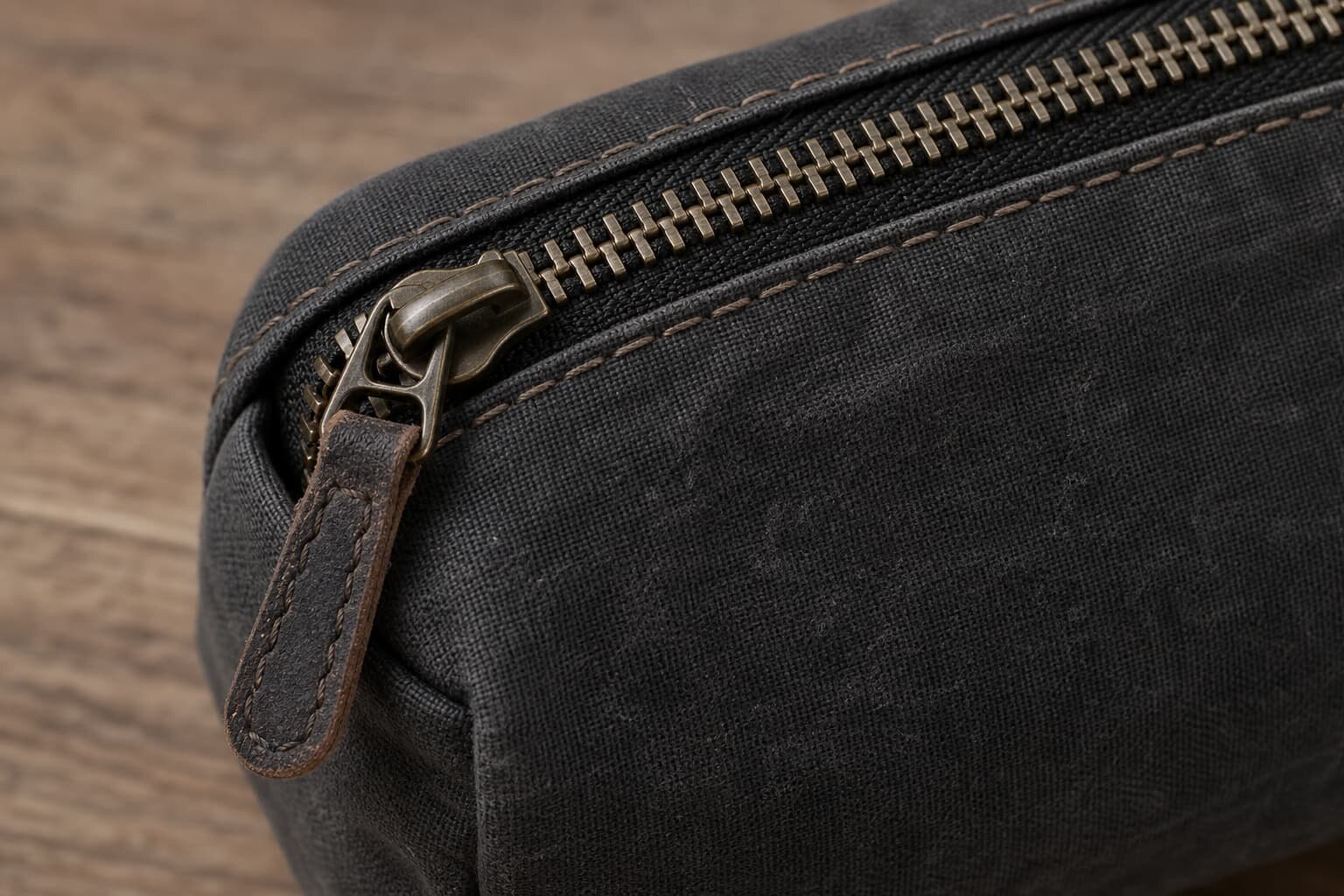
1. The buying problem: a sample can look fine but still fail bulk production
A zipper business bag is not a complicated product, but many bulk order problems start from an incomplete sample review. Procurement teams often approve a sample because the shape, logo, and zipper look acceptable on a desk. Then bulk production arrives with thinner fabric, weak handle stitching, wavy zipper lines, poor packing creases, or a print position that moved by 15 mm. The sample did not fail visually; the review process failed commercially.
For wholesale zipper business bags, the sample review should connect three things: the buyer's intended use, the factory's production method, and the quotation details. If these three do not match, the landed cost and defect risk become unclear. A reliable approval should tell the factory exactly what to buy, cut, print, sew, inspect, and pack. It should also tell your purchasing team what is included in the price and what will change if the specification changes.
- Do not approve only the front photo; open the bag, fill it, pull the handle, and operate the zipper repeatedly.
- Do not accept a material description such as 'good polyester' or 'canvas type'; require GSM, coating, and color standard.
- Do not compare supplier quotes unless zipper size, fabric weight, logo method, pocket structure, and packing are aligned.
2. Define the business use before locking the sample
The first decision is not the logo. It is the way the bag will be used. A document handout bag for a one-day conference does not need the same fabric, zipper, or reinforcement as a retail business organizer sold in stores. A school or training kit may carry heavy manuals, while a corporate onboarding bag may need a cleaner finish and more controlled branding. The sample should be judged against that real use, not against a generic bag image.
When you send an RFQ, describe the contents that the bag must carry. Include approximate weight, document size, whether sharp catalogue corners will rub the lining, whether the bag will be mailed individually, and whether buyers expect repeated daily use. This allows the factory to suggest a sensible fabric weight and zipper size instead of guessing from a photo.
- For simple A4 document bags, a flat body with one main compartment may be enough.
- For distributor kits, consider a front pocket or inner divider to separate brochures, forms, and small gifts.
- For higher perceived value, choose heavier canvas, cleaner binding, a custom puller, or a sewn woven label instead of only increasing logo size.
3. Fabric weight and structure: what GSM tells you and what it does not
Fabric weight is one of the easiest places for quotes to become misleading. A 600D polyester zipper business bag may be around 300-330 GSM depending on yarn, density, and coating, but not every 600D fabric feels the same. Some cheaper fabrics are stiff because of coating but weak in base cloth. Others look good before sewing but wrinkle strongly along the zipper after folding. For cotton canvas, 10 oz, 12 oz, and 14 oz options can all be suitable, but they have different cost, shrinkage, and print behavior.
Ask the factory to state the fabric in a way production can actually follow: material, denier or ounce, GSM, coating or backing, color standard, and whether the color is stock or custom dyed. For business bags with zipper closure, fabric stability matters because the zipper line exposes waviness. If the body fabric is too soft, the top edge can collapse. If it is too stiff, corners may be bulky and difficult to sew cleanly.
- Polyester 600D: common for cost-controlled corporate document bags and event bags.
- Polyester 900D or reinforced fabric: useful when the bag carries heavier catalogues or has a larger size.
- Cotton canvas 12 oz: better for natural retail appearance, but check shrinkage, color consistency, and lint before approving.
- Nonwoven or very light fabric: usually not ideal for a zipper business bag unless the use is very short-term and low weight.
4. Zipper, puller, and opening: the small parts that create the most complaints
The zipper is the main functional part of this product category. Buyers may focus on fabric and logo, but end users complain first when the zipper jams, splits, or catches thread. For most wholesale zipper business bags, a No.5 nylon coil zipper is a safe starting point. It is flexible, cost-effective, and suitable for curved or straight openings. A No.3 zipper can save cost, but it may feel weak on larger bags or when the buyer expects repeated use.
During sample review, operate the zipper more than once. Open and close it 20 to 30 times, then test it after putting actual catalogues or folders inside the bag. Check the zipper ends, because poor sewing at the end stop can cause the slider to catch or the bag opening to tear. If the design has a wide opening, ask whether the zipper tape is sewn with enough margin and whether the top edge is reinforced.
- Confirm zipper size: No.5 is normally safer than No.3 for business document bags.
- Confirm zipper tape color: matching fabric color may require stock availability or dyeing.
- Check puller comfort: thin metal pullers can feel sharp; plastic pullers may look cheaper but can be practical.
- Watch for lining catch: loose lining or thread near the zipper path will cause real use complaints.
5. Logo method: choose for fabric, quantity, and expected finish
Branding should be reviewed as a production process, not only as an artwork file. Silkscreen printing is usually suitable for solid logos and economical wholesale quantities. Heat transfer can handle gradients and fine details, but the hand-feel and edge durability must be checked. Embroidery may look premium on canvas but can distort thin polyester. A woven label is often a clean option for smaller branding, especially when buyers do not want a large printed front panel.
For sample approval, compare the printed sample against Pantone references or a signed digital proof, but remember that fabric color affects the result. A white logo printed on black polyester may need different ink coverage than the same logo printed on cotton canvas. If the logo sits near a seam, zipper, or handle, ask for placement tolerance. A realistic tolerance is more useful than saying 'must be perfect.'
- Silkscreen: best for one to three solid colors, large front branding, and stable repeat orders.
- Heat transfer: useful for full-color logos, but test flexibility and surface adhesion after folding.
- Woven label: clean for retail-style branding and easier to standardize across bag colors.
- Embossed or custom puller branding: possible on some designs, but it affects MOQ, tooling, and lead time.
6. Construction review: handle strength, seams, binding, and pockets
A zipper business bag may fail because of weak construction even when the fabric is acceptable. Handles are a common weak point. Self-fabric handles can look clean, but they need proper folding, seam allowance, and bar-tack reinforcement. Webbing handles are strong and efficient, but the color and texture must match the bag positioning. If the bag will carry manuals, catalogues, or electronics accessories, handle reinforcement should be part of the specification, not a factory assumption.
Pockets and dividers also need practical review. A front pocket may look useful, but if the opening is too shallow, documents fall out or bend. An inner divider can add value, but it increases sewing time and may create uneven thickness at the side seams. During sample review, place actual A4 paper, brochures, training materials, or retail inserts into the compartments and check how the zipper closes after loading.
- Check stitch density: inconsistent long stitches around stress points are a warning sign.
- Check bar-tacks: handle ends should have reinforcement that matches the expected carry weight.
- Check binding tape: internal edges should not have loose threads that catch paper or zipper teeth.
- Check pocket size: measure usable depth, not only external panel dimensions.
7. MOQ logic: why the same bag can have different minimums
MOQ is not only a factory policy. It usually comes from material purchasing, printing setup, zipper color availability, cutting efficiency, and packing labor. A stock black 600D polyester zipper business bag with one-color screen print may have a much lower MOQ than the same bag in a custom dyed fabric with matching zipper tape and a custom puller. If your procurement team pushes for a low MOQ without simplifying the specification, the quote may become unstable or the supplier may quietly substitute materials.
When comparing suppliers, ask what drives the MOQ. If the limitation is fabric color, you may be able to choose a stock color. If it is logo setup, you may combine colors with the same print plate. If it is custom zipper puller tooling, you may keep the standard puller for the first order and upgrade on the repeat order. MOQ negotiation is most effective when you know which component creates the minimum.
- Lowest MOQ route: stock fabric color, standard zipper, standard puller, one-color silkscreen, simple packing.
- Medium MOQ route: custom logo label, two or three print colors, extra pocket, or selected zipper color.
- Higher MOQ route: custom dyed fabric, branded zipper puller, special coating, retail packaging, or multi-SKU color assortment.
- Quote risk: a supplier may quote low by assuming stock material, while another quotes higher for custom material; align assumptions before selecting.
8. Packing and carton review: protect the sample finish during shipping
Packing is often reviewed too late. A zipper business bag can leave the sewing line in good condition but arrive with front panel creases, print pressure marks, bent corners, or dusty surfaces. The risk increases when the bag has a large printed logo, stiff zipper edge, or dark fabric that shows lint. For standard wholesale packing, one piece in an opp bag and 50 to 100 pieces per export carton may be reasonable, but the exact quantity depends on bag size, fabric stiffness, and carton strength.
Ask the factory to show the folding method. The fold should not run directly through a thick logo print, zipper slider, or structured pocket if avoidable. For retail or distributor orders, carton labeling also matters. Incorrect carton marks create receiving delays and warehouse chargebacks. Include SKU, color, quantity, gross weight, net weight, carton dimensions, and purchase order details in the packing instruction.
- Approve a packed sample or packing photo before bulk goods are sealed.
- Check whether desiccant is needed for long sea shipments or humid seasons.
- Avoid overfilled cartons that force permanent creases into canvas or coated polyester.
- Confirm carton drop resistance if the bags are heavy or the shipment is handled by parcel networks.
9. Lead time: separate sample time, material time, production time, and inspection time
A quoted lead time is only useful if it states what the clock starts from. Some factories count from deposit received. Others count from artwork approval, material arrival, or pre-production sample approval. For zipper business bags, lead time can change significantly when the buyer requests custom dyed fabric, printed lining, special zipper puller, or retail packaging. A simple stock-material order may move quickly, while a fully customized order needs more coordination.
Procurement teams should request a lead time breakdown rather than one total number. This helps planning and reduces pressure to skip quality control. For example, sampling may take several working days after artwork confirmation, bulk material purchasing may take longer if color is custom, printing must be scheduled before sewing for some logo positions, and final inspection should happen before carton sealing or shipment release.
- Ask when the pre-production sample will be ready after artwork and specification confirmation.
- Ask whether bulk fabric and zipper are already in stock or need new purchasing.
- Ask whether printing is done before sewing or after sewing, because this affects inspection timing.
- Reserve time for final inspection and corrective action instead of treating shipping date as the only deadline.
10. Quote comparison: what data must be on the supplier's offer
A useful quote for wholesale zipper business bags should allow your team to understand exactly what is included. Unit price alone is not enough. If one supplier quotes 600D polyester with a No.5 zipper and reinforced handles, while another quotes unspecified polyester with a No.3 zipper and no bar-tack detail, the cheaper price may not be the better value. Your quote sheet should capture the product specification, logo method, MOQ basis, packing, carton data, sample cost, production lead time, and trade terms.
Before issuing a purchase order, send the chosen factory a final confirmation sheet and ask them to acknowledge it. Attach artwork, measurement drawings, material notes, packing instructions, and the approved sample photos. This step prevents the common problem where sales, sampling, purchasing, printing, and sewing teams work from slightly different versions of the order.
- Required quote data: size, fabric, GSM, zipper type, handle material, pocket structure, logo method, MOQ, unit price, and sample terms.
- Required packing data: pieces per polybag, pieces per carton, carton size, gross weight, net weight, and carton marking.
- Required timing data: sample lead time, material lead time, production lead time, inspection window, and shipment readiness date.
- Required commercial data: currency, Incoterms, payment terms, quote validity, tooling or setup charges, and exclusions.
Specification comparison for buyers
| Spec decision | Recommended option | When it fits | Buyer risk to check |
|---|---|---|---|
| Main fabric | 600D polyester around 300-330 GSM or 12 oz cotton canvas for a softer retail feel | Trade shows, document kits, employee onboarding, education packs, and distributor programs | Thin fabric may wrinkle around the zipper and show waves after packing; ask for actual GSM and coating details |
| Zipper type | No.5 nylon coil zipper with metal or quality molded puller | Most A4 document bags and lightweight laptop accessory bags | Cheap zipper sliders can jam at corners; test 20-30 open-close cycles on the sample |
| Branding method | Silkscreen for solid logos, heat transfer for gradients, woven label for premium small branding | Corporate giveaway bags, retail private label orders, and repeat promotional programs | Logo cracking, color mismatch, or poor placement tolerance; confirm artwork size and Pantone target |
| Bag structure | Single main compartment plus flat front pocket or inner divider | When buyers need document separation without making the bag too bulky | Extra pockets increase labor time and MOQ; request photos of pocket seam reinforcement |
| Handle construction | Self-fabric handle with bar-tack reinforcement or webbing handle sewn into side seam | Bulk business bags carried by hand at events or schools | Handle pull strength is often under-specified; request stitch density and reinforcement method |
| Packing method | One bag in opp bag, 50-100 pcs per export carton depending on size and fabric thickness | Standard wholesale shipments where clean presentation and carton stability matter | Over-compressed cartons can crease the front panel and damage printed logos |
Buyer checklist before sampling
- Confirm the sample matches the approved size tolerance, especially width, height, gusset, and zipper opening length.
- Measure fabric GSM or request the supplier's test report or fabric purchase specification instead of accepting only a fabric name.
- Check zipper smoothness at both ends, around corners, and under light filling weight.
- Inspect whether the logo size, position, color, and print hand-feel match the artwork approval.
- Review handle attachment, bar-tack position, stitch density, and whether the handle twists after carrying.
- Check lining, binding tape, and internal seams for loose threads that could catch documents or zipper teeth.
- Confirm pocket depth and opening width using actual A4 documents, catalogues, or laptop accessories if relevant.
- Ask whether the sample was made with bulk fabric, bulk zipper, and bulk ink, or only with available sample-room substitutes.
- Approve carton packing only after checking folding method, individual bag orientation, and carton quantity.
- Compare the final sample to the quotation line by line so no hidden upgrade or downgrade enters bulk production.
Factory quote questions to send
- What is the exact fabric construction, GSM, coating, and color standard proposed for this zipper business bag?
- Is the quoted zipper No.5 or No.3, nylon coil or plastic tooth, and what puller material is included?
- Are the handles self-fabric, polyester webbing, cotton webbing, or another material, and how are they reinforced?
- Which logo method is included in the quote, what is the maximum print size, and how many colors are covered?
- Does the MOQ change if we choose custom dyed fabric, custom zipper color, custom puller, or woven label branding?
- Is the pre-production sample made using the same materials and accessories planned for bulk production?
- What are the estimated sampling time, bulk production lead time, and packing time after final approval?
- What carton size, carton weight, pieces per carton, and packing method are used for freight calculation?
- Which quality checkpoints are performed during cutting, sewing, printing, final inspection, and packing?
- What quote items are excluded, such as artwork adjustment, special packing, sample freight, testing, or destination charges?
Quality-control points to confirm
- Fabric GSM and hand-feel match the confirmed sample and written specification.
- Bag size tolerance is controlled within the agreed range, typically plus or minus 5 mm for simple document bags unless otherwise agreed.
- Zipper opens and closes smoothly without catching lining, thread, or corner binding.
- Stitching is straight, secure, and consistent, with no skipped stitches at handles or zipper ends.
- Logo placement is within approved tolerance and print color is checked against Pantone or buyer-approved swatch.
- Inner pocket, front pocket, and divider dimensions are checked with the buyer's intended documents or inserts.
- Loose threads are trimmed and internal seams are clean enough for office or retail use.
- Packing method protects the front panel and printed area from pressure marks and dust.
- Carton labeling matches purchase order, SKU, color, quantity, gross weight, net weight, and destination requirements.
- Final random inspection includes function checks, measurement checks, visual defect grading, and carton count verification.