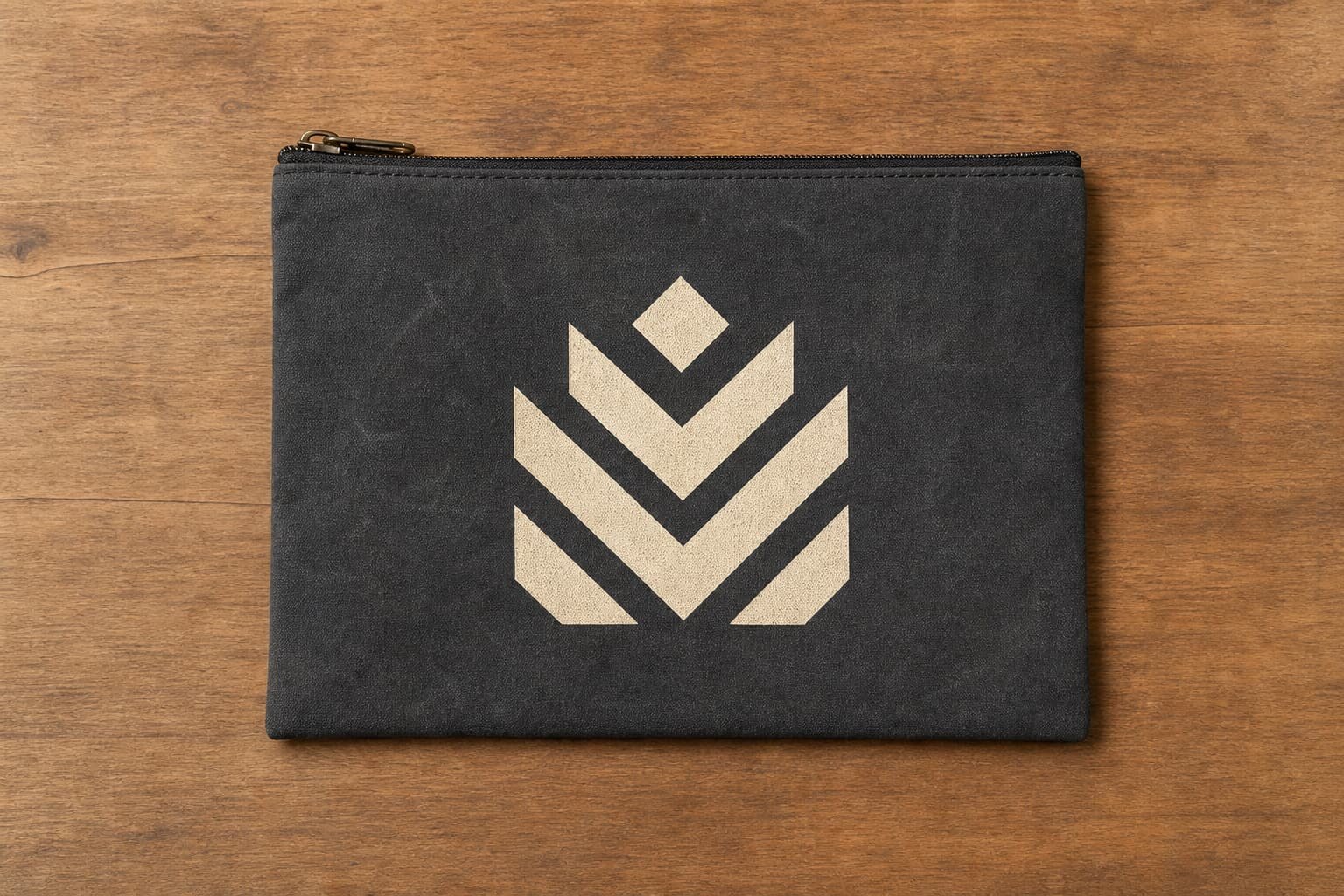
1. The MOQ Problem Buyers Usually Underestimate
For wholesale zipper business bags, MOQ is rarely controlled by the sewing line alone. A simple flat zipper document bag can be made in modest quantities if the factory uses available fabric, standard zipper tape, normal pullers, and a common print method. The MOQ starts rising when the buyer requests custom dyed canvas, special zipper color, molded zipper pullers, multiple inner compartments, retail barcode packing, or many artwork versions.
The buying problem is that many RFQs ask for only a target quantity and a photo reference. That forces the supplier to guess fabric weight, zipper grade, lining, print size, packing, and quality level. The first quote may look attractive, but later the price changes after sampling because the factory discovers that the buyer expected heavier canvas, better zipper, thicker lining, or more complicated packing. A good MOQ RFQ removes those assumptions before price comparison.
- Ask MOQ per fabric color, not only total order MOQ.
- Ask MOQ per logo artwork if you are ordering for multiple branches, events, or distributors.
- Separate standard material MOQ from custom material MOQ.
- Confirm whether the factory can combine colors or artworks in one production run.
2. Fabric Weight and Color Decide Whether MOQ Is Flexible
Zipper business bags are commonly made from cotton canvas, cotton twill, polyester canvas, recycled cotton blends, or nonwoven material for very low-cost programs. For a professional-looking cotton zipper bag, many buyers select 10 oz to 12 oz canvas, roughly 280 to 340 GSM. Lighter 220 to 260 GSM fabric can work for paperwork and conference kits, but it may look soft and less structured. Heavier 14 oz canvas can improve hand feel but increases cutting difficulty, sewing needle wear, carton weight, and freight cost.
MOQ changes sharply when color is custom dyed. Natural cotton, black, navy, grey, and some standard colors may be available from stock or repeat fabric lots. A custom Pantone color usually requires a fabric dye lot, which can be much higher than the bag order quantity. If a buyer needs only 500 bags in a special green canvas, the factory may need to buy enough dyed fabric for far more than 500 pieces, or charge a fabric surcharge.
- For lower MOQ, choose natural, black, navy, grey, or other factory-stock fabric colors.
- For custom dyed cotton, ask for fabric MOQ in meters or kilograms, not only bag MOQ.
- For retail programs, approve a physical fabric swatch before sample production.
- For repeat orders, ask whether the same fabric lot can be reserved or repeated with acceptable shade tolerance.
3. Zipper Specification Is a Hidden MOQ Driver
A zipper business bag looks simple, but zipper details affect cost and purchasing. A No. 5 nylon zipper is usually a stable option for document pouches and business bags because it is flexible, light, and available in many common colors. A No. 3 zipper can be cheaper but may feel weak on a larger A4 bag. A No. 8 zipper or metal zipper looks stronger but can be unnecessary for a flat document pouch and can raise material MOQ.
Zipper tape color is often the detail that causes delay. If the buyer wants the zipper tape to match a custom fabric color exactly, the zipper supplier may require a separate dye MOQ. A contrast zipper, black zipper, or natural zipper tape can keep MOQ lower. Custom pullers, engraved metal pullers, rubber pullers, and branded sliders also add tooling or minimum quantities, so they should not be assumed in a low-MOQ quote.
- Specify zipper size, material, tape color, teeth color, slider color, and puller type.
- Use standard black, white, navy, or natural zipper tape when MOQ is tight.
- Avoid custom pullers on pilot orders unless branding value justifies the setup cost.
- Check zipper smoothness during sample review, not only zipper appearance.
4. Logo Method: Choose the Branding That Matches Quantity
For zipper business bags, the most common branding methods are screen print, heat transfer, embroidery, woven label, and sometimes debossed or PU patch branding if the design includes a leather-look badge. Screen printing is usually efficient for cotton canvas when the artwork has one to three solid colors. It is suitable for business events, office kits, distributor giveaways, and many retail basics. However, large print coverage on dark canvas may need a white underbase and careful curing to avoid poor opacity or cracking.
Embroidery gives a higher perceived value but is slower and may pucker lightweight fabric if not backed correctly. A woven side label is a practical choice when buyers want a subtle brand mark and repeat orders across multiple bag styles. Heat transfer can reproduce gradients and small details, but buyers should ask about washing, rubbing, and heat resistance. The MOQ question should be asked per artwork because ten different branch logos may create ten separate setup processes even if the bag body is identical.
- For 300 to 1,000 pieces, consider one-color screen print or woven label for cost control.
- For detailed artwork, ask for heat transfer sample and rub test before bulk approval.
- For premium branding, embroidery may fit, but confirm backing and stitch density.
- For multi-location orders, group the same bag body and quote logo changes separately.
5. Structure Choices That Push a Bag From Simple to Labor-Heavy
A basic zipper business bag can be a flat pouch with a top zipper, two handles, and maybe one outside pocket. This type is efficient to cut, print, sew, inspect, and pack. MOQ can be more flexible because the factory does not need many different trims or difficult operations. It also gives procurement teams a clean baseline for comparing supplier quotes.
The cost and MOQ change when the buyer adds a gusset, inner divider, laptop padding, pen loops, mesh pocket, card window, elastic bands, binding tape, or metal hardware. These details are not wrong, but they create more sewing steps and more potential rejection points. If the bag is meant for documents and trade show materials, a simple reinforced flat structure may be better than an overbuilt organizer.
- Use a flat structure for document distribution, office handover packs, and event materials.
- Add a gusset only when the bag must hold catalogs, samples, or thicker folders.
- Add padding only when the bag is positioned as laptop protection, not just document storage.
- Limit inner features for first orders if MOQ, price, and lead time are the priority.
6. How Factories Think About MOQ and Unit Price
A factory MOQ is based on setup time, material purchasing, cutting efficiency, printing setup, line arrangement, QC workload, and packing labor. If the order is 300 pieces, the cutting room still needs to prepare patterns, spread fabric, cut panels, sort pieces, and manage print alignment. The print room still needs screens or transfer setup. The sewing line still needs training time and a first-piece approval. That is why a very small order may have a higher unit price even if the bag itself is simple.
Buyers often compare quotes without checking whether the factories quoted the same MOQ logic. One supplier may quote 1,000 pieces using stock 10 oz canvas and standard zipper. Another may quote 500 pieces but use lighter 240 GSM fabric and bulk packing. A third may include individual polybags, barcode labels, and stronger 12 oz fabric. The cheapest quote is not useful unless the specification base is equal.
- Ask suppliers to show the price at two or three quantity breaks, such as 500, 1,000, and 3,000 pieces.
- Request separate lines for bag cost, logo setup, packing, and sample cost when possible.
- Confirm if quoted MOQ is per color, per size, per logo, or total shipment.
- If you need a low MOQ pilot run, keep fabric, zipper, and packing standard.
7. Sample Approval Should Confirm Production Reality, Not Only Appearance
The sample should be treated as a production reference, not just a photo approval item. For zipper business bags, check size, fabric hand feel, zipper running, seam reinforcement, handle drop, logo placement, print opacity, lining, and packing. If the sample uses substitute fabric or a sample-room zipper, the supplier should state that clearly. Otherwise, the buyer may approve a sample that cannot be repeated exactly in bulk.
A strong sample approval sheet should record tolerances. For example, finished size tolerance may be plus or minus 1 cm for soft fabric bags, print placement may be plus or minus 5 mm to 10 mm depending on design, and color should be approved against a physical swatch or Pantone reference with realistic fabric tolerance. These numbers should be agreed before bulk production, not argued during final inspection.
- Compare sample fabric weight to the quoted GSM or ounce specification.
- Open and close the zipper repeatedly and check whether the slider catches at corners.
- Check whether the logo remains straight after the bag is filled.
- Photograph approved sample details and attach them to the purchase order.
8. Packing Choices Affect MOQ, Carton Data, and Delivery Cost
Packing is often added late, but it changes labor time and export carton planning. Bulk packing is normally the lowest cost choice for internal distribution or event use. Individual OPP bags may be needed for retail, ecommerce, or clean warehouse handling. Barcode stickers, suffocation warnings, hang tags, insert cards, and carton labels all add steps and can slow production if artwork is not approved early.
Carton data should be requested during quotation, not after production. Zipper business bags made from 12 oz canvas can become heavy quickly, especially if each piece is individually packed. Importers and distributors need pieces per carton, carton dimensions, gross weight, net weight, and estimated CBM to compare sea freight, air freight, and warehouse receiving cost. A lower unit price can disappear if the packing method creates oversized cartons or inefficient freight volume.
- Use bulk pack for internal corporate distribution when individual retail presentation is not required.
- Use individual polybag only when cleanliness, barcode control, or retail handling requires it.
- Confirm carton quantity before production so warehouse labels and shipping marks match the receiving plan.
- Ask whether bags are folded and if folding will create unacceptable creases on printed areas.
9. Lead Time: What Actually Happens After You Approve the Order
Lead time for wholesale zipper business bags should be discussed by process, not as one vague number. The normal workflow includes artwork confirmation, material purchasing, sample making, sample approval, fabric cutting, printing or embroidery, sewing, trimming, inline QC, final inspection, packing, and export preparation. Custom dyed fabric, custom zipper tape, embroidery sampling, or retail packing artwork can each add time before the sewing line even starts.
Procurement teams should ask what date the factory can start bulk cutting and what approvals are needed before that date. If a buyer delays logo approval or changes the zipper color after sample approval, the delivery date should be recalculated. For launch programs, it is safer to freeze bag body specifications first, then manage artwork versions within a controlled schedule.
- Ask for sample lead time after artwork and material confirmation.
- Ask for bulk lead time after deposit and written sample approval.
- Identify long-lead items: custom dyed fabric, special zipper, custom label, custom puller, retail packaging.
- Confirm whether final inspection is scheduled before or after full packing.
10. Quote Data That Makes Supplier Comparison Fair
A useful quote for zipper business bags should contain more than unit price and MOQ. It should state bag size, fabric composition, fabric weight, color, zipper specification, logo method, logo size, number of logo colors, pocket structure, lining, packing, carton data, sample cost, setup charges, payment terms, quote validity, lead time, and Incoterm. If any of these are missing, buyers may be comparing different products without realizing it.
When you send the RFQ, provide a target use case. A business document pouch for conference handouts has different requirements from a retail laptop accessory bag or a bank document transfer bag. The supplier can then recommend where to save cost and where not to reduce quality. For example, reducing fabric weight may be acceptable for paper documents, but reducing zipper grade may create complaints if users open and close the bag daily.
- Request a quote table with quantity breaks and the exact specification beside each price.
- Ask suppliers to list exclusions such as customs duty, local delivery, testing, or retail packaging.
- Do not accept a quote that says only cotton bag with zipper unless you are buying a commodity sample.
- Keep one approved specification sheet so all suppliers quote the same bag.
Specification comparison for buyers
| Spec decision | Recommended option | When it fits | Buyer risk to check |
|---|---|---|---|
| Main fabric weight | 10 oz to 12 oz cotton canvas, about 280-340 GSM | Good balance for document bags, conference packs, bank packs, and retail business pouches | Very light fabric can wrinkle and show contents; very heavy fabric raises freight and may need stronger sewing needles |
| Zipper type | No. 5 nylon zipper with color-matched tape | Most promotional and retail zipper business bags under A4 or laptop-document size | Special zipper tape colors or metal zippers can create separate MOQ and longer sourcing time |
| Logo method | 1-color screen print or woven side label | Best for stable MOQ, clean branding, and repeat orders | Large ink coverage on dark fabric may need underbase printing and extra curing control |
| Bag structure | Flat document pouch with one front pocket and reinforced top corners | Buyer needs a professional zipper bag but wants MOQ and labor cost controlled | Too many inner dividers, pen loops, and gussets can turn a simple bag into a labor-heavy office organizer |
| Lining | Unlined or simple cotton lining in natural color | Useful when buyer wants lower MOQ and easier inspection | Custom dyed lining may require fabric MOQ and color approval before bulk cutting |
| Packing | Individual OPP bag only when retail presentation or barcode is required | Ecommerce, retail distribution, or multi-SKU carton control | Unnecessary single polybags add cost, labor, and compliance concerns in some markets |
Buyer checklist before sampling
- Confirm finished size in width x height x gusset, not only document format such as A4 or legal size.
- State main fabric composition and weight, such as 100% cotton canvas 12 oz or recycled cotton blend 300 GSM.
- Specify whether the bag is unlined, cotton lined, polyester lined, or padded.
- Define zipper type, zipper tape color, puller shape, and whether the zipper must match fabric color.
- Provide artwork size, print position, Pantone references, and whether the logo prints on one side or two sides.
- List all pockets, inner dividers, handle length, webbing width, and reinforcement requirements.
- Confirm MOQ expectation by color and by artwork, not only total order quantity.
- Ask whether sample fabric and bulk fabric will come from the same stock or same dye lot.
- Define packing method: bulk pack, individual polybag, barcode sticker, carton mark, and master carton quantity.
- Request quote validity, sample lead time, bulk lead time, and what production steps can extend delivery.
Factory quote questions to send
- What is your MOQ per fabric color, per zipper color, and per logo artwork for this zipper business bag?
- Is the quoted fabric greige stock, ready-dyed stock, or custom dyed fabric, and what fabric MOQ applies?
- Which fabric weight are you quoting in GSM or ounces, and what finished bag weight should we expect?
- What zipper specification is included: nylon, resin, or metal; No. 3, No. 5, or No. 8; standard puller or custom puller?
- Is the logo quoted as screen print, heat transfer, embroidery, woven label, or another method, and what setup charges apply?
- How many print colors are included, and does printing on dark fabric require white underbase?
- Are lining, padding, front pocket, inner pocket, and handle reinforcement included in the unit price?
- What is the sample lead time after artwork approval, and what changes will require a second sample?
- What is the bulk production lead time after deposit and sample approval, excluding international shipping?
- How many pieces per export carton, what carton size and gross weight, and can you estimate CBM for freight planning?
Quality-control points to confirm
- Measure finished size at top width, bottom width, height, gusset, and handle drop against approved sample.
- Check fabric weight by cutting and weighing a test swatch or confirming mill certificate where applicable.
- Run each sampled zipper open and closed at least five times to check smooth movement, tape alignment, and end stop strength.
- Inspect zipper end stitching and top corner reinforcement because failures often start at stress points.
- Rub test printed logo for dry and light wet resistance after curing, especially on dark canvas.
- Check print placement tolerance from bag edges and pocket seam, not only visual centering.
- Review lining attachment, inner seam finishing, and loose thread trimming before packing.
- Load test handles with a realistic document or laptop weight for short suspension to confirm reinforcement.
- Confirm individual packing, barcode labels, carton marks, and carton quantity match the purchase order.
- Compare bulk production color to approved fabric swatch under neutral light before final inspection.