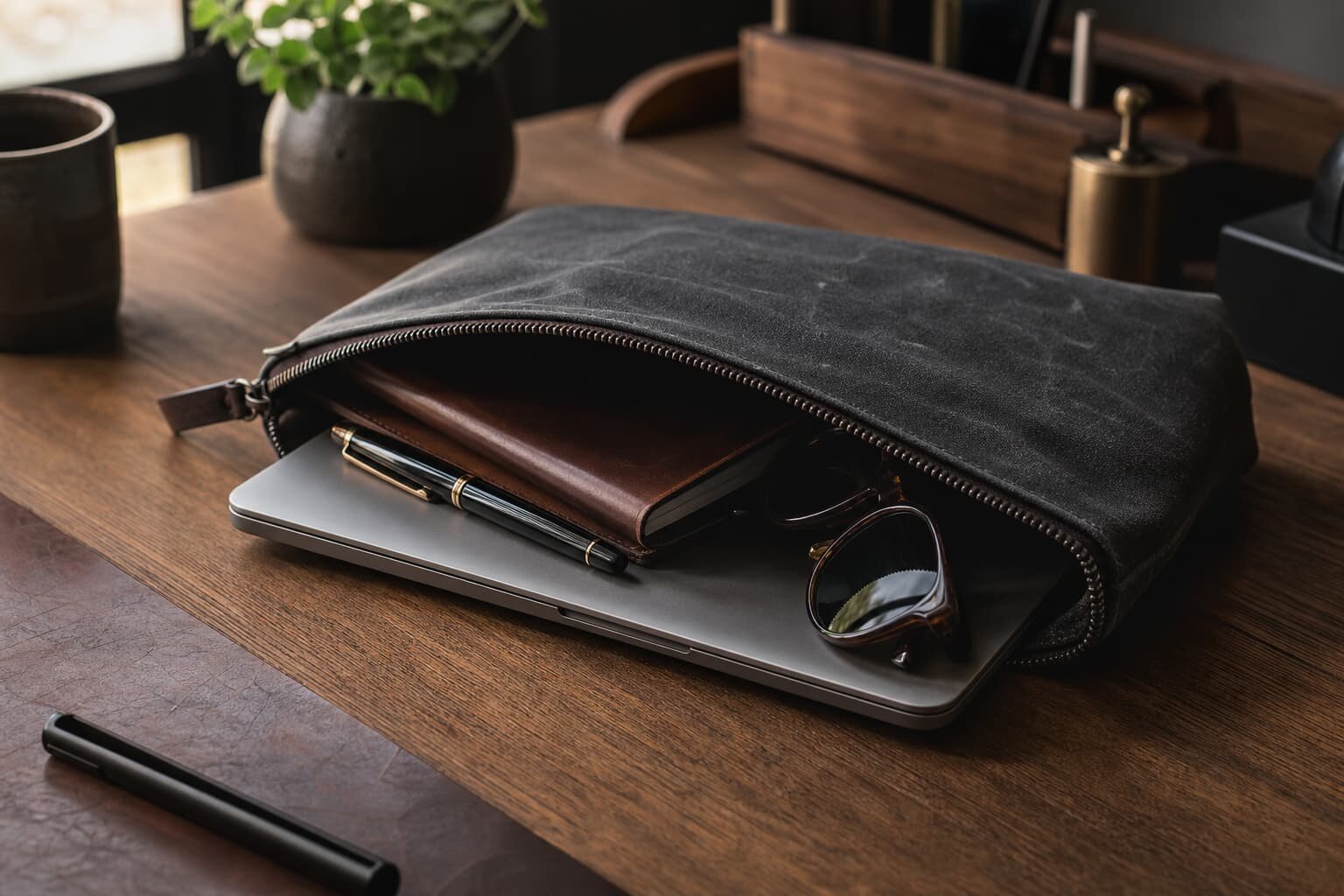
1. The quote problem: same zipper business bag, very different prices
When procurement teams request a wholesale zipper business bag quote with only a photo and a target size, the price spread can look confusing. One factory may quote a low unit price using thin polyester, a small zipper, and bulk packing. Another may include heavier fabric, foam, lining, reinforced handles, and individual polybags. Both quotes may describe the item as a zipper business bag, but they are not quoting the same product.
The job of this cost report is to reduce quote variance before the PO stage. For business bags used in conferences, sales kits, document packs, distributor gifts, and retail promotions, the biggest cost drivers are fabric grade, zipper specification, construction complexity, logo process, MOQ, and packing volume. If those are not controlled in the RFQ, the buyer may save money on paper but pay later through claims, repacking, delayed approval, or weak repeat-order consistency.
- Do not compare quotes until fabric, zipper, size, print, packing, and sample scope are aligned.
- Ask suppliers to show what is excluded, not only what is included.
- Treat unusually low prices as a specification question before treating them as a negotiation success.
- Use one controlled RFQ sheet when collecting quotes from multiple factories.
2. Define the bag function before fixing the material
A zipper business bag can mean a thin document pouch, a conference folder bag, a padded sales kit carrier, or a retail-style portfolio bag. The function decides the material. If the bag only carries printed brochures for one event, a lightweight non-woven or 300D polyester version may be acceptable. If the user will carry A4 folders, catalogues, chargers, or sample cards for months, 600D polyester or cotton canvas is a safer baseline.
Buyers often over-specify the visible features and under-specify the load requirement. A front pocket or colored zipper is easy to describe, but the real failure points are handle seams, zipper corners, fabric coating, and bottom stress. In an RFQ, state the expected contents and use scenario. A factory can then recommend whether the bag needs a gusset, foam, lining, stronger zipper gauge, or reinforcement stitching.
- For single-event document use: consider 80-120 GSM non-woven, 300D polyester, or light laminated material.
- For repeat corporate use: use 600D polyester with backing, 5-8 oz cotton, or 10 oz canvas depending on style.
- For premium retail or executive gifts: use 10-12 oz canvas, thicker lining, refined zipper pullers, and better label finishing.
- For heavier kits: request load testing and handle reinforcement, not only a heavier fabric.
3. Fabric GSM and denier: where low quotes usually hide
Fabric is the first place where quotes become unequal. Polyester business bags are usually described by denier, such as 300D, 420D, 600D, or 900D. Cotton and canvas are usually described by GSM or ounce weight, such as 8 oz, 10 oz, or 12 oz. Non-woven bags are described by GSM, commonly 80, 90, 100, or 120 GSM. A quote that only says polyester or canvas is incomplete.
Backing also matters. 600D polyester with PVC backing feels stiffer and holds shape, but may have odor and compliance considerations depending on market requirements. PU backing is usually softer and can be preferred for some buyers. Unbacked fabric may be cheaper but can look limp. For canvas, weave density, shrinkage control, and dye quality can change both appearance and cutting stability.
- Ask for fabric weight tolerance, such as plus or minus 5 percent, rather than accepting a vague description.
- Request a cutting swatch with the sample, especially when comparing quotes from different factories.
- Confirm whether fabric is stock color or custom dyed; custom dyeing affects MOQ and lead time.
- For canvas, confirm whether the price includes pre-shrunk, dyed, or natural fabric.
- For coated polyester, ask whether there is any odor, coating cracking, or color migration risk.
4. Zipper specification is not a small accessory detail
The zipper is one of the most visible user-touch components on a business bag. A low-grade slider can make an otherwise acceptable bag feel cheap. A zipper that catches at the corner can create complaints even if the fabric and print are correct. For A4 document bags and flat business pouches, a No.5 nylon zipper is often suitable. For larger gusseted bags, padded portfolio bags, or bags carrying heavier contents, a No.8 zipper may be worth the added cost.
Zipper cost depends on gauge, tape quality, slider material, puller design, color, and length. Custom zipper tape color, branded pullers, metal sliders, or special rubber pullers can increase MOQ and lead time. If the RFQ does not define the zipper, suppliers may quote the cheapest functional option. That creates quote variance and later sample rejection.
- Specify zipper gauge: No.5 for standard document bags, No.8 for larger or heavier versions.
- Confirm zipper tape color and whether it matches fabric, logo, or contrast design.
- Request smooth sliding test after the bag is filled, not only when empty.
- Check zipper end finishing, especially at corners and side seams.
- If using metal sliders, confirm plating color, corrosion risk, and puller strength.
5. Construction choices that change labor cost
Labor cost rises when the design adds pockets, gussets, foam padding, piping, lining, binding, shaped corners, or multiple panels. A simple flat zipper document bag is much faster to sew than a structured business bag with front pocket, inner divider, handle wrap, and reinforced bottom. The difference may not be obvious from a front-view reference photo, so the quote must include side view, inside view, and construction notes.
Handle construction is a common under-specified area. Webbing width, handle drop, stitching pattern, and reinforcement affect both cost and durability. A basic single-line stitch may be enough for light documents. For heavier business kits, cross-stitching or bar tacks at stress points are recommended. If the buyer wants a clean retail look, hidden reinforcement may require more labor than exposed stitching.
- Confirm whether the bag is flat, has a bottom gusset, or has side gussets.
- State whether foam padding is required and the thickness, such as 2 mm or 3 mm.
- Define pocket size, pocket zipper, and whether the pocket is functional or decorative.
- Specify webbing width, common options being 25 mm, 30 mm, or 38 mm.
- Use drawings or marked photos for complex structures; do not rely on a single product image.
6. Print method: choose by fabric surface, artwork, and usage
Most wholesale zipper business bags use screen printing because it is cost-efficient for solid logos and clear text. It works well on many polyester and cotton surfaces when ink and curing are correctly matched. However, screen printing is not always the best answer. Heat transfer is useful for gradients, small details, and multi-color logos, but adhesion and edge feel must be checked on coated fabric. Embroidery gives a premium look on canvas but can distort thin fabric or create puckering.
For business bags, logo placement can be more sensitive than on a simple tote because zippers, pockets, seams, and handles reduce the flat print area. The RFQ should define print size, location, color count, and artwork format. For repeat retail buyers, a woven side label or sewn patch may improve consistency because the same label can be used across colors and production lots.
- Use screen print for one to three solid colors and clean corporate logos.
- Use heat transfer for gradients, photo-style logos, and very small details.
- Use embroidery only when fabric weight and structure can support needle tension.
- Use woven label or rubber patch for repeat programs where logo consistency matters.
- Approve a printed sample on the actual production fabric, not only a paper proof.
7. MOQ logic: why small changes create bigger minimums
MOQ for zipper business bags is not only about sewing quantity. It is controlled by fabric roll availability, zipper tape color, printing setup, lining material, label production, and packing materials. A factory may accept 300-500 pieces when the buyer uses stock fabric, stock zipper, and simple screen print. The same bag may need 1,000-3,000 pieces when the buyer requests custom dyed fabric, special zipper color, branded puller, or custom lining.
Procurement teams can control MOQ by separating must-have features from nice-to-have features. For example, keeping black 600D polyester and stock black zipper while changing only the logo may allow a lower MOQ and faster sample approval. If brand guidelines require exact PMS fabric color, the buyer should expect higher MOQ, more sampling, and shade approval risk.
- Ask MOQ for stock fabric and MOQ for custom fabric separately.
- Ask whether different logo versions can be combined under one fabric order.
- Confirm minimums for custom woven labels, rubber patches, or zipper pullers.
- If ordering multiple colors, ask whether each color has its own MOQ.
- For distributor stock, consider one neutral fabric color and variable logo printing to reduce inventory risk.
8. Sampling: what to approve before mass production
A zipper business bag sample should not be approved only by appearance. Buyers need to check dimension, hand-feel, zipper operation, print adhesion, seam strength, handle length, and packing fit. If the factory sends a sample made with substitute fabric or substitute zipper, that sample can be useful for size review, but it should not be treated as final production approval.
For branded orders, a practical sampling path is blank structure sample, printed sample, then pre-production sample if the order is large or technically sensitive. The pre-production sample should use actual bulk fabric, actual zipper, actual print method, actual label, and actual packing. This prevents the common problem where the approved sample looks good but mass production uses a cheaper component that was never reviewed.
- Measure flat size and usable internal size with a tolerance agreed in advance.
- Open and close the zipper at least 20-30 cycles during sample review.
- Load the bag with expected contents and check handle comfort and seam stress.
- Rub the printed logo lightly after curing to check adhesion and surface damage.
- Check whether the sample stands, folds, or creases in the same way expected for packing.
9. Packing and freight: the hidden landed-cost difference
Packing can change landed cost more than the unit quote suggests. A flat document bag may ship efficiently in bulk cartons. A structured padded business bag with foam, gusset, and individual polybag may occupy much more carton volume. If the quote does not include carton quantity, carton size, gross weight, and packing method, the buyer cannot estimate freight accurately.
For event distribution, bulk packing may be acceptable and cost-effective. For retail or distributor resale, individual polybags, barcode labels, hangtags, or carton assortment marks may be required. These details must be quoted upfront. Repacking at the destination is usually more expensive than adding the correct packing method at the factory, but unnecessary retail packing can waste budget on promotional orders.
- Ask for pieces per carton, carton dimensions, net weight, and gross weight.
- Confirm whether bags are packed flat, folded, or shaped with inserts.
- Use individual polybags when scuffing, transfer print contact, or retail handling is a concern.
- Avoid over-compressing padded bags because corners and foam can deform.
- Provide carton mark requirements before final quote, not after production.
10. Quote comparison workflow for procurement teams
A useful quote comparison should separate visible price from specification risk. Create a comparison sheet with fabric, zipper, construction, print, MOQ, packing, sample charge, tooling charge, lead time trigger, carton data, and payment terms. If one supplier quote is lower, identify exactly which line is different. Sometimes the saving is real because the factory has stock fabric or efficient production. Sometimes the saving comes from a weaker specification.
Before placing the PO, send a quote confirmation page back to the selected factory. This page should list the final approved spec, artwork version, sample status, packing method, inspection requirement, and shipping term. The goal is to remove assumptions. For zipper business bags, many disputes happen because the buyer approved a visual sample but did not freeze fabric weight, zipper gauge, handle reinforcement, or packing.
- Compare quotes only after all suppliers respond to the same controlled specification.
- Request a deviation list from each factory, especially if they changed material to meet target price.
- Keep sample comments in writing and attach them to the PO.
- Ask for mass production photos at cutting, printing, sewing, and packing stages.
- Do not release shipment until carton data and QC results match the approved quote.
Specification comparison for buyers
| Spec decision | Recommended option | When it fits | Buyer risk to check |
|---|---|---|---|
| Main fabric | 600D polyester with PVC or PU backing, or 10-12 oz cotton canvas for premium programs | 600D fits conferences, distributor stock, and low-to-mid budget business gifts; canvas fits retail-style executive merchandise | Low quotes may use thin 300D/420D polyester or loosely woven canvas that collapses after packing |
| Zipper type | No.5 nylon zipper with smooth slider for document bags; No.8 for larger laptop-style business bags | No.5 is enough for A4 documents and light catalog use; No.8 is safer when users carry chargers, samples, or folders | Supplier may quote a small zipper gauge or weak slider to reduce cost; test opening cycles and corner movement |
| Bag structure | Single main compartment plus front pocket, with 2-3 mm foam only when needed | Best balance for corporate kits, trade show packs, sales documents, and training folders | Extra padding, inner lining, piping, and pockets increase labor time more than buyers expect |
| Print method | Screen print for solid logos; heat transfer for gradients; embroidery or woven label for premium canvas | Screen print controls cost on 300-1,000 pc runs; transfer helps complex logos; labels improve repeat orders | Wrong print method can crack on coated polyester or look uneven on coarse canvas |
| MOQ logic | 500 pcs for standard fabric colors; 1,000-3,000 pcs for custom dyed fabric or special zipper color | Use stock black, navy, grey, or natural canvas for smaller orders and faster sampling | MOQ is often driven by fabric roll, zipper tape, and printing setup, not only sewing capacity |
| Packing | Individual polybag only when retail handling needs it; bulk carton packing for event distribution | Bulk packing lowers unit cost and carton volume; individual bags reduce scuffing and repacking work | Uncontrolled packing can deform corners, scratch transfer print, or increase freight chargeable weight |
Buyer checklist before sampling
- Define the exact bag size with usable internal size, not only outer dimensions.
- Confirm fabric type, denier or GSM, backing, lining, and whether the fabric is stock or custom ordered.
- Specify zipper gauge, zipper tape color, slider style, puller material, and zipper end finishing.
- State handle length, webbing width, reinforcement method, and whether cross-stitching is required.
- Choose print method by artwork type and fabric surface; request a printed pre-production sample for branded orders.
- Ask for MOQ by fabric color, print color, zipper color, and carton mark requirement.
- Require carton dimensions, carton quantity, gross weight, net weight, and packing method in the quote.
- Separate sample cost, mold/tooling cost, printing setup cost, unit price, and freight terms.
- Set QC checkpoints for fabric weight tolerance, seam strength, zipper function, print position, and carton packing.
- Approve a sealed sample with physical fabric, zipper, logo, stitching, and packing before mass production.
Factory quote questions to send
- Which fabric is included in this quote: denier/GSM, backing type, stock color, and expected tolerance?
- What zipper gauge, zipper brand grade, slider material, and puller style are included?
- Is the quoted size measured flat before sewing, after sewing, or as usable internal document size?
- Does the unit price include front pocket, lining, foam padding, piping, bottom gusset, or inner divider?
- Which print method is included, and how many logo colors or print positions are covered?
- What is the MOQ if we keep stock fabric but request a custom zipper tape or custom lining color?
- How many pieces per carton, what carton size, and what gross weight are assumed in the quote?
- What sample stages do you recommend: blank sample, printed sample, and pre-production sample?
- What lead time starts after deposit, artwork approval, fabric arrival, or pre-production sample approval?
- Which QC inspection standard and acceptable defect limits will be used before shipment?
Quality-control points to confirm
- Measure finished size tolerance on top width, bottom width, height, gusset, and handle drop.
- Check fabric GSM or denier certificate against physical hand-feel and cutting sample.
- Run zipper opening and closing cycles, especially around corners and pocket openings.
- Inspect seam density, skipped stitches, loose threads, bar tack placement, and handle reinforcement.
- Verify logo color, print adhesion, print position, edge sharpness, and curing condition.
- Confirm lining attachment, foam position, piping symmetry, and pocket depth if included.
- Perform light loading test based on intended use, such as documents, catalogues, or laptop accessories.
- Check odor, coating transfer, fabric creasing, and color shade difference between panels.
- Confirm individual or bulk packing method, carton strength, carton marks, and pallet requirements.
- Keep a sealed approved sample and compare it with random production units during inspection.