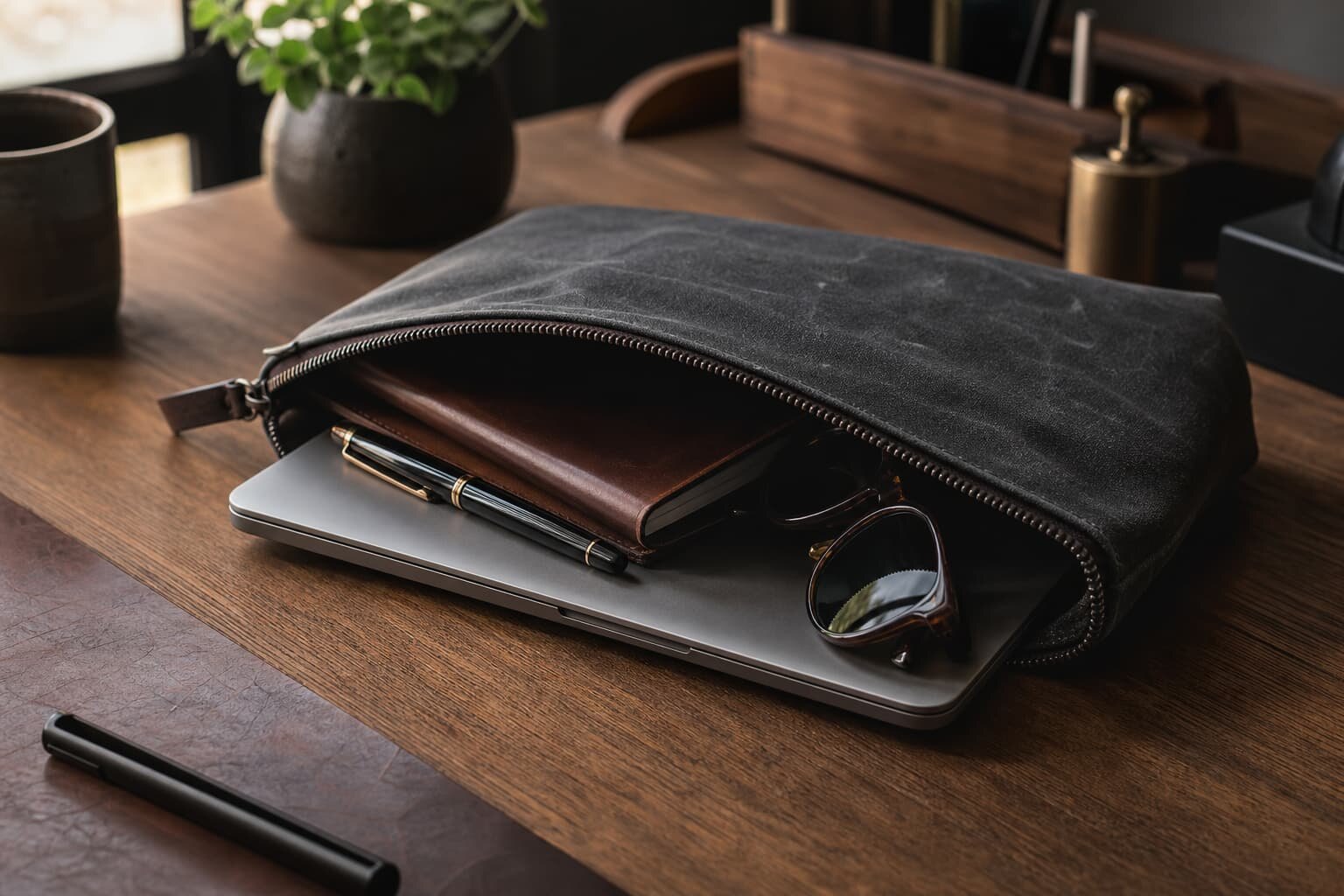
1. The buying problem: zipper business bags look simple but quote unevenly
A zipper business bag is often treated like a basic promotional item, but the quote can change quickly when the buyer adds fabric weight, pocket layout, zipper quality, logo method, packing, and retail labeling. Two factories may both quote a “zipper document bag” while one is using light non-woven fabric with a No. 3 zipper and the other is quoting 600D polyester with a stronger coil zipper, binding, and individual packaging. The unit prices cannot be compared until the construction is aligned.
For procurement teams, the main risk is not paying a few cents more; it is approving a sample that does not match the bulk expectation. Zippers are functional parts, not decoration. If the zipper tape twists, the corners are too tight, or the seam allowance is narrow, the bag may fail during packing or first use. A clean RFQ should force every supplier to confirm the same material, zipper, print, and packing assumptions before price negotiation starts.
- Use the finished bag purpose as the starting point: document kit, retail pouch, laptop-adjacent organizer, event folder, or distributor stock item.
- Ask for the bag construction in writing, not only photos of previous production.
- Compare quotes only after the same fabric, zipper, logo method, and packing method are confirmed.
2. Define the use case before choosing fabric or zipper
The most useful first question is what the end user will carry. A bag for training documents needs different strength than a retail business pouch sold with stationery or electronics accessories. If the bag will carry A4 documents, a notebook, a pen, and light giveaways, a flat structure with 600D polyester or 10 oz canvas may be enough. If the bag carries catalogs, charger sets, folders, or tablet accessories, you should strengthen the zipper area, choose a larger zipper, and consider a small gusset.
A zipper business bag also has a brand role. A distributor may want neutral black, navy, or gray for stock. A brand owner may prefer natural canvas, recycled-looking texture, or a sewn label. A retail buyer may need hangtag, barcode sticker, and carton sorting by SKU. When this commercial purpose is not stated, the factory may quote the cheapest possible interpretation, and the first sample will not match the selling channel.
- For document-only use, allow finished internal dimensions larger than the paper size by at least 20-30 mm each direction.
- For heavier catalog or tablet-adjacent use, consider a gusset of 30-60 mm and reinforced zipper ends.
- For retail programs, define display method: flat packed, folded, hangtagged, or shelf-ready in inner cartons.
- For distributor stock, reduce decoration complexity and standardize fabric colors to improve MOQ efficiency.
3. Fabric weight and structure: what to specify in the RFQ
Fabric terms can be confusing because polyester is often sold by denier, canvas by oz, and non-woven by GSM. Ask the factory to translate the quoted material into a comparable finished weight where possible. For 600D polyester, the finished feel depends on backing and coating, not only denier. A 600D fabric with PU backing may feel different from a lower-cost PVC-backed fabric. For cotton canvas, 10 oz to 12 oz is a common business-bag range, roughly around 340-410 GSM, but actual weight depends on weave and finishing.
Do not write only “durable fabric” in the RFQ. Specify the target hand feel and structure. A soft cotton canvas folds easily but may wrinkle. A coated polyester holds shape and resists dirt better but can smell if low-grade backing is used. Non-woven PP can be economical but should not be used for heavier daily-carry expectations. If repeat orders are planned, reserve the fabric specification and approved swatch so the next batch is not quietly changed.
- Budget event bag: non-woven PP 90-120 GSM, zipper reinforced with binding if carrying paper sets.
- Standard corporate bag: 600D polyester, PU or PVC-free backing preferred where brand policy requires it.
- Premium natural look: cotton canvas 10-12 oz, with pre-shrinkage discussion for size-sensitive products.
- Retail texture option: recycled canvas or blended fabric, but confirm shade consistency and certification needs separately.
- Always request a physical fabric swatch before committing to a large order or color-critical repeat program.
4. Zipper specification: the part buyers underestimate
The zipper is the main functional difference between a business bag and a simple flat pouch. A No. 5 nylon coil zipper is usually a safe choice for A4 business bags because it runs smoothly around straight openings and tolerates frequent use better than very small zippers. A No. 3 zipper can be acceptable for small light pouches, but it is often too weak for larger document bags. Metal zippers may look premium but add weight and can scratch documents or devices if the inside is not protected.
Ask how the zipper ends are finished. A weak zipper end is a common failure point when the user pulls the bag open quickly. The corner radius also matters. If the zipper runs around a tight corner, the puller may jam or the zipper tape may wave. If the bag is a flat top-opening document bag, construction is simpler. If the zipper runs along two or three sides, request a sample and test repeated opening before approving bulk cutting.
- Specify zipper size: No. 5 nylon coil for most medium zipper business bags.
- Confirm tape color and teeth color; black tape on navy fabric may be acceptable or may look mismatched.
- Choose puller style: standard metal puller, fabric pull tab, rubber puller, or branded puller if MOQ supports it.
- Check zipper opening direction and whether the bag needs single puller or double puller.
- Inspect zipper tape stitching for straightness, secure ends, and no fabric caught in the teeth.
5. Logo decoration: match print method to fabric and artwork
Screen printing is often the most practical method for solid one-color or two-color logos on polyester and canvas. It is economical at volume and durable when the ink system matches the fabric. Heat transfer is useful for gradients, small text, or full-color artwork, but it can feel like a patch on some canvas surfaces and must be tested for peeling. Embroidery can look premium on canvas, but on thin panels it may pucker and distort the bag face. Woven labels and side labels are good when the buyer wants a retail-style brand detail without large print coverage.
The RFQ should include artwork size, exact placement, Pantone references, and the accepted tolerance. For example, “front center logo, 120 mm wide, 95 mm from top edge, Pantone 286C, tolerance plus or minus 5 mm” is much better than “logo on front.” If the logo crosses a zipper seam or curved area, expect higher defect risk. For coated polyester, request a print adhesion test. For cotton canvas, accept that natural yarn texture can make fine lines less sharp.
- Use screen print for solid logos, simple text, and cost-controlled corporate orders.
- Use heat transfer for gradients or small details, but approve the feel and edge finish by sample.
- Use embroidery only when the fabric weight and backing can support stitch density.
- Use woven or cotton labels for subtle branding and repeat programs with multiple bag colors.
- Request a strike-off or printed panel before the full pre-production sample if logo color is critical.
6. MOQ logic: why the same bag has different minimums
MOQ is not only a factory policy. It is driven by fabric purchasing, dye lot, zipper color, printing setup, and packing materials. If you choose stock black 600D polyester, stock zipper tape, and one-color screen print, the minimum can be more flexible. If you require custom-dyed canvas, custom zipper pullers, multiple logo versions, retail hangtags, and barcoded polybags, the MOQ rises because each component needs setup and material allocation.
When requesting a quote, separate the order quantity by SKU. A 5,000-piece order can be easy if it is one color and one logo. The same 5,000 pieces split into five bag colors, ten distributor logos, and two packing formats becomes a much more complex production. Procurement teams should ask for price breaks by realistic quantities and identify which specification changes create new minimums.
- Ask MOQ by fabric color, not only total order quantity.
- Ask MOQ by logo version if distributors or branches need separate branding.
- Ask whether zipper tape color must follow stock options or can be custom dyed.
- Ask if retail packing materials have separate MOQ, especially printed hangtags or barcode labels.
- If testing a new product, choose standard fabric and zipper colors before asking for special trims.
7. Cost drivers and how to compare supplier quotes
The lowest quote often hides differences in fabric, zipper, seam finish, print coverage, or packing. A proper comparison should break the bag into cost drivers: main fabric, zipper and puller, lining or inner pocket, binding tape, printing, labor complexity, packing, carton volume, and inspection requirements. Even without asking the supplier to reveal internal cost, you can ask what is included and what changes the price.
For example, a flat 600D zipper business bag with one-color screen print is a different product from a 12 oz canvas bag with inner pocket, woven label, branded puller, and individual retail packaging. If both suppliers only write one unit price, procurement cannot evaluate value. Use a quote sheet that forces each factory to state material, dimensions, zipper specification, logo method, packing, sample charge, lead time, and validity period.
- Compare fabric basis: 600D polyester with backing, 10 oz canvas, 12 oz canvas, or non-woven PP.
- Compare zipper basis: No. 3 versus No. 5, nylon coil versus resin or metal, standard puller versus custom puller.
- Compare decoration basis: number of print colors, print size, number of positions, and setup charge.
- Compare packing basis: bulk pack, individual polybag, paper band, barcode sticker, hangtag, inner carton.
- Compare logistics basis: carton quantity, carton size, gross weight, and estimated CBM.
8. Sampling workflow: avoid approving the wrong thing
A good sampling workflow starts with a material swatch and a construction sample. If the buyer approves only a photo, the bulk order can still fail because fabric feel, zipper smoothness, and print adhesion are physical issues. For a new zipper business bag, request a sample made as close as possible to the intended bulk specification. If the factory must use substitute fabric for the first prototype, label it clearly and do not treat it as final approval.
The pre-production sample should be made after all corrections are confirmed and before bulk material is cut. This sample is the control reference for inspection. Keep one approved sample with the buyer, one with the factory, and one with the inspection team if a third party is involved. Sign or seal the sample bag so it cannot be replaced by accident during production.
- Check finished size with a tape measure, including height, width, gusset, and handle drop if applicable.
- Load the bag with expected documents or catalog weight and open the zipper repeatedly.
- Review zipper path, corner smoothness, and whether fabric catches near the puller.
- Check logo color, logo placement, edge sharpness, and adhesion.
- Confirm actual packing format, folding marks, carton count, and barcode placement before bulk packing.
9. Packing and shipping: protect the zipper and printed panels
Packing affects both product appearance and freight cost. Zipper business bags are often flat, but if they are folded too tightly, the zipper track may bend and the front panel may crease across the logo. Canvas bags can show fold marks; coated polyester can develop pressure lines; heat-transfer prints can stick if packed before fully cured. The factory should confirm the packing method during sample approval, not after production is complete.
For promotional or distributor orders, bulk packing may be acceptable if the bags are protected from dust and moisture. For retail or ecommerce distribution, individual polybags, paper wraps, barcode stickers, and inner cartons may be required. Each addition increases labor and sometimes MOQ. Ask for carton dimensions and CBM before final approval because a thick canvas bag with gusset and retail pack may ship at a very different volume than a flat polyester document bag.
- Define pieces per inner carton and pieces per master carton.
- Confirm whether bags are flat packed or folded, and where the fold line falls.
- Use desiccant or moisture control when shipping cotton canvas in humid seasons or long sea transit.
- Require carton marks with PO number, item number, color, quantity, gross weight, net weight, and carton number.
- Ask for estimated CBM and carton weight per 1,000 pieces to support freight planning.
10. Lead time and acceptance criteria for bulk production
Lead time should be broken into stages: artwork confirmation, material sourcing, sample making, sample approval, bulk cutting, printing, sewing, inspection, packing, and export handover. A factory that gives only one total lead time may still be reliable, but procurement needs the stage breakdown to manage launch dates. Delays often come from late artwork approval, unavailable zipper color, slow print strike-off approval, or retail packing material revisions.
Acceptance criteria should be written before production starts. For zipper business bags, common inspection points include finished size tolerance, zipper smoothness, seam strength, print defects, stains, loose threads, and packing count. If the bag is intended to carry a defined weight, mention a load test or practical loading check. Clear standards reduce arguments because the factory knows what the buyer will reject before the order reaches final inspection.
- Typical tolerance to discuss: finished size plus or minus 5-10 mm depending on fabric and construction.
- Print position tolerance should be measured from fixed edges, not judged by eye.
- Zipper inspection should include repeated opening and closing on sampled pieces.
- Rejectable defects should include broken zipper, missing puller, major stains, wrong logo color, severe print peeling, and wrong packing.
- For repeat orders, compare bulk production against the previously approved retained sample and fabric swatch.
Specification comparison for buyers
| Spec decision | Recommended option | When it fits | Buyer risk to check |
|---|---|---|---|
| Main fabric for corporate document bags | 600D polyester with PVC-free or PU backing, 220-280 GSM equivalent | Good for conferences, office kits, training folders, and distributor stock programs needing shape retention | Confirm backing smell, colorfastness, and whether supplier quotes denier or actual finished GSM |
| Main fabric for eco-positioned business bags | 10-12 oz cotton canvas, about 340-410 GSM, pre-shrunk if possible | Retail, brand merchandise, university packs, and premium onboarding kits | Canvas shrinkage and shade variation can affect panel size, print alignment, and repeat orders |
| Budget fabric option | Non-woven PP 90-120 GSM with zipper | Short-term events, mailer inserts, simple document protection at low target cost | Weak zipper seam strength and lower perceived value; avoid overloading with catalog weight |
| Zipper type | No. 5 nylon coil zipper with standard metal or molded puller | Most A4 and laptop-adjacent document bags where smooth opening matters | Cheap No. 3 zippers may jam on corners or fail under repeated use |
| Logo method on polyester | Screen print for solid logos; heat transfer for gradients or small detail | Distributor logos, trade show graphics, simple corporate branding | Ink adhesion on coated polyester must be tested by tape test and rub test before bulk |
| Logo method on canvas | Screen print, heat transfer, woven label, or embroidery depending on artwork | Premium retail or gift programs where natural texture is acceptable | Fine logo details may fill in on coarse canvas; embroidery can pucker thin panels |
| Internal structure | Single main compartment plus flat inner slip pocket | Most business document uses without increasing sewing complexity too much | Too many pockets increase labor, sample revisions, and inspection points |
| Packing method | Individual polybag or paper band plus master carton with moisture control | Retail-ready shipments, distributor warehousing, or mixed SKU orders | Over-compression can bend zipper tracks and leave panel creases |
| Sample approval route | Pre-production sample using correct bulk fabric, zipper, thread, and print method | Orders with new artwork, new fabric, or strict brand color requirements | Approving a salesman sample made from substitute material leads to quote disputes later |
Buyer checklist before sampling
- Confirm exact finished bag size with tolerance, not only approximate document size.
- State the main fabric in denier, oz, or GSM and ask supplier to confirm finished material weight.
- Specify whether fabric backing is PVC, PU, PVC-free, uncoated, laminated, or water-resistant.
- Choose zipper size, zipper type, puller material, puller color, and opening direction.
- Provide logo artwork with Pantone references, print size, placement, and acceptable deviation.
- Define pocket layout with a simple line drawing showing zipper, gusset, handle, and label positions.
- Ask whether seams use single stitch, double stitch, binding tape, or reinforced stress points.
- Confirm MOQ by color, by size, by logo version, and by packing method.
- Approve a pre-production sample made with actual bulk materials before mass cutting.
- Set carton packing quantity, folded format, carton size target, carton mark, and barcode requirements.
Factory quote questions to send
- Which fabric are you quoting exactly: denier, GSM or oz, backing type, and finished thickness?
- Is the zipper No. 3, No. 5, or another size, and is it nylon coil, resin, or metal?
- What is the quoted MOQ by fabric color, zipper color, logo version, and shipping carton style?
- Is the logo price based on screen print, heat transfer, embroidery, woven label, or another method?
- How many colors and how many print positions are included in the quoted unit price?
- Can you provide a material swatch, zipper sample, and printed strike-off before pre-production sample?
- What tolerance do you apply for finished size, handle length, print position, and fabric weight?
- Are sample charges refundable or credited, and what is the sample lead time after artwork confirmation?
- What packing is included: individual polybag, paper wrap, hangtag, barcode sticker, desiccant, and export carton?
- What are the carton dimensions, gross weight, net weight, and estimated CBM per 1,000 pieces?
Quality-control points to confirm
- Measure finished width, height, gusset, handle drop, and pocket size against approved sample.
- Open and close each inspected zipper several times; check jamming, missing teeth, loose pullers, and uneven tape tension.
- Check seam allowance, stitch density, skipped stitches, loose threads, and reinforcement at zipper ends and handle bases.
- Run a basic print adhesion tape test on coated polyester and a dry rub test on canvas or cotton panels.
- Compare bulk fabric shade against approved swatch under consistent light, especially for black, navy, gray, and natural canvas.
- Check logo position from fixed edges instead of visual judgment only.
- Review odor, stains, dust, oil marks, needle holes, and fabric creases before packing.
- Confirm individual packing format, carton count, carton marks, barcode placement, and moisture control.
- Perform loading or weight simulation if the bag is intended to carry catalogues, tablets, binders, or document kits.