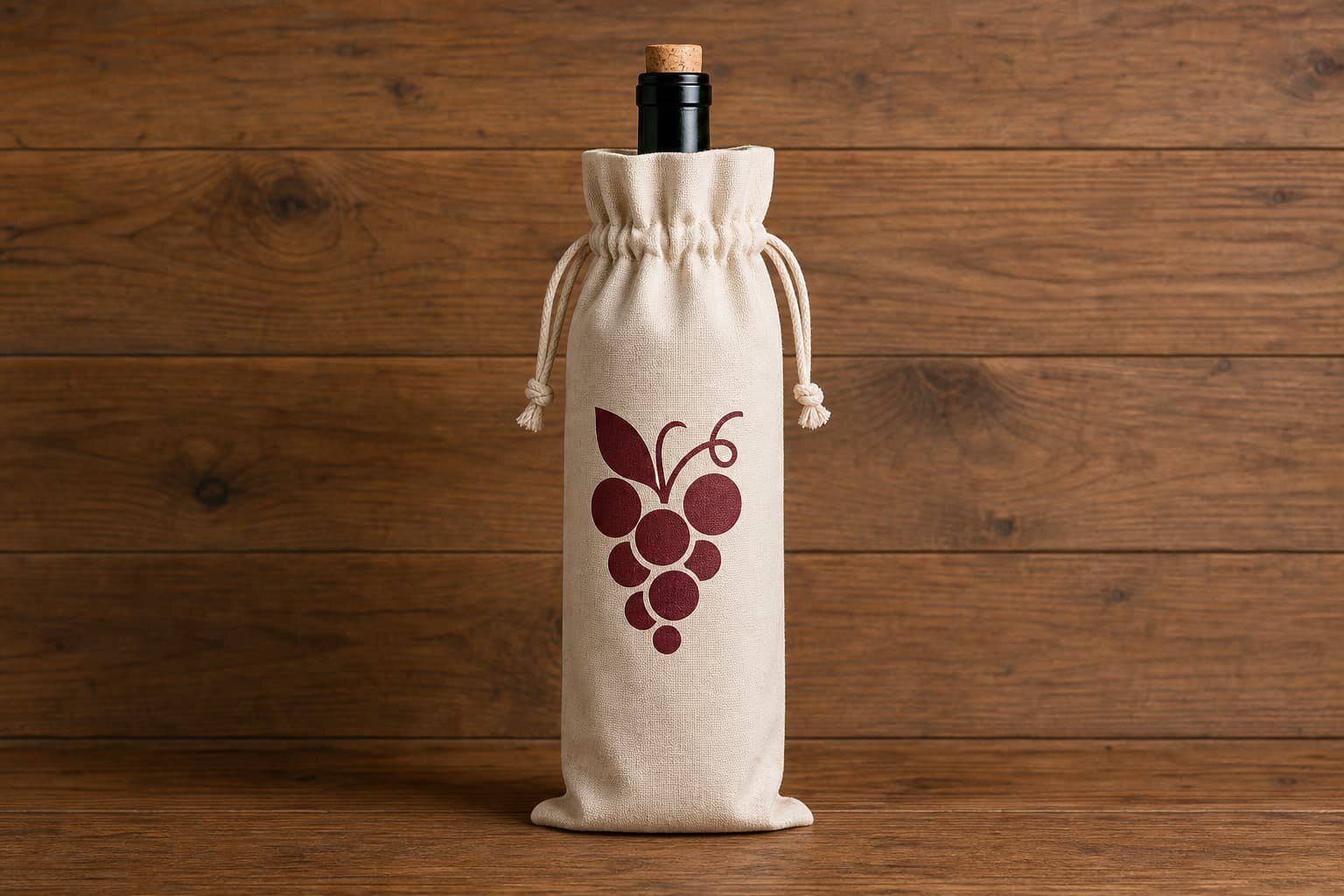
1. What this sample review must prove before you place a PO
A wine or bottle bag sample is not just a color check. It should prove that the bag fits the bottle, survives handling, supports the planned print method, and packs the way your retail or wholesale channel needs. If you only approve a pretty sample, you can still fail on the first shipment if the bottle neck catches on the seam, the handle twists under load, or the logo looks wrong on the final fabric.
For wholesale buyers, the sample review should answer one simple question: can this bag be produced at the same spec, at the agreed MOQ, without changing the look or the unit cost after approval? Ask the supplier to mark the sample with material details, GSM, print method, seam construction, and packing format so the sample becomes a real production reference, not just a display piece.
- Treat the sample as a production control tool, not a sales sample.
- Confirm that the sample matches the intended bulk material, not a temporary substitute.
- Keep a signed golden sample for both buyer and factory records.
- Test the bag with the exact bottle SKU you plan to sell.
2. Start with the bottle, not the bag
The most common mistake in wine bag sourcing is designing around a vague "750ml bottle" description. In reality, a Bordeaux bottle, Burgundy bottle, and champagne-style bottle do not behave the same inside a sleeve or tote. Before you review the sample, send the supplier the real bottle dimensions: height, maximum diameter, shoulder shape, neck diameter, and whether the bottle will be sold empty, filled, or chilled.
Ask for insertion tests on the actual bottle, not a paper cutout. A good sample should allow smooth entry without forcing the seam open, and there should be enough room at the top for the neck to sit naturally without bending the handle or distorting the closure. If you plan to sell multiple bottle shapes, ask for separate samples or at least a fit review on the widest and tallest bottle in the range.
- Measure the bottle with packaging and label if the label adds thickness.
- Check shoulder clearance so the bottle does not catch during insertion.
- Review whether the base sits flat or tips inside the bag.
- If you sell magnums or special shapes, do not approve a standard sample as a substitute.
3. Choose the right fabric and GSM for the sales channel
Fabric name alone is not enough. In wine and bottle bags, the GSM tells you a lot about structure, print quality, and perceived value. A cotton sleeve around 180–220 GSM works for simple promotional packs and lower-cost retail use. A canvas tote around 280–320 GSM gives more body, better shelf presence, and stronger handle feel. Jute can work well for gift-oriented packaging, but its texture is rougher and the surface is less forgiving for fine artwork. Nonwoven is the low-cost option for volume campaigns, but it should be reviewed carefully if the buyer wants a more premium look.
When you check the sample, pay attention to how the fabric behaves under tension. Thin fabric can make the bag look cheap even if the print is accurate. Heavy fabric can improve structure but raise freight weight and make folding less tidy. Ask whether the GSM shown in the quote is before or after coating, washing, or dyeing. That one detail can change the real material cost and the final handfeel.
- Cotton: softer, cleaner print, good for simple branding and reusable use.
- Canvas: stronger structure, better for retail and premium gifting.
- Jute: natural appearance, but logo placement and small text need caution.
- Nonwoven: low cost, but only suitable when the buyer accepts a lighter-duty bag.
4. Check construction details that fail in transit
Wine and bottle bags do not fail because of one big mistake; they fail because of small construction gaps. Look at the seam allowance, stitch density, handle attachment, and whether stress points are reinforced with bartacks or double stitching. If the sample has a drawstring closure, check cord thickness, cord end finishing, and whether the top channel closes evenly without twisting. If it is a tote style, check the handle drop, handle width, and how the handle joins to the body.
A buyer should also review how the sample reacts when it is loaded and moved. Lift a filled bottle and swing it lightly. Set it down on a hard table. Shake the bag inside a carton. These basic checks reveal whether the side seam opens, the bottom panel flexes too much, or the handle stitching starts to distort. For wine bags that will be used as gifts, even a slight lean or crooked top line can make the product look lower in value than the material itself.
- Ask for stitch count or stitch density where the factory can measure it.
- Confirm reinforcement at handles, corners, and bottom seams.
- Check thread trimming and loose yarns before sample approval.
- If the bag uses a drawstring, test both pull strength and smooth closure.
5. Compare print methods before you approve the artwork
The print method should be chosen together with the fabric, not after the sample is already made. Screen printing is usually the best option for one to two solid colors on cotton or canvas because it gives good coverage and keeps the quote under control. Heat transfer can help when you need gradients, small detail, or multiple colors in a short run, but it must be checked for edge lift and heat resistance. Embroidery can look premium, yet it is not always the best choice on thin or unstable fabric. A woven side label or sewn patch is often the safest branding option when the buyer wants a durable, understated look.
Jute needs special attention because the surface is uneven and ink can spread into the fibers. Small text, thin borders, and fine-line logos often look better on a separate woven label than directly on the bag. On dark fabric, ask how the supplier will handle underbase, color opacity, and curing. Your sample should be checked in normal daylight, not only under bright factory lamps, because weak contrast and poor registration are easier to miss in a showroom than in a warehouse or retail environment.
- Confirm exact logo size and placement in millimeters.
- Check whether the artwork sits over a seam or a flat panel.
- Ask for a rub test on the print surface before bulk approval.
- For premium programs, consider a sewn side label with the CTM / CottonToMaker name as a clean brand reference.
6. Read MOQ and lead time from the sample stage
MOQ should be read as a production logic, not just a number. A supplier can usually offer a lower MOQ when the bag uses stock fabric, one-color print, and a standard label. MOQ rises when you add custom dyeing, lining, embroidery, special cords, or a non-standard shape. If the sample looks simple but the quote later changes because the factory had to switch fabric or simplify the print, the original sample was not a real production sample. That is why the sample review and the MOQ discussion must happen together.
Lead time should also be tied to the exact sample status. A straightforward sample made from stock material may take around 5 to 10 days. If you need artwork revision, custom label development, or material sourcing, plan longer. Bulk production often sits in the 20 to 35 day range after approval, but that depends on order size, factory load, and whether the sample has already been made on the same line. Ask the supplier to separate sample lead time, mass production lead time, and shipping preparation time so you can plan the launch properly.
- Ask for MOQ by size, color, and artwork version.
- Confirm whether mixed sizes can share the same fabric run.
- Check if sample fees are deductible from bulk orders.
- Verify whether the quoted lead time starts after artwork approval or after sample sign-off.
7. Packing matters more than many first-time buyers expect
Packing on wine and bottle bags is not just a warehouse task. It affects resale condition, moisture control, carton efficiency, and final cost per unit. A good sample should show the actual folding method, inner packing, and outer carton marking you want to use in bulk. For jute and natural-fiber bags, moisture is a real concern, so the packing method should protect the product without trapping dampness. For retail programs, check whether the sample includes the final hangtag, barcode sticker, care label, or warning card that your channel requires.
Ask the supplier to pack a full test carton and show the gross weight, carton size, and stackability. A carton that looks fine in the sample room can fail when loaded onto a pallet or moved through export freight. The buyer should also confirm that carton marks match the purchase order, especially style number, color code, quantity per carton, and carton number. If your retail customer uses scanning or EAN labels, this is the stage where a small packing error becomes a major receiving problem later.
- Confirm whether each bag is folded flat or stuffed for shape retention.
- Check polybag thickness and whether ventilation or desiccant is needed.
- Verify carton quantity so the packed weight stays practical for handling.
- Review all outer marks before bulk print plates or carton labels are released.
8. Build an apples-to-apples quote, not just a unit price
Two quotes can look close on paper and still be far apart in reality. The lower quote may use lighter fabric, a different print method, thinner thread, or simpler packing. To compare properly, break the quote into material, cutting and sewing, decoration, packing, and export preparation. In many wine bag programs, fabric can take the largest share of cost, but labor rises quickly if the bag has reinforcement, multiple panels, lining, or a sewn-in label. Print setup, artwork revision, and packaging can also move the final unit cost more than buyers expect.
When you request quote data, ask for a clear line between sample cost, tooling cost, and production unit cost. If the supplier cannot explain why one option costs more, they may be quoting by estimate rather than by spec. For example, a canvas bottle tote with one-color screen print and a woven label should not be compared directly with a jute bag that uses heat transfer and a simple stitched edge. The landed value of the product is driven by the exact production recipe, not the headline price alone.
- Compare the same GSM, same print method, same label type, and same packing format.
- Ask whether carton, inner pack, and polybag costs are included or excluded.
- Check if overrun allowance is built into the unit price.
- Review the total landed cost, not only the ex-factory number.
9. Approve only after the golden sample and acceptance criteria
Once the sample passes, do not leave the approval process vague. Create a golden sample that includes the approved fabric, print, label, stitching, and packing method. Mark it with date, style number, and version, then keep one copy with the buyer and one with the factory. Every bulk order should be checked against that reference, because memory and verbal confirmation are not enough when production shifts between teams or schedules.
The acceptance criteria should be simple but specific. Define size tolerance, acceptable print variation, seam quality, pull strength, odor level, and carton condition. If the bag is sold as a gift item, be strict on visible defects such as crooked labels, uneven top edges, and thread snags. If the first sample is close but not right, revise the spec sheet before approving. It is cheaper to fix the sample stage than to sort thousands of finished bags later.
- Use a signed golden sample as the production benchmark.
- Set clear pass/fail rules for size, print, seam, and packing.
- Hold bulk release until the factory confirms the final spec sheet.
- If the sample changes after approval, ask for a revised quote and a new sign-off.
Specification comparison for buyers
| Spec decision | Recommended option | When it fits | Buyer risk to check |
|---|---|---|---|
| Cotton drawstring wine sleeve, 180–220 GSM | Soft handfeel, simple one-color screen print, sewn side label | Promo launches, e-commerce gift packs, lighter retail programs | Too thin for premium positioning; ask for shrinkage and seam tolerance after washing or pressing |
| Canvas bottle tote, 280–320 GSM | Structured body, reinforced handles, screen print or woven label | Retail gifting, premium wine sets, higher perceived value | If fabric is too heavy or seams are underbuilt, handles can distort after load testing |
| Jute wine bag, 250–300 GSM equivalent with lining if needed | Natural look, strong shelf appeal, large logo area | Seasonal gifts, organic-looking packaging, export gift programs | Surface is uneven; small text and fine lines may blur, and odor/moisture control must be checked |
| Nonwoven bottle bag, 80–120 GSM | Low-cost promo packaging, simple hot-cut or stitched handle style | Mass giveaways, event kits, short-term campaigns | Low stiffness and weak edge finishing can cause handle tear or wrinkling in transit |
Buyer checklist before sampling
- Confirm the exact bottle size, including height, shoulder width, and base diameter.
- Ask for sample material details in GSM, weave, and coating or lining if used.
- Check whether the sample uses the same print method planned for production.
- Measure seam allowance, stitch density, and handle reinforcement at stress points.
- Test bottle insertion and removal with the real product, not an empty dummy bottle only.
- Review logo size, placement, color matching, and edge sharpness under normal light.
- Confirm all packing details: fold method, polybag, insert card, carton count, and marks.
- Ask for separate pricing for sample fee, tooling, print setup, and bulk unit cost.
- Verify MOQ by color, artwork, and fabric type, not just one headline MOQ number.
- Keep one signed golden sample on both the buyer side and factory side before bulk approval.
Factory quote questions to send
- What exact fabric, GSM, weave, and lining are included in your quote?
- Is the sample made on the same machine line and with the same material as bulk production?
- Which print method will you use, and what is the setup charge for each color or artwork version?
- What is the MOQ per size, per color, and per logo version?
- Are handles, side seams, bottom reinforcement, and bartacks included in the quoted construction?
- Are sample fee, tooling fee, and artwork revision fee separate from the bulk quote?
- What is your approved tolerance for size, print placement, and stitch variation?
- How will you pack each bag, and what are the inner pack and master carton quantities?
- What is your overrun or underrun policy by percentage?
- Can you provide a pre-production sample or photo approval before full bulk release?
Quality-control points to confirm
- Finished size must match the approved sample within the agreed tolerance for height, width, and gusset depth.
- Bottle fit must be tested with the actual bottle shape, including shoulder clearance and neck clearance.
- Fabric weight must match the quoted GSM or equivalent material spec, not just the named fabric category.
- Stitching should be straight, clean, and reinforced at all load-bearing points with no loose threads.
- Print should be sharp, properly registered, and resistant to light rubbing before packing.
- Handle strength and seam pull should be checked with a filled bottle, not only with an empty bag.
- Packaging must match the agreed fold, polybag, insert, carton count, and outer mark details.
- Cartons should be dry, clean, and strong enough for transit stacking without crushing the product.
- Odor, moisture, and surface contamination should be checked before shipment, especially on jute and coated materials.
- The final bulk should be compared against the signed golden sample before release from the factory.