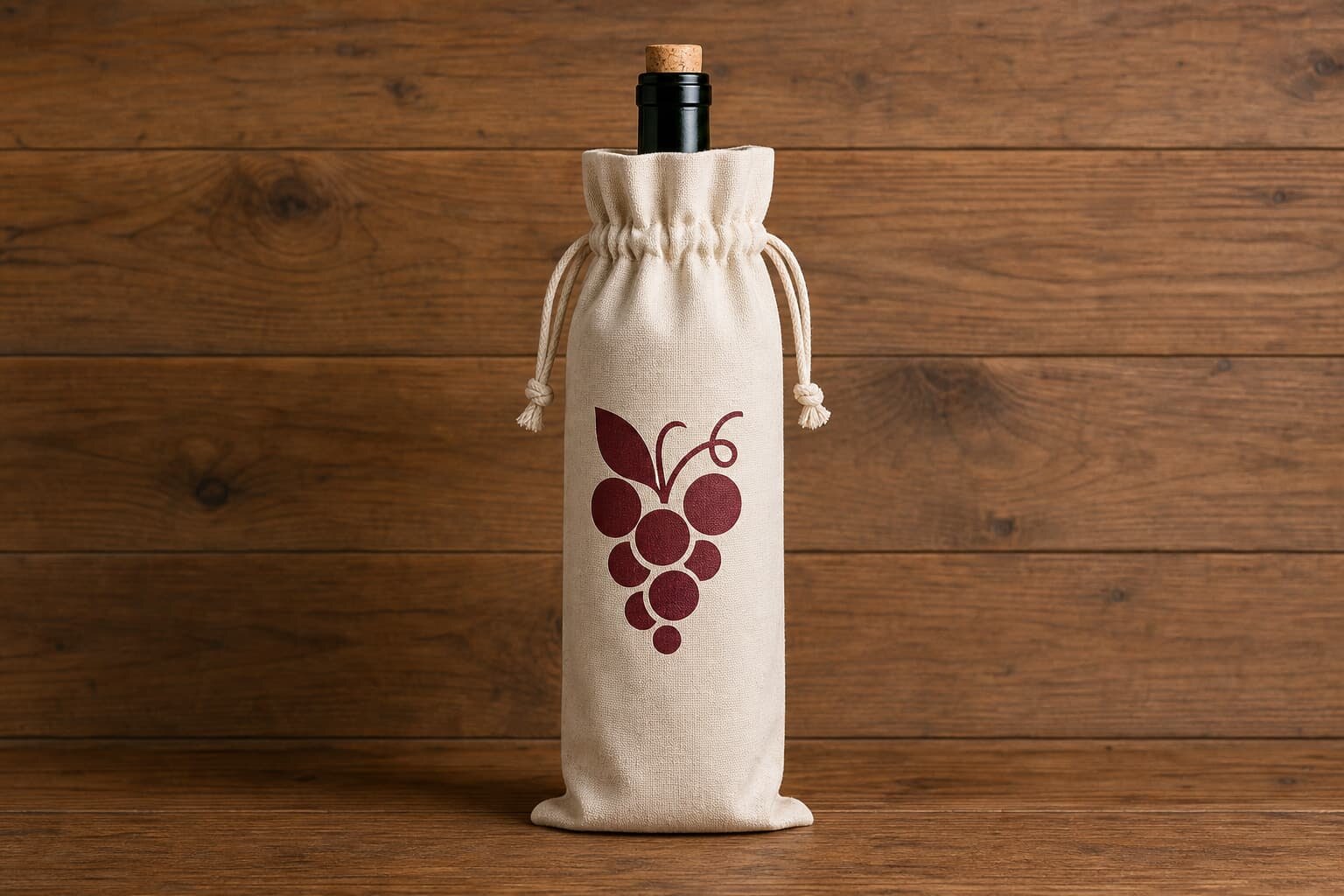
1. The buying problem: the quote looks simple, but the bottle does not fit
Wine and bottle bags look easy to buy because the product is small and the construction is familiar. In production, most disputes come from two preventable gaps: the buyer did not define the real bottle dimensions, and the supplier quoted a generic bag size without testing the bottle. A 750 ml Bordeaux bottle, Burgundy bottle, sparkling wine bottle, olive oil bottle, and spirits bottle can all be described as “standard,” but their shoulder shape and base diameter are different. A few millimeters can decide whether the bottle slides in smoothly or catches at the mouth of the bag.
The second common problem is decoration. A logo that looks balanced on a flat artwork file can look crowded on a narrow wine bag. If the print is placed too low, it may be hidden by a shelf lip or distorted by the gusset. If it is printed before sewing without proper allowance, it can shift toward one side after assembly. This checklist focuses on controlling bottle fit and print execution before you compare supplier quotes.
- Do not ask only for “wine bottle bag price.” Send bottle measurements and target use.
- Do not approve artwork without confirming the actual printable panel after sewing.
- Do not compare quotes unless the same fabric weight, size, handle, print method, and packing are included.
2. Start with bottle data, not bag data
A factory can recommend a better bag size if you provide the bottle first. The useful data is not only volume, such as 750 ml or 1 L. The factory needs total height, base diameter, maximum shoulder diameter, neck diameter, and filled weight. If the bottle has a paper label that can scratch easily, mention it. If the bottle will be inserted with a gift card, hangtag, retail sleeve, or protective tissue, include that extra thickness.
For procurement teams, the best RFQ method is to attach a bottle drawing or a simple measurement table. If you are sourcing for multiple brands or mixed assortments, state the largest bottle that must fit and the smallest bottle that must not look lost inside the bag. A bag sized for a sparkling bottle may look loose around a slim riesling bottle. That may be acceptable for distributor giveaways, but not for premium retail gift packaging.
- Minimum bottle data: height, base diameter, shoulder diameter, neck diameter, filled weight.
- Fit purpose: snug retail gift fit, loose reusable carrier fit, or protective transport fit.
- Insertion requirement: easy one-hand insertion, display-ready upright standing, or drawstring closure over neck.
- Mixed bottle orders: define the maximum bottle to fit and the appearance limit for smaller bottles.
3. Choose the bag structure before discussing fabric
The same material behaves differently depending on structure. A flat cotton sleeve may be cheap and easy to pack, but it has limited space for wide bottles and may not stand upright. A gusseted bag gives more room and better shelf presence. A round-base or oval-base bottle bag can look more tailored, but it requires more accurate sewing and may have higher labor cost. A two-bottle carrier needs a real divider, not just extra width.
For buyers, the structure should match the sales channel. Winery retail shelves may need upright presentation and clean logo visibility. Distributor promotions may need low cost, fast packing, and acceptable fit across several bottle types. Corporate gifts may require a stronger handle, better fabric handfeel, and individual packing. If you decide this before quoting, suppliers can price the right construction instead of guessing.
- Flat sleeve: economical, compact, suitable for simple gift protection and light branding.
- Gusseted single-bottle bag: better for standard wine retail and stronger visual presentation.
- Drawstring bottle bag: useful when the buyer wants closure, dust protection, or a gift reveal.
- Two-bottle carrier: requires divider strength, handle reinforcement, and realistic load testing.
- Bottle tote style: more reusable, but needs stronger handle stitching and larger carton volume.
4. Fabric weight and material selection affect load, print, and price
For cotton and canvas wine bags, 5 oz cotton can work for light promotional sleeves, but it may feel thin for retail gifting. 8 oz cotton is a common middle option for branded wine sleeves and drawstring bottle bags. 10 oz to 12 oz canvas gives better structure and durability, especially for open-top carriers or two-bottle bags. Heavier fabric is not automatically better; it increases cost, shipping weight, and sometimes makes narrow drawstring channels stiff.
Jute bags are often quoted by GSM, such as 260 GSM, 280 GSM, or 320 GSM. Jute gives a natural retail look and good stiffness, but it can have fiber variation and a rougher print surface. Laminated jute is more structured and can resist moisture better, but the laminate changes the handfeel and may affect recyclability claims. If your brand has sustainability language, keep the claim conservative unless you have documentation from the supplier.
- 5 oz cotton: low-cost promotional sleeve, less structure, limited premium feel.
- 8 oz cotton: common option for reusable wine gift bags with moderate print quality.
- 10-12 oz canvas: stronger carrier feel, better for two-bottle or heavier formats.
- 260-320 GSM jute: natural look, good stiffness, print surface varies by fiber quality.
- Felt or nonwoven: possible for budget promotions, but check strength and brand positioning.
5. Print method selection: match artwork to bag surface
Screen printing is usually the practical choice for simple logos, solid colors, and medium to large wholesale orders. It works well on cotton and canvas, and it can work on jute when the artwork is not too fine. The buyer should specify Pantone references, print size, print position, and number of colors. Very fine lines, small text, and tight registration can fail on coarse jute or seams near the print area.
Heat transfer can handle gradients, photo-style artwork, or multi-color designs, but buyers should check handfeel, edge visibility, and adhesion. Embroidery may look premium on thicker canvas, but it can pucker lighter cotton and is less suitable for very narrow bags. Woven side labels are useful for repeat programs because the bag front stays clean and the brand detail is consistent. The safest RFQ includes artwork files and asks the factory to confirm the recommended method rather than forcing one method blindly.
- Screen print: best for solid logos, one to three colors, clear cost control.
- Heat transfer: useful for gradients or complex artwork; check adhesion and surface feel.
- Embroidery: premium on canvas, but avoid tiny text and very light fabrics.
- Woven label: good for long-term brand programs and smaller decoration areas.
- Hot stamp or patch: possible on some materials, but needs sample approval before bulk.
6. MOQ logic: why the minimum changes by size, fabric, and artwork
MOQ is not only a sales policy. It is linked to material purchase, cutting efficiency, printing setup, dyeing, and packing labor. A natural cotton bag using stock fabric may have a lower MOQ than a custom dyed canvas bag. A one-color screen print has a different setup burden than four artwork versions across three fabric colors. If the buyer asks for many logo versions under one small total quantity, the unit price usually rises because setup and handling are repeated.
When comparing suppliers, ask them to separate the MOQ for the base bag from the MOQ for custom fabric color and the MOQ for each print design. This helps procurement teams build a realistic order plan. Sometimes the best commercial solution is to keep one common bag color and split the logo artwork. In other cases, a buyer may accept a higher total quantity to secure custom fabric color or better unit cost.
- Stock natural cotton or jute usually supports more flexible ordering than custom dyed material.
- Each artwork version may need separate screen setup, film, alignment, and approval.
- Custom dyed fabric may have a fabric mill MOQ higher than the sewing factory MOQ.
- Individual packing, barcode labels, or retail inserts can create extra handling minimums.
- Ask for price breaks at realistic tiers, such as 1,000, 3,000, 5,000, and 10,000 pieces.
7. Sample approval: check the bottle, not only the sewing
A wine bag sample should be tested with the buyer’s actual bottle or a confirmed bottle substitute. The sample may look correct when empty but fail when loaded. Check whether the bottle enters smoothly, whether the bottom sits flat, whether the drawstring closes above the shoulder, and whether the handle drop is comfortable. For two-bottle carriers, load two filled bottles and inspect whether the divider keeps glass from hitting glass.
The pre-production sample should use the same fabric weight, handle material, print method, and packing method planned for bulk. A sample made with substitute fabric is useful only for size checking, not for final approval. If timing requires an early size sample, label it clearly as a fit sample and still request a final pre-production sample before bulk cutting or printing.
- Fit sample: confirms size, structure, insertion, and bottle appearance.
- Print strike-off: confirms color, sharpness, adhesion, and print placement.
- Pre-production sample: confirms the exact approved construction before bulk.
- Packing sample: confirms folding, barcode position, carton count, and retail presentation.
- Keep one signed or sealed sample as the inspection reference.
8. Acceptance criteria that prevent subjective disputes
Many bag disputes become subjective because the PO says “good quality” but does not define what good means. For wine and bottle bags, acceptance criteria should be simple and measurable. Finished width, height, gusset, base shape, handle length, logo position, and print color should have tolerances. The supplier should know whether a 5 mm shift is acceptable or whether the logo must be centered within a tighter range.
Load testing should also be defined. A single wine bottle may weigh around 1.2 kg to 1.6 kg when filled, depending on glass weight. Two bottles can exceed 3 kg. The factory should test with a realistic load, not an empty display bottle. For stronger carriers, buyers can request a hanging test for a defined time and inspect handle joints, side seams, bottom seams, and divider points afterward.
- Finished size tolerance example: plus or minus 5 mm for narrow single-bottle bags, if agreed.
- Logo position tolerance example: centered within agreed millimeters from top and side reference points.
- Print quality: no heavy smearing, missing ink, poor registration, or obvious color deviation from approved sample.
- Seam quality: no open seams, skipped stitches, loose handle joints, or sharp thread ends inside.
- Load test: use realistic filled-bottle weight and inspect after suspension or repeated lifting.
9. Packing and carton planning are part of the product cost
Wine and bottle bags can be packed flat, folded, rolled, or upright depending on material and retail requirement. Cotton sleeves usually pack efficiently. Canvas carriers with stiff bases need more carton space. Jute bags can crease or deform if compressed too tightly, especially when laminated or structured. If the product is going to retail shelves, packing method can affect the first impression as much as sewing quality.
Ask for carton size, pieces per carton, gross weight, net weight, and estimated CBM in the quote. This data helps importers compare landed cost and warehouse handling. A lower unit price may not be cheaper if the carton volume is much higher or if the packing method causes rework on arrival. If your distributor needs barcode labels, carton marks, assortment labels, or inner packs by store, specify this early because it changes labor time.
- Bulk pack: lower cost, suitable for giveaways or repacking by importer.
- Individual polybag: protects from dirt but may conflict with plastic reduction goals.
- Paper belly band: retail-friendly and less bulky, but needs print and application control.
- Hangtag or insert card: useful for brand storytelling, but adds approval steps.
- Upright packing: protects structured bags but increases carton volume.
10. Lead time control: separate artwork, sample, material, and production
Lead time should not be stated as one vague number. A practical schedule separates artwork preparation, sample making, sample shipping, sample approval, material purchasing, printing, sewing, inspection, packing, and export handover. For stock fabric and simple screen print, the calendar is usually easier. For custom dyed fabric, multi-color print, special labels, or retail packing, the critical path becomes longer.
Procurement teams should ask when bulk lead time starts. Some factories count from deposit, some from artwork approval, and some from pre-production sample approval. This difference can create missed launch dates. The safest PO names the approval point clearly and includes the buyer’s own response time. If the buyer takes a week to approve a strike-off, that week should be visible in the schedule.
- Artwork confirmation: vector file, Pantone references, print size, and location.
- Sample stage: fit sample, print strike-off, or complete pre-production sample.
- Material stage: stock fabric reservation or custom fabric production.
- Bulk stage: cutting, printing, sewing, trimming, inspection, and packing.
- Shipment stage: booking, customs documents, carton marks, and handover date.
Specification comparison for buyers
| Spec decision | Recommended option | When it fits | Buyer risk to check |
|---|---|---|---|
| Single 750 ml wine bottle bag | Approx. 15 x 35 cm finished size, 8-10 cm gusset or round base, 8-12 oz cotton/canvas or 260-320 GSM jute | Standard still wine, gift pack, retail counter display, winery merchandise | Burgundy bottles and sparkling bottles may be wider; test with the buyer’s actual bottle, not only a factory sample bottle |
| Two-bottle carrier | Approx. 20 x 35 x 10 cm with stitched center divider and reinforced handle area | Corporate gifting, liquor store promotions, winery club sets | Divider must be sewn to the bottom or securely caught in side seams; loose dividers shift and allow bottle impact |
| Heavy bottle or 1 L format | 10-12 oz cotton canvas or laminated jute with bar-tacked handles | Olive oil, spirits, cider, magnum-style packaging, refillable glass | Handle pull strength and seam allowance matter more than fabric weight alone |
| Logo decoration | Screen print for solid logos; heat transfer for gradients; woven side label for premium repeat branding | Retail, events, distributor programs, and brand campaigns | Print area can shrink on narrow bags; confirm flat printable width before artwork approval |
| Drawstring closure | Cotton cord or jute rope with clean channel stitching | Dust protection, gift reveal, and simple closure on wine or bottle sleeves | Cord ends, knot size, and channel opening can affect packing speed and consumer appearance |
| Retail packing | Individual polybag or paper band plus export carton with upright packing when needed | Retail-ready units, Amazon-style handling, distributor warehouse sorting | Over-compressed packing creases printed panels and may deform structured jute bags |
Buyer checklist before sampling
- Send bottle dimensions by type: height, base diameter, shoulder diameter, neck diameter, filled weight, and whether the bottle has a box, sleeve, or tag.
- State the exact bag style: flat sleeve, gusseted bottle bag, round-base bag, two-bottle carrier, drawstring bag, or open-top tote-style carrier.
- Define finished bag size with tolerance, not only cut fabric size. For example: finished width, height, gusset, base diameter, and handle drop.
- Specify material by fabric type and weight: cotton 5 oz, 8 oz, 10 oz, 12 oz; jute 260-320 GSM; nonwoven or felt only if suitable for the load.
- Confirm whether fabric is natural, bleached, dyed, laminated, washed, or recycled-content, because shrinkage, print sharpness, and color variation differ.
- Identify print method, logo size, number of colors, Pantone references, print position, and whether the logo crosses seams, gussets, or curved areas.
- Ask the factory to confirm actual printable area after sewing, especially on narrow single-bottle wine bags.
- Require a pre-production sample using the nominated fabric weight, handle material, divider construction, and final artwork.
- Set practical acceptance criteria: bottle inserts smoothly, bag stands or hangs as intended, seams do not twist, print is centered, and handles pass pull testing.
- Request carton data: pieces per carton, carton dimensions, gross weight, net weight, inner packing, barcode or carton mark requirements, and pallet preference if any.
Factory quote questions to send
- What finished bag size do you recommend for our bottle dimensions, and what tolerance do you propose for width, height, gusset, and handle drop?
- Will the quoted fabric be cotton, canvas, jute, nonwoven, felt, or another material, and what is the exact oz or GSM?
- Is the fabric stock material or made-to-order dyed material? If dyed, what is the fabric MOQ and expected color tolerance?
- What print method is included in the quote: screen print, heat transfer, digital print, embroidery, woven label, leather patch, or hot stamp?
- What is the maximum safe print area on this bag after sewing, and will the print be applied before or after assembly?
- Are handles self-fabric, cotton webbing, rope, jute, ribbon, or twisted cord? What width and length are included?
- For two-bottle bags, how is the divider attached, and can you provide a photo of the inside construction?
- What load test can your factory perform for this style, and what is the suggested test weight and hang time?
- What is your MOQ for this exact style and decoration, and what changes if we order multiple artwork versions or colors?
- What sample cost, sample lead time, and revision policy apply before bulk production?
Quality-control points to confirm
- Bottle fit check with buyer-provided bottle or confirmed bottle drawing before bulk cutting.
- Finished size measurement on width, height, gusset/base, handle length, and handle drop against approved sample.
- Fabric weight verification by GSM or oz per square yard, with attention to natural cotton shrinkage and jute thickness variation.
- Seam strength check on side seams, bottom seams, divider seams, handle joints, and drawstring channel stitching.
- Handle pull test using a realistic filled-bottle load, including short suspension time and visual inspection for stitch tearing.
- Print position and color check against approved artwork, including logo centering on narrow panels and registration for multi-color prints.
- Rub test or tape test for decoration adhesion where screen print, heat transfer, or hot stamp is used.
- Inside finish inspection for loose threads, rough jute fibers, divider alignment, and exposed sharp seam ends that may scratch labels.
- Packing inspection for creasing, carton compression, moisture protection, correct carton marks, and correct piece count.
- Final AQL or agreed sampling inspection before shipment, with photo records of measurement, print, packing, and load checks.