Start With the Real Buying Problem
The main risk when buying wholesale organic cotton totes for wellness studios is not finding a supplier that can print a logo. Most tote factories can print a simple logo. The real buying problem is making the bag look calm, premium, and consistent after cutting, sewing, printing, packing, and shipping. A logo that looks centered on a flat digital mockup can appear too low once the tote is filled with a towel, leggings, boxed skincare, or class materials.
Wellness studio buyers usually want a natural-looking bag that works as both packaging and a walking brand reminder. That means the RFQ must connect logo placement with fabric weight, bag size, handle drop, print method, and carton packing. If those items are quoted separately or left to factory default, suppliers will choose the cheapest workable route, and the result may not match retail expectations.
- Use finished bag measurements, not only cutting size, when specifying placement.
- Define whether the tote is a free class gift, retail product, staff bag, or VIP welcome bag.
- Treat logo placement as a production specification, not a design preference.
- Approve the logo on a sewn sample and a filled sample before mass production.
Choose Fabric Weight Before Logo Size
Organic cotton tote fabric is usually discussed in ounces or GSM. For light promotional totes, 5 oz to 6 oz fabric, roughly 150 to 200 GSM, can be acceptable if the bag carries brochures, a water bottle, socks, or a small retail item. For wellness studios selling the tote or including it in a premium membership kit, 8 oz to 10 oz canvas, roughly 270 to 340 GSM, gives better shape, stronger print support, and a more retail-grade hand feel.
Logo size should follow the fabric choice. A large solid logo on thin natural cotton can show uneven ink absorption and more wrinkles through the print area. A small, centered logo on heavy canvas may look too conservative if the bag is meant for event visibility. The buyer should state the intended use and let the factory quote one main option plus one cost-saving alternative, rather than receiving several prices based on different hidden assumptions.
- 5 oz to 6 oz: better for budget events, light welcome packs, and high-volume giveaways.
- 7 oz to 8 oz: useful middle ground for better structure without heavy freight impact.
- 10 oz and above: stronger retail feel but higher fabric cost, sewing time, and carton weight.
- Natural organic cotton may include specks and slubs; do not expect optical white uniformity unless bleached fabric is specified.
Set Logo Placement With Measurements
A practical front logo position for a standard 38 x 42 cm tote is centered horizontally, with the top of the logo about 9 to 12 cm below the bag opening. For many wellness brands, a logo width of 22 to 28 cm works well on the front panel. Smaller marks can be placed 8 to 10 cm wide at the lower right, but this style needs stricter control because a few millimeters of movement becomes more visible.
Measurements should be written from fixed garment points: distance from top opening to top of print, distance from left side seam to left edge of print, and final print width and height. Avoid instructions such as “center logo nicely” or “same as mockup.” Factories need measurable placement rules because fabric panels shift during cutting, screen setup, and sewing. For side labels, specify label width, finished fold, seam insertion point, and whether the label faces front, back, or side.
- Standard front placement tolerance: plus or minus 5 mm is realistic for many tote productions.
- Small label placement tolerance: plus or minus 3 mm should be discussed before confirming cost.
- Large logos should be checked after the bag is hanging and filled, not only lying flat.
- Handle seam and top hem may visually affect logo position, so approve the complete sewn sample.
Match Print Method to Wellness Branding
For most wholesale organic cotton totes, water-based screen printing is the practical starting point. It gives a soft hand feel, works well with one-color or two-color logos, and suits the natural texture wellness studios often want. The limitation is that ink coverage can vary on slub cotton, and very fine lines may fill in if the screen mesh, ink viscosity, or fabric surface is not controlled.
Heat transfer can reproduce more detailed artwork, but it often feels less natural and may not match the quiet retail look many spa, yoga, pilates, and wellness brands prefer. Embroidery gives texture but adds cost and can pull thin cotton fabric. Woven labels create a premium minimalist result and reduce print-placement risk, but label MOQ and lead time may be separate from the tote order. The RFQ should describe the visual goal and require the supplier to state the method they are pricing.
- Best for simple logo: water-based screen print on 6 oz to 10 oz organic cotton.
- Best for premium subtle branding: woven side label plus small front print.
- Risk for large solid artwork: uneven ink deposit, heavier hand feel, and visible cracking after use.
- Risk for embroidery: fabric distortion on lightweight totes unless reinforcement is added.
Understand MOQ Logic
MOQ is not one number. A tote order may have separate minimums for fabric purchasing, dyeing or bleaching, printing setup, woven label production, custom hangtags, and export carton printing. If a supplier says the MOQ is 500 pieces, confirm whether that applies to plain natural organic cotton with one screen print only, or whether it also covers custom fabric color, custom label, and multiple studio locations.
For wellness studios and distributors, the cleanest RFQ structure is usually one base tote specification with logo variations. If five studio locations each need a different logo, the factory may keep the same bag MOQ but charge separate screen setup and require minimum print quantities per design. Buyers comparing quotes should separate base bag cost, print setup, label setup, sample cost, and packing cost, because a low unit price may hide higher charges on small-batch variations.
- One fabric, one size, one logo color normally gives the most efficient MOQ.
- Multiple print designs increase screen setup, strike-off work, sorting, and carton labeling.
- Custom dyed organic cotton usually needs higher MOQ than natural cotton.
- Woven label MOQ may exceed tote MOQ; overrun labels should be stored or shipped if paid by buyer.
Build a Quote Sheet That Can Be Compared
A useful quote for organic cotton totes must include more than unit price. At minimum, buyers need fabric specification, finished size, handle length, print method, number of print colors, packing method, carton quantity, carton dimensions, gross weight, sample timing, production lead time, incoterm, export port, and quote validity. Without this data, two prices may look comparable but represent different fabric weights, smaller print sizes, or different carton loading.
For importers and distributors, landed cost is the more useful comparison than FOB price alone. A 10 oz tote may cost more at the factory but have better retail value; it also increases CBM and gross weight. A lighter 6 oz tote may look cheaper but may require more replacement stock if customers perceive it as too thin. The buyer should request at least one cost-saving alternate spec, such as reducing logo size, removing woven label, or changing from 10 oz to 8 oz fabric, so savings can be evaluated without destroying the product concept.
- Quote line should show fabric cost, sewing cost, printing cost, label cost, packing cost, and sample charges where possible.
- Carton data should include pieces per carton, carton size, net weight, gross weight, and total CBM.
- Artwork cost should state whether screen charges are one-time or repeated for reorders.
- Payment terms and quote validity matter when cotton prices or freight conditions are moving.
Sample Approval Should Not Stop at a Pretty Photo
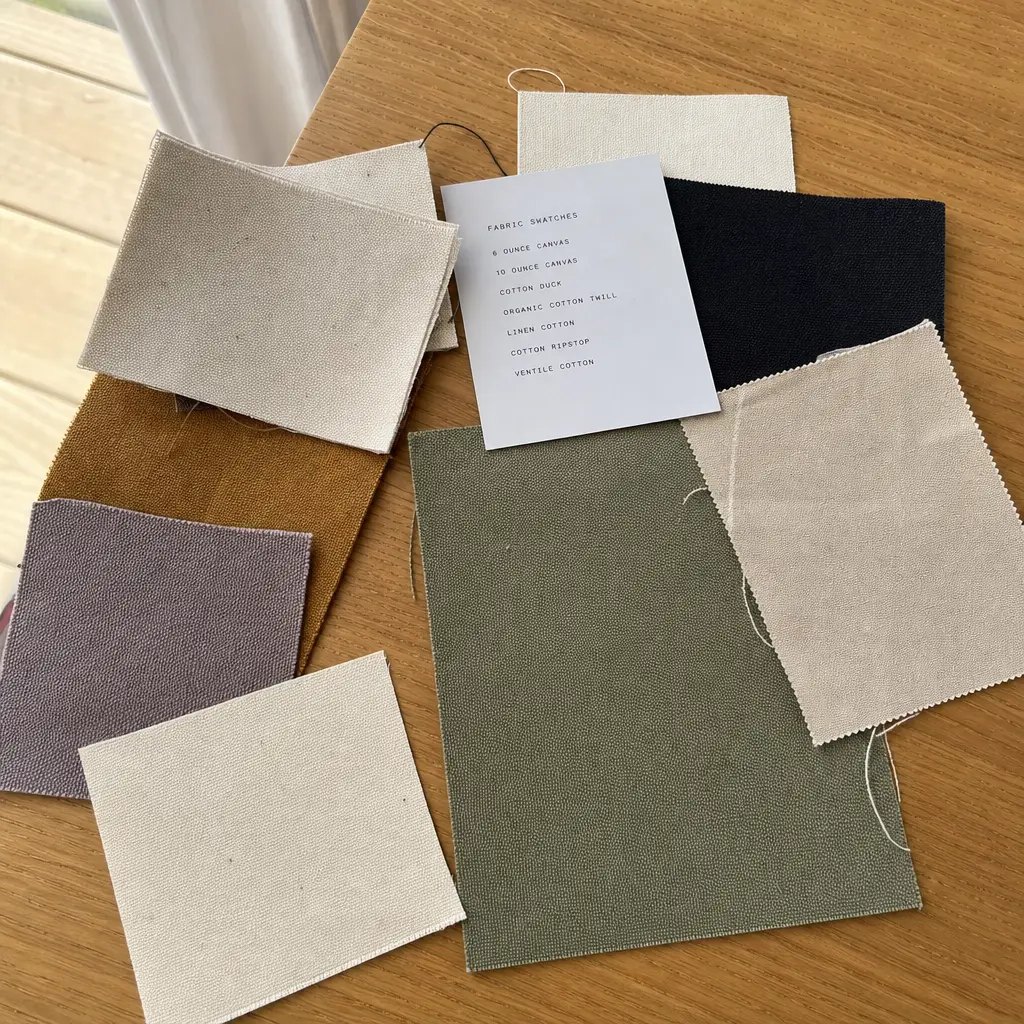
A photo sample can help confirm general appearance, but it is not enough for a logo placement guide. The buyer should approve a physical pre-production sample made with production fabric or the closest available bulk fabric. If the supplier cannot make a full sample before bulk fabric arrives, request a fabric swatch and print strike-off first, then approve the complete sample before mass cutting or printing.
The sample should be reviewed flat, hanging, and filled with representative contents. For wellness studios, that might mean a folded T-shirt, grip socks, a class schedule card, and a small bottle. This simple test shows whether the logo appears too low, whether the handle drop works on the shoulder, and whether the fabric collapses too much for the intended retail look. Mark the approved sample with date, PO number, print size, placement measurements, and any allowed tolerance.
- Measure final bag width and height, not only visual proportion.
- Compare print color to approved swatch under consistent lighting.
- Rub the print surface lightly after curing to detect weak adhesion or chalky ink.
- Photograph the approved sample with ruler visible for factory and inspection reference.
- Seal one approved sample at buyer side and one at factory side if the order value justifies it.
Control Sewing and Durability Details
Organic cotton totes for wellness studios often carry light goods, but weak handles still create brand complaints. A shoulder tote should have handles long enough for comfortable use, usually 60 to 65 cm total length for many standard retail totes, depending on bag height and market preference. Handle width, reinforcement stitching, and top hem construction should be specified because these details affect both durability and appearance.
Common construction choices include self-fabric handles, cross-stitch reinforcement, double-fold top hem, and inside overlock or bound seams. For light promotional totes, a simpler seam may be acceptable. For retail totes, stronger top stitching and reinforced handle attachment are worth quoting. QC should include seam opening checks, handle pull checks, skipped stitch review, and loose thread trimming, especially around handle roots where stress concentrates.
- Handle drop should allow shoulder carry if the tote is intended for retail or daily use.
- Cross-stitch or box-stitch reinforcement improves confidence at handle attachment points.
- Inside seam finish affects perceived quality when customers open the tote.
- Loose threads near the logo area make even a good print look poorly made.
Packing Affects Logo Appearance
Tote bags are often packed flat, but the way they are folded or compressed can mark the logo area. Heavy pressure across a fresh print may cause blocking, shine marks, or creases that remain visible when the bag is unpacked. The packing instruction should state whether bags are flat packed, folded once, individually polybagged, bundled, or packed directly into export cartons.
For many wholesale organic cotton totes, 50 pieces per inner bundle and 100 to 200 pieces per carton can work, depending on fabric weight and bag size. Heavier canvas totes need fewer pieces per carton to avoid excessive compression and high gross weight. Buyers should avoid cartons so heavy that warehouse teams mishandle them. Carton marks should identify PO, SKU, design, quantity, carton number, and gross weight so distributors can receive mixed logo orders without opening every carton.
- Do not fold through the center of a large front logo unless crease testing is approved.
- Let water-based prints cure fully before tight packing.
- Use carton liners if moisture risk is high during inland transport or sea shipment.
- Specify maximum gross weight per carton according to warehouse handling rules.
- For mixed designs, require carton-level design labels and packing list breakdown.
Plan Lead Time Around Approval Gates
Lead time should be counted from a clear trigger. Some factories count from deposit, others from artwork approval, fabric arrival, or pre-production sample approval. For custom organic cotton totes with logo placement control, the safest planning method is to list each approval gate: artwork review, fabric confirmation, print strike-off, pre-production sample, bulk production, final inspection, and shipment booking.
Schedule risk often comes from small delays at the start. A missing Pantone reference, unclear logo size, or late approval of woven label artwork can push production behind other factory orders. Importers and retail buyers should not approve bulk cutting until the placement and size are locked. If an event date or studio opening date is fixed, the buyer should build buffer for sample courier time, re-sampling, inspection booking, and customs clearance.
- Typical sequence: artwork file, fabric swatch, print strike-off, pre-production sample, bulk production, final inspection, shipment.
- Custom dyed fabric and woven labels can add time compared with natural cotton and screen print.
- Reorders move faster only if fabric, ink color, screen, and approved sample records are retained.
- Urgent orders should reduce design complexity rather than skip sample approval.
Specification comparison for buyers
| Spec decision | Recommended option | When it fits | Buyer risk to check |
|---|---|---|---|
| Fabric weight for wellness studio giveaways | 5 oz to 6 oz organic cotton, about 150-200 GSM | Free membership gifts, event bags, light retail bundles, welcome packs with towel, brochure, or small bottle | Too light may show contents and wrinkle heavily; request actual GSM tolerance and handle pull test |
| Fabric weight for paid retail tote | 8 oz to 10 oz organic cotton canvas, about 270-340 GSM | Boutique studio retail, yoga apparel add-on, higher perceived value, repeat daily carrying | Higher GSM increases carton weight and freight cost; compare landed cost, not only FOB unit price |
| Main logo placement | Centered front print, 9-12 cm below bag opening, sized 22-28 cm wide depending bag size | Clean wellness branding where the tote is used in public and photographed by customers | Logo may sit too low after loading; approve placement on filled sample, not only flat artwork |
| Small premium branding | Woven or printed side label, 2.5-4 cm wide, sewn into side seam or handle seam | Minimalist studios, spa brands, co-branded retail programs, higher-end packaging presentation | Label MOQ and color limitation may differ from bag MOQ; include label artwork and fold type in RFQ |
| Print method for solid one-color logo | Water-based screen print with controlled ink coverage | Natural or white organic cotton with simple studio mark, slogan, or location name | Ink migration and uneven coverage on slub fabric; require strike-off with production fabric |
| Print method for soft tonal branding | Pigment print or discharge-style look where fabric and ink supplier allow | Earth-tone wellness brands wanting low-hand-feel print without a plastic surface | Color may dry lighter than digital proof; approve under D65 light and define Pantone tolerance |
| Bag size and handle drop | 38 x 42 cm body with 60-65 cm self-fabric handles for shoulder carry | Most studio retail and class-use totes carrying apparel, mat spray, notebook, or light groceries | Short handles reduce usefulness; measure handle drop after sewing and washing if pre-wash is used |
| Packing format | Flat packed 50 pcs per inner bundle, 100-200 pcs per export carton depending GSM | Importers and distributors needing efficient storage, simple warehouse receiving, and low repacking labor | Overtight cartons cause deep creases across logo; specify carton size and maximum gross weight |
Buyer checklist before sampling
- Define organic cotton standard required by your market or customer before quoting; do not let suppliers quote conventional cotton against an organic brief.
- State finished bag size, fabric weight in oz or GSM, handle length, seam type, and whether shrinkage tolerance applies after washing.
- Provide logo file in vector format with Pantone references, print size in centimeters, and placement measured from top opening and side seams.
- Request a production-fabric print strike-off before the full pre-production sample if the logo has fine lines, light ink on natural cotton, or large solid coverage.
- Set acceptance tolerance for logo placement, commonly plus or minus 5 mm for front center placement and plus or minus 3 mm for small labels.
- Compare quotes using the same packing method, carton quantity, carton dimensions, gross weight, and export port.
- Require photos of fabric roll labels, cutting panels, printed panels, sewing line, and final packed cartons during production.
- Approve one sealed pre-production sample with signed placement, color, handle, stitching, and packing notes before bulk cutting.
Factory quote questions to send
- What organic cotton fabric weight are you quoting, in both oz and GSM, and what is the normal tolerance by roll?
- Is the quoted fabric certified organic cotton, organic cotton in conversion, recycled cotton blend, or conventional cotton? Which documents can be supplied with shipment?
- What is the minimum order quantity for the bag body, printed logo, woven side label, and any custom packaging separately?
- Which print method are you quoting for the logo, and is the ink water-based, plastisol, pigment, or another system?
- What is the maximum recommended print size for this fabric before hand-feel, cracking, or registration risk becomes noticeable?
- Can you provide a fabric swatch, print strike-off, and full pre-production sample before bulk production, and what are the sample charges and timing?
- What are the quoted carton dimensions, pieces per carton, gross weight, and estimated CBM for the full order quantity?
- What lead time is counted from deposit, artwork approval, fabric arrival, or final sample approval, and which milestone controls the production slot?
- What inline and final inspection points will be available for buyer review before shipment?
- Which incoterms, export port, payment terms, and quote validity period are included in the price?
Quality-control points to confirm
- Fabric GSM should match approved sample within agreed tolerance, commonly plus or minus 5% unless the buyer specifies tighter control.
- Finished bag size should be measured flat after sewing, with length and width tolerance agreed before production, commonly plus or minus 1 cm for cotton totes.
- Logo centerline should align with bag centerline within plus or minus 5 mm for standard front placement.
- Print color should be compared against the approved strike-off under consistent lighting, not against a phone photo or monitor proof.
- Handle attachment should pass a practical pull test based on expected load; for retail totes, buyers often specify test load and duration in the QC file.
- Stitching should be even, without skipped stitches, open seams, loose thread clusters, or puckering around handle reinforcement.
- Cartons should be dry, clean, export grade, and labeled with PO number, SKU, color, quantity, carton number, and gross weight.
- Random final inspection should open cartons from different positions in the lot, not only the top cartons prepared near the inspection table.