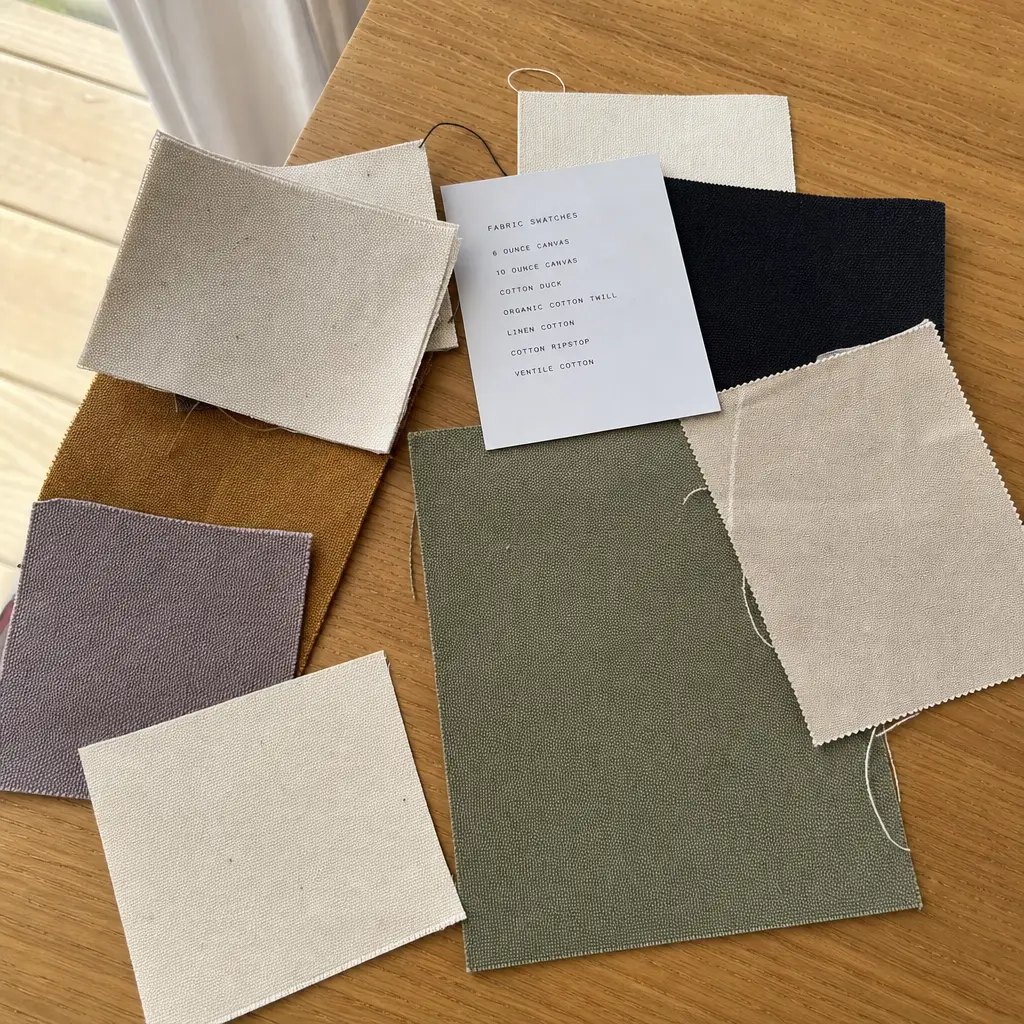
Start With The Bookstore Use Case
A university bookstore tote has to do more than carry a campus logo. It may sit on a retail fixture with a price tag, move through ecommerce fulfillment, go into an orientation kit, or support a department event with a fixed delivery date. Those uses look similar in a mockup, but they do not source the same way. A paid retail tote needs stronger fabric, cleaner finishing, reliable barcode handling, and a logo that still looks centered when the bag is filled. A one-day giveaway may place more weight on unit cost, fast packing, and a simple print.
Logo placement belongs inside that buying context. A seal that looks balanced in a PDF can sit too close to the top hem after sewing. A wide athletics wordmark can read well on a flat sample but bend into the side fold once textbooks are inside. A bookstore sub-line that looks sharp on screen can soften on 10 oz canvas. Before requesting quotes for wholesale organic cotton totes for university bookstores, define the sales channel, load, approval path, and deadline. The supplier can then quote the bag as a product, not a loose promotional item.
It also helps to name the approvers early. The bookstore buyer may care most about retail quality and margin. Licensing may control seal use and color. Athletics may control mascot artwork. Ecommerce may insist on a barcode position that scans after folding. When those stakeholders enter after sampling, even small corrections can cost weeks. A clear placement guide gives each person something measurable to approve.
- Paid retail merchandise: prioritize fabric body, clean print edges, hangtag or barcode application, shelf appearance, and repeat-use durability.
- Reusable checkout tote: prioritize cost control, carton efficiency, handle strength, fast counting, and simple logo execution.
- Orientation or welcome kit: prioritize confirmed delivery date, department sorting, consistent logo placement, and manageable carton labels.
- Licensed university product: prioritize artwork approval history, Pantone control, claim wording, inspection records, and sample sign-off.
- Ecommerce item: prioritize individual protection, scannable barcode, low lint transfer, clean folding, and accurate SKU separation.
Write The RFQ So Quotes Are Comparable
A vague request for an organic cotton tote with a university logo invites assumptions. One factory may quote 8 oz fabric, another 12 oz. One may include screen charges, another may list them later. One may assume bulk packing, while the bookstore expects barcoded units. The result is a spreadsheet that looks competitive but does not compare equal products. A better RFQ sets the physical bag, artwork, sample sequence, packing, documentation, and shipping assumptions in plain terms.
For campus buyers, separate the base bag from each logo version. The main bookstore, alumni office, admissions team, athletics shop, and departments may all want the same tote body with different marks. Combining the base quantity can help with fabric and sewing efficiency, but every logo version still has its own print setup, strike-off, sample review, inspection check, carton mark, and SKU record. Ask the supplier to show base bag cost, print cost by version, screen or setup charges, sample charges, and packing charges separately.
Measurements should be written as production instructions, not only shown visually. State the finished bag width and height, gusset depth, handle drop, handle width, logo size, print side, and distance from the top opening to the top edge of the artwork. If a gusset is used, say whether the logo is centered on the visible front panel or the total flat width. That one sentence can prevent a logo from looking slightly shifted on every filled bag.
- Include finished bag size, gusset depth, fabric GSM or oz, handle drop, handle width, stitch reinforcement, fabric color, and dimensional tolerance.
- Include artwork file type, number of colors, Pantone references, logo size, print position, print side, and license approval status.
- Include sample sequence: digital proof, printed strike-off, pre-production sample, correction round if needed, and final signed sample.
- Include commercial details: quantity by logo version, setup charges, sample fees, payment terms, incoterm, port, and quote validity date.
- Include packing details: inner pack, carton quantity, barcode, hangtag, carton marks, mixed-carton rules, SKU separation, and final destination.
Choose Fabric By Load And Retail Feel
Organic cotton fabric weight affects print quality, sewing, freight, shelf presentation, and customer perception. A 5 oz or 6 oz bag can work for a light event giveaway, but it usually feels thin for bookstore retail. Many buyers begin paid campus tote specifications at 10 oz to 12 oz canvas, roughly 280 to 340 GSM. That range gives the front panel enough body for a clean logo, reduces show-through, and supports books, apparel, bottles, and other mixed bookstore purchases.
Heavier is not automatically better. A 14 oz or 16 oz organic cotton canvas can feel premium, but it adds cost, carton weight, and folding bulk. It can also place more stress on needles and seams, especially around handle reinforcement. If the bookstore wants compact stacks at checkout or efficient ecommerce storage, the extra stiffness may be unwelcome. On the other hand, fabric that is too light may ripple under the screen, wrinkle during handling, and make the logo look less crisp than the approved digital proof.
Ask for the fabric tolerance in writing. A quote should not stop at 10 oz canvas or 320 GSM. It should state the allowable variation and how the factory will check it. A mill report can help, but buyers should confirm that the report applies to the production lot. Keep an approved swatch or pre-production sample for comparison. Organic cotton is a natural material, so small shade and texture differences can occur; the point is to define what is acceptable before bulk cutting begins.
- 6 oz to 8 oz, about 170-230 GSM: workable for light promotional use, short-term events, and lower-load giveaways.
- 10 oz to 12 oz, about 280-340 GSM: common for bookstore retail totes, welcome packs, and reusable shopping bags.
- 14 oz and higher: useful for premium merchandise when freight, folding thickness, needle selection, and sewing cost are acceptable.
- Natural canvas: strong organic cotton signal but may warm or dull white, gold, gray, and pale school colors.
- Dyed canvas: stronger brand color options but can add fabric MOQ, dye-lot tolerance, crocking checks, and colorfastness testing.
- Custom construction: confirm whether the bag uses plain weave, canvas, duck, or twill because hand feel and print behavior differ.
Map Logo Placement On The Actual Panel
The best logo placement guide starts with the real tote construction. Lay the bag flat and mark the top opening, side seams, bottom seam, handle stitch boxes, gusset fold lines, and body center line. For many standard bookstore totes, placing the top of the main artwork 2.5 to 3.5 inches below the bag opening gives the print room to sit below the hem and handle reinforcement. Keeping at least 1.5 inches from side seams helps prevent wide artwork from bending into folds.
Centering is not always as simple as dividing the flat width in half. On a gusseted tote, part of the flat edge becomes the side face when the bag opens. If the logo is centered across the full flat width, it may look slightly off on the visible front panel. Circular seals, shields, and mascot icons make this especially obvious because the eye catches uneven spacing quickly. Check the placement with the bag lightly opened and hanging from the handles, not only pressed flat on a table.
The placement sheet should name the measurement points. Include the print box size, logo size, top distance, side clearance, bottom clearance if relevant, and whether the reference is the visible front panel or full flat bag. Also ask whether printing will happen before or after sewing. Printing before sewing can give a flatter print surface, but sewing alignment must be controlled afterward. Printing after sewing can improve final-position control, though seams, gussets, and hem bulk may limit the printable area.
- Standard 15 x 16 in tote: an 8-10 in wide horizontal logo is often practical, depending on artwork complexity.
- Circular seal: test 5-7 in diameter first, then confirm whether ring text, dates, and small icons remain readable on canvas.
- Top placement: keep artwork below the top hem and handle reinforcement area to avoid distortion and uneven ink pressure.
- Side clearance: keep at least 1.5 in from side seams; increase clearance for gusseted totes or wide wordmarks.
- Two-sided print: confirm whether front and back use the same reference points after sewing, pressing, and folding.
- Bottom placement: avoid fine text near the bottom seam where fabric curl, carton compression, and folding can affect readability.
Match Print Method To The Artwork
Screen printing remains the practical choice for many wholesale organic cotton tote orders. It works well for one to three solid university colors, gives predictable pricing at volume, and can produce a clean retail look when the artwork is prepared correctly. Water-based ink is often requested for organic cotton because it can feel softer than a heavy surface print. Still, it must be tested for opacity, curing, crocking, wash behavior, and edge sharpness on the actual fabric.
University artwork can be more demanding than a normal promotional logo. Seals may include Latin text, dates, rings, fine rules, and small icons. Athletics marks may combine large blocks of color with narrow outlines. Bookstore marks may include a university name plus a smaller store, campus, or sponsor line. On textured canvas, small counters in letters can close, thin strokes can break, and tight color registration can shift. The factory should review the vector file before confirming mesh, ink system, underbase needs, and minimum printable detail.
Transfers, digital printing, and embroidery can be useful in the right order. Transfers may hold detail and many colors, but the hand feel can be less natural. Digital printing can help with short runs or full-color artwork, yet brightness and durability vary by fabric and curing method. Embroidery can look premium for a small accent or woven-style branding, but a dense front seal may pucker the panel and raise cost. The method should follow the artwork, not the other way around.
- One to three solid colors: screen print usually gives the best balance of cost, durability, and repeatability.
- Natural canvas with dark ink: generally easier to control than pale ink on dark or dyed fabric.
- Dark canvas with light ink: request an opacity strike-off and check whether an underbase or extra pass is needed.
- Fine type below 6 pt: review carefully because textured canvas can fill small letterforms or break thin strokes.
- QR codes: print a strike-off and scan it from realistic distances after folding and handling before approving bulk production.
- Large ink coverage: evaluate hand feel, cracking risk, drying time, blocking in cartons, and fold marks.
Control Color, Licensing, And Claims
Campus colors rarely behave the same on every surface. Navy, maroon, forest green, orange, gold, and black can shift when printed on natural organic cotton instead of coated paper or bright white fabric. Pantone references are useful, but the final appearance depends on the cotton shade, weave texture, ink chemistry, curing, and lighting. If licensing depends on an exact color range, approve a physical strike-off on the actual production fabric or on a clearly documented substitute.
Licensing should be built into the timeline. The factory should not expose screens, cut labels, or begin bulk printing until the artwork version is locked. If a university mark changes after setup, the buyer may face new screen charges and sample delays. Keep a dated approval record for each logo version, especially when the order includes bookstore, athletics, alumni, department, sponsor, or co-branded marks. The record should identify the artwork file name, color references, print size, placement, and approval authority.
Organic cotton claim language needs the same discipline. A tote made with organic cotton does not automatically qualify for every certification logo or sustainability claim. If the buyer wants GOTS, organic, recycled, fair-trade, or similar wording on a hangtag, care label, carton, or product page, the supplier must support the exact claim with relevant documentation. Avoid placing unsupported certification wording near the university logo, where it may imply a formal endorsement.
- Provide vector artwork in AI, EPS, or print-ready PDF with fonts outlined and colors separated.
- State Pantone Solid Coated or Uncoated references and identify whether physical sample approval controls final color.
- Keep approved artwork files and dated approvals for bookstore, athletics, alumni, department, sponsor, and event marks.
- Ask whether the supplier can provide transaction certificates, scope certificates, material declarations, or other relevant organic cotton documentation.
- Do not print certification logos or claim language unless the documentation supports the exact claim on the exact order.
- Confirm whether hangtags, care labels, carton labels, and ecommerce copy use the same approved claim wording.
Compare MOQ And Landed Cost Honestly
MOQ is not one number. It can be driven by fabric availability, fabric color, cutting efficiency, sewing setup, print method, logo versions, sample requirements, packing, inspection, and export carton planning. A simple one-color logo on stocked natural organic canvas may have a lower minimum than custom dyed fabric with several department marks and individual barcoding. Ask the supplier to explain which part of the order controls the minimum quantity.
A shared base bag can work well for university buyers. The bookstore, alumni office, admissions team, athletics shop, and departments may use the same construction while changing the front artwork. This can improve fabric purchasing and sewing efficiency, but it does not remove print setup. Each logo version may need its own screen, strike-off, approval, run record, QC check, carton mark, and packing list. A clear quote shows where the cost changes as another logo is added.
Look beyond ex-factory unit price. A 12 oz tote with individual polybagging may cost more to ship than a bulk-packed 10 oz tote. A low unit cost can be wiped out by barcode rework, receiving confusion, failed inspection, or emergency air freight after a late approval. Before awarding the order, request estimated carton dimensions, gross weight, pieces per carton, total carton count, and packing method. Landed cost is where the real comparison lives.
- Base bag MOQ: driven by fabric sourcing, cutting yield, sewing efficiency, and finished construction.
- Logo version MOQ: driven by screens, setup time, print changeover, sample approval, and QC records.
- Fabric color MOQ: custom dye lots may require a higher minimum than natural, bleached, or stocked fabric.
- Packing MOQ: individual bags, hangtags, barcodes, inner cartons, and SKU sorting increase labor and material planning.
- Inspection cost: more logo versions and destinations can increase sampling time, reporting, and documentation needs.
- Landed cost: include carton cube, gross weight, freight mode, duties, receiving labor, rework risk, and missed-date exposure.
Approve Samples With Measurable Feedback
A digital proof is helpful, but it does not show cotton shade, fabric body, print hand feel, opacity, seam bulk, handle drop, or folded presentation. For bookstore retail or licensed university product, approve a printed strike-off and a full pre-production sample before bulk production. The strike-off checks ink color, edge quality, detail readability, and curing on the chosen fabric. The pre-production sample checks the finished tote as the customer will receive it.
Sample comments should be specific enough for production to act on. Instead of saying the logo feels too high, state the revised distance from the top opening to the top edge of the artwork. Instead of saying the blue is off, state whether production should match the Pantone reference, the previous approved sample, or a new strike-off. If the handles feel weak, specify the reinforcement change or load test expectation. Clear comments reduce interpretation across sales, sampling, printing, sewing, and QC teams.
After approval, keep physical references. The factory should retain one signed sample, and the buyer should keep a matching sample or detailed approval record. Final inspection should compare bulk production against that reference. If a strike-off used substitute fabric because final fabric was not ready, document that limitation. Otherwise, a color or texture difference can become a dispute after the order is already packed.
- Strike-off approval: confirm ink color, opacity, edge quality, detail readability, hand feel, and curing on actual or approved fabric.
- Pre-production sample: confirm finished dimensions, handle drop, logo placement, label, hangtag, barcode, folding, and packing.
- Logo placement tolerance: commonly within +/-0.25 in for standard screen printing if agreed before production and measured consistently.
- Finished size tolerance: define by dimension and clarify whether measurement is before or after pressing, steaming, or washing.
- Handle pull test: use a load that reflects books, apparel, drinkware, laptops, and normal campus use rather than an abstract promotional standard.
- Print durability: specify rub test, tape test, wash test, crocking check, or other checks based on the retail claim and expected use.
Build QC Into The Purchase Order
Quality control works best when it is written into the purchase order, not raised after cartons are finished. Define the inspection standard, sample size or AQL level, key measurements, and defect classes before production begins. This matters even more when the order includes several logo versions. A small placement shift on an internal event tote may be acceptable; a crooked university seal on a paid retail item may not be. The PO should make those differences clear.
Logo placement inspection should use the same reference points used during approval. Lay the tote flat, align the body panel, and measure from the top opening to the artwork, from side seams to artwork edges, and from the center line where required. For gusseted totes, inspect the visible front panel and then view the bag lightly opened to see whether the logo bends into the side. For two-sided printing, check both sides unless the back print has a different agreed tolerance.
Construction QC protects the bookstore from returns and reputational noise. Inspect handle width, handle drop, reinforcement stitching, seam strength, loose threads, puckering, skipped stitches, stains, odor, and contamination. If bags are expected to carry books, bottles, laptops, or mixed merchandise, include a handle pull test suitable for that use. Print QC should cover opacity, pinholes, bleeding, cracking, registration shift, curing, crocking, and small-detail readability. Packing QC should confirm SKU, logo version, barcode, quantity, and carton mark.
- Critical defects: wrong logo, wrong university mark, unsupported certification claim, severe stains, unsafe construction, or unusable barcode.
- Major defects: visible logo misplacement, poor opacity, registration shift, weak handle reinforcement, wrong packing, or incorrect carton count.
- Minor defects: small loose threads, minor wrinkles, slight shade variation within agreed tolerance, or light removable lint.
- Measurement checks: bag width, height, gusset, handle drop, handle width, print location, print size, and carton quantity.
- Documentation checks: approved sample, inspection report, packing list, organic cotton documents, claim wording, and final carton marks.
- SKU checks: confirm that logo version, barcode, hangtag, carton label, and packing list match the bookstore purchase order.
Plan Packing For Store Operations
Packing is not just the last line on the quote. It affects receiving labor, shelf presentation, ecommerce fulfillment, freight volume, and campus waste policies. Bulk packing is usually lower cost and uses less material. It works well when staff will place totes behind a register, refill a display bin, or unpack into backroom storage. Individual packing can reduce handling marks and support online orders, but it adds labor, material, carton cube, and receiving time.
Match the packing to the selling path. A retail shelf item may need a hangtag, belly band, barcode sticker, or consistent fold that fits the fixture. An ecommerce item may need individual protection and a barcode that scans after folding. A department order may need cartons marked by destination. If multiple logos ship together, separate cartons by logo version unless mixed cartons are specifically approved. Mixed cartons can save space, but they also create receiving errors when staff count against several purchase orders.
Ask for carton data before freight is booked. Totes are not fragile, but 10 oz to 12 oz canvas can become bulky, especially with long handles or individual bags. Confirm pieces per carton, carton dimensions, gross weight, net weight, total carton count, and carton marks. The right tote can still create a problem if it arrives without barcode alignment, in the wrong mixed carton, or after the floor set date.
- Backroom replenishment: bulk pack 50-100 pcs per carton with inner bundles for easier counting, if carton weight remains manageable.
- Retail shelf: fold consistently and apply buyer-approved hangtag, belly band, barcode, or price label.
- Online fulfillment: individual packing can reduce handling marks but increases carton cube, material use, and receiving labor.
- Multi-logo orders: pack each logo version separately and mark cartons with PO, SKU, logo name, quantity, and carton number.
- Multiple destinations: show ship-to location, department, campus store, or event name on carton marks and packing list.
- Final receiving: make carton count, SKU count, barcode data, and logo version match the buyer purchase order exactly.
Specification comparison for buyers
| Spec decision | Recommended option | When it fits | Buyer risk to check |
|---|---|---|---|
| Fabric weight for bookstore retail totes | 10 oz to 12 oz organic cotton canvas, approximately 280-340 GSM, with agreed GSM tolerance | Paid retail totes, welcome packs, alumni merchandise, reusable checkout bags, and campus department orders | Too-light fabric can wrinkle, distort during printing, and feel promotional; too-heavy fabric raises freight, carton cube, needle stress, and folding difficulty |
| Finished bag size | Common retail range: 14-16 in wide by 15-17 in high, with optional 3-5 in bottom or side gusset | Books, apparel, notebooks, drinkware, gift items, and mixed bookstore merchandise | A logo centered on total flat width can look off-center when the gusset opens; define visible front panel measurements |
| Front logo position | Top of artwork 2.5-3.5 in below bag opening, centered on visible body panel, with at least 1.5 in side clearance | University seals, bookstore wordmarks, department logos, mascot graphics, and alumni marks | Logo placed too high can distort near the top hem or handle reinforcement; logo too wide can bend into side seams or gusset folds |
| Logo size for standard totes | Usually 8-10 in wide for horizontal marks or 5-7 in diameter for circular seals, adjusted after print-detail review | Retail totes where the logo should read from a shelf, register area, or campus event table | Fine seal text, hairline rules, and small sponsor marks may fill in or break on textured canvas |
| Print method for main logo | Water-based or compatible screen print for simple 1-3 color artwork, with curing method confirmed | Organic cotton positioning, softer hand feel, medium to large runs, and repeat bookstore orders | Ink opacity, crocking, curing, and edge sharpness must be checked on actual fabric, especially natural or dyed canvas |
| Print method for detailed or multi-color marks | High-mesh screen print, transfer, or digital print after artwork and fabric review | Fine serif type, complex mascot art, gradients, short-run versions, small QR codes, or many colors | Transfers may feel less natural; digital print brightness can vary by fabric; QR codes require scan testing after print and folding |
| Handle specification | Self-fabric or cotton webbing handles 1-1.25 in wide, 20-24 in total length or specified handle drop, with box-X, cross stitch, or bar tack reinforcement | Bookstore totes carrying textbooks, apparel, bottles, laptops, and daily campus purchases | Long handles may drag or sit low on display; weak reinforcement, low stitch density, or poor back-tacking can cause early failures |
| Dimensional tolerances | Finished size commonly controlled within +/-0.25 to +/-0.5 in depending on construction; print placement often +/-0.25 in if agreed | Retail-grade production where multiple cartons and logo versions must look consistent | Tolerance must be stated on the PO and measured from the same reference points; fabric shrinkage and pressing can change finished measurements |
| MOQ planning | Separate MOQ by base bag, fabric color, logo version, print setup, sample type, and packing style | Orders shared by main bookstore, athletics, alumni, admissions, and departments using one approved base tote | Splitting many logos across small quantities can multiply screens, samples, approvals, QC checks, and carton sorting |
Buyer checklist before sampling
- Define the bag use: paid retail merchandise, reusable checkout bag, orientation kit, alumni event, department giveaway, ecommerce item, or bookstore private-label product.
- Confirm the selling or distribution channel because fixture display, POS scanning, online fulfillment, and department receiving affect packing and labeling.
- Specify organic cotton fabric weight in oz and GSM, including acceptable tolerance, construction type, and whether the fabric is natural, bleached, dyed, or custom dyed.
- Provide finished bag width, height, gusset depth, handle drop, handle width, seam allowance expectations, reinforcement type, stitch density expectation, and dimensional tolerance.
- State expected load: light apparel, notebooks, textbooks, drinkware, laptop accessories, dorm items, or mixed bookstore merchandise.
- Send vector artwork with outlined fonts, separated colors, exact Pantone references, approved file name, and university licensing approval status.
- Mark logo placement from top opening, side seams, center line, bottom seam, handle stitch box, and gusset fold on a flat bag layout.
- Define logo size in inches or centimeters, not only as a percentage in a digital mockup.
- State whether approval must follow university licensing, athletics, alumni, department, bookstore, sponsor, or co-brand rules.
- Choose print method based on artwork detail, color count, fabric color, ink hand feel, durability expectations, order quantity, and retail price point.
Factory quote questions to send
- What organic cotton fabric weight do you recommend for this tote size and expected campus load, and what is the actual GSM tolerance you can control in production?
- Is the quoted fabric greige, natural, bleached, dyed, or custom dyed, and does the fabric color or dye lot require a separate MOQ or longer lead time?
- Can you quote the base bag separately from each logo version so we can see fabric, sewing, print, screen, sample, and packing costs clearly?
- Which print method are you quoting for our artwork, and are screen charges, color matching, strike-offs, curing, setup, and re-screening fees included?
- What is the maximum clean print area before seams, handles, gussets, hem bulk, or fabric folds affect logo flatness?
- What logo placement tolerance can your production line hold across the order, measured from top opening, side seams, center line, and gusset fold?
- Can you produce a printed strike-off on actual production fabric before making the full pre-production sample?
- Can you produce a pre-production sample with actual fabric, handle construction, label, hangtag, barcode, logo placement, folding, and packing before bulk cutting?
- For our university colors, will you match to Pantone Solid Coated, Pantone Solid Uncoated, a textile reference, or the approved physical sample?
- How will you prevent fine seal text, mascot lines, bookstore sub-lines, sponsor marks, and QR codes from filling in or breaking on textured organic cotton canvas?
Quality-control points to confirm
- Measure finished bag width, height, gusset depth, handle drop, handle width, and handle alignment against the approved sample and tolerance sheet.
- Check fabric weight by GSM test, supplier mill report, or approved swatch comparison before mass cutting, and record the method used.
- Confirm fabric color, weave texture, hand feel, shrinkage behavior, and shade lot consistency against the approved production sample.
- Measure logo placement from top opening, left seam, right seam, bottom seam, gusset fold, handle stitch box, and bag center line on a flat tote.
- Compare print color to approved Pantone target or physical strike-off under consistent lighting, and record Delta E only if that measurement is agreed in the order.
- Inspect print edges for bleeding, pinholes, poor opacity, ink cracking, registration shift, scumming, ghosting, blocked fabric texture, and uneven curing.
- Check that small seal type, mascot details, bookstore sub-lines, sponsor marks, legal marks, and QR codes remain readable and functional.
- Perform a handle pull test suitable for expected campus load, especially when bags are sold for books, bottles, laptops, or mixed merchandise.
- Check reinforcement stitching, seam strength, stitch density, skipped stitches, loose threads, seam puckering, top hem consistency, and handle alignment.
- Review odor, stains, oil marks, needle holes, mildew risk, dye transfer, lint, shade panels, and contamination before packing.