Start With The Packing Problem, Not The Tote
For university bookstores, the carton plan is not a warehouse afterthought. It is part of the product. A tote that looks fine on a sample table can still fail in receiving if the cartons are too heavy, the counts are inconsistent, the labels do not match the purchase order, or the packing format slows store replenishment. That is why the first sourcing question should be how the factory will pack the goods, not just how the bag will look.
Treat the order as a retail logistics item with a branded face, not only as a textile item. The buyer needs a carton configuration that stores can receive quickly, open cleanly, and shelve or store without rework. If the supplier cannot describe carton count, carton size, gross weight, and label layout before quoting, the quote is not complete enough to compare.
- Separate the tote spec from the packing spec in the RFQ.
- Decide early whether the bookstore needs bulk packs, individual polybags, or shelf-ready retail packs.
- Make the supplier state carton count by SKU, not only total quantity.
Choose Fabric Weight For Retail Use, Not Just Lowest Cost
The safest baseline for many bookstore programs is 6 oz / 170 gsm organic cotton. That weight gives enough body for resale, event giveaways, and daily campus use without pushing the tote into a heavy, expensive, or stiff product. If the bag is meant to carry books, notebooks, or a water bottle, the fabric should feel sturdy in hand and hold shape after folding and shelf display.
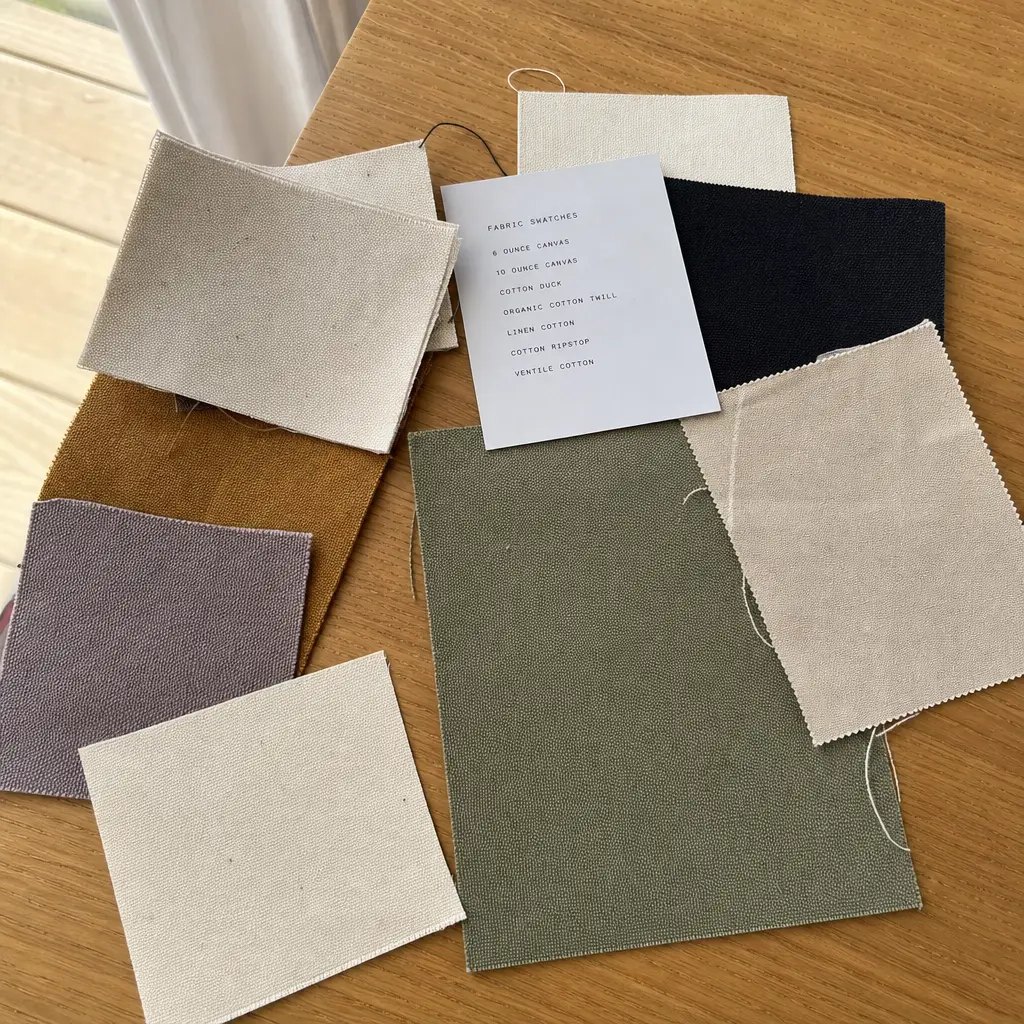
Heavier fabric can be useful, but it changes more than appearance. At 8 oz / 240 gsm, the bag usually needs stronger sewing discipline, a better handle attachment, and a carton plan that respects weight limits. Lighter fabric can lower cost, but it also increases transparency, wrinkling, and perceived value risk. The buyer should approve the fabric by actual swatch and finished sample, not by a marketing description.
- Use 170 gsm as a practical starting point for most bookstores.
- Move heavier only when the retail price point or use case justifies it.
- Confirm whether the quote states pre-shrink or finished GSM.
Match Print Method To Artwork And Handling
Most university bookstore logos do best with screen print. It is predictable, repeatable, and usually easier for a factory to control across a medium or large run. A one-color or two-color screen print keeps setup manageable, gives clear edges, and works well on natural cotton. For simple campus logos, this is usually the cleanest commercial choice.
Print method should also be judged against carton handling. If the totes are packed flat and stacked tightly, a thick or under-cured print can pick up marks before the box reaches the store. The sample should be folded the way the factory plans to pack it. Then inspect for ink transfer, blocking, and edge cracking after pressure. A good print on an unhandled sample is not enough.
- Use screen print for most bookstore logos and wordmarks.
- Check rub resistance after folding and carton pressure.
- Avoid overly thick decoration if the tote will be stacked tightly in cartons.
Build MOQ Around Carton Math, Not Just Factory Policy
MOQ on paper is less important than MOQ by practical carton logic. A supplier may say 1,000 pieces minimum, but if the carton plan requires 80 pieces per carton and the order has three size or color combinations, the real packing minimum becomes more complicated. The buyer should ask how many pieces fit safely per carton, how many cartons per SKU, and whether mixed-SKU cartons are allowed or a mistake.
This matters because university bookstore orders often need split destinations, seasonal replenishment, or different campuses in one program. If the factory can only pack one style per carton, the buyer may need more cartons and more labels, but the receiving process becomes cleaner. If the factory mixes styles to save cartons, the warehouse may lose time sorting. The quote should show where that tradeoff lands.
- Ask for MOQ by color, artwork, and packing format.
- Get a carton count assumption before agreeing to production volume.
- Use volume tiers in the quote so you can compare 1,000, 3,000, and 5,000 piece pricing logic.
Compare Supplier Routes Before You Compare Unit Prices
A direct factory is usually the best route when the tote needs controlled sewing, print, and carton packing in one workflow. The buyer can set the carton count, review the packing marks, and reduce handoffs that create errors. The risk is that the buyer must be specific about instructions. If the order is vague, the factory will fill the gaps with its default packing routine, which may not suit bookstore receiving.
A trading company can still make sense if the buyer needs consolidation across multiple factories, but only if the actual production site and QC owner are clear. Local print-on-blank routes can work for emergency replenishment, yet they often raise landed cost, complicate color matching, and make carton consistency harder. Use the table below as a routing decision, not just a price comparison.
- Direct factory: best control over packing and QC.
- Trading company: useful for consolidation, but verify the real factory.
- Local finishing: useful for speed, but compare landed cost and consistency.
Approve Samples Against Real Shipment Conditions
A sample should not be approved as a standalone tote. It should be approved as a shipping unit. That means the buyer should see the exact fabric, exact stitching thread, exact print method, exact folding method, and at least one representative carton label. If the factory plans to pack 60 pieces per carton, the sample check should include a folded stack or packed carton photo, not only a hanging bag.
The sample also needs a simple abuse check. Load it with a realistic campus carry, let it sit folded, and inspect for handle distortion, seam stress, print cracking, and corner wrinkling. If the buyer wants the tote to arrive shelf-ready, the carton sample should also be checked for odor, moisture, and packing neatness. These are small issues until they become store complaints.
- Approve one pre-production sample with final artwork and final packing method.
- Inspect a packed sample, not only a loose sample.
- Reject any sample that hides fabric shrinkage, misaligned print, or sloppy fold lines.
Write A Carton Packing Plan The Warehouse Can Follow
A good carton packing plan tells the factory exactly how the tote should move from sewing table to bookstore shelf. The plan should include folded size, carton count, inner packing format, carton dimensions, gross weight target, shipping marks, and whether cartons are palletized. If the buyer wants separate packing by campus, store number, or PO line, that instruction should be written into the PO and the artwork file, not left as a verbal note.
For many bookstore programs, bulk packing is the most efficient option. It lowers material use and speeds production. But bulk packing only works if the bookstore can receive and store it without repacking. If the bags need to reach retail display in tidy condition, use clean inner packs or a light polybag, then test whether that changes carton fill and freight cost. The carton plan should be built around the receiving workflow, not just the factory's fastest method.
- Define folded size so cartons stack consistently.
- State whether cartons are mixed or single-SKU.
- Include carton labels that match PO, SKU, campus, and quantity.
- Require carton photos before shipment.
Set Lead Time Buffers Around Peak Campus Buying
University bookstore demand often moves with orientation, homecoming, graduation, and gift seasons. A tote program that lands late is usually as bad as one that misses the spec. The buyer should separate production lead time from transit time and from receiving time. A factory may quote a short sewing schedule, but if carton packing, booking, and export documentation are not already aligned, the order slips.
Use a lead time that includes sample approval, final material confirmation, production, packing, and handover. If artwork is still changing after sampling, the schedule should be extended. If the buyer needs split delivery by campus, add more time. In practice, the safest schedule is the one that assumes one correction round and one packing confirmation round before cargo is released.
- Do not mix production lead time with freight time.
- Add buffer for artwork revisions and packing revisions.
- Ask the supplier when raw cotton, print screens, and cartons are actually booked.
Read The Quote On Landed Cost, Not Ex-Factory Price
A low ex-factory number can hide expensive packing choices, weak carton math, or a freight problem. For this category, the quote should be read as a landed-cost exercise. The buyer needs to know how much the tote costs to make, how much it costs to pack, how many cartons it creates, and whether the carton format will raise freight or warehouse handling costs. The cheapest tote is not the cheapest program if it creates more labor at receiving.
Ask the factory to split the quote into fabric, cutting and sewing, print, packing materials, carton charges, and export preparation. That structure makes it easier to compare suppliers on the same basis and to see where one offer is cheaper because it removed quality control, not because it improved efficiency. The quote should also note what is included in the sample fee, what is refundable, and whether a reprint or repack would be charged if approval changes.
- Compare quotes on the same carton count and packing format.
- Separate manufacturing cost from packing and export preparation.
- Use quote transparency to expose hidden QC shortcuts.
Specification comparison for buyers
| Spec decision | Recommended option | When it fits | Buyer risk to check |
|---|---|---|---|
| Sourcing route | Direct factory with sewing, print, and carton packing in one site | Best for repeat university bookstore programs that need consistent packing marks and carton counts | Confirm who controls packing finalization and whether the factory will carton-pack by campus, store, or SKU |
| Sourcing route | Trading company or sourcing agent with factory coordination | Useful when the buyer needs multi-factory consolidation or cannot audit every plant | Ask for the actual production site, not only the trading company office, and verify QC ownership |
| Sourcing route | Blank tote import plus local print finishing | Fits rush replenishment or very small artwork runs | Check landed cost, local print shrinkage, and whether local packing still matches bookstore requirements |
| Fabric weight | 6 oz / 170 gsm organic cotton as the baseline | Good for general bookstore resale, events, and everyday carry | Make sure the quote states finished GSM, not only fabric ounce, and confirm shrinkage after wash |
| Fabric weight | 8 oz / 240 gsm or heavier body | Fits premium retail positioning or tote programs that need more structure | Higher weight can increase sewing cost and carton weight, so test handle comfort and carton limits |
| Print method | 1 to 2 color screen print with controlled ink coverage | Best for logos, campus marks, and clean retail graphics | Check rub resistance, curing temperature, and whether print sits flat after folding |
| Print method | Water-based print or low-build decoration for soft hand feel | Useful when the bookstore wants a more natural look and lighter retail touch | Confirm opacity on natural cotton and verify no strike-through on lighter colors |
| Carton loading | 50 to 100 pcs per carton depending on tote size and folded thickness | Works for shelf-ready retail replenishment and manageable warehouse handling | Confirm carton gross weight, carton dimensions, and whether cartons stay within carrier limits |
| Packing route | Bulk pack with size-assorted inner polybags only if print rub risk exists | Good when the buyer wants lower packing cost and faster warehouse receiving | Check whether the bookstore can accept bulk packs or needs one-piece retail packing and barcode labels |
Buyer checklist before sampling
- Confirm the exact tote size, gusset depth, handle length, and finished GSM before discussing price.
- State whether the bookstore wants bulk packing, polybag packing, or retail-ready packing with barcodes.
- Request a sample printed with the final artwork, final fabric weight, and final thread color.
- Ask for carton count per SKU, carton dimensions, gross weight, and pallet pattern if pallets are required.
- Verify whether the supplier has in-house sewing, printing, and packing or outsources any of those steps.
- Set acceptance criteria for print registration, stitch strength, edge trimming, and fabric stains.
- Ask the factory to quote by volume tiers so you can see the break between MOQ, repeat orders, and reorders.
- Require production photos of packed cartons before shipment, not only photos of finished totes.
Factory quote questions to send
- What is the finished fabric weight in gsm, the yarn count if available, and the shrinkage allowance used in production?
- Which print method will you use, how many colors are included, and what is the print setup charge if artwork changes?
- What is the MOQ by color, by artwork, and by carton configuration?
- How many pieces per carton do you recommend, and what are the carton dimensions and gross weight?
- Can you quote the tote, print, packing, carton, and export preparation as separate line items?
- Will you send a pre-production sample with the actual fabric, actual print, and actual carton marks?
- Who performs final QC on sewing, print, and packing, and what inspection standard do you follow?
- What is the standard production lead time, and how does it change if the order needs special packing or barcodes?
Quality-control points to confirm
- Fabric weight must stay within the approved tolerance from the signed sample, not only the spec sheet.
- Handle stitches should not open, skew, or pucker when the bag is loaded with a realistic bookstore weight.
- Print edges should be clean, centered, and cured fully with no tackiness, cracking, or ghosting after folding.
- Seam allowance, gusset width, and tote opening should match the approved sample closely enough for retail display consistency.
- Carton labels must show style, color, quantity, buyer PO, and carton number in a format the warehouse can read quickly.
- Packed carton count must be exact, with no mixed counts and no overstuffed cartons that crush the tote shape.
- Any polybag, insert, or hangtag should match the bookstore's packing rules and recycling requirements.
- A final carton photo set should show carton sides, inside counts, and shipping marks before the goods leave the factory.