Start with the shipment job, not the tote itself
For tech startups, a tote is rarely a standalone purchase. It is usually one item inside a welcome kit, event pack, investor gift, or customer mailer, which means the bag has to work as part of a larger shipment. That changes the buying brief. Procurement is not just choosing a product; it is defining how a finished pack will be counted, folded, loaded, shipped, and received. When the brief ignores that reality, the quote may look fine while the actual shipment becomes awkward to pack or expensive to move.
The fastest way to get a useful quote is to define the job in operational terms. Say whether the tote is for internal onboarding, conference handouts, retail resale, or direct-to-employee shipping. Then specify what else goes in the carton, the expected finished pack weight, and whether the receiving location is a warehouse, office, or fulfillment partner. Those details shape the tote size, the fabric weight, the print method, and the carton layout more than the logo does. A supplier can price the real job only when the pack context is clear.
This is where many buyer briefs drift into generic procurement language. Instead of asking for “best price” or “premium quality,” ask for a tote that supports the actual kit contents with the fewest packing steps. A flat cotton tote can be the right answer for a lightweight startup kit, while a denser fabric or larger gusset may be needed if the tote must hold samples or a hoodie. The correct spec is the one that reduces repacking, protects the print, and keeps receiving simple.
Carton planning belongs in the first conversation because it affects more than freight. It influences how many pieces fit in a bundle, whether the tote can remain flat, and whether the outer carton can be handled without crushing the goods. If the goods are going into multiple offices or direct mail packs, the carton format also affects how easily the warehouse can split the shipment. Buyers who define carton expectations early usually get fewer surprises at the dock and fewer disputes about packing later.
A practical buyer brief should cover four things: the tote’s use case, the contents it must carry, the expected pack format, and the destination receiving method. That is enough for most factories to build a serious quote. Without those inputs, the quote tends to default to a generic bag offer that may not match the program’s operational needs. The result is often a cheaper unit price and a more expensive project.
For repeat programs, locking the tote spec and carton method together is especially valuable. The first order sets the standard for future reorders, so the finished size, fold direction, bundle count, carton marks, and inspection rules should all be documented. That gives procurement a stable baseline and reduces variation when the next launch or hiring wave comes around.
- Define the kit contents before asking for a tote price.
- Treat carton planning as part of the product spec.
- Name the receiving point early because warehouse rules affect pack format.
- Lock the first order as the baseline for reorders.
Choose fabric weight and weave based on load and handling, not branding alone
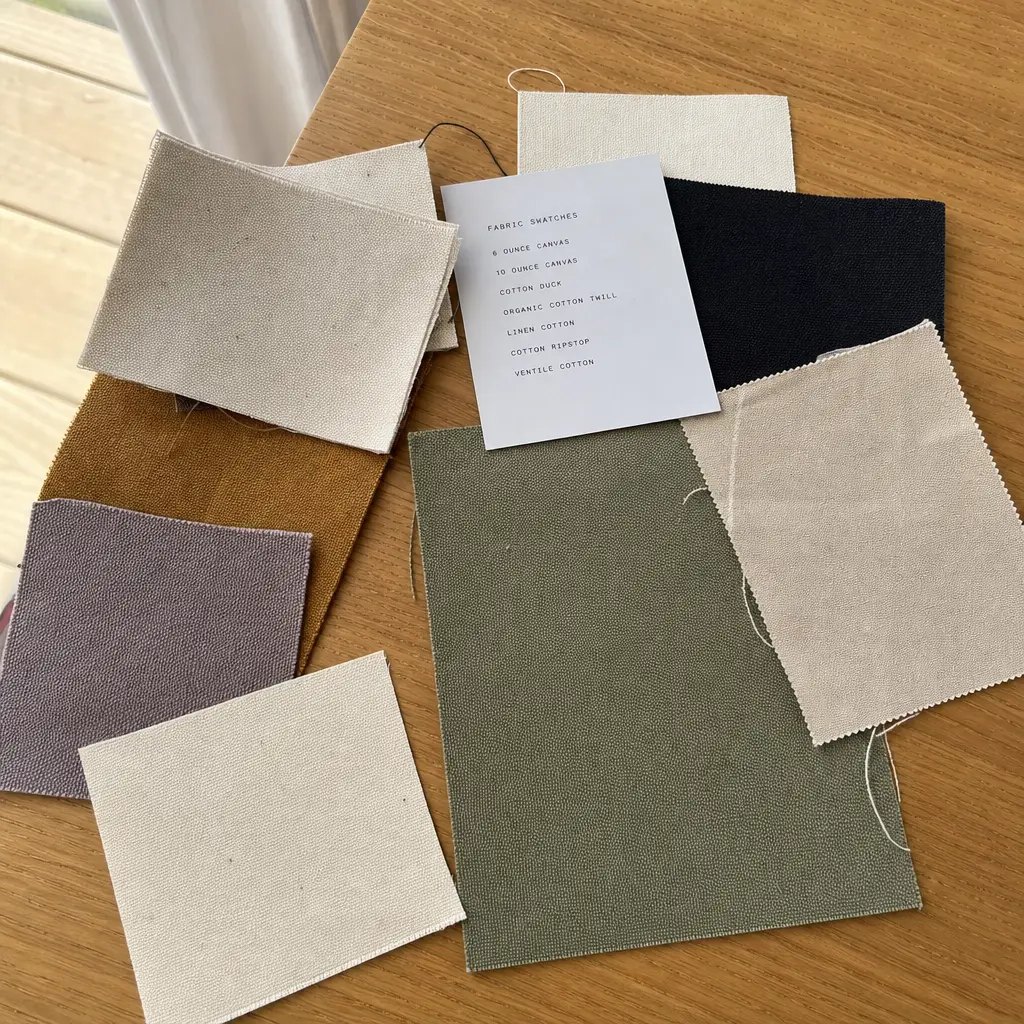
Most wholesale organic cotton totes for startup programs fall between 140 and 180 GSM. That band gives buyers enough structure for daily handling without making the bag so heavy that freight or carton density becomes a problem. A lighter fabric can work for flat inserts and event handouts, while a heavier one may be the better choice when the tote needs to carry samples, notebooks, or a compact welcome kit. The right GSM is not a style preference; it is a load and logistics decision.
Fabric weight alone does not tell the full story. Weave consistency, yarn quality, seam allowance, and handle reinforcement all influence how the tote behaves in production and in use. A clean 160 GSM tote with good stitching can outperform a poorly finished 180 GSM bag. When comparing suppliers, ask whether the cotton is plain weave, whether the fabric is pre-shrunk, and how much shrinkage is allowed after cutting and sewing. Those answers matter because a bag that changes shape after packing can create problems in a kit or in the carton.
Procurement should also ask for a tolerance range, not just a nominal GSM number. If the supplier quotes 160 GSM, ask for the accepted production band and whether the measurement is taken before or after finishing. That detail matters because mills and factories sometimes describe fabric weight differently. The same logic applies to shrinkage. If the seller cannot define the acceptable range, the quote is too vague for commercial comparison.
For practical buying, use the following guide: 140–160 GSM for light inserts, paper goods, and lower cube requirements; 170–180 GSM for stronger structure and heavier contents. If the tote will be reused often, or if it is expected to represent the brand as a retail item, a slightly heavier fabric may be justified. If freight cost and pack efficiency are the main constraints, a lighter fabric may be the better commercial tradeoff. Buyers should weigh both the user experience and the shipping impact.
Ask the supplier for a load test if the tote will carry dense contents. The useful test is not a generic visual approval; it is whether the handles, seams, and bottom panel hold under a realistic weight. Request photos or a sample result that shows the stress points. That is more useful than a broad statement that the bag is “strong enough.” Strong enough for what load, how many cycles, and with what fold pattern? Those are the questions that make the spec actionable.
Handle reinforcement deserves the same attention as fabric weight. Bartacks, box stitches, and seam overlap all affect strength and carton behavior. A tote that is heavier on paper but poorly reinforced can fail earlier than a lighter tote with better construction. If the bag is going into a startup kit, the buyer should prioritize the combination of load stability and packability over headline GSM alone.
- Use 140–160 GSM for light kits and lower freight pressure.
- Use 170–180 GSM when structure and load stability matter more.
- Ask for a stated GSM tolerance and shrinkage allowance.
- Load test handles and seams with a realistic kit weight.
- Check whether the fabric is pre-shrunk and plain weave.
Set dimensions from the contents, then verify fold behavior and carton fit
Bag size should come from the contents, not from a familiar catalog dimension. The common 38 x 42 cm format works well for many startup programs because it offers a balanced print area and easy handling. But if the tote has to hold a hoodie, a thicker sample set, or a branded box, the size or gusset may need to change. If the tote is too small, it becomes hard to load and may distort under pressure. If it is too large, it wastes carton space and increases freight cost.
Handle length is just as important as bag width and height. A short handle can look neat but be awkward for shoulder carry. A longer handle can improve usability but may increase folded height or create a bulkier carton profile. Ask the supplier for a dimension sketch that shows finished width, height, gusset depth, handle drop, handle width, seam allowance, and the measured finished size. That sketch should be the approval reference, because it defines both user comfort and carton nesting.
Buyers should also confirm whether dimensions are quoted as cut size or finished size. That distinction can materially affect fit. A tote that appears to match the brief on paper may end up slightly smaller after stitching. The same issue applies to the internal useable space after seams are formed. If the tote is intended to fit a specific onboarding pack or shipping insert, test the fit with the real contents before bulk approval.
Capacity affects branding too. A large logo can sit too high on a small panel or get interrupted by seams. A smaller logo can disappear on a large tote. Before quoting, provide the actual contents or at least the target pack dimensions so the supplier can advise on panel proportion, logo placement, and whether the bag should stay open-top or include a gusset. This is especially useful when the tote sits inside a kit and the final presentation matters as much as the utility.
A buyer should also ask how the tote folds. Some fabrics resist flattening, while others crease sharply or hold a bulky edge that makes carton packing inefficient. A tote that folds cleanly reduces pack variation and makes bundle counting easier. If your order will be packed in counted bundles, folding behavior can affect both carton height and receiving speed. That is an operational detail with direct cost implications.
Finally, check that the measurement method is consistent across all sizes you may reorder. If the first order is approved with one size interpretation and the reorder uses another, the warehouse may receive a tote that is technically similar but operationally different. For recurring programs, the cost of ambiguity usually shows up later as repacking or receiving delays.
- Size the tote to the actual contents and pack format.
- Confirm whether dimensions are finished size or cut size.
- Ask for a dimension sketch with seam allowance and handle drop.
- Test fold behavior because it affects bundle count and carton height.
- Approve logo placement on the tote when it is filled and folded.
Print method should match artwork detail, durability, and cure time
For simple logos, one- or two-color screen print is often the most practical choice. It is usually cost-effective at bulk volume and gives good durability on cotton when the artwork is not too fine. The tradeoff is detail: thin lines, small reverse text, and tight registration can fill in on the weave. That is why procurement should send vector art early and ask for a strike-off on the actual fabric. A digital proof is not enough to judge how the ink will sit on natural cotton.
Heat transfer can be a better fit when the artwork includes fine detail, gradients, or more colors than screen print can handle cleanly. It often preserves small elements better, but it may produce a different handfeel and surface finish. If your startup kit is meant to look textile-soft rather than sticker-like, ask how the transfer behaves after folding, rubbing, and carton compression. The real question is not whether the graphic looks sharp on screen, but whether it survives handling in production and transit.
Embroidery, woven labels, and sewn branding sit in a different cost and presentation category. They can add texture and premium value, but they also add bulk, setup time, and potentially more carton height. Those options make sense when the brand wants a more finished retail feel or a subtle mark rather than a large front panel logo. They are usually not the first choice if speed and packing efficiency are the primary goals.
A serious quote should define more than the print method. It should specify the number of print locations, the artwork size, the acceptable color range, and the allowed placement tolerance. If the logo can shift by a few millimeters, that should be written into the approval record. Buyers should also ask whether the ink requires curing time before the totes can be packed. If the bags are packed too early, the print can mark or stick during transit. That is a production detail with direct receiving consequences.
When comparing suppliers, ask what happens if a strike-off is approved but the bulk run shows a minor registration shift. Some factories treat this as normal variation; others require rework. Procurement should understand that policy before placing the order. The lowest quote is not necessarily the safest one if the print tolerances are loose and the approval path is unclear.
For startup kits, the best printing decision is often the simplest one that still protects the brand. That usually means a restrained logo size, clear artwork, and a method the factory can repeat without special handling. It keeps the buying process cleaner and makes carton planning easier because the bags are less likely to require a long cure or extra protection.
- Use screen print for simple artwork and clean logo shapes.
- Use heat transfer when small details would be lost in screen printing.
- Use embroidery or labels only when the added bulk supports the brief.
- Approve a strike-off on the real fabric, not just a digital mockup.
- Ask whether the ink needs cure time before packing.
Read MOQ as a production structure, not a single number
MOQ is usually the result of several constraints, not one fixed threshold. Fabric width, cutting efficiency, print setup, handle type, and packing format all influence the minimum. That is why two quotes can look similar on price while carrying very different commercial limits. A useful supplier conversation separates the MOQ by feature: standard size, custom size, one-color print, two-color print, custom label, custom carton mark, and special pack. That breakdown tells procurement where the true constraint sits.
One of the easiest ways to keep MOQ manageable is to simplify the spec. Natural cotton, one print location, standard handles, and standard fold format usually give the supplier the most production flexibility. If the program needs multiple SKUs, keep the base tote identical whenever possible and vary only the print. Reusing the same fabric and carton format across offices or campaign tiers reduces waste and improves scheduling. If the supplier must make several custom versions, the MOQ can rise quickly even when the visible design changes are small.
Carton planning can also affect the practical MOQ if the supplier packs by a fixed bundle count or standard carton size. A buyer should confirm whether the minimum applies to sewing only or to the final packed format. That distinction matters when comparing sources. One factory may be comfortable sewing the quantity but not with the buyer’s requested carton structure. Another may quote a slightly higher sewing price but deliver a warehouse-ready pack with fewer downstream costs.
If the program is likely to repeat, ask about material reservation or reorder planning. That does not guarantee a lower MOQ, but it can improve lead time and reduce the risk of capacity bottlenecks. For recurring onboarding waves or annual events, repeatability often matters more than shaving a few units off the first run. Procurement should think in terms of future reorders as well as the launch order.
A good internal approval discussion is simple: which add-ons are essential, which are optional, and which are only decorative? Once those are separated, MOQ becomes easier to manage. If the tote is for shipping, the packaging requirements may matter more than extra branding. If it is for public-facing use, print finish or reinforcement may matter more than a lower minimum. Either way, the supplier should know the priority order before quoting.
- Ask MOQ by feature, not as one combined number.
- Keep the base tote standard and vary only the print when possible.
- Confirm whether MOQ applies to sewing, printing, or final packing.
- Simplify the spec before negotiating the minimum.
- Discuss reorder planning if the program will repeat.
Compare factory quotes by assumptions, not just unit price
A usable quote should show enough detail for a fair comparison. Unit price alone is not enough. Procurement should know the fabric GSM, print method, number of print locations, folding method, packing format, sample terms, and whether any extra packaging is included. Without those details, the cheapest-looking option may simply be quoting a lighter bag or excluding pack labor that your warehouse will need later. The real comparison is between complete assumptions, not isolated prices.
Ask the supplier to show the cost buckets that matter most to the program: material, cutting and sewing, printing setup, packing, carton materials, and freight estimate. The purpose is not to force a factory into a finance lecture. It is to prevent hidden cost from surfacing after the PO is issued. If the buyer cares about carton planning, carton dimensions and gross weight belong in the quote, not in an afterthought email. The more transparent the quote, the easier it is to compare vendors on an equal basis.
The sample path also belongs in the quote. A pre-production sample, a strike-off, and a carton-pack sample may each have a different cost and a different approval lead time. If one supplier credits sample charges and another does not, procurement should normalize that before judging price. The same goes for rework. Ask who pays if the sample needs one revision or if the first print proof is not acceptable. Those terms influence the true cost of the order more than small unit-price differences.
Lead time should be read with the same caution. A quote that says production takes three weeks may assume immediate artwork approval, no revisions, and standard packing. Another quote may look slower but include a more realistic approval path. Buyers should compare the quote against the actual decision timeline, not against a best-case schedule that never happens. For startup launches, the bottleneck is often approval, not sewing.
It is also smart to ask for a pro forma invoice or a quote format that mirrors the final order. That makes it easier to see exactly what is being bought and what is not. If the supplier’s quote is vague on labels, carton tape, outer marks, or pallet wrap, those gaps may show up as extra charges later. A detailed quote is not just paperwork; it is risk control.
For a B2B procurement team, the best question is: what does this quote assume about the bag, the pack, and the ship date? Once those assumptions are visible, the decision gets much easier.
- Compare suppliers on the same fabric, print, and packing assumptions.
- Ask for carton dimensions, gross weight, and piece count per carton.
- Normalize sample charges and revision policy before comparing price.
- Check whether lead time assumes immediate approval or includes revisions.
- Request a quote that mirrors the final order structure.
Direct factory, trader, or hybrid: choose the route that matches control needs
Supplier route matters because it affects accountability, speed, and traceability. A direct factory is often the best fit when the order needs stable carton planning, repeatable quality, and one party responsible for cutting, printing, packing, and release. That route is usually easier to manage for reorderable startup programs and warehouse-sensitive shipments because there are fewer handoffs to track.
A trader can be useful when the buyer needs faster market access, help coordinating multiple products, or support comparing options across factories. The tradeoff is that production may happen in more than one place, and the buyer may not get a clear view of where each step occurs. If a trader is used, ask for the actual production site, the packing site, and the party responsible for final inspection. When the shipment date is fixed, hidden handoffs are a commercial risk.
A hybrid model can work if the supplier owns the main production but outsources one specialty step such as embroidery, woven labels, or final cartonization. That is not automatically a problem, but it creates a handoff point that should be named in the quote. Ask who owns defects if the outsourced step fails and whether the sample reflects the same route as the bulk order. If the tote must arrive on a hard deadline, fewer handoffs usually mean fewer surprises.
The practical test is straightforward: who cuts the fabric, who prints it, who packs it, and who signs it off before shipment? If the answer includes multiple parties, map the approval chain before placing the order. This reduces confusion if a defect appears later and helps procurement understand where delays are likely to happen. It also keeps the comparison honest when a lower quote is really just a less transparent route.
For larger programs, traceability matters. Ask whether the supplier can provide in-process photos or sign-off records for the first cut, first print, first sewn bag, and first carton. You do not need a complicated audit; you need enough evidence to know that the work followed the agreed route. That is especially useful for recurring orders, where consistency matters more than one-off savings.
A slightly higher price can be the better procurement choice if the supplier can show clearer control of the production path. In tote buying, the cheapest route is not always the lowest-risk route.
- Direct factory: best for control, repeatability, and carton discipline.
- Trader: useful for speed, but verify the actual production site.
- Hybrid: workable only if outsourced steps are named.
- Ask who signs off before shipment and who owns defects.
- Map the handoff chain before approving the PO.
Sampling and approval: test fit, print, load, and pack separately
Sampling should answer four questions: does the tote match the spec, does the print look right, does the bag handle the expected load, and does the pack format actually work. A pre-production sample should use the real fabric, the real print method, and the intended construction. A generic blank sample is useful only for shape and proportion; it is not enough to approve bulk production. If the supplier substitutes a different fabric or a different print route, the sample should be treated as informational, not final.
The sample review should include more than appearance. Check seam symmetry, handle alignment, panel shape, and whether the tote folds cleanly. Load the tote with the type of contents it will actually carry and inspect stress points at the handle joins and bottom seams. Confirm that the logo remains legible under normal viewing distance and that small text does not fill in. A good sample is one that behaves like the bulk order will behave, not one that simply looks tidy on a table.
If the tote will be shipped in bundles or warehouse-ready cartons, add a carton-pack sample or at least a pack photo set to the approval path. That step catches issues like bulging bundles, awkward carton heights, label placement problems, and fold inconsistency. It also lets procurement confirm that the counting method matches the receiving process. That is how you avoid a shipment that is technically correct but operationally annoying to receive.
For higher-risk launches, ask for first-article photos at the start of production. A first cut panel, first printed panel, first sewn bag, and first packed carton can reveal errors before the full batch runs. That is especially useful for seasonal campaigns, event schedules, or executive onboarding programs where a missed date is costly. First-article review is not an overreaction; it is a low-cost way to protect the delivery date.
Approval should also capture what must not change. If the tote is approved with a specific fold, carton count, label position, or print placement, write it down. Many receiving problems happen because the bag is right but the pack format shifts. The cleaner the approval record, the less room there is for debate when the cartons arrive.
If marketing, operations, and procurement all review the same sample, make sure they are using the same checklist. Marketing tends to focus on print and brand tone, operations on handling and receiving, and procurement on cost and consistency. Shared approval reduces internal friction and helps the final PO reflect one agreed spec.
- Approve a sample made from the actual fabric and print method.
- Test seams, handle feel, print clarity, and load behavior.
- Add carton-pack approval when bundle count matters.
- Treat generic substitute samples as informational only.
- Use first-article photos on time-sensitive orders.
Carton planning should protect print, count, and warehouse speed
Packing format affects shipping cost and receiving efficiency. Flat-packed totes usually stack cleanly and are easier to count than loosely folded bags. Inner bundles of 25, 50, or 100 pieces can make receiving straightforward, but the right count depends on fabric thickness, print sensitivity, and carton size. A thicker tote or a freshly printed tote may do better in smaller bundles because the cartons stay cleaner and the folds are under less pressure.
Outer carton planning should be part of the quote review. Ask for estimated carton dimensions, gross weight, and the piece count per carton. Those numbers help freight planning and tell the receiving team whether the shipment can be moved manually or should be palletized. A carton that is efficient on paper may still be awkward in real life if it is too tall, too dense, or packed with inconsistent folds. That is why carton planning is both a logistics question and a quality question.
Carton marks and labels should match the destination warehouse’s format before production starts. Confirm item name, SKU, quantity, lot reference, and ship-to details. If cartons will be split across offices or distribution centers, the packing method should support that split in advance. Good carton planning reduces touchpoints after arrival and lowers the risk of a receiving exception. It also protects the print finish by avoiding unnecessary repacking.
Buyers should ask the supplier how carton strength is chosen for the route and climate. If the shipment travels long distance or through humid conditions, the carton specification matters more than a standard factory packing box. Even if the supplier does not run formal carton testing, they should be able to explain how they select the carton grade and why it suits the load. That answer reveals whether the factory is thinking about shipping conditions or only about moving goods around its own floor.
If the totes go directly into startup kits, map the full pack sequence. Does the tote go in first or last? Does it need tissue, a band, or an insert card? Every added item changes carton height, bundle pressure, and labor time. The best packing format is usually the one that protects the product without adding unnecessary steps. In procurement terms, operational simplicity is a real cost advantage.
Lock carton planning before the production run starts. Late changes to carton size, bundle count, or label format can ripple into freight, warehouse receipt, and artwork placement. Treat the pack method as part of the purchase order, not as a detail to resolve later.
- Use flat packing unless display-ready folding is required.
- Adjust bundle count to tote thickness and print sensitivity.
- Confirm carton dimensions, gross weight, and carton marks before release.
- Match carton labels to the receiving warehouse’s format.
- Ask how the carton is selected for route and climate conditions.
Lead time, landed cost, and the tradeoffs worth pricing in
Lead time is shaped by more than sewing capacity. Fabric availability, sample approval, print setup, carton format, and packing complexity all affect the schedule. A tote made from standard natural organic cotton with one print color and basic packing will usually move faster than a custom-size bag with special labels and a more complex carton plan. A shorter schedule is not automatically better; buyers should ask what the longer schedule buys them. Sometimes the extra time is simply paying for avoidable complexity.
When comparing landed cost, procurement should include the full chain of expenses. That means sample charges, setup fees, packing upgrades, carton materials, domestic handling, and freight to the receiving point. A lower unit price can disappear once the carton gets larger, the bundle count changes, or the order needs a sample revision. The useful metric is cost per packed unit delivered to the destination, not the factory gate price of a loose bag.
It also helps to identify the step most likely to delay the order. Is it artwork approval, sample revision, label production, or carton confirmation? Ask the supplier where delays usually happen and what is needed to avoid them. Buyers who know the bottleneck can make better tradeoffs between speed, appearance, and price. In many startup programs, the simplest tote is the safest one when the launch date is fixed.
For budget planning, ask for a quote split into sample, production, packing, and freight. That gives internal stakeholders a clearer view of where the money goes and makes vendor comparison easier. If one supplier gives an all-in figure and another breaks out packaging and freight, the lower quote may not actually be cheaper. Normalize the assumptions before making the decision.
If the project has a hard date, add realistic time for sample approval and carton sign-off. A tightly scheduled order can still work if the spec is simple and the supplier is experienced, but a complicated tote with a narrow launch window is a fragile combination. Buyers should simplify the spec before the schedule becomes the problem.
The right pricing question is not “what is the cheapest tote?” It is “what spec gives us the lowest total cost with the lowest rework risk?” That framing is more useful for procurement and more honest for the supplier.
- Simple specs usually shorten lead time more than aggressive negotiation does.
- Packing density can outweigh a small unit-price gap in freight.
- Compare landed cost per packed unit, not per loose piece.
- Ask which approval step most often delays the schedule.
- Request pricing split into sample, production, packing, and freight.
Specification comparison for buyers
| Spec decision | Recommended option | When it fits | Buyer risk to check |
|---|---|---|---|
| Fabric weight | 140–180 GSM organic cotton | Most startup kits, onboarding packs, and light retail programs | Below 140 GSM can feel thin; above 180 GSM raises carton weight and freight cost |
| Bag size | 38 x 42 cm with 2.5 x 70 cm handles | Welcome kits, event packs, and product inserts | Confirm shoulder-carry comfort, folded thickness, and carton nesting |
| Print method | 1–2 color screen print for simple logos | Simple marks, one location, and medium-volume runs | Fine lines and small text can fill in; require a strike-off on the actual fabric |
| Fabric color | Natural unbleached cotton | When buyers want lower dye risk and faster sourcing | Natural shade varies by lot; define shade tolerance instead of comparing to bleached white |
| Closure / add-ons | Open top unless the kit needs retail presentation features | Internal onboarding and shipping inserts where speed matters | Zips, linings, drawstrings, and lamination increase cost, weight, and sampling time |
| Carton pack | Flat packed with counted inner bundles | High-volume receiving, distribution centers, and palletized freight | Over-compression can crease print, distort panels, or raise carton burst risk |
| MOQ route | Factory standard fabric with simple print | Programs needing lower entry quantity and shorter lead time | Custom size, custom color, and specialty handles can push MOQ higher quickly |
| Supplier type | Direct factory with in-house cutting, printing, and packing | When schedule control and carton discipline matter | If printing is outsourced, delivery risk and shade variation usually increase |
| Sampling route | Pre-production sample plus carton-pack sample | When buyers need fit, print, and packing approval before bulk production | Skipping pack samples often creates receiving disputes even when the bag itself is correct |
Buyer checklist before sampling
- Confirm final bag size, gusset depth, handle drop, and target loaded weight before requesting quotes.
- Specify fabric composition, GSM, color tolerance, shrinkage allowance, and seam construction in writing.
- Send vector artwork and define logo size, print position, Pantone references, and no-print margins.
- Ask for a physical pre-production sample and, if packing matters, a carton-pack sample or carton photo set.
- Request the supplier’s tolerance range for size, stitch count, print alignment, shade variation, and handle length.
- Agree carton configuration, barcode or hangtag needs, carton marks, and pallet pattern before production starts.
- Record inspection checkpoints for stitching, print adhesion, stains, odor, panel shade, and quantity count.
- Confirm whether organic claims require certification documents tied to the production lot and factory scope.
Factory quote questions to send
- What fabric GSM, weave type, yarn count, and shrinkage allowance are included in your quote?
- Is the print method screen print, heat transfer, embroidery, or woven label, and what setup charge applies to each?
- What is your MOQ by size, print color count, and carton pack configuration?
- Can you provide a pre-production sample and a carton-pack sample before bulk production starts?
- What is the standard lead time after sample approval, and which steps usually extend it?
- How many pieces per carton, what are the carton dimensions, and what is the estimated gross weight per carton?
- Which tolerance do you apply for size, stitching, print alignment, shade variation, and handle length?
- Do you manufacture and pack in-house, or do you outsource printing, labels, or final packing?
- What inspection points do you record before shipment, and can you share the checklist?
- If we require organic certification documents, which document type do you provide and how is it matched to the shipment lot?
Quality-control points to confirm
- Fabric GSM should match the approved range, not just the nominal spec on the quote.
- Stitching should hold under a handle pull test with no skipped stitches at stress points.
- Handle attachment should show even reinforcement, clean bartacks, and no twist after folding.
- Print should stay legible on the natural cotton grain and not crack after light fold testing.
- Handle length should be consistent enough for shoulder carry across the full order.
- Carton count must match the packing list, with bundle counts written on the outer carton.
- No obvious oil stains, needle holes, loose threads, lint, or shade mismatch between panels.
- Sample approval should include print placement, bag shape, fold method, and carton packing method.
- If organic certification claims are made, require the document type and scope to match the production lot.
- Confirm that carton labels, SKU codes, and ship marks match the receiving instructions of the destination warehouse.