Compliance Starts With the Claim
For wholesale organic cotton totes, supplier compliance is not only a certificate question. The real issue is whether the claim printed on a product page, hangtag, invoice, or retail label can be supported by the material documents and production route. A tech startup may only need an event giveaway with responsible material positioning, while a retail buyer may need documentation that survives vendor onboarding and marketplace review.
Start the RFQ by writing the exact claim you intend to make. There is a big difference between a tote made from organic cotton fabric and a tote sold with certified organic chain-of-custody language. If the supplier only provides a general company certificate, but the fabric batch and order are not traceable, your compliance file may be too weak for a retailer audit.
- Use plain claim language such as made with organic cotton if full chain-of-custody documents are not required.
- Request order-linked material evidence when organic wording appears on packaging, hangtags, or online listings.
- Keep all claim wording consistent across PO, artwork, carton marks, retail copy, and supplier invoice.
- Reject supplier proposals that quietly substitute conventional cotton while keeping the same marketing wording.
Choose Fabric Weight by Use, Not Habit
Organic cotton tote quotes often look different because suppliers are not quoting the same fabric. One may quote 5 oz lightweight cotton for a conference handout, while another quotes 10 oz canvas for a retail-quality tote. The words cotton tote are not enough. Procurement teams should specify GSM or oz, construction, color, shrinkage expectations, and whether the tote must carry laptops, welcome kits, or groceries.
For tech startups, the common buying mistake is overbuilding the bag for a one-day event or underbuilding it for a premium employee onboarding kit. A 140 to 170 GSM lightweight tote can work for documents and giveaways. Around 220 to 280 GSM is more suitable for repeated use, heavier print coverage, and better perceived value. Heavier canvas above that range increases cost, freight weight, sewing time, and sometimes MOQ.
- Lightweight organic cotton: suitable for events, inserts, and low freight weight, but less structured.
- Midweight organic cotton: better for branded merchandise, onboarding kits, and retail resale programs.
- Heavy canvas: stronger hand feel and durability, but higher unit cost and more carton weight.
- Natural unbleached fabric: lower dyeing complexity, but shade variation and seed specks must be accepted.
Specify Construction Before Comparing Prices
A tote bag cost is driven by more than fabric. Handle length, gusset style, seam finishing, reinforcement, label position, and folding method all change labor time. Two quotes may both say 38 x 42 cm, but one includes a flat bag with simple handles and the other includes a 10 cm bottom gusset, inside overlock, reinforced handle box stitch, and retail fold. They are not comparable.
For a compliance-focused supplier checklist, construction matters because weak seams create returns and brand complaints. If the tote is expected to carry laptops, water bottles, brochures, or swag kits, the handle joint becomes a critical control point. The RFQ should define the handle width, handle length, stitch type, seam allowance, and whether the top hem is folded once or twice.
- Flat tote: lowest sewing cost and easiest packing, but limited capacity and weak structure.
- Bottom gusset tote: better for boxed gifts and tech kits, but needs tighter measurement control.
- Long handles: useful for shoulder carry, but require strength testing at the attachment points.
- Side label or woven label: improves brand finish, but adds MOQ, label approval, and sewing alignment checks.
Match Print Method to Logo Risk
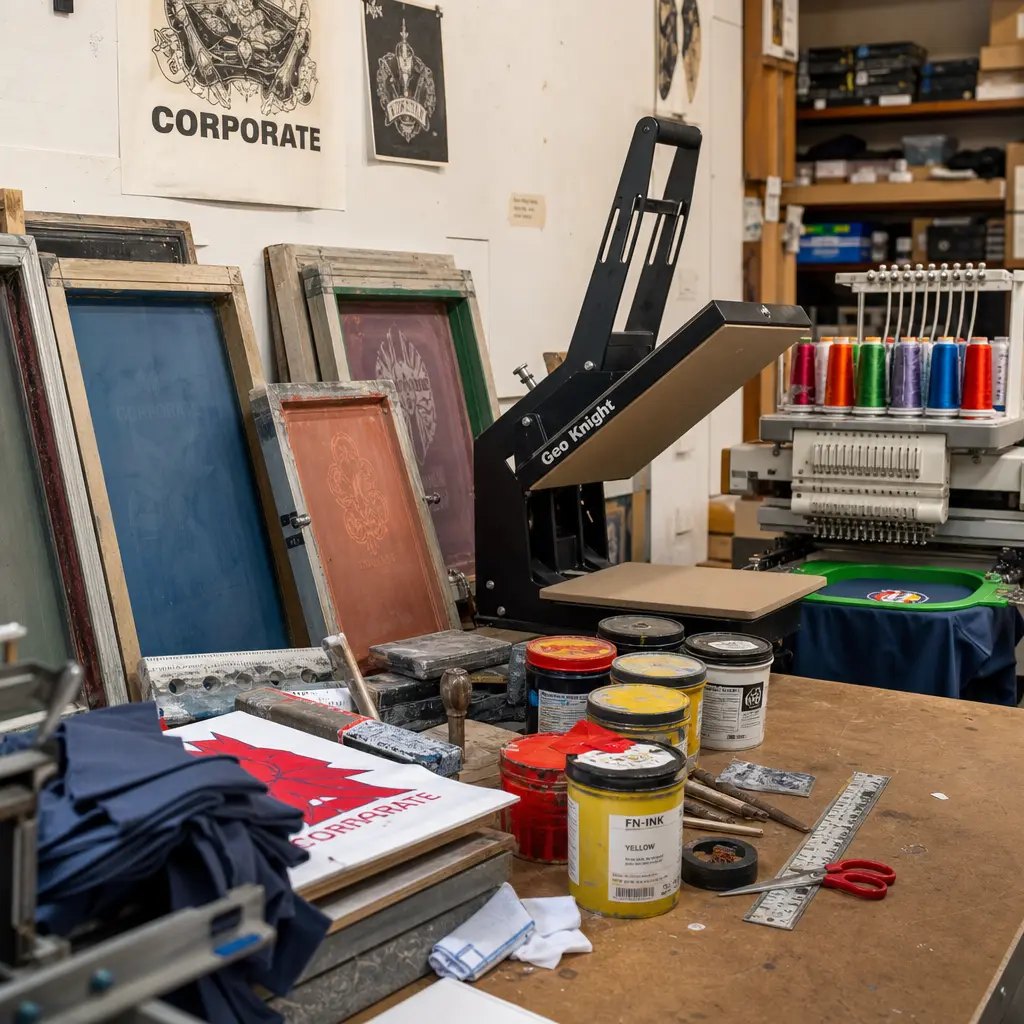
Most startup tote artwork uses a logo, short slogan, QR code, sponsor mark, or simple campaign graphic. Screen printing is usually the most stable choice for one to four solid colors on cotton totes. It gives clean edges, predictable cost at wholesale quantity, and good repeatability when the screen, ink, and curing settings are controlled. The buyer should specify print size, location, Pantone reference, and whether the print is one side or both sides.
Digital print can be useful for gradients, multiple artwork versions, or lower MOQ campaigns, but it needs a more careful approval process on organic cotton. Natural fabric texture can soften fine details, and color will not look like a glossy digital proof. Heat transfer can handle sharp detail, but it may change hand feel and can look less integrated with the fabric if the transfer film is obvious.
- Screen print: best for solid logos, higher repeat orders, and controlled color matching.
- Digital print: better for multicolor artwork, but require fabric-based sample approval.
- Heat transfer: useful for sharp detail, but check hand feel, edge appearance, and wash performance.
- Embroidery: premium look for small logos, but heavier fabric is usually needed to avoid puckering.
Understand MOQ Logic Before Negotiating
MOQ is not only a supplier sales rule. It comes from fabric sourcing, dyeing, cutting efficiency, print setup, label production, carton packing, and sewing line changeover. A supplier can often support a lower MOQ for natural organic cotton with one screen print than for custom dyed fabric, five artwork versions, individual retail barcode labels, and mixed carton ratios.
When procurement teams negotiate MOQ without explaining the order structure, suppliers may reduce quantity by removing controls or changing materials. A better approach is to separate MOQ by variable. Ask what changes if the buyer keeps the same fabric but splits artwork, changes logo color, adds a woven label, or requests individual paper belly bands. This gives a more accurate unit cost and avoids surprise surcharges after sample approval.
- Fabric MOQ is affected by organic cotton availability, dyeing color, and roll width.
- Print MOQ is affected by screen setup, artwork versions, and number of colors.
- Label MOQ is affected by woven label production and private label packaging.
- Packing MOQ is affected by individual polybag, kraft band, barcode sticker, and carton sorting.
Read Supplier Evidence Like an Auditor
A useful supplier compliance file should connect the order to the factory, fabric, and shipment. Generic PDF certificates can help pre-screen a supplier, but they are not enough when the buyer will make an organic claim or submit vendor documents to a retailer. The key question is whether the documents match the actual order route and whether the supplier controls the stages they claim to control.
For factory qualification, procurement teams should separate three evidence groups: material evidence, production evidence, and export evidence. Material evidence supports organic cotton content and fabric batch. Production evidence supports sewing, printing, quality control, and social or environmental requirements if relevant. Export evidence supports invoice, packing list, carton data, HS code discussion, and shipment handover.
- Material file: composition, fabric weight, batch reference, organic cotton transaction document if required.
- Factory file: business license, audit or assessment scope where applicable, production photos, QC process.
- Artwork file: approved print proof, Pantone reference, logo placement drawing, label layout.
- Shipment file: packing list, carton marks, inspection report, commercial invoice, export carton measurements.
Use Samples as Production Controls
Samples should not be treated as presentation pieces only. For wholesale organic cotton totes, the approved sample becomes the standard for fabric hand feel, color shade, print coverage, stitch quality, handle length, and folding method. If the buyer approves a sample without marking tolerances, the factory may have no clear control limit during bulk production.
A good sample approval note includes measured size, fabric weight, photo of print position, logo color reference, stitching observations, and packing method. For new suppliers, request at least a pre-production sample made with bulk-intended fabric and the final print method. If timing is tight, a material swatch and print strike-off can reduce risk, but they do not replace a finished bag approval for construction.
- Measure sample width, height, gusset, handle drop, and print placement before approval.
- Keep one signed or clearly photographed reference sample for buyer and factory comparison.
- Do not approve digital artwork alone when natural fabric shade affects the logo appearance.
- Record acceptable variation, especially for natural cotton specks, fabric slubs, and minor shade differences.
Set QC Thresholds That Factories Can Measure
Quality control language such as good quality or premium finish is not useful on a PO. Factories need measurable standards. For organic cotton totes, the most practical thresholds cover finished dimensions, GSM, stitching, print placement, ink defects, stains, odor, quantity, carton packing, and labeling. These are easy to inspect before shipment and reduce argument if a batch has defects.
For general wholesale orders, many buyers use AQL inspection logic for workmanship and critical defects, but the exact limits should match the selling channel. A retail buyer may reject visible stains, bad print registration, barcode errors, and inconsistent folding more strictly than a startup event buyer. Define what is critical, major, and minor before the first production run.
- Finished size: usually controlled within plus or minus 1 cm for standard totes.
- Print placement: define tolerance from top edge and side seam, commonly within several millimeters to 1 cm depending on artwork.
- Stitching: no open seams, skipped handle reinforcement, broken thread lines, or sharp thread ends.
- Fabric defects: reject holes, oil stains, mildew marks, strong odor, and large visible weaving faults.
- Carton count: match PO quantity, inner packing, barcode labels, and carton marks before shipment release.
Control Packing and Warehouse Handling
Packing is often treated as a final detail, but it directly affects landed quality and warehouse cost. Organic cotton totes can arrive with hard fold lines through the logo, moisture marks, carton crushing, or mixed SKU confusion if packing is not defined. The quote should include units per carton, fold method, carton dimensions, gross weight, inner bag policy, barcode requirements, and carton mark format.
Plastic-free or reduced-plastic packing is common for organic cotton projects, but buyers still need moisture protection during export. Options include master poly liner inside the carton, recycled polybag where accepted, paper bands, or bulk packing with silica gel depending on the route. If goods are going to a fulfillment warehouse or retail DC, carton weight and scannable labeling may matter more than the lowest packing cost.
- Bulk pack: lower cost and less material, suitable for event distribution and repacking.
- Individual pack: better for retail or fulfillment, but adds labor, material, and barcode control.
- Paper band: good presentation, but test whether it slips during carton movement.
- Carton weight: avoid overweight cartons that fail warehouse handling or cause crushed lower cartons.
Build a Realistic Lead Time Map
A supplier lead time statement is only useful when it starts from the correct trigger. Some suppliers quote from deposit date, some from artwork approval, and others from final sample approval. For wholesale organic cotton totes, the safer schedule starts after material confirmation, artwork file approval, sample approval, and deposit. If custom dyed fabric, woven labels, retail packing, or third-party inspection are involved, the timeline expands.
Tech startup buyers often work around launch dates, trade shows, onboarding events, or investor days. The biggest schedule risk is not sewing time; it is late artwork, unclear claim documents, sample revisions, print color disagreement, and freight booking. Build internal approval time into the plan and avoid changing artwork after print screens or digital files are locked.
- Material booking: confirm organic fabric availability before promising a launch date.
- Sampling: allow time for physical approval, especially for new print methods or new construction.
- Bulk production: reserve capacity after sample approval, not before final specs are locked.
- Inspection and packing: schedule final QC before freight pickup, not on the same day.
- Freight handover: separate factory completion date from vessel, air, or courier transit date.
Specification comparison for buyers
| Supplier option | What to verify | Commercial advantage | Buyer risk to control |
|---|---|---|---|
| Direct sewing factory | fabric batch documents, dye-lot photos, approved sample archive, and final QC record | Better sample-to-bulk control and faster production feedback | May be weaker on export paperwork or branded packing unless checked early |
| Trading company | Factory name, production photos, trim-source proof, and who owns QC decisions | Can coordinate small mixed orders and extra services | Markup can hide real factory capability and slow defect decisions |
| Specialized bag workshop | seam allowance, handle reinforcement, label attachment, fabric pre-shrink note, and batch shade control | More practical for detailed construction, trims, and repeat programs | Capacity may be limited during peak seasons |
| Low-price general supplier | organic cotton canvas, batch documentation where available, undyed or low-impact dyed fabric, and shrinkage control | Useful for simple promotional runs with loose specs | Material downgrades, weak packing, and vague inspection scope can erase savings |
| Retail-ready supplier | plastic-reduction request, recycled carton note, bundle count, carton mark, and moisture protection without overpacking | Can handle labels, SKU separation, carton marks, and receiving rules | Higher unit cost must be compared against reduced warehouse work |
| Compliance-focused supplier | Fabric records, labeling review, test plan, and production traceability | Safer for retail programs and repeat brand orders | Documentation claims need evidence, not only sales language |
| Local sample room plus bulk factory | Signed sample, bulk factory handoff, first-piece photos, and deviation owner | Good for complex branding before large production | Sample room quality may not match bulk line unless handoff is controlled |
Buyer checklist before sampling
- Define the exact tote type before requesting quotes: size, bottom gusset, handle length, fabric GSM or oz, seam construction, and whether the bag must stand when packed.
- State the claim level clearly: organic cotton material only, certified organic cotton chain of custody, recycled packaging, plastic-free packing, or retailer-specific restricted substance rules.
- Request fabric evidence that matches the order, not only a marketing certificate: fiber composition, fabric weight tolerance, dyeing status, transaction document if needed, and mill or fabric batch reference.
- Lock artwork details early: print size, Pantone or CMYK reference, print method, number of print positions, tolerance for placement, and whether the logo crosses seams or gussets.
- Require a physical sample or production sample for any new fabric weight, new print process, new handle construction, or retailer-facing claim.
- Set measurable QC thresholds: finished size tolerance, fabric weight tolerance, print placement tolerance, handle pull strength, seam defect limits, carton weight, and acceptable shade variation.
- Clarify MOQ logic by design, fabric color, print color, and packing method; do not compare a quote for one artwork against a quote covering many artwork versions.
- Ask for the quote to separate bag cost, print cost, label cost, packing cost, sample cost, mold or screen charge, carton quantity, and estimated carton dimensions.
- Confirm export carton packing, polybag policy, moisture control, carton marks, barcode labeling, and pallet requirements before mass production starts.
- Build lead time around material booking, sample approval, print screen preparation, sewing capacity, final inspection, and freight handover rather than accepting one optimistic delivery date.
Factory quote questions to send
- What fabric weight is included in the quote, in GSM and oz, and what tolerance do you control during incoming fabric inspection?
- Is the fabric organic cotton with batch traceability, and which documents can be provided for this order rather than general company marketing?
- Is the tote sewn in your own facility, and is printing done in-house or by a subcontracted print shop?
- What is the MOQ by fabric color, bag size, artwork version, print method, and packing style?
- Which print method is quoted, what is the maximum print area, and what color tolerance will be used against the approved sample?
- What sample types are available before bulk production, and which one becomes the production approval standard?
- What are the included packing details: units per carton, carton size, carton gross weight, inner packing, barcode labels, and moisture protection?
- What is the normal production lead time after sample approval and deposit, and which steps can extend it during peak season?
- What QC reports, inline photos, final inspection records, or third-party inspection support can be provided before shipment?
- Which Incoterms are quoted, and are local charges, export documents, fumigation status, and freight handover responsibilities clearly separated?
Quality-control points to confirm
- Fabric weight should be verified from cutting panels or fabric roll samples, not estimated from supplier descriptions.
- Finished size tolerance should normally be controlled within plus or minus 1 cm for standard totes unless the design has complex gussets.
- Handle attachment must show consistent box stitch or reinforced stitching, with no skipped stitches, loose thread clusters, or weak corners.
- Print placement should be measured from the top edge and side seams on a flat bag; define tolerance before production.
- Ink adhesion and rub resistance should be tested on the approved fabric, especially on natural unbleached cotton with surface fiber.
- Organic cotton claim documents must match the order batch and buyer claim; generic certificates are not enough for retailer compliance.
- Carton packing should prevent hard creases across the printed logo, moisture marks, and overweight cartons that fail warehouse handling.
- Final inspection should include AQL sampling for workmanship, measurement, print defects, labeling, carton marks, and quantity count.