Why procurement needs a stricter tote checklist
Wholesale organic cotton totes can look simple from a merchandising angle, but they are still sewn textile products with measurable risk. The bag may have only two panels and two handles, yet the buyer still has to control fabric weight, cutting accuracy, seam strength, print placement, packing efficiency, and carton-level traceability. When those details are vague, suppliers fill in the blanks with their own assumptions, and that is where cost disputes start.
For eco apparel brands, the tote is usually more than a carry item. It can function as brand merch, a packaging insert, a retail add-on, or a resale product that sits in public view long after the purchase. A thin body, crooked logo, or weak handle can undermine the environmental story the order was meant to support. That is why a wholesale organic cotton totes quality inspection checklist should tie product specs to business outcomes: fewer rejects, cleaner receiving, stronger presentation, and lower repeat-order risk.
The best checklist is written before the purchase order is issued. That gives the buyer one approved standard to compare quotes against and gives the supplier a clear production target. Instead of asking for a premium tote, the buyer asks for measurable details: fabric GSM, weave, finish, handle construction, decoration method, tolerance band, carton pack, and inspection scope. The more precise the brief, the less room there is for costly interpretation later.
- Use the checklist before sampling, not only at shipment inspection.
- Treat the tote as a sewn textile item with tolerances, not as a generic promo product.
- Tie every quote to one approved physical standard so price comparisons are meaningful.
- Define who owns rework cost if defects exceed the agreed limit.
Start with the use case, not the style name
Internal briefs often say natural organic cotton tote with logo or eco-friendly bag for apparel orders. That is not enough for accurate quoting. A factory needs a production-ready spec that includes finished dimensions, gusset depth, handle dimensions, fabric weight, weave type, decoration method, print area, label placement, seam details, and packing format. If any of those items are left open, the supplier may quote a different product than the one the brand expects.
Start with the use case. A lightweight event giveaway does not need the same structure as a paid retail tote. A tote used as a garment insert may need flatter folding and a smaller carton footprint than a store carry bag. A retail tote may need barcode labels, individual packing, and tighter stain control. The procurement task is to translate that business use into engineering language the factory can actually build from.
For many eco apparel programs, 180-220 GSM organic cotton canvas or twill is a practical operating range. Lower GSM can reduce cost and weight, but it is more likely to sag, wrinkle, and show print distortion. Higher GSM can improve structure and perceived quality, but it also changes unit cost, freight weight, and carton efficiency. The right answer is not simply heavier fabric. It is the fabric spec that supports the tote’s function without adding avoidable cost.
- State finished dimensions in millimeters and include an allowed tolerance.
- Define whether the tote is flat, gusseted, boxed-bottom, or another construction.
- Specify natural, bleached, dyed, or washed finish because each changes shade and print behavior.
- Include the intended use case so suppliers do not underbuild the bag to reach a target price.
Lock fabric, certification, and shrinkage as separate decisions
Organic cotton claims need documentation, but documentation alone does not guarantee a usable tote. Procurement should separate the material claim, the fabric performance, and the finished-goods inspection. Ask what certification or transaction documentation is available, where it applies in the supply chain, and whether the final tote can be supported with the paperwork your channel requires. At the same time, inspect the physical fabric for GSM, weave consistency, shade, hand feel, and obvious defects.
Fabric construction affects almost every other quality point. A loose plain weave may look casual and natural, but it can allow ink bleed and panel distortion. A tighter canvas or twill usually gives better structure and a cleaner print surface, though it may increase cost and carton weight. If the tote may be washed or repeatedly reused, ask for pre-shrunk fabric or a stated shrinkage target. Without that, size, handle drop, and logo placement can drift after use.
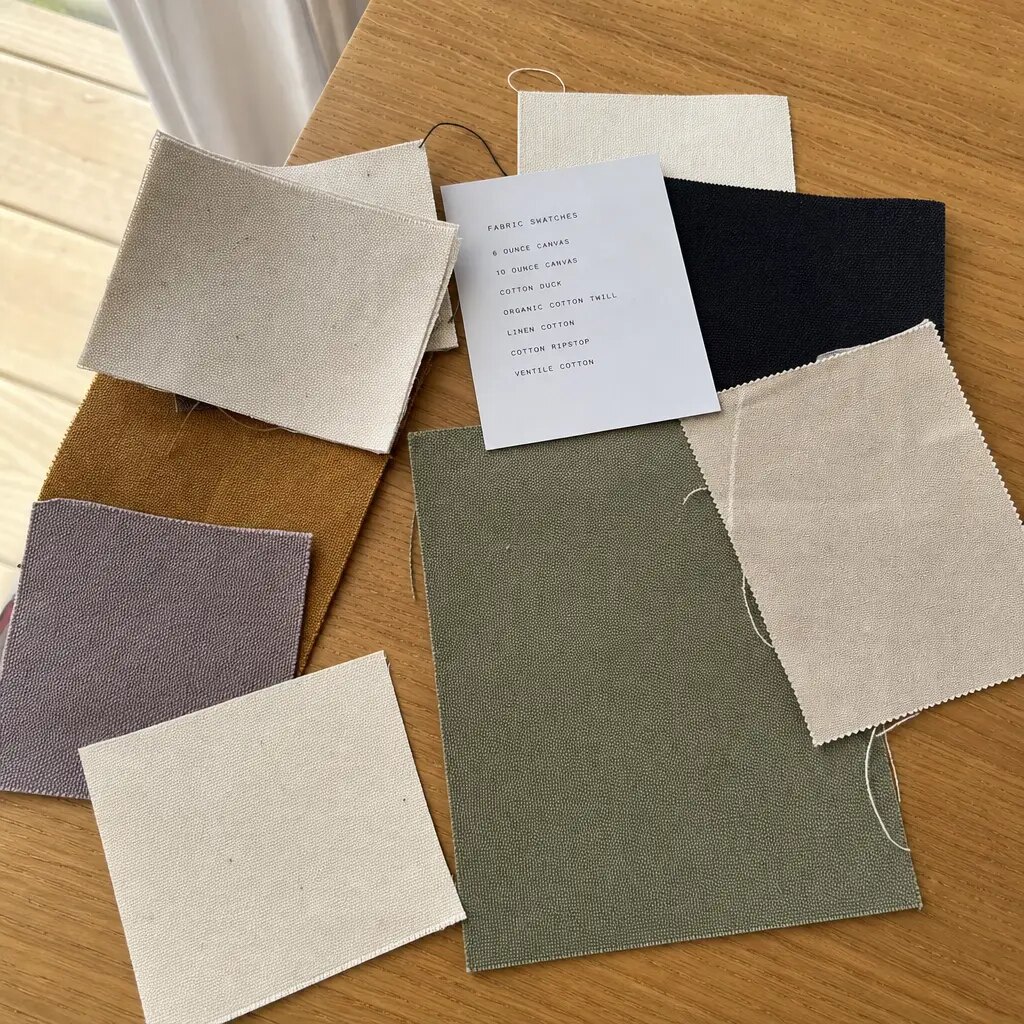
Do not accept a GSM number without a tolerance. A quote that says 200 GSM should also say what range is acceptable in bulk. For natural cotton, shade variation should be handled as a controlled condition, not ignored as natural variation. Even unbleached goods need a standard for color, because one lot can read more cream and another more beige depending on cotton source and processing. Approve the shade against a physical reference, not a generic description.
- Ask for a fabric GSM target and tolerance, not only a marketing label such as heavy canvas.
- Request shrinkage expectations by test condition when size stability matters.
- Approve a realistic shade range for natural cotton instead of assuming every lot will match exactly.
- Inspect bulk fabric from production lots, because a development swatch may not represent the final run.
Build handle strength and bag structure into the RFQ
Handle failures are one of the most preventable tote problems. The RFQ should specify handle width, handle length, handle drop, reinforcement method, and stitch density before sampling starts. A tote used for apparel retail often needs a shoulder-friendly handle drop, while a smaller hand-carry bag may use a shorter handle. If the handle length changes after sampling, the factory may need to adjust cutting yield, labor time, folding method, and carton pack.
The handle join is the stress point. Buyers commonly request X-box stitching, bartacks, or double-stitch reinforcement at the attachment area. The right reinforcement depends on bag weight and expected use. A bag meant to carry folded garments and brochures needs more support than a low-cost event handout. The reinforcement also needs to be neat. Crooked X-boxes, uneven bartacks, or puckering at the top hem make the tote look cheap even if it technically holds weight.
A practical load check helps align expectations. The goal is not a lab claim unless your channel requires one. The goal is a repeatable test before mass production. Ask the supplier to load or hang a representative weight for a defined duration and then inspect for stitch breakage, seam distortion, handle elongation, or pull-out at the top hem. Repeat that check on production pieces, not just on a specially prepared sample.
- Specify handle width and drop separately; do not rely on photos to communicate handle length.
- Require the reinforcement pattern in writing and approve it on the pre-production sample.
- Check both handle attachments on each inspected piece, because one neat side does not prove the other side is secure.
- Document the test method, load, duration, and pass/fail criteria in the inspection file.
Choose decoration by durability, hand feel, and order size
Logo method is a commercial choice as much as a design choice. Water-based screen printing is often the best fit for simple one- or two-color logos on organic cotton totes because it can balance cost, softness, and repeatability at volume. That said, the buyer still needs to control ink type, screen setup, curing, print placement, color target, and whether the print has been checked for rubbing or cracking.
Heat transfer can work for short runs or more complex artwork, but it should be approved on the actual fabric, not just in a digital render. A transfer that looks sharp on screen can feel too stiff on cotton, lift at the edges, or crack after handling. Embroidery, woven labels, and sewn tabs can create a premium look, but they add their own QC points: thread tension, alignment, loose ends, attachment security, and label MOQ.
Do not approve decoration from a mockup alone. Organic cotton texture changes how ink sits on the surface, and natural shade changes how color reads. A proper strike-off or pre-production sample should use the actual bulk fabric and the intended decoration method. Measure logo placement from fixed points such as the top edge and side seam, then write the tolerance in millimeters. Without that control, a slightly off-center print becomes a subjective dispute during inspection.
- For screen print, confirm number of colors, Pantone target, screen charge, print area, and curing method.
- For heat transfer, inspect edge lift, cracking, stiffness, and adhesion on the actual fabric.
- For embroidery or labels, check placement, thread trimming, spelling, and attachment security.
- Set logo placement tolerance in millimeters from the top edge, side seam, or center line.
Read MOQ and pricing as a full cost picture
MOQ is usually the result of several production constraints, not a random number. Fabric roll minimums, dye lot size, cutting efficiency, print setup, label sourcing, sewing line time, packing labor, and carton utilization all affect the threshold. A supplier may offer a low MOQ for a plain natural tote because the base material is already available. The same supplier may require a much higher MOQ once the buyer requests custom dyeing, a specific handle length, a woven side label, or individual polybagging.
Procurement should ask what the MOQ applies to: per color, per size, per artwork, per label type, or per packing format. This matters when the brand needs multiple store regions, different wholesale accounts, or several logo versions. A quote that says MOQ 1,000 pcs may really mean 1,000 per design or 1,000 per color. If that detail is missed, internal approval can lock the buyer into a higher spend or a weaker substitute product.
The unit price should also be viewed as a tiered cost map. Ask for pricing at 500, 1,000, 3,000, 5,000, and 10,000 pieces if those are realistic order sizes for your program. At higher volume, setup cost is spread over more units and cutting may be more efficient. But freight, inventory carry, and storage risk also rise. Separate one-time charges from repeat-order charges so future reorders can be forecast accurately.
- Ask for MOQ by color, artwork, size, label type, and packing format.
- Request price tiers at the quantities you may actually buy, not only the supplier’s preferred tier.
- Separate one-time charges from repeat-order costs so reorders can be forecast cleanly.
- Check whether low MOQ depends on stock fabric or stock base bags that may change between orders.
Approve samples as production controls, not just visuals
A tote sample should not be approved because it looks good in a photo. It should be approved because it proves the supplier can make the production spec consistently. For custom wholesale organic cotton totes, the pre-production sample should use the actual or confirmed bulk fabric, the actual decoration method, the final handle construction, the approved seam finish, the final label placement, and the proposed packing fold. If anything is substituted, the approval record should clearly say what remains unverified.
Keep a sealed reference sample. It is one of the simplest ways to avoid later disputes. The sealed sample should include the approval date, project or PO number, supplier name, version number, fabric description, print method, and any written exceptions. A second working sample can be used by merch, warehouse, QC, or sourcing teams. When a disagreement appears, the sealed sample becomes the shared standard instead of relying on memory or email images.
The sample review should mirror the final inspection. Measure body size, gusset, handle drop, and logo placement. Open the bag flat and check whether side seams twist. Look inside for loose threads and unfinished edges. Pull gently at the handle join. Inspect the print in normal light and angled light. Fold the tote the way it will be packed. If the sample creates deep creases, blocks itself with ink transfer, or looks distorted in carton fold, revise the packing method before bulk production starts.
- Mark the approved sample with date, version, and approval scope.
- Record measurable tolerances and non-negotiable defects before bulk release.
- Do not approve a sample with the expectation that production will improve weak handles or poor stitching.
- Request a revised sample when fabric, logo method, handle length, or label placement changes.
Inspect bulk production in the order defects appear
Inspection should follow the way defects build. Start with the base bag: fabric, cutting, size, seams, handles, and cleanliness. Then inspect decoration: logo placement, color, registration, ink coverage, curing, embroidery, labels, or tags. Finally inspect packing: folding, carton count, carton marks, sealing, and carton condition. This sequence helps identify root causes. A crooked print may come from a skewed panel, not a printing error.
Buyers can use a third-party inspector or a supplier-managed final inspection depending on order size and risk. For first-time suppliers or launch-critical orders, independent inspection is often worth the cost because it creates unbiased documentation. The report should open random cartons, not only the units the factory prepared for viewing. It should show measured dimensions, defect photos, carton numbers, quantity checked, and defect classification.
Defects need to be defined in advance. Critical defects may include contamination, mold odor, sharp objects, broken needles, or completely wrong artwork. Major defects may include handle failure, wrong fabric, severe stains, incorrect logo placement, wrong carton quantity, or seams that open under normal handling. Minor defects may include small loose threads or slight cosmetic variation within tolerance. Clear defect categories prevent arguments while the shipment is still on the floor.
- Inspect fabric and sewing before judging logo quality.
- Open random cartons across the lot, not only top cartons prepared for inspection.
- Classify defects as critical, major, or minor before the inspection date.
- Require rework evidence when defects are corrected, especially for loose threads, stains, or packing errors.
Use packing specs to protect margin and receiving flow
Packing is often treated as an afterthought, but it affects freight cost, product appearance, warehouse labor, and customer experience. Organic cotton totes can crease, pick up odor, and absorb dirt during handling. The right packing method depends on the channel. A tote sold as merchandise may need individual folding, a hangtag, a barcode sticker, or a protective bag. A tote used as a garment insert may only need clean bulk packing, but the fold still needs to be consistent and the carton must protect the fabric.
Carton engineering matters for landed cost. Ask for units per carton, carton dimensions, and gross weight before the PO is finalized. A carton that is too large wastes freight cube. A carton that is too heavy slows handling and may arrive damaged. A carton that is overfilled can crush folded edges and create presentation issues. If the buyer wants to reduce plastic, the supplier can still use carton liners, clean inner bundles, or other protective methods depending on route and humidity risk.
Carton marks should match warehouse needs, not just export habits. At minimum, marks should include buyer PO, style or SKU, color, quantity, carton number, gross weight, and destination if needed. For split shipments or multiple wholesale accounts, carton marks become part of fulfillment accuracy. During inspection, verify carton count and carton mark text against the PO. A perfectly sewn tote can still create cost if the warehouse has to open every carton to identify it.
- Choose packing by sales channel: retail-ready, DTC, wholesale distribution, or bulk apparel insert.
- Confirm carton dimensions and gross weight early because they affect freight and handling cost.
- Use carton marks that support receiving, allocation, and traceability.
- Inspect folding, inner packing, carton quantity, sealing, and carton condition before shipment release.
Set lead time, ownership, and rework rules before award
Tote lead time is usually underestimated because buyers count sewing time and skip everything around it. A real production schedule includes material sourcing, fabric prep, sample making, sample revision, artwork approval, screen or tooling setup, cutting, sewing, decoration, finishing, inspection, packing, export documents, and freight booking. Each stage needs an owner and a decision point. If the tote is tied to an apparel launch or retail campaign, late approval can cost more than a slightly higher unit price.
Ask suppliers to break the schedule into stages and identify dependencies. When is final artwork required? When does the pre-production sample ship? How many days are needed after approval before cutting starts? Can printing begin before sewing is complete, or does the factory decorate finished bags only? When is the last date for carton mark changes? These questions show whether the supplier understands the workflow or is quoting from a generic lead-time template.
The buyer should also define what pauses the clock. If artwork is delayed, handle length changes, packing is revised, or a new color is requested after sample approval, the schedule should be updated accordingly. The same applies if the supplier changes fabric lot, print method, or subcontractor. A clear timeline protects both sides and reduces the pressure to skip inspection just to hit a ship date. It also makes the supplier route easier to evaluate: direct factory, verified trading route, or stock-base route each brings a different tradeoff between speed and control.
- Break lead time into sample, approval, material prep, cutting, sewing, printing, inspection, packing, and dispatch.
- Identify buyer approval dates that control the production start.
- Ask what changes will reset the schedule or require a revised sample.
- Reserve time for final inspection and rework instead of scheduling shipment immediately after production ends.
Specification comparison for buyers
| Procurement decision | Recommended buying standard | Best fit for | Inspection or cost risk to control |
|---|---|---|---|
| Fabric weight and weave | 180-220 GSM organic cotton canvas or twill; state target and tolerance in the PO, commonly +/- 5% to +/- 8% depending on supplier capability | Retail merchandise, gift-with-purchase programs, store carry bags, and apparel packaging inserts | Too-light fabric can sag, wrinkle, and show print distortion; loose weave can increase ink bleed and seam stretch |
| Shrinkage and finish | Pre-shrunk or shrinkage-tested fabric; require the test method and the accepted size change after wash or steam exposure | Eco apparel brands that need stable sizing and repeatable print placement | Uncontrolled shrinkage changes finished dimensions, handle drop, and logo centering after customer use or washing |
| Handle construction | Self-fabric or webbing-style handles with stated width, length, drop, stitch density, and reinforcement pattern such as X-box or bartack | Totes expected to carry garments, catalogs, footwear boxes, or heavier retail inserts | Thin handles, short stitch runs, or weak reinforcement can fail under load or twist out of alignment |
| Logo application | Water-based screen print for simple logos; embroidery or woven labels for premium texture; heat transfer only when the artwork or run size justifies it | Brands balancing sustainability messaging, hand feel, repeatability, and cost | Wrong method can cause cracking, stiffness, fuzzy edges, color mismatch, or high setup cost |
| MOQ basis | Quote MOQ by color, size, artwork, and packing format; ask for price breaks at 500, 1,000, 3,000, 5,000, and 10,000 pieces | Buyers comparing launch order, reorder, and seasonal program economics | A single MOQ number can hide fabric-lot minimums, screen charges, label MOQ, or split-shipment fees |
| Sampling approval | Pre-production sample made from actual bulk fabric and actual decoration; keep one sealed reference sample with version notes | Any order with custom print, custom label, color matching, or retail presentation requirements | Approving a mockup or substitute fabric leaves no enforceable standard for bulk inspection |
| Quality inspection | Inline checks during cutting, sewing, and printing plus final AQL-style inspection before packing or shipment | Programs where rejects would disrupt retail launches, warehouse flow, or customer experience | Only inspecting after cartons are sealed makes rework slower, more expensive, and harder to trace |
| Packing format | Flat fold, controlled stack height, carton liner when needed, and carton marks tied to PO and style | Retail, DTC, marketplace, and wholesale distribution channels | Loose or overpacked cartons cause creasing, contamination, carton compression, and receiving errors |
| Supplier route | Direct factory for repeatable custom orders; verified trading route for low MOQ or mixed SKUs; stock-base route for speed | Procurement teams balancing control, flexibility, and launch timing | Outsourced cutting, printing, or sewing can blur accountability when defects appear |
Buyer checklist before sampling
- Define the tote use case before quoting: paid merchandise, retail giveaway, garment packaging insert, store carry bag, event bag, or wholesale account support item.
- Specify finished dimensions in millimeters, including body width, body height, gusset depth if any, handle length, handle drop, handle width, and top hem construction.
- Lock fabric details in the RFQ: certified organic cotton, GSM target, weave type, finish, color, shrinkage expectation, and allowed tolerance.
- Ask whether the quoted fabric is greige, bleached, natural, dyed, or washed, because finish affects hand feel, shade, shrinkage, and print absorption.
- Require decoration details: print method, number of colors, Pantone or color target, artwork format, print area, print placement tolerance, and whether setup charges are reusable.
- State sewing requirements: seam allowance, stitch density, handle reinforcement method, thread color, inside seam finish, and loose-thread trimming standard.
- Approve a physical pre-production sample made with actual bulk fabric, actual handle construction, actual logo method, and final label or hangtag placement.
- Keep one sealed reference sample and one working sample with measurement notes, approval date, supplier name, PO number, and version number.
- Set tolerance rules for finished size, GSM, shade, logo placement, stitch defects, stains, skipped stitches, and carton count before bulk production starts.
- Ask for inline QC evidence at cutting, sewing, printing, and packing stages, not only polished final photos after the order is complete.
Factory quote questions to send
- What is the exact organic cotton fabric specification, including GSM, weave, finish, color, and shrinkage expectation?
- Which certification or material documentation can be provided for the organic cotton, and at what stage of the supply chain does it apply?
- Is cutting, sewing, printing, finishing, inspection, and packing handled in-house or subcontracted? If subcontracted, which steps are outsourced?
- What is the MOQ by fabric color, tote size, artwork, label type, and packing method?
- How does the unit price change at 500, 1,000, 3,000, 5,000, and 10,000 pieces, and which cost drivers change at each tier?
- Which decoration method is included in the quote, what setup charges apply, and are screens, plates, or tooling reusable for repeat orders?
- Can you make a pre-production sample using the actual bulk fabric, actual print method, final label placement, and proposed packing method?
- What are the finished-size tolerances for body dimensions, gusset, handle drop, handle width, and logo placement?
- What stitch density, seam allowance, thread type, and handle reinforcement method will be used in bulk production?
- What load test or pull test can be performed on the handle area before bulk production is approved?
Quality-control points to confirm
- Verify fabric GSM against the approved tolerance using a sample from bulk fabric, not only the original development swatch.
- Check fabric shade, weave density, hand feel, and surface cleanliness across multiple cartons or production bundles.
- Confirm finished measurements for body width, body height, gusset depth, handle length, handle drop, and handle width against the approved spec sheet.
- Inspect panel cutting for skew, uneven top edges, twisted side seams, mismatched gussets, and visible distortion after the bag is opened flat.
- Check stitch density and seam allowance at side seams, bottom seam, top hem, and handle joins.
- Confirm handle reinforcement matches approval, such as X-box stitching, bartack placement, stitch length, and thread color.
- Perform a practical pull or load check on handles when the tote is intended to carry garments, books, samples, or heavier inserts.
- Inspect print registration, edge sharpness, opacity, ink coverage, color match, placement, curing, cracking, rubbing, and bleeding on actual production bags.
- Check embroidery, woven labels, care labels, or hangtags for placement, alignment, spelling, thread trimming, and attachment security.
- Reject visible oil marks, mildew odor, dirty fold lines, needle damage, broken stitches, skipped stitches, loose threads, fabric holes, and foreign material.