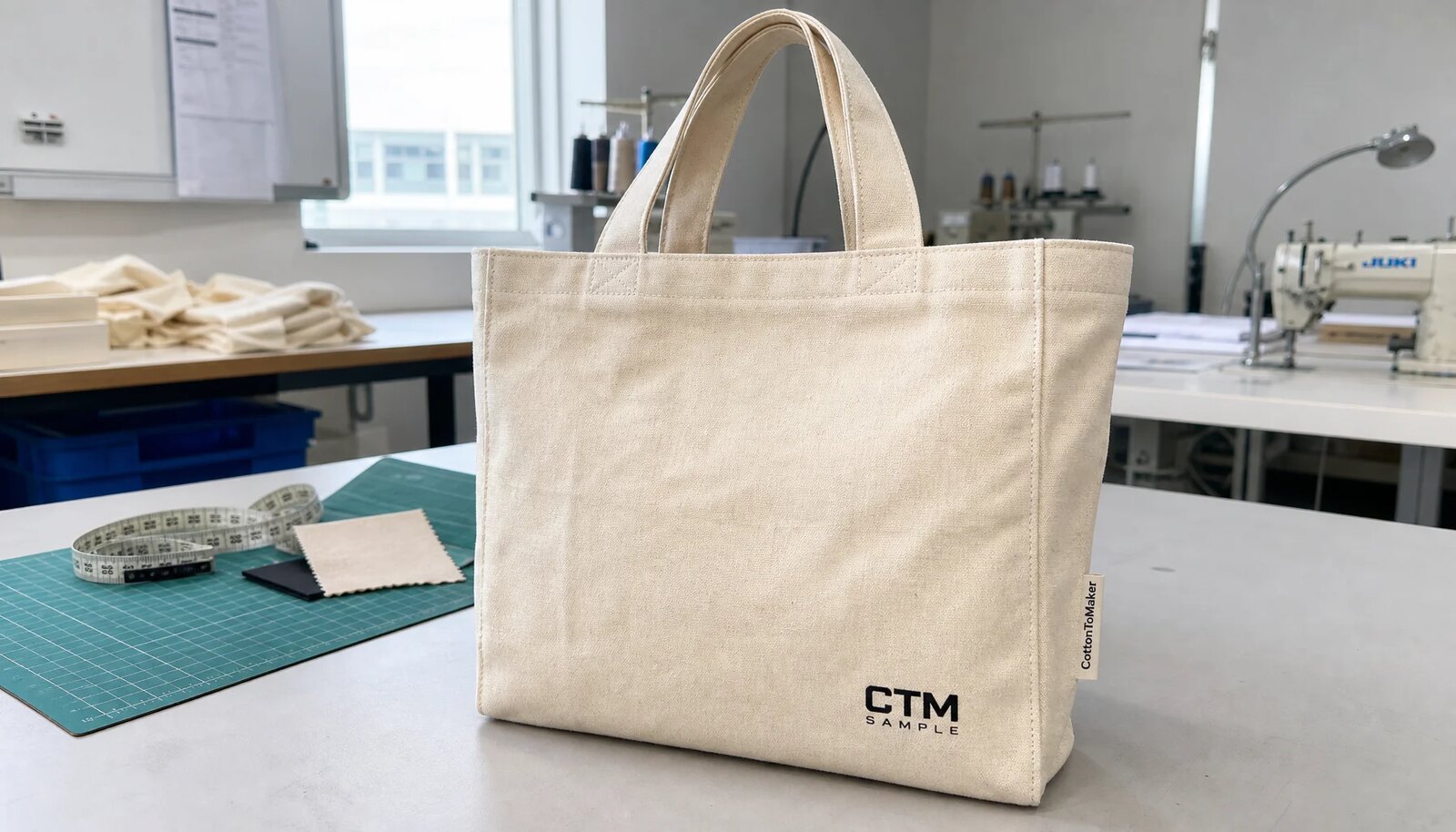
Why print proofing fails on organic cotton totes
Wholesale organic cotton totes are easy to price badly because the bag itself looks simple. The failure point is usually print proofing: a logo that looked clean on a flat artwork file can shift on the finished bag once the fabric weight, weave, and seam tension are real. Organic cotton also tends to show texture more clearly than a coated or blended fabric, so a design that looks sharp on screen can look weak, washed out, or off-center when it is printed on production stock.
Most buyer problems start when the proof is approved on the wrong material. A lab sample printed on different fabric, a blank tote pulled from stock, or a photo proof with no measurements will not tell you how the bulk order will behave. For this product, the approval standard should be the actual production fabric, the actual print method, and the actual folding and packing method. If any one of those changes after sign-off, the quote is no longer comparable and the final result is no longer controlled.
- Do not approve artwork without a physical sample or a production-grade strike-off.
- Treat fabric weight, weave, and finishing as part of the print spec, not as separate details.
- Use a ruler, a signed reference sample, and a written tolerance target for the final approval.
Lock the tote spec before you review the artwork
The first decision is the tote itself. For eco apparel brands, 7-8 oz organic cotton is usually the safest resale spec because it feels substantial enough for retail while still staying cost-controlled. A 5-6 oz bag can work for lighter promotional use, but it is easier to deform, more likely to show seam pull, and more sensitive to print show-through on dark logos. At the heavier end, 10 oz and above moves into a sturdier utility bag, which may be the right choice if the bag will carry product samples or bundled apparel, but it also changes cost, sew time, and freight weight.
The other spec choices matter as much as weight. A natural unbleached body gives an eco look that fits organic cotton positioning, but it also introduces background variation from batch to batch. A bleached white body gives cleaner contrast for fine logos, yet it adds another processing step and can change the hand feel. Handle length, gusset depth, seam allowance, and reinforcement at the stress points all affect how the tote lies when printed. A logo placed too close to a seam or fold line will often look distorted in bulk even if the artwork was technically correct.
- Freeze finished fabric weight, body size, handle length, and gusset width before any proof is approved.
- State whether the bag is natural, bleached, or dyed, because background color changes the print result.
- Keep the print away from seams, corners, and fold lines unless the factory has already proven that placement.
Choose the print method with the quote in mind
For most wholesale organic cotton totes, water-based screen printing is still the most practical option. It gives a clean retail look, works well on simple logos, and scales better than transfer methods when the order repeats. If the logo is one or two spot colors and the quantity is meaningful, screen printing usually gives the best balance of cost, opacity, and durability. The tradeoff is that setup discipline matters: screen count, mesh, registration, and curing all affect the final result, and the supplier should quote those items clearly.
Heat transfer and digital transfer are useful when the artwork is changing, the run is short, or the buyer needs multiple names or variable graphics. They are not always the best fit for a sustainable tote brand because the surface can feel less natural, and the print can crack or lift if the bag is folded hard or packed tightly. Embroidery is usually a branding accent rather than a main print method on cotton totes, because it changes drape and can show puckering on lighter fabric. If the buyer wants a premium feel, a small woven side label plus a clean front print is often more stable than trying to force a decorative effect onto the full panel.
- Keep the artwork simple if you want the lowest-risk bulk quote.
- Ask for the minimum line thickness and minimum gap the print shop can hold on the chosen fabric weight.
- Require a cure test and a rub test for any method that depends on heat or surface transfer.
Compare sourcing routes before you request samples
The supplier route changes the quality risk more than many buyers expect. A single factory that cuts, sews, and prints in one facility is usually easier to manage because the proof and bulk run stay under one control point. That setup is useful when you need one or two logo colors, a standard size, and a direct approval chain. If the factory also shows you its own print area, line photos, and packed pre-production sample, you can usually compare quote to quote more cleanly than when multiple vendors are involved.
A split route can still be the right answer. Some bag factories outsource printing because the artwork needs a better print line, special inks, or tighter registration than their sewing floor can handle. The buyer then needs to manage the handoff risk: fabric can change in transit, the print shop may not have the same shade standard, and the final bag may be sewn after the print is already approved. Trading companies can be useful when you need mixed SKUs or a consolidated shipment, but they add another layer between the buyer and the production floor. If the quote is vague about who owns print QC, treat it as a risk, not a convenience.
- Use one-source factories for standard repeat orders and simple graphics.
- Use split sourcing only when the print requirement justifies the extra coordination.
- Ask who signs off the print strike-off, not just who sends the PDF proof.
What belongs in a useful print proof package
A useful proof package is more than a mockup image. It should include the exact bag size, fabric weight, fabric color, print location, logo size, ink color reference, and the production method. The factory should send a sample on production fabric with a ruler in the frame or, better, a physical sample that can be measured and touched. If the tote uses a side label, the label artwork and placement need the same treatment. Buyers often lose weeks because the first proof showed only the front logo, while the side label, inner seam, or folding position was never specified.
The best proof package also shows what the factory plans to change between sample and bulk. That includes screen count, curing temperature, wash treatment if any, and packing format. If the logo is intended to sit 30 mm above the hem, write that into the proof and the PO. If the artwork must stay within a certain dimension window, state the acceptable range in millimeters. A signed sample without measurements is still a guess; a signed sample with a measured reference becomes a production control document.
- Include an annotated artwork file with dimensions, placement, and Pantone references if applicable.
- Require a measured physical sample or a measured photo proof with a ruler and clear front-face alignment.
- Keep the final sign-off file in the PO folder so the factory cannot substitute an older version later.
Approve the sample on the same fabric the bulk order will use
Sample approval is where many tote orders go wrong because the sample can look acceptable even when it is not production-ready. A display sample made from different fabric may print more sharply than the bulk fabric, or a hand sample may hide the way the seams pull when the bag is loaded. The right question is not whether the sample looks nice; it is whether the sample reflects the bulk line closely enough that the buyer can trust it. For organic cotton totes, that means the same fabric lot, the same print method, and the same finishing process wherever possible.
When you review the sample, use buyer-facing acceptance criteria instead of a vague yes or no. Check body width, height, handle drop, print placement, and whether the print sits square to the bag opening. Then look at the finish under natural light. A tote can pass a photo review and still fail on line quality, ink curing, or seam tension. If the print is slightly soft but consistent and the buyer has agreed to a softer hand feel, that can be acceptable. If the logo drifts from bag to bag, the process is not under control and bulk should pause until the factory explains the cause.
- Measure the sample, do not just look at it.
- Load it with product or books to see how the print and seams behave under real use.
- Reject a sample if the print method, fabric lot, or label position differs from the approved route.
Set production QC limits that the factory can actually hit
A tote order does not need a hundred-page QC manual, but it does need a clear limit on what counts as acceptable. If the bag is for retail, the factory should know the expected tolerance for dimensions, handle length, print placement, and stitch quality before the first bulk run starts. For a simple logo tote, many buyers set a tight placement window and a modest size tolerance, because the bag has enough room to look neat if the line is controlled. If the order includes multiple colors or multiple artwork placements, the risk rises fast and the buyer should tighten the pre-production review instead of relying only on final inspection.
Inspect the fabric and the print together, not as separate problems. A clean print on a bag with crooked seams still fails retail standards. A strong seam with a blurry logo also fails. The point of QC is to protect brand presentation and reduce receiving disputes, so the inspection plan should cover front panel alignment, stitching at the handle stress points, ink opacity, and whether the bags can survive folding without scuffing the print. If the print is not fully cured, it may pass the visual check and still fail after cartons sit in a hot container for a few weeks.
- Use a documented tolerance for body size, handle drop, and print placement.
- Inspect seam strength, thread trimming, and print cure together.
- Open random cartons before shipment and check for scuffing, odor, or offset print.
Packing and labeling can damage an otherwise good print
Packing is not a back-office detail on printed cotton totes. A good print can rub against a carton wall, offset onto the opposite bag, or crease badly if the folding method is inconsistent. Flat folding usually works well for wholesale because it protects the front panel and keeps the shape repeatable, but the factory must fold the bags the same way every time. If the logo is on the front panel, the packing direction should keep the print from sitting against rough carton board or a rough inner wrap surface.
Brand buyers also need to decide how much packaging is actually necessary. Some programs accept a simple bulk pack in recycled poly or kraft outer wrapping, while others require individual packing for retail channels. The key is to define the protection level, not to leave it open-ended. Carton marks should show the SKU, color, quantity, and packing count clearly, and the buyer should know whether the supplier will pack by assortment or by single color. If the quote ignores these details, the final landed cost will not be comparable across suppliers.
- Specify folding direction and carton count before production starts.
- Use packaging that protects the ink surface without creating unnecessary cost or plastic waste.
- Confirm carton marks, SKU coding, and outer pack count before dispatch.
Use MOQ and landed-cost logic instead of comparing unit price alone
MOQ on printed organic cotton totes is driven by more than sewing capacity. It changes with fabric color, print colors, print positions, label type, and the supplier’s setup cost for screens or transfer tooling. A single-color logo on natural cotton may reach a workable MOQ faster than a two-color design with a side label, because every extra operation adds setup time and rejection risk. If the buyer wants a lower MOQ, the practical tradeoff is usually higher unit cost, fewer print options, or a simpler packing spec.
For sourcing teams, the real comparison is landed cost. A quote that looks cheap on the unit line can become expensive once you add screen setup, sample freight, labels, master cartons, inland pickup, and any rework cushion. Compare quotes on the same assumptions: same fabric weight, same print method, same packing, same shipping point, and same approval sample. If one supplier quotes a lower bag price but excludes print setup or uses a different fabric finish, that quote is not directly comparable. Put those items into the RFQ and the price spread will make more sense.
- Ask for the quote to break out bag body, print setup, labels, packing, and freight separately.
- Compare all suppliers on one identical spec sheet.
- If the MOQ drops, expect the quote to shift on setup, labor, or packing efficiency.
Specification comparison for buyers
| Spec decision | Recommended option | When it fits | Buyer risk to check |
|---|---|---|---|
| Sourcing route | Single factory with cut-sew and in-house screen print | Standard retail totes with one to two logo colors and a tight approval cycle | Confirm the print is truly done in-house and not moved to a subcontractor after sample approval |
| Sourcing route | Cut-sew factory plus outside print partner | When the artwork is more complex, special inks are needed, or the bag factory lacks a clean print line | Check who owns color control and what happens if the printer misses placement or cure limits |
| Fabric weight | 7-8 oz organic cotton | The safest middle ground for retail resale, reuse, and a decent hand feel | Verify the quoted weight is after finishing, not a greige estimate that drops after washing |
| Fabric weight | 5-6 oz organic cotton | Promotional giveaways, light shopping use, or price-sensitive campaigns | Watch for weak handle stress, transparency, and print show-through on dark artwork |
| Print method | Water-based screen print | Simple logos, steady repeat orders, and buyers who want a clean eco look | Set a cure and rub test because soft hand feel can hide under-cured ink |
| Print method | Heat transfer or digital transfer | Short runs, variable artwork, or late-stage design changes | Check edge lift, folding cracks, and whether the transfer feels too glossy for the brand |
| Branding method | Front print plus small side woven label | Retail programs that need strong brand ID without crowding the front panel | Confirm label seam allowance and that the label does not distort the tote shape |
| Packing route | Flat-folded in master poly or kraft outer carton | Most wholesale, distributor, and replenishment programs | Inspect print scuffing, carton crush, and moisture control during transit |
Buyer checklist before sampling
- Lock the exact fabric type, finished weight, and color before any artwork proof is approved.
- Require the pre-production sample to be made on production fabric with the same ink and curing line planned for bulk.
- Put print placement, logo size, and measurement tolerance in writing, not only in the artwork file.
- Ask the factory to separate bag cost, print setup, label cost, packing, and inland freight in the quote.
- Approve one signed reference sample and keep it with the PO file for production comparison.
- Set your acceptance limits for color shift, placement drift, stitching defects, and rubbing before bulk starts.
- Confirm whether the supplier uses blank stock, made-to-order fabric, or pre-booked fabric lots.
- Check folding method, carton count, and carton marks before the factory packs the first master carton.
- Ask for line photos or short video of the print, curing, and packing process if the order is large or time-sensitive.
- Write down the reject and rework process so defects do not become a dispute after shipment.
Factory quote questions to send
- What is the exact finished fabric weight, weave, and width you will use, and can you share a production swatch?
- Is the print done in-house or by a subcontract printer, and which line will run the bulk order?
- How many print colors and print positions are included, and what extra charges apply per additional color or placement?
- What are your tolerance limits for bag size, handle drop, and print placement?
- Will the pre-production sample use the same fabric lot, ink, screen mesh, and curing temperature as bulk production?
- What is your MOQ by colorway, print design, and packing configuration?
- What is your standard lead time after sample approval, and which steps can extend it?
- How will you pack the bags for shipment, and what protection will you use to prevent scuffing or moisture damage?
Quality-control points to confirm
- Fabric weight matches the approved spec and the finished feel is consistent across the sample and bulk lot.
- No major weaving faults, holes, oil marks, or heavy slubs on the front panel, handles, or bottom seam.
- Handle length, handle drop, and body dimensions stay within the agreed tolerance.
- Print placement matches the signed sample and is centered or aligned as specified.
- Ink opacity is even, with no patchiness, pinholes, or obvious ghosting at the edges.
- Curing is complete: no tackiness, no offset onto the opposite panel, and no heavy cracking after folding.
- Stitching is straight, thread ends are trimmed, and bar-tacks are secure at handle stress points.
- Label placement is straight, legible, and securely attached without distorting the tote shape.
- Cartons carry the correct SKU, color, quantity, and carton count, with clean marks for receiving.
- Random carton opening before dispatch confirms the packed units match the approved sample and packing method.