1. Start with the real buying brief, not a generic tote request
Natural grocers do not usually buy tote bags for the same reason that trade-show marketers do. The bag may be sold at checkout, used in a loyalty program, packed with meal-kit or produce orders, or issued as a reusable in-store shopper. Each use changes the right fabric, construction, print method, and packing plan. If procurement sends an RFQ that says only organic cotton tote with logo, suppliers will fill the gaps with their own assumptions and the quotes will not be comparable.
This is where the keyword intent behind a wholesale organic cotton totes for natural grocers wholesale buying checklist matters in practical sourcing terms. Buyers need a checklist that turns brand intent into a factory-usable specification. The commercial goal is not simply to lower ex-factory piece price. It is to buy a tote that carries groceries reliably, supports your material claim, arrives clean and count-correct, and does not create margin loss through freight inefficiency or avoidable rework.
Before asking for prices, define the program type. A resale tote for repeated use usually needs heavier canvas, stronger handle reinforcement, cleaner print approval, and tighter QC than a short campaign giveaway. A bag that will carry jars, cartons, or bottles needs volume and bottom support. A bag used mainly for bakery items or leaflets can be lighter. This first internal step removes many later quote disputes.
- State the end use in one sentence on the RFQ: resale reusable grocery tote, event giveaway, loyalty bag, or produce-pack add-on.
- Define expected contents and target carrying load so suppliers can comment on whether the construction is fit for purpose.
- Separate must-have requirements from nice-to-have features; this prevents suppliers from cutting hidden corners to hit a target price.
2. Fabric choice drives cost, feel, print stability, and complaint rate
For natural grocers, the most common commercial mistake is approving a bag that looks fine on a sample table but feels underbuilt once customers fill it. Lightweight sheeting may suit low-cost promotions, but repeated grocery use usually pushes buyers toward a stronger organic cotton canvas. In many programs, 270 to 340 GSM is the practical middle range because it balances body, sewing efficiency, freight weight, and retail value.
Use GSM as the control point, not broad canvas language alone. One supplier may call 8 oz canvas a different GSM equivalent than another depending on conversion and finishing assumptions. Your RFQ should therefore ask for finished GSM with tolerance. Also ask whether the quoted figure is based on greige fabric, finished fabric, or the post-wash state if the product is washed. Without that detail, a lower quote may simply be a lighter fabric.
Base shade matters too. Unbleached natural cotton is popular with natural grocers because it supports a clean sustainability story and avoids unnecessary dyeing. But natural cloth varies by lot. Seed specks, slubs, and tone shifts can be acceptable if approved in advance, yet problematic if store teams expect a very clean cream tone. Buyers should approve an acceptable appearance band rather than assuming all natural fabric looks identical.
- 140 to 180 GSM: suitable mainly for promotional use where cost is the primary driver.
- 200 to 240 GSM: workable for lighter retail totes but still check handle strain and shape retention.
- 270 to 340 GSM: strong default range for reusable grocery totes with gussets.
- Above 350 GSM: premium handfeel, but confirm whether added cost and freight are justified by actual retail pricing.
3. Organic claims require a document flow buyers can actually audit
Organic cotton procurement gets vague very quickly when teams rely on product language instead of document language. Saying organic cotton required is not enough. Procurement should decide whether it needs source-level confirmation only, or a chain that supports shipment-linked transaction documents and product claims in the buyer's channel. Those are different buying models, and the supplier base may narrow once documentation expectations become specific.
This matters especially for natural grocers because the tote may sit in a retail environment where shoppers associate the material claim with the store's broader values. If labels, online descriptions, shelf talkers, or packaging mention certified organic cotton, the evidence standard should be defined before samples are approved. Otherwise a buyer can end up with a product that looks right but cannot support the wording used at sale.
A stronger sourcing process is to map the document flow from fabric source to shipment. Ask who holds the relevant certification, who issues shipment paperwork, whether sewing is done in-house or subcontracted, and whether the transaction evidence will name the entities that actually handled the goods. This is not about adding bureaucracy; it is about preventing a late-stage compliance block after inventory is already planned.
- State whether the order must be 100 percent organic cotton or whether blends are prohibited explicitly.
- Ask who the certified parties are in the supply chain and which company will appear on shipment paperwork.
- Align marketing wording, sewn labels, hangtags, and ecommerce copy with the level of proof you will actually collect.
4. Construction details affect function more than most quote sheets show
Two totes can look similar in a thumbnail image and perform very differently in real grocery use. Construction choices influence capacity, comfort, seam stress, and customer perception. Flat totes are cheaper and simpler, but grocery contents often sit awkwardly without a bottom gusset. A gusseted base usually improves packability for produce, cartons, and jars and reduces stress concentration at the side seams.
Handle design deserves more precision than many RFQs give it. Long handles around shoulder-carry length are common for natural grocer programs because shoppers may carry the bag from store to car or through a market. But comfort depends on both length and width. A strap that is too narrow or too short may generate complaints even if the seam itself does not fail. Reinforcement style must be written down, not assumed.
Sewing detail is another point where quote gaps appear. Factories may differ on seam allowance, SPI, back-tack practice, or whether they reinforce the handle root with a box, cross box, or bartack. These are small line items on paper but major variables in durability. Procurement should ask for a line drawing or marked photo on the approved specification so there is no ambiguity during production.
- For grocery carry, bottom gussets of roughly 10 to 12 cm are commonly more useful than flat construction.
- Long handles often work best around 60 to 70 cm finished length with 2.5 to 3 cm width.
- Write the reinforcement method into the spec: box stitch, cross box, bartack, or a defined equivalent.
- Ask for SPI range and seam allowance so factories are not pricing different sewing standards.
5. Print method should match the artwork, the fabric, and the retail claim
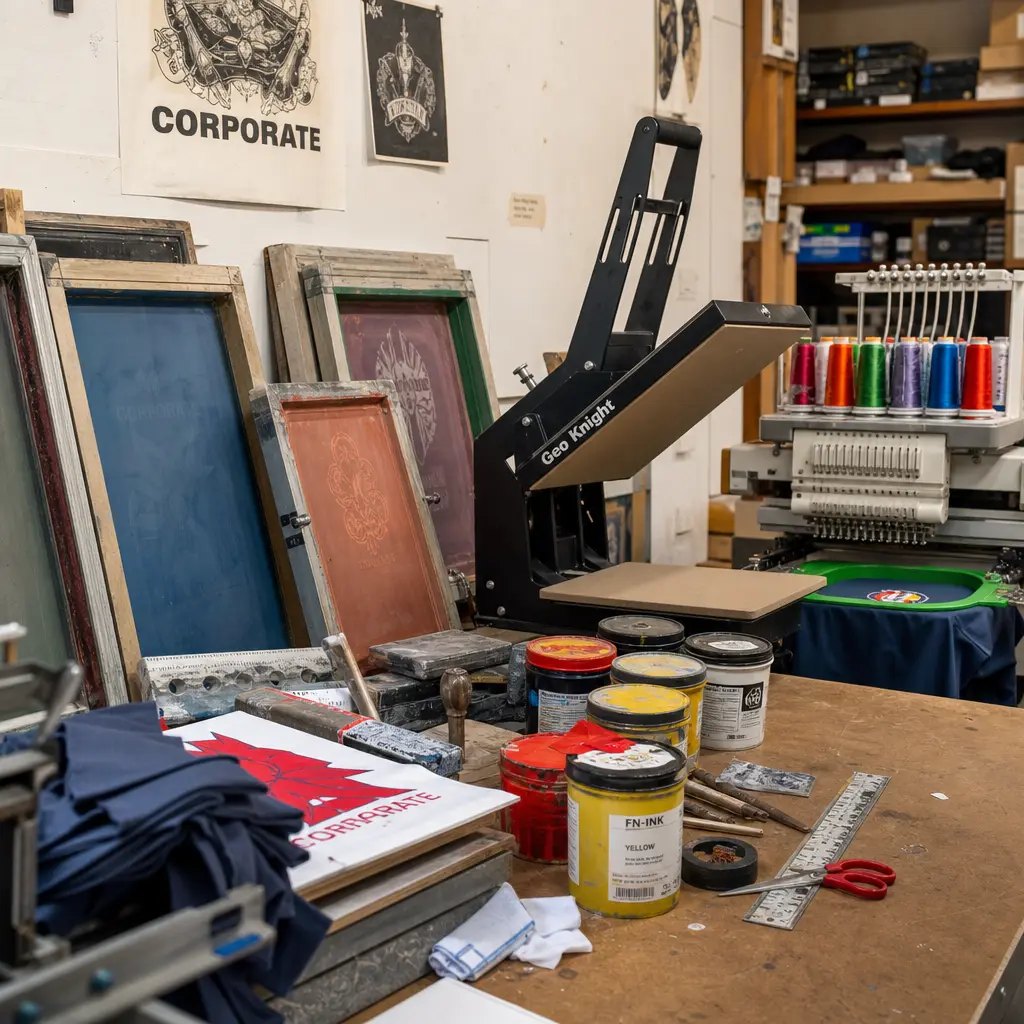
Natural grocers often use simple branding, which makes one-color or two-color water-based screen print a practical default. It usually balances cost, handfeel, and visual fit on natural canvas. But this should still be treated as a technical decision rather than a branding afterthought. Coarse canvas texture can affect edge sharpness, line fidelity, and coverage on large solid areas.
A common quote trap is sending detailed art, tiny text, or large flood areas while comparing prices as if all suppliers were quoting the same print risk. Some may silently assume a smaller print area, a different ink system, or looser visual tolerance. Others may quote a low piece price but later add setup charges once they see the final artwork. Procurement should send artwork early and ask suppliers to comment on method suitability, expected risk points, and any limitations.
For durability, print should be checked not only for appearance but also for rub behavior and wash response if the tote will be sold as a reusable item. Even when formal wash claims are not marketed, a simple pre-approval wash and crocking check can prevent complaints about flaking, excessive fading, or transfer on adjacent bags in carton packing.
- Water-based screen print: strong default for simple logos on natural canvas.
- Pigment-based alternatives: useful in some color situations, but confirm handfeel and crocking.
- Digital print: helpful for detailed multi-color art or smaller mixed-SKU runs, often at higher unit cost.
- Require a strike-off on the actual tote fabric, at actual artwork size, before bulk approval.
6. MOQ, capacity, and region-specific quote traps need to be surfaced early
MOQ is often discussed as a negotiation issue, but operationally it is a result of fabric booking, print setup, cutting efficiency, and production-line loading. For natural grocer programs with multiple store logos or regional campaigns, the smart question is not just what is your MOQ. It is how can we structure the order to keep one base bag while reducing slow-moving inventory by artwork split or staged delivery.
Buyers should also separate factory capacity from willingness to quote. A supplier may accept your order size on paper but still place it behind larger customers in peak periods, especially before holiday or promotional seasons. Ask what their monthly tote capacity is for similar styles, how many lines they run for canvas bags, and whether your fabric is stock-supported or booked case by case. The answer affects schedule reliability more than the nominal lead time number alone.
Regional quote traps also matter. In some markets, the low initial quote comes from short handles, lighter actual GSM, minimal print coverage assumptions, or EXW pricing that excludes substantial inland and export handling costs. In other cases, the issue is not price but shipment timing tied to port congestion or vessel availability. A procurement comparison should therefore include both commercial basis and logistics basis.
- Ask for MOQ by SKU and by master fabric booking; these are not the same thing.
- Compare split-logo pricing against split-size or split-color pricing; artwork changes are often easier than construction changes.
- Request both EXW and FOB if you buy enough volume for freight optimization.
- Ask whether production peaks or port constraints affect the quoted ship window.
7. Samples should be used to prove function, not just approve appearance
A visually acceptable sample can still be a weak production reference. Development samples are useful for shape and general direction, but they often use substitute fabric, non-final stitching, or temporary print methods. For buying confidence, the key stage is the pre-production sample made to production intent: target GSM, actual print method, intended labels, planned handle construction, and realistic packing fold if that affects creasing.
Sample review should be hands-on. Load the tote with items similar to actual groceries. Measure dimensions after sewing. Check the handle drop on a person or fixture rather than by ruler only. Fold and unfold the bag to see whether the print sticks, cracks, or marks. If the bag will be sold in-store, assess whether the visual quality matches the price point shoppers will see.
Retain one sealed approval sample as the shipment reference standard. This may sound basic, but it helps in real disputes over shade, print density, or handle placement. Without a retained standard, buyers often end up arguing from photos rather than from an agreed physical sample.
- Do not approve bulk from a sales sample made with substitute cloth.
- Measure body, gusset, and handles on the sewn sample, not on the pattern spec only.
- Ask the supplier to note sample deviations clearly if any temporary substitutions were used.
- Keep one approved sample at the buyer side and one at the factory side as the control reference.
8. QC should include test protocol, AQL, and carton performance, not only visual checks
For B2B tote buying, quality control needs to go beyond checking for stains and loose threads. Structural performance, print durability, and packing integrity all affect whether inventory arrives saleable and fit for use. A good tote QC plan starts before final inspection, with line-start confirmation of fabric, construction, labels, print placement, and packaging method. In-line checks matter because handle reinforcement or seam issues are cheaper to correct before full output is sewn.
Buyers should specify a practical acceptance method. Many use AQL references for final random inspection, with a lower tolerance for major defects than for minor cosmetic defects. The important point is to define what counts as major, minor, and critical. Wrong material claim, missing certification-linked labeling where required, open seams, major measurement failure, or severe print defects are usually major or critical issues depending on channel risk.
Test protocol should also be concrete. For example, a load test can be run by filling the bag to the agreed working weight and suspending it for a set time before checking seam slippage, handle root distortion, or tearing. Stitch density can be checked against the approved SPI range. Print can be checked with dry and damp rub tests and, where relevant, a simple wash cycle for dimensional change and print appearance. Export cartons should be checked for count, marks, and basic drop resilience so goods do not arrive with damaged retailable bags.
- Set AQL and defect definitions in writing before production starts.
- Use pre-production load testing and repeat a simplified version during final inspection.
- Check SPI, seam allowance, reinforcement pattern, and back-tack quality on randomly selected pieces.
- Validate carton labels, quantity, and basic drop performance for the intended shipping route.
9. Packing, Incoterms, and freight cube often decide the real winner
Tote bags are low-to-medium value products with a freight profile that can change margin quickly. A supplier that is cheaper by a few cents per piece can still lose once carton dimensions, packing density, and inland charges are included. That is why procurement should request carton data at quotation stage, not after the PO is placed. For gusseted grocery totes in particular, freight cube can vary enough to change the landed-cost ranking between suppliers.
Packing should match the channel. Bulk cartons may be ideal for a distributor that re-packs locally. Retail-ready folding, barcode labels, or pre-sorted store bundles may save downstream labor but add factory handling cost. The right answer depends on where labor is cheaper and where errors are more expensive. Buyers should therefore ask for at least two packing options when store allocation or retail presentation is part of the program.
Incoterms need equal attention. EXW can appear cheap while shifting local pickup, loading, export handling, and inland transport risk to the buyer. FOB often gives a cleaner export-ready comparison for international buyers. CIF can be useful for quick budgeting, but it is harder to compare if the ocean-freight assumption is hidden. Ask for the same bag under at least two terms so the true cost picture is visible.
- Request pieces per carton, carton dimensions, gross weight, and estimated loading quantity by container type.
- If plastic reduction matters, define whether inner poly is banned, optional by bundle, or required for moisture protection.
- Compare EXW and FOB before awarding the order; do not assume the lowest unit price has the best landed cost.
- Ask whether the supplier can palletize, floor-load, or apply store-assort carton marks as needed.
10. A practical supplier comparison method for final award
When all quotes are back, the best procurement move is to normalize them into one comparison sheet with five blocks: material, construction, print, packing, and logistics basis. Then list exclusions separately. This quickly exposes whether one supplier is truly efficient or simply quoting a lighter fabric, smaller print area, shorter handle, looser QC basis, or less protective packing.
At this stage, buyer nuance matters. A direct factory may be stronger on cost transparency and technical alignment, while a trader may help with small MOQs or communication. One supplier may offer faster sewing but weaker documentation flow. Another may show better compliance discipline but longer fabric lead time. The correct award decision depends on your channel risk, claim sensitivity, launch date, and reorder potential.
A useful final step is to issue a written award summary that confirms approved specification, document expectations, QC method, Incoterm, shipment window, sample reference, and packing standard. That summary becomes the practical control document for the PO and reduces the chances that assumptions drift after deposit.
- Normalize all quotes to one final specification before discussing price concessions.
- Score suppliers on documentation discipline, responsiveness, QC clarity, and landed cost, not price alone.
- Confirm any negotiated substitutions in writing; verbal agreements around GSM or packing often create shipment disputes.
- Use a short award memo so procurement, compliance, design, and logistics are all working from the same final standard.
Specification comparison for buyers
| Sourcing choice | Option A: direct factory | Option B: trader or sourcing company | When each works best | Main buyer risk to check |
|---|---|---|---|---|
| Commercial model | Factory quotes, produces, and usually arranges export through its own team or nominated forwarder | Intermediary manages one or more factories and consolidates communication | Factory is best when your specification is stable and volume is meaningful; trader can help when order mix is small or communication support is needed | Traders can obscure mill source, true production site, or margin layers; direct factories can be weaker at documentation speed or English communication |
| Organic document flow | Buyer receives mill/certification path, production-site details, and shipment-level transaction paperwork if agreed | Trader may provide one document set while production is split across subcontractors | Direct flow is safer when your label or marketing copy depends on documented organic chain-of-custody | Ask who appears on shipment paperwork, who holds certification, and whether subcontract sewing is declared |
| MOQ flexibility | Often stricter by fabric booking, print setup, and line efficiency | May combine orders across clients or factories to offer lower apparent MOQ | Trader can help for trial runs; factory is usually better for repeat programs | Lower MOQ can come with mixed lot fabric, longer lead time, or less control over matching |
| Price transparency | Clearer visibility on print charge, stitching cost, packing, and ex-factory basis | Can be simpler to buy from but cost build-up is less visible | Factory is better for cost engineering and repeat annual buying | Very low all-in quotes may exclude testing, labels, inland haulage, or document fees |
| Lead time control | More direct scheduling with cutting, sewing, and packing teams | Trader may buffer delays by shifting production, but that can reduce consistency | Factory suits stable replenishment; trader can help with rush coordination | Confirm actual production site, line allocation, and whether fabric is booked before deposit |
| QC access | Easier to align on in-line and final inspection, acceptance criteria, and corrective action | Trader may offer added inspection service but may inspect after issues are already built in | Factory route works when your team can review details closely | Ask who performs in-line checks, who signs final inspection, and whether third-party inspection is accepted |
| Landed-cost planning | More precise carton, CBM, and loading data from the producing site | May be less precise if trader is still balancing suppliers | Factory route is best when freight cube is important to your margin | Request carton spec, pieces per carton, gross weight, and loading estimate early rather than after PO |
| Incoterm suitability | EXW, FOB, FCA, and sometimes CIF can be quoted with fewer assumptions | Trader often pushes one familiar term regardless of your freight strategy | FOB is often easiest for comparing export-ready suppliers; EXW can work if you control local pickup | EXW can hide inland haulage and export handling costs; CIF can make ocean comparison harder if freight assumptions are opaque |
Buyer checklist before sampling
- Define the selling use case first: in-store resale, loyalty reward, checkout add-on, event giveaway, or produce/meal-kit carry.
- Write finished dimensions in centimeters for width, height, bottom gusset, side gusset, handle length, and handle width; state whether measurements are flat or opened.
- Specify target fabric as finished GSM with tolerance, not just oz terminology; note whether tolerance applies before or after washing/finishing.
- State whether the bag must be 100 percent organic cotton and whether any recycled blend is prohibited.
- Define the certification and document route required at quote stage: source-level proof only or shipment-linked transaction documents.
- Clarify whether unbleached natural shade variation and seed specks are acceptable, and record an approved shade band.
- Lock print method, artwork colors, print size, and coverage early; require strike-off on actual tote fabric.
- Specify handle reinforcement method, SPI range, seam allowance, and whether bartack, box stitch, or cross box is required.
- Ask for quote options by Incoterm such as EXW and FOB so inland and export costs are visible.
- Request MOQ by SKU and by master fabric booking so split-logo scenarios can be costed properly.
Factory quote questions to send
- Are you quoting as the producing factory or as a trading company, and what is the exact production site for cutting, sewing, and packing?
- What is the finished fabric specification in GSM, weave, and composition, and what bulk tolerance will you commit to?
- What organic documentation can you provide at material stage and shipment stage, and who is the document holder on those papers?
- Is the quote based on unbleached natural canvas, bleached fabric, or dyed fabric, and what shade variation standard applies?
- Are dimensions quoted as finished sewn measurements, and what tolerance applies separately to body, gusset, and handle length?
- What stitch construction is included at the handle root, what SPI range do you run for this bag, and what seam allowance is standard?
- What print method is included, how many colors, what maximum print area, and is a strike-off on actual production fabric included?
- Can one master order be split into multiple store logos or regional artworks while keeping the same fabric booking, and how are setup charges applied?
- What is your lead time by stage: fabric booking, sample making, strike-off approval, bulk cutting, sewing, packing, inspection, and booking to port?
- What quality system do you use for final inspection, what AQL level can you accept, and do you allow third-party inspection before shipment?
Quality-control points to confirm
- Use an approved specification sheet with finished tolerances, defect definitions, print placement rules, and packing instructions at line start.
- Verify bulk fabric GSM from roll sampling, not only mill declaration. A practical method is to cut standard swatches from multiple rolls and weigh them to confirm finished GSM average and spread.
- Check stitching at handles and side seams for a defined SPI range, commonly about 8 to 10 stitches per inch for medium-weight tote construction unless the factory proves an equivalent standard.
- Confirm handle attachment uses the approved reinforcement pattern on every unit, with clean back-tack and no skipped stitches or open ends.
- Run a simple load test on pre-production and during final QC: load the bag to the agreed working weight, suspend for a set period, then inspect handle roots, seam slippage, and fabric distortion.
- Review print by strike-off and bulk check for color match, registration, edge clarity, pinholes, cracking, and crocking. Use dry and damp rub checks on dark prints and large coverage areas.
- If wash performance matters for resale claims, test one approved sample for dimensional change and print appearance after a defined home-laundry cycle before bulk approval.
- Inspect natural fabric shade under agreed lighting and compare to the approved band; record whether seed specks, slubs, and minor flecks are acceptable or defective.
- Apply a final inspection reference such as AQL 2.5 for major defects and AQL 4.0 for minor defects unless your internal standard differs; define critical defects as safety, wrong material claim, or severe structural failure.
- Confirm odor, stains, oil marks, mildew signs, needle holes, sharp foreign matter, and metal contamination are not present before packing.