The buying problem: visible logos without production surprises
Wholesale organic cotton totes for trade show exhibitors look simple until the logo is printed too close to the handle seam, the fabric is too light for the ink, or cartons arrive so tightly compressed that every bag has a crease through the sponsor mark. For procurement teams, the main issue is not only choosing a tote bag. It is controlling how the logo appears when the bag is empty on a booth table, filled with catalogs, and carried through a crowded exhibition hall.
A practical RFQ should lock the relationship between bag size, fabric GSM, print method, logo placement, handle length, packing, and delivery date. If any of those items are left open, two supplier quotes may look comparable on unit price but represent different products. One factory may quote 140 GSM natural cotton with a small print. Another may quote 280 GSM organic cotton with water-based ink, reinforced handles, and export packing. The logo placement guide below is written to help buyers compare those offers on the same basis.
- Use millimeter placement rules instead of approving only a flat digital mockup.
- Treat logo visibility, fabric weight, and packing as linked decisions, not separate line items.
- Evaluate supplier quotes by total event readiness: sample approval, bulk consistency, carton data, and in-hand deadline.
Start with tote size before deciding logo position
For trade shows, the most common organic cotton tote size is around 380 x 420 mm without gusset, or 380 x 420 x 80–100 mm with a side or bottom gusset. A flat tote is cheaper, folds better, and is suitable for brochures and light samples. A gusseted tote stands better and carries boxed samples, but it changes how the front panel curves when filled. That curve affects whether a large logo still reads clearly.
Logo placement should be set from the finished bag opening, not from the top of the fabric panel before stitching. On a 380 x 420 mm tote, a front center logo often works best when the top of the print sits 90–120 mm below the opening. For a wide mark, keep the print inside the stitched side seams by at least 45–60 mm. For a vertical logo or event graphic, leave enough bottom space so the artwork does not fold around the base when the tote is filled.
- Flat tote for brochures: 360–390 mm wide x 400–430 mm high, no gusset, medium logo size.
- Gusseted exhibitor tote: 380–420 mm wide x 400–450 mm high x 80–120 mm gusset, logo adjusted higher than on flat totes.
- Large sponsor logo: limit width to roughly 60–70% of bag width to avoid distortion near side seams.
- Small premium logo: place 80–100 mm below opening and consider a woven side label if the main panel should stay minimal.
Fabric GSM changes print quality and freight cost
Organic cotton tote quotes often differ because suppliers use different fabric weights. For one-day giveaway bags, 140–180 GSM may be offered at a lower unit cost, but the bag can feel thin and the print may show more unevenness because of fabric movement and yarn texture. For trade show exhibitors who want a practical bag that visitors keep using, 220–280 GSM is usually a safer commercial range. It supports a clear screen print, holds shape better, and still folds for carton packing.
For retail-grade or VIP sponsor bags, 300–340 GSM canvas gives a stronger hand feel and better perceived value. The tradeoff is higher cotton consumption, heavier cartons, larger shipping volume, and sometimes longer sewing time. If the event has strict freight budget or booth distribution requires thousands of bags, the landed cost difference can matter more than the factory unit price. Buyers should request carton dimensions and gross weight at RFQ stage, not after production.
- 140–180 GSM: lowest cost range, best for very light giveaways, higher risk of weak hand feel.
- 220–280 GSM: practical exhibitor range for good print surface and manageable shipping weight.
- 300–340 GSM: premium range for sponsor bags, retail resale, or reusable merchandise programs.
- Key quote data: actual GSM tolerance, finished bag weight, pieces per carton, carton gross weight, and carton CBM.
Choose print method around artwork, not habit
Water-based screen printing is usually the most suitable method for wholesale organic cotton totes when the artwork is one to three solid colors. It gives a softer feel than plastisol-style heavy ink and fits the natural positioning of organic cotton as a reusable, lower-impact product. However, water-based ink still needs correct mesh, opacity control, and curing. On natural cotton, light ink may look muted; on dyed cotton, white underbase or adjusted pigment may be needed.
Heat transfer can be useful for gradients, small full-color sponsor logos, or short-run variations, but buyers should evaluate hand feel and edge durability. Embroidery is possible for premium totes but is not ideal for large trade show logos because it adds cost, puckering risk, and longer lead time. Woven labels work well as a secondary branding method, especially for brand owners who want the event print on one side and permanent brand identity on the side seam.
- Screen print: best for bold event logos, simple sponsor graphics, and large repeat orders.
- Heat transfer: useful for multicolor detail, but approve flexibility, adhesion, and feel on actual organic cotton.
- Embroidery: premium appearance for small marks, not efficient for large exhibitor panels.
- Woven label: good for subtle brand ownership, but requires separate label approval and MOQ planning.
Set logo placement with measurable acceptance criteria
The most common mistake is approving a PDF mockup without specifying the actual print size and placement tolerance. A mockup may look centered on a screen, but production teams need numbers. For example: front logo printed 250 mm wide x proportional height, horizontally centered, top edge of print 105 mm below finished bag opening, tolerance ±5 mm. That instruction is much clearer than “print logo centered on front.”
For co-branded trade show bags, define which logo has priority. Exhibitors often place a main sponsor mark on the front and event information or QR code on the back. If the back print includes a QR code, set a minimum printed code size and quiet zone. Small text below 5–6 mm height may fill in on textured cotton, especially if the ink is heavy or the fabric has slubs. A factory can print small details, but repeatability on thousands of cotton totes depends on artwork construction and fabric surface.
- Placement tolerance for bulk: typically ±5 mm for standard screen print placement on totes.
- Minimum margin from handle stitch area: keep print at least 25–40 mm below reinforced handle stitching.
- Minimum margin from side seam: keep artwork 45–60 mm inside finished side edges for large logos.
- QR code: test scan from an actual printed sample, not only from the digital proof.
- Small text: avoid very thin strokes, tight letter spacing, and low-contrast ink on natural cotton.
MOQ logic: why the lowest unit price may not be the best quote
MOQ for organic cotton totes is not only a sewing quantity. It may be driven by fabric availability, dyeing lot, printing setup, woven label order, or carton customization. Natural organic cotton in common GSM ranges may be easier to source at lower quantities than a custom-dyed organic canvas. A one-color screen print may have a low setup threshold, while several sponsor versions can create multiple screen charges and more production handling.
When comparing quotes, separate the base tote cost from variable branding costs. If one supplier includes screen charges and another lists them separately, the unit price comparison is misleading. The same applies to sampling. A factory-made pre-production sample with actual fabric and print is not the same as a blank stock sample plus digital artwork proof. For a trade show deadline, paying for the right sample early is usually cheaper than discovering placement or ink issues during mass production.
- Fabric MOQ: affected by organic cotton availability, GSM, width, color, and finishing.
- Print MOQ: affected by number of colors, number of logo versions, and setup time.
- Label MOQ: woven labels may require higher minimums than the bag order quantity.
- Packing MOQ: custom belly bands, printed cartons, or retail polybags may add separate minimums.
- Cost comparison: calculate total order cost including setup, sampling, packing, inspection, inland freight, and ocean or air freight impact.
Sample approval should test the production method, not just appearance
A useful pre-production sample for exhibitor totes must be made from the intended fabric GSM, with the intended handle construction, ink system, print size, and logo placement. If bulk production will use 260 GSM natural organic cotton and water-based screen print, the approved sample should not be a 180 GSM blank tote with a heat transfer logo. That type of shortcut gives buyers a false sense of approval.
The sample should be reviewed in the same way the bag will be used. Fill it with catalogs or sample boxes, hang it by the handles, lay it flat on a table, and photograph it from a normal booth-viewing distance. The logo may look perfect flat but sit too low when loaded. The handles may look strong but feel too short for shoulder carry. Sample approval should produce a written standard that production and inspection teams can measure.
- Measure finished sample dimensions after sewing and pressing.
- Record logo size, top distance, side distance, and center alignment.
- Compare Pantone target against printed ink under consistent light.
- Rub the print surface with dry and slightly damp white cloth.
- Load the tote with expected event contents and observe handle comfort and seam stress.
- Keep one signed sample at the factory and one with the buyer or inspection team.
Packing choices affect print appearance at the booth
Trade show tote bags are often packed months of planning into a few cartons that must open cleanly at the booth. If the bags are folded through the printed logo, the first impression is a permanent crease across the brand mark. Organic cotton can be pressed or steamed, but exhibitors usually do not have time or equipment on-site. Packing must be planned as part of the logo placement decision.
Flat packing is preferred when the print area must remain smooth. Inner packs of 25 or 50 pieces make counting and booth distribution easier. For very large orders, 100–200 pieces per export carton may be efficient, but carton compression must be controlled. If individual polybags conflict with sustainability goals, kraft paper bands or bulk inner bags can be used, but they need to protect against moisture, dust, and print transfer.
- Avoid fold lines directly across the main logo whenever carton size allows.
- Use tissue or controlled stacking if wet-looking ink surfaces risk print-to-print transfer.
- Specify inner pack quantity for fast event kit assembly and warehouse counting.
- Request carton drop-test suitability if bags will be couriered to multiple show locations.
- Include carton marks with SKU, color, logo version, quantity, gross weight, net weight, and destination code.
Lead time planning for fixed trade show dates
A trade show delivery date is not flexible, so lead time should be built backwards from the in-hand date, not the ship date. Buyers need time for artwork proofing, sample production, sample courier transit, review, revisions, bulk material preparation, printing, sewing, packing, inspection, export handling, freight transit, customs clearance, and local delivery. The risk increases when there are multiple logo versions or sponsor approvals.
Organic cotton fabric sourcing can add time if a specific GSM, width, color, or certification document is required. Custom dyeing adds more risk than natural cotton because lab dips, shade approval, and batch consistency become part of the schedule. For urgent trade show programs, a standard natural organic cotton fabric with one-color screen print is usually safer than a custom-dyed tote with multiple print locations and woven labels.
- Artwork proof and technical confirmation: allow several working days, especially for complex sponsor layouts.
- Physical sample: include factory making time plus courier transit and buyer review time.
- Bulk production: depends on order quantity, GSM, print colors, and sewing capacity.
- Final inspection: schedule before final balance payment and before goods leave the factory.
- Freight buffer: allow time for booking changes, customs questions, warehouse receiving, and local event distribution.
Supplier evidence that matters before placing the order
For organic cotton totes, supplier evaluation should go beyond a product photo and a low FOB quote. Procurement teams should request evidence that the factory understands cotton fabric behavior, print placement control, and export packing. Useful evidence includes photos of similar tote construction, close-up stitching images, print samples on comparable GSM, carton packing photos, and measurement reports from prior production. These do not need to reveal other clients, but they should prove process capability.
Certification claims also need careful handling. If the buyer requires certified organic cotton under a recognized chain-of-custody system, the RFQ must state the exact documentation expected and whether transaction documents are needed. A supplier may sell bags made from organic cotton material without being able to provide the paperwork a retailer or distributor requires. Clarifying this before quotation prevents a late compliance dispute.
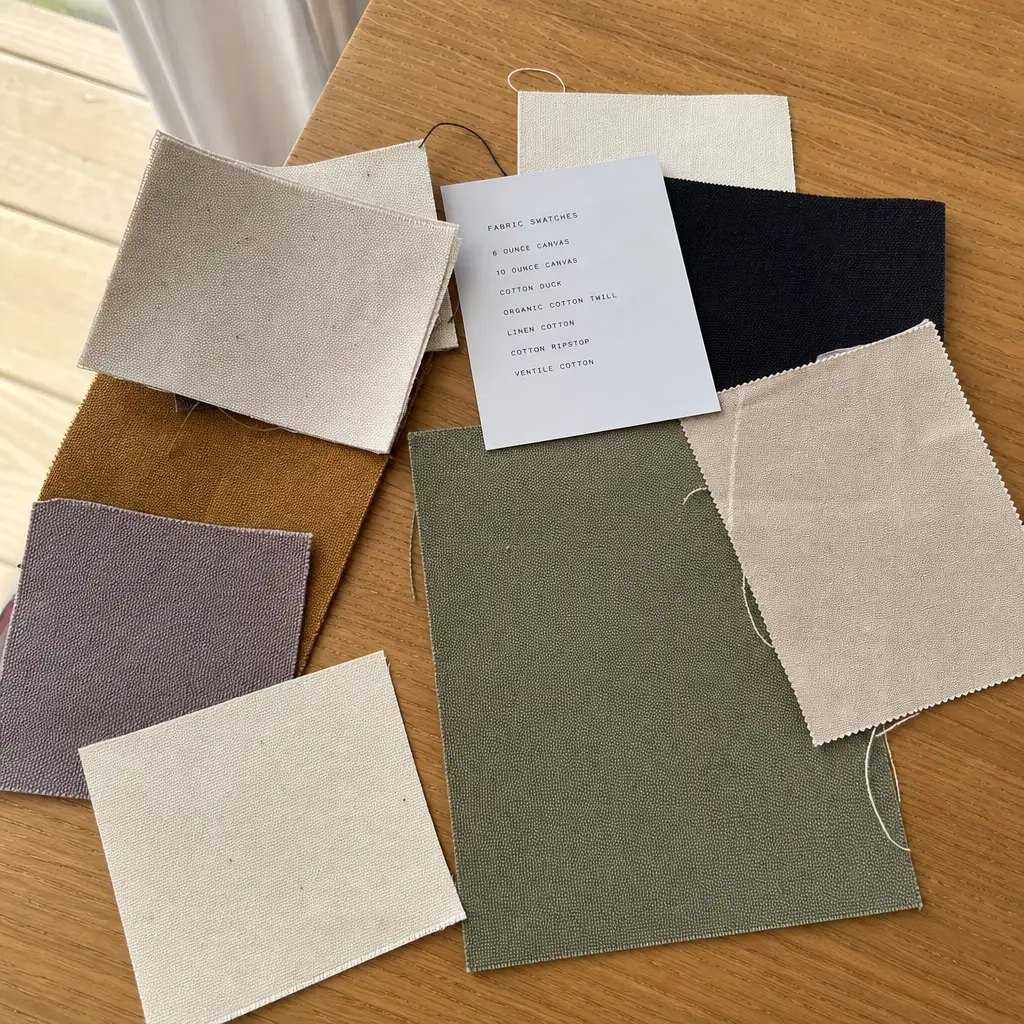
- Request fabric swatch or sample in the same GSM and color family as the quoted product.
- Review seam reinforcement style: cross stitch, box stitch, or bar tack where handles attach.
- Check whether the supplier controls printing in-house or outsources it to a local print shop.
- Clarify documentation: fabric composition, country of origin, packing list, invoice, and any required organic certification records.
- Require pre-shipment photos or inspection access before the goods are sealed for export.
Specification comparison for buyers
| Spec decision | Recommended option | When it fits | Buyer risk to check |
|---|---|---|---|
| Front logo position | Centered print 90–120 mm below bag opening, sized 220–280 mm wide on a 380 x 420 mm tote | Most trade show giveaways where the exhibitor logo must be visible when carried by hand or over the shoulder | If the print is too high, it may fold under the handle seam; if too low, it can disappear when the bag is filled |
| Organic cotton fabric weight | 220–280 GSM for standard exhibitor totes; 300–340 GSM for retail-grade or sponsor bags | 220–280 GSM balances cost, foldability, and print surface for bulk booth distribution | Low GSM can show ink bleed and bag distortion; high GSM increases carton weight and freight cost |
| Print method | Water-based screen print for 1–3 solid colors; heat transfer only for gradients or small multicolor art | Large flat logos, simple sponsor marks, and event graphics on natural or dyed organic cotton | Heat transfer can feel plastic on organic cotton; screen print needs correct ink opacity and curing |
| Logo size control | Approve artwork by millimeter size and placement tolerance, not only by visual mockup | Useful when multiple exhibitors or distributors need consistent brand presentation | Factories may scale art to fit unless final print width, height, and centerline are specified |
| Handle length | 60–65 cm self-fabric handles for shoulder carry, reinforced with cross stitch | Trade shows where visitors carry catalogs, samples, and water bottles for several hours | Short handles reduce usability; weak attachment fails under catalog weight and damages brand impression |
| Side label option | Small woven organic cotton or recycled polyester side label, 25–35 mm folded | When the main panel must remain clean or co-branded with event sponsor artwork | Labels need separate MOQ and lead time; colorfastness and placement must be confirmed before bulk cutting |
| Packing method | Flat packed 50 pieces per inner polybag or kraft band, 100–200 pieces per export carton | Best for distributor warehousing, event kits, and fast booth setup | Over-compressed packing causes deep creases across the print area; loose packing increases carton volume |
| Sample approval path | Pre-production sample using actual fabric GSM, ink, logo size, and final seam construction | Needed for international orders, sponsor approvals, or color-sensitive brand logos | Digital mockups do not prove ink hand feel, cotton shrinkage, stitching strength, or true logo placement |
Buyer checklist before sampling
- Define the final tote size in width x height x gusset, not only by capacity description.
- Specify organic cotton type, fabric GSM, color, shrinkage tolerance, and whether fabric must be certified under a recognized chain-of-custody program.
- Fix logo placement by distance from top opening, centerline, print width, print height, and acceptable tolerance in millimeters.
- Send vector artwork with Pantone references and state whether small text, QR codes, or sponsor lockups must remain readable.
- Choose print method based on artwork complexity, cotton color, ink opacity, hand feel, and expected wash or rub resistance.
- Approve one physical pre-production sample made with actual bulk fabric, print ink, handle stitching, and packing method.
- State carton packing requirements, inner pack quantities, barcode or label needs, carton marks, and pallet limits if applicable.
- Build trade show delivery backwards from in-hand date, including sample approval time, production, inspection, export booking, customs, and local distribution.
- Request quote breakdowns for bag, print, label, packing, sampling, mold or screen charges, inspection support, and freight-ready carton data.
- Set QC acceptance criteria for dimensions, logo placement, print defects, seam strength, stains, odor, needle damage, and carton condition.
Factory quote questions to send
- What organic cotton fabric options are available for this tote size, and what are the actual GSM tolerances after finishing?
- Is the quoted cotton greige, bleached, dyed, or natural, and will shrinkage or skew affect final bag dimensions?
- Which print method do you recommend for our artwork on this fabric color, and what is the expected ink hand feel?
- What is the minimum clear line thickness and smallest readable text height for this print method on organic cotton?
- What logo placement tolerance can your production line hold from the top opening and side seams?
- Does the quote include screen setup, Pantone matching, sample charges, label weaving, inner packing, carton marks, and export cartons?
- What is the MOQ logic: fabric MOQ, printing MOQ, label MOQ, dyeing MOQ, or total order MOQ?
- How many days are needed for artwork proof, sample making, sample revision, bulk production, final inspection, and carton packing?
- What carton dimensions, gross weight, net weight, and pieces per carton will be used for the quoted specification?
- Can you provide production photos or inspection data showing logo placement, seam reinforcement, print curing, and packed cartons before shipment?
Quality-control points to confirm
- Measure finished bag dimensions against approved tolerance after stitching and pressing, not before sewing.
- Check logo placement from top opening, side seam, and bag centerline on samples from multiple cartons.
- Rub test the print surface dry and damp to detect poor curing, ink powdering, or color transfer.
- Inspect print edges for bleeding, pinholes, ghosting, misregistration, and ink buildup on organic cotton slubs.
- Load test handles with a realistic catalog weight for a fixed period, then inspect cross-stitch and seam distortion.
- Review fabric defects including oil marks, seed contamination beyond approved natural variation, weaving holes, and shade variation.
- Confirm inner packing prevents print-to-print transfer, heavy creasing, moisture, and carton abrasion.
- Verify carton marks, SKU labels, barcodes, country of origin labels, and piece count before export sealing.