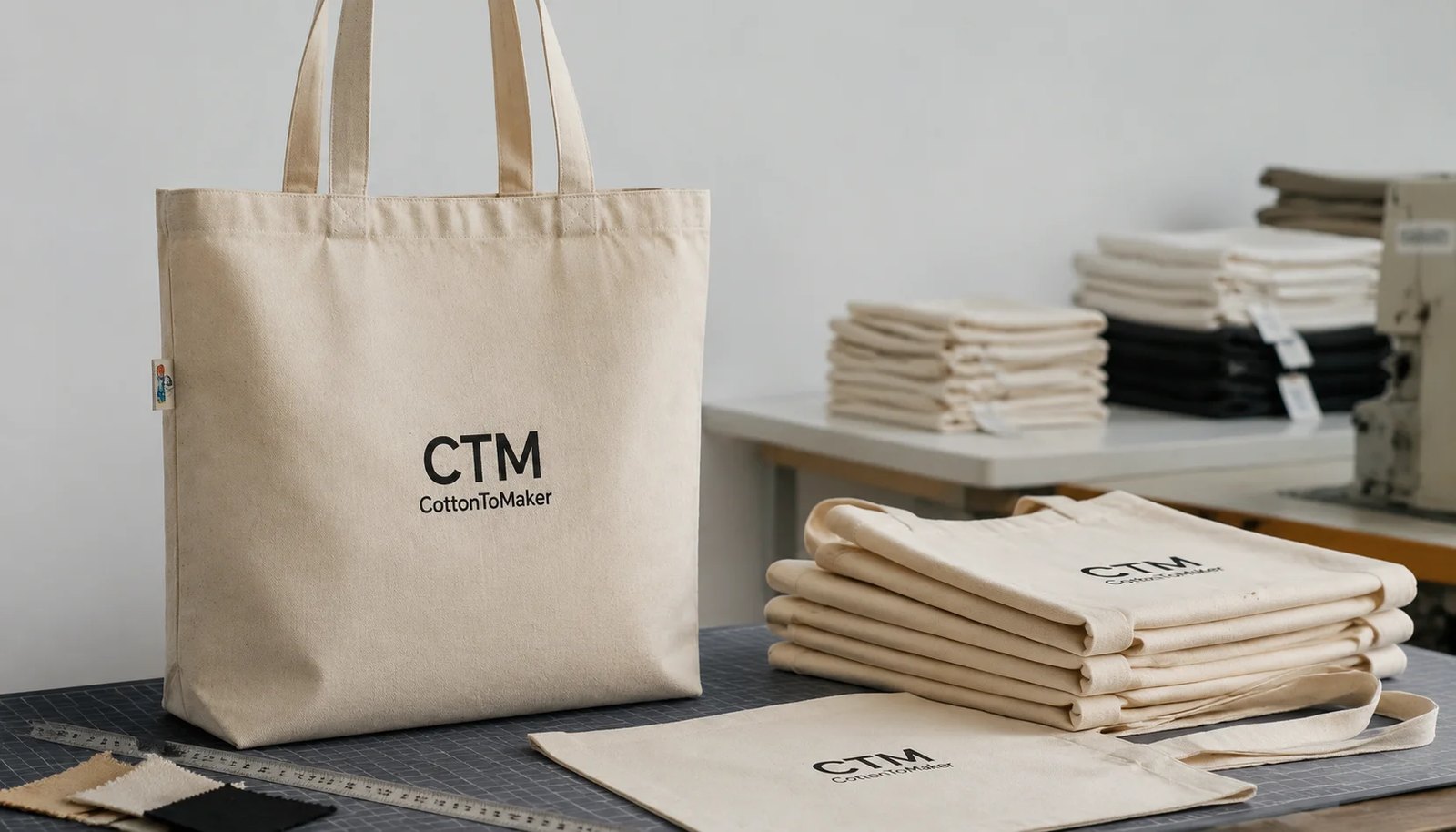
Define the Liquor Retail Load Before Choosing the Tote
Wholesale organic cotton totes for liquor retailers should be specified around the actual load, not only around the front logo area. A bag used for a single wine bottle promotion can be lighter and narrower than a tote expected to carry two spirits bottles, mixers, and a gift box. Glass packaging creates concentrated weight and hard edges, so the handle join, bottom seam, and gusset shape matter more than they do for a normal grocery giveaway.
The buying problem is usually simple: procurement receives several cheap tote quotes that look similar on paper, but the bags are not built for the same carrying stress. One supplier may quote 6 oz flat cotton, another may quote 10 oz organic canvas with a boxed bottom, and both may call it an organic cotton tote. Your RFQ should remove that ambiguity before price comparison starts.
- For one bottle or light accessories, a flat 7-8 oz tote can work if the campaign is short term.
- For two bottles or boxed liquor gifts, move toward 10 oz canvas, reinforced handles, and a gusset.
- For premium retail or reusable loyalty bags, consider 10-12 oz organic canvas with stronger finishing and cleaner print control.
- For checkout use, test whether the bag stands open enough for staff to load quickly.
Fabric Weight and Organic Cotton Claims
Cotton tote quotes are often compared by ounce weight, while many mills and factories also use GSM. As a working guide, 5 oz cotton is a light promotional cloth, 7 oz is a mid-light fabric, 8 oz is a practical entry canvas, and 10 oz or above gives a firmer retail feel. In GSM terms, many 8-10 oz cotton canvas options fall roughly in the 270-340 GSM range, depending on weave and finishing. For liquor retail, going too light can save a few cents while creating a bag that feels weak against the value of the bottles inside.
Organic cotton also needs evidence. If your brand, importer, or distributor intends to make an organic claim, the supplier should explain what documentation is available and whether the certification covers fabric, transaction, or the full chain of custody. Do not let the word organic sit only in the product name. The safest buying route is to define the claim level you need before the factory prices the order.
- Use 8 oz organic cotton for economical retail promotions where load is moderate.
- Use 10 oz organic cotton canvas when the bag must feel reusable and carry heavier bottles.
- Avoid comparing natural conventional cotton to certified organic cotton as if they are the same material.
- Request certificate type, certificate holder, and validity period if the claim will appear on product packaging or marketing.
Size, Gusset, and Handle Construction
A liquor retail tote needs enough depth to hold bottles without forcing the bag into an awkward shape. A common general tote size may work for folded apparel but may not sit well around bottle cartons. For bottle-heavy usage, specify width, height, and gusset depth in finished measurements. A gusset of around 8-12 cm is often more practical than a completely flat panel when the store expects customers to carry boxed wine, spirits, mixers, or multiple small items.
Handle strength deserves separate wording in the RFQ. Long shoulder handles around 60-65 cm are usually more useful for retail customers than short hand-carry handles, but longer handles put more strain on the attachment point. The factory should quote the handle width, fabric type, and reinforcement stitch. Cross stitch, box stitch, or bar tack reinforcement is more reliable than a simple single seam when the bag will carry glass.
- State finished size as width x height x gusset, not only panel size.
- Clarify whether the bottom is flat, boxed, or side-gusseted.
- Specify handle length and width; do not accept only the phrase long handle.
- Require reinforced stitching at handle joins and bottom stress points.
- Approve one loaded sample with real bottle weight before bulk production.
Print Method for Organic Cotton Totes
Most liquor retailers use totes for store branding, seasonal campaigns, tasting events, club membership gifts, or responsible retail messages. For simple logos, water-based screen printing is usually a practical choice on organic cotton because it has a softer hand feel and suits natural fabric positioning. However, textured canvas can create small gaps in large solid print areas. Artwork with fine lines, small legal text, or heavy ink coverage should be reviewed against the fabric weave before the factory opens screens.
Heat transfer can produce cleaner detail for complex full-color artwork, but it changes the hand feel and may not match every organic or sustainability message. Embroidery can look premium but adds cost, thread weight, and possible fabric puckering if the panel is too light. For liquor retail totes, the best method is the one that balances brand appearance, durability, and production control, not the one that looks brightest in a digital proof.
- Use water-based screen print for one to three solid brand colors on natural cotton.
- Use discharge or pigment options only after confirming compatibility with fabric color and finish.
- Use heat transfer when fine detail or full-color artwork is more important than a soft cotton hand feel.
- Avoid tiny compliance wording on rough canvas unless the factory confirms legibility on a physical sample.
- Provide Pantone references and accept that natural cotton background can shift perceived print color.
MOQ Logic and What Low Quotes Usually Exclude
MOQ depends on fabric availability, color, print complexity, and production setup. A standard natural organic cotton tote with one-color print may be possible at a lower MOQ than a custom dyed organic cotton tote with multiple print positions and retail packing. For many wholesale programs, 500-1,000 pieces is a more realistic starting point than very small trial quantities, especially when the buyer needs stable fabric and clean print setup.
A low unit price can be useful, but only if it includes the same scope as the competing quotes. Some quotes exclude screen charges, sample charges, carton marks, hangtags, inner packing, certification document handling, or export packing upgrades. Others quote from available fabric, which may be acceptable for a short campaign but risky for a repeat retail program. The quote comparison should separate cost lines so your team can see what is actually included.
- Stock natural fabric usually supports lower MOQ and faster sampling.
- Custom dyed organic cotton usually increases MOQ because fabric dyeing has mill minimums.
- Multiple print colors increase setup cost and inspection risk.
- Retail barcode labels, hangtags, or individual bags add labor and packing cost.
- Repeat orders need fabric traceability so the second batch does not feel different from the first.
Sample Approval That Prevents Bulk Mistakes
A pre-production sample should not be treated as a decoration sample only. For liquor retail totes, the sample must prove fabric weight, finished size, handle reinforcement, print method, and packing fold. If a supplier sends a beautiful sample in a different fabric or a hand-made construction that cannot match bulk production, it has limited buying value. The approval sample should represent the exact production standard.
During sample review, load the tote with the same bottle configuration expected in store. Look for handle stretching, seam distortion, print cracking when the panel bends, and whether the bottom shape supports the items. Also check how the bag looks after being folded and unpacked, because export packing can create creases that affect retail presentation.
- Measure fabric feel against the quoted oz or GSM and keep a retained approved sample.
- Measure bag dimensions after the sample is laid flat and after it is loaded.
- Photograph print position with a ruler so the factory has a placement reference.
- Pull-test the handles manually with realistic weight before approval.
- Confirm folding method if bags will be stored behind checkout or shipped to multiple stores.
Packing and Carton Planning for Retail Distribution
Packing is not a small detail when totes are shipped to liquor stores, distributor warehouses, or regional retail branches. Organic cotton can absorb odor and moisture, and natural fabric shows dirt more easily than dark dyed fabric. The carton should be export-worthy, dry, and lined if needed. Bags should be folded consistently so store teams can count and issue them without extra sorting.
Individual polybags are sometimes requested for cleanliness, but many liquor retailers prefer reduced plastic packaging. Bulk packing with an inner liner can work if the cartons are handled properly and the bags are not being sold as individually packaged merchandise. If retail presentation is required, then barcode labels, hangtags, belly bands, or paper sleeves need to be included in the quote and sample approval.
- Define pieces per inner bundle and pieces per export carton.
- Request carton dimensions and gross weight for warehouse planning and freight estimates.
- Use carton marks that match purchase order, item code, color, quantity, and destination.
- Avoid overpacking heavy cartons that are difficult for store staff to move.
- Clarify whether moisture control, inner liner, or desiccant is needed for ocean freight.
Lead Time and Schedule Risk
A realistic schedule includes artwork confirmation, sample making, sample shipping, buyer approval, fabric booking, bulk cutting, printing, sewing, trimming, packing, final inspection, and export handover. For a standard natural organic cotton tote, production may be simpler than a custom dyed bag, but the approval steps still take time. The most common delay is not sewing; it is late artwork approval, unclear certification requirements, or a sample revision after the buyer sees the real fabric.
Liquor retail programs often tie to holiday seasons, tasting events, new store openings, or brand launches. If the date is fixed, the RFQ should include required delivery date, ship mode, destination, and latest acceptable inspection date. Air freight can rescue a late order but may destroy the value of a low unit price, especially for bulky cotton bags.
- Allow time for artwork proof and physical sample review before bulk production.
- Book fabric only after confirming the organic documentation and color requirement.
- Set a latest sample approval date, not only a requested delivery date.
- Reserve inspection time before the cargo leaves the factory.
- Compare ocean, rail, truck, or air freight impact on landed cost when schedule is tight.
Quote Data Needed for a Clean Landed-Cost Comparison
Procurement teams should not compare tote suppliers only by unit price. The correct comparison includes fabric spec, bag construction, print scope, sample charges, setup charges, packing, carton volume, export terms, and documentation. A cheaper tote that packs fewer pieces per carton can cost more to ship. A lower fabric weight can reduce unit price but weaken the retail experience and increase complaint risk.
Ask suppliers to quote in a format your team can compare line by line. If one quote is FOB and another is EXW, the prices are not equivalent. If one includes individual packing and another uses bulk cartons, the cost and warehouse handling are different. The more exact the quote data, the easier it is to defend supplier selection internally.
- Unit price by quantity tier, such as 500, 1,000, 3,000, and 5,000 pieces.
- Fabric material, weight, color, and organic documentation status.
- Print method, print size, number of colors, and number of positions.
- Sample cost, screen cost, artwork proof cost, and whether charges are refundable.
- Packing method, carton quantity, carton size, gross weight, and estimated CBM.
- Trade term, production lead time, payment term, and inspection arrangement.
Supplier Evidence and Acceptance Criteria
For wholesale organic cotton totes, supplier evidence should cover both product capability and compliance reliability. A factory that regularly produces cotton bags should be able to explain fabric sourcing, cutting tolerance, print limitations, stitch reinforcement, and inspection method. A trading supplier may still be useful, especially for mixed promotional orders, but the buyer needs visibility into the actual manufacturing standard.
Set acceptance criteria before the purchase order is issued. This protects both sides because the factory knows what will be inspected and the buyer avoids subjective rejection after production. For liquor retail, important criteria include handle strength, finished size, print placement, print durability, clean sewing, odor, stains, and carton condition. If the tote will carry organic labeling, documentation accuracy should also be part of release approval.
- Define major defects such as broken handle stitching, incorrect fabric weight, wrong print color, or unsupported organic claim.
- Define minor defects such as loose thread, small print speck, slight fold mark, or small measurement variance within tolerance.
- Use an approved sample as the reference for fabric hand feel, color, print position, and sewing standard.
- Require production photos during cutting, printing, sewing, and packing for early issue detection.
- Use third-party inspection for larger rollouts or time-sensitive retail programs.
Specification comparison for buyers
| Spec decision | Recommended option | When it fits | Buyer risk to check |
|---|---|---|---|
| Fabric weight | 8-10 oz organic cotton canvas, or about 270-340 GSM | Liquor retailers carrying one to three bottles, gift sets, or heavier store purchases | Very light 5 oz fabric may look cheap and stretch at the handle join under bottle weight |
| Bag construction | Boxed bottom or gusseted flat tote with reinforced handle stitching | Stores that want the bag to stand better at checkout and hold bottle cartons more cleanly | Flat promotional totes can fold around bottles and make the print look distorted when loaded |
| Handle length | 60-65 cm long handles with cross stitch or bar tack reinforcement | Shoulder carry for retail customers walking from store to car or transit | Short handles reduce usability; weak reinforcement is a failure point with glass bottles |
| Print method | Water-based screen print for simple logos; heat transfer only for complex full-color artwork | Brand logos, store names, responsible drinking messages, or seasonal liquor promotions | Large solid ink areas on textured organic cotton can show pinholes unless artwork and ink deposit are adjusted |
| Organic claim evidence | Transaction certificate or scope certificate details available before bulk order approval | Brands that need verified organic cotton content for retail or ESG reporting | A generic statement saying organic cotton is not enough for many importers or compliance teams |
| MOQ logic | 500-1,000 pcs for standard natural fabric and simple print; higher MOQ for dyed fabric or custom size | First wholesale program, store rollout, distributor promotion, or seasonal retail campaign | Low MOQ quotes may use available fabric, which can change shade or GSM between repeats |
| Packing method | Individual folded polybag only if required; otherwise bulk carton with inner liner and carton marks | Retail backroom handling, distributor storage, or lower packaging waste targets | Loose packing without moisture control can cause creasing, odor, or carton abrasion during ocean freight |
| Supplier route | Factory-direct for controlled custom specs; trading supplier for mixed small accessory orders | Factory-direct fits repeat liquor retail programs; trading route fits one-off mixed SKUs | Trading quotes may hide fabric mill source, certification chain, and actual production capacity |
Buyer checklist before sampling
- Define the loaded use case: one bottle, two bottles, boxed spirits, accessories, or general liquor store shopping.
- State fabric clearly by material, weave, weight, color, and certification expectation, for example natural organic cotton canvas, 10 oz, undyed.
- Specify finished size, gusset depth, handle length, handle width, seam type, and reinforcement method.
- Include target artwork size, print location, Pantone references, number of print colors, and whether water-based inks are preferred.
- Request organic cotton evidence in the quote stage, not after the deposit is paid.
- Separate sample cost, mold or screen setup cost, unit cost, packing cost, and freight terms in the quote comparison.
- Require a pre-production sample made with actual fabric weight, actual handle construction, and final print method.
- Set acceptance criteria for size tolerance, print placement tolerance, stitch density, handle pull strength, color variance, and carton packing.
- Confirm whether bags are packed bulk, individually bagged, or retail-ready, and whether any barcode, hangtag, or carton label is needed.
- Build approval time, fabric booking time, production time, QC inspection, and export documentation into the purchase schedule.
Factory quote questions to send
- What organic cotton fabric weight in oz and GSM are you quoting, and is it greige, bleached, dyed, or natural undyed fabric?
- Can you provide the certification document type available for this fabric, and at what stage can the buyer review it?
- Is the quoted MOQ based on stock fabric, regular mill fabric, or custom woven or dyed fabric?
- What is the maximum recommended loaded weight for this tote construction, and how is the handle reinforcement sewn?
- Which print method is included in the unit price, and how many print colors and print positions are included?
- What are the setup charges for screen, artwork proofing, digital proof, lab dip, or pre-production sample?
- What size and print placement tolerances will the factory accept during bulk production?
- How many pieces per export carton, what carton dimensions, and what estimated gross weight per carton?
- What is the production lead time after sample approval and deposit, and what can delay the schedule?
- What inspection standard do you support before shipment, and can the buyer appoint a third-party inspection company?
Quality-control points to confirm
- Fabric weight should be verified against the approved sample, allowing normal textile tolerance but rejecting obvious downgrade substitutions.
- Finished bag size should stay within agreed tolerance, commonly about +/-1 cm for main dimensions unless the design requires tighter control.
- Handle stitching should be clean, reinforced, and free of skipped stitches, loose threads, or weak backstitching.
- Print placement should match the approved sample and remain centered within the agreed tolerance, especially on gusseted or boxed-bottom bags.
- Ink coverage should be even with no major smearing, cracking, heavy bleeding, or unacceptable pinholes in logo areas.
- Organic cotton labels or claims should match the approved documentation and buyer artwork, without unsupported wording added by the factory.
- Cartons should be dry, export-worthy, correctly marked, and packed to prevent crushing, odor transfer, and moisture damage.
- Random finished bags should be load tested using the intended bottle weight before shipment approval.