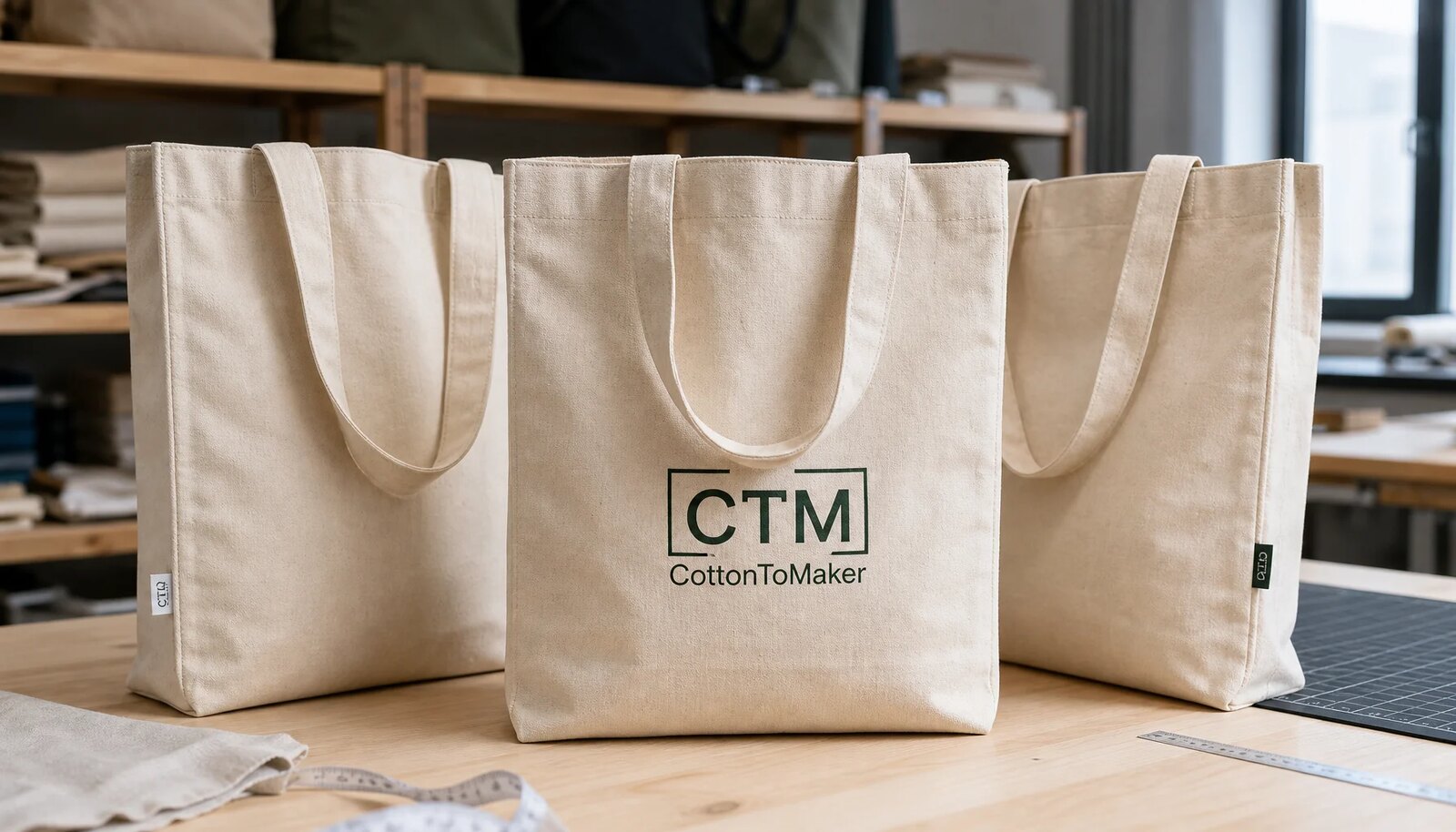
Start With the Hotel Retail Use Case
Wholesale organic cotton totes for hotel retail should be treated as sellable merchandise first and a branded bag second. A tote sold in a resort boutique, spa shop, destination hotel, vineyard property, museum hotel, or branded online store has to survive shelf display, guest handling, packing, transport, and real use after purchase. That usually means stronger fabric, cleaner finishing, stable decoration, and packing that protects the retail look.
A free guest tote can be lighter. It may not need a hangtag, belly band, or premium handle build. Still, it cannot feel flimsy if guests are likely to carry towels, bottled water, books, slippers, snacks, or airport extras. The difference is not only price; it is the job the bag is expected to do.
This is where many RFQs become too vague. If the request only says organic cotton tote with hotel logo, suppliers may quote very different products: a thin flat amenity bag, a standard promotional tote, a gusseted canvas retail tote, or a premium beach-style bag. All may be described as organic cotton totes. They will not carry the same cost, carton volume, retail value, or defect risk.
Before sending the RFQ, procurement should align internal stakeholders. Retail may care about shelf price and display. Operations may care about storage space and receiving. Brand may care about logo placement and claim wording. Sustainability teams may care about documentation. Put those needs into one brief before sampling starts.
- Paid retail SKU: prioritize 10 oz to 12 oz canvas, reinforced handles, clean stitching, stable logo application, and retail hangtag or belly band.
- Guest amenity: balance cost and strength with lighter fabric, fewer trims, and bulk packing.
- Spa or resort use: consider towels, bottles, sunscreen contact, humidity, and stain-control expectations.
- Beach or pool tote: add gusset, longer handles, stronger bottom seam, and heavier fabric where needed.
- Distributor replenishment: lock SKU data, carton marks, barcode placement, and sealed sample standards.
- Opening order: keep the first run manageable, but freeze the specification before scaling across properties.
Specify Fabric Weight, Weave, and Finish
Fabric is the biggest cost driver in most wholesale organic cotton totes. It is also the easiest place for quote confusion to hide. For hotel retail, 10 oz to 12 oz cotton canvas, roughly 270-340 GSM finished weight depending on weave and finishing, is a practical starting point. It feels more substantial than a giveaway bag and supports common uses such as books, robes, spa products, bottled water, and local goods.
For budget welcome bags, 6 oz to 8 oz cotton, roughly 170-240 GSM, can work if the expected load and shelf value are modest. Premium beach or resort totes may move into 12 oz to 14 oz canvas, roughly 340-475 GSM depending on the weave and finishing. Heavier is not automatically better. It increases fabric cost, carton size, sewing difficulty, and freight exposure.
Do not compare quotes by ounce alone. Ounce, GSM, weave density, yarn count, finishing, and moisture regain all influence hand feel. A loosely woven 10 oz fabric can feel less structured than a tighter lower-GSM fabric. Ask the supplier to state finished GSM or ounce, tolerance, weave type, and finishing route. Keep an approved physical swatch for repeat orders.
Natural unbleached organic cotton often shows seed specks, small slubs, and shade variation. These are normal fabric character when approved in advance; they become disputes when nobody defines the acceptable range. Bleached, dyed, washed, or pre-shrunk fabrics add control, but they also add cost, lead time, and testing. Dyed fabric needs lab dip approval, shade tolerance, wet and dry crocking checks, shrinkage data, and lot segregation.
Decoration belongs in the fabric conversation. Coarse canvas can soften fine-line artwork. Natural beige ground can mute pale inks. Dark dyed cotton may need an underbase. If the hotel logo has a crest, serif lettering, thin line art, or a light Pantone target, test it on the selected fabric before approving bulk production.
- 6 oz to 8 oz: use for budget amenity bags, conferences, welcome packs, and short-term promotions.
- 10 oz to 12 oz: use for most paid hotel retail totes and destination merchandise.
- 12 oz to 14 oz: use for premium canvas totes, beach bags, and heavier-load applications.
- Natural finish: approve seed specks, shade range, slubs, and surface variation before bulk production.
- Dyed finish: request lab dip, shade tolerance, crocking checks, shrinkage range, and lot segregation.
- RFQ wording: state finished GSM or ounce, tolerance, weave, color, finish, and approved surface character.
Define Size, Gusset, and Handle Build
A tote can look perfect in a digital mockup and still disappoint in use. The common problems are simple: the bag is too flat, the gusset is too small, the handles are awkward, or the reinforcement is not strong enough for what guests actually carry.
Start with likely contents. A general merchandise tote around 38 x 42 cm works for books, light shopping, folded apparel, and small retail items. A gusseted tote with an 8 cm to 12 cm bottom gusset works better for towels, slippers, spa products, bottles, boxed goods, and larger gifts. A beach or pool tote may need a wider body, stronger bottom seam, longer handles, and heavier fabric.
Flat totes are economical and pack tightly. Gusseted totes increase capacity and perceived value, but they use more fabric, require more sewing time, and take more carton space. Procurement should decide whether the added retail impact justifies the added landed cost.
Handles deserve more attention than they usually get. State total handle length, handle drop, or both. Short handles suit hand carry. Shoulder handles normally need a longer drop; common shoulder-handle total length is around 55 cm to 65 cm, though bag height and local preference matter. Too short feels uncomfortable over resort clothing. Too long can drag, swing awkwardly, or look unbalanced on a display hook.
Construction details should be in the purchase specification, not left to factory habit. Define handle material, handle width, seam type, stitch density, seam allowance, reinforcement method, thread color, and loose-thread trimming. For sellable hotel retail totes, handle attachment should usually use box stitch, cross stitch, bartack, or another approved reinforcement instead of only a straight stitch.
- Common flat tote: approximately 38 x 42 cm for books, shopping, and light merchandise.
- Gusseted tote: add 8 cm to 12 cm bottom gusset for boxed goods, towels, robes, or bottles.
- Shoulder carry: specify handle drop or total length rather than vague terms such as long handle.
- Handle width: define finished width, especially for self-fabric handles that can twist if too narrow.
- Reinforcement: approve box stitch, cross stitch, bartack, or equivalent stress-point construction.
- Measurement method: state whether dimensions are measured flat, after pressing, and before or after washing if relevant.
Match Decoration to Artwork and Use
Most hotel wordmarks, resort names, destination line art, and simple logos work well with screen printing. It is efficient at wholesale quantities and can give good opacity on cotton canvas when the artwork is designed for the fabric. Buyers should provide vector artwork, Pantone targets, print size, placement measurements, number of colors, and ink preference.
A mockup is useful, but it is not an approval sample. It shows layout. It does not show ink absorption, fabric texture, opacity, curing, edge sharpness, or color shift on natural cotton. For a tote that will be sold as merchandise, request a print strike-off on the actual fabric. The strike-off should become the reference for color and print quality during production.
Embroidery can look premium for a small crest, monogram, or discreet property mark. It is less suitable for large dense artwork on lighter fabric because it can pucker the panel and increase cost. Heat transfer or digital print can handle complex artwork, gradients, or many colors, but buyers should test hand feel, edge durability, cracking, washing behavior, and whether the result still feels right for an organic cotton retail product.
Decoration specifications need tolerances. Define print position from the top edge and side seams, center alignment, acceptable tilt, print coverage, opacity, and color target. For standard tote printing, a placement tolerance of +/-0.5 cm to +/-1.0 cm is commonly used, though tight artwork or prominent center marks may need stricter control.
If the hotel uses several properties or seasonal drops, create one artwork control sheet. Include logo files, Pantone references, print dimensions, placement diagrams, label positions, and approved wording. This prevents a reorder from drifting because a supplier reused an old mockup or adjusted scale without approval.
- Screen print: best for solid one-to-three-color hotel logos, slogans, and destination graphics.
- Embroidery: best for small premium marks, but check puckering, backing, thread color, and stitch density.
- Heat transfer: useful for complex color, but test edge lift, cracking, and hand feel.
- Digital print: flexible for detailed art, but confirm color stability and fabric compatibility.
- Woven label: useful for understated branding when the front panel should stay minimal.
- Print QC: define opacity, curing, dry rub, wet rub, adhesion, wash test if needed, and placement tolerance.
Verify Organic Cotton Documentation
Organic cotton is not just a marketing phrase. It is a sourcing and documentation requirement, and the required evidence should be decided before the quote is requested. Some hotel programs need only organic cotton content confirmation. Others need certified organic fabric evidence, chain-of-custody documents, or transaction-certificate-level documentation. A supplier cannot price accurately if this requirement appears after samples are approved.
The RFQ should state the organic cotton content percentage and whether the claim applies only to the fabric or also to thread, labels, hangtags, and packaging. Many tote programs use organic cotton fabric with conventional sewing thread, standard cartons, and ordinary trims. That can be acceptable, but the consumer-facing claim must be accurate. If a hangtag says certified organic cotton, the buyer should confirm that the documentation supports that wording.
Documents also have timing. Some information can be checked at quotation stage. Lot-specific documents may only become available after fabric booking, production, or shipment. Ask what can be provided before deposit, before bulk production, before final payment, and with shipping documents. If shipment release or final payment depends on documentation, put that condition into the purchase order.
Be cautious with stock-base programs. A supplier may have ready natural cotton totes available for quick logo printing, but stock availability does not prove certified organic origin. If the organic claim matters, request evidence tied to the fabric lot or finished goods route. If traceable organic documentation is unavailable for a small stock order, the buyer should adjust the claim, change the sourcing route, or accept a higher MOQ for documented fabric.
Claim wording should be reviewed like artwork. The purchase order, invoice, packing list, label copy, hangtag copy, website copy, and supplier documents should not contradict each other. Small wording changes can create compliance problems later, especially when hotel groups use the tote across different markets.
- Claim level: define organic cotton content, certified organic fabric, or transaction-certificate-level evidence.
- Lot relevance: request documents connected to the fabric lot or order, not only a generic certificate image.
- Claim consistency: align PO wording, invoice wording, label copy, hangtag text, and supplier documents.
- Trim scope: state whether thread, labels, hangtags, and packing are included in sustainability requirements.
- Timing: list documents required at quotation, sample approval, shipment, and final payment.
- Stock risk: verify the specific stock fabric claim before selling the tote as organic cotton.
Understand MOQ and Cost Drivers
MOQ is not just a factory preference. It is shaped by fabric procurement, cutting efficiency, print setup, sewing line planning, label production, packing materials, and carton efficiency. A factory may accept 300 to 500 pieces for a standard natural fabric, simple size, one-color screen print, and bulk pack. The same factory may need a much higher MOQ for custom dyed organic fabric, special canvas weight, multiple print colors, woven labels, barcode application, or retail packaging.
Ask for price breaks with identical specifications. A useful comparison might include 500, 1000, 2500, and 5000 pieces using the same GSM, size, gusset, handle, print size, label scope, packing, Incoterm, and documentation level. If the unit price drops, you want to know whether the saving comes from true production efficiency or from a changed specification.
Component MOQs often surprise hotel buyers. Woven labels, hangtags, belly bands, barcode stickers, custom cartons, and dyed fabric can each have their own minimums. If the tote order is 500 pieces but the woven label supplier requires 2000 labels, the factory may add a surcharge, hold leftover labels for reorders, or push the order quantity higher. Ask which component is driving the MOQ before negotiating.
Setup charges should be separated from unit cost. Screen charges, embroidery digitizing, sample fees, courier fees, label tooling, hangtag printing, barcode stickers, individual bags, desiccants, palletizing, and third-party inspection can change the real landed cost. A low unit price with hidden setup charges may not be the lowest total cost.
Hotel groups can reduce cost and risk through planned replenishment. Several properties may use the same blank tote while changing only the front print or hangtag. Seasonal artwork can shift while the construction sample, fabric standard, carton plan, and QC tolerance stay fixed. Repeat-order discipline often protects retail consistency better than a one-time low price.
- Low MOQ route: stock fabric, standard size, one-color print, no custom dye, and bulk packing.
- Higher MOQ route: custom dyed fabric, special GSM, complex print, woven labels, and retail packaging.
- Hidden drivers: label MOQ, hangtag MOQ, screen setup, carton efficiency, and fabric roll minimums.
- Price breaks: compare 500, 1000, 2500, and 5000 pieces with unchanged specifications.
- Setup charges: separate screen, sample, embroidery digitizing, label tooling, and packing charges.
- Reorder plan: ask whether screens, fabric standards, labels, and sealed samples can be retained.
Compare Supplier Quotes Like-for-Like
A useful B2B quote for wholesale organic cotton totes gives procurement enough information to calculate landed cost, retail margin, and operational risk. Unit price alone is not enough. The quote should state fabric weight, weave, finished size, gusset, handle length, print method, print area, color count, label scope, packing method, pieces per carton, carton dimensions, gross weight, sample cost, setup charges, payment terms, Incoterm, lead time, and quote validity.
Incoterms matter. EXW, FOB, FCA, CIF, and DDP prices are not directly comparable because they include different responsibilities. Packing scope matters too. A tote quoted in bulk pack without hangtags is not the same as a tote quoted with individual polybags, barcode stickers, belly bands, and retail-ready folding. If one supplier quotes 8 oz and another quotes 12 oz, the lower price may simply be a different product.
Build a quote matrix and require every supplier to answer the same fields. Mark deviations clearly. One supplier may offer a short lead time because they are using stock fabric. Another may quote longer because they are using traceable fabric. One may include screen charges but reduce print size. Another may exclude label application or carton liners. The matrix makes the trade-offs visible before purchasing chooses a winner.
Carton data should be collected before purchase order approval. Cotton totes can be bulky, especially in heavier canvas or with retail presentation materials. Carton dimensions, gross weight, net weight, and pieces per carton affect sea freight, courier charges, warehouse handling, pallet planning, and hotel receiving space.
Quote validity also matters. Cotton, freight, and exchange-rate exposure can change the economics of a program. Ask suppliers how long the quote is valid and what happens if artwork, packing, documentation, or delivery timing changes after approval.
- Fabric field: organic content, documentation level, weave, GSM/ounce, tolerance, color, shrinkage, and finish.
- Construction field: width, height, gusset, handle drop, handle width, stitch type, and reinforcement.
- Decoration field: method, color count, print size, placement, Pantone target, ink type, and setup charge.
- Packing field: fold, inner liner, polybag or bulk pack, hangtag, barcode, pieces per carton, carton size, and gross weight.
- Commercial field: MOQ, price breaks, Incoterm, payment terms, sample charges, inspection cost, and quote validity.
- Schedule field: sample days, approval gates, bulk production days, inspection date, and export handover point.
Control Sampling Before Bulk Production
Sampling is where mistakes are still affordable. A complete hotel retail approval path may include a fabric swatch, blank construction sample, print strike-off, label proof, pre-production sample, and sealed final sample. Not every order needs every step, but skipping the pre-production sample is risky when the tote includes organic fabric claims, custom logo work, labels, and retail packing.
The fabric swatch confirms weight, hand feel, shade, and surface character. The blank construction sample confirms size, gusset, handle drop, handle width, seam shape, and reinforcement. The print strike-off confirms color, opacity, edge sharpness, curing, and placement on the chosen fabric. The label proof confirms woven label, care label, country-of-origin marking, hangtag, barcode, and belly band details.
Approval comments should be measurable. Do not write make the handle longer; write increase handle total length from 55 cm to 60 cm. Do not write logo is too high; write move print 2 cm lower from the top edge. Do not write color should be warmer; reference the approved Pantone, lab dip, strike-off, or sealed sample. Specific comments reduce interpretation before fabric is cut and printed.
The pre-production sample should use the real bulk inputs wherever possible: bulk fabric, final thread, final handle construction, final print method, final label, final folding, and final packing. If any element is substituted, the supplier should say so in writing and identify what will change in production.
The final approved sample should be sealed and controlled. One sample should stay with the buyer. One should stay with the factory or inspection team. For repeat orders, a sealed sample is more useful than a long email chain because it captures fabric feel, print result, stitching, labels, folding, and packing in one physical reference.
- Fabric swatch: approve GSM, color, surface character, shrinkage expectation, and hand feel.
- Blank sample: approve dimensions, gusset, handle drop, handle width, stitch type, and reinforcement.
- Strike-off: approve print color, opacity, line clarity, curing result, and placement reference.
- Label proof: approve woven label, care label, hangtag, barcode, origin mark, and retail wording.
- Pre-production sample: approve final fabric, construction, print, labels, folding, and packing together.
- Sealed standard: keep one buyer sample and one factory sample for inspection and repeat orders.
Set Measurable QC Standards
Quality control should be written in terms the factory and inspector can measure. For organic cotton totes, key control points include finished dimensions, handle drop, fabric GSM, shrinkage if relevant, seam strength, stitch density, print position, print color, stains, odor, needle damage, loose threads, label placement, barcode accuracy, carton count, and carton markings.
Defect severity should be defined before production. Critical defects may include wrong artwork, wrong organic claim, missing legal marking, mildew odor, broken handle, unsafe sharp object, severe contamination, or mixed SKUs. Major defects may include incorrect size outside tolerance, obvious print tilt, open seam, oil stain on the front panel, missing hangtag, unreadable barcode, or wrong carton mark. Minor defects may include small trimming issues or minor surface variation within the approved natural cotton character.
AQL inspection can help, but it is not a full quality standard by itself. The buyer should define critical defects that are not acceptable even if the total defect count is low. Inspection should reference the purchase specification, sealed sample, approved strike-off, label proofs, and packing instructions. If the order includes several hotel properties or SKUs, carton segregation and shipping marks need close attention.
Inline checks prevent large-scale failure. Print color, opacity, and curing should be checked before all panels are sewn or packed. Handle reinforcement and seam quality should be checked before final trimming. Final inspection should verify workmanship, measurements, labels, barcode scans, carton counts, moisture protection, and export marks.
Remote photo updates are useful, but they should not replace a documented inspection plan for high-risk retail orders. Ask for photos of fabric rolls, cutting, print strike-off, first sewn pieces, packing setup, carton marks, and random finished pieces. Then connect those updates to clear acceptance criteria.
- Size tolerance: commonly +/-0.5 cm to +/-1.0 cm for body dimensions, depending on construction.
- Handle tolerance: commonly around +/-1.0 cm for handle drop or total length.
- Print placement: define centerline and edge measurements, commonly with +/-0.5 cm to +/-1.0 cm tolerance.
- Stitching: reject skipped stitches, open seams, broken bartacks, weak reinforcement, and poor trimming.
- Cleanliness: reject oil stains, mildew, strong odor, obvious dirt, and retail-facing surface damage.
- Packing QC: verify barcode scan, SKU separation, carton count, carton marks, liner, desiccant use, and carton strength.
Plan Packing for Retail and Logistics
Packing affects cost, sustainability positioning, warehouse receiving, and retail presentation. Individual polybags protect each tote from moisture and dirt, but many hotel buyers want reduced plastic. Bulk packing with a clean carton liner, neat folding, dry cartons, and controlled storage can work well when the logistics route and hotel storerooms are clean and dry.
Retail presentation should match the selling environment. A boutique shelf may prefer a folded tote with a paper belly band and barcode sticker. A spa counter may prefer a hangtag and minimal packaging. A distributor shipping to multiple hotels may require SKU labels, carton numbers, barcode-ready packing, and inner separation to reduce picking errors. The best packing method is the one that supports the real receiving and retail workflow.
Carton data belongs in the quotation, not only in the shipping file. A 12 oz gusseted tote with hangtags and belly bands may occupy far more space than a 6 oz flat tote in bulk pack. Carton dimensions, gross weight, net weight, and pieces per carton affect sea freight, courier charges, warehouse handling, pallet configuration, and hotel receiving space.
Moisture and odor control are especially important for cotton. Natural cotton can absorb smells from cartons, warehouses, and humid routes. If the shipment will move through humid conditions or sit before a hotel opening, specify dry packing conditions, clean packing tables, carton liners, desiccants where needed, and no strong odor. Plastic reduction should not mean accepting mildew or dirty retail goods.
For multi-property programs, carton marking should be precise. Include PO number, SKU, property or destination, color, quantity, carton number, country of origin, and any required receiving reference. Bad carton marks can create receiving delays even when the tote quality is good.
- Bulk pack: lower plastic and faster unpacking, but requires clean folding, carton liner, and dry handling.
- Individual polybag: better protection for long storage or humid routes, but may conflict with sustainability goals.
- Paper belly band: strong retail presentation, but must be protected from crushing and carton abrasion.
- Hangtag and barcode: useful for hotel POS, distributor inventory, replenishment SKUs, and gift shop receiving.
- Carton marks: include PO number, SKU, color, quantity, carton number, destination, and country of origin.
- Moisture control: specify dry cartons, inner liners, desiccants when needed, and odor-free packing areas.
Specification comparison for buyers
| Spec decision | Recommended procurement position | When it fits | Buyer risk to check |
|---|---|---|---|
| Hotel retail product tier | Use 10 oz to 12 oz cotton canvas, roughly 270-340 GSM finished weight, with reinforced handles and clean retail finishing. | Paid merchandise in resort boutiques, spa shops, destination hotels, museum hotels, gift shops, and distributor replenishment SKUs. | Confirm finished GSM tolerance, hand feel, size tolerance, load expectation, print durability, and whether the quoted fabric is canvas, drill, twill, or plain weave cotton. |
| Budget amenity or event tier | Use 6 oz to 8 oz cotton, roughly 170-240 GSM, with clear limits on load use, simpler trims, and bulk packing. | Room welcome bags, conference totes, spa amenity packs, gift-with-purchase programs, and short-term promotional use. | Lower GSM can show print strike-through, seam distortion, wrinkling, and weak handle attachment if stitch density and reinforcement are not specified. |
| Premium tote tier | Use 12 oz to 14 oz canvas, roughly 340-475 GSM depending on weave and finishing, with gusset, stronger handles, and tighter workmanship controls. | Higher-priced hotel retail, beach and pool totes, branded capsule collections, and merchandise expected to carry heavier items. | Heavier canvas raises fabric cost, needle stress, carton volume, and freight cost; it may also require stronger machines, wider seam allowance, and adjusted print curing. |
| Organic claim level | State whether the order needs organic cotton content declaration, certified organic fabric evidence, or transaction-certificate-level documentation. | Hotel sustainability programs, ESG procurement files, retail hangtag claims, and distributor compliance review. | A generic certificate does not prove the specific lot; request scope certificate relevance, lot reference, transaction certificate availability if required, and claim wording approval. |
| Fabric color route | Use natural unbleached organic cotton for classic eco-positioning; choose dyed fabric only when shade control justifies added MOQ, testing, and lead time. | Natural cotton suits most hotel retail stories; dyed cotton suits brand-color programs, capsule drops, and premium retail ranges. | Natural cotton may show seed specks and shade variation; dyed lots need lab dip approval, shade tolerance, crocking checks, shrinkage data, and lot segregation. |
| Logo decoration method | Use screen print for solid artwork, embroidery for small premium marks, and transfer or digital print only after durability and hand-feel checks. | Hotel wordmarks, destination names, resort line art, spa logos, monograms, and boutique merchandise. | Define print size, placement tolerance, Pantone target, ink type, curing method, rub test, wash test if needed, and acceptable opacity on natural fabric. |
| Construction route | Write a finished-size specification with gusset, handle length/drop, seam type, stitch density, reinforcement method, and measurement points. | Private-label totes that must repeat across properties, seasons, or replenishment orders. | Do not approve only a visual mockup; measure the sealed sample and define tolerances for body size, gusset, handle drop, seam alignment, and label position. |
| Packing route | Use bulk pack with clean carton liner and dry carton controls unless individual protection is required by retail, humidity, or distribution route. | Plastic-reduction programs, hotel storeroom replenishment, distributor cartons, and retail teams unpacking multiple pieces. | Unbagged cotton can absorb odor, dust, and moisture; require clean packing tables, dry cartons, inner liner, desiccants where needed, and clear carton marks. |
| MOQ and price breaks | Ask for 500, 1000, 2500, and 5000 pieces using identical specs, plus separate setup, sample, screen, label, and packing charges. | Procurement comparison, annual hotel-group buying, distributor margin modeling, and reorder planning. | Suppliers may lower unit price by changing GSM, print area, packing, label scope, or organic document level; compare only like-for-like quotes. |
Buyer checklist before sampling
- Define the commercial use first: paid retail SKU, guest amenity, gift-with-purchase, spa pack, conference tote, opening order, or multi-property replenishment item.
- State the target retail expectation: expected shelf price, display method, likely contents, carrying load, storage duration, and whether the tote must look premium when folded or hung.
- Specify the organic cotton requirement clearly: organic cotton percentage, acceptable certification evidence, transaction certificate need, lot traceability requirement, and approved consumer-facing claim wording.
- Define fabric by finished GSM or ounce with tolerance, weave type, natural/bleached/dyed/washed finish, shrinkage expectation, shade standard, and approved surface character for seed specks or slubs.
- Provide finished measurements: width, height, gusset depth, handle total length or handle drop, handle width, seam allowance, stitch density, reinforcement type, and measurement method.
- Set practical tolerances before quoting: body size often +/-0.5 cm to +/-1.0 cm, handle drop +/-1.0 cm, print placement +/-0.5 cm to +/-1.0 cm, and GSM tolerance stated as a percentage or agreed range.
- Attach vector artwork and define print method, print size, placement from top edge and side seams, Pantone targets, number of colors, ink type preference, and testing requirements.
- Decide trims and retail presentation early: woven label, care label, country-of-origin marking, hangtag, barcode sticker, belly band, retail fold, individual bag, or bulk pack.
- Request sample stages appropriate to risk: fabric swatch, blank construction sample, print strike-off, label proof, pre-production sample, and sealed final approval sample.
- Ask for price breaks using identical specifications, Incoterm, packing, carton data, sample charges, screen charges, label/tooling charges, quote validity, and payment terms.
Factory quote questions to send
- What exact fabric will be used: organic cotton content, certification status, weave type, finished GSM or ounce, GSM tolerance, shrinkage range, color route, surface character, and available shades?
- Is the fabric stock, booked greige fabric, custom woven fabric, custom dyed fabric, or fabric already cut into blank totes, and what MOQ and lead time apply to each route?
- What organic documents can you provide: scope certificate reference, lot-specific evidence, transaction certificate if required, invoice wording, packing list wording, and timing for each document?
- What is included in the quoted unit price: fabric, cutting, sewing, printing, labels, hangtags, barcode application, folding, inner liner, cartons, inspection support, and export packing?
- What is excluded or charged separately: sample fee, courier fee, screen charge, embroidery digitizing, label mold/tooling, hangtag printing, barcode stickers, individual polybags, desiccants, palletizing, or third-party inspection?
- What is the MOQ for this exact combination of size, GSM, organic documentation, print, label, packing, and Incoterm, and which component is driving the MOQ?
- Please quote 500, 1000, 2500, and 5000 pieces with identical specifications, including setup charges, carton data, Incoterm, payment terms, production lead time, and quote validity date.
- Is printing handled in your facility or by an approved partner, and who checks artwork position, Pantone matching, ink opacity, curing, rub resistance, and print defects before packing?
- What normal tolerances do you apply for finished width/height, gusset, handle drop, GSM, shrinkage, print placement, print color, stitch density, label position, and carton quantity?
- What sample sequence do you recommend for this order, and will the pre-production sample use bulk fabric, final thread, final label, final print method, and final packing?
Quality-control points to confirm
- Finished width, height, and gusset measured flat against the approved sample and RFQ tolerance, commonly +/-0.5 cm to +/-1.0 cm depending on construction and fabric behavior.
- Handle total length and handle drop measured consistently, with common handle-drop tolerance around +/-1.0 cm because comfort changes quickly for shoulder-carry totes.
- Fabric weight checked against the agreed finished GSM or ounce tolerance, not only against a catalog name such as 10 oz canvas or heavy cotton.
- Shrinkage checked if the product claim or use case requires washing; buyer should define test method, wash cycle, and acceptable percentage before production.
- Organic cotton documentation reviewed against purchase order, invoice, label claim, hangtag copy, lot references, and any buyer compliance file requirement.
- Handle attachment checked for approved reinforcement such as box stitch, cross stitch, bartack, or reinforced seam, with no skipped stitches, open seams, loose threads, or broken needle damage.
- Stitch density and seam alignment checked at visible seams and stress points; buyer should define stitches per inch or stitches per centimeter when repeatability is important.
- Print placement checked from top edge, side seams, or centerline with agreed tolerance, commonly +/-0.5 cm to +/-1.0 cm for standard tote printing.
- Print quality checked for opacity, registration, pinholes, smearing, ghosting, cracking, poor edge sharpness, under-curing, poor adhesion, and unacceptable fabric show-through.
- Pantone or approved color target compared to strike-off or sealed sample under consistent lighting, allowing only agreed variation caused by natural cotton ground color.