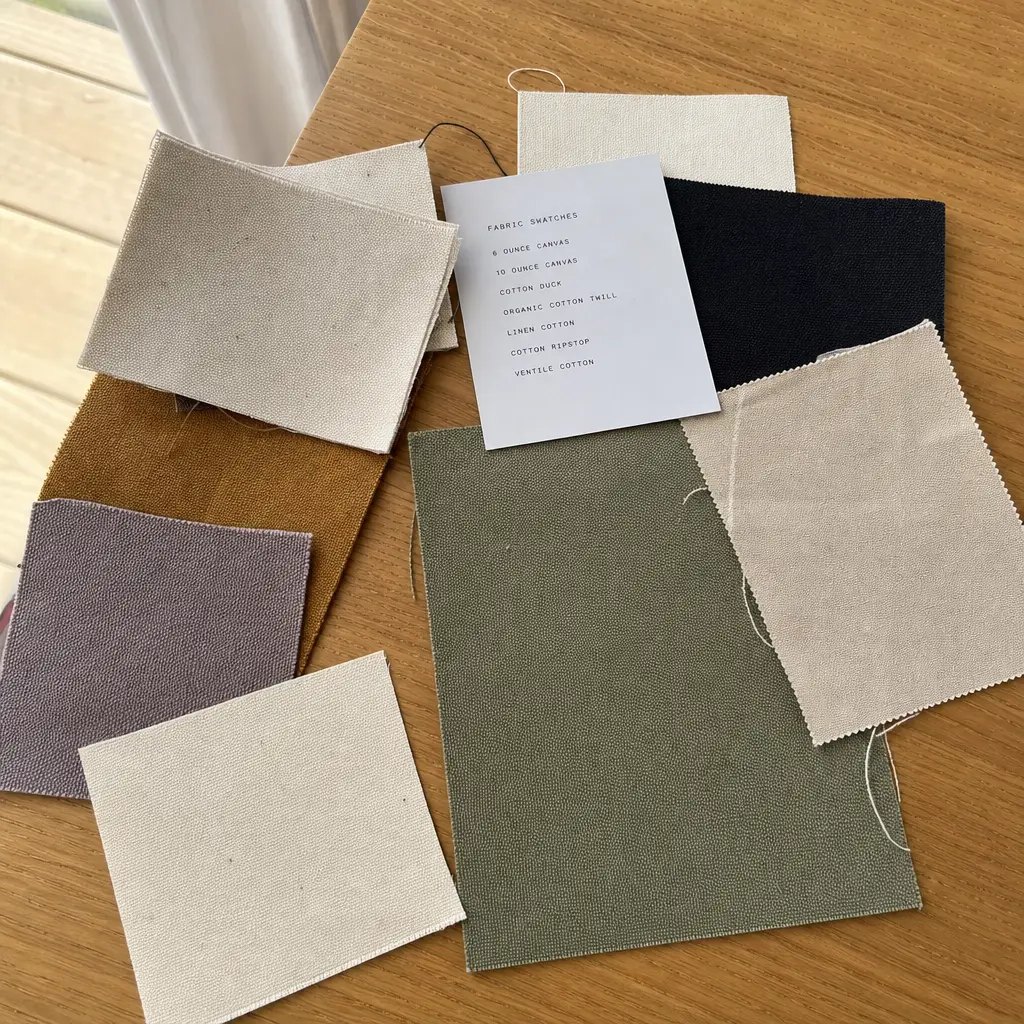
Start with the bookstore use case
A university bookstore tote should be sourced around the job it has to do. The same buyer may need a low-cost orientation bag, a retail tote near checkout, and a premium alumni item in the same school year. All three can be organic cotton, but they should not share the same specification by default.
Define the program before asking for price. An orientation tote may only need to hold handouts, a campus map, and a welcome item. A core retail tote should carry notebooks, apparel, drinkware, small gifts, and occasional textbooks without looking flimsy. A premium alumni tote needs a more deliberate hand feel, cleaner decoration, and stronger structure because the customer is buying it as merchandise.
This framing keeps the RFQ practical. If the request only says "organic cotton tote, natural, logo print," suppliers may quote the lightest standard bag that matches those words. A stronger request explains the use case, expected contents, display method, barcode needs, and whether the item will be replenished as a regular SKU.
- Classify the program as giveaway, core retail, premium retail, event merchandise, e-commerce packaging, or department support.
- List likely contents such as books, apparel, laptop sleeve, drinkware, gift items, or paperwork.
- Tell suppliers whether the tote will hang, fold on shelf, ship in kits, or move through a warehouse.
Build the spec before comparing quotes
Most quote problems begin with missing details. One factory may assume a flat tote with short handles and a simple folded hem. Another may assume a gusseted body, long shoulder straps, double stitching, and retail packing. On a spreadsheet, both may appear to be organic cotton totes. In production, they are different products.
A useful spec covers finished body size, gusset depth, handle length, fabric weight, weave construction, print method, reinforcement, label requirements, and packing format. These choices affect fabric consumption, sewing labor, print setup, carton size, and freight. Without them, the lowest price may hide a thinner fabric, shorter handle, weaker seam, or bulk pack that the bookstore did not intend to buy.
Use real bookstore merchandise during spec review. A tote that holds a hoodie may still be too narrow for textbook stacks. A bag that looks fine flat may twist when loaded with drinkware and books. A shoulder tote needs a handle drop that works over jackets, not just in a product photo.
- Freeze size, gusset, handles, fabric, print, reinforcement, labels, and pack before final price comparison.
- Name actual contents instead of using vague language such as "books and merch."
- Ask suppliers to quote exceptions clearly if their standard construction differs from the requested spec.
Use GSM as a guide, not the whole decision
GSM and ounces per square yard are useful, but they do not tell the full story. Yarn, weave density, finishing, shrinkage, sewing, and handle reinforcement all affect how a finished tote feels. One 7 oz canvas can feel firmer than another if the construction is tighter or the finish is different.
For wholesale organic cotton totes for university bookstores, the practical range is usually 5 oz to 10 oz. Lighter weights reduce material cost, folding bulk, and carton weight. Midweight fabrics often create the best balance of retail feel and price. Heavier canvas adds structure and perceived durability, but it can increase freight, sewing time, print curing attention, and shelf price.
Ask where the weight is measured. Greige fabric, finished fabric, washed fabric, cut panels, and sewn printed bags can produce different numbers. A quote should state the measurement stage and tolerance. For repeat orders, keep an approved swatch or sample bag so future production is judged against a physical reference, not only an old spreadsheet line.
- Request finished GSM and tolerance, not only a nominal fabric label.
- Compare GSM together with weave, hand feel, shrinkage, dimensions, and handle construction.
- Keep an approved fabric standard for reorders and inspections.
Choose a practical weight band
A 5 oz to 6 oz organic cotton tote, about 170 to 205 gsm, works when cost and easy distribution matter most. It fits orientation packs, campus visit days, event giveaways, and lightweight bookstore promotions. It usually pairs best with simple artwork and basic self-fabric handles. The risk is perceived value: this range can feel too light for a paid retail tote.
A 7 oz to 8 oz tote, about 235 to 275 gsm, is often the best starting point for a core bookstore retail item. It has enough body to feel like a real product, still folds reasonably well, and can carry typical bookstore purchases. This is often where durability, unit cost, print quality, and shelf presentation meet.
A 9 oz to 10 oz tote, about 305 to 340 gsm, belongs in a premium or heavier-carry program. It can feel more substantial and may present better when folded or hung, but the construction must match the fabric. Stronger handles, reinforced stitching, print cure checks, and load testing become more important. Heavy fabric with weak handle attachment is still a weak product.
- Use 5 oz to 6 oz for event distribution, orientation, and low-cost promotions.
- Use 7 oz to 8 oz for the main bookstore retail tote in most programs.
- Use 9 oz to 10 oz for premium, alumni, or heavier carry programs with stronger QC controls.
Specify construction details that affect durability
Two quotes can both say "organic cotton canvas" and still represent different bags. Construction includes weave, yarn size, fabric density, finishing, sewing method, seam allowance, handle design, and reinforcement. These details explain why one supplier's 8 oz tote feels retail-ready while another feels loose or uneven.
Plain weave canvas or duck is common for bookstore totes because it is familiar, durable for cost, and straightforward to sew. Tighter woven cotton can improve print edges and body structure. Twill may offer a different surface and hand feel, but it should be sampled before replacing canvas in a standard program.
Handles deserve close attention. Students may carry books, a bottle, and apparel across campus. Specify handle width, handle drop, stitch pattern, and reinforcement method. Bartacks, cross-stitches, and double rows of stitching should be included in the quote if they are required. A gusset also changes cost and performance: it helps with bulky merchandise but adds fabric, sewing complexity, and sometimes print placement issues.
- Specify weave, finish, dimensions, gusset, handle drop, seam allowance, and reinforcement together.
- Do not compare a flat tote quote against a gusseted or reinforced tote quote.
- Ask for construction details when supplier prices differ more than expected.
Handle organic cotton claims carefully
Organic cotton claims need documentation discipline. Buyers should know whether the claim applies to the fiber, the fabric, the finished bag, the hangtag language, or the selling description. A supplier saying "organic cotton" in an email is not the same as having usable records for a retail program.
Ask what documentation is available before production starts. Depending on the sourcing route and claim language, buyers may need scope certificates, transaction certificates, lot references, invoice wording, or approved label text. The supplier should explain what they can provide, when it will be available, and whose name appears on the documents.
Claim language also needs approval. A hangtag, sewn label, product page, and invoice may each require slightly different wording. If the bookstore or university has sustainability guidelines, align those with supplier documentation before bulk production. Keep records with the purchase order so reorders can use the same claim scope or be updated if the supply chain changes.
- Confirm whether the claim is for organic cotton fiber, fabric, finished goods, or marketing copy.
- Ask for transaction certificate availability, lot traceability, approved wording, and documentation timing.
- Assign ownership for storing certificates, label approvals, and claim records for future reorders.
Protect artwork and licensed marks
Campus artwork can be harder to print than it looks. Seals, mascots, anniversary marks, department names, and licensed wordmarks may include fine type, thin rules, small registration points, or legal details. Textured cotton can soften edges or make tiny marks fill in.
Screen printing is usually reliable for simple one-color and limited-color graphics. Water-based ink can give a softer hand, but opacity and edge control depend on the fabric and ink system. Digital print or transfer methods may suit short runs or multi-color art, but buyers should review hand feel, rub performance, and durability on the actual fabric.
Placement should be measured from physical reference points: centered on the body, a fixed distance below the top edge, or aligned to seams. Require a strike-off or printed pre-production sample on the intended fabric weight. A digital mockup is helpful for layout, but it does not prove ink coverage, cure, cracking, texture, or color appearance on natural cotton.
- Choose print method based on artwork detail, fabric texture, color expectations, and hand feel.
- Define print size, location, color references, file format, and placement tolerance.
- Approve a physical strike-off before bulk printing, especially for licensed campus artwork.
Plan MOQ, versions, and seasonality
MOQ is rarely just one number. A factory may have minimums for fabric purchasing, cutting, printing, sewing, label setup, and packing. Multiple campus names, departments, barcodes, or pack formats can each create separate minimums. Clarify this before the assortment is finalized.
One useful approach is to separate the base tote from the decorated version. If several departments can use the same blank body, the supplier may cut and sew a larger base quantity and print smaller sub-runs. This can improve consistency across SKUs and make reorders easier, though print setup, labels, and carton marks still need to be quoted by version.
University bookstore demand is seasonal. Orientation, graduation, alumni weekends, sporting events, and holiday gifting can all compress timelines. Ask how long screens, fabric standards, approved samples, and documentation records are kept. For repeat items, separate setup costs from recurring unit costs so the reorder comparison is cleaner.
- Clarify MOQ by fabric, color, GSM, print version, barcode, packed SKU, and total order quantity.
- Use one approved base tote when multiple department or campus artwork versions are needed.
- Confirm reorder lead time, retained screens, documentation renewal, and price-break logic.
Make sample approval measurable
A sample that looks good in a photo is not enough for a bookstore order. The pre-production sample should prove fabric weight, construction, print, dimensions, labels, and packing. If the final fabric lot is not available, the supplier should identify what is different and whether a second approval is needed before bulk cutting.
Measure the sample against the spec sheet: finished width, height, gusset depth, handle width, handle drop, print size, print position, seam allowance, and stitch density where relevant. Then load it with typical bookstore contents. Check handle comfort, opening width, balance, seam stress, and whether the bag still looks sellable when carried.
Natural cotton shade should also be approved. Some lots are warmer, grayer, whiter, or more speckled than others. These variations may be acceptable, but they should be agreed before production. Keep one signed reference sample with the buyer or inspector and one with the factory so bulk production has a clear standard.
- Measure the pre-production sample and record actual results against the spec sheet.
- Test the tote with realistic contents before approving bulk production.
- Keep approved samples, strike-offs, shade standards, and photos for inspection and reorders.
Write QC and packing rules inspectors can use
Quality control should define visible, measurable defects. For organic cotton totes, common issues include wrong dimensions, print shift, uneven ink, stains, loose threads, skipped stitches, weak handles, inconsistent folding, incorrect barcodes, and carton shortages. A note saying "good quality" is not enough for inspection.
Classify defects before production. Critical defects may include broken handles, severe stains, wrong logo, wrong barcode, unauthorized claim labels, or unsafe foreign objects. Major defects may include size outside tolerance, open seams, poor reinforcement, heavy puckering, visibly off-center print, or wrong packing. Minor defects may include small loose threads or natural slubs within the approved standard.
Handle testing should be specific. For example, require a 10 kg static load for 30 minutes and fail any unit with tearing, seam opening, broken reinforcement stitches, or permanent distortion beyond the approved sample. The exact test can change by program, but the weight, duration, and pass/fail rule should be written before production.
Packing affects landed cost and receiving labor. State whether units are bulk packed, inner packed, individually polybagged, paper-banded, folded to a retail size, ticketed, barcoded, or packed by SKU. Ask for carton quantity, dimensions, gross weight, carton marks, and pallet guidance before confirming the order. A tote can pass sewing inspection and still create warehouse rework if packing is wrong.
- Use AQL or an equivalent standard and define critical, major, and minor defects.
- Measure dimensions, print placement, handle strength, and packing details during inspection.
- Confirm fold method, barcode placement, inner quantity, carton count, SKU separation, and carton marks.
Specification comparison for buyers
| Spec decision | Recommended option | When it fits | Buyer risk to check |
|---|---|---|---|
| 5 oz to 6 oz | Organic cotton, about 170 to 205 gsm | Orientation giveaways, campus visit kits, event packs, lightweight promotions, or bags that need to fold compactly | Can feel too light for paid retail; confirm opacity, seam visibility, print show-through, and finished GSM on the sample |
| 7 oz to 8 oz | Organic cotton, about 235 to 275 gsm | Core bookstore retail tote for notebooks, apparel add-ons, drinkware, campus gifts, and everyday student carry | Loose weave can still feel soft or collapse on shelf; check hand feel, shrinkage, handle strength, and loaded shape |
| 9 oz to 10 oz | Organic cotton, about 305 to 340 gsm | Premium bookstore tote, alumni shop program, heavier textbook carry, or longer-service reusable bag | Higher unit cost and freight weight; require stronger reinforcement, print cure checks, and a defined load test |
| Fabric construction | Plain weave canvas or duck | Most natural cotton bookstore totes with familiar hand feel, solid durability for cost, and straightforward sewing | Loose construction may blur small artwork; ask for weave density, surface texture, and tolerance examples |
| Fabric construction | Twill or tighter woven cotton | Cleaner print edges, more structure, and a more finished retail feel for premium programs | May cost more at similar GSM; compare actual hand feel and print result rather than weight alone |
| Handle construction | Self-fabric handles with bartack or cross-stitch reinforcement | General bookstore retail where the tote may be carried by hand or over the shoulder | Handle attachment often fails before the fabric body; specify width, drop, stitch pattern, and pull-test expectation |
| Handle construction | Wider self-fabric handles or webbing handles with reinforced ends | Heavier carry use, textbook loads, premium totes, or programs where comfort matters | Webbing changes appearance, seam bulk, fold size, and cost; confirm it matches the retail presentation |
| Organic claim documentation | Supplier support for transaction certificates, claim wording, label approval, and lot traceability | Any program using organic cotton claims on product pages, hangtags, labels, invoices, or campus sustainability materials | Unclear claim scope can create compliance risk; define who owns documents and what claims are allowed before production |
| Print method | 1-color screen print or tested water-based print | Campus wordmarks, seals, mascot marks, department names, and repeat orders with stable artwork | Fine lines can fill in on textured cotton; require a strike-off on production fabric and define placement tolerance |
Buyer checklist before sampling
- Define the program before pricing: orientation giveaway, core bookstore retail tote, premium alumni item, event merchandise, online order packaging, or campus department pack.
- State what the tote must carry: textbooks, notebooks, folded apparel, laptop sleeve, water bottle, gift items, or mixed bookstore purchases.
- Specify finished body width and height, gusset depth if any, handle width, handle drop, top hem, and whether the bag must fit a standard textbook stack or 13-inch laptop sleeve.
- Request finished fabric weight, not only a catalog label, and confirm whether the measurement is greige, finished, washed, post-print, or taken from cut production panels.
- Choose fabric construction, fabric color, and acceptable shade range for natural cotton so repeat orders do not drift from cream to gray or yellow tones.
- Define print method, logo size, artwork file requirements, number of colors, Pantone or approved color reference, seam-based placement, and allowed print shift tolerance.
- Confirm organic cotton claim scope: product claim, fabric claim, hangtag wording, invoice wording, transaction certificate availability, and who keeps documentation.
- Decide whether the tote is bulk packed, inner packed, individually polybagged, paper-banded, ticketed, barcoded, hangtagged, or shelf-ready before requesting final pricing.
- Request a pre-production sample made with the intended fabric weight, handle construction, print method, claim labels, and pack format rather than a generic showroom sample.
- Set measurable tolerances for body dimensions, handle length, seam allowance, stitch density, print position, stains, skipped stitches, loose threads, shade variation, and barcode placement.
Factory quote questions to send
- What is the finished GSM after weaving, finishing, and any print curing, and what tolerance will you hold in bulk production?
- Which cotton construction are you quoting: canvas, duck, sheeting, twill, or another weave, and can you provide yarn count or construction details if available?
- What organic cotton documentation can you provide for this order, such as transaction certificates, scope certificates, lot references, or approved claim wording?
- Is the quoted price for blank bags, one-color printed bags, multi-color printed bags, or fully packed retail units with barcode, hangtag, and insert?
- What is the MOQ by fabric weight, fabric color, print version, packing format, certification documentation requirement, and destination SKU?
- Can multiple campus names, departments, or artwork versions share the same blank body production run, and how does that affect MOQ, setup cost, and lead time?
- Will the pre-production sample be made from the same fabric lot intended for bulk cutting, and what approval step applies if the bulk lot changes after sample sign-off?
- What print method do you recommend for this artwork, and can you provide a strike-off on the exact production fabric before bulk printing?
- What handle reinforcement method is included in the quote, and what load or pull test do you use for handle attachment?
- What packing configuration is included: fold method, inner pack, polybag or paper band, barcode label, insert card, master carton quantity, and carton marks?
Quality-control points to confirm
- Measure finished GSM from production fabric or cut panels, not only from a catalog swatch, and keep results inside the agreed tolerance band.
- Check finished body width, height, gusset, handle width, handle drop, seam allowance, top hem, stitch density, and symmetry against the signed spec sheet on first-article samples.
- Review fabric shade under consistent lighting and compare natural cotton tone against the approved standard or tolerance range before bulk sewing continues.
- Pull print samples for color density, edge sharpness, ink coverage, cure, rubbing resistance, cracking, and placement from seam reference points.
- Load-test handles and top seams with an agreed weight, such as 10 kg for 30 minutes, and fail any bag with tearing, seam opening, broken stitches, or permanent handle distortion beyond the approved standard.
- Inspect bartacks, cross-stitches, skipped stitches, needle damage, puckering, loose threads, stains, oil marks, fabric holes, and seam openings across random cartons.
- Confirm that labels, organic cotton claims, hangtags, inserts, barcodes, and carton marks match the purchase order, artwork approval, claim approval, and destination requirements.
- Verify fold size, polybag or band fit, inner pack quantity, carton count, carton gross weight, SKU separation, and barcode placement so receiving teams do not need to rework the shipment.
- Keep approved samples, strike-offs, shade standards, measurement records, transaction certificate references, and inspection photos on file for reorder comparison and supplier accountability.
- Use an AQL or equivalent inspection approach that matches your internal purchasing standard, and state what happens if the sample fails one critical, one major, or multiple minor checks.